

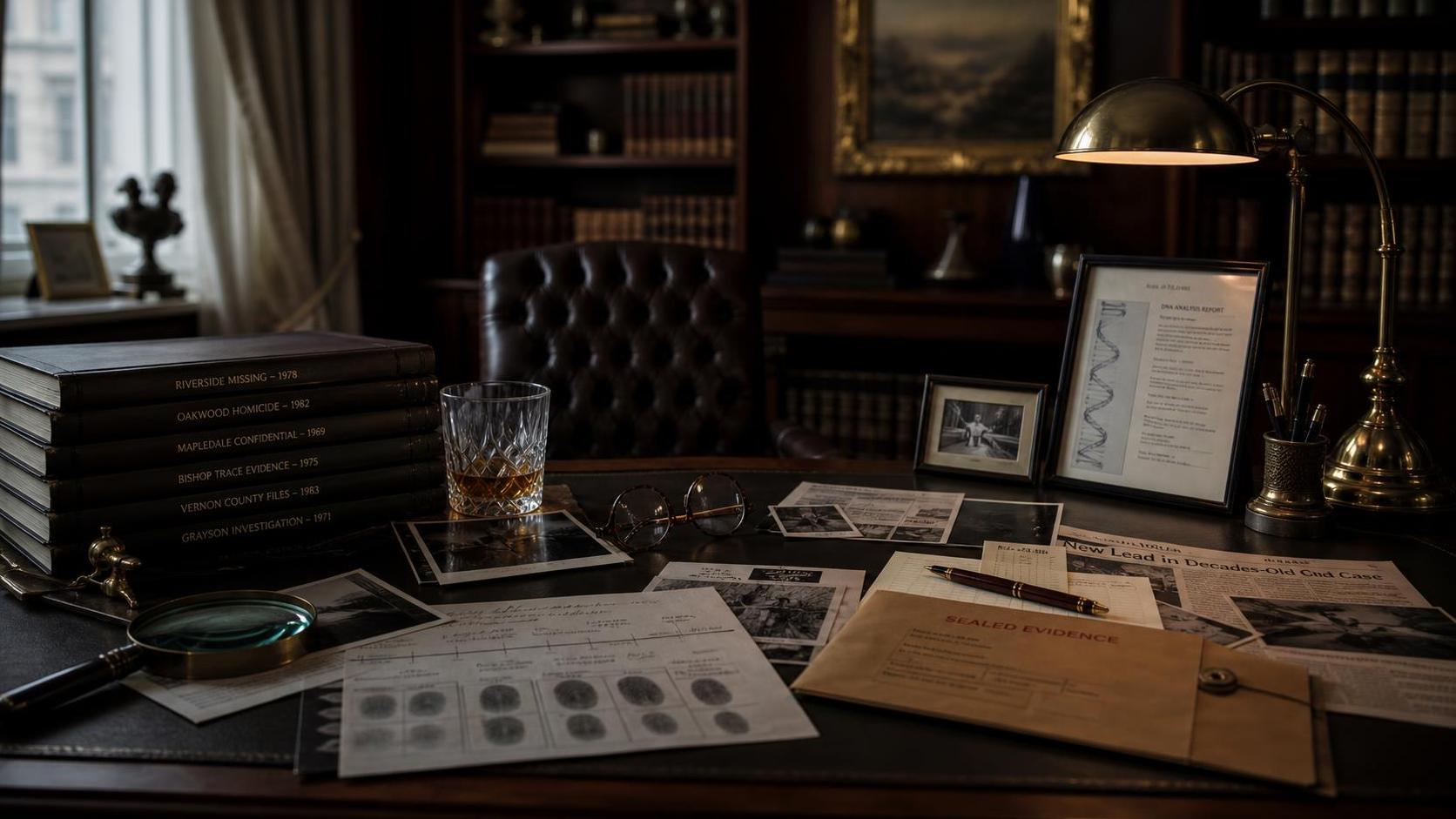
Introduction to Cold Cases
Cold cases occupy a unique place in criminal justice because they sit at the intersection of unfinished investigations, advancing science, and enduring human hope. In simple terms, a cold case is a criminal investigation that remains unsolved after active leads have dried up. These cases are not closed in the sense of being resolved; instead, they are shelved, revisited periodically, and sometimes reopened when new evidence, witnesses, or technologies emerge. In the United States alone, analysts estimate there are hundreds of thousands of unsolved homicides, along with many unresolved disappearances and sexual assault cases, illustrating the scale of the challenge.
What Makes a Case Go Cold?
A case typically becomes “cold” when investigators have exhausted the most immediate avenues of inquiry. This can happen for several reasons: physical evidence may be limited, witness memories may conflict or fade, suspects may be difficult to identify, or investigative methods available at the time may simply be inadequate. In older cases, especially those from the mid-20th century, detectives often worked without the forensic tools now considered standard, such as DNA profiling, digital databases, or advanced fingerprint comparison systems.
The Role of Time
Time is both an obstacle and, surprisingly, an advantage. On one hand, the passage of years can weaken a case. Witnesses move away, die, or forget important details. Evidence can degrade if it was not stored properly. Public attention also fades, reducing pressure and limiting fresh tips. On the other hand, time can also loosen secrets. Relationships change, guilty consciences surface, and people who were once afraid to speak may eventually come forward. A single new statement decades later can transform an investigation.
Why Cold Cases Matter
Cold cases are not just old files gathering dust; they represent real victims, grieving families, and communities left without answers. For relatives, the emotional toll can last a lifetime. The absence of resolution often creates a painful uncertainty that differs from ordinary grief. From a legal and social perspective, solving cold cases can also expose patterns of violence, identify serial offenders, and correct investigative mistakes made in earlier eras.
Advances That Change Outcomes
Modern forensic science has dramatically improved the odds of solving long-dormant crimes. DNA testing, forensic genealogy, digitized records, and national databases have all reshaped investigative work. A notable example is the rise of genetic genealogy, which has helped identify suspects in cases that remained unsolved for 30 or 40 years. Investigators can now reexamine preserved evidence with methods far more sensitive than those available when the crime first occurred.
Why These Stories Endure
Public fascination with cold cases stems from more than mystery. These investigations reveal how persistence, science, and careful detective work can overcome decades of silence. They also remind readers that justice is not always immediate, but it can still arrive long after hope seems lost. In the cases that follow, each story shows how forgotten clues, renewed scrutiny, and modern tools helped bring long-awaited answers to crimes once thought unsolvable.
Why Some Cases Go Cold
The Fragile Early Window
A criminal investigation is often won or lost in its earliest hours. Detectives call this the golden window, the period when witnesses still remember details clearly, physical evidence remains uncontaminated, and suspects have not yet had time to disappear or reshape their stories. When that window closes without a strong lead, a case can begin drifting toward cold status. In the United States, homicide clearance rates have fallen from above 90 percent in the 1960s to roughly 50 percent in recent years, according to FBI data, showing how easily difficult cases can stall.
Small early mistakes can have lasting consequences. A missed fingerprint, an improperly logged item, or a witness interviewed too late may seem minor at first, yet each gap weakens the chain of proof. In older cases, investigators also worked without modern DNA profiling, digital surveillance, or searchable national databases, which meant many promising clues could not be fully used at the time.
When Evidence Fades
Physical evidence does not stay perfect forever. Biological samples degrade, paper records are misplaced, and crime scenes are altered by weather, time, or human activity. Even when evidence survives, the standards used decades ago were often inconsistent. Some departments lacked specialized storage, while others did not preserve items that today would be considered crucial for forensic retesting.
The Problem of Witness Memory
Human memory is equally vulnerable. Witnesses move away, die, or simply forget. Research in cognitive psychology has repeatedly shown that memory becomes less reliable over time, especially when stress was involved during the original event. A witness who once recalled a license plate or a face with confidence may later remember only fragments. That erosion makes prosecutors more cautious, because a case built on uncertain testimony is harder to prove beyond a reasonable doubt.
Limited Resources and Competing Priorities
Not every unsolved case receives the same level of attention. Police departments must constantly balance staffing, budgets, and urgent new crimes. When a case stops producing leads, investigators may be reassigned to active threats that demand immediate response. This does not mean the older case is forgotten; it means the system often lacks the capacity to pursue every dead end indefinitely.
Institutional Challenges
Cold cases can also suffer from fragmented communication. Jurisdictional boundaries, poor record sharing, and leadership changes may interrupt momentum. Before integrated databases became common, one agency might hold a key piece of information that another agency never saw. In some historic cases, files were stored in boxes, handwritten notes were difficult to interpret, and evidence inventories were incomplete.
Silence, Fear, and Changing Technology
Some cases go cold because people stay silent. Witnesses may fear retaliation, feel loyalty to a suspect, or distrust law enforcement. In gang-related, domestic, or small-community cases, that silence can be especially powerful. Years later, relationships change, guilt grows, or legal pressure increases, and someone finally speaks.
At the same time, technology can transform a dead-end investigation. DNA testing, forensic genealogy, digital mapping, and database matching have reopened cases once considered unsolvable. A single preserved hair, cigarette butt, or fingerprint can suddenly connect a decades-old crime to a name, turning a cold case back into an active pursuit.
How Old Cases Get Reopened
Why investigators return to dormant files
Cold cases are not simply forgotten investigations. They are active records that remain unsolved because evidence was incomplete, technology was limited, or witnesses were unavailable at the time. Law enforcement agencies often reopen these cases when a new lead emerges, when forensic science advances, or when a dedicated cold case unit reviews old material with fresh eyes. In the United States, thousands of homicide cases remain unsolved each year, and many departments now assign specialists to revisit them systematically rather than waiting for chance breakthroughs.
The role of new forensic technology
One of the most important reasons old cases get reopened is the development of better forensic tools. DNA testing has transformed criminal investigations since the late 1980s, but newer methods have made even tiny or degraded samples useful. Evidence collected decades earlier, such as hair, skin cells, or blood traces, may now produce profiles that were impossible to obtain when the crime first occurred. Fingerprint enhancement, digital imaging, and advanced ballistics comparison also help investigators reexamine physical evidence with greater precision.
Genetic genealogy and its impact
A major shift came with investigative genetic genealogy. This method compares crime scene DNA with profiles voluntarily uploaded to public genealogy databases, helping detectives identify relatives of an unknown suspect. The technique gained national attention in 2018 with the arrest of the Golden State Killer suspect, whose case had remained unsolved for more than 40 years. Since then, numerous agencies have reopened long-stalled investigations in hopes of finding similar connections.
Fresh witness testimony and overlooked details
Cases are also reopened because people change over time. A witness who was once afraid may later feel safe enough to speak. Family members, former friends, or even accomplices may come forward after years of silence. In some cases, investigators discover that earlier interviews contained inconsistencies or clues that were not fully understood. A fresh review can reveal patterns that original detectives missed, especially when modern analysts compare the case against other crimes across jurisdictions.
The value of digitizing old records
Many older investigations were stored in paper files, cassette recordings, and boxed evidence logs. When agencies digitize these materials, they make them easier to search, compare, and share. A name mentioned in one file may suddenly connect to another case in a different county or state. This process often uncovers links that were practically invisible when records were fragmented.
Public attention and specialized cold case units
Media coverage can also reopen old cases. Documentaries, podcasts, and anniversary news reports frequently generate tips from the public. While not every lead is useful, renewed attention can prompt someone with key information to come forward. At the same time, specialized cold case units bring structure to these efforts. These teams often include detectives, forensic analysts, prosecutors, and victim advocates who review whether evidence still exists, whether legal standards can be met, and whether a viable suspect can now be identified.
When reopening becomes possible
In many solved-decades-later cases, the turning point is not one dramatic discovery but the combination of preserved evidence, modern science, and persistent review. That is why some investigations remain open for generations until the right tool, witness, or connection finally appears.
Case 1: The Boy in the Box
A haunting discovery that gripped Philadelphia
In February 1957, a young boy’s body was found in a cardboard box in the Fox Chase area of Philadelphia, Pennsylvania. The child appeared to be between four and six years old. He was malnourished, bore signs of recent grooming, and had visible bruises, suggesting a violent death. Investigators quickly realized they were facing one of the most heartbreaking unidentified child homicide cases in American history. Because the victim’s identity was unknown, newspapers and police began referring to him as “The Boy in the Box.”
The case drew enormous public attention. Thousands of tips poured in, and police distributed flyers across the region. His fingerprints were taken, his clothing was examined, and his image was circulated widely. Yet despite these efforts, no one came forward to identify him with certainty. For decades, the mystery remained unsolved, becoming a symbol of both the limits of mid-twentieth-century forensic science and the persistence of investigators who refused to let the child be forgotten.
Why the case remained unsolved for so long
One major obstacle was the era in which the crime occurred. In 1957, investigators lacked access to modern DNA profiling, digital databases, and advanced genealogical tools. Missing children records were fragmented, often local rather than national, and communication between jurisdictions was far slower than it is today. Even when police pursued promising leads, they had few scientific methods available to confirm identity.
Early theories and dead ends
Over the years, several theories emerged. One of the most discussed came from a woman known publicly as “M,” who claimed in 2002 that her abusive mother had purchased the boy and later killed him. Her account attracted attention because it included details some believed matched the evidence. However, investigators could not substantiate the story sufficiently to close the case. Other leads involved foster homes, illegal adoptions, and missing child reports, but none produced definitive answers.
The lack of a name made every step harder. Without knowing who the child was, detectives could not reconstruct his family background, movements, or likely suspects. The case became a painful example of how unidentified victims can remain trapped in investigative limbo for generations.
The forensic breakthrough that changed everything
The turning point came through advances in DNA technology. In 2019, Philadelphia police exhumed the boy’s remains to obtain a better DNA sample. Scientists were able to extract genetic material suitable for modern testing, something that had not been possible in earlier decades. This DNA was then used in genetic genealogy, a method that compares unknown DNA to profiles in public or law-enforcement-accessible databases to identify possible relatives.
How genetic genealogy helped
Genetic genealogy has transformed cold case investigations in the twenty-first century. The same broad approach helped identify suspects or victims in several major cases after 2018, when it gained national attention through the Golden State Killer investigation. In the Boy in the Box case, genealogists built family trees from distant DNA matches, then worked backward through birth records, census documents, and family histories.
This process eventually led investigators to the child’s identity. In December 2022, Philadelphia authorities announced that the boy was Joseph Augustus Zarelli, born in January 1953. After sixty-five years, the child finally had his name restored.
What investigators revealed about Joseph Augustus Zarelli
Officials stated that Joseph was born to a West Philadelphia family and that they had identified both his birth mother and father. However, because the homicide investigation remained active, authorities released only limited details about his immediate relatives and circumstances. Investigators emphasized that identifying Joseph was not the end of the case but a crucial new beginning.
Why identification matters in cold cases
Naming a victim can dramatically reshape an investigation. Once Joseph was identified, detectives could examine family relationships, living arrangements, medical history, and potential witnesses with far greater precision. It also allowed them to revisit old assumptions and compare them against verified records rather than speculation.
Just as importantly, identification restored a measure of dignity. For decades, the public knew the child only through a tragic nickname. By naming him, investigators shifted the story from abstraction to personhood. Joseph Augustus Zarelli was no longer just a mystery; he was a real child whose life and death demanded accountability.
The broader legacy of the case
The Boy in the Box case remains one of the most famous examples of a cold case revived by science. It demonstrates how evidence preserved for decades can still yield answers when technology catches up. It also highlights the importance of long-term investigative commitment. Detectives, forensic experts, and genealogists worked across generations to solve a question that once seemed impossible.
Joseph’s identification did not erase the tragedy, but it marked a historic breakthrough. In the landscape of cold cases solved decades later, this case stands as a powerful reminder that even after half a century, truth can still emerge from silence.
Case 2: The Golden State Killer
The Golden State Killer case stands as one of the most significant examples of how persistence, forensic science, and evolving investigative methods can solve crimes that once seemed impossible to close. For decades, the offender terrorized California communities while eluding capture, leaving behind a trail of violence that included at least 13 murders, more than 50 rapes, and over 100 burglaries. The eventual identification of Joseph James DeAngelo in 2018 transformed the case from a haunting mystery into a landmark moment in criminal investigation.
A Crime Spree Spanning Years
The crimes linked to the Golden State Killer occurred primarily between 1974 and 1986 across multiple regions of California. Investigators initially believed they were dealing with separate offenders because the attacks varied by location and pattern. In the Sacramento area, the suspect became known as the East Area Rapist. In Southern California, he was later connected to murders attributed to the Original Night Stalker. Earlier burglaries in Visalia were also eventually tied to the same man, then called the Visalia Ransacker.
This fragmentation slowed the investigation for years. Law enforcement agencies often worked within their own jurisdictions, and the technology needed to compare evidence across cases was far less advanced than it is today. As a result, a single offender was able to exploit gaps in communication and continue offending over a long period.
Why the Case Went Cold
The Golden State Killer was exceptionally difficult to catch because he was organized, mobile, and careful. He stalked neighborhoods, studied routines, and often entered homes while victims slept. In many attacks, he used ligatures, threats, and psychological manipulation to control victims. He also appeared to understand police response patterns, which led some investigators to suspect he had military or law enforcement experience.
Limits of Earlier Forensics
During the 1970s and 1980s, DNA profiling did not yet exist in a form investigators could use widely. Detectives relied heavily on eyewitness accounts, shoe prints, sketches, and behavioral patterns. While biological evidence was collected in some cases, the ability to generate a useful genetic profile came much later. Even after DNA testing improved in the 1990s and 2000s, a match was only possible if the offender’s DNA was already in a law enforcement database, which it was not.
The Breakthrough: Genetic Genealogy
The case changed dramatically in 2018, when investigators used a method called investigative genetic genealogy. Instead of searching only criminal DNA databases, they uploaded crime scene DNA data to a public genealogy platform in a way that allowed them to identify distant relatives of the unknown suspect. From there, genealogists and detectives built family trees, narrowed possible candidates by age, sex, and location, and eventually focused on Joseph James DeAngelo, a former police officer.
Investigators then conducted surveillance and collected DNA from discarded items linked to DeAngelo. That sample matched the DNA from the crime scenes, providing the confirmation they needed. This approach was groundbreaking because it showed that even when a suspect had never been arrested for a qualifying offense or entered into a criminal database, relatives’ genetic information could still help identify him.
Arrest, Charges, and Plea
Joseph James DeAngelo was arrested on April 24, 2018, at age 72. The arrest stunned the public because he had lived for decades in suburban California, apparently blending into ordinary life. In 2020, DeAngelo pleaded guilty to multiple charges, including murders and kidnappings, in a negotiated resolution that spared survivors and victims’ families the strain of a lengthy trial. He was sentenced to life imprisonment without the possibility of parole.
Why the Case Matters
The Golden State Killer investigation reshaped public understanding of cold cases. It demonstrated that evidence preserved for decades can become newly valuable when science advances. It also pushed law enforcement agencies to revisit unsolved crimes with fresh tools and renewed urgency.
At the same time, the case sparked debate about privacy, consent, and the ethics of genealogy databases. Supporters argued that the method delivered justice in cases involving extreme violence. Critics warned that genetic data shared for family history research could be used in ways people never anticipated. That debate continues, especially as more agencies consider similar techniques.
Lasting Impact on Cold Case Investigations
The success of the Golden State Killer case inspired investigators across the United States to reexamine dormant files. Since 2018, genetic genealogy has helped solve numerous murders and identify previously unknown victims. The case also highlighted the importance of preserving biological evidence, maintaining interagency cooperation, and documenting crimes thoroughly even when immediate leads run dry.
For survivors and families, the arrest brought a measure of accountability after decades of uncertainty. For investigators, it proved that a cold case is not necessarily a dead case. Sometimes, the missing piece is not a confession or a witness, but a scientific method that did not yet exist when the crime was committed.
Case 3: The Murder of April Tinsley
A Crime That Shocked Fort Wayne
In April 1988, eight-year-old April Marie Tinsley disappeared in Fort Wayne, Indiana, while walking to a friend’s house. Her disappearance immediately alarmed the community because the route was familiar, short, and taken in broad daylight. Three days later, her body was discovered in a ditch in neighboring DeKalb County, about 20 miles away. Investigators determined that she had been abducted, sexually assaulted, and murdered, turning the case into one of Indiana’s most haunting unsolved crimes.
The killing deeply affected Fort Wayne and surrounding areas. Parents changed routines, children were warned not to walk alone, and fear lingered for years. The case was especially disturbing because the victim was so young and because the offender appeared confident enough to strike without leaving an obvious trail. Despite extensive police work, no immediate suspect could be tied conclusively to the crime.
Early Investigation and Frustrating Dead Ends
From the start, law enforcement pursued hundreds of leads. Detectives interviewed neighbors, checked known offenders, and examined physical evidence collected from the crime scene. Yet the forensic tools available in the late 1980s were far more limited than those used today. DNA profiling existed in its early stages, but databases were small, testing methods were less sensitive, and matching an unknown offender was often impossible without a direct comparison sample.
The Taunting Messages
What made the case even more chilling was the behavior of the killer after the murder. In 1990 and again in 2004, authorities found taunting messages linked to the case. Some were written on barns and included references to April by name, suggesting the killer remained in the area and wanted to terrorize the public. These messages intensified pressure on investigators, but they still could not identify the person responsible.
The case remained active for decades, with detectives preserving evidence and revisiting witness statements. This persistence mattered. In many cold cases, the difference between permanent mystery and eventual resolution is not a sudden breakthrough alone, but the careful maintenance of evidence until science catches up.
How Genetic Genealogy Changed the Case
The major breakthrough came in 2018, when investigators turned to forensic genetic genealogy, a method that had recently gained national attention after helping identify the Golden State Killer. Instead of relying solely on traditional law enforcement DNA databases, genetic genealogy compares crime scene DNA to profiles voluntarily uploaded to public genealogy platforms by private citizens researching family history.
In April Tinsley’s case, investigators worked with specialists to build family connections from the unknown DNA profile. This process did not instantly name the killer. Rather, it narrowed the field by identifying relatives and constructing family trees. Detectives then focused on men who fit the age, location, and behavioral profile connected to the original crime.
Identifying John D. Miller
That work led police to John D. Miller, a resident of Grabill, Indiana, who lived near Fort Wayne at the time of the murder. Investigators obtained a discarded DNA sample from Miller and compared it with the biological evidence preserved from 1988. The match was decisive. After 30 years, police finally had the suspect they had been seeking.
Miller was arrested in July 2018. According to investigators, he later confessed to abducting and killing April. In December 2018, he pleaded guilty to murder, child molesting, and criminal confinement. He was sentenced to 80 years in prison, bringing legal closure to a case that had haunted Indiana for three decades.
Why This Case Matters
The April Tinsley case is now widely cited as a landmark example of how modern forensic science can revive long-stalled investigations. It demonstrated that even when a killer avoids detection for decades, preserved biological evidence can still speak powerfully if analyzed with new methods. It also showed the value of collaboration between local police, forensic laboratories, and genealogy experts.
Lessons for Cold Case Investigations
One of the clearest lessons from this case is the importance of evidence preservation. Without properly stored DNA from 1988, later testing would have been impossible. Another lesson is that cold cases should not be viewed as inactive simply because they are old. Advances in technology can transform weak leads into compelling proof.
For families of victims, this case also offered a painful but meaningful reminder that justice can be delayed without being denied forever. April Tinsley’s murder remained unsolved for 30 years, yet investigators never fully gave up. When the right scientific tools emerged, they were ready to act.
The case continues to be discussed in criminal justice circles because it sits at the intersection of traditional detective work and cutting-edge science. It is not only a story about a terrible crime, but also about how persistence, technology, and careful forensic strategy can finally expose a killer who once seemed untouchable.
Case 4: The Murder of Carla Walker
A Christmas Dance, Then Disappearance
On the night of February 16, 1974, 17-year-old Carla Jan Walker attended a Valentine’s dance at Western Hills High School in Fort Worth, Texas, with her boyfriend, Rodney McCoy. By all accounts, it was an ordinary evening for two teenagers. After the dance, McCoy drove Carla to a bowling alley parking lot, a common gathering place for local teens. What happened next would become one of Texas’s most haunting cold cases.
As the couple sat in McCoy’s car, an armed man approached the vehicle. He struck McCoy, threatened both teenagers, and forced Carla out of the car. McCoy, injured and disoriented, could not stop the abduction. Carla vanished into the night, and the brutal nature of the crime immediately shocked investigators and the Fort Worth community.
The Discovery and Early Investigation
The following day, Carla Walker’s body was found near Benbrook Lake. She had been sexually assaulted and murdered. The case drew intense media attention, not only because of Carla’s age, but also because the attack appeared to be random and brazen. Investigators worked extensively with the evidence available in the 1970s, interviewing witnesses, reviewing possible suspects, and collecting physical evidence from the scene and the victim’s clothing.
Why the Case Stalled
Despite the seriousness of the investigation, the case quickly ran into the limitations of the era. Forensic science in 1974 lacked the DNA profiling tools that later transformed criminal investigations. Detectives preserved evidence, including biological material, but they had no reliable method at the time to identify a perpetrator from it. As years passed, leads dried up, memories faded, and the case remained unsolved.
The Walker family endured decades without answers. Like many cold case families, they lived with the pain of uncertainty while hoping advances in science might eventually reveal the truth. Their persistence, along with the work of committed detectives, helped keep the case active long after public attention had faded.
How DNA Technology Reopened the Case
More than four decades later, modern forensic testing changed everything. Advances in DNA analysis allowed investigators to test preserved evidence in ways that had been impossible in the 1970s. In Carla Walker’s case, crime scene DNA was developed and entered into law enforcement databases. Detectives also used genetic genealogy, a technique that compares crime scene DNA with publicly available family-tree data to identify possible relatives of an unknown suspect.
This method has become increasingly important in cold case work. It gained national attention after helping identify the Golden State Killer in 2018, and it has since been used in numerous homicide and sexual assault investigations. In Carla Walker’s case, the technology pointed investigators toward a man named Glen Samuel McCurley.
The Arrest of Glen McCurley
In 2020, Fort Worth police arrested Glen Samuel McCurley, who was 77 years old at the time. Investigators had gathered DNA from him after surveillance and comparison testing linked him to the evidence preserved from 1974. The arrest marked a major breakthrough after 46 years of uncertainty.
Building the Final Case
Authorities did not rely on DNA alone. Detectives also revisited witness statements and historical records to strengthen the prosecution. Reports indicated that McCurley had a criminal history and had lived in the area at the time of the murder. By combining old-fashioned investigative work with modern science, law enforcement was able to present a far stronger case than had been possible decades earlier.
A Guilty Plea and Long-Delayed Justice
In 2021, McCurley pleaded guilty to Carla Walker’s murder. He was sentenced to life in prison, bringing a measure of justice to a case that had haunted Fort Worth for generations. For Carla’s family, the plea did not erase the loss, but it finally provided an answer to the question of who had taken her life.
The case stands as a powerful example of how preserved evidence and evolving forensic methods can solve crimes once thought impossible to crack. It also underscores the importance of cold case units, which continue to revisit old files with new tools and renewed determination. Carla Walker’s story remains one of the clearest reminders that even after decades, a case can still move from silence to accountability.
Case 5: The Murder of Christine Jessop
A Crime That Shocked Canada
The murder of Christine Jessop remains one of Canada’s most haunting cold cases, both for the brutality of the crime and for the decades-long search for justice. Christine was a nine-year-old girl from Queensville, Ontario, who disappeared on October 3, 1984, after leaving home to walk to a nearby store. When she did not return, panic spread quickly through her family and community. Her body was discovered more than two months later, on December 31, 1984, in a wooded area about 50 kilometers from her home. She had been sexually assaulted and murdered.
From the beginning, the case drew intense public attention. The victim’s age, the rural setting, and the apparent randomness of the crime created widespread fear. Investigators faced enormous pressure to identify the killer, but despite interviews, forensic work, and public appeals, the early investigation failed to produce a reliable answer. Instead, the case became known not only for the tragedy itself, but also for one of the most troubling wrongful convictions in Canadian legal history.
The Wrongful Conviction of Guy Paul Morin
In 1985, suspicion fell on Guy Paul Morin, a shy and socially awkward neighbor who lived near Christine’s family. Morin was charged with her murder, even though the evidence against him was weak and largely circumstantial. In 1986, he was acquitted, but the case did not end there. After a successful appeal by the Crown, Morin was retried and, in 1992, convicted of first-degree murder.
The conviction was later exposed as a grave miscarriage of justice. Problems included flawed forensic interpretation, unreliable witness testimony, and investigative tunnel vision. Morin spent years in prison before advances in DNA testing changed the course of the case. In 1995, DNA evidence proved that he was not the source of biological material found on Christine’s clothing. He was officially exonerated, and the case triggered a major public inquiry into wrongful convictions in Canada.
Lessons From the Morin Case
The Morin prosecution became a landmark example of how confirmation bias can distort criminal investigations. Once investigators focused on one suspect, contradictory evidence was often minimized or ignored. The subsequent inquiry, led by Justice Fred Kaufman, produced recommendations that influenced police procedures, forensic standards, and disclosure practices across Canada. In that sense, the Jessop case shaped not only one investigation, but the broader justice system.
How DNA Technology Finally Solved the Case
For many years after Morin’s exoneration, Christine Jessop’s murder remained unsolved. However, biological evidence had been preserved, and that decision proved critical. As forensic science improved, investigators revisited the case using more advanced DNA analysis. In 2020, York Regional Police announced that the killer had been identified as Calvin Hoover, a man who had lived in the same area at the time of the murder.
Hoover had never been charged while alive. He died in 2015, which meant he could not stand trial. Investigators identified him through genetic genealogy, a method that compares crime scene DNA with publicly available family-history databases to locate relatives and build family trees. This approach has become increasingly important in cold cases, especially after its high-profile use in the Golden State Killer investigation in the United States.
The Role of Genetic Genealogy
Genetic genealogy does not simply produce a suspect’s name instantly. It narrows possibilities by identifying biological relatives, sometimes as distant as third or fourth cousins. Investigators then combine that information with traditional police work, such as timelines, geography, age, and known associations. In the Jessop case, this process helped police focus on Hoover, and subsequent testing confirmed a DNA match.
Why Preservation of Evidence Matters
One of the most important practical lessons from this case is the value of preserving physical evidence. In the 1980s, DNA profiling was still in its infancy and far less precise than it is today. If evidence had been lost, contaminated, or destroyed, the truth might never have emerged. Cold case units around the world now emphasize long-term evidence storage because future scientific advances can transform old investigations.
A Case That Changed Public Trust
The resolution of Christine Jessop’s murder brought a measure of truth, but it also reopened painful questions about justice, accountability, and institutional error. Her family endured decades of uncertainty, while Guy Paul Morin lost years of his life to a wrongful conviction. The case stands as a stark reminder that solving crimes requires not just determination, but accuracy, restraint, and scientific integrity.
Even decades later, the Jessop investigation continues to be studied by legal experts, police trainers, and forensic specialists as an example of both failure and progress in modern criminal justice.
Case 6: The Murder of Lindy Sue Biechler
A Brutal Crime That Went Cold
The murder of Lindy Sue Biechler became one of Pennsylvania’s most haunting unsolved cases, lingering for more than four decades before science finally delivered an answer. On December 5, 1975, the 19-year-old newlywed was found dead in her apartment in Lancaster, Pennsylvania. She had been sexually assaulted and stabbed multiple times in a violent attack that shocked the local community and devastated investigators who had little evidence to pursue beyond the crime scene itself.
At the time, forensic technology was limited. Detectives collected physical evidence, including biological material left by the killer, but there was no practical way in 1975 to identify a suspect from that evidence alone. As a result, the case quickly stalled despite repeated efforts by law enforcement to revisit leads over the years. For Lindy Sue’s family, the passage of time meant decades without answers, accountability, or closure.
Why the Investigation Struggled
Cold cases from the 1970s often share the same obstacles, and Biechler’s case was no exception. Investigators relied heavily on witness statements, neighborhood canvassing, and comparisons to known offenders. Without modern DNA databases or advanced analytical tools, even strong physical evidence could sit dormant for years. In this case, detectives preserved key evidence carefully, a decision that would later prove critical.
The Limits of Earlier Forensics
During the late 20th century, DNA profiling gradually transformed criminal investigations, but early methods still required direct comparison with a known suspect or someone already in a criminal database. If the offender had never been arrested for a qualifying crime, the DNA profile often led nowhere. That appears to have been the central challenge in the Biechler investigation. Authorities had the offender’s genetic material, yet no matching identity.
The Breakthrough: Genetic Genealogy
The turning point came in the 2020s, when investigators turned to investigative genetic genealogy, the same broad technique that helped identify suspects in several high-profile cold cases across the United States. This method does not simply search standard law enforcement databases. Instead, it compares crime scene DNA to profiles in genealogy databases where users have voluntarily uploaded their genetic information, often to learn about ancestry or connect with relatives.
By identifying distant family relationships, genealogists can build family trees and narrow the field to individuals who fit the age, sex, location, and circumstances of the crime. In Biechler’s case, Lancaster County investigators worked with forensic genealogy experts to follow those genetic clues. Their work led them to David Sinopoli, a man who had lived near Biechler at the time of the murder.
Identifying the Suspect
Sinopoli had died in 1997, which meant he could not be questioned or prosecuted. However, investigators were able to obtain DNA from one of his close relatives and compare it to the preserved crime scene evidence. According to authorities, the genetic relationship was consistent with Sinopoli being the source of the DNA. In 2022, officials publicly announced that they had solved the case and identified him as Lindy Sue Biechler’s killer.
Why This Case Mattered Nationally
The resolution drew national attention because it demonstrated the growing power of forensic genealogy in cases once considered unsolvable. By 2023, this approach had contributed to hundreds of investigative leads and numerous identifications in the United States, especially in homicide and sexual assault cases. The Biechler case stood out because of the extraordinary time span involved: 47 years passed between the murder and the identification of the suspect.
Justice After Death
Although Sinopoli was no longer alive to face trial, the identification still carried enormous significance. For many families, solving a cold case is not only about punishment. It is also about truth, official recognition, and the end of uncertainty. Law enforcement could finally say with confidence who killed Lindy Sue Biechler, replacing decades of speculation with a documented answer grounded in forensic evidence.
The case also underscored the importance of evidence preservation. Had the biological material from 1975 not been properly retained, later testing would have been impossible. That lesson continues to shape modern policing, where even small samples may become decisive years later as technology advances.
A Landmark in Cold Case Investigation
Lindy Sue Biechler’s murder remains a tragic example of a life stolen far too soon, but it is also a landmark in the history of cold case investigation. Her case showed that time does not always erase the trail. Sometimes, it simply waits for science to catch up.
What Solved These Cases
The Turning Point: Better Science and Better Records
What finally broke open many long-stalled investigations was not a single miracle technique, but a combination of scientific progress, preserved evidence, and renewed attention. In cold cases solved decades later, the original crime scene often held the answer all along. What changed was investigators’ ability to extract useful information from old material that earlier generations could not fully analyze.
The most important development was modern DNA testing. In the 1980s and 1990s, many police departments collected biological evidence, but testing methods were limited, expensive, or too imprecise to identify a specific suspect. Today, even tiny or degraded samples can sometimes produce a profile. According to the National Institute of Justice, advances in forensic biology have dramatically increased the value of evidence once considered too weak to test, especially in homicide and sexual assault cases.
Genetic Genealogy Changed the Game
A major breakthrough in several famous cold cases came from investigative genetic genealogy. This method compares crime scene DNA with profiles voluntarily uploaded to public genealogy databases, helping investigators identify possible relatives of an unknown suspect. From there, family trees, public records, and traditional detective work narrow the field.
The 2018 arrest of the Golden State Killer, Joseph James DeAngelo, brought this method into public view. Investigators used DNA from decades-old crime scenes and matched it through genealogical research, eventually identifying DeAngelo as a suspect. That case demonstrated how a person could evade detection for years, yet still be found through distant family connections and careful record analysis.
Why It Worked So Well
Genetic genealogy succeeded because it did not require a suspect’s DNA to already exist in a criminal database. Traditional systems like CODIS are powerful, but they depend on prior samples being on file. Genealogy-based methods opened a new path when no direct database match existed.
Old-Fashioned Detective Work Still Mattered
Even with advanced science, human persistence remained essential. Detectives reopened files, re-interviewed witnesses, digitized paper records, and revisited timelines that had once gone cold. In many cases, investigators found that earlier statements contained overlooked inconsistencies or names that became significant only years later.
Reexamining Evidence With Fresh Eyes
A new detective or task force can notice patterns that original investigators missed. Social changes also matter. Witnesses who were once afraid may become willing to speak. Family members may share long-hidden suspicions. In some cases, media coverage and anniversary reporting generated fresh leads that helped connect forgotten details.
Technology Beyond DNA
Other tools also helped solve old cases. Fingerprint enhancement software, digital databases, and national information-sharing systems made comparisons faster and broader than before. Improved forensic imaging, facial reconstruction, and geographic analysis gave investigators new ways to test old theories.
The common thread across these cases is clear: evidence preservation, technological advancement, and relentless follow-up solved what time alone could not. Decades later, justice often depended on whether someone kept the file, saved the sample, and refused to stop asking questions.
Ethics, Privacy, and DNA Databases
The Promise and the Privacy Tradeoff
DNA databases have transformed criminal investigations, helping authorities identify suspects in cases that remained unsolved for 20, 30, or even 40 years. In the United States, the FBI’s CODIS system contains millions of offender, arrestee, and forensic profiles, while consumer genealogy platforms have given investigators access to family connections that traditional policing could never uncover. This has been especially important in cold cases, where biological evidence may be the only surviving lead.
Yet the same power that makes DNA so effective also raises serious ethical concerns. A DNA profile is not like a fingerprint. It can reveal family relationships, ancestry patterns, and, in some contexts, health-related information. Even when law enforcement uses only limited forensic markers, the broader implications of storing genetic material remain significant.
Consent, Ownership, and Genetic Reach
A central ethical question is consent. People who submit DNA to ancestry or health-testing services may agree to company terms, but their relatives have not necessarily consented to becoming indirectly searchable. Investigators using genetic genealogy can identify a suspect through cousins, siblings, or distant family lines, extending surveillance beyond the individual who uploaded data.
The Family Connection Problem
This creates a unique privacy challenge because DNA is inherently shared. One person’s decision can expose an entire family network to scrutiny. In high-profile cold case breakthroughs, such as those solved through public genealogy databases, this method has delivered justice, but critics argue that it also stretches traditional expectations of privacy and due process.
Regulation and Responsible Use
Different countries and states apply different rules to DNA retention, access, and deletion. Some jurisdictions allow broad collection from arrestees, while others restrict database inclusion to convicted offenders. Oversight matters because errors, contamination, or misuse can have life-altering consequences.
Balancing Public Safety and Civil Liberties
A responsible framework usually includes judicial oversight, transparent policies, strict chain-of-custody standards, and limits on how genetic data can be shared. Public trust depends on clear safeguards. Without them, the same tools that solve violent crimes could be expanded into routine monitoring, employer misuse, or unauthorized data sharing.
Why the Debate Matters in Cold Cases
In cold cases, the emotional stakes are high. Families want answers, communities want accountability, and investigators want every legitimate tool available. DNA databases can provide that breakthrough, but their use must be balanced against civil liberties. The debate is not about whether DNA works; it is about how society chooses to govern one of the most powerful forms of personal data ever collected.
Conclusion: Why Cold Cases Still Matter
The Enduring Value of Unfinished Investigations
Cold cases continue to matter because they represent more than unsolved crimes; they reflect unfinished obligations to victims, families, and communities. Even after decades, a case can shape public trust in law enforcement and influence how future investigations are handled. When a long-dormant case is solved, it sends a powerful message that justice is not limited by time and that persistence still has value.
How Modern Advances Change Old Outcomes
Many cases once considered impossible to solve are now being reopened with stronger tools. DNA analysis, forensic genealogy, digital archiving, and improved evidence preservation have transformed investigative work. In recent years, forensic genealogy alone has helped identify suspects in numerous historic cases, proving that evidence collected long ago can gain new meaning when paired with modern science. These breakthroughs do not erase the past, but they can finally provide answers that were once out of reach.
The Human Impact of Resolution
For families, resolution often means more than a conviction. It can offer clarity, restore dignity to victims, and end years of uncertainty. Communities also benefit when hidden truths are brought to light, especially in cases that exposed investigative mistakes or social bias. Solving old crimes can reveal how systems have improved and where they still need reform.
Why These Stories Continue to Resonate
The stories of cold cases solved decades later endure because they combine mystery, tragedy, and hope. They remind readers that evidence matters, memory matters, and justice can remain possible even after silence has lasted for generations. That is why cold cases still command attention, and why they will continue to matter in every era.
FAQ: Common Questions About Cold Cases
What exactly is a cold case?
A cold case is an unsolved criminal investigation that remains open but has no active leads strong enough to move it forward. These cases often involve homicide, missing persons, or unidentified human remains, although serious assaults and kidnappings can also become cold cases. Law enforcement agencies may revisit them months, years, or even decades later when new evidence, witness statements, or forensic tools emerge. In the United States alone, analysts estimate there are more than 250,000 unsolved homicides, showing how large the challenge can be.
Why do some cold cases stay unsolved for so long?
Cold cases often stall because the original investigation lacked enough evidence, witnesses were unreliable, or forensic science was limited at the time. In older cases, detectives may have worked without DNA profiling, digital databases, or surveillance footage. Memories also fade, and physical evidence can degrade if it was not preserved properly. In some instances, social bias or lack of media attention affected how aggressively a case was pursued. A case from the 1970s, for example, may suddenly become solvable today because biological evidence can now be tested with methods unavailable when the crime occurred.
How are cold cases solved decades later?
The role of modern forensic science
Advances in forensic science have transformed cold case work. DNA testing, fingerprint enhancement, forensic genealogy, and digital reconstruction now allow investigators to reexamine evidence with far greater precision. Genetic genealogy has been especially influential, helping identify suspects or victims by comparing crime scene DNA to public family-history databases. This method gained global attention in the identification of the Golden State Killer in 2018.
Reinvestigation and fresh perspectives
Cold case units also succeed because new detectives bring fresh eyes to old files. They may notice inconsistencies, reinterview witnesses, or connect separate crimes that were not linked before. Even a small overlooked detail, such as a vehicle description or a receipt, can become important when reviewed in a broader context.
Can families still get answers after many years?
Yes, and many do. While time makes investigations harder, it does not erase the possibility of justice or identification. Families often play a vital role by preserving records, sharing DNA samples, and keeping public attention on the case. Organizations focused on missing persons and unidentified remains have also helped reunite families with answers after decades of uncertainty.
Are all cold cases eventually solved?
Not all of them. Some lack recoverable evidence, and some perpetrators or witnesses die before key facts are uncovered. Still, cold does not mean closed. As technology improves and databases expand, cases once considered impossible are increasingly being solved, which is exactly why stories of long-delayed breakthroughs continue to matter.


