

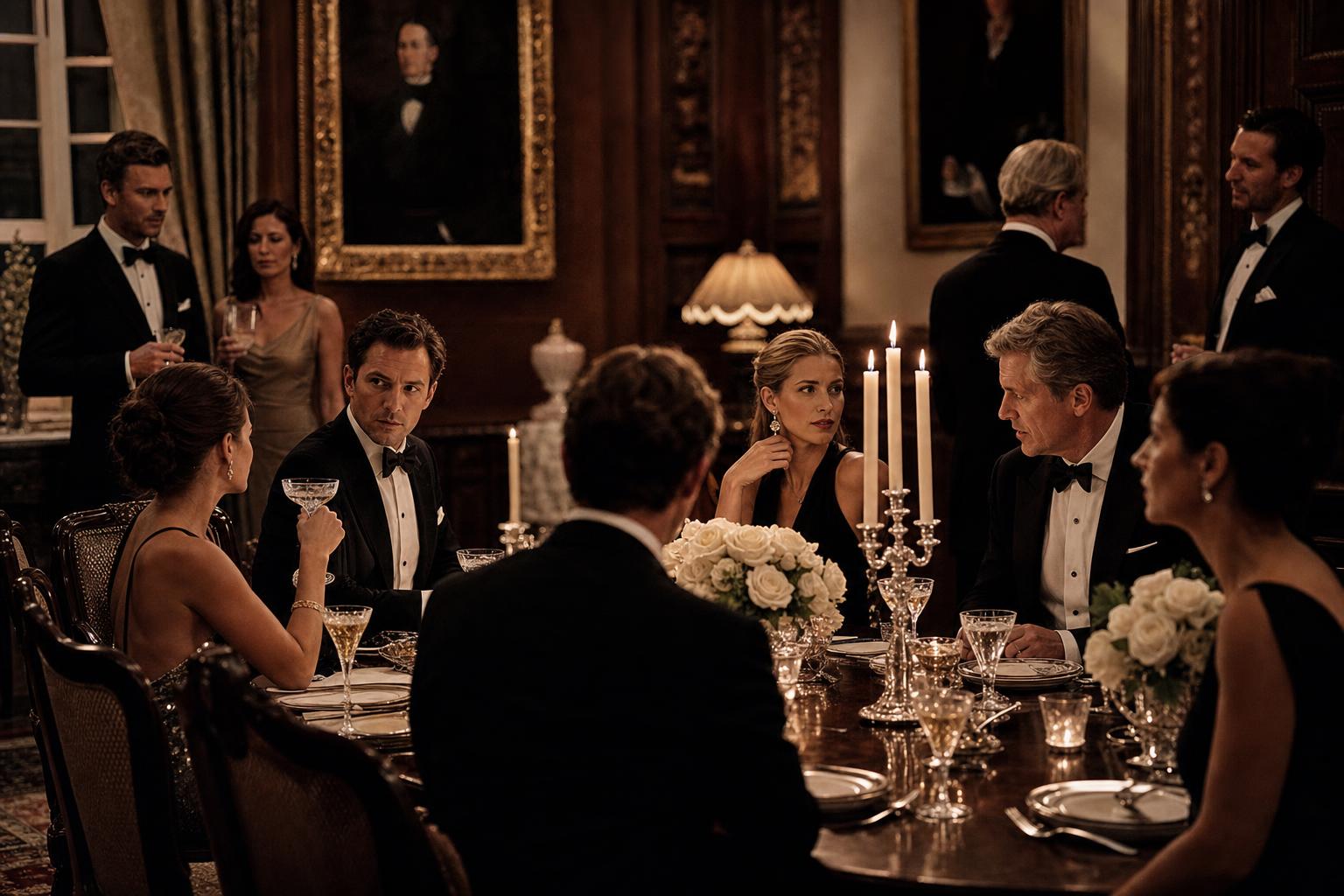
Introduction: Assigned vs Open Roles
Murder mystery parties thrive on suspense, social interaction, and structured improvisation, but one design choice shapes the entire experience: whether players receive assigned roles in advance or discover characters more freely through open roles. This distinction affects preparation, pacing, and how confidently guests participate. For hosts comparing formats, understanding the strengths of each approach is essential before choosing a game style that fits the group.
What Assigned Roles Mean
In an assigned-role mystery, each guest is given a specific character before the event or at the start. That role often includes a backstory, motives, secrets, and relationships with other suspects. Commercial mystery kits frequently use this model because it creates a tighter narrative and helps ensure that critical clues are distributed correctly. A host might assign the ambitious business partner, the jealous ex, or the detective, allowing players to arrive dressed and ready to perform.
Why Structure Appeals to Many Groups
The biggest advantage of assigned roles is clarity. Guests know who they are, what they want, and how they fit into the story. This can reduce hesitation, especially in groups where not everyone enjoys improvising from scratch. Assigned roles also support stronger thematic immersion. If players prepare costumes, accents, or character mannerisms in advance, the event often feels more theatrical and memorable.
What Open Roles Mean
Open-role mysteries take a looser approach. Instead of fixed character assignments, players may choose from available roles, develop their identities during the game, or participate with minimal scripted guidance. This format is often more flexible for casual gatherings, larger groups, or mixed personalities. It can also make last-minute attendance changes easier, since the story is not always dependent on one person playing one exact part.
Where Flexibility Becomes a Strength
Open roles encourage spontaneity and accessibility. Guests who dislike heavy preparation may feel more comfortable joining in when expectations are lighter. The format can also reduce the pressure of “performing correctly,” which matters because social comfort strongly influences participation. In practice, an open-role game may feel more like collaborative storytelling, while an assigned-role game resembles an interactive stage production.
Why the Choice Matters
Neither format is universally better. The right option depends on the group’s size, experience level, and appetite for roleplay. A highly engaged group may love the depth of assigned characters, while a relaxed crowd may prefer the freedom of open participation. The comparison becomes even more interesting when looking at preparation demands, player engagement, and overall replay value.
What a Murder Mystery Party Is
A murder mystery party is an interactive social game in which guests work together, and sometimes against one another, to solve a fictional crime. Unlike a standard dinner party or game night, the event gives everyone a role in an unfolding story. One guest may be the detective, another a suspicious heiress, and someone else the secret culprit. The entertainment comes from questioning motives, uncovering clues, and piecing together what happened before the final reveal.
The Core Idea Behind the Experience
At its heart, a murder mystery party blends theater, puzzle-solving, and social interaction. Players are not simply watching a story unfold; they are actively shaping it through conversation, observation, and improvisation. Most games begin with a dramatic setup, such as a wealthy host collapsing during a gala or a famous actor being found dead at a film premiere. From there, each participant receives information that helps build the case.
The format has become increasingly popular because it offers something more immersive than passive entertainment. According to industry reports on the broader escape room and immersive events market, consumers increasingly seek experiences that are participatory rather than purely observational. A murder mystery party fits that demand by turning guests into part of the plot.
How a Typical Murder Mystery Party Works
Most murder mystery parties follow a structured sequence. Guests arrive and learn the setting, time period, and basic storyline. As the event progresses, they gather clues through dialogue, written evidence, hidden objects, or staged announcements. Some versions include rounds, where new facts are revealed at specific moments to keep the tension rising.
Assigned Roles and Character Play
In many games, each guest is given a specific character with a backstory, secrets, and objectives. This can make the experience feel theatrical and highly engaging, especially for groups that enjoy roleplay. A player might need to hide an affair, protect a business deal, or accuse a rival without revealing too much. These layers create the suspicion and drama that define the genre.
Flexible or Role-Light Formats
Other murder mystery parties use a looser format, where guests participate mainly as themselves while still solving the crime. This style appeals to people who enjoy deduction but feel less comfortable acting. It can also make hosting easier, since players need less preparation and can focus more on the investigation than performance.
Why People Enjoy Murder Mystery Parties
The appeal lies in the combination of competition, collaboration, and surprise. Guests get to test their instincts, read social cues, and connect with others in a memorable setting. For hosts, the format works well for birthdays, corporate team-building events, holiday gatherings, and even virtual parties.
A Social Event with Built-In Conversation
One reason these parties work so well is that they remove the awkwardness that can come with mingling. Instead of making small talk, guests immediately have something to discuss: alibis, motives, and suspicious behavior. That built-in purpose often leads to stronger engagement and more laughter than a traditional party setting.
How Assigned Roles Work
The Core Idea Behind Assigned Roles
In a murder mystery game, assigned roles mean each participant receives a specific character identity before play begins. That identity usually includes a backstory, relationships with other guests, motives, secrets, and sometimes a scripted objective beyond simply solving the crime. Instead of arriving as themselves, players step into a fictional part and interact through that lens. This structure turns the event from a standard guessing game into a more theatrical, character-driven experience.
Assigned-role formats are common in commercial murder mystery kits, hosted dinner parties, and corporate team-building events. In many boxed games, the host distributes character packets days in advance so guests can prepare costumes, accents, or personal strategies. Some games assign only basic traits, while others provide multi-page dossiers with timelines, evidence, and private instructions. The level of detail can vary widely, but the central mechanic remains the same: every player has a defined place in the story.
What Players Typically Receive
Most assigned-role games begin with a character brief. This document often explains who the player is, how they knew the victim, and what they want to hide or reveal. In stronger game designs, each role also contains information unavailable to others, creating a web of partial truths. That asymmetry is what drives conversation, suspicion, and dramatic reveals throughout the evening.
Common Elements in a Role Packet
A typical packet may include a public biography, a private secret, and a set of goals for each round. For example, one guest may be instructed to protect a business scandal, while another must expose an affair without revealing their own financial motive. These layered objectives keep players engaged even if they are not the murderer. In well-balanced games, everyone has something meaningful to do, which helps prevent quieter guests from fading into the background.
How the Game Progresses
Once roles are assigned, the host usually opens with a scene-setting introduction. Players then mingle, question one another, and reveal clues according to the game’s structure. Some mysteries unfold in acts, with new evidence released every 20 to 30 minutes. Others are more freeform, allowing players to decide when to disclose information. According to event-planning platforms and party publishers, most home murder mystery games last between 2 and 4 hours, depending on group size and complexity.
Why Assigned Roles Change the Experience
Assigned roles create a very different atmosphere from open-format mystery games. Because players are given motives and personalities, interactions tend to feel more dramatic and intentional. A shy guest may become bold when speaking as an arrogant art dealer or disgraced politician. In that sense, assigned roles can lower social pressure by giving people a script-like framework to follow.
Structure Versus Spontaneity
The biggest advantage of assigned roles is structure. Players are less likely to feel lost because they know who they are and what they should contribute. This is especially useful in groups where not everyone is naturally improvisational. At the same time, the structure can reduce spontaneity. If a role is too rigid or too detailed, some players may feel they are performing instructions rather than genuinely participating in a mystery.
Best Situations for Using Assigned Roles
Assigned-role mysteries often work best when the group enjoys light performance, themed events, or immersive storytelling. They are especially effective for birthdays, holiday parties, and organized social gatherings where guests are willing to prepare in advance. A group of eight to twelve players is often ideal, since that size allows enough suspects for complexity without making the story hard to follow.
Hosts should also consider player comfort. Not everyone enjoys acting, and some guests may prefer deduction over roleplay. In those cases, assigned roles can still work if the game emphasizes conversation and clue-sharing more than theatrical performance. The success of the format depends less on the script itself and more on how well the roles match the personalities and expectations of the group.
What Makes Role Assignment Successful
A good assigned-role mystery depends on balance, clarity, and inclusion. If one character holds all the important information, the game can feel lopsided. If instructions are vague, players may become confused. The best designs give each participant a reason to speak, a secret to manage, and a plausible connection to the crime. When that happens, assigned roles do more than organize the game—they actively deepen the suspense, encourage interaction, and make every revelation feel personal.
How Open Role Mysteries Work
Open role mysteries are designed to give players maximum flexibility from the moment the game begins. Instead of assigning each guest a fixed character before the event, the host presents a central crime, a setting, and a pool of possible identities, motives, and clues that emerge through play. This format shifts the experience from scripted performance toward collaborative improvisation, making it especially appealing for groups that want a lighter structure without losing the thrill of deduction.
The Core Structure of an Open Role Mystery
In a traditional assigned-role mystery, each participant receives a character sheet with a backstory, secrets, and objectives. In an open role mystery, that structure is loosened. Players may choose their character type at the start, develop their persona during the event, or even remain relatively undefined while focusing on solving the case. The mystery itself still has a clear framework, including the victim, the timeline, the evidence, and the hidden solution, but the player experience is less rigidly scripted.
This approach works because the host or game materials provide enough narrative scaffolding to keep the investigation coherent. For example, a party might begin with the announcement that a wealthy art collector has been found dead during a gala. Guests then learn about suspects such as business rivals, family members, staff, and visitors, but no one is locked into a detailed prewritten role unless the game specifically offers optional prompts.
How Players Participate
Because roles are open, players engage in a more spontaneous way. Some choose to invent accents, motives, or dramatic rivalries, while others prefer to ask questions, compare clues, and reason through the evidence. This makes the format accessible to a wider range of personalities, including guests who may feel intimidated by heavy roleplay.
Freedom to Build a Character
Players often receive minimal starting information, such as a profession, a relationship to the victim, or a reason for attending the event. From there, they can expand naturally. One guest may decide to play a suspicious business partner, while another becomes a nervous family friend. This flexibility encourages creativity without forcing anyone to memorize pages of backstory.
Emphasis on Investigation
Open role mysteries usually place stronger emphasis on clue discovery and group deduction. Since fewer interactions are predetermined, the energy often centers on what happened, who benefited, and which statements conflict with the evidence. In many commercial mystery kits, clues are revealed in rounds, through envelopes, host announcements, or staged discoveries. That pacing helps maintain momentum and ensures the mystery unfolds in a satisfying way.
What the Host Needs to Manage
Although open role mysteries can feel more relaxed for players, they still require thoughtful hosting. The host must explain the premise clearly, introduce the rules, and guide clue distribution so the story remains understandable. In practice, this often means balancing freedom with structure. If the game is too open, players may drift into unrelated improvisation; if it is too controlled, it starts to resemble an assigned-role format.
Key Hosting Elements
A successful open role mystery usually depends on several factors:
| Element | Why It Matters |
|---|---|
| Clear premise | Gives players an immediate sense of the crime and setting |
| Timed clue reveals | Prevents the investigation from stalling too early |
| Optional character prompts | Helps shy players engage without pressure |
| Defined solution | Ensures the mystery feels fair and solvable |
Industry trends in party gaming support this format’s rise. Social deduction and immersive party games have grown steadily, with the global board game market valued at over $13 billion in 2023, according to multiple market analyses. That growth reflects demand for experiences that are interactive but easy to join, which is exactly where open role mysteries perform well.
Strengths and Trade-Offs
The biggest strength of an open role mystery is adaptability. It works well for mixed groups, larger gatherings, and casual social settings where not everyone wants to commit to theatrical performance. It also reduces preparation time for guests, since they do not need to study assigned biographies in advance.
The trade-off is that character depth can be less consistent. In assigned-role games, every participant usually has a built-in reason to speak, hide information, or pursue a goal. In open role mysteries, some players may become highly inventive while others stay passive unless the host actively encourages involvement. For that reason, many modern mystery games use a hybrid model, combining open participation with light prompts, secret clues, or optional objectives that give each guest a reason to stay engaged.
When This Format Works Best
Open role mysteries are particularly effective for first-time players, office parties, family gatherings, and events where attendance may change at the last minute. Because the format is flexible, it can absorb different group sizes more easily than tightly scripted games. A host can often add or remove suspect identities without breaking the story, which makes planning simpler and the atmosphere more relaxed.
Key Differences at a Glance
When comparing a murder mystery party with assigned roles to one without assigned roles, the best choice depends on the kind of experience you want to create. Both formats can be entertaining, social, and memorable, but they differ in structure, preparation, player involvement, and overall atmosphere. Understanding these differences helps hosts choose a format that matches their group’s size, comfort level, and expectations.
Structure and Gameplay
Assigned-role murder mysteries are built around specific characters. Each guest receives a backstory, motives, secrets, and sometimes costume suggestions before the event. This creates a more theatrical experience, where every participant has a defined place in the story. In many commercial kits, 100% of players are expected to stay in character for most of the game, which can make the evening feel immersive and dramatic.
By contrast, role-free or flexible-role murder mysteries allow guests to participate as themselves or take on light, improvised identities. The focus shifts from performance to puzzle-solving and social interaction. This format often feels more relaxed because players do not need to memorize details or act convincingly to contribute.
Preparation and Hosting Effort
Assigned-role games usually require more planning. Hosts often need to send invitations early, match characters to personalities, and ensure guests understand the premise. If one player cancels at the last minute, the story can be affected, especially in games designed for exact numbers such as eight, ten, or twelve participants.
Flexible-role games are easier to organize. They are generally more adaptable to changing attendance and can work well for casual gatherings. A host may still prepare clues, evidence, and a timeline, but there is less pressure to coordinate detailed character assignments in advance. For busy hosts, this lower setup burden can be a major advantage.
Guest Experience and Comfort Level
Social Confidence Matters
Assigned roles can be exciting for outgoing guests who enjoy acting, improvising, or dressing up. They often create stronger character-driven moments and memorable interactions. However, some guests may feel self-conscious if they are asked to perform in front of others. In surveys on party game preferences, comfort and ease of participation consistently rank among the top factors influencing enjoyment.
Flexible-role mysteries are often more inclusive for mixed groups. Introverts, first-time players, and guests unfamiliar with immersive games may find them easier to join. Because participation feels less performative, conversation tends to flow more naturally.
Replayability and Atmosphere
Immersion Versus Accessibility
Assigned-role games often deliver a richer narrative atmosphere, especially for themed events like 1920s speakeasies or Victorian manor mysteries. The trade-off is lower replayability, since once the solution and character secrets are known, the same scenario loses surprise.
Role-free formats are usually more accessible and can be reused with different groups or adapted on the fly. They prioritize flexibility over deep character immersion, making them ideal for informal parties, team-building events, or family gatherings where ease matters as much as suspense.
Best Fit for Different Groups
For drama-loving groups, assigned roles often create a more cinematic evening. For casual or varied groups, a role-free mystery may provide smoother participation and less pressure. The real difference is not which format is universally better, but which one aligns with your guests’ personalities, your planning capacity, and the kind of energy you want the event to have.
Benefits of Assigned Roles
Why structure can elevate a murder mystery party
Assigned roles bring clarity, momentum, and richer interaction to a murder mystery event. Instead of asking guests to invent a character on the spot, the host provides each participant with a defined identity, background, and purpose within the story. That structure reduces uncertainty and helps people engage faster, especially at the beginning of the game when hesitation can slow the energy in the room.
In social settings, many players are not natural improvisers. Research on group participation consistently shows that people contribute more confidently when expectations are clear. In a murder mystery, assigned roles act as a social framework. Guests know who they are, what they want, and how they relate to others. As a result, conversations start more naturally, accusations feel more grounded, and the story develops with less awkwardness.
Stronger immersion and character commitment
One of the biggest advantages of assigned roles is deeper immersion. When players receive a role in advance, they can prepare mentally, choose a costume, and think about how their character might speak or behave. That preparation transforms the event from a simple party game into a more theatrical and memorable experience.
A guest playing a jealous business partner, for example, enters the room with a built-in emotional perspective. Another guest cast as the victim’s secret sibling immediately has a reason to ask pointed questions and guard sensitive information. These motivations create tension that feels organic rather than forced. Instead of waiting for the plot to happen, players actively drive it.
Preparation improves performance
Advance role assignment often leads to better participation because guests arrive ready to contribute. Even minimal preparation can make a difference. A name, a short biography, and two or three secrets are usually enough to help someone step into character. Hosts also benefit because they spend less time explaining the basics during the event and more time facilitating the mystery itself.
Better balance for story and gameplay
Assigned roles also help maintain narrative balance. In an unstructured mystery, some guests may dominate while others fade into the background. With assigned characters, the host can distribute clues, motives, and relationships more evenly. This design ensures that multiple people matter to the plot, not just the loudest or most outgoing participants.
A well-built role system can support pacing too. If ten guests attend, the host can make sure at least six have direct ties to the victim, three hold misleading clues, and one has a hidden alliance. That kind of intentional structure keeps the mystery layered. It also reduces the risk of the game becoming too easy or too chaotic.
Easier clue distribution
When roles are assigned, clues can be tailored to individuals instead of released randomly. This creates a more satisfying investigative experience. A doctor character might understand forensic evidence, while a spouse character recognizes emotional inconsistencies. By linking information to identity, the game rewards interaction and encourages players to seek out the right people.
More inclusive for mixed groups
Assigned roles are especially useful when the guest list includes people with different comfort levels, ages, or familiarity with party games. Structure supports inclusion because it gives everyone a starting point. New players do not have to guess how to participate, and experienced players still have enough material to perform creatively.
This matters in groups where not everyone knows each other. According to event industry surveys, themed interactive gatherings are more successful when guests receive pre-event guidance, because it lowers social friction and increases early engagement. Assigned roles serve exactly that purpose. They give strangers a reason to talk immediately, often through built-in rivalries, friendships, or shared secrets.
Helpful for hosts managing large groups
For hosts, assigned roles simplify logistics. They make it easier to track who knows what, who should interact, and where major reveals are likely to emerge. In larger parties, this organization is invaluable. A host managing 12 to 20 guests can use role cards to prevent confusion and keep the mystery moving without constant intervention.
Greater dramatic payoff
Another major benefit is stronger dramatic tension. Assigned roles allow the mystery to include twists that depend on hidden agendas, conflicting testimonies, and personal stakes. If every character has something to lose, the final accusation feels more meaningful. Players are not just solving a puzzle; they are navigating a web of motives and deception.
This dramatic payoff often leads to better post-game discussion as well. Guests remember standout betrayals, clever lies, and surprising reveals because those moments are tied to character identity. A random participant may forget generic clues, but they are far more likely to remember that the charming politician was secretly blackmailing the victim or that the quiet friend had the strongest motive all along.
Ideal for themed and polished experiences
Assigned roles are often the better choice when the goal is a cinematic, polished, or highly themed event. They work particularly well for milestone birthdays, corporate team-building nights, holiday parties, and dinner events where atmosphere matters as much as gameplay. In these settings, the extra structure creates a smoother, more cohesive experience that feels intentional from start to finish.
Because each guest has a place in the story, the event gains shape, personality, and momentum, setting up an important contrast with mysteries that rely on freer improvisation and open-ended participation.
Benefits of Playing Without Assigned Roles
Greater Freedom and Spontaneity
Playing a murder mystery game without assigned roles creates a very different social dynamic from a tightly scripted experience. Instead of asking each participant to perform a prewritten character, the game allows players to react naturally, improvise freely, and shape the evening through their own instincts. For many groups, this makes the experience feel less like amateur theater and more like a genuine interactive mystery.
This freedom is especially valuable for guests who feel uncomfortable acting in character. In assigned-role formats, some players worry about remembering backstory details, delivering lines convincingly, or staying “in character” for hours. Without those expectations, participants can focus on the core appeal of the game: asking questions, spotting inconsistencies, and solving the crime. Lower pressure often leads to higher participation, particularly among introverts or first-time players.
A More Natural Social Experience
When no one is locked into a scripted identity, conversations tend to flow more organically. Players can move between suspicion, humor, and strategy without checking whether a response fits a character sheet. This often produces a more relaxed atmosphere, which can be ideal for family gatherings, office parties, or mixed-age groups.
In practical terms, this flexibility reduces the learning curve. A host does not need to distribute detailed biographies or spend time explaining hidden motives to every attendee. According to event-planning trends reported by party game retailers, simpler game structures often receive stronger feedback from casual groups because they are easier to start and easier to enjoy immediately.
Easier Setup and Better Accessibility
One of the clearest advantages of role-free play is convenience. Assigned-role murder mystery games usually require preparation such as printing character packets, matching roles to personalities, and ensuring every guest understands their objectives. A no-roles format removes much of that logistical burden.
For hosts, this means less planning stress and fewer opportunities for confusion. If a guest arrives late, leaves early, or brings a friend unexpectedly, the game can usually continue without major disruption. By contrast, role-based mysteries can become difficult to manage if a key character is missing, because the structure depends on specific people holding specific information.
Flexible for Different Group Sizes
A role-free format also scales more easily. Many assigned-role games are designed for exact player counts, such as eight, ten, or twelve participants. If the number changes, the host may need to rewrite the scenario or eliminate characters. Without assigned roles, the mystery can adapt more naturally to the group present.
The difference is significant for informal events. A party of six can investigate together, while a party of sixteen can split into teams, compare theories, and debate suspects. This adaptability makes role-free games especially useful for schools, community groups, and corporate team-building sessions, where attendance may shift at the last minute.
Inclusive for Varied Personalities
Not every player enjoys performance-based entertainment. Some people love deduction but dislike roleplay. Others are enthusiastic observers who prefer listening, analyzing, and contributing selectively. A game without assigned roles makes room for all of these styles.
Because there is no expectation that every participant must portray a dramatic suspect, players can engage at their own comfort level. This inclusivity can improve overall enjoyment. In group entertainment research, autonomy is consistently linked to stronger engagement; when people choose how to participate, they are more likely to remain invested.
Stronger Focus on the Mystery Itself
Without assigned roles, the spotlight shifts away from performance and toward investigation. Players spend less time managing fictional identities and more time examining evidence, discussing motives, and testing theories. For groups that enjoy puzzles, this can make the experience more satisfying.
A role-free structure can also reduce the imbalance that sometimes appears in scripted games. In assigned-role mysteries, one or two players may receive especially dramatic secrets, while others have relatively minor parts. That can create uneven involvement. In a no-roles format, everyone can access the same clues and contribute to the same central objective, which often feels fairer.
Better Collaboration and Shared Problem-Solving
This format encourages teamwork. Rather than protecting private character agendas, players can openly compare observations and build cases together. The game becomes a collaborative investigation instead of a competition between scripted personalities.
That collaborative quality is useful in settings where the goal is connection rather than performance. Friends can debate clues, families can work across generations, and coworkers can practice communication in a low-stakes environment. The mystery becomes a shared challenge, which often strengthens group interaction more effectively than individual roleplay.
Ideal for Repeat Play and Customization
Another major benefit is replay value. Assigned-role games can lose appeal once players know the secrets attached to specific characters. A role-free mystery is often easier to modify with new clues, changing suspects, or alternate endings. Hosts can tailor difficulty, tone, and pacing to fit the audience.
This customization makes the format highly versatile. A host can run a lighthearted version for a birthday party, a more intricate version for experienced puzzle fans, or a streamlined session for younger players. Because the structure is less rigid, the game can evolve with the group rather than forcing the group to fit the game.
Challenges of Each Format
Where Assigned-Role Mysteries Can Become Restrictive
Assigned-role murder mystery games offer structure, clarity, and dramatic momentum, but that same structure can create friction for certain groups. Because each guest receives a predefined character, players may feel pressure to perform in a way that matches the script rather than their natural social style. For confident extroverts, this can be exciting. For quieter guests, however, the expectation to improvise dialogue, defend motives, or act suspicious on cue can feel intimidating and reduce enjoyment.
Another challenge is the uneven distribution of importance. In many commercial murder mystery kits, a few characters carry the bulk of the secrets, clues, and plot relevance, while others serve as supporting figures. This imbalance can lead to a familiar problem: some players dominate the investigation while others become spectators. If one guest is cast as the victim’s secret lover, another as the blackmailer, and another as the detective’s rival, they naturally have more to do than someone whose role contains only light background detail.
Logistical Demands and Group Fit
Assigned-role formats also require more preparation and stronger attendance reliability. Hosts often need to distribute character materials in advance, coordinate costumes, and ensure the right number of participants show up. If a guest cancels at the last minute, the entire narrative can weaken, especially in games designed for exactly eight, ten, or twelve players. Unlike flexible party games, these mysteries do not always scale smoothly.
The Problem of Mismatched Casting
A role can fail simply because it does not suit the player. A guest who dislikes deception may struggle with a manipulative suspect, while someone eager for center stage may feel disappointed by a quieter role. This mismatch matters because engagement often depends on whether players feel comfortable inhabiting their characters. In practice, hosts must know their group well, which is not always possible for mixed gatherings, corporate events, or large parties where guests have different comfort levels.
Why Non-Assigned Formats Can Feel Too Loose
Murder mysteries without assigned roles solve many of those performance issues by allowing participants to engage as themselves, but they introduce a different set of challenges. The biggest is lack of built-in direction. Without predefined motives, secrets, and relationships, some players may be unsure how to participate beyond asking a few questions and waiting for clues. The freedom that makes the format accessible can also make it feel less immersive.
This looser structure can reduce dramatic tension. Assigned-role games often create suspense through hidden agendas and conflicting testimonies. In contrast, open-format mysteries may rely more heavily on puzzle solving than interpersonal drama. For groups seeking theatrical energy, that can make the experience feel flatter, even if the mystery itself is clever.
Participation Gaps in Open Play
Non-assigned formats can also suffer from uneven involvement, just in a different way. Instead of role imbalance, the issue becomes initiative imbalance. More assertive guests may take over clue analysis, lead discussions, and reach conclusions quickly, while others hang back. Research on group interaction consistently shows that unstructured social activities tend to amplify dominant personalities, and mystery games are no exception.
When the Host Must Carry the Experience
In open-format games, the host often plays a larger facilitation role. They may need to pace clue reveals, redirect stalled conversations, and encourage quieter players to contribute. If the host is inexperienced, the event can lose momentum. A strong script in assigned-role games often does some of this work automatically; without it, the host becomes the engine of engagement.
Comparing the Core Trade-Offs
The central challenge of choosing between these formats is that each solves one problem by creating another. Assigned-role mysteries provide rich character immersion but demand preparation, reliable attendance, and player confidence. Non-assigned mysteries offer flexibility and lower social pressure but may sacrifice narrative depth and require more active facilitation.
A useful way to view the difference is through the lens of control versus freedom:
| Format | Main Strength | Main Challenge |
|---|---|---|
| Assigned roles | Strong story immersion | Higher pressure and stricter logistics |
| No assigned roles | Easy participation and flexibility | Less drama and weaker structure |
For hosts, the real difficulty is not deciding which format is universally better, but identifying which limitations their group will tolerate more easily. A highly social friend group may forgive rigid casting because they enjoy performance, while a mixed-age family gathering may prefer flexibility even if the mystery feels less theatrical.
How to Choose the Best Format
Choosing between a murder mystery with assigned roles and one without assigned roles depends less on which format is universally better and more on the kind of experience you want to create. Both styles can deliver suspense, laughter, and memorable interaction, but they serve different group dynamics, event goals, and comfort levels. The best choice usually comes down to guest personality, party size, preparation time, and how structured you want the evening to feel.
Start with Your Guest List
The first factor to consider is who will actually be playing. A group of outgoing guests who enjoy improvisation, costumes, and light performance often thrives in a format with assigned roles. In that setup, each participant receives a character identity, background details, and sometimes secrets or objectives. This creates a highly immersive atmosphere and can make the event feel closer to interactive theater.
By contrast, a group that includes shy guests, first-time players, or people who dislike being put on the spot may respond better to a non-assigned format. In these games, players investigate the mystery as themselves or as loosely defined participants, which reduces social pressure. Comfort matters, because engagement tends to rise when guests feel relaxed rather than obligated to perform.
Match the Format to the Occasion
Different events call for different levels of structure. A birthday party, family gathering, or casual dinner often benefits from a flexible format without assigned roles. These games are easier to explain, simpler to start, and more forgiving if guests arrive late or lose focus. They also work well when the mystery is only one part of the evening rather than the entire event.
For themed celebrations, corporate events, or dedicated game nights, assigned-role mysteries can be especially effective. They provide a clear framework and encourage stronger participation. According to event industry surveys, interactive entertainment tends to produce higher guest recall than passive activities, which helps explain why role-based mysteries are popular for team-building and milestone celebrations.
Consider Group Size and Logistics
Smaller and Larger Groups
Group size can strongly influence your decision. Assigned-role games usually work best when the number of attendees closely matches the number of characters. If a game is written for 8 players and 11 people attend, adjustments may be awkward. Non-assigned formats are generally more adaptable, making them practical for fluctuating guest counts.
For larger gatherings, flexibility becomes even more valuable. A host managing 15 to 20 guests may find it easier to run a mystery where participants can join discussions naturally instead of tracking detailed character scripts. Logistical simplicity often determines whether the night feels smooth or stressful.
Think About Preparation and Hosting Style
Time, Materials, and Guidance
Assigned-role mysteries often require more preparation. Hosts may need to distribute character packets in advance, encourage costumes, explain rules, and keep the story moving. That extra effort can pay off in immersion, but it is not ideal for every schedule.
A non-assigned mystery usually demands less setup and less pre-event coordination. This makes it attractive for busy hosts or last-minute planners. If you prefer a low-maintenance evening with easy onboarding, this format may be the stronger option.
Decide How Much Immersion You Want
Ultimately, the best format reflects the experience you want guests to remember. If your priority is dramatic storytelling, character secrets, and theatrical fun, assigned roles offer a richer narrative structure. If your goal is accessibility, spontaneity, and easy participation, a format without assigned roles will likely serve your event better.
The strongest choice is the one that aligns guest comfort, event purpose, and hosting capacity, because a well-matched format consistently creates better energy than a more elaborate game that does not fit the room.
Best Uses for Different Events
Choosing between a murder mystery with assigned roles and one without preassigned characters often depends less on preference alone and more on the type of event you are planning. The structure of the gathering, the relationships among guests, and the amount of time available all influence which format will create the best experience. A well-matched game style can increase participation, reduce awkwardness, and make the event feel more immersive.
Assigned Roles for Structured Social Events
Murder mystery games with assigned roles work especially well for events where guests expect a clear activity and are willing to perform a little. These formats are ideal for birthday parties, themed dinner parties, and private celebrations where attendees know one another reasonably well. Because each player receives a character with motives, secrets, and scripted clues, the evening gains a stronger theatrical element.
Why role-based games shine at dinner parties
At a dinner party, assigned roles give the event a built-in conversation engine. Guests do not have to wonder how to participate because the game provides direction from the start. This can be particularly useful for groups of 8 to 20 people, which is a common size for boxed or downloadable murder mystery kits. Defined characters help quieter guests engage because they can speak as someone else rather than feeling pressure to improvise as themselves.
Role-based formats also suit milestone events such as anniversaries or New Year’s Eve gatherings, where hosts want a memorable centerpiece rather than casual entertainment in the background.
Unassigned Formats for Flexible and Mixed Groups
Games without assigned roles are often better for larger, more fluid events such as corporate parties, fundraisers, school socials, or community gatherings. In these settings, guests may arrive at different times, know very little about one another, or feel hesitant about acting. A flexible format allows participants to investigate the mystery at their own comfort level.
Best fit for corporate and public events
For workplace events, unassigned murder mysteries can be more inclusive. Employees from different departments may not want the spotlight, and some may prefer problem-solving over performance. A role-optional structure lowers the barrier to entry while still encouraging teamwork, observation, and conversation. This makes it effective for team-building sessions, especially when the goal is collaboration rather than theatrical immersion.
At public or semi-public events, flexibility also helps with attendance changes. If 30 people are expected but 24 arrive, the game can still function smoothly. Assigned-role games are usually less forgiving because each missing character can disrupt the plot.
Matching Format to Guest Experience
Hosts should also consider how familiar guests are with murder mystery games. Beginners often enjoy unassigned formats because they can learn the mechanics without memorizing a backstory. More experienced players, however, may prefer the depth and drama of assigned roles.
Practical planning considerations
Time matters as well. Assigned-role mysteries usually require more preparation, including costume suggestions, character distribution, and pre-event reading. Unassigned games are easier to organize quickly and can adapt to casual venues. The best choice is the one that fits the event’s energy, guest expectations, and logistical reality, ensuring the mystery feels entertaining rather than forced.
Tips for Hosting Either Style
Start with the Guest Experience
Whether you choose a murder mystery with assigned roles or a freer, role-optional format, the best host begins by thinking about guest comfort, clarity, and participation. A highly structured game can be thrilling for confident, outgoing players, while a more flexible setup often works better for mixed groups with different energy levels. In practice, group chemistry matters more than strict format. A party of 8 to 12 guests is often ideal because it gives enough suspects and interactions without becoming difficult to manage.
Match the Format to the Group
Assigned-role mysteries usually succeed when guests enjoy performance, improvisation, and light competition. These games give each person a defined identity, motive, and set of clues, which can create stronger immersion. By contrast, non-assigned or lightly assigned styles are often easier for casual gatherings, family events, or corporate teams where not everyone wants to act. The right choice depends less on the game itself and more on how willing your guests are to participate actively.
Consider Time and Complexity
A host should also match the mystery style to the available time. Structured role-based games often take 2 to 4 hours, especially if costumes, scripted reveals, and multiple rounds are involved. Simpler formats can be completed in 60 to 90 minutes, making them better for dinner parties or shorter evening events. If your guests are new to murder mystery games, reducing complexity can improve engagement and lower the chance of confusion.
Prepare the Essentials in Advance
Good hosting relies on preparation. Invitations should explain the tone, expected level of participation, dress suggestions, and event length. If roles are assigned, send character details early enough for guests to prepare, but not so early that important clues are forgotten. If roles are optional, provide a short introduction at the start so everyone understands the setting, stakes, and rules.
Set the Scene Effectively
Atmosphere matters in both styles. Lighting, music, themed food, and simple decorations can increase immersion without requiring a large budget. For example, a 1920s mystery can be elevated with jazz, dim lamps, and vintage-style table cards. Even minimal staging helps guests feel that the event is intentional and polished.
Keep the Game Moving
Pacing is one of the most important hosting skills. Guests need enough time to question each other, examine clues, and form theories, but long pauses can drain momentum. Plan clear transitions between stages, such as introductions, clue reveals, accusation rounds, and the final solution. In role-based games, gently support quieter players so dominant personalities do not control the entire mystery.
Be Ready to Adapt
No matter which style you host, flexibility is essential. A guest may forget their role, arrive late, or feel shy about performing. Strong hosts adjust by simplifying instructions, redistributing information, or nudging conversations forward. The goal is not perfect theatrical execution but a memorable, inclusive experience that keeps everyone engaged and eager to solve the crime.
Conclusion: Which Is Better?
The Best Choice Depends on the Experience You Want
There is no single winner between murder mystery games with assigned roles and those without assigned roles, because each format creates a different kind of experience. Assigned-role games usually deliver stronger structure, clearer character motivation, and more dramatic interaction. Players often feel more immersed because they know exactly who they are, what secrets they hold, and how they should participate. This format works especially well for larger groups, themed parties, and guests who enjoy performance or light improvisation.
When Flexibility Matters More
Mystery games without assigned roles offer a more relaxed and accessible alternative. They are often easier to organize, simpler for first-time players, and better suited to casual gatherings where not everyone wants to act in character. Because players are not locked into predefined identities, the game can feel more open-ended and less intimidating. For hosts, this usually means less preparation and fewer concerns about matching personalities to roles.
Comparing Engagement and Ease
In practical terms, the better option depends on your group’s preferences. If your guests enjoy theatrical storytelling, hidden agendas, and a more scripted flow, assigned roles are often the better choice. If they prefer collaborative problem-solving, lower pressure, and a faster setup, non-assigned formats may be more effective. Many hosts find that player comfort matters more than complexity, since engagement typically rises when participants feel confident.
A Smart Way to Decide
A useful rule is to match the format to the occasion. For milestone celebrations or immersive dinner parties, assigned roles can create memorable moments. For family nights, team events, or mixed-experience groups, flexible mysteries may produce smoother participation and stronger overall enjoyment.
FAQ: Murder Mystery Role Questions
Do assigned roles make a murder mystery better?
Assigned roles often make a game feel more structured and immersive, especially for first-time hosts. When each guest receives a character with motives, secrets, and relationships, the story gains momentum quickly. Players usually spend less time wondering what to do and more time interacting in character. In many commercial murder mystery kits, assigned roles are designed to balance clues across the group, which helps prevent one or two guests from dominating the investigation.
Are unassigned roles more flexible?
Yes, unassigned formats can be easier to organize and more adaptable for mixed groups. If attendance changes at the last minute, the host does not need to rewrite a tightly connected cast list. This approach also works well for casual gatherings where some guests may feel nervous about acting. Instead of performing a detailed persona, players can participate as themselves while still solving clues, questioning suspects, and following the plot.
Which option is better for shy players?
Shy players often do better when expectations are clear. An assigned role can actually reduce anxiety because it gives a script, background, and purpose. However, if the role is too theatrical, it may create pressure. A lighter role-based format, with simple prompts rather than long biographies, is often the best middle ground.
What if guests do not stay in character?
That is common, and it does not ruin the event. Most successful parties focus on engagement over performance. Hosts can encourage roleplay with costume suggestions, short character cards, and guided rounds of questioning. Even minimal participation can still produce a fun mystery if the clues are well paced.
How many players work best?
Most murder mystery games work best with 6 to 12 players, which is large enough for varied suspects but small enough for everyone to contribute. Larger groups can work, though they often need co-hosting or side activities to keep energy balanced.
Can you mix both styles?
Absolutely. Many hosts use a hybrid model, giving key suspects assigned roles while allowing other guests to join as flexible investigators or party attendees. This method preserves story depth while making the game easier to manage for real-world social events.


