

Introduction: Why the Right Murder Mystery Matters
Choosing a murder mystery game for adults is about far more than picking a dramatic title or a stylish box. The right mystery shapes the entire experience, influencing how engaged your guests feel, how naturally they interact, and whether the evening becomes memorable for the right reasons. A well-matched case can turn a simple gathering into an immersive social event, while the wrong one can leave players confused, underinvolved, or overwhelmed.
Matching the Mystery to the Group
Not every group enjoys the same style of play. Some players love theatrical roleplay, improvised accents, and elaborate secrets, while others prefer structured clues and logical deduction. That difference matters. A highly performative game may delight an outgoing dinner party but feel uncomfortable for a quieter group. In contrast, a puzzle-heavy investigation with clear objectives may work better for analytical players who enjoy solving problems together.
Industry trends reflect this variety. The global board game market was valued at over $13 billion in 2023, with social deduction and narrative-driven games continuing to grow in popularity. Murder mystery games sit at the intersection of those trends, combining storytelling, teamwork, and light performance in a format that appeals to adults seeking more interactive entertainment.
Why Tone and Complexity Matter
Setting expectations early
Tone is one of the most overlooked factors when choosing a case. Some mysteries lean comedic and campy, while others aim for suspense, noir, or psychological intrigue. If the tone clashes with the occasion, the game can feel awkward. A playful 1920s whodunit may suit a birthday party, whereas a darker corporate conspiracy might fit a more serious, game-focused group.
Complexity also affects enjoyment. Games with too many characters, hidden motives, or layered rules can slow momentum, especially for first-time players. On the other hand, a mystery that is too simple may leave experienced players underchallenged. The best choice creates just enough tension, discovery, and interaction to keep everyone involved.
Creating a Better Shared Experience
A strong murder mystery encourages conversation, laughter, suspicion, and collaboration. It gives each participant a reason to contribute and helps avoid the common party problem where only a few people dominate the activity. When the case fits the group’s size, personality, and comfort level, players are more likely to stay engaged from the opening clue to the final accusation.
That is why selecting the right murder mystery is not a minor detail. It is the foundation that determines whether your event feels forced or effortlessly entertaining, casual or immersive, forgettable or worth talking about long after the killer is revealed.
What Adult Murder Mystery Games Are
Adult murder mystery games are interactive social experiences in which players step into fictional roles, uncover clues, question one another, and work toward solving a staged crime. Unlike traditional board games that rely mainly on luck or fixed mechanics, these games blend storytelling, deduction, improvisation, and group dynamics. The result is a format that feels part party, part theater, and part puzzle.
A Social Game Built Around Story
At their core, murder mystery games give each participant a character with motives, secrets, and relationships to other players. One person in the story is usually the victim, while the remaining guests become suspects, investigators, or witnesses. Over the course of the game, players reveal information gradually, respond to accusations, and piece together what happened.
This structure is what makes the format especially appealing for adults. The experience depends on conversation, observation, and interpretation, not just on moving pieces around a board. Many games are designed for dinner parties, birthdays, team-building events, or holiday gatherings because they encourage interaction in a way few other party games can.
How These Games Typically Work
Most adult murder mystery games follow a clear sequence. Players receive character backgrounds before the event or at the start of the evening. As the game unfolds, they read prompts, exchange clues, and react to new developments. Some versions are highly scripted, while others leave room for improvisation and roleplay.
Common Game Elements
A typical game may include character booklets, evidence cards, host instructions, and solution envelopes. In boxed sets or downloadable kits, the host often guides the pacing while players stay in character. Digital versions may add audio files, video clues, or app-based tracking.
The complexity can vary widely. A light party game may last 60 to 90 minutes, while a more immersive event can run for three hours or longer. According to market data from the tabletop gaming sector, the global board game industry has grown steadily in recent years, with social deduction and narrative-driven formats gaining strong popularity among adult players. Murder mystery games fit directly into that trend because they combine shared storytelling with problem-solving.
What Makes Them Different From Other Party Games
Unlike trivia or card games, murder mystery games ask players to participate in a narrative rather than simply compete for points. Success often depends on reading social cues, remembering details, and asking the right questions. That makes them especially effective for groups that enjoy drama, humor, and collaborative thinking.
Tone and Style Can Vary
Not every murder mystery game feels dark or serious. Some are written as comedies, others as noir thrillers, period dramas, or glamorous detective stories. A 1920s speakeasy mystery creates a very different atmosphere from a modern corporate whodunit. This range allows hosts to match the game to the group’s comfort level and interests.
Because of that flexibility, adult murder mystery games are less about violence and more about immersive entertainment, making them a distinctive option for groups seeking something more memorable than a standard game night.
Know Your Group Before You Choose
Choosing the right murder mystery game starts with a simple truth: the best case is the one your group will actually enjoy playing. A brilliantly written scenario can still fall flat if it does not match the personalities, experience levels, and social dynamics around the table. Before comparing themes, difficulty ratings, or game lengths, it helps to understand who is playing, how they like to interact, and what kind of evening they expect.
Group Size Shapes the Entire Experience
One of the first factors to consider is the number of players. Murder mystery games are usually designed around a specific cast size, and that number matters more than many hosts realize. A game written for eight to ten players may feel thin with six, while a tightly structured six-person mystery can become chaotic if extra guests are added without purpose. Publishers often provide a recommended range, and sticking close to it usually leads to smoother pacing and stronger character involvement.
A larger group often creates more energy, more side conversations, and more opportunities for dramatic reveals. However, it also increases the chance that quieter guests will fade into the background. Smaller groups, by contrast, tend to produce deeper participation because every player has more responsibility and more screen time. If your gathering typically includes outspoken friends who enjoy improvisation, a bigger cast can work well. If your guests are more reserved, a smaller game often creates a safer and more manageable environment.
Matching Cast Size to Real Attendance
It is wise to choose a game based on confirmed attendance rather than optimistic estimates. Last-minute cancellations are common at social events, and a mystery that depends on every role being filled can become difficult to run if key characters are missing. Some modern games include flexible roles or optional suspects, which can be especially useful for adult parties where schedules change quickly.
Consider Experience With Roleplay and Party Games
Not every adult group approaches a murder mystery with the same comfort level. Some players love accents, dramatic entrances, and improvisational banter. Others prefer structured clues, clear objectives, and minimal performance pressure. Knowing whether your group enjoys roleplay or simply tolerates it can save the evening.
For first-time players, a beginner-friendly game is usually the better choice. These cases often provide stronger character guidance, clearer rules, and more straightforward clue progression. That structure reduces awkward pauses and helps guests understand what they are supposed to do. In contrast, experienced groups may find simple mysteries too predictable and may prefer layered plots with hidden motives, misleading evidence, and more freedom to shape conversations.
Social Dynamics Matter More Than Difficulty Ratings
A game’s official difficulty level tells only part of the story. The social chemistry of the group often matters more. A highly analytical group may solve a medium-level mystery quickly, while a casual group focused on food, drinks, and conversation may prefer a lighter case with humor and theatrical moments. Think about whether your guests enjoy competition, collaboration, or a blend of both.
Competitive vs. Cooperative Groups
Some adult groups thrive on accusation, bluffing, and strategic deception. For them, a case with secret agendas and conflicting objectives can be thrilling. Other groups prefer a more cooperative style, where everyone works together to uncover the truth. If your guests dislike confrontation, a heavily adversarial game may create discomfort rather than fun. On the other hand, if your friends enjoy poker, social deduction games, or debate-heavy party games, a more suspicious and competitive mystery may be ideal.
Theme Can Make or Break Engagement
Theme is not just decoration; it strongly influences participation. A 1920s speakeasy mystery, a glamorous Hollywood scandal, or a spooky manor-house case each creates a different emotional tone. Adults are more likely to engage when the setting feels appealing and easy to imagine. If the theme resonates with the group’s interests, guests tend to commit more fully to their characters and the unfolding story.
For example, a workplace friend group may enjoy a polished corporate gala mystery because it feels familiar and satirical. A close-knit group of longtime friends might prefer a campier or more dramatic setting where costumes and inside jokes can shine. If your guests are hesitant about roleplay, choosing a recognizable theme can lower the barrier to entry.
Tone Should Fit the Occasion
Tone deserves careful attention, especially for adult gatherings. Some murder mystery games are comedic and intentionally over-the-top, while others lean into suspense, noir, or psychological tension. A birthday party may benefit from a playful, fast-moving case, while a dinner party with dedicated gamers may support a darker, more intricate story. Matching tone to the occasion helps the game feel natural rather than forced.
Time, Energy, and Attention Span
Most adult groups underestimate how much time a murder mystery requires. Many games run between 1.5 and 3 hours, though elaborate dinner-party formats can last longer. If your guests are arriving after work, have limited attention spans, or mainly want a relaxed social evening, a shorter case is often the smarter choice. A complex three-hour mystery can feel exhausting if the group expected something casual.
Energy level also matters. A lively weekend gathering can support a more demanding game with multiple rounds of clues and character objectives. A quieter evening may call for a simpler format with less reading and fewer rules. The right game should fit the group’s stamina, not test it.
Practical Questions to Ask Before Choosing
Before buying a case, ask yourself a few practical questions. How many people are definitely attending? Have they played mystery games before? Do they enjoy acting, solving puzzles, or simply socializing? Will they dress up, or would that feel like homework? The answers often point clearly toward the right style of game.
When hosts choose with the group in mind, the result is usually better pacing, stronger participation, and far more memorable moments. That is what turns a murder mystery from a novelty into a genuinely successful adult event.
Match the Game to the Occasion
Choosing a murder mystery game becomes much easier when you start with the occasion itself. A lively birthday party, a polished corporate event, and an intimate dinner with close friends all call for different pacing, tone, and levels of participation. The best game is not simply the most popular title or the hardest mystery; it is the one that fits the energy, expectations, and practical limits of the gathering.
Consider the Event Format
The structure of the event shapes how the game should unfold. If guests are seated for a formal dinner, a game with rounds between courses works especially well. This format gives players time to read clues, question one another, and stay immersed without competing with other activities. By contrast, a cocktail-style party usually benefits from a more flexible mystery that allows people to mingle freely. In that setting, a rigid script can feel restrictive, while open-ended interaction keeps the evening moving.
For weekend getaways or holiday gatherings, longer games often perform better because players have more time to settle into character. A game lasting two to three hours may feel too demanding for a weeknight event, but it can be ideal when the group is already planning to spend an entire evening together.
Match the Tone to the Audience
Not every occasion calls for the same style of mystery. Some groups enjoy dark, atmospheric cases with serious motives and layered evidence. Others respond better to comedic themes, exaggerated characters, and playful twists. Matching tone to audience is essential because mood strongly affects participation. If the humor feels too broad for a professional setting, or the crime feels too grim for a celebratory event, engagement can drop quickly.
Social Celebrations
For birthdays, anniversaries, and themed house parties, a dramatic or humorous case usually works best. Guests often arrive ready to socialize rather than solve a highly technical puzzle, so games with memorable roles and accessible clues tend to create stronger momentum. A roaring twenties mystery, a Hollywood scandal, or a masquerade murder can add a sense of occasion without overwhelming casual players.
Professional and Team Events
Corporate groups typically need a game that encourages collaboration without putting too much pressure on individual performance. In these settings, clear instructions and balanced participation matter more than extreme difficulty. According to workplace event research from Gallup and similar engagement studies, structured social activities can improve team connection when they are inclusive and easy to join. A mystery that lets quieter participants contribute through clue analysis, rather than constant improvisation, is often the smarter choice.
Think About Timing and Attention Span
A game should fit the schedule, not dominate it unexpectedly. Many adult murder mystery games run between 60 and 180 minutes, and that difference matters. A shorter game is often better for after-work gatherings, while a multi-round experience suits a dedicated evening. If your event includes dinner service, speeches, gift opening, or other entertainment, choose a case that leaves room for those moments.
Practical Timing Guide
| Occasion | Ideal Game Length | Best Style |
|---|---|---|
| Dinner party | 90–150 minutes | Structured, course-based mystery |
| Cocktail party | 60–120 minutes | Flexible, mingling-friendly game |
| Corporate event | 60–90 minutes | Team-oriented, easy onboarding |
| Weekend gathering | 120–180 minutes | Immersive, character-driven case |
Account for Guest Expectations
The final step is understanding what guests believe they are attending. If they expect a relaxed evening, a highly theatrical game may feel like work. If they are excited for costumes and roleplay, a simple printed mystery may seem underwhelming. Expectation matching is often what separates a memorable event from an awkward one. When the game aligns with the purpose of the gathering, players engage more naturally, conversations flow more easily, and the mystery becomes part of the occasion rather than a distraction from it.
Choose the Right Difficulty Level
Selecting the right difficulty level is one of the most important decisions when planning murder mystery games for adults. A case that is too simple can feel predictable and underwhelming, while one that is too complex may leave players confused or disengaged. The best experience happens when the challenge matches the group’s confidence, attention span, and familiarity with deduction-based games. Difficulty affects not only how quickly players solve the mystery, but also how much they enjoy the process of gathering clues, debating theories, and staying immersed in the story.
Why Difficulty Matters for Group Enjoyment
A well-matched case creates momentum. Players feel capable enough to participate, yet challenged enough to stay curious. In social gaming, this balance is especially important because the goal is not only to solve the crime, but also to encourage conversation and shared discovery. If the mystery is too easy, stronger players may dominate early and reveal the answer before others have had a chance to contribute. If it is too hard, the group can lose energy, especially during longer sessions.
Many commercial mystery games classify cases as beginner, intermediate, or advanced. This is useful, but labels alone do not tell the full story. One “advanced” game may rely on complex timelines and hidden motives, while another may simply include more characters and red herrings. Understanding what makes a mystery difficult helps you choose more accurately than relying on packaging alone.
Signs a Game Is Beginner Friendly
Beginner-level mysteries usually have a smaller cast, clearer motives, and a more direct clue trail. These games often work best for groups who are new to roleplay, party games, or structured deduction. A straightforward case allows players to learn the format without feeling overwhelmed by too many moving parts.
Common Features of Easier Cases
An easier mystery often includes fewer suspects, shorter evidence packets, and clues that point clearly toward a limited number of possibilities. Character backgrounds are usually simple enough to absorb quickly, and players can make progress without taking extensive notes. In many beginner games, the host may also receive guidance on when to reveal hints, which keeps the pace steady.
This level is ideal for casual gatherings, dinner parties, or mixed groups where not everyone is equally enthusiastic about puzzle solving. Accessibility matters more than complexity when the main goal is laughter, interaction, and a memorable evening.
When to Choose an Intermediate Mystery
Intermediate cases suit groups that enjoy problem solving and are willing to pay closer attention to detail. These mysteries often include layered motives, conflicting witness statements, and clues that require interpretation rather than simple recognition. Players may need to compare timelines, revisit assumptions, and discuss inconsistencies before reaching the correct answer.
For many adult groups, intermediate is the safest choice. It offers enough challenge to feel satisfying without becoming exhausting. If your group has played one or two mystery games before, or regularly enjoys escape rooms, trivia nights, or strategy games, this level often provides the best balance.
Advanced Cases for Experienced Players
Advanced mysteries are best reserved for groups that actively want a demanding investigation. These games may involve unreliable narrators, multiple crimes, hidden alliances, or evidence that only makes sense when combined across several documents. In some cases, the solution is not obvious until the final stage, even for highly engaged players.
What Makes Advanced Games Challenging
The difficulty usually comes from information density rather than just length. Players may need to track alibis carefully, identify subtle contradictions, or distinguish meaningful clues from deliberate misdirection. A 2023 report from the global tabletop games market noted that adult players increasingly prefer immersive and narrative-heavy experiences, which helps explain the growing popularity of more sophisticated mystery formats. Still, complexity should serve enjoyment, not replace it.
Match the Case to Your Specific Group
The same game can feel easy for one group and difficult for another. Consider group size, patience, and personality. A highly social group may thrive with dramatic character interaction even if the puzzle is moderate, while a detail-oriented group may want a tougher intellectual challenge. If your players are meeting after work, a lighter case may perform better than a mentally demanding one.
A practical rule is to choose slightly easier rather than slightly harder when unsure. Players usually remember feeling clever and involved more fondly than feeling stuck. If needed, you can always raise the challenge later with expansion packs, timed rounds, or cases designed for more experienced detectives.
Pick a Theme Adults Will Enjoy
Choosing the right theme is one of the most important steps in planning murder mystery games for adults. A strong theme does more than provide a backdrop; it shapes the tone, influences how easily guests get into character, and determines whether the evening feels sophisticated, hilarious, suspenseful, or immersive. For adult groups, the best themes usually balance familiarity with novelty. Guests should immediately understand the setting, but still feel intrigued enough to participate fully.
Why Theme Matters for Adult Players
Adults tend to engage more deeply when the scenario matches their interests, humor, and comfort level. A well-chosen theme helps players understand the social rules of the game quickly. For example, a 1920s speakeasy mystery naturally suggests glamour, secrets, and betrayal, while a modern corporate retreat mystery invites satire, office politics, and awkward alliances. In both cases, the theme gives players a framework for improvisation, which is especially helpful for guests who are new to role-based games.
Theme also affects participation rates. According to event industry surveys, immersive activities are more successful when attendees can easily picture themselves in the setting. In practical terms, that means a recognizable theme often works better than one that is too niche or overly complicated. If guests spend the first half hour trying to understand the world, they may miss the fun of solving the case.
Popular Themes That Work Well
Several themes consistently perform well for adult groups because they combine clear storytelling with strong costume and character potential.
Classic Mansion or Dinner Party Mystery
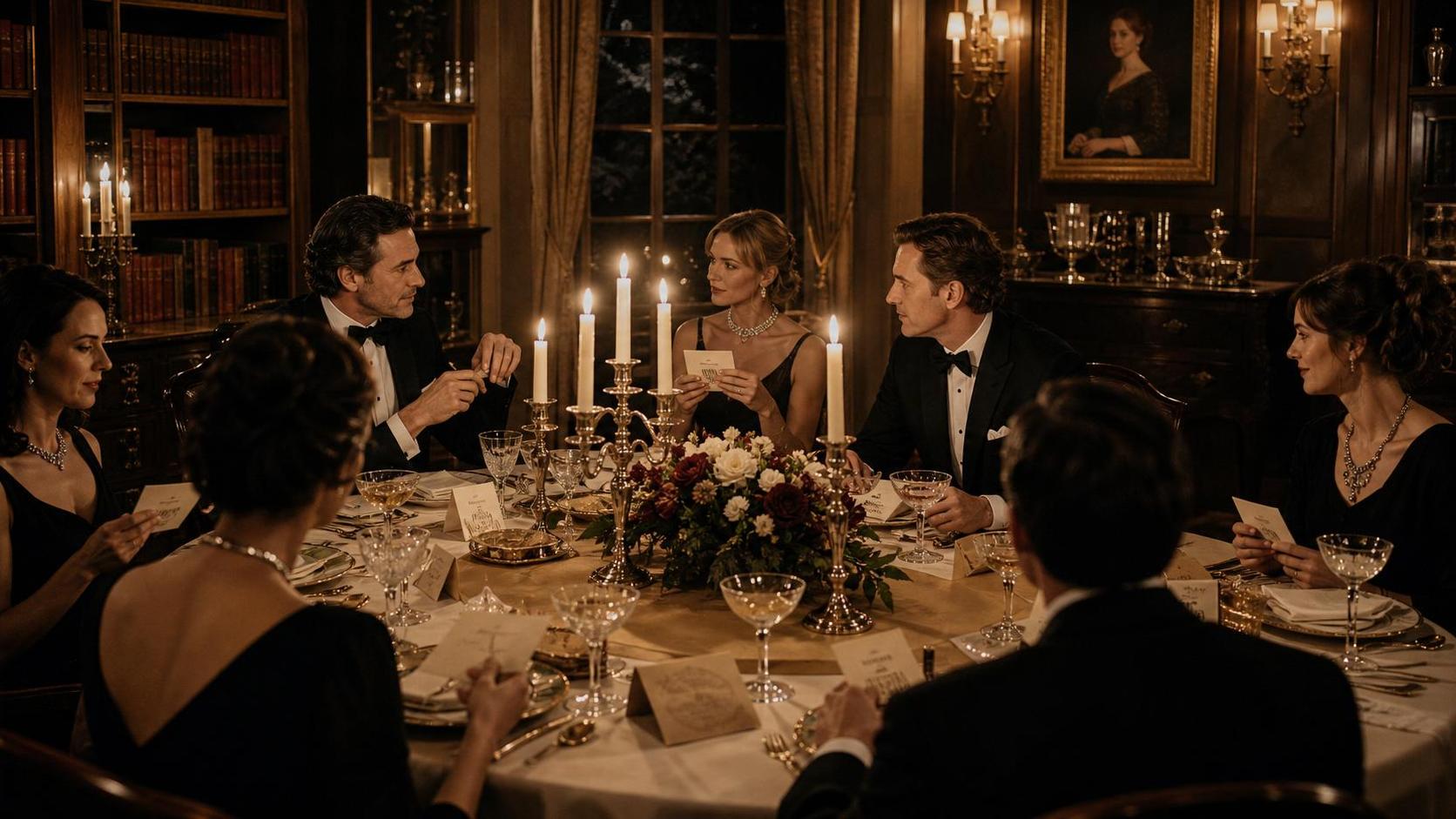
This is the most traditional option and remains popular for a reason. A wealthy host, a suspicious guest list, and a shocking death create an atmosphere that most players instantly recognize. It works particularly well for dinner parties because the elegant setting feels natural around a table. This theme also allows for a wide range of characters, from heirs and ex-lovers to business rivals and household staff.
Roaring Twenties and Speakeasy Settings
A 1920s mystery is ideal for groups that enjoy style, music, and dramatic personalities. The era offers built-in visual appeal, from flapper dresses to jazz-club décor, and supports plots involving bootlegging, corruption, and hidden identities. Because many adults already know the cultural references, they can step into the game with minimal explanation.
Hollywood, Casino, or Luxury Cruise Themes
These themes are excellent for groups that want something glamorous and playful. A Hollywood awards-night murder can feel witty and theatrical, while a casino or cruise setting introduces high stakes and shifting loyalties. These scenarios often encourage bold roleplay because the environment is already larger than life.
Matching Theme to Your Group
The best theme depends on who is playing. For close friends who enjoy humor and improvisation, a campy or exaggerated setting can be a hit. For coworkers or mixed social groups, a more neutral theme is often safer because it avoids inside jokes and reduces the risk of awkwardness. If your guests are highly analytical, choose a theme with a serious investigative tone. If they are more social than strategic, pick one that emphasizes character drama and entertaining reveals.
Consider Comfort and Accessibility
Not every adult group wants the same experience. Some prefer dark suspense, while others want light comedy. It is wise to avoid themes that rely heavily on sensitive topics unless you know the group well. Historical settings can be engaging, but they should be handled thoughtfully, especially if they involve real-world issues that may distract from the fun.
Practical Factors That Influence Theme Choice
A theme should also fit the event format. If the party is at home, a dinner-party or mansion mystery is easier to stage than a sprawling spy thriller. If guests have limited time to prepare costumes, choose a theme with flexible dress expectations. The most successful mystery parties often use themes that are easy to understand, easy to dress for, and rich in character conflict, because those elements help adults relax and participate without feeling self-conscious.
Consider Group Size and Character Balance
Choosing the right murder mystery case starts with a practical question: how many people are actually playing? Group size shapes everything from pacing and participation to how believable the story feels. A game designed for eight players can feel thin and repetitive with twelve, while a twenty-person case may leave a smaller group overwhelmed by unused roles and missing clues. For adult groups, where expectations for immersion and social interaction are often higher, matching the case to attendance is one of the most important decisions you can make.
Why Group Size Matters
Most commercially available murder mystery games are built around a specific player range, often something like 6 to 8, 8 to 12, or 12 to 20 participants. That range is not arbitrary. It reflects how many suspects, motives, and interpersonal conflicts the game can support without becoming confusing or unbalanced. If your guest count falls outside the recommended range, the mystery may lose momentum. Too few players can make the culprit easier to identify, while too many can create long stretches where some guests have little to do.
In adult gatherings, this issue becomes even more noticeable because players usually want meaningful interaction rather than passive observation. A well-sized game gives each person enough information to contribute while still preserving uncertainty. As a rule, smaller groups often work best with tighter, clue-driven plots, while larger groups benefit from broader social dynamics, hidden alliances, and more flexible role structures.
Matching the Case to Your Attendance
Before choosing a case, confirm your realistic headcount rather than your ideal one. Party hosts often invite more people than actually attend, and murder mystery games do not always adapt gracefully to last-minute absences. If you expect ten guests, selecting a game that requires exactly ten central roles may be risky. A case with adjustable or optional characters gives you more flexibility.
Core Roles vs. Optional Roles
Many strong party mysteries distinguish between essential characters and expandable roles. Core roles carry the main plot, while optional characters add texture, red herrings, or side conflicts. This structure is especially useful for adult parties where attendance can shift. If two guests cancel, the game can still function without breaking the narrative.
A practical way to evaluate a game is to check whether every role has a purpose. Balanced character design means no one should feel like an extra. Even quieter roles should have secrets, objectives, or relationships that matter to the investigation.
Character Balance and Player Experience
Character balance is not only about numbers; it is also about personality distribution, complexity, and spotlight time. In many adult groups, some players love theatrical performance, while others prefer solving puzzles or asking strategic questions. The best murder mystery games account for both styles by offering a mix of bold, dramatic roles and more analytical ones.
Balancing Energy Levels
If every character is written as loud, flirtatious, or confrontational, the game can become exhausting. If every role is reserved and clue-focused, the event may feel flat. A balanced cast includes varied energies so different personalities can engage comfortably. This matters even more in mixed groups of close friends, coworkers, or couples, where social confidence may vary widely.
Gender and Role Flexibility
Another key factor is whether characters are gender-locked or flexible. Modern murder mystery games increasingly offer adaptable roles, which makes casting easier and more inclusive. This flexibility can prevent awkward mismatches and helps hosts assign parts based on enthusiasm rather than rigid character labels. For example, a twelve-player game with six male and six female roles may be harder to cast than one with twelve interchangeable suspects.
Avoiding Common Mismatches
One common mistake is choosing a game with too many passive characters. Another is selecting a highly complex case for a casual dinner party where guests mainly want conversation and entertainment. In general, the larger the group, the simpler each individual role should be, because players have less time to track every detail. Smaller groups can usually handle denser backstories and more intricate clue webs without losing focus.
In-Person, Virtual, or Hybrid Formats
Matching the Format to Your Group
Choosing between in-person, virtual, or hybrid murder mystery formats can shape the entire experience. The best option depends on your group’s size, location, comfort with technology, and the kind of atmosphere you want to create. A lively dinner party with dramatic costumes often works best in person, while a geographically scattered group may benefit more from a virtual setup. Hybrid games, which combine on-site and remote players, can be effective for mixed groups, but they usually require more planning and stronger facilitation.
In-person games remain popular because they create natural conversation, easier improvisation, and stronger social energy. Guests can read body language, move around the room, and interact more freely with props, clues, and themed décor. This format is especially effective for milestone birthdays, dinner parties, and team-building events where immersion matters. According to event industry surveys, face-to-face gatherings still produce higher engagement rates than digital-only social events, particularly for activities built around roleplay and collaboration.
When Virtual Games Work Best
Virtual murder mystery games became significantly more common after 2020, and they continue to offer clear advantages. They are ideal for remote teams, long-distance friend groups, and families spread across different cities. Because there is no travel involved, attendance is often easier to coordinate. Virtual formats can also reduce costs tied to venue rental, food, printed materials, and decorations.
Practical Benefits of Online Play
A well-designed virtual game can still feel interactive and suspenseful. Video platforms allow hosts to use breakout rooms, private messages, and screen-shared evidence to simulate interviews and clue reveals. Some digital mystery kits even include automated character assignments, downloadable scripts, and timed clue releases. For groups that prefer convenience over theatrical staging, virtual can be the most efficient choice without sacrificing the core puzzle-solving experience.
The Challenge and Appeal of Hybrid Events
Hybrid formats aim to include both in-room and remote participants, making them useful for corporate events or reunions where not everyone can attend physically. However, they demand careful balance. If remote players cannot hear side conversations or see physical clues clearly, they may feel excluded. Strong audio, multiple cameras, and a host dedicated to managing both audiences are often essential.
Making Hybrid Feel Fair
To keep hybrid play engaging, the mystery should be structured so that all critical information is shared digitally as well as physically. For example, if one team examines a handwritten note in the room, remote players should receive a scanned version at the same time. The most successful hybrid games are designed intentionally for dual participation rather than adapted at the last minute. That distinction often determines whether the event feels seamless or frustrating.
Choosing Based on Experience Goals
If your priority is immersion, choose in-person. If convenience and accessibility matter most, virtual is often smarter. If inclusion across locations is non-negotiable, hybrid can work well with the right tools, expectations, and hosting support.
Hosted vs DIY Mystery Experiences
What Sets Them Apart
When choosing a murder mystery game for adults, one of the biggest decisions is whether to book a hosted experience or run a DIY mystery yourself. Both formats can deliver suspense, laughter, and memorable roleplay, but they differ in cost, structure, and the amount of effort required from the organizer.
A hosted mystery is typically led by a professional company, actor, or event facilitator. They guide the pacing, explain rules, manage clues, and often stay in character throughout the event. DIY experiences, by contrast, rely on a downloadable kit, boxed game, or printable script that the host manages independently. This option gives groups more control, but it also places more responsibility on the organizer.
Hosted Experiences: Convenience and Immersion
Hosted events are ideal for groups that want a polished, low-stress evening. Because a professional runs the game, guests can focus on enjoying the story instead of worrying about logistics. This format often works especially well for corporate parties, milestone birthdays, and large gatherings where smooth coordination matters.
When Hosted Makes Sense
A hosted mystery usually includes structured timing, character guidance, and built-in audience engagement. Some providers also supply props, themed décor, or live performances, which can significantly increase immersion. Prices vary widely, but professionally hosted murder mystery events often cost more per person than DIY kits, reflecting the added labor and customization.
DIY Experiences: Flexibility and Budget Control
DIY mystery games appeal to groups that want a more affordable and customizable option. Many downloadable games cost far less than hiring performers, making them attractive for smaller parties or casual game nights. A host can choose the setting, assign roles in advance, and adapt the evening to fit the group’s preferences.
Where DIY Shines
DIY formats are especially useful when your group enjoys creativity and doesn’t mind a little preparation. The host may need to print materials, explain the rules, and keep the plot moving, but that extra involvement can also make the event feel more personal. For example, a group of close friends may prefer tailoring character backstories or adding themed food and music.
Choosing Based on Your Group
The best option depends on your priorities. If you value ease, theatricality, and professional pacing, hosted is often worth the investment. If you care more about budget, flexibility, and hands-on planning, DIY may be the stronger fit. Group size, confidence with roleplay, and available prep time should all influence the decision, especially if you want every guest to stay engaged from the first clue onward.
Check Practical Details Before Buying
Match the Game to Your Group Size
Before purchasing, verify the recommended player count and compare it with your expected attendance. Many adult murder mystery games are designed for a fixed range, such as eight to ten players, while others allow flexible participation with optional characters. Buying a game that is too small can leave guests without meaningful roles, while an oversized kit may create confusion or reduce engagement. If your guest list is uncertain, choose a version with expandable character options so the experience still feels balanced.
Review Time, Setup, and Host Workload
A strong theme is important, but the practical demands of the game matter just as much. Check the estimated playtime, which often ranges from 90 minutes to three hours depending on complexity. Also look at setup requirements. Some games only require printed character sheets and clue cards, while others involve decorations, scripted hosting, or pre-assigned roles sent in advance. For a casual dinner party, a lower-prep format may be the better choice. For a milestone birthday or themed event, a more elaborate package can justify the extra effort.
Digital vs. Physical Formats
Format affects convenience and cost. Digital downloads are usually cheaper and can be purchased instantly, making them useful for last-minute planning. Physical boxed sets, however, often provide higher-quality props, invitations, and printed evidence that enhance immersion. If you are hosting remotely or coordinating guests across locations, a digital option may be more practical.
Check Content, Difficulty, and Replay Value
Not every mystery suits every audience. Review the game’s tone, age guidance, and content notes before buying. Some cases lean toward comedy, while others include darker crime themes better suited to close adult friends. Difficulty also matters. A highly intricate mystery can be rewarding for experienced players, but frustrating for beginners. Finally, consider replay value. Most murder mystery games are designed for one-time use, since the solution becomes known after play, though some hosts reuse them with entirely different groups.
Common Mistakes to Avoid
Choosing a Game That Mismatches Your Group
One of the most common mistakes is picking a case based on theme alone. A glamorous 1920s mansion setting may sound exciting, but if your group prefers fast, casual fun over deep roleplay, the experience can fall flat. The best murder mystery game is not always the most elaborate one; it is the one that matches your group’s size, attention span, and comfort level with acting in character.
Ignoring Player Experience
Groups with first-time players often struggle when hosts choose highly complex cases with layered clues, hidden motives, and extensive scripts. Many adult party game publishers recommend beginner-friendly formats for mixed-experience groups because simpler structures help players engage faster and reduce confusion. If the rules take longer to explain than the first round takes to play, the game may already be losing momentum.
Overlooking Practical Details
Another frequent error is failing to check the game’s logistics before buying. Some cases are designed for exactly eight players, while others scale from six to twenty. A mismatch in player count can weaken the story and leave some guests underused. Hosts should also confirm estimated playtime, preparation needs, and whether the game requires a dedicated moderator.
Forgetting Tone and Setting
Tone matters just as much as mechanics. A dark, serious mystery may not suit a lighthearted dinner party, while a comedy-driven case may disappoint players hoping for a true detective challenge. Paying attention to content, complexity, and atmosphere helps ensure the game feels intentional rather than awkward.
How to Make the Night More Immersive
Set the Scene Before the First Clue
A memorable murder mystery night begins long before the first accusation. Immersion depends on atmosphere, and atmosphere is built through intentional details. Lighting is one of the easiest tools to use. Warm lamps, candles, or dimmed bulbs can instantly make a living room feel like a 1920s manor, a noir nightclub, or a haunted estate. Music also matters. A carefully chosen playlist with jazz, classical suspense, or vintage party tracks helps guests settle into the setting without needing constant explanation.
Hosts can deepen the experience by preparing the space to match the case theme. A few props, such as old letters, labeled evidence bags, faux newspapers, or period-style tableware, can make the event feel more theatrical. Research in event design consistently shows that multisensory environments improve engagement because guests respond more strongly when visual and auditory cues support the story.
Encourage Guests to Play Their Roles
Costumes and character commitment transform a casual gathering into an interactive experience. Even simple additions, such as a feather boa, detective hat, or formal jacket, help players step into character. People participate more confidently when they feel visually connected to the role. If some guests are hesitant, encourage “inspired by” outfits rather than full costumes so no one feels pressured.
Use Character Briefings Effectively
Send character information in advance whenever possible. This gives players time to understand motives, relationships, and secrets. Guests who arrive prepared are more likely to improvise naturally, ask better questions, and stay involved throughout the evening. A strong briefing can also reduce awkward pauses, especially in groups where not everyone knows each other well.
Build Interaction Into the Evening
Immersion grows when guests are actively doing something rather than passively listening. Structure the night so players have opportunities to mingle, form suspicions, and reveal information gradually. Timed clue releases, private notes, or short rounds of questioning keep momentum high. In many successful party formats, new evidence appears every 20 to 30 minutes, which helps maintain attention and prevents the story from stalling.
Food and Drink as Part of the Theme
The menu can support the fiction just as much as the script. Signature cocktails, mocktails, or themed dishes make the event feel cohesive. A prohibition-era mystery might feature classic drinks, while a glamorous Hollywood case could include elegant hors d’oeuvres. Naming items after suspects or clues adds a playful layer that guests remember.
Keep the Host in Character
If the host acts as narrator, inspector, or master of ceremonies, staying in role can anchor the entire experience. Guests often mirror the energy of the host, so enthusiasm, pacing, and confidence matter. Brief announcements, dramatic clue reveals, and consistent tone help the mystery feel like a shared world rather than just a party game.
Best Types of Cases for Different Groups
Choosing the right murder mystery case depends less on difficulty alone and more on group dynamics, experience level, and the kind of evening you want to create. A case that thrills one group can overwhelm another, so matching the scenario to the players is essential for keeping everyone engaged.
Cases for First-Time Players
For beginners, the best choice is usually a straightforward case with clear motives, limited suspects, and simple clue progression. New players often enjoy stories set in familiar environments, such as a dinner party, country manor, or office gathering, because the setting is easy to understand and the character roles feel accessible. A case with six to eight suspects tends to work well, since it gives enough variety without creating confusion.
Why Simplicity Matters
First-time groups are still learning how to question suspects, track evidence, and separate red herrings from useful clues. If the plot includes too many twists or hidden mechanics, players may spend more time figuring out the rules than enjoying the mystery. A well-structured beginner case builds confidence and helps the group settle into roleplay naturally.
Cases for Small Groups
Smaller gatherings, usually between four and eight players, benefit from cases with tighter narratives and stronger character development. In these formats, every player has more speaking time, so the mystery should give each role meaningful secrets and motives. Intimate settings such as a family inheritance dispute or a private yacht murder often work especially well because they create tension without requiring a large cast.
Best Structure for Intimate Play
A small-group case should avoid relying on crowd energy. Instead, it should focus on layered relationships, personal betrayals, and clues that reward close listening. These mysteries often feel more immersive because players can follow each conversation in detail and notice subtle inconsistencies.
Cases for Large Parties
Large groups need cases designed for high interaction and broad participation. A mystery with 10 to 20 characters usually works best when set in a lively environment, such as a masquerade ball, 1920s speakeasy, or Hollywood awards night. These themes naturally encourage mingling and make it easier for guests to move between conversations.
Cases for Experienced Mystery Fans
Veteran players often want more than a simple whodunit. They tend to enjoy complex cases with multiple layers, unreliable witnesses, hidden alliances, and surprise reveals. Historical conspiracies, political scandals, and noir-inspired investigations are strong options because they demand sharper deduction and more strategic questioning.
Adding Challenge Without Frustration
For experienced groups, the ideal case introduces complexity while still remaining fair. The best mysteries provide enough evidence for players to solve the crime logically rather than relying on random twists. According to event industry surveys, themed interactive games consistently perform better when players feel their choices influence the outcome, which is why advanced groups respond well to cases with branching discoveries and deeper character objectives.
Cases for Social or Casual Gatherings
Not every group wants intense deduction. Some parties prefer a lighter, more humorous case where entertainment matters as much as solving the crime. In these settings, comedic mysteries, campy themes, and dramatic character archetypes can be the smartest choice, especially when the goal is to encourage conversation and laughter rather than strict competition.
Conclusion: Choose a Case Everyone Can Enjoy
Match the mystery to the group
Choosing the right murder mystery game for adults comes down to one central idea: fit the case to the people playing it. A well-matched game creates energy, laughter, and genuine suspense, while a poorly matched one can leave guests confused or disengaged. Group size, experience level, theme preference, and time available all matter. For example, a six-person dinner party may enjoy a character-driven case with simple rules, while a team-building event for 20 people often works better with structured clues and clear objectives.
Balance challenge, tone, and participation
The best hosts also think about difficulty and tone. Some groups love intricate puzzles and red herrings, but others prefer a lighter social experience with easy-to-follow evidence. Tone is equally important. A noir-inspired investigation may suit serious players, while a campy 1920s speakeasy mystery can help first-timers relax. According to event industry surveys, interactive experiences are most successful when participants understand their roles early and feel included throughout the activity.
Make every player part of the story
A strong case gives each guest a reason to participate. When everyone has secrets, motives, or useful information, the game feels immersive rather than passive. That is what turns a themed evening into a memorable shared experience and sets up the rest of your planning, from invitations to costumes and hosting style.
FAQ: Common Questions About Adult Murder Mystery Games
Are murder mystery games only for large parties?
Not at all. Adult murder mystery games work well for many group sizes, from intimate dinners of six to larger events with 20 or more players. Many boxed and downloadable kits are designed with flexible casting, allowing hosts to add or remove characters. For example, some popular party packs include core roles plus optional suspects, making them practical for birthdays, team socials, and holiday gatherings.
How long does a typical game last?
Most games run between 90 minutes and three hours, depending on complexity, group size, and whether food is served during play. A streamlined case with simple clues may fit into a two-hour evening, while immersive games with costumes, secret objectives, and multiple rounds often take longer. Hosts should always check the publisher’s estimated playtime before buying.
Do players need acting experience?
Confidence matters more than performance
No acting background is required. The best games are written for beginners, with character briefs, prompts, and scripted moments that help players stay involved. Guests who enjoy conversation, problem-solving, or light roleplay usually participate comfortably. Choosing a tone that matches your group is often more important than selecting the hardest mystery.
Are these games replayable?
Usually, a specific mystery is best played once because the solution becomes known. However, hosts can replay the format by purchasing new cases, expansion packs, or themed editions, keeping future game nights fresh and surprising.


