

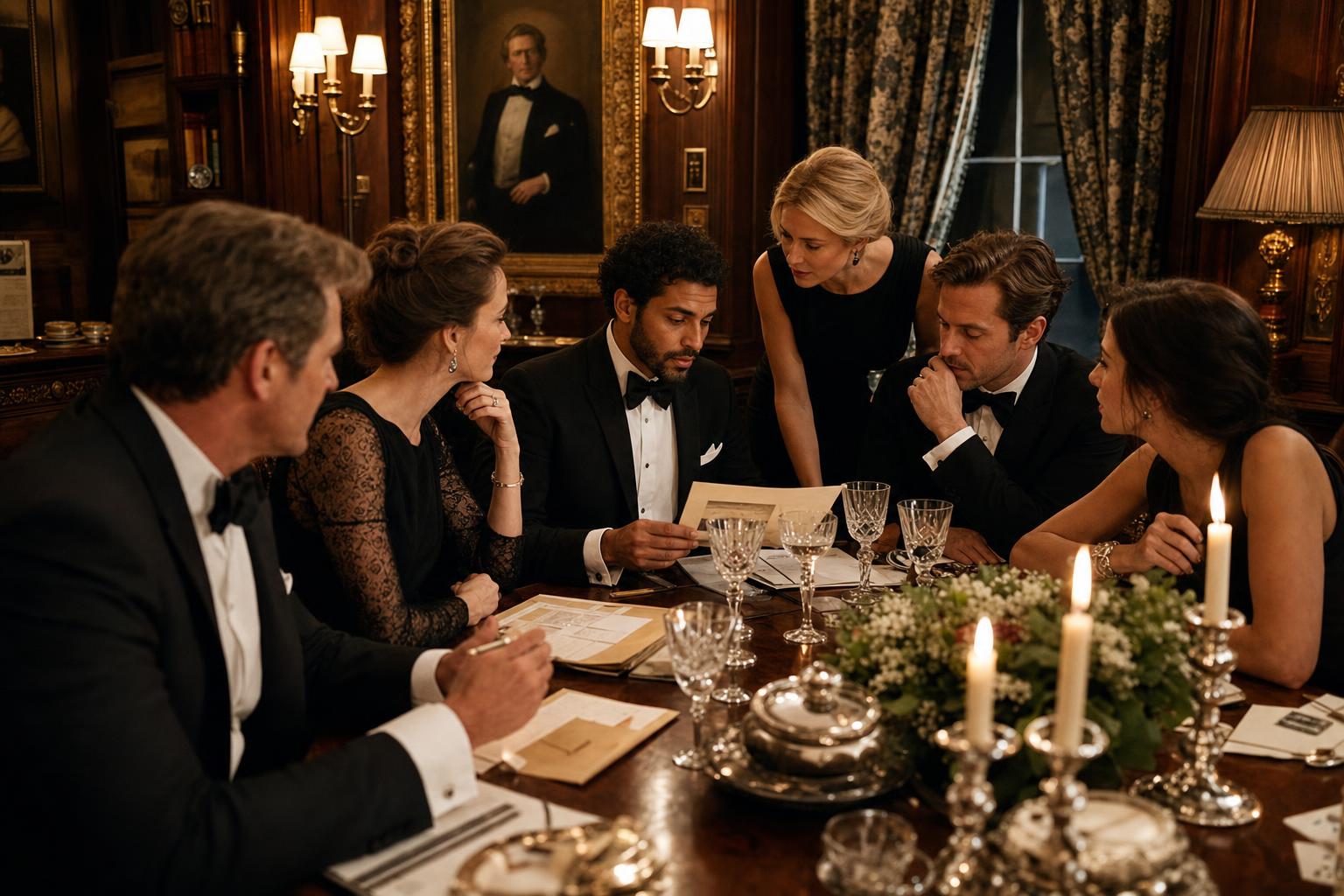
Introduction: Why Murder Mystery Works
Murder mystery games have become a standout choice for corporate events because they combine entertainment, collaboration, and problem-solving in a way few activities can match. Unlike passive social gatherings or predictable icebreakers, a mystery scenario gives every participant a reason to engage. Employees are not simply attending an event; they are stepping into a shared story where observation, communication, and quick thinking matter. That sense of involvement is exactly what makes the format so effective for team building.
A Team-Building Format with Real Interaction
Traditional corporate activities often struggle to create genuine interaction across departments or seniority levels. A murder mystery changes that dynamic almost immediately. Participants must interview one another, compare clues, test assumptions, and work toward a common solution. This naturally encourages conversation between colleagues who may rarely work together in daily operations. In many workplaces, cross-functional collaboration is essential, yet difficult to practice in a low-pressure setting. A mystery game creates that opportunity in a memorable way.
Research consistently shows that interactive experiences improve engagement and retention more than passive formats. According to studies on experiential learning, people absorb information and build stronger connections when they actively participate rather than simply observe. In a corporate setting, that means employees are more likely to remember the event and the colleagues they worked with during it.
Why the Murder Mystery Format Is So Effective
It blends logic with creativity
One reason murder mystery games work so well is that they appeal to different strengths at once. Analytical thinkers enjoy piecing together evidence, while more outgoing participants thrive during roleplay and discussion. This balance makes the activity inclusive. A well-designed game does not reward only the loudest voice in the room; it also values listening, deduction, and attention to detail.
It creates low-stakes pressure
A successful team-building event should feel exciting without becoming stressful. Murder mystery games introduce structured tension through timed reveals, hidden motives, and competing theories. That pressure is playful rather than intimidating, which helps teams practice decision-making and communication in a safe environment. Employees can experiment, speak up, and collaborate without the consequences attached to real workplace challenges.
Stronger Engagement Than Standard Event Activities
Compared with quizzes, networking mixers, or formal dinners, murder mystery games offer a clearer sense of purpose. Everyone has a role in moving the story forward, whether they are solving the case or portraying a suspicious character. This shared objective reduces awkwardness and keeps energy levels high throughout the event. It also helps introverted participants engage more comfortably because the game provides built-in conversation starters and context.
A Memorable Experience That Supports Workplace Skills
Beyond the fun, murder mystery events reinforce practical workplace abilities. Teams must share information clearly, interpret incomplete data, and avoid jumping to conclusions. These are the same skills used in project management, client communication, and strategic planning. When employees laugh together while solving a fictional crime, they are also building trust and learning how others think, respond, and contribute under pressure. That combination of fun and functional value is what makes murder mystery such a powerful fit for corporate events.
What Murder Mystery Games Are
Murder mystery games are interactive social experiences in which participants work together, compete, or do both while solving a fictional crime. In a corporate event setting, these games blend storytelling, problem-solving, and group dynamics into a structured activity that feels more like entertainment than training. Players are typically assigned characters, given background information, and asked to uncover who committed the “murder” by examining clues, questioning suspects, and piecing together motives, timelines, and evidence.
A Blend of Theater, Puzzle, and Team Exercise
At their core, murder mystery games combine elements of improvisational theater, escape-room logic, and collaborative decision-making. Each participant becomes part of the narrative, whether as a detective, witness, suspect, or hidden culprit. Unlike passive entertainment, the format requires people to listen carefully, communicate clearly, and think critically. That is one reason these games have become increasingly popular at workplace gatherings, where organizers want something more memorable than a standard dinner or presentation.
In many formats, the event unfolds in rounds. Early stages introduce the setting and characters, while later stages reveal new evidence or unexpected twists. This structure keeps energy high and encourages teams to revise assumptions as fresh information appears. The result is a game that rewards observation and adaptability, two skills that also matter in professional environments.
How the Gameplay Usually Works
Most murder mystery games begin with a fictional scenario, such as a gala gone wrong, a suspicious death at a company retreat, or a crime aboard a luxury train. Participants receive role descriptions, objectives, and sometimes secret information. As the game progresses, they interview one another, compare notes, and analyze clues provided by the host or facilitator.
Some versions are highly scripted, with clear dialogue prompts and timed reveals. Others are more open-ended, allowing players to improvise conversations and strategies. In either case, the central mechanic remains the same: gather information, identify inconsistencies, and determine the most likely culprit. A well-designed game balances challenge and accessibility, so even first-time players can contribute meaningfully.
Why They Work So Well in Corporate Settings
Murder mystery games are especially effective for corporate events because they create low-pressure interaction with a clear shared goal. Research from Gallup has repeatedly shown that employee engagement improves when people feel connected to colleagues and involved in meaningful group experiences. While a murder mystery is fictional, the collaboration it demands is real. Teams must exchange ideas, divide tasks, and persuade others using evidence rather than hierarchy.
Another advantage is inclusivity across departments and seniority levels. In a game environment, a junior employee may notice a clue others missed, while a manager may need to rely on teammates to test a theory. That temporary shift in dynamics often leads to more authentic communication and stronger rapport.
Common Formats and Event Styles
Corporate murder mystery games can be hosted in person, virtually, or in hybrid formats. Some are designed as dinner theater experiences, while others function as fast-paced tabletop investigations. Professional facilitators may guide the event, or companies may use self-hosted kits for smaller budgets. Themes can range from 1920s speakeasies to modern office scandals, allowing planners to match the tone of the event and the culture of the organization.
Because the format is flexible, it can support onboarding sessions, holiday parties, leadership retreats, and client entertainment alike.
Why They Fit Corporate Events
Corporate events succeed when they do more than fill a calendar slot. The most effective programs create shared experiences, encourage authentic interaction, and give employees a reason to engage beyond routine workplace roles. Murder mystery games fit this need especially well because they combine entertainment with structured collaboration. In a corporate setting, that blend is valuable: people are not simply watching a presentation or attending a dinner, they are actively participating in a scenario that requires communication, observation, and problem-solving.
A Natural Match for Team Building
Traditional team-building activities can sometimes feel forced, particularly when employees sense that the exercise is overly scripted or disconnected from real workplace dynamics. A murder mystery game avoids much of that resistance because it frames collaboration as part of a compelling story. Participants are motivated to contribute because they want to solve the case, uncover clues, and test their theories. The result is often higher engagement than with passive formats such as speeches, standard networking sessions, or generic icebreakers.
In practice, these games encourage people from different departments or seniority levels to interact in ways they might not during a normal workday. A finance manager may find themselves working closely with someone from marketing, operations, or HR, all while discussing evidence and motives rather than quarterly targets. That shift lowers social barriers and helps create more relaxed, productive conversations.
They Promote Core Workplace Skills
A well-designed murder mystery event is entertaining, but it also reinforces several skills companies actively want to develop. Participants must listen carefully, ask useful questions, interpret incomplete information, and present their reasoning clearly. These are the same competencies that support effective meetings, project work, and cross-functional collaboration.
Communication Under Pressure
Because the game unfolds in stages, teams often need to exchange information quickly and decide which details matter most. This mirrors real business situations where employees must process new information and respond without having every answer upfront. The game setting makes that challenge enjoyable rather than stressful, while still demonstrating the importance of clear communication.
Critical Thinking and Decision-Making
Murder mystery games rely on ambiguity. Clues can be misleading, suspects may conceal information, and early assumptions often prove wrong. That structure rewards teams that question their biases and test ideas before reaching a conclusion. For corporate groups, this is a useful reminder that strong decisions depend on evidence, not just confidence.
Inclusive and Adaptable for Different Event Types
Another reason these games fit corporate events is their flexibility. They can be tailored for small leadership retreats, large holiday parties, client appreciation evenings, or hybrid team gatherings. Some formats are highly theatrical, with actors and costumes, while others are streamlined for conference rooms or virtual platforms. This adaptability makes them suitable for organizations with different budgets, cultures, and event goals.
According to event industry reporting, interactive experiences have become increasingly popular because attendees remember them more vividly than passive programming. That matters for employers investing in morale, retention, and culture. An event people talk about afterward often delivers more lasting value than one they forget by the next week.
Stronger Engagement Than Passive Entertainment
Many corporate events include entertainment, but not all entertainment creates connection. A live band or keynote speaker may be enjoyable, yet employees remain largely observers. In a murder mystery game, they become part of the action. That distinction is important because active participation tends to improve memory, enjoyment, and social bonding.
Memorable Shared Experiences
When teams debate suspects, laugh over false leads, or discover a surprising twist, they create stories they will reference later in the office. Those moments can strengthen workplace relationships long after the event ends. Shared memories are a meaningful part of company culture, especially in organizations trying to unite remote, hybrid, or newly merged teams.
Low-Risk, High-Reward Interaction
For many employees, especially introverts, traditional networking can feel awkward. A murder mystery gives people a built-in topic and a reason to speak. Instead of making small talk, they can discuss clues, alibis, and theories. That structure makes interaction feel more natural and often leads to broader participation across the group.
They Balance Fun With Professional Value
Corporate planners often need activities that feel enjoyable without seeming frivolous. Murder mystery games strike that balance well. They are playful, but they also have a clear purpose: fostering teamwork, communication, and engagement. When facilitated effectively, they can align with company objectives while still feeling like a genuine reward for attendees.
For organizations seeking an event format that is immersive, social, and practical, murder mystery games offer a rare combination of entertainment and measurable team-building value. That is why they continue to stand out in the corporate events space, particularly for companies that want employees to connect in a way that feels fresh, collaborative, and genuinely memorable.
Team Building Benefits
Why shared experiences matter at work
Strong teams are rarely built through org charts alone. They develop through shared experiences that create trust, improve communication, and help people understand how colleagues think under pressure. In corporate settings, team building is most effective when it feels purposeful rather than forced, which is why interactive formats such as murder mystery games have gained traction. They combine collaboration, problem-solving, and social engagement in a way that mirrors real workplace dynamics without the pressure of a formal meeting room.
Research consistently shows that connected teams perform better. Gallup has reported that highly engaged teams can see 23% higher profitability and significantly lower absenteeism than disengaged groups. While engagement depends on many factors, structured team experiences play an important role because they create opportunities for people to participate, contribute, and be recognized outside their routine responsibilities. A finance manager may reveal sharp investigative instincts, while a quiet analyst may emerge as the person who keeps the group organized and focused.
Communication improves in practical ways
One of the clearest benefits of team building is better communication. In many workplaces, communication problems are not caused by a lack of intelligence or effort, but by assumptions, silos, and unclear expectations. Activities that require teams to exchange clues, compare interpretations, and challenge ideas encourage employees to communicate more deliberately. They learn to listen for detail, ask better questions, and explain their reasoning more clearly.
From passive updates to active dialogue
A murder mystery format is especially useful because it turns communication into an active necessity. Participants cannot solve the scenario by waiting for instructions; they must engage with one another, test theories, and share information quickly. This creates a more natural environment for dialogue than a traditional workshop. Employees practice speaking up, but they also practice listening with intent, which is often the more valuable skill in collaborative work.
These improvements can transfer back to the office. Teams that have experienced fast-paced, interactive problem-solving together often become more comfortable voicing ideas in meetings, clarifying misunderstandings early, and checking assumptions before projects go off track.
Trust and psychological safety get stronger
Trust is essential for effective teamwork, yet it is difficult to build through email threads and status calls alone. Team building activities help by giving employees a low-risk environment in which to rely on one another. When people contribute ideas, make guesses, and occasionally get things wrong without embarrassment, they begin to experience psychological safety, the sense that participation is welcomed rather than punished.
This matters because psychological safety is strongly linked to innovation and learning. Teams that feel safe are more likely to ask questions, admit uncertainty, and suggest unconventional solutions. In a murder mystery game, no one has all the answers at the start, so the structure naturally rewards curiosity and collaboration over hierarchy. That can be particularly valuable in organizations where junior employees may hesitate to challenge senior voices during normal operations.
Problem-solving becomes more collaborative
Many team building exercises claim to develop problem-solving, but immersive games make that benefit tangible. Participants must gather evidence, identify patterns, and decide which details matter. These are the same cognitive habits used in project planning, risk assessment, and strategic decision-making. The difference is that the game setting makes the process memorable and enjoyable.
Different strengths become visible
A well-designed team activity reveals that effective problem-solving is rarely about one brilliant individual. Instead, it depends on combining different strengths. One person may notice inconsistencies, another may keep track of timelines, and someone else may read social cues well enough to spot deception. Seeing these complementary skills in action helps colleagues appreciate one another more deeply. That appreciation can improve how work is delegated later, because managers and peers gain a clearer sense of who excels in analysis, facilitation, creativity, or coordination.
Morale, belonging, and retention
Team building also supports morale. Employees who feel connected to coworkers are more likely to enjoy coming to work and less likely to feel isolated. This is especially important in hybrid and distributed organizations, where informal relationship-building happens less often. A shared event gives people something to talk about afterward, creating stories and references that strengthen workplace culture.
There is also a business case for this social connection. Replacing employees is expensive, with many estimates placing the cost of turnover at one-half to two times an employee’s annual salary, depending on the role. While no single event will solve retention challenges, experiences that reinforce belonging can contribute to a workplace people are less eager to leave. When employees feel seen as people rather than just job titles, loyalty tends to grow.
Team building with measurable organizational value
The strongest argument for team building is that it delivers both human and operational benefits. Better communication can reduce costly errors. Greater trust can speed up decision-making. Stronger relationships can improve cross-functional cooperation. Even morale has practical value, because energized teams are often more resilient during busy periods or organizational change.
Why interactive formats stand out
Not all team building produces the same results. Passive entertainment may be enjoyable, but interactive experiences create more lasting impact because they require participation. Murder mystery games stand out by blending fun with meaningful collaboration. They give teams a reason to think together, laugh together, and solve something together, which makes the benefits feel immediate rather than theoretical. That combination is what turns a corporate event from a pleasant distraction into a genuinely useful investment in team performance.
How the Game Format Works
Setting the Stage
A corporate murder mystery game is designed to feel immersive without becoming confusing. At its core, the format combines structured gameplay, guided social interaction, and collaborative problem-solving. Most sessions begin with a host introducing the fictional scenario, the setting, and the central crime. This opening usually takes 10 to 20 minutes, giving participants enough context to step into the story while keeping the pace lively.
The game is typically built around a cast of characters, each with motives, secrets, and relationships tied to the case. In a corporate event setting, these roles may be assigned in advance or distributed on arrival. Some formats make every attendee an active suspect, while others divide participants into investigators, witnesses, and key characters. This flexibility makes the experience suitable for groups ranging from small leadership teams to departments of 100 or more.
The Core Gameplay Loop
Once the premise is established, the event moves into a series of interactive rounds. These rounds are the engine of the experience, allowing players to gather clues, question one another, and test theories. A well-run game usually alternates between host-led reveals and open discussion, which helps maintain momentum and prevents quieter participants from being left out.
Clue Gathering and Character Interaction
During each round, players receive new information in the form of written clues, witness statements, hidden objectives, or physical evidence. For example, one participant may learn that they saw the victim arguing with a colleague, while another may be instructed to conceal a financial motive until later in the game. This creates a dynamic where information is intentionally incomplete, encouraging conversation and negotiation.
In many corporate formats, teams are asked to compare notes and decide what matters most. This mirrors real workplace collaboration, where individuals often hold different pieces of a larger puzzle. Research on team-building activities has shown that shared problem-solving can improve communication and trust, particularly when participants must work under light time pressure.
Timed Rounds and Escalating Revelations
Most murder mystery games use timed segments, often lasting 15 to 30 minutes each. As the game progresses, the host introduces twists such as a second crime, a surprise confession, or newly uncovered evidence. These moments keep engagement high and stop the experience from becoming predictable. Escalation is essential, because it rewards attention and keeps teams actively revising their assumptions.
How Teams Win
The objective is not always simply to name the killer. In many corporate versions, teams earn points for identifying motives, reconstructing timelines, spotting inconsistencies, or completing side challenges tied to the story. This broader scoring system ensures that success depends on critical thinking and teamwork, not just luck.
Role of the Host or Facilitator
A skilled facilitator keeps the event organized, explains rules clearly, and manages pacing. They also help balance entertainment with inclusion, making sure dominant personalities do not control every exchange. In professional event formats, the host may adapt the difficulty level based on group size, seniority mix, or available time, which is one reason these games work well in conference agendas and off-site retreats.
Adapting the Format for Corporate Events
The strongest corporate murder mystery games are tailored to business audiences. Themes can be formal, comedic, or industry-specific, and the format can be delivered in person, virtually, or in hybrid settings. A typical event lasts between 60 and 150 minutes, making it long enough to feel substantial but short enough to fit into a broader program. Because the structure blends storytelling with collaboration, participants stay engaged while practicing observation, communication, and decision-making in a memorable setting.
Planning a Successful Event
Planning a corporate murder mystery event requires more than booking a room and sending invitations. To create an experience that feels immersive, collaborative, and worthwhile, organizers need a clear strategy that balances entertainment with business goals. A well-planned event can strengthen communication, improve morale, and increase participation, especially when employees feel the activity has been tailored to their group rather than treated as a generic add-on.
Start with Clear Objectives
Every successful event begins by defining what success looks like. For some companies, the goal is to improve cross-department collaboration. For others, it may be to reward staff, energize a conference agenda, or provide a memorable client-facing experience. Establishing these priorities early helps shape every later decision, from venue size to game format.
Corporate team-building research consistently shows that shared problem-solving activities can improve workplace relationships when they are intentional and inclusive. A murder mystery game works particularly well because it combines storytelling, cooperation, and light competition. When the objective is clear, the event feels purposeful rather than gimmicky, which increases buy-in from both leadership and participants.
Know Your Audience
A successful event must fit the people attending it. Consider the group’s size, seniority mix, cultural background, and comfort level with roleplay. A team of twenty executives may prefer a polished dinner-theater format, while a company-wide gathering of two hundred employees may need a more flexible, facilitated structure with shorter rounds and simpler character assignments.
Matching the Format to the Group
The best murder mystery events are designed around participant energy and expectations. If attendees are outgoing and familiar with one another, interactive character-driven gameplay can be highly effective. If the group is more reserved, a host-led mystery with guided clues may generate stronger engagement. Accessibility matters as much as creativity, so planners should also account for dietary needs, mobility considerations, language clarity, and scheduling constraints.
Choose the Right Venue and Timing
Venue selection has a direct impact on atmosphere and logistics. Murder mystery games thrive in spaces that support movement, conversation, and themed presentation. Private dining rooms, hotel function spaces, and office event areas can all work well if they allow participants to hear instructions clearly and interact without excessive crowding. As a rule, banquet-style seating often supports discussion better than theater-style rows.
Timing is equally important. Most corporate events run more smoothly when the mystery is integrated into a broader schedule rather than treated as an afterthought. For example, a 90-minute game may fit neatly between a networking reception and dinner service, while a half-day event may include icebreakers, the mystery itself, and an awards segment. Industry event planners often recommend building in a 10% to 15% time buffer for transitions, late arrivals, and technical adjustments.
Build a Realistic Budget
A polished event does not always require a lavish budget, but it does require thoughtful allocation. Costs typically include venue rental, catering, entertainment provider fees, props, audiovisual support, printed materials, and staffing. If the event is hybrid or virtual, budget considerations may shift toward digital hosting platforms, shipping character kits, or technical moderation.
Where Budget Has the Biggest Impact
The areas that most influence attendee experience are facilitation quality, food and beverage, and production value. A talented host can keep the energy high and ensure everyone understands the rules, which is essential for participation. Likewise, small thematic details such as custom invitations, suspect boards, or branded evidence cards can make the event feel distinctive without dramatically increasing costs. Spending strategically often delivers better results than simply spending more.
Coordinate Communication and Logistics
Strong communication before the event reduces confusion and raises excitement. Invitations should explain the purpose of the event, the schedule, dress expectations, and whether guests will receive character roles in advance. If the mystery includes costumes or scripted elements, participants need enough notice to prepare comfortably.
On the operational side, planners should confirm room setup, registration flow, sound equipment, lighting, and any presentation needs. A simple logistics table can help align stakeholders and vendors.
| Element | Key Question | Why It Matters |
|---|---|---|
| Guest list | Who is attending? | Determines format, seating, and materials |
| Agenda | When does each segment begin? | Prevents delays and overlap |
| AV setup | Are microphones and speakers tested? | Ensures instructions are heard clearly |
| Catering | When is food served? | Affects pacing and guest attention |
| Facilitation | Who leads the game? | Keeps the experience organized |
Prepare for Engagement, Not Just Attendance
Attendance alone does not guarantee success. The real measure is whether people participate, interact, and leave with a positive impression. Encourage engagement by assigning mixed teams, giving clear instructions, and creating low-pressure ways for everyone to contribute. Some employees will eagerly perform in character, while others may prefer solving clues quietly with colleagues. A good event design accommodates both styles.
Creating Momentum During the Experience
Pacing is critical in interactive events. Early moments should be simple and welcoming, helping participants understand the premise quickly. Mid-event reveals, timed clue drops, and short facilitated check-ins keep energy from dipping. Recognition also helps; small prizes for best detective, best performance, or best costume can increase enthusiasm without overshadowing the team-building purpose.
Measure Results and Capture Feedback
Post-event evaluation helps determine whether the experience met its goals and provides insight for future planning. Feedback can be collected through short surveys, manager observations, or informal team discussions. Useful questions include whether the event encouraged collaboration, whether the format was easy to follow, and what participants enjoyed most.
For organizations investing in culture-building initiatives, this step is especially valuable. Events that are measured can be improved, repeated, and aligned more closely with broader employee engagement strategies. Even simple metrics such as participation rate, satisfaction score, and post-event social sharing can reveal whether the event created the intended impact.
In-Person vs Virtual Formats
Choosing the Right Experience for Your Team
When planning murder mystery games for corporate events, one of the biggest decisions is whether to run the experience in person or virtually. Both formats can deliver strong team-building value, but they create different dynamics, logistical demands, and levels of immersion. The best choice depends on your team’s size, location, goals, and comfort with technology.
In-person events often feel more theatrical and immediate. Participants can read body language, move around the room, and engage in spontaneous side conversations that make the mystery feel alive. This format is especially effective for companies that want to energize an offsite, holiday party, or leadership retreat. According to workplace collaboration research, face-to-face interaction tends to strengthen trust faster because people process nonverbal cues more easily, which can improve cooperation during problem-solving activities like clue analysis and suspect interviews.
Strengths of In-Person Events
An in-person murder mystery usually offers the highest level of immersion. Costumes, props, themed décor, and live performances can turn a standard corporate gathering into a memorable shared experience. Teams often become more invested when they can physically examine evidence, question actors, and react together in real time. That sense of presence can lead to stronger emotional engagement, which helps employees remember the event long after it ends.
Practical Considerations
However, in-person formats require more coordination. Venue size, seating layout, catering schedules, travel costs, and timing all affect the flow of the game. For distributed companies, bringing everyone together may significantly increase the budget. There is also less flexibility for employees in different time zones or with accessibility needs that are easier to accommodate online.
Why Virtual Formats Work
Virtual murder mystery games became especially popular as remote and hybrid work expanded. They allow teams across cities, countries, or continents to participate without travel, making them a practical option for global organizations. A virtual event can still be highly interactive when designed well, using breakout rooms, digital clue packets, live hosts, and collaborative chat features.
For many companies, the biggest advantage is accessibility. Employees can join from home, and organizers can often schedule shorter sessions that fit more easily into the workday. Virtual formats also scale efficiently. A company with 50 or even 500 employees may find online delivery more cost-effective than reserving a large venue and managing on-site logistics.
Engagement Challenges Online
The main drawback is that virtual events can feel less immersive if the format is too passive. Screen fatigue is real, and attention spans may drop if participants spend too much time listening instead of interacting. To keep energy high, the best virtual murder mysteries include frequent role assignments, timed clue reveals, and small-group collaboration. Strong facilitation matters even more online because the host must actively maintain momentum.
Matching Format to Event Goals
If the goal is deep relationship building, celebration, and a high-impact shared memory, in-person is often the stronger option. If the priority is inclusion, convenience, and cross-location participation, virtual may deliver better results. Some companies even choose a hybrid approach, combining live hosts with digital participation tools to connect office-based and remote employees in one experience.
The most successful format is not simply the most dramatic one. It is the one that aligns with how your team works, communicates, and connects under pressure.
Custom Themes and Branding
One reason murder mystery games work so well for corporate events is their flexibility. A standard detective storyline can be entertaining, but a customized experience feels far more memorable because it reflects the company’s identity, culture, and event goals. When organizers tailor the game’s setting, characters, and visual elements, the activity becomes more than a party game; it becomes a branded team-building experience that supports engagement and recognition at the same time.
Why Customization Matters
Corporate audiences respond strongly to events that feel designed specifically for them. A generic 1920s whodunit may be fun, yet a mystery built around a company conference, product launch, or annual awards dinner creates immediate relevance. Employees are more likely to participate when they recognize inside jokes, familiar department dynamics, or references to company milestones. This sense of ownership can increase involvement, especially among attendees who might otherwise stay on the sidelines during interactive activities.
Customization also helps align the event with business objectives. For example, a company focused on collaboration can create a plot where solving the case requires cross-department communication. A sales organization might frame the mystery around a high-stakes client gala, while a technology firm could set the story inside a fictional innovation lab. In each case, the narrative reinforces the broader purpose of the gathering.
Branding Opportunities Within the Game
Branding can be woven into a murder mystery event without making it feel overly promotional. The most effective approach is subtle integration that enhances immersion rather than distracting from it. Event planners often adapt invitations, suspect dossiers, signage, digital assets, and props to match company colors, logos, and messaging. Even character names or fictional organizations within the plot can echo the brand voice.
Practical Examples of Branded Elements
A customized game might include a welcome letter from the “CEO” of a fictional company modeled after the client’s business, or evidence files designed in the same style as internal corporate communications. Name badges, table cards, and presentation slides can all reinforce visual consistency. According to event industry surveys, immersive personalization is one of the strongest drivers of attendee satisfaction, with many planners reporting higher engagement when experiences feel exclusive and tailored.
Balancing Creativity and Professionalism
The best custom themes strike a balance between entertainment and workplace appropriateness. While dramatic twists and humorous character roles add energy, the content should still respect company values, diversity, and audience comfort levels. A well-designed corporate mystery avoids stereotypes and instead uses clever storytelling, collaborative clues, and polished production to create excitement.
Matching Theme to Audience
For executive retreats, a sophisticated black-tie mystery may be ideal. For holiday parties, a lighter and more comedic storyline often works better. Industry-specific themes, such as healthcare, finance, or hospitality, can make the experience even more relevant, helping participants feel that the event was created with genuine care and strategic intent.
Facilitation and Guest Experience
Why facilitation shapes the event
A murder mystery game can only deliver strong team-building results when the facilitation is confident, clear, and responsive. In a corporate setting, guests arrive with different comfort levels, personalities, and expectations, so the host must quickly create structure without draining the fun. Good facilitation keeps the pace moving, explains rules in simple language, and ensures every participant understands their role in the unfolding story.
Professional facilitators also help translate entertainment into business value. Research from Gallup has consistently shown that engaged teams perform better, and interactive formats like mystery games encourage communication, listening, and collaborative problem-solving. When the host actively guides discussions, prompts quieter players, and manages dominant personalities, the experience becomes more inclusive and productive.
Designing a seamless guest journey
The guest experience begins before the first clue appears. Clear invitations, pre-event character details, and practical information about timing, dress code, and participation level reduce uncertainty and build anticipation. For corporate groups, this preparation matters because attendees often balance networking, socializing, and team interaction all at once.
Creating comfort and momentum
Once the event starts, guests should feel immersed rather than confused. A strong facilitator opens with a compelling briefing, introduces the scenario, and sets expectations for how teams will investigate, question suspects, and share discoveries. This early clarity is especially important in mixed groups where some participants may love roleplay while others prefer observation and analysis.
Momentum depends on timing. If clue releases are too slow, energy drops; if they come too quickly, guests can feel rushed. Skilled hosts read the room and adjust accordingly, giving teams enough time to debate theories while keeping the narrative tight. This balance is what turns a novelty activity into a memorable corporate experience.
Inclusion, energy, and interaction
A successful murder mystery is not just about solving the crime; it is about making sure every guest feels involved. Facilitators can encourage participation by assigning varied tasks, from interviewing characters to organizing evidence or presenting final accusations. This creates multiple entry points for different working styles and confidence levels.
For example, analytical employees may thrive when examining timelines, while more outgoing guests may enjoy interrogations and dramatic reveals. By recognizing these differences, the host helps the event feel personalized rather than one-size-fits-all. The result is a smoother atmosphere, stronger peer interaction, and an experience guests are far more likely to remember, discuss, and associate with positive team connection.
Common Challenges to Avoid
Balancing Complexity and Accessibility
A murder mystery game can energize a corporate event, but overcomplicating the experience is one of the most common mistakes. If the plot includes too many characters, tangled motives, or dense rule explanations, participants may disengage. In workplace settings, groups often include a mix of personalities, from highly outgoing employees to quieter team members, so the format should be easy to follow within the first 10 to 15 minutes. A well-designed game gives enough intrigue to spark collaboration without making players feel lost.
Keeping Everyone Involved
Another challenge is allowing a few dominant personalities to control the investigation. When only the loudest participants drive the discussion, the team-building value drops significantly. Strong facilitation helps ensure that every attendee has a role, whether through assigned clues, rotating speaking opportunities, or smaller breakout teams. This matters because employee engagement is closely tied to participation; Gallup research has repeatedly shown that involved employees contribute more effectively in group environments.
Matching the Theme to Company Culture
Not every organization will respond well to the same tone. A highly theatrical or dark storyline may feel exciting for one company but uncomfortable for another. The key is choosing a mystery style that aligns with the audience, event goals, and workplace culture. For example, a playful “whodunit” set at a gala dinner may suit a sales team, while a lighter detective scenario may be better for a mixed executive group.
Avoiding Logistical Missteps
Practical issues can also undermine the event. Poor audio, unclear instructions, or a venue with limited movement space can disrupt immersion. Timing is especially critical; most successful corporate mystery sessions run between 60 and 120 minutes, giving teams enough time to engage without fatigue setting in.
Conclusion: Team Building with Impact
Turning Entertainment into Measurable Value
Murder mystery games offer more than a memorable corporate event; they create a practical environment for collaboration, communication, and problem-solving. As teams analyze clues, question assumptions, and work toward a shared outcome, they practice skills that directly support workplace performance. Research consistently shows that engaged teams are more productive, and interactive experiences can strengthen that engagement in meaningful ways.
A Lasting Takeaway for Corporate Culture
When planned thoughtfully, these events blend fun with purpose, helping employees connect across departments and roles. For organizations seeking fresh, effective team-building ideas, murder mystery experiences deliver energy, insight, and lasting impact.
FAQ: Murder Mystery Events
What happens at a corporate murder mystery event?
A corporate murder mystery event is an interactive team-building experience where employees play suspects, investigators, or witnesses in a fictional crime. Guided by facilitators, participants gather clues, question one another, and solve the case together. Events typically last 90 minutes to three hours, making them suitable for conferences, retreats, and holiday parties.
Are murder mystery games good for team building?
Yes. These events encourage communication, collaboration, and creative problem-solving in a low-pressure setting. Because success depends on sharing information and interpreting evidence, teams naturally practice skills that transfer to workplace projects.
Can they be customized?
Most providers can tailor themes, difficulty, and scripts to match company size, culture, and event goals.


