

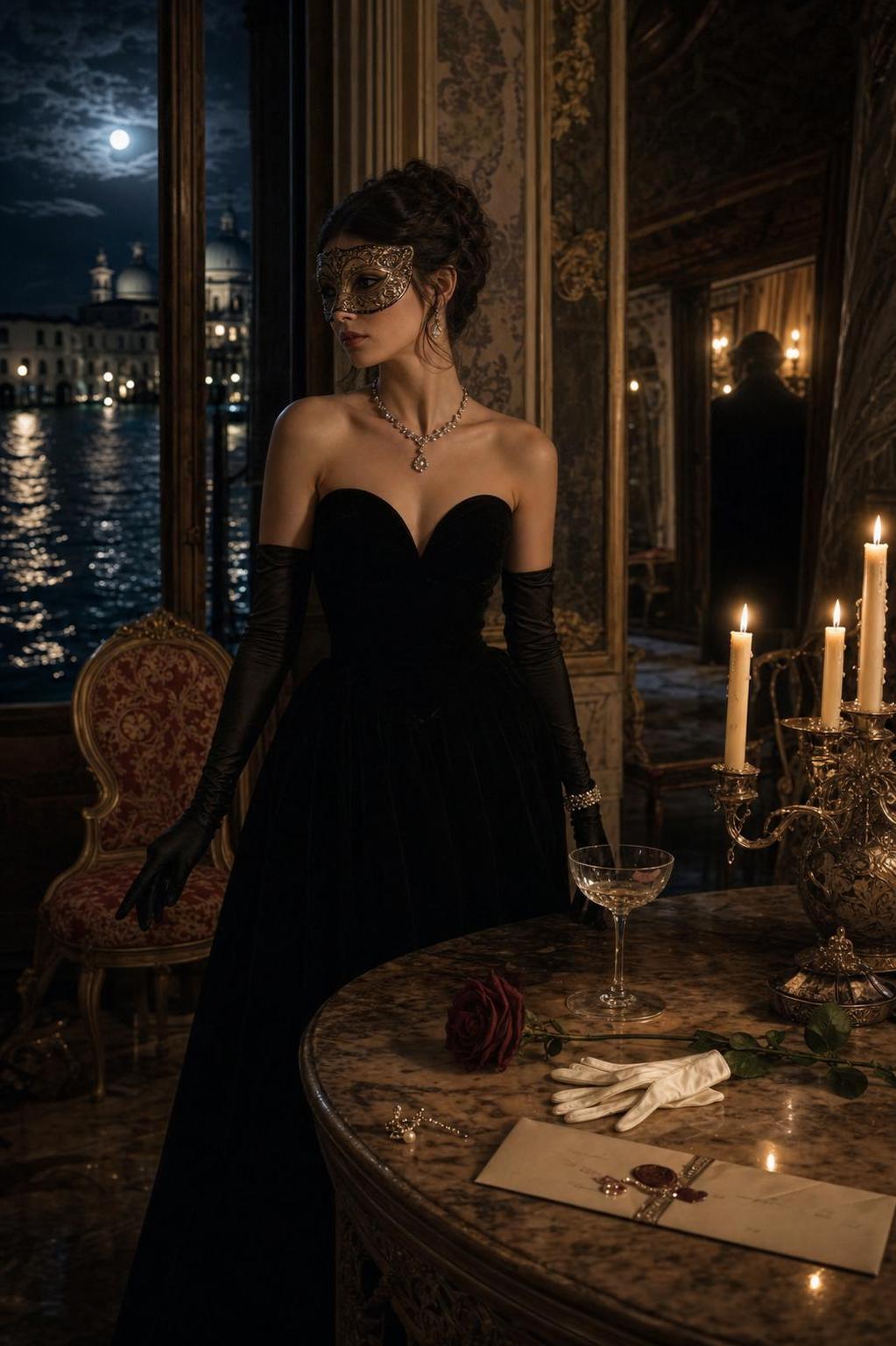
Introduction to the Mystery
Venice is a city that seems designed for intrigue. Built on more than 100 small islands and threaded together by canals, bridges, and narrow passageways, it has long inspired stories of hidden identities, whispered conspiracies, and crimes concealed behind beauty. In a tale titled “Murder Mystery in Venice: Masquerade, Secrets and Murder,” the setting is more than decorative background. Venice itself becomes an active force, shaping suspicion, movement, and deception at every turn.
A City Made for Secrets
Few places in the world carry the same atmosphere as Venice after dark. The city’s historic center, with its Gothic palaces, dimly lit alleys, and echoing waterways, creates a natural stage for mystery. Unlike modern cities built on broad roads and open visibility, Venice encourages concealment. A person can disappear around a corner, cross a small bridge, or slip into a private courtyard in seconds. This physical design gives any murder investigation an immediate layer of complexity.
The city’s long association with masks deepens that sense of uncertainty. During the famous Carnival of Venice, masks were historically used not only for celebration but also for anonymity, allowing nobles and commoners to mingle without social boundaries. That tradition makes the masquerade an ideal symbol in this story: appearances cannot be trusted, and every face may hide another truth.
The Masquerade as a Perfect Cover
A masquerade ball introduces glamour, but it also creates the perfect conditions for crime. In a crowded room filled with costumes, altered voices, and shifting identities, witnesses become unreliable. A suspect may be remembered only by the color of a cloak or the shape of a mask. Even close acquaintances may fail to recognize one another. This uncertainty raises the stakes from the opening moments of the mystery.
Why Masks Matter
Masks are powerful because they conceal more than physical features. They also free characters to act differently, speak more boldly, and pursue hidden motives. In fiction, a masked gathering often reveals the tension between public image and private desire. Jealousy, ambition, betrayal, and revenge can move unnoticed beneath music and candlelight, making the eventual murder feel both shocking and inevitable.
Secrets Beneath the Surface
Every strong murder mystery depends on concealed relationships, and Venice provides fertile ground for them. Behind elegant façades may lie financial ruin, political scandal, forbidden romance, or family conflict. The city’s mercantile history, once tied to trade routes stretching across the Mediterranean, suggests wealth and influence, but also rivalry and corruption. In such an environment, the victim’s death is rarely an isolated act. It is usually the visible result of pressures that have been building in silence.
The Reader’s First Questions
From the beginning, the mystery invites urgent questions. Who was the victim beneath the glitter of the evening? Who benefited from the death? Which guest arrived wearing a disguise, and which one was hiding something far more dangerous than identity? In Venice, where beauty and menace exist side by side, the search for answers begins with a simple realization: everyone has a mask, even without wearing one.
Venice as a Gothic Stage
A City Built for Shadows
Venice has long provided writers and filmmakers with a setting that feels inherently theatrical, secretive, and unstable, making it an ideal Gothic stage. Unlike many European cities shaped by broad avenues and defensive walls, Venice rises from a lagoon in a maze of canals, bridges, narrow passages, and enclosed courtyards. This geography creates a sense of disorientation that is central to Gothic storytelling. Characters can be watched from windows, followed through alleys, or cut off by water, all without the city ever needing to invent artificial suspense.
The city’s physical fabric deepens that effect. Venice contains more than 100 islands linked by hundreds of bridges, and its historic center developed vertically as much as horizontally, with looming palazzi, hidden staircases, and decaying facades. In Gothic fiction, architecture often acts as a psychological mirror, and Venice excels at this. Its peeling walls, damp stone, and fading grandeur suggest lives built on old wealth, old sins, and old secrets. A murder mystery set here immediately inherits an atmosphere of beauty touched by rot, which is one of the genre’s most powerful visual and emotional contrasts.
Water, Silence, and Unease
The Lagoon as a Living Presence
Water changes the rules of fear in Venice. In most cities, danger arrives through footsteps, engines, or crowds. In Venice, it can glide silently. Gondolas, water taxis, and small boats move with an eerie softness, while fog over the lagoon can erase distance and direction in moments. This gives the city a dreamlike quality, but also a threatening one. In Gothic tradition, landscapes are rarely passive backgrounds; they seem to observe, trap, or distort human action. Venice’s waters do exactly that.
High water, or acqua alta, adds another layer of vulnerability. Seasonal flooding has historically transformed streets into reflective surfaces and made familiar routes uncertain. Even when not central to the plot, the possibility of rising water suggests instability beneath everyday life. That tension between elegance and exposure is essential to the Gothic mood.
Masquerade and Hidden Identity
Venice is inseparable from the image of the mask, and that symbolism is especially potent in a murder mystery. The Venetian Carnival, whose roots stretch back to the medieval period and flourished during the Republic’s height, allowed participants to obscure class, gender, and intention. In narrative terms, the mask becomes more than costume. It represents duplicity, performance, and moral concealment.
A Gothic setting thrives when identity is uncertain. In Venice, disguise feels culturally embedded rather than artificially imposed. A masked figure at a candlelit gathering does not seem out of place; instead, it feels historically and emotionally correct. This makes every glance suspect and every conversation layered. The city itself appears complicit in deception, encouraging secrets to survive behind silk, velvet, and ritual.
Decadence, Religion, and Decay
Splendor with a Dark Underside
Venice offers a rare combination of sacred imagery and worldly excess. Churches glitter with mosaics, palaces display mercantile wealth, and art celebrates both devotion and spectacle. Gothic narratives often draw power from this collision between holiness and corruption. In Venice, that contrast is visible everywhere. A serene chapel may stand only steps from a crumbling canal entrance; a noble residence may conceal financial ruin, scandal, or violence behind ornate doors.
This duality has historical grounding. By the early modern era, Venice was one of Europe’s richest trading powers, but its political and economic dominance gradually declined. The result was a city marked by lingering magnificence and visible deterioration. For storytellers, that is invaluable. It suggests a society preserving appearances while something darker festers underneath.
Why Venice Intensifies Murder Mystery
A murder mystery depends on motive, secrecy, and controlled revelation, and Venice naturally amplifies all three. Its enclosed spaces make encounters feel intimate, while its labyrinthine layout supports surveillance, misdirection, and escape. Sound behaves differently over water and stone, allowing whispers, echoes, and sudden silences to carry dramatic weight. Even light contributes to the effect, whether from chandeliers reflected in canals or dim lantern glow on wet pavement.
Most importantly, Venice turns atmosphere into evidence. The setting does not merely decorate the crime; it shapes how characters lie, fear, and remember. In a story of masquerade, secrets, and murder, the city functions almost like another suspect—seductive, elusive, and impossible to fully know.
The Masquerade Tradition
Origins in Venetian Society
The masquerade tradition is inseparable from Venice’s identity, blending spectacle, anonymity, and social freedom into one of Europe’s most enduring cultural symbols. Masks in Venice were not merely decorative accessories; they were tools that allowed citizens to move beyond rigid social boundaries. By the thirteenth century, Venetian records already mentioned mask makers, known as maschereri, and by the Renaissance the craft had become a respected trade regulated by guilds. During Carnival, nobles, merchants, courtesans, and travelers could mingle with unusual ease, creating a rare public space where status became less visible and behavior more unpredictable.
This temporary suspension of hierarchy gave masquerades their irresistible appeal. In a republic famous for commerce and diplomacy, appearance mattered deeply, yet the mask offered a sanctioned way to conceal identity. That concealment encouraged flirtation, political conversation, gambling, and theatrical performance. The masquerade was both entertainment and social experiment, allowing Venice to celebrate freedom while carefully managing it through custom and ritual.
The Meaning Behind the Mask
Masks carried symbolic as well as practical value. They represented transformation, secrecy, and the possibility of reinvention. In a city built on trade routes connecting East and West, Venetian culture absorbed influences from Byzantine ceremony, Italian theater, and local festival traditions. The result was a masking culture that felt luxurious, mysterious, and slightly dangerous.
Iconic Mask Types
Several mask styles became closely associated with Venetian masquerade culture. The bauta was perhaps the most famous, recognizable by its angular shape and the way it allowed the wearer to speak, eat, and drink without removing it. This made it ideal for long evenings of socializing. The moretta, an oval black mask often worn by women, created an especially enigmatic effect because it was traditionally held in place by biting a button inside the mask, leaving the wearer silent. The volto, or ghostlike white face mask, offered a simpler but striking disguise that remains popular today.
Each design shaped behavior. A full-face mask could embolden the wearer, while a partial mask might heighten allure by revealing only fragments of expression. In literature and drama, this selective concealment often becomes a metaphor for hidden motives, double lives, and dangerous secrets.
Masquerades as Performance
Venetian masquerades were never passive occasions. They were immersive performances in which every guest became both actor and audience. Grand halls glittered with candlelight, silk, and music, while conversation itself became a kind of theater. The uncertainty of identity heightened suspense, making every exchange more charged. A compliment could be sincere or manipulative; a dance invitation could begin a romance or a conspiracy.
The Role of Costume and Setting
Costume extended the mask’s power by completing the illusion. Rich fabrics, feathers, gloves, cloaks, and jewels helped create characters rather than simply outfits. In eighteenth-century Venice, Carnival celebrations could last for months, and public festivities spilled into private salons, opera houses, and gaming rooms. Historians often note that Venice’s population during major festival periods swelled with foreign visitors, reinforcing the city’s reputation as a stage for indulgence and intrigue.
For modern audiences, this atmosphere explains why the masquerade remains so compelling in fiction. It naturally supports plots involving deception, mistaken identity, and concealed intention. A masked gathering turns ordinary social interaction into suspense, because readers and characters alike must question what lies beneath the surface.
Enduring Cultural Legacy
Although the traditional Carnival declined after Venice fell to Napoleon in 1797, the masquerade never disappeared from cultural memory. The modern revival of the Venice Carnival, formally reestablished in 1979, helped restore global fascination with handcrafted masks and elaborate costume balls. Today, millions of visitors associate Venice with this visual language of mystery and elegance.
That legacy matters especially in stories centered on crime or suspense. The masquerade tradition offers more than beauty; it provides a framework where truth is obscured, motives are disguised, and every face may hide another story. In a setting shaped by canals, candlelight, and centuries of ritual, the mask becomes more than an ornament—it becomes an invitation to doubt, to desire, and to investigate.
Plot Setup and Central Crime
A City Built for Illusion
Venice is the perfect stage for a murder mystery because the city itself feels like a performance. Its narrow canals, fading palazzos, and echoing footsteps create an atmosphere where appearance and reality constantly blur. In a story centered on masquerade, secrets, and murder, the setting does more than provide visual beauty; it shapes the crime. Venice has long been associated with Carnival culture, where masks historically allowed nobles and commoners to mingle anonymously. During the height of the Venetian Republic, masks were worn for months at a time in some seasons, encouraging freedom, deception, and social risk. That tradition gives the plot a powerful foundation: in a city where everyone can hide in plain sight, truth becomes difficult to recognize.
The opening of the narrative should establish this uneasy duality. Readers are introduced to a glamorous masked gathering in an old Venetian palace, perhaps during a private Carnival celebration attended by aristocrats, collectors, artists, and foreign guests. Music drifts through candlelit halls while the canals outside remain dark and silent. Beneath the elegance, however, tensions are already present. Financial disputes, old betrayals, illicit affairs, and family rivalries simmer under the surface. The event is not simply a party; it is a carefully enclosed world in which every guest has something to conceal.
The Function of the Masquerade
A masquerade is more than decorative spectacle in this kind of story. It is a structural device that enables the central crime. Masks erase certainty, distort witness testimony, and encourage characters to act with unusual boldness. A guest may speak to an enemy without being recognized, exchange a threatening note, or slip into a restricted room unnoticed. The mask becomes both symbol and weapon, allowing hidden motives to move freely through the plot.
This setup also deepens suspense because the reader understands that identity itself is unstable. A person seen arguing in one room may not be who they appear to be. A supposed alibi may collapse if clothing, voice, and social assumptions can be manipulated. Historically, Venetian masks such as the bauta and moretta were designed specifically to obscure expression and status, making them ideal tools for intrigue. In fiction, that historical detail adds credibility while intensifying mystery.
Social Theater and Hidden Motives
The guest list should be crafted with precision. A wealthy host may be unveiling a rare artifact, announcing a controversial inheritance, or negotiating a sale tied to the city’s cultural heritage. Such a revelation gives multiple characters plausible motives. An estranged relative fears disinheritance. A business partner faces ruin. A lover risks exposure. A scholar suspects forgery. By embedding these conflicts before the murder occurs, the crime feels inevitable rather than arbitrary.
The Central Crime
The murder itself should strike at the heart of the evening’s illusion. At the peak of the celebration, the host or another prominent figure is discovered dead in a private chamber, on a balcony above the canal, or even in a gondola drifting away from the palace. The image matters. Venetian mysteries thrive on visual contrast, so the death should interrupt luxury with something stark and unforgettable. A jeweled mask beside the body, water staining formal clothes, or a shattered glass of poisoned wine can all create a memorable crime scene.
The method of murder should reflect the themes of secrecy and performance. Poison is especially effective because it suggests planning, intimacy, and concealment. According to global homicide studies, firearms dominate many modern murder statistics, but in classic enclosed mysteries, poison remains compelling because it narrows opportunity and emphasizes personal intent. A stabbing during a blackout or a staged drowning can work as well, particularly in Venice, where water is both romantic and threatening. The crime should appear impossible at first glance, with conflicting witness accounts and a timeline distorted by costume changes, music, and movement through labyrinthine corridors.
Why the Crime Resonates
The victim must matter beyond the shock of death. If the murdered figure holds influence over money, reputation, or long-buried scandal, the crime immediately destabilizes every relationship in the story. A strong central murder does not only ask who killed the victim; it asks what the victim’s life was hiding. This is where the investigation gains depth. The detective, journalist, or reluctant amateur sleuth is not merely solving a homicide but peeling back layers of Venetian society.
Clues Embedded in Setting
Venice offers natural opportunities for distinctive clues. Tides affect movement and timing. Private docks create secret access points. Church bells can confirm or challenge testimony. Humidity damages paper, making letters fragile and partial. Even the city’s geography contributes to suspense, since a suspect can vanish into alleys or cross water routes invisible from the street. These details make the central crime feel inseparable from place.
The First Wave of Suspicion
After the body is found, the masquerade transforms instantly. Celebration gives way to containment. Guests are no longer revelers but suspects. Alliances shift as masks come off, both literally and emotionally. The initial investigation should reveal that nearly everyone lied about something, though not always about murder. That distinction is crucial because it keeps the mystery layered. Some characters hide theft, infidelity, debt, or political compromise, creating a dense web of deception around the killing.
As the plot advances, the central crime should remain the axis around which every secret turns. Each new revelation must complicate the original scene, making the murder appear at once more personal, more calculated, and more deeply rooted in Venice’s culture of spectacle and concealment.
Key Characters and Hidden Motives
The Glamour of Venice and the Masks People Wear
In a murder mystery set in Venice, character is never separate from setting. The city itself encourages concealment, performance, and reinvention. With its labyrinth of canals, shuttered palazzos, and centuries-old carnival traditions, Venice becomes the perfect stage for people who are hiding more than their faces. In Murder Mystery in Venice: Masquerade, Secrets and Murder, the central tension does not arise only from the crime, but from the private agendas each character brings into the story. Every smile can be strategic, every alliance temporary, and every confession potentially incomplete.
The strongest mysteries depend on characters whose motives overlap, conflict, and evolve. A suspect should never feel suspicious for only one obvious reason. Instead, compelling intrigue grows when love, money, shame, revenge, and ambition intersect. In a Venetian setting, these motives become even richer because social reputation carries enormous weight. Historically, Venetian elites guarded family honor, political influence, and commercial wealth with fierce determination. That legacy gives modern mystery fiction a believable foundation for secrets that people would kill to protect.
The Investigator as Outsider and Interpreter
At the center of most successful mysteries stands an investigator who can read both evidence and behavior. In a Venetian tale, this figure often works best as a partial outsider. Whether a detective, journalist, visiting scholar, or disgraced former official, the investigator needs enough distance to question local assumptions while still being drawn into the city’s emotional currents. This dual position allows the reader to discover Venice through observant eyes.
What makes such a character memorable is not simply intelligence, but interpretive skill. Physical clues matter, yet hidden motives are usually exposed through contradictions in speech, ritual, and memory. An investigator may notice who avoids eye contact during a masked ball, who knows too much about a victim’s schedule, or who reacts with relief rather than grief. These subtle observations transform the detective from a collector of facts into a reader of human performance.
Why the Investigator Must Have Personal Stakes
A purely detached detective can solve a puzzle, but a deeply engaging protagonist usually has something personal at risk. Perhaps the investigator once loved the victim, carries guilt tied to Venice, or needs the case to restore a damaged reputation. These stakes sharpen judgment while also threatening it. The best mysteries exploit that tension, showing how personal involvement can both illuminate and distort the truth.
The Victim Who Was Never Innocent
A strong murder mystery often gives the victim a complicated moral history. If everyone loved the dead person, the suspect pool narrows too quickly. In contrast, a victim who manipulated friends, exploited employees, concealed affairs, or trafficked in dangerous knowledge creates a network of plausible motives. This does not mean the victim deserves death; rather, it means the murder exposes fractures that already existed.
In Venice, the victim may be a patron of the arts, a collector of rare documents, a hotel magnate, or a member of an old family trying to preserve fading prestige. Such figures often occupy a public role of elegance while privately exerting control over others. The gap between appearance and reality is what makes the victim central even after death. Their secrets continue to shape the investigation, often more powerfully than any living suspect’s testimony.
The Inner Circle of Suspects
The most effective suspect group includes characters tied to the victim through dependency, resentment, or shared history. A spouse may fear financial ruin. A sibling may feel erased from inheritance. A business partner may face exposure for fraud. A longtime servant may know where documents are hidden and understand the family’s habits better than anyone else. Each relationship should carry both emotional texture and practical consequence.
Rather than making one suspect obviously hostile, a richer approach gives every major character a reason to lie. According to criminology research, deception in investigations often stems not only from guilt but from self-protection, fear of scandal, or unrelated wrongdoing. That principle is especially useful in fiction. A suspect may conceal an affair, addiction, debt, or forged identity that has nothing to do with the murder, yet that concealment makes them appear more culpable.
The Seductive Power of the Wrong Motive
One of the smartest ways to structure suspicion is to present a believable motive that later proves incomplete. For example, greed may seem to explain a killing until evidence reveals a deeper motive such as humiliation or betrayal. Readers are often trained to look for money first, but many memorable fictional crimes are driven by damaged pride. In aristocratic or image-conscious circles, public disgrace can feel more catastrophic than financial loss.
Masks, Performance, and Social Theater
A Venetian mystery gains special force when masks are not just decorative props but thematic devices. During carnival, identity becomes fluid. Age, class, gender, and status can be blurred behind costume and ritual. This creates practical opportunities for crime, yet it also symbolizes how characters construct versions of themselves for others. A philanthropist may be cruel in private. A frivolous socialite may be the sharpest observer in the room. A seemingly loyal friend may be collecting leverage.
Hidden Motives That Deepen the Plot
The most satisfying hidden motives are those that feel surprising in the moment yet inevitable in retrospect. They emerge from character history rather than arbitrary twists. In this kind of story, motives often cluster around several recurring pressures.
| Motive | How it appears publicly | What it may conceal |
|---|---|---|
| Wealth | Estate disputes or business tension | Debt, blackmail, forged claims |
| Love | Jealousy or romantic rivalry | Obsession, rejection, secret parentage |
| Revenge | Old arguments or family bitterness | Long-buried crimes or betrayals |
| Reputation | Social caution and polished manners | Panic over scandal or exposure |
When these motives overlap, the mystery becomes more than a question of who committed the crime. It becomes an exploration of why people choose deception long before violence enters the story.
Secrets Beneath the Masks
Venice as a City of Concealment
In a murder mystery set in Venice, masks are never simple accessories. They are symbols of permission, allowing people to move through society unseen, to cross class boundaries, and to hide motives in plain sight. Historically, Venetian masks were closely tied to Carnival, but they also carried a deeper social function. For centuries, they created a temporary suspension of identity, giving nobles, merchants, gamblers, and servants a shared anonymity that could be thrilling, dangerous, and politically useful. In a story shaped by intrigue, that tradition makes Venice more than a backdrop. It becomes an accomplice.
The power of concealment matters because murder mysteries depend on uncertainty. A suspect who smiles behind lacquered silk or gilded leather is harder to read, and every interaction becomes layered with doubt. What is hidden is often more important than what is shown. In Venice, where narrow alleys, private palazzos, and moonlit canals already distort perception, the mask intensifies every secret. It turns ordinary conversation into performance and transforms social rituals into opportunities for deception.
The Mask as Character and Clue
A strong mystery uses objects as evidence, and masks are especially rich in narrative value. They can reveal status, allegiance, desire, or fear without a single spoken confession. A black bauta, for example, traditionally allowed the wearer to eat, drink, and speak while remaining disguised, making it ideal for clandestine meetings. A more elaborate volto might suggest theatricality, vanity, or a deliberate attempt to distract. When a writer pays attention to such details, the mask becomes both costume and clue.
Hidden Identity and Psychological Tension
The most compelling secrets beneath the masks are not always about names. They are often about private selves that society forces underground. A respected patron may be drowning in debt. A devoted spouse may be conducting an affair. A loyal friend may be protecting a family scandal that reaches back decades. The mask externalizes these buried truths. It gives characters a physical way to separate who they appear to be from who they really are.
This creates psychological tension that strengthens the mystery. Readers begin to question whether the masked ball is merely festive or whether it is the one place where everyone feels safe enough to act on forbidden impulses. In that sense, the disguise does not only hide guilt. It can also expose desire, resentment, jealousy, and ambition. The mask liberates behavior while obscuring accountability, a combination that makes violence feel disturbingly plausible.
Social Rituals, Power, and Deception
Venetian masquerade culture also reflects power. Historically, Venice was a republic shaped by trade, wealth, and strict social structures. During Carnival, masks could blur those divisions, but they did not erase them entirely. Instead, they created a temporary illusion of equality. In fiction, that illusion is fertile ground for manipulation. A servant may overhear a noble’s confession. A politician may negotiate with a rival without witnesses recognizing either face. A lover may mistake one masked figure for another, setting off a chain of betrayal.
When Everyone Has Something to Hide
The best murder mysteries rarely hinge on a single secret. They thrive when multiple hidden agendas collide. In a Venetian masquerade, one guest may be concealing financial ruin, another an illegitimate inheritance, another a blackmail scheme, and another the truth about a death long assumed accidental. The murder then becomes not an isolated crime but the violent rupture of a carefully maintained social performance.
This layered secrecy keeps suspicion fluid. Because masks equalize appearances, investigators cannot rely on first impressions. They must study gesture, voice, timing, and contradiction. A torn ribbon, a trace of perfume, or wax from a candlelit chapel may matter more than a face. Venice supports this method beautifully because the city itself is fragmented into hidden courtyards, echoing chambers, and water-bound routes that complicate movement and memory.
Why the Theme Resonates
The idea of secrets beneath the masks endures because it speaks to a universal truth. People everywhere construct versions of themselves for public view. In modern life, those masks may be social, professional, or digital rather than literal, but the instinct is the same. We hide vulnerability, disguise ambition, and edit our histories. A Venetian murder mystery dramatizes that reality with exceptional elegance. The costume makes the metaphor visible.
Beauty Covering Corruption
Venice is famous for beauty, yet beauty in mystery fiction often serves as camouflage. Glittering chandeliers, velvet capes, candlelit canals, and ornate masks create a world that feels romantic, but that romance sharpens the shock of betrayal. The more exquisite the surface, the more unsettling the corruption beneath it appears. That contrast is central to the appeal of a story like Murder Mystery in Venice: Masquerade, Secrets and Murder, where every masked smile may conceal grief, revenge, or the intent to kill.
When readers enter such a world, they are invited to do more than solve a crime. They are asked to look past spectacle and question performance itself, noticing how easily elegance can disguise danger and how often truth waits in the shadows just behind the mask.
Clues, Suspicion and Investigation
The First Clues Beneath the Masks
In a Venetian murder mystery, clues rarely appear in a neat or obvious form. They are hidden in gestures, overheard remarks, missing objects, and the subtle contradictions that emerge when every guest is already performing a role behind a mask. In Murder Mystery in Venice: Masquerade, Secrets and Murder, the investigation gains its tension from this layered uncertainty. Venice itself deepens the effect. With its narrow calli, shadowed canals, and candlelit palazzi, the city creates an atmosphere where truth feels constantly within reach yet frustratingly obscured.
The earliest clues often seem insignificant. A torn piece of silk caught on a balcony rail, a wine glass abandoned near a private chamber, or a clock stopped at an unusual hour can all become meaningful once placed in context. Investigators in classic mystery fiction frequently rely on this principle: the smallest detail can overturn the most convincing alibi. According to crime analysis research, witness memory is often incomplete and influenced by stress, which means physical evidence usually carries greater weight than first impressions. That dynamic is especially useful in a masquerade setting, where appearances are deliberately deceptive.
Suspicion Spreads Through the Palazzo
Once a murder is discovered, suspicion moves quickly through the assembled circle. In a closed setting such as a Venetian palazzo, every guest becomes both observer and suspect. The host may appear composed but have financial motives to silence someone. A lover may grieve too dramatically. A servant may know more than they admit. The brilliance of this stage lies in how suspicion is distributed unevenly, often guided by prejudice, class assumptions, or personal rivalries rather than evidence.
Motive Hidden in Social Ritual
Venetian high society offers ideal cover for concealed motives. Public politeness masks private resentment, and rituals of elegance can hide desperation. A missing inheritance, a threatened reputation, or a secret affair may all sit beneath the surface of a formal gathering. In many historical mysteries, motive is not merely greed or revenge but the fear of exposure. That fear becomes sharper in a masquerade, where anonymity encourages boldness while also making betrayal easier.
A compelling investigation uses suspicion to reveal character. The person who insists too strongly on another’s guilt may be redirecting attention. The guest who claims to remember nothing may be protecting someone. Even innocence can look suspicious when everyone has something to hide. This is what makes the middle of a murder mystery so gripping: each new clue narrows the possibilities while simultaneously making the truth more complicated.
Following Evidence Through Venice
A Venetian investigation is never confined to one room. It spills into courtyards, private chapels, bridges, and canals. Geography matters. Venice contains more than 150 canals and over 400 bridges, and that maze-like structure naturally supports pursuit, secrecy, and mistaken identity. A suspect can vanish into a crowd at Carnival, cross a narrow bridge, and reappear in another district with a plausible excuse. The city itself becomes an accomplice to confusion.
Interpreting Contradictions
The investigator’s task is not simply to collect evidence but to interpret contradictions. If a witness heard laughter moments before the crime, why does another insist the corridor was silent? If a mask was found in the wrong chamber, was it dropped in panic or planted deliberately? Contradictions are valuable because they expose where the story has been manipulated. In detective fiction, false certainty is often more dangerous than ignorance.
Strong investigations also depend on timing. A gondola ride across Venice may take minutes or much longer depending on route, tide, and traffic. That matters when testing alibis. If a suspect claims to have traveled from a casino to a palazzo in ten minutes, the route must be believable. Practical details like distance, access, and visibility ground the mystery in reality and make the eventual revelation more satisfying.
The Investigator as Outsider and Interpreter
The most effective investigator in this setting is often someone who sees through performance. Whether a magistrate, a guest with sharp instincts, or an amateur sleuth drawn unwillingly into events, this figure must read both evidence and behavior. Investigation in a masquerade mystery is part forensic, part psychological. Solving the crime requires understanding not only who had the opportunity, but who benefited from deception becoming the norm.
As clues accumulate, suspicion becomes more focused, but it should never become simple. The best mysteries in Venice preserve ambiguity until late in the story, allowing each discovery to reshape earlier assumptions. A bloodstain may prove less important than a whispered warning. A stolen letter may matter more than the murder weapon. In that shifting balance between what is seen and what is hidden, the investigation acquires its real power, drawing every secret toward exposure.
Themes of Deception and Desire
Masks, Performance, and Hidden Motives
In a Venetian murder mystery, deception is never merely a plot device; it is part of the city’s cultural and visual language. Venice has long been associated with masquerade traditions, especially the Carnival, where masks historically allowed nobles and commoners to mingle beyond social rules. That legacy makes deception feel organic to the setting. Characters do not simply lie with words; they perform alternate selves through costume, gesture, and carefully staged appearances. In such a world, identity becomes unstable, and every interaction carries the possibility of manipulation.
This atmosphere intensifies suspense because readers are encouraged to question what is authentic. A gracious host may be concealing financial ruin, a devoted lover may be pursuing inheritance, and a trusted friend may be protecting a damaging secret. The mask becomes both literal and symbolic, representing the gap between public image and private intention. In murder fiction, that gap is where motive often hides.
Desire as the Engine of Conflict
If deception shapes the method, desire often supplies the motive. Desire in this kind of story is rarely limited to romance. It can involve longing for status, revenge, freedom, beauty, recognition, or control. Venice, with its decaying palazzos and shimmering canals, offers an ideal backdrop for such cravings because the city itself embodies contradiction: splendor alongside decline, seduction alongside danger. That duality mirrors the emotional lives of the characters.
Romantic and Social Longing
Romantic desire can drive characters toward secrecy, betrayal, and reckless decisions. Forbidden affairs, unspoken attraction, and obsessive attachment all create emotional pressure that can erupt into violence. At the same time, social desire can be equally destructive. A character who wants entry into elite circles, or fears exclusion from them, may deceive others to preserve status. In classic mystery structures, these ambitions are especially potent because they create plausible motives without immediately revealing guilt.
When Deception and Desire Intertwine
The most compelling mysteries emerge when these themes reinforce one another. A person driven by desire often turns to deception to obtain what they want, while deception itself can generate new desires, including the desire to maintain a false identity at any cost. This creates a chain reaction in which lies multiply, trust erodes, and murder becomes a desperate attempt to silence exposure.
Emotional Stakes and Reader Engagement
From a storytelling perspective, this interplay deepens character complexity. Readers are not only asking who committed the crime, but also why people wanted what they wanted and what they were willing to sacrifice. For example, a suspect who lies to conceal an affair may be innocent of murder yet still morally compromised, which keeps suspicion alive. This ambiguity is central to the genre’s appeal.
In a Venetian setting, where reflections shimmer on water and architecture suggests both grandeur and concealment, deception and desire become more than themes. They shape the emotional architecture of the mystery itself, turning every secret into a temptation and every temptation into a potential threat.
Conclusion: Why Venice Fits Murder
A City Built for Suspense
Venice feels almost designed for mystery because its beauty is inseparable from concealment. Narrow calli, silent canals, masked traditions, and decaying palazzi create a setting where appearances constantly mislead. In a city where people have historically moved by water, vanished into fog, and hidden behind carnival identities, secrecy becomes part of daily life rather than an exception. That atmosphere gives murder fiction a natural stage.
History, Isolation, and Performance
What makes Venice especially compelling is the way history presses against the present. Founded more than 1,500 years ago, the city carries layers of political intrigue, mercantile wealth, and social ritual. The Venetian Carnival, famous for masks and elaborate disguise, symbolizes a deeper truth: in Venice, identity can be performed. That idea is central to any strong murder mystery, where motive, alibi, and persona are always unstable.
Beauty with a Dark Undercurrent
Venice also heightens tension through contrast. Sunlit piazzas and glittering water suggest romance, yet the same geography creates isolation, limited escape routes, and hidden corners. A suspect can arrive by gondola, disappear through a private courtyard, or remain visible while still unreadable. Few cities combine spectacle and claustrophobia so effectively, which is why Venice remains such a powerful backdrop for stories of deception, obsession, and murder.
FAQ
What makes a Venice murder mystery party so compelling?
A Venice-themed mystery blends masquerade glamour, hidden identities, and a richly atmospheric setting. The city’s canals, palazzos, and Carnival traditions naturally support suspense, deception, and dramatic reveals. That combination makes it ideal for immersive events where guests feel like active participants rather than passive observers.
How many guests work best for this theme?
Most murder mystery formats work well with 8 to 20 guests, though larger groups can be accommodated with teams or supporting roles. Smaller gatherings often create deeper character interaction, while bigger parties add energy and more complex alliances.
Do costumes really matter?
Yes. Masks, capes, and Venetian-inspired attire instantly strengthen immersion. Even simple accessories can transform the mood and help guests step into character more confidently.
Is this suitable for beginners?
Absolutely. A well-designed game includes clear character briefs, structured clues, and guided pacing. Hosts can also simplify mechanics for first-time players, ensuring the focus stays on fun, intrigue, and storytelling.
How long should the event last?
Most parties run 2 to 4 hours, depending on group size, dining breaks, and how elaborate the investigation becomes.


