

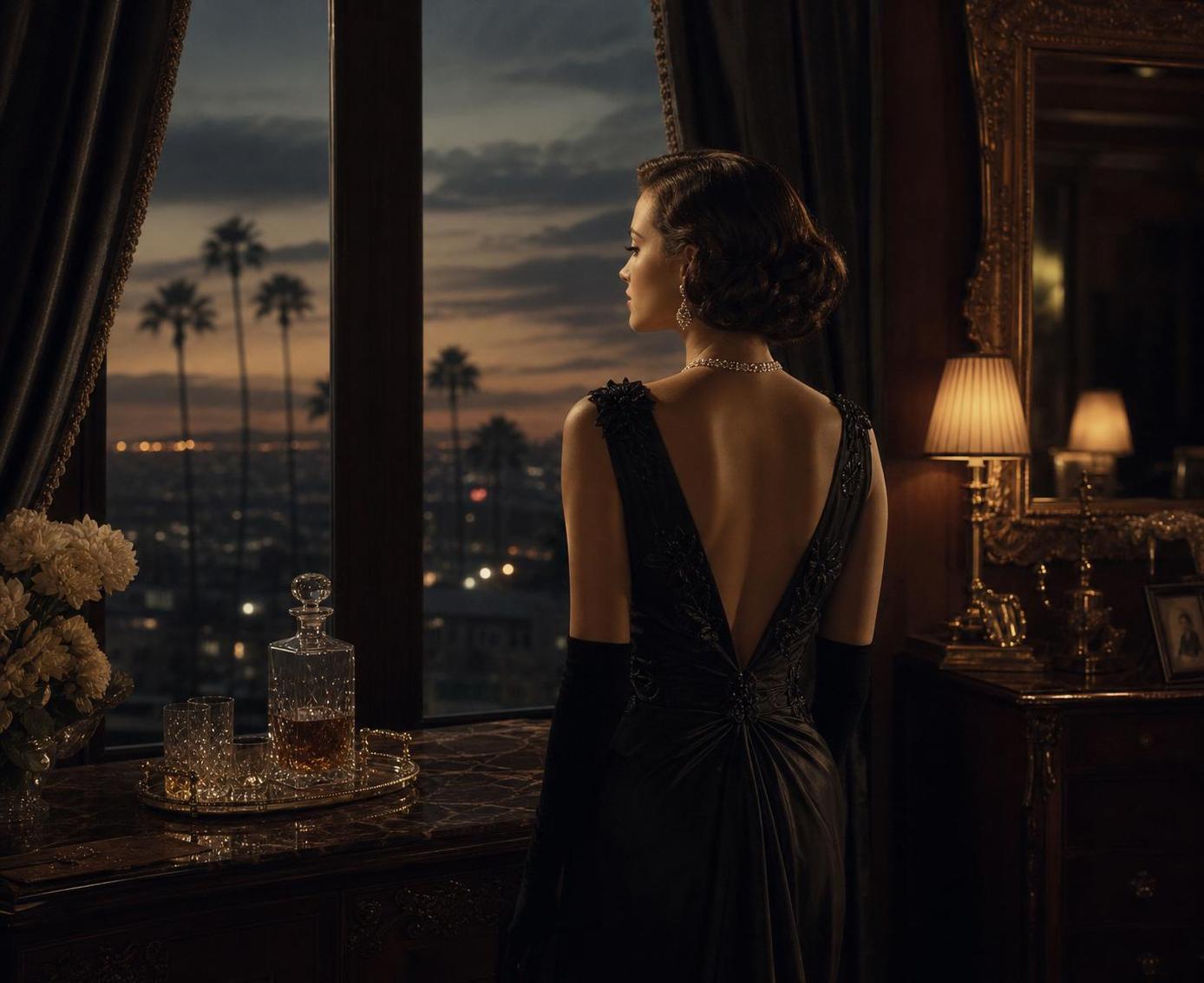
Introduction to the Black Dahlia Case
Few crimes in American history have gripped the public imagination like the murder of Elizabeth Short, the young woman later immortalized as the Black Dahlia. Her killing, discovered in Los Angeles in January 1947, became one of the most notorious unsolved cases of the twentieth century. Decades later, it still stands at the intersection of true crime, media sensationalism, and postwar Hollywood mythology, continuing to inspire books, films, and endless speculation.
Who Was Elizabeth Short?
Elizabeth Short was born on July 29, 1924, in Boston, Massachusetts, and spent much of her early life moving between Massachusetts and Florida. Friends and acquaintances often described her as attractive, ambitious, and drawn to the glamour of Hollywood. Like many young women of the era, she came to Southern California hoping to build a new life, though there is little evidence that she had achieved any significant success in film or entertainment before her death.
Short’s life in Los Angeles was marked by instability. She worked odd jobs, relied on friends for temporary housing, and moved frequently. This precarious lifestyle has made reconstructing her final weeks difficult for investigators and historians alike. Yet it also helps explain why her murder quickly became framed not only as a personal tragedy, but as a dark symbol of shattered dreams in postwar America.
The Discovery That Shocked Los Angeles
On the morning of January 15, 1947, Elizabeth Short’s body was found in a vacant lot in the Leimert Park area of Los Angeles. The scene was horrifying. Her body had been severed at the waist and carefully posed, with visible signs of severe trauma. The brutality of the crime stunned police and the public, while the unusual staging suggested a killer who wanted attention or possessed disturbing forensic knowledge.
Why the Case Drew Immediate Attention
The timing and setting amplified the shock. Los Angeles in the late 1940s was a city defined by growth, celebrity culture, and the promise of reinvention. A murder this gruesome seemed to expose a sinister underside to that dream. Newspapers seized on the story, publishing dramatic headlines and lurid details that transformed the investigation into a media spectacle almost overnight.
The nickname “Black Dahlia” was not one Elizabeth Short used for herself in any confirmed way. Reporters likely coined it by combining her dark clothing and hair with the popularity of the 1946 film The Blue Dahlia. The label was catchy, mysterious, and marketable, helping turn a real victim into a cultural icon.
An Unsolved Mystery with Lasting Impact
Despite massive publicity, countless tips, and years of renewed interest, the Black Dahlia case remains officially unsolved. Historians note that the Los Angeles Police Department received hundreds of confessions, many of them false, which complicated the inquiry. Over time, the case became a benchmark for unsolved celebrity-era murders, often cited alongside America’s most enduring criminal mysteries.
More Than a Crime Story
What keeps the Black Dahlia case alive is not only the unanswered question of who killed Elizabeth Short, but also what her story reveals about media, gender, and fame. From the beginning, public fascination blurred the line between investigation and entertainment, creating a legacy that remains deeply unsettling.
Who Was Elizabeth Short?
A Young Woman Behind a Dark Legend
Before she became known to history as the Black Dahlia, Elizabeth Short was a real person with ambitions, hardships, and a life shaped by instability. She was born on July 29, 1924, in Boston, Massachusetts, and spent much of her childhood in Medford, a suburb north of the city. Her early years were marked by financial strain and family disruption, circumstances that would influence the course of her short life.
Elizabeth was the third of five daughters born to Cleo and Phoebe Short. In 1930, during the economic devastation of the Great Depression, her father reportedly abandoned the family after his business failed. For a time, it was believed he had died by suicide because his car was found abandoned near a bridge. Years later, however, the family learned that he was alive and had started a new life in California. This disappearance left Phoebe to raise five children alone, a difficult task in an era when social support for single mothers was limited.
Health, Family Struggles, and Early Dreams
As a teenager, Elizabeth dealt with chronic health problems, including severe bronchitis and asthma. Doctors advised her to spend winters in warmer climates, which led her to travel to Florida on several occasions. These trips exposed her to a world far removed from her Massachusetts upbringing and may have strengthened her desire for a more glamorous future.
Elizabeth’s relationship with her father resumed in the early 1940s after years of separation. She eventually traveled to Vallejo, California, to live with him for a brief period. That arrangement did not last. Reports suggest the two argued, and Elizabeth left soon afterward. This pattern of movement would define much of her young adulthood. She drifted between Massachusetts, Florida, and California, often staying with friends, acquaintances, or relatives while trying to establish herself.
Drawn to Hollywood
Like many young women of the 1940s, Elizabeth was fascinated by Hollywood’s promise of beauty, fame, and reinvention. Los Angeles during World War II and the postwar years attracted thousands of hopefuls seeking work in film, modeling, or nightlife. Although there is little evidence that Elizabeth secured serious acting roles, she reportedly enjoyed dressing stylishly and presenting herself with the poise of someone destined for the screen.
Accounts from people who knew her often describe her as attractive, soft-spoken, and carefully groomed. She had dark hair, pale skin, and a striking appearance that made an impression. Some stories claim she wore black clothing frequently, though historians caution that many details about her image were later exaggerated by the press.
The Origins of the “Black Dahlia” Name
One of the most persistent myths surrounding Elizabeth Short is the nickname itself. There is no strong evidence that close friends or family regularly called her “Black Dahlia” during her life. The name appears to have gained traction only after her murder in January 1947, when newspapers sought a dramatic label that would capture public attention.
The nickname was likely inspired in part by The Blue Dahlia, a popular 1946 film noir starring Veronica Lake and Alan Ladd. In the competitive world of Los Angeles journalism, sensational names sold papers. The press transformed Elizabeth from an aspiring young woman into a mysterious figure, and that transformation shaped public memory more than the facts of her life ever did.
Separating Fact from Myth
Because her case became one of America’s most famous unsolved murders, Elizabeth Short’s biography has often been distorted. Over the decades, rumors portrayed her as an actress, a socialite, or a woman deeply entangled in Hollywood vice. In reality, documented evidence suggests a far more vulnerable and ordinary life. She worked odd jobs, relied on personal connections, and struggled to find stability.
What the Historical Record Shows
Researchers who have revisited police files, newspaper archives, and family records generally agree on several points. Elizabeth was not a major Hollywood performer. She was not known to have a criminal record of significance. She was a young woman navigating postwar Los Angeles with limited money and uncertain prospects. That context matters because it restores some humanity to a figure too often reduced to a headline.
The media environment of 1947 played a major role in shaping her image. Newspapers competed fiercely, and crime reporting often blurred fact and invention. Sensationalism was common, especially in Los Angeles, where celebrity culture and tabloid journalism overlapped. Elizabeth’s murder became front-page material not only because of its brutality, but because editors recognized the public’s appetite for stories involving beauty, ambition, and danger.
Why Her Identity Still Matters
Understanding who Elizabeth Short was is essential to understanding why the Black Dahlia case still resonates. She represents more than an unsolved crime; she reflects the vulnerabilities faced by young women chasing opportunity in a city built on illusion. Her story also reveals how media narratives can overwhelm truth, turning a victim into a symbol while obscuring the person at the center of the tragedy.
By looking beyond the nickname, readers can see Elizabeth Short as she was: a 22-year-old woman with family ties, health struggles, fractured relationships, and hopes for something bigger than the life she had known. That clearer portrait provides the human context necessary for examining the murder itself, the investigation that followed, and the enduring fascination that has kept her name alive for nearly eight decades.
Los Angeles in the 1940s
A City of Glamour and Unease
In the 1940s, Los Angeles projected an image of sunshine, opportunity, and cinematic magic, yet beneath that polished surface lay a city marked by rapid change, wartime pressure, and deep social tension. As the home of Hollywood’s studio system, Los Angeles attracted aspiring actors, screenwriters, and laborers from across the United States. The film industry was booming, and major studios such as MGM, Warner Bros., Paramount, and RKO helped shape the city’s identity as a dream factory. At the same time, that dream often collided with harsher realities, including poverty, corruption, and violence.
The city’s population expanded dramatically during the decade. Between 1940 and 1950, Los Angeles grew as defense jobs and wartime industries drew new residents to Southern California. Aircraft manufacturing became especially important, with companies like Lockheed, Douglas, and North American Aviation employing tens of thousands of workers. This influx transformed neighborhoods, strained housing, and intensified competition for jobs and resources. Los Angeles was not simply glamorous; it was crowded, restless, and increasingly divided.
War, Migration, and Social Strain
World War II reshaped daily life in Los Angeles. The region became a critical military and industrial hub, and wartime production fueled economic growth. However, that growth was uneven. New arrivals included white migrants from the Midwest and South, African Americans leaving the Jim Crow South, and Mexican American workers already rooted in the region. These communities often faced discrimination in housing, employment, and policing.
Racial Tensions in the City
The 1940s exposed serious racial fault lines. One of the most notorious flashpoints was the Zoot Suit Riots of 1943, when U.S. servicemen and civilians attacked mostly Mexican American youths in downtown Los Angeles. The violence revealed how prejudice, sensational media coverage, and aggressive policing shaped public life. African American Angelenos also encountered restrictive covenants and segregated opportunities, despite their growing contribution to the wartime economy.
These tensions mattered because they formed the backdrop to the city’s crime culture. Public trust in institutions was uneven, and many residents believed that power, money, and celebrity could influence justice. In a city where image mattered enormously, scandal often spread quickly.
Crime, Media, and the Noir Atmosphere
Los Angeles in the 1940s also became associated with a darker cultural mood, later captured in film noir. Stories of corruption, ambition, and moral ambiguity resonated because they reflected real anxieties. Newspapers competed fiercely for readers, often sensationalizing murders and disappearances with dramatic headlines and lurid detail. The press played a major role in shaping public fascination with violent crime.
Why the Setting Mattered
This environment helps explain why certain crimes became legendary. A sprawling city of isolated neighborhoods, transient populations, and intense media attention could turn a single case into a national obsession. The contrast between palm-lined streets and brutal violence made such stories even more shocking. In postwar Los Angeles, where fame and failure existed side by side, the city itself became part of the mystery.
By the late 1940s, Los Angeles had established the paradox that still defines much of its history: a place of reinvention and aspiration shadowed by exploitation, secrecy, and fear. That contradiction made it the perfect setting for one of America’s most haunting unsolved murders.
The Discovery of the Body
A Morning in Leimert Park
On the morning of January 15, 1947, Los Angeles awoke to a scene that would become one of the most haunting images in American crime history. In the Leimert Park neighborhood, a local resident, Betty Bersinger, was walking with her young daughter along South Norton Avenue when she noticed what appeared, at first glance, to be a discarded store mannequin lying in a vacant lot. As she moved closer, the horrifying truth emerged: the object was the mutilated body of a young woman.
The victim was later identified as Elizabeth Short, a 22-year-old aspiring actress whose life and death would soon be consumed by sensational headlines. The condition of her body immediately distinguished the case from ordinary homicide investigations. Short had been severed cleanly at the waist, completely drained of blood, and posed in a deliberate manner that suggested calculation rather than frenzy. Her face had also been slashed from the corners of the mouth toward the ears, creating the grotesque effect later associated with the term “Glasgow smile.”
The Crime Scene and Its Disturbing Details
The location of the body added another layer of mystery. Leimert Park was a growing residential district, not an isolated rural dumping ground. The killer had apparently chosen a relatively visible area, increasing the likelihood that the body would be discovered quickly. Investigators noted that Elizabeth Short’s body had been carefully positioned, with her hands placed above her head and her legs spread apart. This staging implied that the murderer wanted the corpse to be seen and to provoke shock.
Evidence of Premeditation
Police quickly concluded that the killing had likely occurred elsewhere. The absence of significant blood at the scene strongly indicated that the body had been transported after death. Medical examiners determined that Short had died from hemorrhage and shock caused by blows to the head and cuts to the face. The precise bisection of the body suggested that the killer may have possessed anatomical knowledge or surgical skill, a detail that fueled decades of speculation.
At the time, forensic science was far less advanced than it is today. There was no DNA profiling, and crime scene preservation standards were inconsistent. Although fingerprints were lifted from the body after it had been cleaned, the broader investigation suffered from contamination, media interference, and the overwhelming public frenzy that followed.
Public Reaction and Media Sensation
The discovery of Elizabeth Short’s body quickly became front-page news across Los Angeles and beyond. Newspapers seized on the grisly details, transforming the murder into a spectacle. It was during this period that the press popularized the nickname “Black Dahlia,” reportedly inspired by Short’s dark clothing, rumored beauty, and the contemporary film The Blue Dahlia, released in 1946.
How the Press Shaped the Case
Coverage of the discovery often blurred the line between reporting and sensationalism. Journalists emphasized the brutality of the crime, the theatrical posing of the body, and the supposed mystery surrounding Short’s personal life. In many reports, facts mixed with rumor, making it difficult for the public to separate evidence from invention. This media storm intensified pressure on the Los Angeles Police Department, which was suddenly handling one of the most publicized murder cases in the city’s history.
The press also affected the investigation in practical ways. False confessions poured in, as did tips from people eager for attention or convinced they had solved the crime. Historians estimate that dozens of individuals falsely confessed over the years, complicating the search for credible leads. The spectacle surrounding the body’s discovery ensured that the case would not remain a local tragedy; it became a national obsession almost immediately.
Why the Discovery Still Resonates
The discovery of Elizabeth Short’s body remains central to the enduring power of the Black Dahlia case because it combined brutality, symbolism, and public display in a way few crimes ever have. The vacant lot on Norton Avenue became more than a crime scene; it became the starting point for a myth that has endured for nearly eight decades. The stark visual horror of the discovery, coupled with the victim’s youth and unrealized ambitions, embedded the case deeply into Hollywood lore and American cultural memory.
Even now, discussions of the Black Dahlia begin with that January morning in 1947, when an ordinary walk through a Los Angeles neighborhood revealed a crime so shocking that it would eclipse nearly every answer investigators later tried to find.
The Investigation Begins
A Crime Scene That Shocked Los Angeles
On the morning of January 15, 1947, a passerby discovered the body of Elizabeth Short in a vacant lot in the Leimert Park area of Los Angeles. At first glance, the scene looked almost unreal. Short’s body had been severed cleanly at the waist, drained of blood, and carefully posed with her arms above her head. Her face had been slashed from the corners of her mouth toward her ears, creating the grotesque effect later described as the “Glasgow smile.” Even in a city already familiar with sensational crime, the brutality of the killing stunned police, reporters, and the public alike.
The Los Angeles Police Department moved quickly, sealing off the area and calling in homicide detectives, crime scene photographers, and the coroner’s office. Yet from the beginning, the case presented unusual difficulties. The body had been washed, suggesting the murder took place elsewhere. There was little blood at the scene, and investigators found no obvious murder weapon nearby. This meant detectives were not simply investigating a killing; they were trying to reconstruct a carefully staged disposal.
Identifying the Victim
Within hours, fingerprint analysis became the key to identifying the victim. Investigators sent Short’s prints through FBI records, where they matched an earlier application she had made for military base employment. This was a significant breakthrough in an era before DNA testing, when fingerprints were among the most reliable forensic tools available. By the end of the day, police knew the victim was 22-year-old Elizabeth Short, a young woman who had spent time in Massachusetts, Florida, and California.
That identification immediately shifted the investigation from an unknown homicide to a case involving a real person with a traceable history. Detectives began interviewing acquaintances, former employers, landlords, and anyone who had recently seen her. They pieced together a portrait of a woman moving through postwar Los Angeles, often staying with friends, pursuing social connections, and hoping for a more glamorous future. Her nickname, “Black Dahlia,” was not one she commonly used herself; it was largely a product of press culture, likely inspired by her dark clothing and the popular 1946 film The Blue Dahlia.
Early Forensic Efforts
What Investigators Could Learn in 1947
Forensic science in 1947 was far more limited than modern viewers of crime dramas might expect. Detectives relied on autopsy findings, fingerprints, witness statements, and physical trace evidence that could be seen or collected without advanced laboratory technology. The coroner determined that Short had died from hemorrhage and shock caused by blows to the head and facial lacerations. The body’s bisection appeared precise enough to suggest some anatomical knowledge, a detail that would influence many later theories.
Investigators also noted marks indicating restraint, which suggested torture or prolonged abuse before death. These findings deepened the horror surrounding the case and led police to consider suspects with medical training, butcher experience, or other technical skill. However, such assumptions could also mislead. A clean cut did not automatically prove a surgeon was involved, and detectives had to balance forensic interpretation with the risk of speculation.
The Press Enters the Case
Almost immediately, the investigation became entangled with the media. Los Angeles newspapers competed fiercely for exclusive details, and the murder of a young woman with Hollywood associations was irresistible material. Reporters published dramatic descriptions, embellished aspects of Short’s life, and helped transform the case into a national obsession. In some instances, journalists received information from police sources; in others, they shaped the narrative themselves.
This intense coverage had a double effect. On one hand, publicity generated leads. Citizens called in tips, recognized names, and offered sightings. On the other hand, the flood of attention produced misinformation, false confessions, and sensational distortions. The press also contacted Short’s family before police could fully brief them, a move widely criticized for its cruelty. As the story spread, the line between evidence and myth began to blur, complicating the work of detectives who needed verifiable facts.
Suspects, Leads, and Dead Ends
An Avalanche of Confessions
One of the most extraordinary features of the early investigation was the number of false confessions. More than 50 people reportedly confessed to the crime over time, though none could be substantiated. This was not entirely unusual in notorious murder cases, especially in the mid-20th century, when publicity could attract attention seekers, the mentally ill, or individuals hoping to insert themselves into history. Each confession still had to be checked, consuming valuable police resources.
Detectives also pursued men who had known Short socially in the days before her death. They retraced her final movements, including reports that she had been seen at the Biltmore Hotel in downtown Los Angeles shortly before disappearing. Witness testimony, however, was inconsistent. Memories shifted, timelines conflicted, and many accounts emerged only after newspapers had already shaped public perception.
The Killer’s Taunting Message
Days after the body was found, the case took an even darker turn when a package was mailed to the Los Angeles Examiner. It contained Short’s birth certificate, business cards, photographs, and an address book, all apparently belonging to her. The items had been cleaned with gasoline, seemingly to remove fingerprints. The sender also included a note assembled from clipped newspaper letters, beginning with the chilling phrase, “Here is Dahlia’s belongings.”
For investigators, this mailing strongly suggested direct contact from the killer or someone closely connected to the crime. It confirmed that the murderer was following press coverage and may have enjoyed manipulating both police and the public. Yet even this dramatic clue failed to produce a definitive suspect, leaving detectives with a case that was rich in notoriety but painfully poor in proof.
A City Gripped by Fear
As the investigation widened, Los Angeles became a city on edge. The Black Dahlia case exposed anxieties about gender, violence, celebrity culture, and urban anonymity in postwar America. Women were warned to be cautious, and every new rumor seemed to suggest the killer could strike again. For the LAPD, the pressure was immense: solve the city’s most talked-about murder, or risk watching it become a permanent symbol of failure.
Media Frenzy and the Black Dahlia Name
How the Press Turned a Murder into a Myth
The 1947 murder of Elizabeth Short became a national obsession not only because of its brutality, but because the press transformed the case into a spectacle almost immediately. Los Angeles in the late 1940s was already a city fascinated by glamour, scandal, and crime. Newspapers competed fiercely for circulation, and sensational reporting was a proven way to attract readers. In that environment, Short’s death was not treated simply as a homicide investigation. It was packaged as a dark Hollywood story, complete with mystery, beauty, and horror.
Reporters seized on every available detail, often blurring the line between fact and invention. Coverage emphasized Short’s appearance, her rumored ambitions, and her social life, sometimes more than the evidence itself. This approach helped create a public image that was dramatic and memorable, but not always accurate. The media did not just report the Black Dahlia case; it actively shaped how the victim and the crime would be remembered for generations.
The Origin of the “Black Dahlia” Nickname
One of the most enduring elements of the case is the nickname itself. Elizabeth Short was widely identified in headlines as the “Black Dahlia,” a label that gave the story an almost cinematic quality. The exact origin remains debated, but many historians believe it was inspired by the 1946 film The Blue Dahlia, a noir mystery released just months before her murder. According to popular accounts, people in Long Beach or Los Angeles may have used the nickname because Short often wore black clothing and had dark hair.
What is clear is that newspapers quickly embraced the phrase because it was striking and marketable. A name like “Elizabeth Short” belonged to a real young woman; “Black Dahlia” sounded like a character from a pulp novel. That distinction mattered. The nickname turned her into a symbol, making the case easier to sensationalize and harder to humanize. It was a branding decision as much as a descriptive one, and it helped ensure the murder would dominate front pages.
A Name Built for Headlines
The power of the nickname lay in its rhythm and imagery. “Black” suggested darkness, danger, and elegance, while “Dahlia” carried a floral softness that contrasted sharply with the violence of the crime. This combination made the name unforgettable. In an era before television dominated breaking news, memorable newspaper language was essential. Editors understood that a compelling label could keep readers emotionally invested day after day.
Sensationalism, Competition, and Distortion
The media environment of postwar Los Angeles encouraged exaggeration. At the time, the city had multiple major newspapers battling for readers, including the Los Angeles Examiner and the Los Angeles Herald-Express. Crime reporting was often aggressive, and ethical standards were far looser than those expected today. Journalists sometimes published rumors, embellished personal details, or relied on unnamed sources without verification.
In Short’s case, this led to widespread distortion. Stories portrayed her as an aspiring actress, a femme fatale, or a drifter, depending on what best fit the narrative. Some reports exaggerated her connections to Hollywood nightlife, even though evidence suggests her life was far more precarious and ordinary than legend implies. Sensational coverage sold papers, but it also obscured the truth, complicating public understanding of both the victim and the investigation.
The Cost to the Investigation
The frenzy had practical consequences. False confessions poured in, a common problem in notorious murder cases. Historians estimate that dozens of people confessed, though none proved credible. Police also faced intense public pressure to solve the case quickly, which can distort investigative priorities. Media leaks, speculative reporting, and public hysteria created noise that made serious detective work more difficult.
Why the Name Still Endures
The phrase “Black Dahlia” has outlived most factual knowledge about Elizabeth Short herself. It appears in books, films, television dramas, songs, and true crime discussions nearly eight decades later. That endurance shows how effectively the media constructed a myth around the case. The nickname condensed violence, beauty, and mystery into two words, making it one of the most recognizable labels in American crime history.
Yet the persistence of that name also raises uncomfortable questions. It reflects how easily a victim can be transformed into a cultural icon while her real identity fades. The media frenzy did not merely document a tragedy; it created a legend, one that still influences how the Black Dahlia case is discussed, investigated, and imagined today.
Main Suspects and Theories
Why the Case Produced So Many Suspects
The murder of Elizabeth Short, known forever as the Black Dahlia, generated an extraordinary number of suspects almost immediately. In the weeks after her body was discovered in Los Angeles on January 15, 1947, police reportedly received hundreds of tips, confessions, and accusations. Some estimates place the number of people questioned over time at more than 150, a reflection of both the case’s notoriety and the limitations of mid-century investigative methods. Because the crime was so brutal, so public, and so symbolically staged, it invited theories that ranged from plausible to wildly speculative.
Part of the difficulty lay in Short’s lifestyle during her final months. She moved frequently, relied on acquaintances for housing, and interacted with a wide circle of men and women across Los Angeles and San Diego. That transient social pattern created gaps in the timeline and made it hard for investigators to identify who truly knew her well. The absence of a clear motive only deepened the mystery. Robbery did not appear to be the primary aim, and there was no definitive evidence of a sexual assault, despite the intensely personal violence involved.
Early Investigative Focus
Police initially concentrated on men who had recently seen Short, including romantic interests, casual companions, and individuals with military or medical backgrounds. The condition of the body suggested to some investigators that the killer may have possessed anatomical knowledge. Short had been severed cleanly at the waist, leading to speculation that the murderer had training in surgery, but later assessments cautioned that such conclusions may have been overstated. A determined killer with practical experience in butchery or mortuary work might also have been capable of similar injuries.
The Role of False Confessions
One of the most disruptive elements in the investigation was the flood of false confessions. More than 50 people are often said to have confessed at various points, though many were quickly ruled out. False confessions were not unusual in high-profile cases of the era, especially when media coverage was sensational and constant. Some confessors sought attention, while others suffered from mental illness or wanted temporary shelter in custody. This noise made it harder for detectives to separate credible leads from fantasy.
Dr. George Hodel
Among the most famous suspects is Dr. George Hodel, a Los Angeles physician whose name gained major attention decades after the murder. Interest in Hodel was revived largely through the work of his son, retired LAPD detective Steve Hodel, who argued that his father had both the personality and opportunity to commit the crime. George Hodel was intelligent, socially connected, and lived a bohemian life that included controversial relationships and allegations of abuse.
The case against him remains circumstantial, but several details have kept his name prominent. He was investigated by police in the late 1940s, and wiretap recordings from 1950 captured a statement widely interpreted as, “Supposin’ I did kill the Black Dahlia. They couldn’t prove it now.” Supporters of the theory see that line as deeply incriminating. Skeptics note that the recording is ambiguous and not a confession in any legal sense. No physical evidence has conclusively tied Hodel to Short’s murder, yet he remains one of the most discussed suspects because he fits the image many people have of an organized, intelligent killer.
Leslie Dillon and the “Medical Knowledge” Theory
Another major suspect was Leslie Dillon, a bellhop and aspiring writer with an interest in crime. In 1949, Dillon wrote to police consultant and psychiatrist J. Paul De River, discussing the psychology of the killer in strikingly detailed terms. His letters raised alarm, especially because he suggested the murderer might be someone with medical training and displayed unusual familiarity with the case. Investigators soon focused on him as a possible suspect.
Why Dillon Was Not Charged
Despite the suspicion, the case against Dillon fell apart. He denied involvement, and questions emerged about police procedure, witness reliability, and whether detectives had become too committed to a theory without enough evidence. Dillon’s supporters argued that his interest in the case reflected obsession rather than guilt. The controversy surrounding his interrogation and treatment also damaged the prosecution’s position. In the end, there was not enough admissible evidence to move forward.
Other Frequently Named Suspects
Several other names recur in Black Dahlia discussions, though none has been definitively linked to the crime. Mark Hansen, a nightclub owner and acquaintance of Short, drew attention because she had stayed at his home and because some of her belongings were reportedly found there. Yet suspicion alone was not enough, and no direct evidence placed him at the murder scene.
Robert “Red” Manley, a salesman who was among the last known people to see Short alive, was also scrutinized. He drove her from San Diego to Los Angeles shortly before her disappearance. Investigators gave him a polygraph, and he was eventually cleared, though polygraphs were and remain imperfect tools. His proximity to Short in her final days ensured that his name stayed in the record.
There were also theories involving Orson Welles, gangsters, corrupt police officers, and unidentified serial killers. These claims often gained traction because the case unfolded in postwar Los Angeles, a city already associated with glamour, vice, and hidden power. However, most of these theories rely more on atmosphere than evidence.
Enduring Interpretations
What keeps the suspect list alive is the fact that the Black Dahlia case sits at the intersection of crime, celebrity culture, and institutional failure. The evidence was incomplete, some records were lost or disputed, and media sensationalism shaped public memory from the beginning. As a result, every generation seems to produce a new theory, often reflecting contemporary fears about misogyny, corruption, or predatory men hiding behind respectability.
Why No Theory Has Fully Prevailed
The strongest theories tend to share a few features: access to Short, the ability to commit and stage the crime, and a personality consistent with extreme violence. Yet none satisfies every requirement. Without definitive forensic proof, a reliable confession, or a complete timeline of Short’s final movements, each suspect remains suspended between possibility and myth. That unresolved tension is exactly why the case continues to fascinate historians, crime writers, and the public alike.
Why the Case Was Never Solved
A Crime Scene That Offered More Shock Than Clarity
The murder of Elizabeth Short in January 1947 horrified Los Angeles, but public outrage did not translate into a solvable case. Investigators faced a scene that was both meticulously staged and deeply disturbing. Short’s body had been cleaned, posed, and drained of blood, suggesting planning and forensic awareness unusual for the era. While the brutality drew enormous attention, it also created a flood of speculation that often overshadowed verifiable evidence. Detectives had a sensational crime, yet very little that could firmly identify a killer.
At the time, forensic science was far less advanced than modern audiences often assume. DNA profiling did not exist, blood typing had limited usefulness, and crime scene preservation standards were inconsistent. Evidence that today might yield microscopic traces, digital timelines, or genetic links was either contaminated, overlooked, or impossible to analyze. The investigation depended heavily on witness statements, confessions, and circumstantial leads, all of which proved unreliable in a case already attracting national fascination.
Media Frenzy and Investigative Chaos
When Publicity Became a Problem
The Black Dahlia case quickly became a media spectacle. Newspapers competed aggressively for exclusive details, sometimes publishing information before detectives could act on it. Reporters coined the nickname “Black Dahlia,” dramatizing Short’s life and shaping public perception in ways that blurred fact and fiction. This coverage generated thousands of tips, but quantity did not equal quality. Many leads were contradictory, exaggerated, or entirely fabricated.
The press also complicated police strategy. False confessions poured in from across the country, a common phenomenon in notorious murder cases. Historians estimate that dozens of people falsely admitted involvement, forcing investigators to spend valuable time eliminating attention seekers, unstable individuals, and opportunists. In such an environment, credible leads could easily be buried beneath noise.
Limits Within Law Enforcement
Rivalries, Pressure, and Procedure
The Los Angeles Police Department was under immense pressure to solve the case quickly, yet internal and institutional limitations weakened the effort. Detectives pursued hundreds of suspects, including doctors, artists, drifters, and alleged sexual predators, but many inquiries lacked the coordination expected in a modern major-case task force. Communication between agencies was imperfect, recordkeeping was uneven, and investigative theories often shifted with each new tip.
There were also broader structural issues. In the 1940s, homicide investigations often relied on aggressive interrogation and intuition more than evidence-based profiling. Some suspects were scrutinized intensely, then dropped when proof failed to emerge. Others may never have been fully investigated. A case can remain unsolved not because no suspect existed, but because no prosecutable case could be built.
The Victim’s Life Was Hard to Reconstruct
Elizabeth Short’s movements in the weeks before her death were difficult to map with certainty. She lived a transient life, stayed with friends, traveled frequently, and knew many casual acquaintances. That made timeline reconstruction extremely challenging. Witness memories varied, and some people may have concealed information to avoid scandal or police attention.
Why Ambiguity Endured
Short was neither a major celebrity nor a person with a stable, easily documented routine. As a result, investigators struggled to determine whom she trusted, where she went, and whether she was targeted by someone she knew. Without a clear final timeline, motive and opportunity remained frustratingly elusive, leaving the case suspended between plausible theories and unprovable accusations.
Cultural Impact and Lasting Fascination
A Crime That Escaped Its Era
Few murder cases have embedded themselves in public memory as deeply as the Black Dahlia killing. More than seven decades after Elizabeth Short was found murdered in Los Angeles in January 1947, the case still occupies a unique place in American culture. Its endurance is not simply the result of brutality, though the crime was exceptionally shocking even by modern standards. Rather, it reflects a powerful combination of Hollywood mythology, media sensationalism, and unresolved mystery that continues to attract historians, crime writers, filmmakers, and the general public.
At the time, Los Angeles was rapidly becoming a symbol of glamour, ambition, and reinvention. Short’s death disrupted that image in a dramatic way. Newspapers seized on the contrast between the city’s polished dream factory and the grim reality of violence lurking beneath it. The nickname “Black Dahlia,” reportedly inspired by film noir trends and press invention, transformed a real victim into a dark cultural symbol. That branding helped turn the case into something larger than a homicide investigation: it became a story about the hidden underside of postwar America.
The Role of Media in Shaping the Legend
The Black Dahlia case is often cited as an early example of modern true-crime spectacle. In 1947, newspapers competed fiercely for readership, and sensational crimes could drive circulation dramatically. Coverage of Short’s murder was relentless, often emphasizing lurid details over verified facts. This approach shaped public understanding from the beginning, blurring the line between reporting and mythmaking.
From Headlines to Folklore
Media attention did more than inform the public; it created a narrative framework that still influences how the case is remembered. Elizabeth Short was frequently portrayed through stereotypes, with stories focusing on her appearance, social life, and supposed ambitions. Many of those claims were exaggerated or unsupported, yet they became part of the legend. This distortion matters, because it shows how victims can be transformed into characters rather than understood as people.
The case also generated false confessions, rumored suspects, and endless speculation. By some accounts, dozens of individuals confessed over the years, though none were credibly linked to the crime. That flood of misinformation helped ensure the mystery would remain active in the public imagination.
Hollywood, Noir, and the American Imagination
The Black Dahlia case has inspired books, films, television episodes, podcasts, and online communities. James Ellroy’s 1987 novel The Black Dahlia introduced the story to a new generation, blending fact with fiction in a style that reinforced the case’s noir identity. Brian De Palma’s 2006 film adaptation extended that reach, even as it took major creative liberties. These works demonstrate how the murder has been repeatedly reinterpreted to fit changing cultural interests.
Why the Fascination Endures
Part of the case’s lasting appeal lies in its unresolved nature. People are naturally drawn to mysteries, especially those involving famous places, symbolic imagery, and investigative failure. The Black Dahlia case offers all three. It also raises enduring questions about gender, media ethics, policing, and celebrity culture. In that sense, fascination with the case is not only about identifying a killer. It is also about understanding the society that turned the crime into a legend.
Modern audiences, shaped by documentaries and digital archives, often revisit the case with greater skepticism toward old narratives. That shift has encouraged more thoughtful discussions about victimhood, exploitation, and historical memory, keeping the Black Dahlia relevant far beyond its original headlines.
Conclusion: The Enduring Mystery
Why the Black Dahlia Case Still Haunts the Public
Nearly eight decades after Elizabeth Short was found murdered in Los Angeles in January 1947, the Black Dahlia case remains one of America’s most enduring criminal mysteries. Its grip on public imagination comes from a troubling mix of brutality, media sensationalism, and unanswered questions. Short was only 22 years old, yet her death became a national spectacle, amplified by postwar newspaper competition and Hollywood’s appetite for dark legend.
The Power of Uncertainty
What keeps the case alive is not only the horror of the crime, but the absence of resolution. Despite countless leads, confessions, and theories, no suspect was ever charged. The Los Angeles Police Department investigated hundreds of individuals, and over the years writers, detectives, and amateur sleuths have proposed names ranging from doctors to drifters. Still, evidence strong enough to close the case has never emerged.
A Mirror of Its Era
The Black Dahlia murder also endures because it reflects the anxieties of 1940s Los Angeles. The city promised glamour, reinvention, and opportunity, yet beneath that image lay violence, exploitation, and inequality. Elizabeth Short’s story became larger than the facts of her life, revealing how easily a victim can be transformed into a symbol by headlines and rumor.
Legacy in Crime History and Culture
Books, films, documentaries, and podcasts continue to revisit the case, proving its cultural reach. Yet beyond the mythology, the Black Dahlia remains a reminder of a real young woman whose life was cut short. The lasting mystery is not just who killed Elizabeth Short, but why her case still speaks so powerfully to fear, fame, and the limits of justice.
FAQ: Common Questions About the Black Dahlia
Who was the Black Dahlia?
The Black Dahlia was the nickname given to Elizabeth Short, a 22-year-old aspiring actress whose 1947 murder became one of America’s most notorious unsolved crimes. Born in Massachusetts, Short spent time in Florida and California, hoping to build a life in Hollywood. The press popularized the nickname after her death, likely inspired by the film The Blue Dahlia, then in theaters.
Why did the case become so famous?
The case drew intense attention because of the gruesome nature of the crime, the victim’s youth, and the media frenzy surrounding postwar Los Angeles. Short’s body was found on January 15, 1947, in Leimert Park, severely mutilated and posed. Newspapers sensationalized nearly every detail, helping turn the murder into a lasting cultural obsession.
Was the killer ever identified?
No. Despite hundreds of interviews, false confessions, and decades of speculation, the murder remains officially unsolved. The Los Angeles Police Department investigated numerous suspects, but no one was conclusively charged. Over the years, writers and amateur investigators have proposed theories, yet none has been proven with definitive evidence.
Why does the Black Dahlia case still matter?
The case endures because it reflects the intersection of crime, celebrity culture, and media sensationalism in mid-century America. It also continues to raise questions about investigative limits, public mythmaking, and how victims are remembered.


