

Introduction: Why 6-Player Murder Mystery Games Work So Well
Six-player murder mystery games hit a sweet spot that many party formats struggle to achieve. With six participants, the group is large enough to create layered suspicion, shifting alliances, and lively discussion, yet small enough for every player to stay involved. That balance is a major reason these games work so well for a cozy game night. Instead of people waiting too long for turns or fading into the background, each guest typically gets meaningful opportunities to question others, reveal clues, and shape the story.
The Ideal Group Size for Interaction
A six-person table naturally supports strong social dynamics. In smaller groups, the mystery can feel too narrow, with fewer suspects and less room for misdirection. In much larger groups, the experience can become chaotic, and quieter players may struggle to participate. With six players, conversations remain manageable while still offering enough variety in personalities, motives, and theories to keep the game engaging.
This size also fits common real-world hosting situations. Many households can comfortably seat six people around a dining table or in a living room, making setup easier. From a practical standpoint, six is often the number where a gathering feels special without becoming logistically difficult.
Better Character Depth and Roleplay
Another reason six-player murder mystery games shine is the level of character development they can support. Most well-designed games for this player count give each participant a distinct identity, secret objectives, and relationships with other characters. That structure encourages roleplay without overwhelming players with too much information.
Enough Complexity Without Overload
At six players, designers can introduce twists, hidden motives, and red herrings while keeping the rules accessible. This is especially important for mixed groups that may include both experienced gamers and first-time players. A game that feels intuitive is more likely to keep energy high throughout the evening.
A Strong Fit for Cozy Game Nights
For a cozy game night, atmosphere matters as much as mechanics. Six-player murder mystery games often create the right emotional mix of tension, humor, and collaboration. Players can immerse themselves in the story, but the group remains intimate enough for laughter, improvisation, and memorable moments. Whether the setting is a glamorous manor, a 1920s speakeasy, or a quirky small town, six participants are usually enough to make the mystery feel alive without losing that warm, personal feel.
That combination of accessibility, drama, and social connection is exactly what makes this format such a reliable favorite for intimate gatherings.
What Makes a Great Cozy Murder Mystery Game Night
Atmosphere That Feels Inviting, Not Intimidating
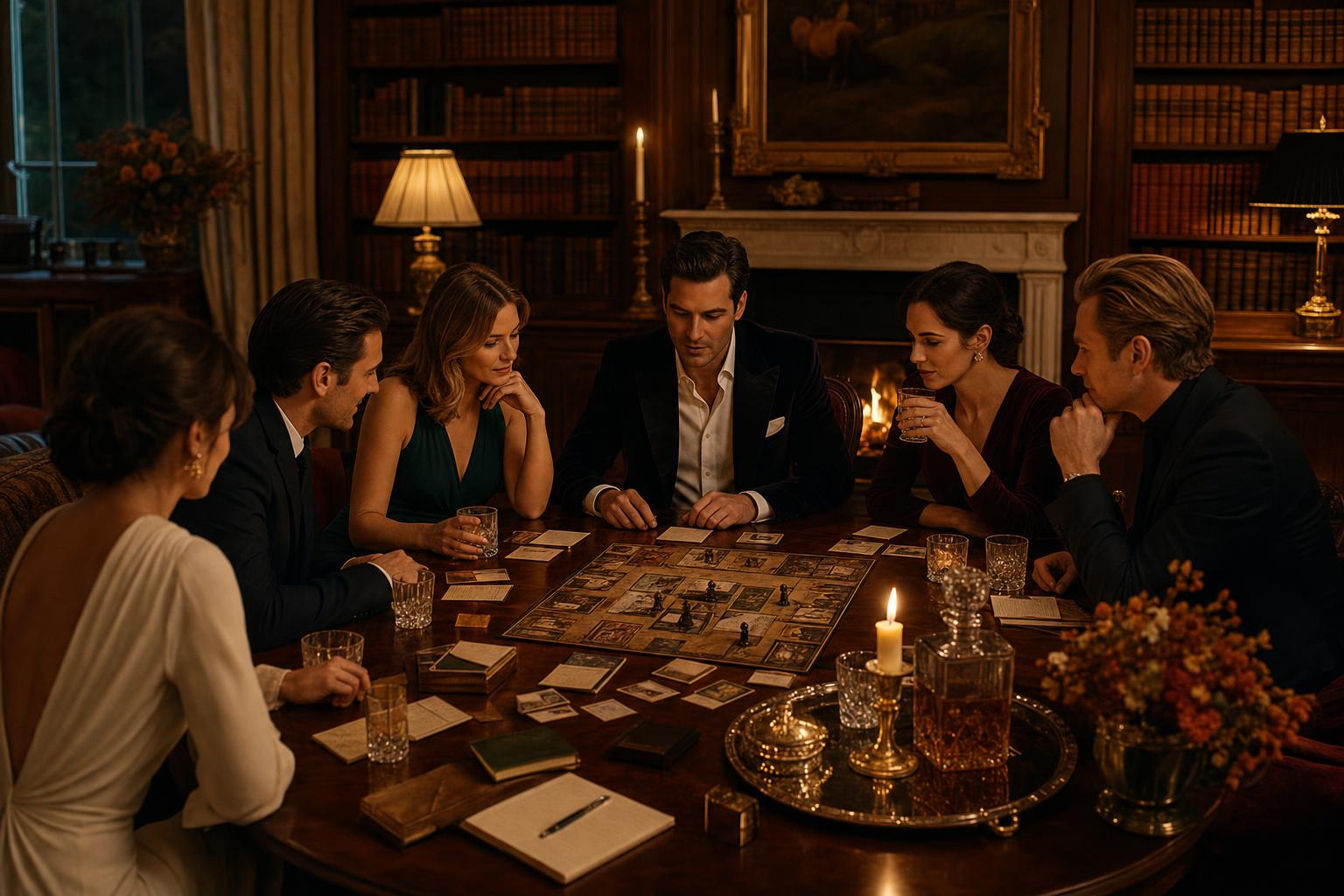
A great cozy murder mystery game night begins with comfort and accessibility. Unlike high-pressure party games, cozy mysteries work best when guests feel relaxed enough to improvise, laugh, and follow clues at their own pace. Lighting matters more than many hosts expect. Warm lamps, candles, or string lights can make a living room feel like a country manor or vintage train carriage, while harsh overhead lighting can flatten the mood. Soft background music, especially instrumental jazz, classical, or light cinematic scores, helps create immersion without overpowering conversation.
The setting should also support easy interaction. For six players, a single table or a circular seating arrangement usually works well because everyone can hear each other and stay involved. Physical comfort directly affects participation, especially in games that last 90 minutes to two hours. Cushions, drinks within reach, and simple snacks reduce friction and keep attention on the mystery rather than logistics.
A Mystery That Balances Structure and Freedom
The best cozy murder mystery games give players enough guidance to stay oriented while leaving room for creativity. If a game is too scripted, it can feel like reading lines. If it is too open-ended, quieter players may struggle to contribute. Strong design usually includes clear character motivations, a manageable suspect pool, and clue reveals that unfold in stages. For a six-player group, this balance is especially important because every participant has a meaningful role, and no one should feel like an extra.
Why pacing matters
Pacing often determines whether the night feels charming or chaotic. Many successful mystery games divide play into rounds, with each round introducing new evidence or objectives. This structure keeps energy moving and prevents early solution guesses from ending the fun too soon. According to tabletop industry trend reporting, social deduction and narrative party games have grown steadily in popularity over the past decade, largely because players enjoy shared storytelling as much as winning. A cozy mystery benefits from that same appeal when the reveal feels earned rather than rushed.
Characters Guests Actually Want to Play
Memorable characters are central to a successful game night. In cozy mysteries, players often enjoy roles that are colorful but not overly demanding, such as a suspicious bookseller, a retired actress, or a charming local doctor. These archetypes are easy to understand and fun to perform, even for guests who do not usually roleplay. Good character writing gives each person secrets, relationships, and possible motives without requiring theatrical expertise.
Encouraging shy players
Hosts can make the experience smoother by assigning roles thoughtfully. A more outgoing guest may enjoy a dramatic suspect, while a reserved player might prefer a character focused on observation and clue sharing. Inclusive design makes the night better for everyone, and that includes readable materials, concise rules, and enough prompts to help conversation flow naturally.
Food, Timing, and Host Preparation
A cozy game night feels seamless when practical details are handled in advance. Finger foods, tea, wine, or themed desserts can reinforce the setting without interrupting play. Timing also matters. Starting after guests have settled in, rather than immediately on arrival, gives everyone a chance to relax and understand the premise.
Small details that elevate the experience
Printed invitations, name cards, and simple props can make a standard evening feel special. Even a modest budget can create immersion when the host focuses on clarity, warmth, and playful suspense rather than elaborate production. The strongest game nights are not necessarily the most expensive; they are the ones where every guest feels involved in the story unfolding around them.
How to Choose the Right Game for Your Group
Choosing the best murder mystery game for six players is not only about finding a clever plot. The right pick depends on your group’s personality, comfort level, and preferred game-night pace. A game that feels thrilling for one circle of friends may feel awkward or overly complicated for another. When you match the game to the people at the table, the experience becomes smoother, funnier, and far more memorable.
Start With Your Group’s Play Style
Every group approaches game night differently. Some players love dramatic roleplay, speaking in character and improvising accusations. Others prefer a more structured experience with clear clues, guided turns, and less pressure to perform. Before choosing a title, think honestly about how your six players usually interact.
If your group enjoys party games such as charades or social deduction games like Werewolf, they may thrive in a murder mystery with theatrical elements. In contrast, if they prefer strategy games or escape rooms, a mystery with stronger puzzle-solving mechanics may be a better fit. The ideal game should feel inviting, not intimidating, especially if some players are new to the genre.
Consider Experience Level
Not all murder mystery games are equally accessible. Some are designed for beginners and include simple instructions, prewritten character goals, and a predictable flow. Others expect players to manage layered evidence, hidden motives, and freeform conversations over several hours.
Beginner-Friendly vs. Advanced Games
For a mixed-experience group, beginner-friendly games usually work best. They reduce the chance that one or two confident players dominate the evening while quieter guests feel lost. A well-designed beginner game often includes:
- concise rules
- clear character summaries
- guided clue reveals
- a playtime of around 1.5 to 2.5 hours
More advanced games can be rewarding, but they require stronger attention spans and a willingness to stay engaged throughout. If your group has never played a murder mystery before, starting simple often leads to a better first impression.
Match the Tone to the Occasion
Tone matters more than many hosts expect. Murder mystery games can range from cozy and comedic to dark and suspenseful. Since this article focuses on cozy game night picks, look for games with lighthearted writing, quirky suspects, and playful twists rather than graphic crime details.
A cozy tone works especially well for casual gatherings, double dates, or relaxed weekend nights. It keeps the atmosphere fun and social instead of heavy. For six players, a warm and humorous mystery often creates the best balance, because everyone gets a chance to participate without the mood becoming too intense.
Check Player Count Flexibility
Even when a game says it supports six players, it is worth checking how well it truly functions at that number. Some games are built specifically for six distinct roles, while others allow a range such as six to eight players. In flexible games, certain roles may feel less essential, which can weaken the experience if you play at the minimum count.
Why Exact Fit Matters
An exact-fit game tends to produce tighter storytelling and better balance. Each player usually receives meaningful information, motives, and opportunities to influence the outcome. With six players, this is especially important because every role represents a large share of the interaction. If one character feels underwritten, the gap becomes noticeable quickly.
Think About Time, Setup, and Hosting Effort
A great game for your group should also fit the practical realities of the evening. Some murder mystery kits require costume suggestions, printed materials, host preparation, and room setup. Others are nearly plug-and-play. According to consumer trend reports from the tabletop industry, shorter social games have grown in popularity because players increasingly value easy setup and immediate engagement.
If your group meets after work or during a busy weekend, choose a game with low preparation demands. A two-hour mystery with straightforward materials is often more successful than a four-hour epic that exhausts the host before guests arrive.
Read Reviews for Social Fit
Reviews can reveal details that product descriptions miss. Look for comments about pacing, clarity, humor, and whether all players stay involved. A game may have an excellent premise but weak character balance. Another may be simple yet consistently praised for keeping everyone engaged.
What to Look For in Feedback
The most useful reviews mention whether the mystery works well for exactly six players, how much improvisation is required, and whether the solution feels satisfying. Strong social fit is often the difference between a decent game and a standout game night, especially when you want every guest to leave feeling included and entertained.
Prioritize Replay Expectations
Most murder mystery games are designed for one primary playthrough because the solution becomes known after the reveal. That means value should be judged by the quality of the experience rather than replayability alone.
Best Murder Mystery Board Games for 6 Players
Finding the right murder mystery game for a group of six can transform an ordinary evening into a tense, hilarious, and highly memorable game night. Six players is a sweet spot for this genre because it allows enough suspects, motives, and hidden information to create real intrigue without making turns drag or rules become overwhelming. The best titles balance deduction, storytelling, and social interaction, giving every player a meaningful role in uncovering what happened.
Unlike larger party games that can feel chaotic, six-player murder mystery board games often create a more intimate table dynamic. Players can track one another’s reactions, remember clues, and build theories with greater confidence. That makes accusations feel sharper and reveals more satisfying. Whether your group prefers classic whodunits, escape-room style investigations, or theatrical roleplay, there are standout options designed to keep all six players engaged from the opening clue to the final accusation.
Why Six Players Works So Well for Murder Mystery Games
Many deduction games are technically playable across a broad range, but six players often delivers the best balance of complexity and control. With fewer than six, some mystery games can feel too easy because there are not enough competing theories or suspect interactions. With more than six, downtime can increase, and quieter players may struggle to stay involved.
At six, each person usually has enough space to contribute observations, challenge assumptions, and follow the evolving narrative. This player count also works especially well for hidden-role mechanics, where one or more players may be misleading the group. In a six-player setting, deception remains manageable rather than chaotic, and social reads become a genuine part of the puzzle.
Another advantage is practical. Many modern mystery games list six players as either the maximum or one of the strongest recommended counts. That means you can often play the full intended experience without needing expansion content, house rules, or awkward character adjustments.
Top Murder Mystery Board Games for a Group of Six
Mysterium
Mysterium is one of the most atmospheric murder mystery games available, and it shines with six players. One player takes the role of a ghost who cannot speak, while the others act as psychic investigators trying to identify the murderer, location, and weapon. The ghost communicates only through surreal illustrated cards, creating a distinctive blend of deduction and interpretation.
For six players, the game becomes especially dynamic because multiple investigators can compare visions and debate what each clue means. A typical session lasts around 45 to 60 minutes, making it substantial without becoming exhausting. Its cooperative structure also makes it a strong pick for mixed-experience groups, since no one is eliminated and everyone works toward the same solution.
Deception: Murder in Hong Kong
If your group enjoys sharper logic and bluffing, Deception: Murder in Hong Kong is a standout choice. One player is the murderer, another acts as the forensic scientist, and the remaining players are investigators trying to interpret clue categories and identify the culprit. Games often run in about 20 to 30 minutes, which makes it easy to play multiple rounds in one night.
At six players, the table talk is focused and energetic. There are enough voices to create doubt, but not so many that evidence gets lost in noise. The forensic scientist’s limited communication creates excellent tension, and the murderer must subtly redirect suspicion without becoming too obvious. This game consistently ranks highly in social deduction circles because it combines accessible rules with real psychological depth.
Clue Conspiracy
A modern twist on the classic Clue formula, Clue Conspiracy introduces hidden roles and team-based deduction. Instead of simply moving around a mansion and making suggestions, players navigate suspicion, deception, and secret objectives. For groups that want the familiarity of Clue with more social tension, this version feels fresh without becoming difficult to teach.
Six players is an ideal count because the hidden-role structure has enough participants to create uncertainty while still allowing players to track behavior. The game tends to move faster than older deduction titles, and its emphasis on conversation makes it better suited to a lively game night than traditional roll-and-move mystery systems.
Best Options for Story-Driven Investigation
Chronicles of Crime
Chronicles of Crime blends board gaming with digital support through an app-based investigation system. Players scan QR-coded locations, interview suspects, and connect evidence to solve a case. While some mystery fans prefer fully analog experiences, this hybrid design allows for richer storytelling and more detailed case construction than many traditional board games can offer.
With six players, the game works best as a collaborative detective team. One person may focus on tracking motives, another on timelines, and others on suspect statements or location links. Because the app handles branching dialogue and case logic, the group can concentrate on analysis rather than rules management. It is especially appealing for players who enjoy procedural crime dramas and evidence-based deduction.
Sherlock Holmes Consulting Detective
For groups that love pure investigation, Sherlock Holmes Consulting Detective remains a benchmark. This is less of a conventional board game and more of a case-solving experience built around newspapers, maps, directories, and written leads. Players examine information and decide where to investigate next, attempting to solve the mystery with fewer leads than Holmes himself.
A six-player group can get tremendous value from this format because discussion becomes the heart of the experience. Different players notice different details, and the case files reward close reading and logical inference. Sessions can run longer, often 90 minutes or more, so it suits groups that want a deeper, more deliberate mystery night rather than a quick filler.
Best Games for Roleplay and Theatrical Fun
Freeform Murder Mystery Party Games
Some of the best six-player experiences are not traditional board games at all, but boxed murder mystery party kits. These assign each player a character, backstory, and secrets, then unfold through scripted rounds of accusation, revelation, and improvisation. They are ideal for groups that enjoy costumes, accents, and dramatic twists.
At exactly six players, these kits often feel especially polished because each character has room to matter. No one gets lost in the crowd, and the social energy stays high. Many commercial kits are designed for one-time use, but they can deliver a uniquely immersive evening that feels closer to interactive theater than tabletop gaming.
How to Choose the Right Game for Your Group
The best choice depends on what kind of mystery experience your group wants. If you prefer cooperative deduction with strong visual flair, Mysterium is an excellent fit. If your players enjoy bluffing and reading each other, Deception: Murder in Hong Kong is often the strongest option. For deeper narrative investigation, Chronicles of Crime and Sherlock Holmes Consulting Detective offer more layered casework.
You should also consider playtime, rules complexity, and replayability. Some games, like Deception, are easy to replay several times in one sitting. Others, like Consulting Detective, demand more concentration and are better as the centerpiece of the evening. Matching the game’s style to your group’s energy level is often more important than choosing the most famous title.
Quick Comparison of Top Picks
| Game | Best For | Typical Playtime | Style |
|---|---|---|---|
| Mysterium | Cooperative groups | 45–60 min | Visual deduction |
| Deception: Murder in Hong Kong | Bluffing and social reads | 20–30 min | Social deduction |
| Clue Conspiracy | Modern hidden-role mystery | 45 min | Team deduction |
| Chronicles of Crime | Story-focused investigators | 60–90 min | App-assisted mystery |
| Sherlock Holmes Consulting Detective | Deep analytical groups | 90+ min | Narrative investigation |
| Murder Mystery Party Kits | Roleplay-heavy game nights | 2–3 hours | Theatrical mystery |
Hosting a Better Six-Player Mystery Night
A great murder mystery game benefits from the right setup. Good lighting, a quiet table, and enough space for clue cards or case materials can significantly improve the experience. For app-based or text-heavy games, make sure everyone can see the evidence clearly. For social deduction titles, seating arrangements matter too, since eye contact and body language often influence accusations.
Snacks and pacing also help. Games built on deduction can stall if players become distracted, so choose food that is easy to eat between turns rather than during key discussions. If your group is new to the genre, starting with a faster title can build confidence before moving into longer, more intricate investigations.
Best Murder Mystery Party Games for 6 Players
A six-player group hits a sweet spot for murder mystery gaming. It is small enough to keep everyone involved in every clue, accusation, and reveal, yet large enough to create competing motives, shifting alliances, and memorable twists. For a cozy game night, that balance matters. Nobody wants a mystery so sprawling that half the table waits around, and nobody wants one so thin that the culprit becomes obvious in ten minutes.
Why six players works so well
With six participants, each person can usually take on a distinct role with meaningful information. Many mystery games are designed around asymmetry, where one player knows a secret, another controls information, and others must interpret partial evidence. In a six-player format, designers can distribute those responsibilities without overwhelming the group. Every player has room to speak, suspect, bluff, and investigate.
This player count also supports a wide range of styles. Some groups want theatrical roleplay with costumes and character secrets. Others prefer deduction-first games with structured turns and concrete evidence. Six players can comfortably handle both. It is enough people for social tension, but not so many that the evening turns into crowd management.
Top picks for a cozy six-player mystery night
Murder Mystery Party Case Files
For groups that want a more immersive case-solving experience, the Case Files style of game is a strong option. These games often present players with witness statements, forensic reports, photographs, maps, and timelines. Instead of relying heavily on acting, they focus on collaborative deduction. That makes them ideal for mixed groups where not everyone enjoys performance.
A six-player table can divide evidence naturally, with each person reviewing a different document set before sharing insights. This structure creates the satisfying feeling of a real investigation. The best versions avoid random guessing by giving enough factual material to support reasoned conclusions. Some published case-file mysteries report playtimes between 90 and 150 minutes, which fits well into a relaxed evening with snacks and breaks.
Freeform murder mystery party kits
Freeform kits are excellent if your group loves character drama. In these games, each player receives a role, a backstory, objectives, and private secrets. One player may be the murderer, or the crime may unfold through scripted reveals. The appeal lies in conversation. Players interrogate one another, conceal motives, and improvise reactions as the mystery deepens.
For six players, freeform kits tend to feel especially intimate. Every accusation lands harder because there are fewer places to hide. A well-written kit gives each character a reason to matter, preventing the common party-game problem where one or two roles feel decorative. Look for kits specifically balanced for six, because larger-party mysteries sometimes lose tension when scaled down.
Deception-style social deduction games
Games in the deception category can also deliver a murder mystery feel, especially for groups that enjoy reading body language and debating clues. In these titles, one player may know the solution, another may be guiding the table silently, and the rest interpret symbolic evidence. They are usually faster than full roleplay mysteries, often running 20 to 45 minutes per round.
This shorter format is useful if your game night includes newcomers or if you want to play multiple rounds. Six players is often near the ideal count because discussion stays focused. In larger groups, quieter players can disappear. Here, everyone’s theory gets heard, which makes the final accusation more satisfying.
What to look for when choosing the right game
Complexity and learning curve
Not every six-player group wants the same level of challenge. Some mystery games require careful note-taking, timeline analysis, and close reading. Others are accessible within ten minutes. If your group includes casual players, choose a game with clear rules and a strong onboarding structure. If everyone enjoys puzzles, a denser investigative format may be more rewarding.
A useful benchmark is playtime. Games under 45 minutes usually emphasize deduction through discussion, while games over 90 minutes often include layered evidence or roleplay. Neither is better by default. The best choice depends on whether your group wants a brisk social experience or a centerpiece event.
Replayability and structure
Replayability matters because many murder mystery games are inherently one-and-done. Once the culprit and method are known, the core puzzle is solved. However, some designs remain replayable through hidden roles, variable clues, or rotating responsibilities. For frequent hosts, that flexibility can stretch value significantly.
The table below highlights how common formats compare for six players.
| Game style | Typical playtime | Best for | Replayability |
|---|---|---|---|
| Case file investigation | 90–150 minutes | Puzzle-focused groups | Low to moderate |
| Freeform party kit | 60–120 minutes | Roleplay and themed nights | Low |
| Social deduction mystery | 20–45 minutes | Fast, lively discussion | High |
Theme and atmosphere
Theme can elevate the entire night. A manor-house whodunit creates a different energy than a noir detective case or a campy 1980s scandal. For six players, atmosphere matters because the group is small enough to sustain a shared tone. Music, lighting, and simple props can make even a modest game feel special.
The strongest picks combine theme with mechanical clarity. A beautiful premise cannot rescue weak clue design. If reviews mention confusing solutions or underwritten roles, that is worth taking seriously.
Matching the game to your group
A great six-player mystery game is not just well reviewed; it fits the personalities at your table. Analytical players often prefer evidence-driven investigations. Extroverted groups may thrive with secret agendas and dramatic reveals. If your guests vary widely, choose a hybrid game that offers both structured clues and open discussion.
That fit is what turns a decent party game into a standout night. When each player has meaningful decisions, enough spotlight time, and a mystery that unfolds at the right pace, six people are more than enough to create real suspense.
Best Escape-Room-Style Mystery Games for 6 Players
Escape-room-style mystery games are an excellent fit for a six-player game night because they naturally reward teamwork, discussion, and varied problem-solving styles. With six people at the table, the ideal game offers enough clues, puzzles, and narrative twists to keep everyone involved without creating long stretches where one or two players dominate. The best titles blend deduction with tactile or narrative challenges, giving your group the thrill of cracking a case under pressure while still preserving the cozy, social atmosphere that makes home mystery nights memorable.
What Makes an Escape-Room Mystery Work for Six Players
A strong six-player experience depends on shared participation. Many escape-room-inspired board and card games technically allow up to six players, but the best ones distribute information in ways that encourage collaboration. Hidden documents, ciphers, maps, witness statements, and physical components all help create multiple avenues of engagement. One player may spot a pattern in numbers, another may connect story details, while someone else organizes clues into a coherent timeline.
Pacing also matters. A typical tabletop escape mystery lasts between 60 and 120 minutes, which is long enough to feel immersive but short enough to keep energy high. For six players, games with modular puzzles or parallel clue trails tend to perform especially well because smaller pairs can tackle different tasks before regrouping. That structure reduces downtime and makes the session feel more like a real team investigation.
Top Picks for a Six-Player Mystery Night
Unlock! Game Adventures
The Unlock! series remains one of the most accessible escape-room-style options for larger groups. Using a deck of cards and a companion app, players search for combinations, solve riddles, and uncover story developments in real time. Because clues are visible to everyone, six players can easily crowd around the table and contribute ideas. The app also handles timing and hints, which keeps the experience moving.
What makes Unlock! especially appealing is variety. Different boxes include themes ranging from detective stories to supernatural mysteries, so you can choose a tone that fits a cozy murder-mystery evening. The challenge level varies by scenario, but many groups find the mid-range cases ideal for mixed-experience players.
Exit: The Game
The Exit series is often praised for its clever puzzle design and stronger sense of escalation. These games frequently ask players to manipulate physical components, decode symbols, and connect narrative clues in surprising ways. For six players, Exit works best when the group enjoys active discussion and doesn’t mind gathering around shared materials.
One practical note is that many Exit games are designed as single-use experiences, since components may be folded, written on, or cut. That can still be worthwhile for a dedicated game night, especially because the line includes highly rated mystery-driven entries such as haunted manor and secret-lab scenarios. The compact format also makes setup relatively simple.
Detective: A Modern Crime Board Game
For groups that want a heavier investigative feel, Detective: A Modern Crime Board Game offers a more narrative, evidence-based approach than a traditional escape game. Players act as investigators analyzing documents, interviewing suspects, and connecting data through an integrated database system. While it is less puzzle-box oriented, it captures the same collaborative urgency that makes escape-room mysteries satisfying.
With six players, Detective shines because there is enough information to divide responsibilities naturally. Some players can focus on timelines and motives, while others review forensic details or cross-reference suspect statements. Its cases are often more intricate than lighter party mysteries, making it a strong choice for groups that enjoy methodical deduction.
Choosing the Right Difficulty and Theme
Match Complexity to Your Group
Not every six-player group wants the same experience. If your guests are new to mystery games, a streamlined title with intuitive clues will create a better evening than an extremely abstract puzzle set. By contrast, experienced players may prefer layered cases that require note-taking and sustained concentration. A useful benchmark is whether your group enjoys cooperative board games with medium complexity; if so, they will likely handle most mainstream escape mysteries comfortably.
Theme Shapes the Atmosphere
Theme has a major effect on immersion. A Victorian manor, locked train carriage, or secret society archive can make the night feel dramatically different even when the underlying mechanics are similar. For a blog centered on cozy game night picks, mystery games with strong storytelling and moderate tension often work better than horror-heavy scenarios. They preserve suspense without overwhelming the social, inviting tone of the evening.
Practical Tips for Hosting
A six-player table benefits from good lighting, extra note paper, and enough space to spread out cards or documents. If the game uses an app or online database, placing one device where everyone can see it reduces friction. It also helps to appoint one person to track solved clues so the group avoids repeating the same lines of reasoning. These small adjustments can significantly improve flow, especially in games where time pressure amplifies confusion.
Some hosts like to pair the game with thematic snacks or background music. While that is optional, it can deepen immersion and make the session feel more event-like, particularly when the mystery involves a mansion, gala, or noir-inspired investigation.
Best Light and Replayable Mystery Picks
Why lighter mystery games work for six players
For a cozy game night, light murder mystery games often deliver the best balance of suspense, laughter, and accessibility. With six players at the table, the ideal pick should be easy to teach, quick to set up, and flexible enough to keep everyone involved. Heavier deduction titles can be rewarding, but they sometimes slow the pace, especially when one or two players dominate the investigation. Lighter games avoid that problem by emphasizing shared discovery, social interaction, and brisk turns.
Replayability matters just as much. A mystery game that can only be solved once may feel expensive or limiting for groups that meet regularly. By contrast, replayable designs use hidden roles, randomized clues, modular cases, or shifting suspect combinations to create a fresh experience each session. That means your group can revisit the same box multiple times without knowing exactly how events will unfold.
Top qualities to look for
A strong six-player mystery game usually succeeds in three areas: clarity, participation, and variation. Clarity means the rules can be explained in under 15 minutes. Participation means every player has something meaningful to do, whether questioning suspects, comparing evidence, or bluffing. Variation ensures the game remains interesting after the first play.
Why six is a special player count
Six players is large enough to create lively table talk but small enough that downtime becomes noticeable if the design is not tight. Games that scale well to six often include simultaneous actions, rotating roles, or open discussion phases. Social deduction mystery games are especially effective here because six players creates enough uncertainty for accusations to feel tense without becoming chaotic.
Recommended light and replayable picks
Deception: Murder in Hong Kong is one of the strongest options for this category. One player acts as the forensic scientist, another is the murderer, and the rest work together to interpret clue tiles. A typical session lasts around 20 to 30 minutes, making it ideal for multiple rounds in one evening. Because the evidence and means cards change every game, replay value is high.
Mysterium also works beautifully with six. One player becomes the ghost, silently guiding psychic investigators through dreamlike image cards. The cooperative structure keeps the tone gentle rather than confrontational, which suits groups looking for a more relaxed mystery experience. With dozens of vision cards and variable suspect combinations, the game stays fresh across repeated plays.
A great pick for deduction fans
Chronicles of Crime deserves attention if your group enjoys app-assisted investigation without heavy rules overhead. Cases involve scanning QR-coded locations, suspects, and evidence, creating a streamlined detective flow. While individual scenarios are not infinitely replayable once solved, the system offers multiple cases and expansions, giving the broader experience strong longevity.
Choosing based on group mood
If your players enjoy bluffing and accusation, Deception: Murder in Hong Kong is usually the safest recommendation. If they prefer atmosphere and collaboration, Mysterium is often the better fit. For a more modern investigative feel, Chronicles of Crime offers an engaging middle ground between board game and detective app experience.
Quick comparison table
| Game | Best Feature | Typical Play Time | Replayability Style |
|---|---|---|---|
| Deception: Murder in Hong Kong | Social deduction | 20–30 min | Hidden roles and changing evidence |
| Mysterium | Cooperative atmosphere | 30–45 min | Variable visions and suspects |
| Chronicles of Crime | App-driven investigation | 60–90 min | Multiple cases and expansions |
These picks suit six players because they keep the mystery engaging without overwhelming the table, while offering enough variety to earn repeat appearances at future game nights.
How to Host a Cozy Murder Mystery Game Night
Set the Scene for an Immersive Evening
Hosting a memorable murder mystery game night starts with atmosphere. For a six-player gathering, the goal is to create a setting that feels intimate, comfortable, and just theatrical enough to pull everyone into the story. A dining table with dim lighting, candles, soft background music, and themed decor can transform an ordinary evening into something far more immersive. Small details matter, because they help guests suspend disbelief and engage more naturally with their characters.
If your chosen game has a specific setting, such as a 1920s speakeasy, a manor house, or a glamorous train journey, reflect that in the room. Even inexpensive touches like printed name cards, thrifted props, or color-coordinated tableware can reinforce the mood. Research on event design consistently shows that sensory cues, especially lighting and sound, strongly influence participation and emotional engagement, making them especially useful for role-based games.
Choose the Right Game and Prepare in Advance
Not every mystery game suits every group. Some are heavily scripted, while others rely on improvisation. For a cozy game night, choose a format that matches your guests’ comfort levels. If your group enjoys acting, a character-driven game with secrets and motives will shine. If they are newer to roleplay, a more guided structure with clear clues and objectives may work better. Preparation is what keeps the evening smooth, so read the host instructions thoroughly before anyone arrives.
Share Character Details Early
Sending character assignments a few days in advance gives players time to understand their roles and, if they want, dress the part. This simple step often leads to better participation and more confident interactions. Guests do not need elaborate costumes, but even one themed accessory can help them get into character.
Plan Food Around the Format
Because murder mystery games unfold in stages, food should be easy to serve and eat. Finger foods, small desserts, and one-pot dishes work especially well because they do not interrupt the flow. A cozy menu might include baked brie, mini sandwiches, roasted vegetables, and warm cider. Keeping the meal low-maintenance allows the host to focus on pacing and guest experience.
Guide the Energy Without Taking Over
A great host keeps the game moving without dominating it. Introduce each round clearly, remind players of objectives, and gently involve quieter guests when needed. In groups of six, everyone has a meaningful role, so balanced participation is essential. The best game nights feel structured but relaxed, with enough guidance to avoid confusion and enough freedom for spontaneous fun.
Add Finishing Touches That Elevate the Experience
Printed invitations, a themed playlist, and a small prize for best detective or best performance can make the night feel special. According to social gathering trends, interactive home entertainment continues to grow because people value shared, screen-free experiences. A murder mystery game night fits that perfectly, offering conversation, laughter, suspense, and a memorable way to bring six people together.
Quick Comparison: Best Picks by Mood and Skill Level
Choosing by Mood
For a relaxed evening, cozy, story-first mysteries work best. Titles with lighter themes, guided clues, and shorter playtimes help six players stay engaged without feeling overwhelmed. These games are ideal for mixed groups, especially when some guests are new to deduction games. A good example is a narrative-driven case file game, where players collaborate rather than compete and can enjoy the mystery at an easy pace.
Best Picks for Competitive Energy
If your group enjoys debate, bluffing, and dramatic accusations, choose a social deduction style mystery. These games create tension quickly and often reward confident speaking more than careful note-taking. With six players, the table usually has enough variety for shifting alliances and strong suspicion mechanics. In many popular deduction games, sessions last 30 to 60 minutes, making them excellent for replaying multiple rounds in one night.
Matching Skill Level
Beginners usually do best with games that have clear rules, structured turns, and hint systems. Intermediate players often prefer deeper suspect webs, hidden motives, and more freedom in how clues are interpreted. Experienced groups may enjoy titles with layered evidence, misleading leads, and fewer guardrails.
Fast Reference Table
| Mood or Skill Level | Best Fit |
|---|---|
| Relaxed beginners | Cooperative case-solving games |
| Lively casual group | Light social deduction games |
| Competitive experienced players | Complex bluffing and deduction titles |
Conclusion: Picking the Best 6-Player Mystery for Your Night
Choosing the right mystery game for six players comes down to tone, complexity, and hosting style. If your group loves lighthearted banter, a cozy, scripted mystery can keep everyone engaged without overwhelming new players. If they prefer deduction and layered clues, a more intricate case will feel rewarding. For many hosts, the sweet spot is a game that lasts 90 to 120 minutes, offers balanced roles, and minimizes downtime between reveals.
Match the Game to Your Group
The best pick is the one your players will actually enjoy. Prioritize clear rules, strong replay value, and immersive storytelling, and your game night is far more likely to become a tradition.
FAQ: Best Murder Mystery Games for 6 Players
Which games work best for exactly six players?
Deception: Murder in Hong Kong, Mysterium, and Chronicles of Crime shine with six players because they balance deduction, discussion, and pacing well. For a more theatrical option, boxed murder mystery party kits often assign six tightly written character roles.


