

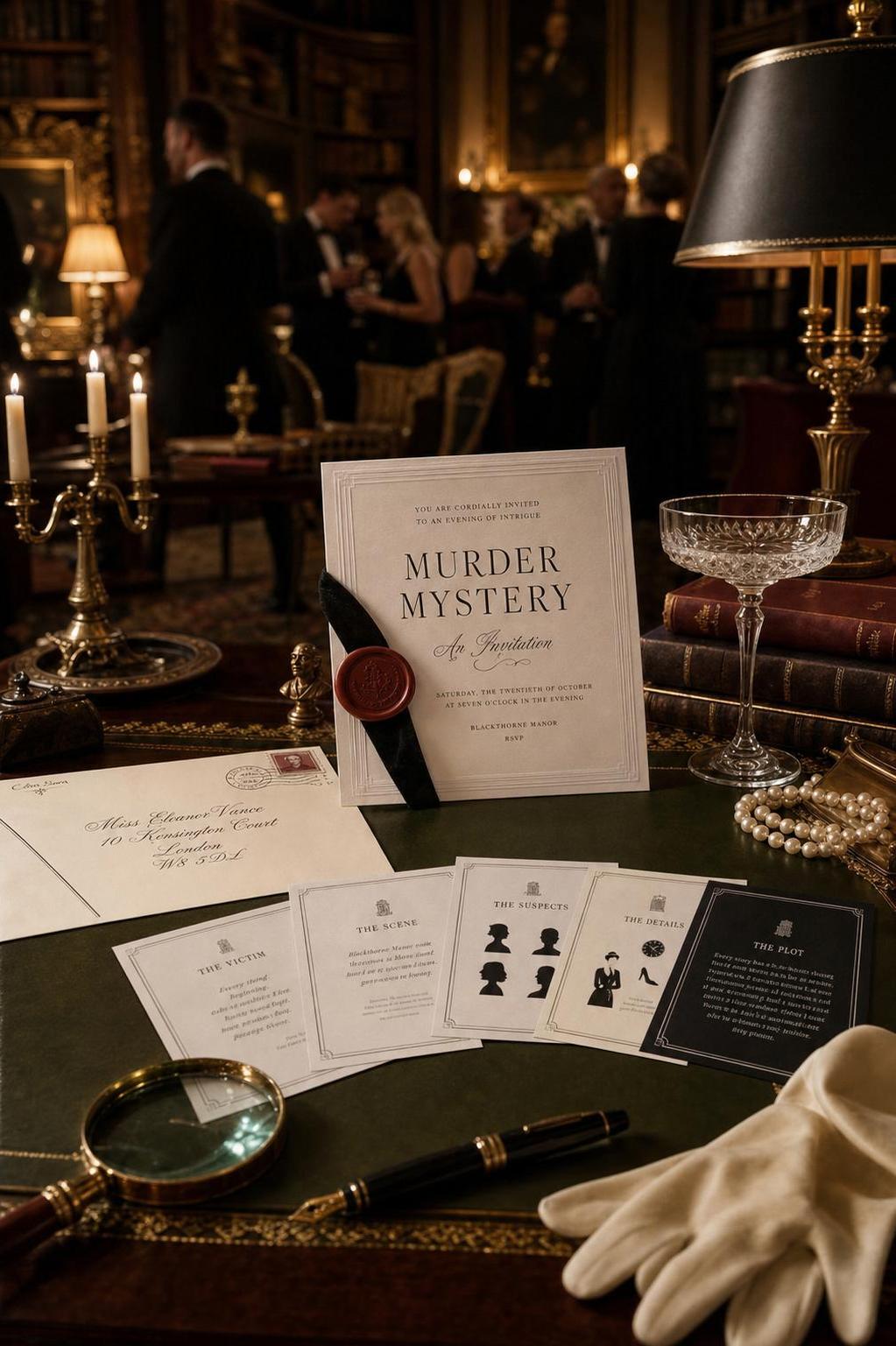
Introduction to Murder Mystery Invitations
Murder mystery invitations do far more than announce a date and time. They establish tone, intrigue, and expectation before guests ever arrive. For a themed party built around secrets, clues, and character roles, the invitation acts as the first piece of storytelling. A well-written invite can turn a simple gathering into an immersive experience by hinting at the plot, setting, and level of formality.
Why Invitations Matter for a Murder Mystery Party
Unlike standard party invitations, murder mystery invites often need to communicate more than logistics. They may introduce a fictional setting, such as a 1920s speakeasy, a glamorous masquerade ball, or a country manor filled with suspects. This early context helps guests prepare costumes, understand the mood, and feel excited about participating. According to event planning research from platforms like Eventbrite, themed events typically see stronger engagement when pre-event communication clearly reflects the experience guests can expect.
Setting Expectations Through Wording
The wording of a murder mystery invitation should balance practical details with dramatic flair. Guests usually need to know whether they are expected to dress in character, improvise dialogue, or simply follow a guided game. If the event includes assigned roles, the invitation may also need to explain when and how character information will be shared. Clear wording reduces confusion and increases the chance that guests arrive ready to take part fully.
Key Elements Every Invitation Should Include
Every effective murder mystery invitation combines creativity with essential information. The host should include the event date, start time, location, RSVP deadline, and dress code. It is also helpful to mention the theme, age suitability, and whether dinner or refreshments will be served. When invitations are sent digitally, hosts can add links to character guides or costume inspiration, making preparation easier and more engaging.
Blending Style With Practical Information
The best invitations feel theatrical without becoming vague. For example, a line such as “Join us for an evening of deception at Blackwood Manor” creates atmosphere, but it should be followed by precise details so guests know exactly what to do next. A strong invitation combines mystery with clarity, giving readers enough information to feel prepared while still preserving suspense.
Creating Excitement Before the First Clue
A memorable invitation can spark conversation well before the party begins. It encourages guests to imagine their roles, plan outfits, and anticipate twists, making the event feel special from the very first message.
Why the Invitation Sets the Tone
A murder mystery party begins long before guests arrive, and the invitation is the first clue. It does more than share the date, time, and location. It introduces the mood, style, and expectations of the event. Whether the evening is designed as a glamorous 1920s whodunit, a spooky manor-house investigation, or a playful detective game for coworkers, the invitation tells guests what kind of experience awaits them.
First Impressions Shape Participation
In event planning, first impressions matter because they influence how seriously people engage. An invitation with generic wording may make the party feel casual or unclear, while a thoughtfully designed one signals that the event is immersive and worth preparing for. This matters especially for murder mystery gatherings, where participation drives the success of the night. Guests are more likely to dress up, stay in character, and respond promptly when the invitation creates excitement from the start.
A strong invitation also reduces uncertainty. If guests immediately understand the theme, they can make better decisions about costumes, timing, and whether they should expect a formal dinner, lighthearted game, or interactive performance. Clarity increases attendance confidence, which can improve response rates and reduce last-minute questions.
Tone Communicates the Type of Mystery
The language, design, and structure of the invitation all work together to establish tone. A formal invitation with elegant typography and dramatic wording suggests sophistication and suspense. A playful invitation with witty lines and bright visuals hints at comedy and light entertainment. This distinction is important because murder mystery parties can vary widely in style.
Matching Wording to Theme
For example, an invitation that says, “You are cordially summoned to Blackwood Manor for an evening of secrets, scandal, and suspicious deaths,” creates a very different expectation than one that says, “Put on your detective hat and join us for a hilarious night of clues and chaos.” Both are effective, but each attracts a different mindset. The right wording helps guests emotionally enter the story before the event even begins.
Invitations Build Anticipation
Anticipation is a major part of the appeal. According to event marketing research, anticipation can significantly increase perceived value because people begin imagining the experience in advance. In the context of a murder mystery party, that anticipation may come from teaser details, character hints, or a cryptic message that invites curiosity. Even a short line such as “One guest will not survive dessert” can spark conversation and make the event more memorable before it starts.
Setting Expectations Without Revealing Too Much
The best invitations balance information with intrigue. Guests need practical details, but they should also feel there is something to discover. Including a brief premise, dress guidance, and role expectations helps them prepare, while a touch of mystery keeps the suspense alive. An effective invitation is both informative and theatrical, acting as the opening scene of the entire experience.
Key Details Every Invitation Should Include
A murder mystery invitation does more than announce a date. It sets expectations, builds suspense, and gives guests the practical information they need to participate confidently. A strong invitation balances atmosphere with clarity, ensuring the event feels intriguing without leaving invitees confused about logistics or their role in the game.
Essential Event Information
Every invitation should clearly state the date, start time, and location of the party. This sounds obvious, yet missing or vague details are one of the most common invitation mistakes across all event types. If the party is hosted at a private home, include the full address and, when helpful, a short note about parking or entry instructions. For virtual events, provide the platform name and explain when the access link will be sent.
The host should also specify the expected duration. Murder mystery parties often run longer than casual gatherings, typically between two and four hours depending on the format and number of players. Letting guests know the approximate end time helps them plan and reduces last-minute cancellations.
Theme and Tone
The invitation should communicate the theme of the mystery right away. Whether the setting is a 1920s speakeasy, a glamorous Hollywood awards night, or a haunted Victorian manor, this information shapes guest expectations and increases excitement. A themed opening line or short story hook can immediately create mood while still leaving room for the practical details.
Why Tone Matters
Tone influences how seriously guests prepare. If the wording is playful and comedic, attendees will expect a lighter social game. If it sounds dramatic and immersive, they are more likely to arrive ready to perform in character. Matching the invitation tone to the actual party experience helps avoid disappointment and improves participation.
Character and Costume Guidance
Many murder mystery events assign guests specific roles. If that applies, the invitation should explain whether characters are assigned in advance, selected later, or distributed upon arrival. Guests need enough notice to prepare, especially if costumes are encouraged. Include a brief description of the dress code, such as cocktail attire, period clothing, or simple themed accessories.
How Much Detail to Share
Give enough information to help guests prepare without revealing key plot points. For example, telling someone they are playing a wealthy art dealer is useful; disclosing their secret motive may spoil the game. Good invitations tease the experience without giving away the mystery.
RSVP and Guest Coordination
An RSVP deadline is essential because most murder mystery games are designed for a specific number of players. Unlike open-house parties, these events often require balanced casting and pre-planned materials. Include the response date, preferred contact method, and any information guests should send back, such as costume questions, dietary restrictions, or willingness to play a major role.
Planning Around Attendance
If a game is written for 8, 10, or 12 participants, every response matters. Hosts may need to reassign characters or adjust the script based on attendance. According to event planning industry surveys, response deadlines significantly improve final attendance accuracy, especially for themed events requiring preparation.
Food, Drinks, and Special Instructions
Guests should know whether food will be served, whether it is a full dinner or light snacks, and if they are expected to bring anything. This is especially important when the event includes a sit-down meal integrated into the mystery. Mentioning accessibility needs, age suitability, or whether phones should be limited during gameplay can also prevent confusion.
Helpful Extras
If space allows, include a short note about prizes, photo opportunities, or interactive elements. These details can increase enthusiasm and help guests understand that the evening is more than a standard dinner party. Clear, complete invitations make guests feel prepared, included, and eager to play, which is exactly what a successful murder mystery party needs.
Choosing a Murder Mystery Invitation Style
Match the Invitation to the Party Theme
Choosing the right murder mystery invitation style starts with the tone of the event. A 1920s speakeasy mystery calls for a very different design than a haunted manor dinner or a modern detective party. The invitation is the first clue guests receive, so it should immediately signal the world they are stepping into. Color palette, typography, and wording all help establish that atmosphere before the party even begins.
For example, a vintage-style invitation might use black, gold, and deep burgundy, along with art deco fonts and dramatic phrasing. A campy mystery party, on the other hand, may lean into playful language, exaggerated suspense, and brighter visuals. According to event marketing research, visual consistency can improve audience response because people form first impressions in seconds. In practical terms, that means a well-matched invitation style can make guests more excited and more likely to participate fully.
Consider Formal vs. Casual Presentation
The level of formality matters just as much as the theme. If you are hosting an elegant dinner party with assigned characters, a polished invitation with refined wording is usually the best fit. If the event is a relaxed game night with friends, a more casual and witty style may feel more natural. The invitation should reflect the experience guests can expect, helping them prepare socially as well as practically.
A formal invitation often includes full event details, structured layout, and elevated language. A casual version may use conversational wording and creative taglines. Both can be effective, but the wrong choice can create confusion. If guests expect a laid-back evening and arrive to a highly theatrical, costume-heavy event, they may feel unprepared. Matching style to format helps avoid that disconnect.
Printed Invitations vs. Digital Designs
Printed invitations offer a tactile, immersive quality that works especially well for murder mystery parties. Heavy cardstock, wax seals, or aged paper effects can make the invitation feel like a prop rather than just an announcement. This style is ideal for milestone birthdays, corporate events, or upscale themed dinners where presentation adds value.
Digital invitations, however, are faster, easier to track, and often more budget-friendly. Platforms like Canva and Evite allow hosts to customize templates while managing RSVPs efficiently. In 2024, digital invitations remain the most common choice for social events because they combine convenience with strong design flexibility. If you choose digital, you can still preserve atmosphere through custom graphics, themed borders, and dramatic copy.
Choose a Style That Supports Guest Participation
A strong invitation style does more than look attractive; it encourages involvement. Murder mystery parties work best when guests understand their role in the experience. If costumes are encouraged, the invitation should visually and verbally reinforce that expectation. If character assignments will be sent later, the design should hint at intrigue without overwhelming guests with too much information upfront.
Key Elements to Align
| Element | Style Consideration |
|---|---|
| Theme | Vintage, gothic, modern, comedic |
| Tone | Formal, playful, suspenseful |
| Format | Printed, digital, interactive |
| Guest Role | Costume-focused, character-led, casual participation |
When these elements align, the invitation becomes part of the storytelling. That is what makes a murder mystery invitation memorable and sets the stage for stronger guest engagement in the sections that follow.
Murder Mystery Invitation Template Types
Choosing the right invitation format sets the tone for the entire event. A murder mystery party depends on atmosphere, and the invitation is often the first clue guests receive. Template type matters because it shapes expectations, communicates practical details, and helps guests understand whether the evening will feel elegant, playful, spooky, or theatrical. From printable designs to digital layouts, different invitation styles serve different hosting needs.
Printable Invitation Templates
Printable templates remain one of the most popular options because they offer a classic, tangible feel. Hosts can download a design, customize the wording, and print copies at home or through a professional service. This format works especially well for formal mystery dinners, birthday celebrations, and themed house parties where presentation adds to the experience.
A printed invitation can mimic a detective file, an old-fashioned letter, a newspaper clipping, or a sealed case report. These designs create immediate immersion. Physical invitations also tend to feel more memorable, especially for milestone events. According to marketing studies on direct mail engagement, physical materials often achieve higher attention rates than digital messages, which helps explain why printed invitations still carry appeal for special occasions.
Best Use Cases for Print Designs
Printable templates are ideal when the host wants guests to keep the invitation for reference. Murder mystery parties often include costume guidance, character names, and arrival instructions, so a printed card can be useful. This format also suits events with older guests or mixed age groups who may appreciate a traditional invitation over an app-based message.
Digital Invitation Templates
Digital templates are efficient, affordable, and easy to distribute. They can be sent by email, text, or invitation platforms, making them especially useful for larger guest lists. A host can personalize the design quickly and track responses without managing paper copies. For busy planners, digital invitations reduce both time and cost while still allowing strong visual branding.
Many digital templates include themed graphics such as magnifying glasses, blood-red accents, vintage typewriter fonts, or mansion silhouettes. Some platforms also support animated elements, which can make the invitation feel more dramatic. For example, a flickering candle graphic or a slowly revealed “suspect list” can heighten anticipation before the party even begins.
Character-Based Invitation Templates
Character-based templates go beyond standard event announcements by assigning each guest a role within the mystery. This type is especially valuable for structured murder mystery games, where every attendee plays a suspect, detective, witness, or victim-connected figure. The invitation may include the guest’s character name, backstory, costume suggestions, and secrets to keep hidden.
This format helps guests prepare more effectively. Instead of arriving unsure of what to do, they come ready to participate. A strong character invitation increases engagement because it turns the event into an experience before the party starts. For hosts using boxed games or downloadable mystery kits, character templates often align with the script and make organization much easier.
What to Include in a Character Template
A useful character invitation should clearly state the guest’s role, the event theme, and any wardrobe expectations. It should also explain whether the character assignment is fixed or flexible. If the mystery involves accents, props, or period clothing, those details should appear in the invitation so guests have enough time to prepare.
Theme-Specific Invitation Templates
Theme-specific templates are designed around a particular setting or era. Popular examples include 1920s speakeasy mysteries, Victorian manor crimes, Hollywood scandals, masquerade murders, and spooky Halloween investigations. These templates are effective because they visually communicate the party concept at a glance.
A Gatsby-inspired invitation might feature gold borders and art deco typography, while a haunted mansion design may use dark florals and distressed textures. Matching the template to the storyline creates consistency, which makes the event feel more polished and intentional. This is especially important for social media-friendly gatherings where guests often decide how much effort to invest based on the invitation’s style.
Editable and Fill-In Templates
Editable templates give hosts the most flexibility. They are usually available through design platforms or downloadable files that allow changes to names, dates, venue details, RSVP instructions, and theme wording. Fill-in templates are similar but simpler, offering a prewritten structure with blank spaces for key information.
These options are helpful for first-time hosts who want guidance without starting from scratch. They also reduce wording mistakes and ensure no essential detail is forgotten. A well-designed editable template balances creativity with convenience, making it easier to produce an invitation that looks professional without requiring graphic design experience.
Comparing Common Template Types
| Template Type | Best For | Main Advantage |
|---|---|---|
| Printable | Formal or keepsake events | Tangible and memorable |
| Digital | Fast planning and large guest lists | Easy distribution |
| Character-Based | Interactive mystery games | Strong guest immersion |
| Theme-Specific | Visually dramatic parties | Clear atmosphere |
| Editable/Fill-In | Beginners and quick customization | Simple and flexible |
The best choice depends on budget, timeline, guest preferences, and how immersive the host wants the mystery to feel.
Wording Tips for Different Party Tones
The tone of a murder mystery invitation shapes expectations before guests ever arrive. A playful message suggests laughter, costumes, and light improvisation, while a darker, more dramatic invitation signals suspense, secrets, and theatrical tension. Choosing the right wording helps attract the right energy and ensures guests understand whether the evening is elegant, campy, spooky, or family friendly. In event planning research, first impressions strongly influence attendance and engagement, making invitation language one of the most important details in party preparation.
Matching Language to the Experience
A murder mystery party can take many forms, from a 1920s speakeasy whodunit to a haunted manor investigation. The wording should reflect the style of the event as clearly as the design, colors, and theme. If the invitation says, “You are summoned to uncover a chilling crime beneath candlelight,” guests expect a dramatic atmosphere. If it says, “Join us for a night of clues, chaos, and suspiciously good snacks,” the tone feels more relaxed and humorous.
Consistency matters. If the invitation sounds formal but the event is actually casual, guests may overdress or prepare for a more serious roleplay experience than intended. Clear wording reduces confusion and improves participation, especially for first-time players who may feel unsure about what a murder mystery party involves.
Wording for a Formal and Elegant Tone
For upscale parties, use polished language with a sense of intrigue. Words like “cordially invited,” “an evening of mystery,” and “request your presence” create a refined impression. This style works especially well for black-tie dinners, period-themed events, or milestone celebrations hosted in restaurants, banquet rooms, or decorated homes.
Example phrasing
“You are cordially invited to an evening of deception, scandal, and suspense. Join us as we gather to unravel a most unsettling crime.”
This type of wording suggests structure and sophistication. It also pairs well with practical details such as dress code, arrival time, and character assignments presented in a clean, formal format.
Wording for a Fun and Playful Tone
A playful tone is ideal for casual gatherings, birthdays, or groups that want entertainment without too much intensity. Use lively verbs, light humor, and approachable phrasing. Guests should feel excited rather than intimidated. Expressions such as “crime-solving adventure,” “suspicious suspects,” or “prepare for twists, laughs, and alibis” make the event sound welcoming.
Example phrasing
“Get ready for a night of mystery, mayhem, and plenty of accusations. Someone has committed the crime, and everyone has something to hide.”
This style works well when the host wants guests to relax, improvise, and enjoy the social side of the game. It is especially effective for mixed-age adult groups or first-time participants.
Wording for a Dark and Dramatic Tone
Some murder mystery parties lean into gothic suspense or cinematic tension. In that case, stronger atmospheric language helps set the mood. Use words like “shadowed,” “forbidden,” “haunting,” and “deadly.” The goal is not to alarm guests but to create anticipation for a more immersive experience.
Example phrasing
“On a night cloaked in secrets, a terrible crime will demand answers. Enter if you dare, but trust no one.”
This tone is popular for Halloween parties and themed events inspired by noir, Victorian horror, or classic detective fiction. It works best when the rest of the invitation design supports the same dramatic style.
Wording for Family-Friendly or Teen Parties
When the guest list includes younger players, the wording should keep the mystery exciting without sounding too grim. Focus on clues, puzzles, teamwork, and adventure rather than violence. Phrases like “case to crack,” “top-secret mission,” and “mystery challenge” keep the theme age-appropriate.
Example phrasing
“You’ve been recruited to solve a top-secret mystery. Gather the clues, question the suspects, and see if you can crack the case.”
This approach reassures parents and makes the event sound accessible to teens or families. It also broadens appeal for school, community, or birthday settings.
Practical Tone Adjustments That Make a Difference
Small wording choices can dramatically shift the invitation’s feel. “Attend” sounds more formal than “come along.” “Investigate” feels more serious than “figure out.” Even the phrase “murder mystery” can be softened in some contexts by using “mystery dinner” or “whodunit party.” According to consumer communication studies, language framing affects emotional response, which is why subtle edits can improve guest enthusiasm.
Keep these elements aligned
| Element | Formal Tone | Playful Tone | Dark Tone |
|---|---|---|---|
| Greeting | Cordially invited | Join us | You are summoned |
| Activity | Unravel the mystery | Solve the case | Survive the secrets |
| Dress cue | Formal attire requested | Costumes encouraged | Dress for a deadly evening |
The best invitation wording does more than share logistics. It builds the world of the party and helps guests step into character before the first clue appears.
Sample Murder Mystery Invitation Wording
The right invitation wording does more than share a date and time. It sets the mood, hints at the storyline, and gives guests a reason to RSVP with enthusiasm. For a murder mystery party, the invitation is part of the entertainment, acting as the first clue in an immersive experience. Well-written wording can make a casual gathering feel like a glamorous 1920s speakeasy, a chilling manor-house investigation, or a modern whodunit full of secrets.
What Great Murder Mystery Invitation Wording Should Include
Strong invitation wording balances atmosphere with clarity. Guests need the practical details, but they also want a sense of the drama ahead. A useful invitation usually includes the event type, date, time, location, dress code, RSVP instructions, and whether guests will receive assigned characters. According to event planning best practices, invitations sent three to six weeks in advance generally give guests enough time to prepare costumes and confirm attendance, especially for themed events.
Setting the Tone From the First Line
The opening line should immediately establish the party’s personality. A formal mystery might begin with elegant, suspenseful language, while a comedic mystery can sound playful and exaggerated. For example, a refined invitation could say: “You are cordially summoned to an evening of intrigue, deception, and deadly secrets.” A lighter version might read: “Someone is about to meet an untimely end, and we need your detective skills to crack the case.” Both approaches work because they signal what kind of experience guests should expect.
Matching Wording to the Theme
Theme-specific wording makes invitations feel tailored rather than generic. A 1920s party may reference jazz, champagne, and scandal. A haunted mansion mystery might mention stormy nights, candlelit halls, and family curses. A detective-noir theme can use language about shadowy suspects and smoky back rooms. Specific imagery helps guests visualize the event and often increases participation because the theme feels more vivid and memorable.
Sample Formal Invitation Wording
For a sophisticated gathering, polished wording creates anticipation and elegance. A sample might read:
“You are invited to an unforgettable evening of mystery and suspense at our Murder Mystery Dinner Party. Join us on Saturday, October 19 at 7:00 p.m. at Blackwood Manor, where secrets linger behind every door and one guest may not survive the night. Formal attire or themed costume is encouraged. Kindly RSVP by October 5 to confirm your place in the investigation.”
This style works well for dinner parties, corporate events, or adult celebrations where hosts want a more cinematic atmosphere.
Sample Playful Invitation Wording
A playful tone can make the event feel accessible, especially for first-time players. Consider this version:
“A crime is brewing, the suspects are gathering, and your presence is urgently required. Join us for a Murder Mystery Party on Friday, November 8 at 6:30 p.m. at 14 Maple Lane. Come dressed to impress in theme-appropriate attire and prepare for twists, clues, and plenty of suspicious behavior. RSVP by November 1 before the culprit slips away.”
This wording keeps the suspense while sounding welcoming and fun.
Sample Character-Based Invitation Wording
If guests will receive roles, the invitation should prepare them early. Character-based wording might say:
“You have been selected to attend an exclusive evening where every guest has a secret and one has a motive for murder. Your character details will be sent after RSVP, so be ready to step into role, follow the clues, and protect your alibi. Join us on December 14 at 7:30 p.m. for a night of deception, accusation, and dramatic reveals.”
This approach is especially effective because it encourages commitment. Guests understand that participation matters, which can improve engagement throughout the game.
When to Mention Costumes and Roles
Costume expectations should be stated clearly, not hidden in decorative language. If the party depends on immersion, mention whether costumes are required, optional, or simply encouraged. If characters are assigned, note whether guests may choose roles or will receive them from the host. Clear wording reduces confusion and helps guests arrive prepared, which makes the event run more smoothly.
Short Wording for Digital Invitations
Digital invites often work best with concise copy. A shorter version could read:
“You’re invited to a night of mystery, mayhem, and murder. Join us Saturday, January 20 at 7:00 p.m. for a Murder Mystery Party at Raven Hall. Dress for the theme, watch your back, and RSVP by January 10.”
This format suits email invitations, text-based invites, or online event platforms where readers scan quickly.
Common Wording Mistakes to Avoid
The most common issue is focusing so heavily on style that essential details get lost. Guests should never have to search for the time, address, or RSVP deadline. Another mistake is making the tone misleading. If the party is lighthearted, wording that sounds intensely grim may discourage some attendees. If the event is elaborate, overly casual wording may undersell it. The best invitation copy is thematic, clear, and actionable, giving guests enough information to feel excited and fully prepared for the mystery ahead.
Design Ideas and Visual Elements
Setting the Tone Through Design
The design of a murder mystery invitation does more than share event details; it establishes atmosphere immediately. Before guests read the first line, the visual style signals whether the party will feel like a glamorous 1920s speakeasy, a Victorian manor investigation, or a modern crime thriller. Strong invitation design helps guests understand the theme, dress appropriately, and arrive ready to participate.
A well-designed invitation usually combines typography, color, imagery, and layout into one cohesive experience. According to event marketing research, visual consistency improves recognition and response because people process images faster than text. In practical terms, that means a guest is more likely to remember an invitation with a clear, dramatic aesthetic than one with plain formatting and generic fonts.
Color Palettes That Create Suspense
Color is one of the most effective tools for building mystery. Deep shades such as black, burgundy, navy, and dark emerald often work well because they suggest secrecy, elegance, and tension. Metallic accents in gold or silver can add a refined touch, especially for formal mystery dinners or masquerade-style events.
Matching Color to Theme
Different subgenres benefit from different palettes. A haunted mansion theme may use charcoal, faded ivory, and blood red, while a 1920s crime party often looks striking in black, gold, and cream. For a detective noir concept, grayscale with a single accent color can create a cinematic effect. The key is consistency, since too many competing colors can weaken the dramatic impact.
Typography and Layout Choices
Fonts play a major role in storytelling. Serif fonts can feel classic and sophisticated, script fonts may suggest elegance or secrecy, and typewriter-style fonts evoke police files and case notes. The best results usually come from pairing one decorative headline font with one highly readable body font. This keeps the invitation stylish without sacrificing clarity.
Layout should also support the theme. Centered text with ornate borders suits formal mysteries, while asymmetrical layouts can mimic newspaper clippings or investigative dossiers. White space is equally important. A crowded invitation can feel confusing, but a balanced layout gives each detail room to stand out, including the date, time, location, and character instructions.
Imagery, Textures, and Decorative Details
Visual elements such as silhouettes, magnifying glasses, wax seals, fingerprints, chandeliers, masks, or vintage keys can reinforce the story world. These details work best when used selectively. A few strong motifs are more effective than excessive decoration. Background textures like aged paper, smoky overlays, or subtle damask patterns can add depth without overwhelming the text.
Print and Digital Enhancements
For printed invitations, premium paper stock, embossed lettering, or envelope liners can make the experience feel immersive. For digital invitations, animated candlelight, flickering shadows, or interactive RSVP buttons can create similar impact. Even small touches, such as a “confidential case file” label or redacted text effect, can make the invitation feel memorable.
Balancing Style With Readability
No matter how dramatic the design, the invitation must remain easy to read. Essential details should stand out clearly, especially RSVP deadlines and costume guidance. Contrast matters: light text on a dark background can look elegant, but only if the font size and spacing are generous enough for comfortable reading. A visually compelling invitation succeeds when it combines mood, clarity, and thematic precision in a way that excites guests before the mystery even begins.
Digital vs Printed Invitations
Choosing the Right Format for Your Murder Mystery Event
When planning a murder mystery party, the invitation format shapes guests’ first impression. Digital invitations are fast, flexible, and cost-effective, while printed invitations deliver a tactile, theatrical experience that can heighten anticipation. The best choice depends on your budget, timeline, audience, and the atmosphere you want to create before the first clue is revealed.
Digital invitations have become the default for many hosts because they are convenient and easy to personalize. Platforms such as Canva, Evite, and Paperless Post allow users to design themed invitations in minutes, often with matching fonts, vintage graphics, or noir-inspired visuals. They also simplify RSVP tracking, which is especially useful for murder mystery parties where guest count affects character assignments, seating, and food planning. According to event industry reporting, digital invitations can reduce stationery and postage costs by 70% or more compared with traditional mailed invites.
Benefits of Digital Invitations
A digital format works particularly well for casual gatherings, last-minute events, or groups that communicate primarily through email or messaging apps. Hosts can quickly update event details, resend missing information, or attach character sheets and costume suggestions without additional printing costs. This is a major advantage when managing interactive events where each guest may need unique instructions.
Best Use Cases for Digital Options
Digital invitations are ideal for younger audiences, workplace socials, and hybrid events where guests may need links to maps, playlists, or online participation details. They also support eco-conscious planning by reducing paper use, envelopes, and transport-related emissions.
Why Printed Invitations Still Stand Out
Printed invitations offer a sense of occasion that digital formats often cannot match. Receiving a physical envelope in the mail feels more personal and memorable, especially for themed events built around suspense and storytelling. A well-designed printed invitation can function as part of the experience itself, perhaps styled as a detective’s case file, a secret note, or a vintage dinner summons.
For formal parties or milestone celebrations, printed invitations can reinforce the event’s quality and attention to detail. Premium cardstock, wax seals, embossed lettering, or aged paper effects help establish mood before guests even arrive. This physical presentation can encourage stronger engagement, particularly among attendees who appreciate traditional etiquette or collectible keepsakes.
Balancing Cost, Style, and Guest Expectations
The decision is not purely aesthetic. Printed invitations involve design, printing, and postage expenses, and mailing timelines require more planning. Digital invitations save time and money, but they can feel less immersive if not thoughtfully designed. Many hosts choose a hybrid approach: sending a digital RSVP invite first, then following up with printed character cards or themed inserts. That combination preserves efficiency while still delivering dramatic impact and a stronger sense of mystery.
Personalizing Invitations for Guests
Why Personalization Matters
A murder mystery invitation does more than announce a date and time; it sets the tone for the entire evening. Personalized invitations make guests feel chosen for a special role rather than simply added to a guest list. That distinction matters. Event planning research consistently shows that tailored communication increases response rates and engagement because people are more likely to react when a message feels directly relevant to them.
For a murder mystery party, personalization also builds anticipation. When guests receive wording that reflects their personality, relationship to the host, or assigned character, they begin imagining the experience before they arrive. That early emotional investment can lead to stronger participation, better costumes, and more enthusiastic roleplay.
What to Personalize
Guest Names and Character Roles
The simplest starting point is addressing each guest by name, but effective personalization goes further. If your party includes assigned roles, mention the character title directly in the invitation. For example, instead of sending a generic note, you might write that “Jordan is cordially summoned as the ambitious art dealer with secrets to protect.” This approach instantly creates intrigue and gives the guest a reason to engage with the theme.
Tone, Theme, and Relationship
The wording should also reflect who the guest is to you. Close friends may appreciate playful language, while coworkers or mixed-age groups may respond better to a polished, slightly formal tone. Matching the invitation style to the recipient helps the message feel natural. A 1920s mystery, for instance, may use elegant phrasing, while a haunted manor storyline can lean into suspenseful, atmospheric language.
Practical Ways to Add Detail
Personalization does not require rewriting every invitation from scratch. A flexible template can include customized fields for the guest’s name, role, costume hint, and a short teaser. Digital invitation platforms make this especially easy, allowing hosts to duplicate a design while changing only a few lines for each recipient.
A useful structure is shown below:
| Element | Example |
|---|---|
| Guest name | Dear Olivia |
| Character role | You are Lady Blackwood’s trusted confidante |
| Costume cue | Wear vintage evening attire |
| Story hook | You know something others must never discover |
Balancing Creativity and Clarity
While creative wording is important, clear event details must remain easy to find. Personalized invitations should still include the date, time, location, RSVP deadline, and any preparation instructions. The best invitations blend practical information with immersive storytelling so guests feel both informed and excited for the mystery ahead.
Common Invitation Mistakes to Avoid
Vague Event Details
One of the most common mistakes in murder mystery invitations is leaving out essential information. Guests need to know the date, time, location, dress code, and whether they will receive a character role in advance. If any of these details are unclear, confusion can reduce attendance and excitement. For example, a guest who does not realize the party requires 1920s attire may arrive unprepared and feel out of place.
Why Clarity Matters
Clear wording improves response rates and helps guests plan properly. According to event industry research, invitations with specific logistical details tend to generate faster RSVPs because recipients can make decisions immediately. In a themed event, clarity also builds anticipation by setting expectations from the start.
Overloading the Invitation
Another frequent error is trying to include too much information in one invitation. While murder mystery parties often involve backstory, character notes, and costume suggestions, cramming everything into the main invite can overwhelm readers. A better approach is to keep the invitation focused on the event itself and provide extra details in a separate insert, email, or linked document.
Balancing Theme and Readability
A dramatic tone is fun, but readability should come first. Highly stylized fonts, dark backgrounds, or excessive decorative language can make important details hard to spot. Guests should be able to scan the invitation quickly and still understand exactly what is expected.
Forgetting the RSVP Prompt
Many hosts also forget to make the RSVP request direct and visible. Without a clear response deadline, planning food, seating, and character assignments becomes difficult. A simple line such as “Please RSVP by October 10” keeps the process organized and ensures the mystery can unfold smoothly.
Conclusion
Creating memorable murder mystery invitations is about blending atmosphere, clarity, and creativity into one polished message. The strongest invitations do more than announce a date; they set expectations, spark curiosity, and make guests feel like they are stepping into a story before the party even begins. From choosing the right template to refining the wording, every detail helps build anticipation and supports a more immersive event.
Bringing Theme and Practicality Together
A well-crafted invitation balances dramatic flair with essential information. Guests need clear details about the time, location, dress code, and RSVP process, but they also respond to intriguing language that hints at secrets, suspects, and suspense. Effective wording turns a simple invite into part of the entertainment, especially when paired with design elements that match the chosen era or storyline.
Turning Invitations Into the First Clue
Whether you prefer elegant, funny, or chilling wording, the invitation should reflect the tone of the evening and make participation feel exciting rather than confusing. Personal touches, character assignments, and themed formatting can all elevate the experience. With the right approach, your invitation becomes the first clue in a night of mystery, helping guests arrive engaged, prepared, and ready to play their part perfectly.
Murder Mystery Invitation FAQs
What information should a murder mystery invitation include?
A strong murder mystery invitation should cover the same essentials as any event invite, but with extra detail to support the game experience. At minimum, include the date, start time, location, host name, RSVP deadline, and dress expectations. Because murder mystery parties often involve assigned roles, it is also helpful to mention whether guests will receive character sheets in advance or at the event.
Clarity matters just as much as creativity. A dramatic opening line can set the mood, but the practical details must still be easy to find. Guests should immediately understand whether the evening is a formal dinner, a casual house party, or a themed celebration such as a 1920s speakeasy or Victorian manor mystery. If the event includes dinner, cocktails, or prizes, a brief note can increase excitement and improve attendance rates.
Should you include character details in the invitation?
In many cases, yes. If your party relies on pre-assigned roles, adding a short character teaser helps guests prepare and engage with the theme before arrival. For example, a guest might be told they are “a glamorous jazz singer with a hidden grudge” or “a wealthy heir with something to lose.” These details build anticipation without revealing major plot points.
If you prefer surprise, the invitation can simply state that full character information will follow after RSVP. This approach works well for larger groups or for hosts using downloadable party kits, which often provide customized role assignments after the guest list is finalized.
How formal should the wording be?
The tone should match the style of the event. A black-tie mansion mystery benefits from polished, elegant wording, while a birthday party mystery can be playful and witty. The best invitations balance immersive language with straightforward instructions. Readers should feel intrigued, not confused.
For example, “You are cordially summoned to an evening of scandal, secrets, and suspicious alibis” creates atmosphere, while the next lines should clearly explain when and where to arrive. According to event planning best practices, response rates improve when invitations are both visually appealing and easy to scan, especially in digital formats where attention spans are shorter.
Are digital invitations good for murder mystery parties?
Digital invitations are often the most practical choice, especially when guest roles, updates, or costume notes may change. They are fast to send, simple to track, and easy to personalize. Platforms such as Canva, Evite, and Paperless Post allow hosts to combine themed design with RSVP management, which is particularly useful for parties with eight or more guests.
A digital format also makes follow-up easier. If a guest forgets their role description or asks about attire, the host can resend the invitation or attach extra materials instantly. For adult social events, this convenience can significantly reduce planning friction.
When are printed invitations a better option?
Printed invitations work best when the host wants a more theatrical or premium feel. They can be especially effective for milestone birthdays, corporate events, or holiday parties where presentation is part of the experience. A printed invite sealed with wax, styled like a police file, or designed as a vintage telegram can become part of the storytelling itself.
That said, printed invitations require more lead time. Hosts should usually send them three to five weeks in advance, giving guests enough time to RSVP, plan costumes, and coordinate schedules.
What if guests are new to murder mystery parties?
First-time players often worry that they will need acting skills or extensive preparation. The invitation should reassure them. A simple line such as “No acting experience needed” or “Costumes encouraged but not required” can remove hesitation and make the event feel accessible.
It also helps to explain the format briefly. Let guests know whether they will be solving clues, staying in character, or simply enjoying a guided party game. This reduces uncertainty and encourages participation from people who may otherwise decline because they do not know what to expect.
How can you make the invitation more memorable?
Memorable invitations usually combine theme, clarity, and personality. Strong wording, immersive design, and a clever subject line all help. A line like “One guest won’t make it to dessert” instantly creates intrigue, while a themed visual style reinforces the mood.
Small details can elevate the experience further. Matching fonts, period-inspired language, and a short backstory can make the invitation feel like the first clue rather than just an event notice. When done well, the invitation becomes part of the entertainment, setting expectations for an evening filled with suspense, laughter, and interactive fun.


