

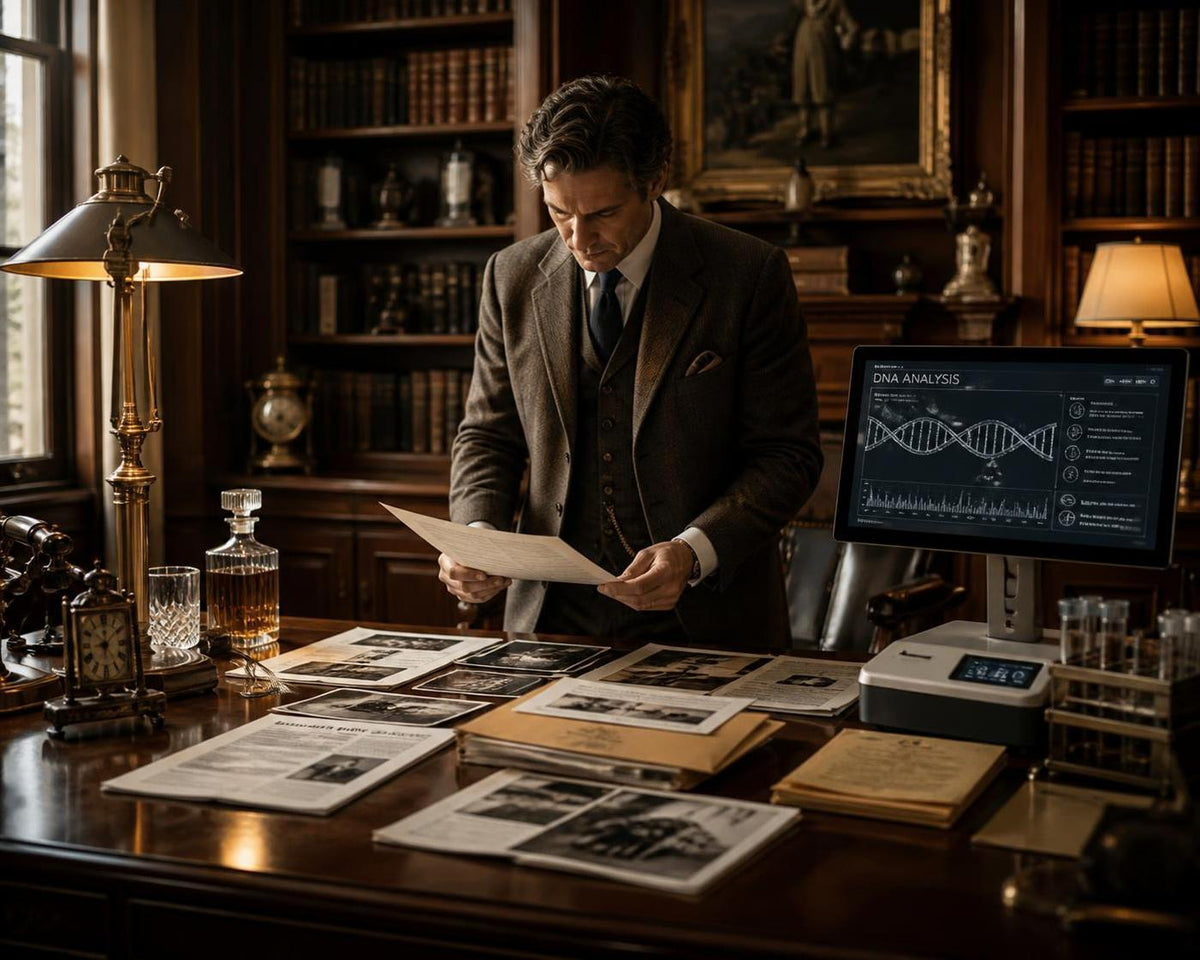
Introduction to Cold Cases
Cold cases are criminal investigations that remain unsolved after all immediate leads have been exhausted. In practice, these cases often involve homicides, sexual assaults, or missing persons investigations that have gone unanswered for years, sometimes decades. In the United States, law enforcement agencies collectively manage hundreds of thousands of unsolved cases, including an estimated 250,000 unsolved homicides and many more unresolved sexual assault files. A case becomes “cold” not because it no longer matters, but because traditional investigative methods have failed to produce enough evidence for an arrest or conviction.
Why Cases Go Cold
Several factors can push an investigation into cold case status. Witness memories fade over time, physical evidence may be incomplete, and early forensic techniques may not have been advanced enough to detect useful clues. In cases from the 1970s and 1980s, investigators often collected biological evidence without the tools needed to analyze it fully. As a result, potentially critical samples were stored for years, waiting for science to catch up.
The Human and Investigative Cost
A cold case carries a heavy burden for everyone involved. Families are left without answers, communities may continue to fear an unidentified offender, and investigators must revisit old files that can span thousands of pages. The passage of time complicates every step. Suspects may move, die, or change identities, while records can be lost or degraded. Even when evidence exists, connecting it to a person once seemed nearly impossible.
How Cold Cases Are Reopened
Cold cases are often revived when new evidence emerges or when old evidence is reviewed with improved methods. A detective may reexamine archived reports, compare patterns across jurisdictions, or submit preserved biological samples for modern forensic testing. This renewed attention has become increasingly effective because today’s laboratories can recover DNA profiles from much smaller or more degraded samples than was possible decades ago.
From Archived Evidence to New Leads
Items such as clothing, fingernail scrapings, hair roots, or sexual assault kits may contain trace biological material that earlier investigators could not interpret. Modern DNA analysis transforms these overlooked fragments into actionable leads, sometimes identifying a suspect after 40 years of silence. This shift has changed the meaning of a cold case: it is no longer simply an old investigation, but a case with renewed potential through science, persistence, and the careful preservation of evidence.
Why Cases Go Cold for Decades
The Early Limits of Forensic Science
Many cold cases remain unsolved for decades because the original investigation began with far fewer scientific tools than detectives have today. In the 1970s and 1980s, DNA profiling either did not exist or was too limited for routine casework. Investigators often relied on eyewitness accounts, blood typing, fingerprints, and circumstantial evidence. While useful, these methods could not always identify a specific offender with confidence.
In homicide and sexual assault cases, biological evidence might have been collected but stored without a clear path to testing. A semen stain, hair fragment, or trace of skin cells could sit in an evidence locker for years because laboratories lacked the technology to extract a reliable profile. In some jurisdictions, even when testing became available in the late 1980s, backlogs slowed progress. According to the National Institute of Justice, evidence preservation and later reanalysis have become central to solving long-dormant crimes precisely because earlier methods were so limited.
When Evidence Was Collected but Not Fully Understood
A case can go cold even when police did many things right. Investigators may have preserved clothing, fingernail scrapings, or weapons, yet had no way to detect the significance of microscopic material. What once appeared unusable can later become critical. The science changed faster than the case files did, leaving many investigations suspended between careful evidence collection and insufficient analytical capability.
Human and Investigative Barriers
Cold cases also persist because criminal investigations depend heavily on people, and people are imperfect. Witnesses move away, die, forget details, or become afraid to speak. Memories degrade over time, and even sincere testimony can become less reliable after years or decades. If the original suspect pool was broad and no confession, strong physical evidence, or credible witness statement narrowed it, detectives often reached a dead end.
Resource Constraints and Shifting Priorities
Police departments must prioritize active threats, recent violent crimes, and emergencies. That reality means older cases may receive less attention, especially in smaller agencies with limited staff. A detective assigned dozens of current investigations may not have the time to revisit boxes of old reports, re-interview witnesses, or request new testing. A case does not need to be forgotten to become cold; it only needs to lose momentum.
Recordkeeping, Storage, and Lost Connections
Before digital databases became standard, records were often paper-based, fragmented, and difficult to search. Reports, lab notes, photographs, and interview transcripts might be stored in separate locations. That made pattern recognition harder. A suspect arrested in another state years later could remain unlinked to an older crime simply because systems did not communicate.
The Importance of Preservation
Evidence degradation, poor packaging, or chain-of-custody issues can also delay justice. Heat, moisture, and contamination may damage samples, while incomplete documentation can complicate later testing. Even so, many departments that preserved evidence carefully created the possibility for future breakthroughs. That is why modern DNA methods, combined with digitized records and national databases, have transformed cases once considered unsolvable.
The Evolution of DNA Forensics
From Blood Typing to Genetic Fingerprinting
The history of DNA forensics reflects one of the most important transformations in modern criminal investigation. Before DNA analysis entered the courtroom, investigators relied on blood typing, fingerprints, hair comparison, and witness testimony. These methods could be useful, but they often lacked the precision needed to identify a single individual with high confidence. Blood typing, for example, could exclude suspects, yet it could not uniquely identify one person among millions because many people share the same blood group.
That changed in 1984, when British geneticist Sir Alec Jeffreys discovered that certain regions of human DNA vary greatly between individuals. His breakthrough led to the first use of DNA fingerprinting, a method that compared patterns in genetic material to distinguish one person from another. By 1986, DNA evidence had already helped solve a double murder case in England, proving both guilt and innocence in the same investigation. This early success demonstrated that genetics could do what older forensic tools often could not: connect biological evidence to a specific person with extraordinary accuracy.
The Rise of PCR and Modern Crime Lab Testing
Early DNA testing was powerful but limited. It required relatively large, well-preserved samples, which meant many older crime scene materials could not be analyzed effectively. The development of the polymerase chain reaction, or PCR, changed that dramatically. PCR allows scientists to copy tiny amounts of DNA millions of times, making it possible to test degraded or minimal biological evidence such as a few skin cells, a rootless hair, or decades-old stains.
Why PCR Changed Cold Case Work
For cold cases, PCR was revolutionary because evidence collected years earlier was often small, damaged, or poorly stored. With amplification technology, labs could revisit items once considered unusable. This opened the door for police departments to reexamine rape kits, clothing, cigarette butts, and weapons from cases that had gone unsolved for decades. In the United States, the growing use of PCR during the 1990s helped transform forensic DNA from a specialized scientific tool into a standard investigative method.
STR Analysis and Database Matching
As forensic science advanced, laboratories moved toward short tandem repeat analysis, commonly called STR testing. STRs are repeating sequences in DNA that vary significantly from person to person. By examining multiple STR locations, analysts can create a profile with an extremely low probability of random match. Modern forensic systems often examine 20 core STR markers in the U.S., producing highly discriminating results suitable for court proceedings.
The expansion of DNA databases made STR analysis even more effective. The FBI’s Combined DNA Index System, or CODIS, enables local, state, and federal agencies to compare crime scene profiles with profiles from convicted offenders, arrestees in some jurisdictions, and other unsolved cases. As of recent years, CODIS has assisted in hundreds of thousands of investigations, generating investigative leads that would have been impossible through manual comparison alone. This database-driven approach has been especially valuable in linking serial offenses committed across different places and time periods.
New Frontiers: Y-STR, Mitochondrial DNA, and Genetic Genealogy
Not all forensic samples are ideal for standard STR testing, so scientists developed specialized approaches. Y-STR analysis focuses on the Y chromosome and is useful in male-line identification, especially in sexual assault cases with mixed DNA samples. Mitochondrial DNA testing examines DNA passed through the maternal line and can be helpful when nuclear DNA is too degraded, such as in old bones, hair shafts, or historical remains.
The Impact of Investigative Genetic Genealogy
One of the most significant recent developments is investigative genetic genealogy. Instead of searching only law enforcement databases, this method compares crime scene DNA to profiles in public or consent-based genealogy databases to identify possible relatives of an unknown suspect. Investigators then build family trees to narrow candidates. This technique gained worldwide attention in 2018 with the identification of the Golden State Killer suspect, a breakthrough that showed how modern DNA tools could revive cases dormant for more than 40 years.
Accuracy, Limits, and Ongoing Improvement
Despite its power, DNA forensics is not infallible. Contamination, laboratory error, and misinterpretation can affect results, which is why strict chain-of-custody procedures and quality controls are essential. Still, when properly collected and analyzed, DNA remains one of the most reliable forms of forensic evidence available, and continuing advances in sequencing, preservation, and computational analysis are making it even more effective for aging evidence
How Modern DNA Testing Works
Modern DNA testing turns microscopic biological traces into high-confidence identity evidence. In cold case investigations, that matters because samples collected decades ago may be tiny, degraded, or mixed with material from several people. Today’s laboratories can often recover useful genetic information from a single hair root, old bloodstains, saliva on envelopes, or skin cells left on handled objects. The science rests on a simple fact: with the exception of identical twins, every person’s DNA profile is statistically unique, allowing investigators to compare crime scene evidence against known individuals or searchable databases.
From Biological Sample to DNA Profile
The process begins with careful evidence handling. Technicians document the item, preserve chain of custody, and use contamination controls such as gloves, masks, sterile tools, and negative controls. In older cases, these precautions are especially important because the original evidence may have been stored under less-than-ideal conditions. Heat, humidity, sunlight, and repeated handling can break DNA into smaller fragments, making analysis more difficult.
Next comes extraction, where cells are broken open and DNA is separated from proteins, dyes, dirt, and other substances. Laboratories may use organic extraction, Chelex methods, or silica-based purification depending on the sample type. The goal is to isolate enough clean DNA for testing. After extraction, analysts quantify the DNA to measure how much is present and whether inhibitors could interfere with downstream analysis. Quantification helps labs choose the right testing strategy, especially when only trace amounts are available.
The Role of PCR Amplification
Most forensic DNA testing relies on polymerase chain reaction, or PCR. This technique acts like a molecular photocopier, making millions of copies of targeted DNA regions from even a very small starting sample. PCR transformed forensic science in the 1990s because it allowed useful testing from evidence that would have been impossible to analyze with earlier methods.
Why STR Markers Matter
For standard forensic identification, labs usually examine short tandem repeats, known as STRs. These are locations in the genome where short DNA sequences repeat a variable number of times. One person may have 10 repeats at a marker, while another has 14. By testing multiple STR markers together, analysts generate a profile with extremely strong discriminatory power. In the United States, the CODIS core system uses 20 STR loci for national database compatibility, creating a profile that can be searched for matches.
Reading and Interpreting the Results
After PCR, the amplified fragments are separated by size using capillary electrophoresis. A detector reads fluorescent tags attached to the DNA fragments, producing a graph called an electropherogram. Peaks on that graph correspond to genetic markers. Analysts review peak height, balance, and possible artifacts to determine whether the profile is complete, partial, or mixed.
Mixtures, Degradation, and Partial Profiles
Cold case evidence often contains DNA from more than one person. A weapon handle, for example, may carry DNA from the victim, the perpetrator, and later handlers. Interpreting these mixtures requires statistical modeling and strict laboratory thresholds. Degraded samples may also produce partial profiles, where some markers fail to appear because the DNA fragments are too damaged. Even partial profiles can still be valuable if they are compared carefully and supported by other evidence.
Beyond STRs: Y-DNA, mtDNA, and Sequencing
When standard autosomal STR testing is not enough, labs may use specialized methods. Y-STR testing focuses on the Y chromosome and can help isolate male DNA in sexual assault cases with overwhelming female DNA present. Mitochondrial DNA testing examines DNA passed through the maternal line and is useful for hair shafts, bones, and highly degraded remains. Although mtDNA is less individually specific than STR testing, it can still narrow identity significantly.
Newer approaches include next-generation sequencing, which can read many genetic regions at once and perform better on damaged samples. Some labs also use SNP analysis, examining single nucleotide polymorphisms that support ancestry inference, phenotype prediction, or forensic genetic genealogy under legal and ethical controls.
Database Matching and Investigative Leads
Once a profile is developed, it may be compared against offender databases, arrestee databases where permitted, and forensic indexes containing profiles from unsolved crimes. CODIS has helped generate hundreds of thousands of investigative hits since its creation, linking suspects to cases and connecting crimes across jurisdictions. If no direct database hit appears, investigators may pursue forensic genetic genealogy, comparing crime scene DNA to public genealogy databases used by consenting participants. That method has been pivotal in several decades-old homicide identifications, especially when traditional leads were exhausted.
Why Modern Testing Reopens Old Cases
The biggest advantage of modern DNA technology is sensitivity combined with improved interpretation. Samples once labeled unusable can now yield profiles through better extraction chemistry, miniSTRs designed for fragmented DNA, and advanced software for mixture analysis. DNA does not solve a case by itself, but it can identify a suspect, exclude the innocent, and refocus an investigation with scientific precision. In 40-year-old cold cases, that capability often turns forgotten evidence into the strongest lead investigators have.
Forensic Genetic Genealogy Explained
What Forensic Genetic Genealogy Is
Forensic genetic genealogy, often shortened to FGG, is an investigative method that combines DNA analysis with traditional family history research to identify unknown individuals. In cold case work, it is most often used to generate leads about a suspect or an unidentified victim when standard forensic DNA methods have failed to produce a match in law enforcement databases.
Traditional forensic DNA profiling focuses on a small set of genetic markers, usually short tandem repeats, or STRs. These profiles are highly effective for direct comparison, but they only work when the person being sought is already in a criminal database or when a close family member’s DNA is available for comparison. FGG expands that reach by analyzing hundreds of thousands of single nucleotide polymorphisms, or SNPs, across the genome. This broader dataset can reveal distant biological relationships, sometimes as far back as third or fourth cousins.
How the Process Works
FGG begins with biological evidence collected from a crime scene, such as blood, semen, hair roots, or bone. If the sample contains enough usable DNA, a laboratory creates a SNP profile rather than relying only on the STR profile used in conventional forensics. That SNP profile is then uploaded, where legally permitted, to genealogy databases that allow law enforcement use under specific conditions.
When potential relatives appear, the work shifts from genetics to genealogy. Researchers build family trees using public records, including census data, obituaries, birth certificates, marriage licenses, newspaper archives, and social media clues. By tracing shared ancestors forward through multiple generations, they narrow the field to people who fit the case facts, such as age, sex, location, and opportunity.
From Distant Cousins to a Name
A key strength of FGG is that it does not require a perfect match. Even a relatively distant match can be enough to start reconstructing a family network. For example, if investigators identify two second cousins who share DNA with the unknown sample, genealogists may be able to locate the common ancestral couple and map their descendants. From there, they can isolate branches that place a likely individual in the right place at the right time.
This is why FGG is often described as a lead-generation tool, not a stand-alone proof of guilt. Once a likely suspect is identified, investigators still need independent evidence. They may collect discarded DNA from a coffee cup, tissue, or cigarette butt and compare it directly to the original crime scene sample using standard forensic methods.
Why It Has Changed Cold Case Investigations
The method gained widespread public attention in 2018 with the identification of the Golden State Killer suspect, a breakthrough that demonstrated the power of combining consumer-style genetic data with genealogical research. Since then, FGG has helped resolve hundreds of violent crime cases in the United States, including murders and sexual assaults that had remained unsolved for decades.
What makes FGG especially valuable in older cases is the way it overcomes the limitations of time. Witness memories fade, physical evidence deteriorates, and suspects may have died or moved. DNA, however, can remain informative for decades if preserved properly. Even when no direct database hit exists, relatives of the unknown person may have voluntarily uploaded their DNA to genealogy platforms, creating a pathway investigators did not have twenty years ago.
Success Rates and Practical Limits
FGG is powerful, but it is not universal. Its success depends heavily on DNA quality, database participation, and the complexity of the family tree. Endogamy, adoption, misattributed parentage, and incomplete historical records can complicate analysis. In some populations, available reference matches are still limited, which can reduce effectiveness.
Ethical and Legal Considerations
Because FGG touches both criminal justice and personal privacy, it has sparked significant debate. Most genealogy databases do not automatically permit unrestricted police access. Instead, users must often opt in to law enforcement matching, and policies vary by platform. Investigators are also generally expected to reserve FGG for serious violent crimes or unidentified human remains cases.
Balancing Privacy and Public Safety
Supporters argue that FGG has delivered justice in cases where all other leads were exhausted, while critics warn that one person’s DNA submission can indirectly expose relatives who never consented. As a result, best practices increasingly emphasize judicial oversight, strict case criteria, documentation, and confirmation through conventional forensic testing before any arrest is made.
In practical terms, forensic genetic genealogy is not replacing traditional detective work. It is strengthening it. The science provides a biological roadmap, but investigators still need records, timelines, interviews, and corroborating evidence to turn a genetic clue into a legally sound case.
Reopening 40-Year-Old Investigations
Why Old Cases Become Solvable Again
Reopening a homicide or missing-person investigation after four decades is no longer an act of desperation; it is often a data-driven strategy. Cases from the 1970s and 1980s were built with the tools available at the time: eyewitness statements, fingerprint comparisons, blood typing, and paper case files. Those methods could be powerful, but they also left many investigations stalled when no suspect emerged. Today, modern DNA analysis allows investigators to revisit preserved evidence and extract information that was once scientifically unreachable.
A major reason these cases can move forward is the survival of biological evidence. Hair roots, semen stains, blood spots, saliva on envelopes, skin cells on clothing, and fingernail scrapings may still exist in sealed property rooms. Even when samples are degraded, newer testing methods can often recover usable genetic profiles from material that earlier laboratories would have considered too limited or contaminated. What was once inconclusive can now become probative evidence.
The First Step: Reexamining Archived Evidence
Before any laboratory work begins, investigators typically conduct a full audit of the original case. They review reports, photographs, autopsy findings, interview notes, and chain-of-custody records. This process helps determine what evidence still exists and whether it was stored in conditions suitable for retesting. In many successful cold case breakthroughs, the turning point was not discovering new evidence, but recognizing the value of evidence collected decades earlier.
What Investigators Look For
Analysts focus on items most likely to contain offender DNA. Clothing worn during an assault, ligatures, cigarette butts, drinking containers, or letters sent to victims can all become critical. They also compare old suspect lists with modern databases and identify witnesses who may now be more willing to speak. In some jurisdictions, dedicated cold case units use digital case management systems to reorganize thousands of pages of records, making patterns easier to detect.
How Modern DNA Methods Change the Equation
The science itself has changed dramatically. In the late 1980s and early 1990s, forensic DNA testing often required larger, cleaner samples. Current methods, including short tandem repeat analysis, mitochondrial DNA testing, and advanced sequencing approaches, can work with much smaller quantities. Laboratories can also separate mixed DNA profiles more effectively than before, which matters in cases involving multiple contributors.
Another transformative development is forensic genetic genealogy. When a direct match is not found in law enforcement databases, investigators may use a DNA profile to identify relatives in public genealogy databases, then build family trees to narrow possible suspects. This approach has helped solve numerous cold cases, including crimes unsolved for more than 40 years. Its success depends on both scientific precision and meticulous historical research.
Practical Challenges in Reopening Long-Dormant Cases
Despite the promise of technology, reopening an old investigation is complex. Evidence may have been lost, mislabeled, or degraded by heat and humidity. Witness memories fade, detectives retire, and some key individuals die before answers emerge. Legal standards also matter. Prosecutors must show that the evidence was handled properly and that new testing methods meet admissibility requirements in court.
Balancing Science and Investigation
DNA rarely solves a case in isolation. A genetic lead must be supported by timelines, location data, witness accounts, and corroborating physical evidence. The strongest reopened cases combine modern laboratory results with disciplined investigative follow-up, turning a decades-old file into a prosecutable narrative that can finally withstand scrutiny.
Famous Cold Case Breakthroughs
Landmark cases that changed public expectations
Some of the most compelling proof of modern DNA technology’s power comes from famous cold case breakthroughs that once seemed impossible to solve. For decades, investigators relied on eyewitness accounts, confessions, fingerprints, and circumstantial evidence. While those methods remain important, they often failed in older cases where leads dried up, witnesses died, or physical evidence was too limited for earlier testing methods. Advances in forensic genetics have changed that reality, allowing law enforcement to revisit evidence collected 20, 30, or even 40 years ago.
A major turning point came with the arrest of the Golden State Killer, Joseph James DeAngelo, in 2018. The crimes, committed across California during the 1970s and 1980s, included at least 13 murders and more than 50 rapes. Investigators had preserved biological evidence for decades, but the suspect remained unidentified despite extensive traditional police work. The breakthrough came when investigators used genetic genealogy, comparing crime scene DNA to profiles in public genealogy databases. By building family trees and narrowing possible relatives, they identified DeAngelo, whose direct DNA sample later confirmed the match. This case drew international attention because it demonstrated that distant familial DNA connections could solve crimes long considered unsolvable.
The rise of forensic genealogy
The Golden State Killer case was not an isolated success. It helped launch a new era in which forensic genealogy became a practical investigative tool. According to public reporting, hundreds of cases in the United States have since been advanced or solved using similar methods. The process usually begins with a DNA profile generated from preserved evidence. That profile is then converted into a format suitable for genealogical comparison, allowing experts to identify relatives who may share small segments of DNA with the unknown suspect.
Why older evidence can still matter
One reason these breakthroughs are so significant is that cold case evidence often survives better than expected. Hair roots, blood stains, semen samples, skin cells, and even saliva on envelopes can sometimes yield usable DNA decades later if stored properly. Improvements in extraction methods also mean forensic labs can now work with smaller, more degraded samples than was possible in the 1990s or early 2000s.
The 1987 murder of Canadian schoolgirl Christine Jessop offers another striking example. In 2020, police announced that DNA testing had identified Calvin Hoover as the killer, nearly 36 years after the crime. Hoover had died in 2015, so he could not be prosecuted, but the identification finally answered a question that had haunted the victim’s family and the public for decades. The case also highlighted another value of DNA science: it can correct investigative errors and bring clarity even when a trial is no longer possible.
Cases that also exposed wrongful convictions
Cold case breakthroughs are not only about finding guilty parties. In some instances, modern DNA testing has exonerated innocent people who were convicted before advanced forensic methods existed. This has had a profound effect on public trust in the justice system. Organizations such as the Innocence Project have documented more than 375 DNA-based exonerations in the United States, many involving serious violent crimes.
The importance of retesting old assumptions
One well-known example is the case of Kirk Bloodsworth, the first person in the United States sentenced to death and later exonerated by DNA evidence. Convicted in 1985 for the murder of a nine-year-old girl in Maryland, Bloodsworth spent years in prison before DNA testing in the 1990s proved he was not the perpetrator. His case showed that preserved biological evidence could do more than identify suspects; it could also overturn deeply flawed verdicts.
What these breakthroughs reveal about modern investigations
These famous cases reveal a broader truth: time no longer protects offenders in the way it once did. As databases expand, laboratory techniques improve, and genealogical research becomes more refined, evidence that once sat untouched in storage can suddenly become decisive. Investigators now routinely review old files with fresh eyes, knowing that a partial profile or overlooked sample may hold the key to identification. In many departments, cold case units specifically prioritize evidence audits, because even a tiny biological trace can reopen an investigation that has been stalled for generations.
Beyond identification
The impact of these breakthroughs extends beyond arrests. They give families long-delayed answers, help clear the wrongly accused, and reshape how police preserve evidence today. Every high-profile success reinforces the importance of careful collection, long-term storage, and continued investment in forensic science, especially as newer techniques make yesterday’s unsolved cases newly vulnerable to discovery.
Limits, Risks, and Ethical Questions
Scientific limits of old DNA evidence
Modern DNA technology has transformed cold case investigations, but it is not a magic key that unlocks every mystery. Biological evidence collected 40 years ago is often degraded by heat, moisture, sunlight, or poor storage. In many older cases, samples were handled before strict forensic standards became common, increasing the risk of contamination. Even when a usable profile is recovered, it may be partial rather than complete, which can limit how confidently investigators can identify or exclude a suspect.
Another important limit is context. DNA can show that a person’s biological material was present, but it does not automatically explain when it was deposited, how it got there, or what role that person played. In a cold case, where witnesses may have died and memories have faded, that distinction matters. A profile linked to a crime scene can be powerful evidence, yet prosecutors still need surrounding facts to build a reliable narrative.
Investigative and legal risks
False confidence in advanced tools
As forensic methods become more sophisticated, there is a danger that juries, investigators, or the public may place too much trust in scientific language. Techniques such as probabilistic genotyping can help interpret complex mixtures, but they rely on statistical models and assumptions. If those methods are poorly explained, they may appear more certain than they really are. Courts in several countries have wrestled with how to present such evidence clearly so that it informs rather than overwhelms legal judgment.
Chain of custody also remains critical. If evidence has passed through many hands over decades, defense attorneys may challenge whether the sample tested today is truly the same material collected at the original scene. A breakthrough result can therefore reopen not only a case, but also disputes about procedure, preservation, and admissibility.
Privacy and genetic genealogy
The reach of family-based searching
One of the most debated developments in cold case work is investigative genetic genealogy, which compares crime scene DNA with profiles in consumer genealogy databases. This method helped identify the Golden State Killer in 2018 and has since contributed to hundreds of leads in the United States. Its power comes from family connections: investigators may identify a suspect not because that person uploaded DNA, but because a distant relative did.
That raises serious privacy questions. A person who consents to ancestry testing may not realize their data could indirectly assist a criminal investigation involving cousins, siblings, or parents. Policies differ across platforms, and opt-in rules have become more common, yet public understanding often lags behind the technology.
Ethical questions about fairness and accountability
Balancing justice with civil liberties
Supporters argue that solving violent cold cases serves victims, deters offenders, and restores trust in justice systems. Critics respond that expanding genetic surveillance can erode civil liberties if oversight is weak. There are also concerns about bias. Communities already subject to heavier policing may face disproportionate scrutiny if forensic databases and investigative practices are not carefully regulated.
Ethical use of DNA technology requires transparency, independent review, and limits on scope. Many experts recommend restricting genealogy searches to serious crimes such as homicide and sexual assault, requiring warrants or high-level approval, and documenting every step. Without those safeguards, a tool designed to correct historical injustice could create new forms of intrusion, error, and unequal treatment in the present.
The Future of DNA in Cold Cases
Rapid Advances in Sequencing and Analysis
The next decade will likely transform cold case work through faster, cheaper, and more sensitive DNA tools. In the early 2000s, processing complex biological evidence could take weeks and require relatively large, intact samples. Today, next-generation sequencing can recover useful genetic information from highly degraded material, including old bones, hair shafts, and trace touch DNA. Costs have also fallen dramatically. Human genome sequencing once cost millions of dollars; now, targeted forensic analysis can be performed for a fraction of that, making broader case review more realistic for public agencies.
Better Results From Smaller Samples
One of the most important developments is the ability to generate profiles from evidence once considered unusable. A cigarette butt stored for decades, a partial bloodstain, or DNA mixed from multiple individuals may now yield leads with improved extraction chemistry and software interpretation. Probabilistic genotyping has already helped analysts evaluate complex mixtures more accurately, assigning statistical weight to profiles that older methods might have excluded.
The Expanding Role of Investigative Genetic Genealogy
Investigative genetic genealogy has already reshaped high-profile cold cases by identifying suspects through distant relatives in consumer DNA databases. Its future impact could be even greater as databases grow and analytical methods improve. Even when no exact match exists, second- or third-cousin connections can help investigators build family trees and narrow a suspect pool. This approach was central in the identification of the Golden State Killer in 2018, a case that demonstrated how decades-old investigations can be revived with modern science.
Privacy, Policy, and Public Trust
As this field expands, ethical safeguards will matter as much as technical progress. Agencies must follow clear rules on consent, database access, and the types of crimes eligible for genealogy searches. Public trust depends on transparency, especially because genetic data reveals family relationships as well as identity. Strong oversight can help ensure these methods remain focused on serious violent crimes and unidentified human remains.
What Investigators May Soon Expect
In the future, cold case units may combine DNA with artificial intelligence, digital record reconstruction, and national evidence audits to prioritize solvable cases. Laboratories may also automate more of the review process, reducing backlogs and speeding comparisons. As preservation methods improve and more historical evidence is retested, cases once thought permanently unsolved may continue moving back into active investigation.
Conclusion: Science Meets Justice
The Lasting Impact of Modern DNA Technology
Modern DNA technology has transformed cold case investigations from exercises in fading memory into evidence-driven searches for truth. In cases that sat unresolved for 40 years or more, biological traces once considered too small, too degraded, or too old can now produce meaningful leads. Techniques such as advanced STR analysis, mitochondrial DNA testing, and forensic genetic genealogy have given investigators new ways to identify victims, exclude the innocent, and connect suspects to crimes long thought unsolvable.
Why These Breakthroughs Matter
The significance goes far beyond technical progress. Every solved cold case represents a restored name, an answered question, or a long-delayed measure of accountability. Families who spent decades living with uncertainty can finally receive verified information grounded in science rather than speculation. In the United States alone, hundreds of violent cold cases have been reopened through renewed forensic review, and a growing number have been solved because preserved evidence could be tested with methods unavailable at the time of the original investigation.
Where Science and Justice Intersect
What makes this era remarkable is the way scientific precision supports legal and moral responsibility. DNA does not replace detective work, witness interviews, or judicial process, but it strengthens them with objective data. When paired with careful chain-of-custody practices, database comparisons, and ethical oversight, modern forensic science becomes one of the most powerful tools available to the justice system.
A Continuing Evolution
As laboratories improve sensitivity, speed, and accuracy, more dormant cases will likely move toward resolution. The lesson is clear: time may weaken memories, but it does not always erase evidence. With the right technology, persistence, and safeguards, science continues to help justice catch up with the past.
FAQ: Modern DNA and Cold Cases
How can DNA still solve a case after 40 years?
Yes, DNA can remain useful for decades if biological material was collected, preserved, and stored reasonably well. Even when samples are old, degraded, or extremely small, modern forensic methods can often recover enough genetic information to generate a profile. Techniques such as enhanced extraction, probabilistic genotyping, and next-generation sequencing have improved analysts’ ability to work with compromised evidence that would have been unusable in the 1980s or 1990s.
Why older evidence matters now
Many cold cases were investigated before today’s testing standards existed. Clothing, fingernail scrapings, cigarette butts, envelopes, and sexual assault kits may still contain recoverable DNA. In some jurisdictions, re-testing archived evidence has produced major breakthroughs, especially in homicide and sexual assault investigations where preserved items were never fully analyzed.
What is investigative genetic genealogy?
Investigative genetic genealogy, often called IGG, compares crime-scene DNA to profiles in approved genealogy databases to identify possible relatives of an unknown suspect or victim. Instead of looking for an exact match, analysts search for shared segments of DNA that suggest family connections, such as second or third cousins. Genealogists then build family trees to narrow the field.
Is a genealogy match enough for an arrest?
No. A genealogy lead is an investigative clue, not courtroom proof. Investigators must still confirm identity through traditional police work and direct forensic comparison, usually by collecting a legally obtained reference sample from the suspect. Only that confirmed match can support prosecution.
How accurate is modern forensic DNA testing?
When a clean sample produces a full profile, forensic DNA testing is extremely reliable. Random match probabilities can reach one in billions or trillions, depending on the number of markers tested. However, accuracy depends on sample quality, contamination controls, and proper interpretation. Mixed samples involving multiple contributors are more complex, which is why laboratories increasingly use validated statistical software.
Are there privacy or legal concerns?
Yes. The use of DNA in cold cases raises ongoing debates about consent, database access, and genetic privacy. Policies vary by country and state, and some genealogy platforms require users to opt in before law enforcement can view their data. Courts and lawmakers continue to balance public safety interests with civil liberties, especially as technology advances faster than regulation.
Why do some cold cases still remain unsolved?
Even with better science, not every case has testable evidence. Some samples were lost, contaminated, or never collected. In other cases, DNA may identify a person who cannot be linked to the crime without supporting evidence, witness testimony, or a clear timeline.


