

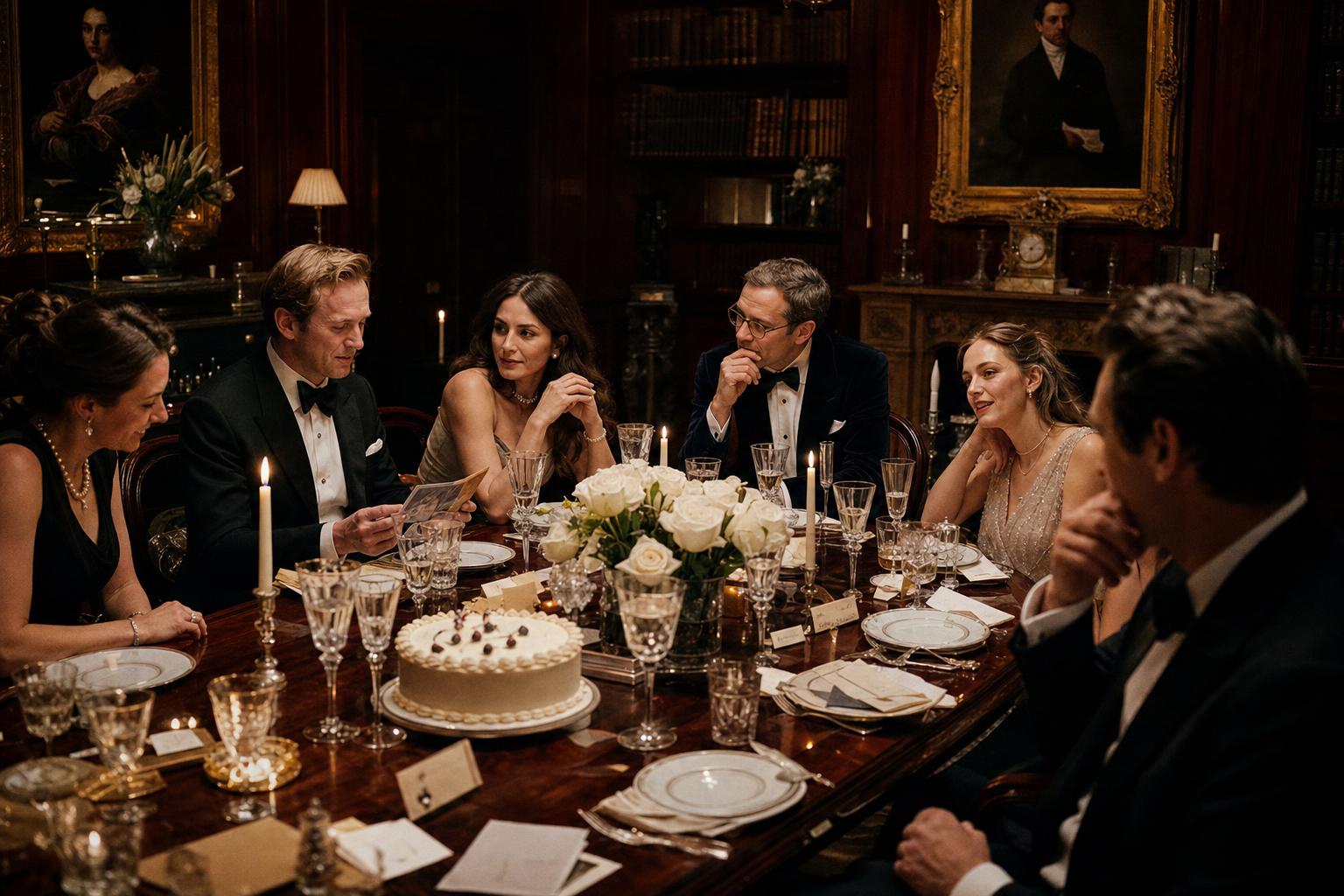
Introduction: Why Murder Mystery Games Work for Birthdays
Birthday parties succeed when they give guests a reason to connect, laugh, and share a memorable experience. Murder mystery games do all three at once, which is why they have become a popular choice for adult birthdays, teen celebrations, and even mixed-age gatherings. Instead of relying on passive entertainment, these games turn every guest into an active participant with a role, a motive, and a reason to engage.
Built-In Interaction Makes Socializing Easier
One of the biggest challenges at birthdays is helping different groups of people mingle. Friends from work, family members, neighbors, and longtime companions may not naturally mix. A murder mystery game solves that problem by creating a shared objective. Guests are encouraged to ask questions, compare clues, and form theories, which makes conversation feel natural rather than forced. The game structure removes social awkwardness and gives everyone an immediate way to join in.
A Format That Encourages Participation
Unlike traditional party activities, murder mystery games reward attention and creativity. Players are not just watching events unfold; they are shaping them. Even quieter guests often find it easier to participate when they have a character to play. This role-based format can increase engagement because people are responding as part of the story, not simply making small talk.
The Experience Feels Personal and Memorable
Birthdays are about creating moments people remember, and themed experiences tend to stand out more than standard dinners or casual house parties. A murder mystery adds suspense, humor, and surprise, turning the celebration into an event. According to event industry trend reports, immersive entertainment has grown steadily in popularity because guests increasingly value experiences over material extras. That makes mystery games especially well suited to modern birthday planning.
Flexible for Different Party Sizes and Styles
Another reason these games work so well is their adaptability. Some cases are designed for six to eight players, while others can handle groups of 20 or more. Hosts can choose elegant dinner-party mysteries, lighthearted comedic plots, or dramatic detective stories depending on the birthday person’s taste. This flexibility makes it easier to match the game to the venue, budget, and energy of the group.
A Strong Balance of Structure and Fun
The best birthday activities provide enough structure to keep momentum going without making the event feel rigid. Murder mystery games hit that balance well. They give the party a clear arc, from introductions and clue gathering to accusations and reveals, while still leaving plenty of room for improvisation, jokes, and unexpected twists. That combination is exactly what makes them such a strong option when choosing the right birthday case.
What Makes a Great Birthday Mystery Game
Balancing Challenge, Fun, and Accessibility
A great birthday mystery game does more than present a clever crime. It creates a shared experience where guests feel involved, entertained, and comfortable participating. The best games balance intrigue with accessibility, ensuring that both first-time players and seasoned mystery fans can enjoy the event without feeling lost. If the mystery is too complex, players may disengage. If it is too simple, the excitement fades quickly.
For birthday celebrations, pacing matters just as much as plot. Most party hosts need a game that fits naturally into a social setting, often alongside food, drinks, and conversation. A strong birthday mystery typically runs between 60 and 120 minutes, which aligns well with average party attention spans. This length gives enough time for character interaction, clue discovery, and a satisfying reveal without overwhelming guests.
A Theme That Matches the Party Atmosphere
The setting of the mystery strongly influences how memorable the party feels. A great birthday mystery game uses a theme that sparks imagination immediately, whether that means a glamorous 1920s mansion, a Hollywood scandal, or a modern true-crime style investigation. The theme should feel festive rather than grim, especially for mixed-age gatherings or casual social groups.
Why tone matters
Tone can make or break the experience. Many successful birthday mystery games lean into suspense with touches of humor, drama, or theatrical exaggeration. This keeps the event lively instead of heavy. For example, a campy detective story with eccentric suspects often works better at a birthday party than a dark, highly realistic homicide scenario. Guests are usually there to celebrate first and solve a mystery second.
Strong Roles and Easy Participation
One hallmark of an excellent mystery game is the quality of its character roles. Guests should receive parts that are distinct, easy to understand, and fun to play. Clear motivations, secrets, and relationships help players improvise naturally, even if they are not confident performers. When every guest has a reason to speak and investigate, the game becomes far more dynamic.
Flexible role design
The most effective games also account for real-world party logistics. Some birthday groups have eight guests, while others may have twenty. Good mystery games often include flexible character assignments, optional suspects, or host guidance for adapting the cast size. This flexibility can significantly improve usability, especially since party attendance often changes at the last minute.
Clues, Structure, and Replay Value
A satisfying mystery depends on fair and well-placed clues. Players should be able to solve the case through observation and discussion rather than random guessing. Good clue design rewards attention without making the answer obvious too early. Evidence might appear through printed witness statements, hidden objects, timed reveals, or scripted accusations.
Below is a simple comparison of qualities that often separate average games from standout birthday mysteries:
| Feature | Average Game | Great Birthday Mystery Game |
|---|---|---|
| Difficulty | Either too easy or confusing | Balanced and engaging |
| Theme | Generic or forgettable | Immersive and party-friendly |
| Roles | Uneven or unclear | Distinct and inclusive |
| Length | Drags or feels rushed | Fits party pacing well |
Host-Friendly Setup and Materials
Even the most creative mystery can disappoint if it is difficult to run. Hosts benefit from games with organized instructions, printable materials, and clear timelines. A great birthday mystery game reduces stress for the organizer, allowing them to enjoy the celebration too. Simple setup, guided rounds, and ready-to-use invitations or costume suggestions can elevate the entire experience while keeping preparation manageable.
Key Factors to Consider Before You Choose a Case
Choosing the right murder mystery case can make the difference between a birthday party that feels mildly entertaining and one that becomes the event guests talk about for months. While theme and packaging matter, the best choice usually comes down to how well the case fits your group, your space, and the kind of experience you want to create. A game that is brilliant for a tight-knit group of eight adults may fall flat with a mixed-age party of sixteen, so it helps to evaluate a few practical factors before buying.
Match the Case to Your Group Size
One of the first things to check is the recommended player count. Many murder mystery games are designed for a specific range, such as 6 to 8 players or 10 to 20 players, and that range is not arbitrary. If you run a game below its minimum, some roles may feel underdeveloped and key clues can lose impact. If you stretch beyond the maximum, guests may become spectators instead of active participants.
For birthday parties, this matters even more because participation drives energy. A case built for 12 players often works best when at least 10 people are willing to speak, question others, and stay engaged. If your guest list includes quieter attendees, choosing a slightly smaller or more flexible case can help maintain momentum.
Consider Age Range and Experience Level
Not every mystery game suits every audience. Some cases rely on subtle motives, layered timelines, and complex clue interpretation, while others are intentionally light, theatrical, and easy to follow. If your birthday group includes teenagers, first-time players, or family members who are unfamiliar with roleplay, a beginner-friendly case is usually the smarter option.
Complexity Affects Enjoyment
A highly intricate mystery can be rewarding, but only if players enjoy puzzle-solving. Research on game engagement consistently shows that people have more fun when challenge matches skill level. In practice, that means a group of experienced escape room fans may love a difficult case, while a casual birthday crowd may prefer a simpler structure with clearer objectives and stronger character prompts.
Think About Theme and Tone
Theme strongly shapes the atmosphere of the party. A 1920s speakeasy mystery creates a very different mood from a modern true-crime investigation or a campy Hollywood scandal. The best theme is one that aligns with the birthday person’s personality and the expectations of the guests.
Some groups want suspense and realism, while others prefer humor and dramatic exaggeration. Tone is just as important as plot. A dark, serious murder mystery may feel immersive for adults who enjoy crime fiction, but it could feel awkward at a lively birthday dinner where guests expect laughter and light interaction.
Check the Hosting Requirements
Before choosing a case, review how much preparation the host must do. Some games are nearly plug-and-play, with printable character sheets and step-by-step instructions. Others require the host to assign roles carefully, manage evidence reveals, decorate the room, or even act as a game master throughout the evening.
Time, Space, and Setup
A well-designed case should fit your venue. If you are hosting at home, consider whether players will have enough room to mingle privately and discuss clues. If the party is in a restaurant or rented hall, a simpler format may work better. Preparation time also matters. A host who has only one hour to organize should avoid a case that requires extensive costume coordination or multiple staged rounds.
Look at Replayability and Format
Most murder mystery games are designed for one-time use because once the solution is known, the suspense disappears. However, some kits include alternate endings, expandable character sets, or digital add-ons that increase value. If budget is a concern, compare what is included. A $25 downloadable game for 10 players may be more cost-effective than a $50 boxed set with fewer roles.
Physical vs. Digital Options
Physical kits can feel more premium and giftable, while digital versions offer convenience and instant access. Digital games are especially useful for last-minute planning, and printable files make it easier to replace lost materials. The right format depends on whether you prioritize presentation, flexibility, or speed.
Read Reviews for Real-World Performance
Product descriptions often promise easy hosting and unforgettable twists, but reviews reveal how the game performs with actual groups. Look for comments about pacing, clarity of instructions, and whether guests stayed engaged from start to finish. Reviews that mention specific party sizes or age groups are especially useful because they show how the case functions outside ideal conditions.
A strong case should balance clear structure, memorable characters, and satisfying clues without overwhelming the host or confusing the players.
Best Murder Mystery Themes for Adult Birthday Parties
Choosing the right theme can make or break a murder mystery birthday celebration. While the game mechanics matter, the theme sets the emotional tone, shapes guest expectations, and influences everything from costumes to menu choices. For adult birthday parties, the best murder mystery themes balance intrigue, humor, and social interaction, giving guests enough freedom to perform without feeling awkward. A well-matched theme also helps hosts align the party with the birthday person’s personality, whether they prefer glamorous drama, vintage suspense, or modern true-crime energy.
Classic 1920s Speakeasy Mystery
A 1920s speakeasy remains one of the most popular adult party themes because it combines elegance with instant recognizability. Guests can easily dress in flapper dresses, suspenders, pearls, and fedoras, which lowers the barrier to participation. The setting naturally supports dramatic motives such as bootlegging rivalries, hidden affairs, gambling debts, and political corruption. Because the Prohibition era is so visually iconic, decorations are straightforward, often relying on gold accents, dim lighting, jazz playlists, and faux casino props.
Why it works for birthdays
This theme works especially well for milestone birthdays because it feels celebratory and upscale. It also suits mixed-age adult groups, since most guests understand the references even if they are not history enthusiasts. Theatrical but accessible, a speakeasy mystery encourages roleplay without demanding deep improvisation skills.
Masquerade Ball Whodunit
A masquerade ball theme offers a more refined and mysterious atmosphere. Masks create instant intrigue, allowing even shy guests to feel protected while participating in character. This setup is ideal for adults who enjoy immersive experiences with a polished, romantic edge. Storylines often revolve around inheritance disputes, secret identities, blackmail, or scandal among elite social circles.
Hollywood Red Carpet Crime
For groups that enjoy glamour and comedy, a Hollywood-themed mystery is a strong choice. Guests can arrive as actors, directors, agents, critics, or paparazzi, making the cast dynamic and full of ego-driven conflict. This theme supports exaggerated personalities and sharp dialogue, which often leads to memorable interactions. It also gives hosts easy opportunities for themed cocktails, faux award statues, and photo backdrops.
Built-in entertainment value
Hollywood mysteries thrive because the setting already assumes drama. A suspicious death at a film premiere or awards gala feels believable within the world of celebrity culture. That built-in absurdity adds fun, especially for birthdays where the goal is laughter as much as suspense.
Roaring Casino Night Mystery
A casino setting creates momentum because guests immediately understand the social environment. High stakes, bluffing, and hidden alliances fit naturally into a murder mystery structure. This theme works particularly well for adults who enjoy party games, as hosts can blend simple casino-style activities into the evening. Motives may include cheating scandals, stolen winnings, or revenge between business partners.
Manor House or Country Estate Murder
The classic manor house mystery is the closest many people get to an Agatha Christie-style experience. It is ideal for guests who want a more traditional detective atmosphere, with suspects trapped in one location and secrets slowly revealed over dinner. This theme often feels more serious than others, though it can still include humor depending on the script.
Strong narrative appeal
A country estate setting supports layered storytelling. Family tensions, inheritance battles, and long-buried betrayals create a richer plot than more novelty-driven themes. For adults who enjoy puzzle-solving, this is often the most satisfying format.
Modern True-Crime or Detective Theme
A contemporary detective theme appeals to guests who love podcasts, streaming crime documentaries, and police procedurals. Instead of period costumes, players might portray journalists, detectives, influencers, tech founders, or suspicious neighbors. This can be especially useful for casual birthday groups because modern clothing is easier to assemble than historical outfits.
Practical advantages
According to event industry surveys, convenience strongly affects participation rates in themed gatherings. When costumes are simple, more guests join fully. A modern mystery reduces planning friction while still delivering suspense, making it a smart option for busy adults.
Choosing the best fit for your group
The best theme depends on guest personality, venue, and desired energy level. A formal dinner party may suit a manor house or masquerade mystery, while a lively restaurant gathering may benefit from Hollywood or casino drama. Hosts should also consider group size. Larger groups often do better with broad, high-energy themes, while smaller gatherings can support denser, more intricate plots.
| Theme | Best For | Atmosphere |
|---|---|---|
| 1920s Speakeasy | Milestone birthdays, mixed groups | Glamorous and playful |
| Masquerade Ball | Elegant evening parties | Romantic and mysterious |
| Hollywood Red Carpet | Outgoing, humorous guests | Dramatic and comedic |
| Casino Night | Interactive social groups | Fast-paced and competitive |
| Manor House | Puzzle-loving guests | Classic and suspenseful |
| Modern Detective | Casual or last-minute planners | Contemporary and accessible |
Matching theme to the birthday guest of honor
The strongest parties feel personal rather than generic. If the birthday person loves vintage style, a speakeasy or manor mystery may feel tailored and memorable. If they prefer bold social energy, Hollywood or casino themes can create a more animated room. A great murder mystery theme does more than decorate the party; it shapes how guests connect, perform, and remember the event, which is why theme selection should come before choosing the exact case or script.
Best Mystery Game Styles for Teens and Family Birthdays
Choosing the right mystery format can make a birthday feel immersive rather than awkward. For teens and mixed-age family groups, the best option usually depends on energy level, attention span, and how much structure guests need. A well-matched game style keeps everyone involved, encourages conversation, and avoids the common problem of a few confident players dominating the experience.
Hosted Party Mysteries
Hosted mysteries are one of the most popular birthday choices because they combine clear direction with theatrical fun. In this format, each guest receives a character, background details, and clues to reveal over several rounds. The birthday host or game organizer guides the flow, making it easier for players who are new to mystery games.
For teens, this style works especially well because it creates instant roles and gives everyone a reason to participate. A shy guest can rely on their character sheet, while outgoing players can improvise and perform. For family birthdays, hosted mysteries help bridge age gaps because grandparents, parents, and children all understand the same structure. The strongest advantage is accessibility: players do not need advanced puzzle-solving skills to enjoy the story.
Best for Social Interaction
Hosted mysteries are ideal when the goal is laughter, roleplay, and memorable conversations. A 10 to 14 player group often performs best because there are enough suspects to create tension without making the plot confusing. If the birthday includes dinner, this format also fits naturally between courses or snacks.
Escape-Room-Style Mystery Games
Escape-room-style mysteries focus more on solving puzzles than acting in character. Instead of interrogating suspects for dramatic reveals, players work together to decode messages, unlock clues, and connect evidence. This style appeals strongly to teens who enjoy logic games, scavenger hunts, or competitive teamwork.
For family birthdays, this format can be excellent if the puzzles are balanced. Research from the escape room industry has shown that most recreational teams perform best with 4 to 8 active participants, which means larger birthday groups may need to split into teams. That can actually improve engagement, since smaller teams reduce waiting time and give each person a task.
Best for High-Energy Groups
This style suits birthdays where guests want movement and challenge rather than extended conversation. A mystery built around hidden objects, timed clues, and short problem-solving rounds can keep attention high, especially for younger teens. However, very complex puzzles may frustrate mixed-age groups if younger players feel left behind.
Case File and Detective-Style Games
Case file mysteries are more structured and evidence-driven. Players examine witness statements, timelines, maps, and forensic-style clues to identify the culprit. These games feel closer to true crime or detective fiction, making them a strong fit for older teens and families who enjoy analytical thinking.
What makes this style effective is its flexibility. It can be played around a table, in a living room, or even virtually. The emphasis is on deduction rather than performance, so guests who dislike roleplay often prefer it. A family birthday with puzzle-loving adults and mature teens may find this style especially satisfying because everyone can contribute observations and theories.
Best for Smaller, Thoughtful Gatherings
Case file games usually work best when the group is willing to slow down and discuss details. They are ideal for birthdays with 4 to 10 players, where conversation can stay focused. If the event is more relaxed than theatrical, this format often delivers the most satisfying mystery-solving experience.
Hybrid Mystery Formats
Hybrid games combine roleplay, clue hunting, and deduction. A party might begin with assigned characters, then shift into puzzle solving, and finally end with a detective-style accusation round. This blended approach is often the best all-around choice for teen and family birthdays because it offers variety.
A hybrid format keeps different personality types engaged. Dramatic guests enjoy the acting, competitive players enjoy the puzzles, and quieter participants can shine during evidence analysis. For birthdays with mixed ages and interests, that balance can be the difference between a game that feels inclusive and one that only suits half the room.
How Group Size Changes the Best Case Choice
Choosing the right murder mystery case for a birthday party is not only about theme or difficulty. Group size has a major impact on how smoothly the game runs, how involved each guest feels, and whether the mystery creates excitement or confusion. A case that feels thrilling with eight players can become chaotic with sixteen, while a story designed for a large crowd may feel flat in a smaller setting.
Why player count matters
Most murder mystery games are built around a balance of suspects, clues, and speaking opportunities. In a smaller group, each player usually gets more time to interact, question others, and influence the outcome. This often makes the experience feel more immersive. With a larger group, the energy can be fantastic, but only if the case includes enough roles, side objectives, and clue distribution to keep everyone engaged.
Industry trends in party game design show that ideal player counts are usually narrow for the best experience, even when publishers list a broad range. For example, a game advertised for 6 to 12 players may feel strongest at 8 or 9, where role overlap and pacing are easier to manage. That is why checking the recommended sweet spot matters more than simply looking at the maximum capacity.
Best case types for small groups
For birthdays with six to eight guests, choose a case with deeper character development and more detailed evidence. Smaller groups can handle richer storytelling because every participant has room to absorb information and contribute. A manor-house murder, a noir detective case, or a tightly written family inheritance scandal often works especially well here.
Advantages of intimate cases
With fewer players, every role feels important. No one disappears into the background, and the host can manage the flow without needing heavy structure. This also makes smaller groups ideal for first-time players, since they can follow the plot more easily and build confidence in roleplay.
Best case types for medium groups
For nine to twelve players, the best choice is usually a balanced mystery with a clear central plot and several secondary conflicts. This size allows for stronger social dynamics, including alliances, secrets, and misdirection, without becoming too difficult to control. A masquerade ball, 1920s speakeasy, or celebrity gala mystery often fits this range well.
Keeping everyone involved
At this size, the case should include multiple clue paths so guests are not all waiting on one conversation. Good design spreads information across the room, encouraging movement and interaction.
Best case types for large groups
When the guest list reaches thirteen or more, choose a case built specifically for large parties. These mysteries need simpler core objectives, broader character archetypes, and enough flexible roles to prevent disengagement. Large-group games work best when they emphasize spectacle, fast exchanges, and team-style deduction rather than intricate one-on-one interrogation.
Matching complexity to scale
A complex mystery with too many hidden details can stall in a big room. Larger groups need clarity more than density, so the best case is often the one that sacrifices some nuance in favor of momentum, laughter, and constant participation.
In-Person, Printable, Boxed, or Virtual: Which Format Fits Best
Choosing the right murder mystery game format can shape the entire birthday experience. The best case is not only about theme or difficulty; it is also about how the game is delivered and played. Guest count, budget, available time, and the kind of atmosphere you want all influence whether an in-person hosted game, a printable kit, a boxed set, or a virtual experience will work best.
In-Person Hosted Games for Maximum Immersion
An in-person hosted format is often the most theatrical option. These games usually involve a host, assigned roles, scripted clues, and live interaction that unfolds over one to three hours. They work especially well for milestone birthdays, adult dinner parties, and groups that enjoy performance and improvisation.
Because players are physically together, the social energy tends to be stronger. Facial expressions, side conversations, and costume details all add to the suspense. This format is ideal for groups of 8 to 20, though some premium experiences can support even larger parties. The tradeoff is planning. In-person games usually require more setup, space, and coordination than other formats.
Printable Games for Flexibility and Value
A printable murder mystery is one of the most practical choices for birthday hosts. After purchase, the materials are downloaded and printed at home, which makes this format both fast and affordable. Many printable kits cost significantly less than professionally hosted events, often ranging from $15 to $40 depending on complexity and guest count.
Best for Last-Minute Planning
Printable games are especially useful when time is short. If a birthday party is only days away, a downloadable kit can solve the problem quickly. Hosts can also reprint lost pages, customize invitations, and sometimes adjust roles to fit their guest list. That flexibility makes printable formats popular for families, teens, and casual adult gatherings.
Boxed Games for Convenience
A boxed murder mystery game offers a middle ground between immersive hosting and easy setup. Everything arrives in one package, usually including character booklets, clue cards, invitations, and instructions. This all-in-one structure appeals to hosts who want a polished experience without having to assemble materials themselves.
What Boxed Sets Do Well
Boxed games are often designed for reliability. Components are professionally printed, rules are clearly organized, and the presentation can feel more gift-worthy for a birthday celebration. Many boxed sets are best for smaller groups, commonly between 6 and 12 players, so they suit intimate parties particularly well.
Virtual Games for Remote or Hybrid Birthdays
A virtual murder mystery is the best fit when guests are spread across different locations. These games are typically played over Zoom or similar platforms and may include digital character files, online clue rounds, and moderator support. During recent years, virtual social gaming grew sharply, and many publishers now design specifically for remote participation.
When Virtual Works Best
Virtual formats are excellent for long-distance families, busy adult friend groups, or hybrid birthdays where not everyone can attend in person. They remove venue limits and can reduce food and décor costs. However, they depend heavily on internet quality and guest engagement, so they work best with participants who are comfortable interacting online.
Matching the Format to Your Party Style
The best format depends on the experience you want to create. If your group loves costumes and dramatic roleplay, in-person is usually strongest. If budget and speed matter most, printable is hard to beat. If you want a polished package with minimal prep, boxed is a smart option. If your guest list spans cities or countries, virtual may deliver the most inclusive celebration.
Quick Comparison Table
| Format | Best For | Typical Group Size | Main Advantage |
|---|---|---|---|
| In-Person | Immersive parties | 8–20+ | Strong social energy |
| Printable | Budget-friendly events | 6–20 | Flexible and fast |
| Boxed | Easy hosting | 6–12 | Convenient presentation |
| Virtual | Remote birthdays | 4–20 | Accessible from anywhere |
Once the format is clear, it becomes much easier to narrow down the actual case, theme, and difficulty level that will make the birthday party memorable.
Difficulty, Roleplay, and Replay Value: Matching the Game to Your Guests
Choosing the right murder mystery game for a birthday party is not just about theme. Difficulty, roleplay intensity, and replay value often determine whether guests feel delighted or overwhelmed. A well-matched game keeps everyone engaged, encourages conversation, and helps the event flow naturally from introductions to the final reveal.
Choosing the Right Difficulty Level
Not every group wants the same challenge. Some birthday guests love solving layered puzzles with hidden motives, timelines, and conflicting clues. Others simply want a light social activity that adds structure to the party without demanding intense concentration. Difficulty should match both the group’s experience and the party atmosphere.
For mixed-age gatherings or casual celebrations, beginner-friendly games usually work best. These often include straightforward evidence, clearly defined suspects, and guided rounds that help players stay on track. By contrast, experienced players may enjoy advanced cases with red herrings, multiple clue types, and more complex deduction. A game that is too easy can feel flat, but one that is too hard may leave quieter guests disengaged.
Signs a Game May Be Too Complex
A mystery may be overly difficult for your group if players need constant rule clarification, struggle to understand their objectives, or lose momentum early. In social settings, complexity should create intrigue, not confusion. Many hosts find that a case designed for 90 to 120 minutes suits birthday parties better than longer formats, especially when food, gifts, or other activities are also planned.
Balancing Roleplay With Guest Comfort
Roleplay is one of the biggest variables in murder mystery games. Some titles ask players to fully embody dramatic characters, improvise dialogue, and accuse each other in character. Others use lighter roleplay, where guests read prompts, share clues, and participate without theatrical pressure. The best choice depends on how outgoing your guests are.
Light Roleplay vs. Immersive Performance
Light-roleplay games are ideal for groups that include introverts, first-time players, or guests who do not know each other well. These games reduce awkwardness and make participation feel accessible. Immersive games, however, can be unforgettable for confident groups who enjoy costumes, accents, and dramatic reveals. In those settings, stronger character-driven mechanics often produce the most laughter and memorable moments.
Creating Space for Different Personalities
A good birthday game should allow both expressive and reserved players to contribute. Structured clue-sharing, optional character prompts, and clear scene progression help ensure no one feels sidelined. This balance is especially important when the guest list includes a wide range of ages or social styles.
Considering Replay Value
Replay value matters most if you host often or want to lend the game to friends afterward. Because the solution becomes known after one playthrough, many mystery games have limited replayability with the same group. However, games with multiple endings, variable suspect roles, or expandable content offer more flexibility. If your birthday tradition includes recurring game nights, choosing a title with adaptable scenarios can provide better long-term value than a single-use case.
Top Murder Mystery Case Ideas by Party Mood
Choosing the right case for a birthday mystery party is not only about theme; it is about matching the energy of the room. A well-chosen storyline can make guests feel instantly involved, while the wrong tone can leave even a clever game feeling flat. The best murder mystery games work because they align with how people want to celebrate, whether that means laughing loudly, dressing dramatically, or solving a genuinely tricky puzzle.
For a Lighthearted and Funny Birthday Party
If your group prefers playful chaos over serious deduction, a comedy-driven case is usually the strongest choice. These mysteries often feature exaggerated suspects, ridiculous motives, and witty dialogue that keeps the atmosphere relaxed. A setting such as a disastrous awards night, a spoiled millionaire’s dinner, or a backstage theater scandal works especially well because it gives every guest permission to be theatrical.
Why humor-heavy cases work
A funny case lowers the pressure for first-time players. According to event industry surveys, interactive entertainment tends to perform best when guests feel comfortable participating, and humor is one of the fastest ways to build that comfort. In practice, this means even shy attendees are more likely to speak in character, accuse others, and enjoy the roleplay without worrying about getting every clue exactly right.
For a Glamorous and Stylish Celebration
Some birthday parties call for elegance. If guests are dressing up and expecting a polished evening, choose a case built around luxury, scandal, and high society. Think masquerade balls, 1920s speakeasies, casino nights, or celebrity galas. These settings naturally encourage dramatic entrances, strong costume choices, and memorable character interactions.
Best fit for adult birthday groups
A glamorous mystery often works especially well for milestone birthdays because it makes the event feel elevated. A 30th, 40th, or 50th birthday can benefit from a case where the setting itself becomes part of the celebration. When players step into a world of champagne, secrets, and betrayal, the party feels more immersive than a standard dinner gathering.
For a Darker, More Suspenseful Mood
If your guests love true crime, detective fiction, or psychological thrillers, a more serious case can create a gripping experience. These mysteries usually involve layered clues, red herrings, and a slower reveal of motives. A manor house murder, a secluded winter lodge, or a corporate conspiracy can all support a tenser tone.
Balancing suspense with fun
The key is to keep the mystery engaging without making the birthday feel heavy. Strong suspense cases still include moments of surprise and social interaction, but they focus more on deduction than comedy. This style is ideal for smaller groups that enjoy conversation and close attention to detail, since complex mysteries often reward players who listen carefully and connect evidence.
For High-Energy, Social Party Crowds
Some birthday groups want movement, noise, and constant interaction. For them, choose a fast-paced case with lots of secrets, alliances, and public reveals. A cruise ship disaster, reality TV reunion, or wild reunion party can keep guests circulating rather than sitting still for long stretches.
Matching gameplay to guest behavior
High-energy groups usually respond best to mysteries with shorter clue cycles and plenty of opportunities for accusation. In these cases, the entertainment comes as much from social dynamics as from solving the crime itself. The more interactive the structure, the better the payoff for extroverted guests.
Quick Mood-to-Case Guide
| Party Mood | Ideal Case Style | Best For |
|---|---|---|
| Funny and casual | Comedy mystery | First-time players |
| Elegant and dressy | Glamour or period mystery | Milestone birthdays |
| Serious and suspenseful | Detective or thriller case | Puzzle-loving groups |
| Loud and social | Fast-paced interactive mystery | Large outgoing parties |
The most successful choice comes from reading your guest list honestly. A brilliant case on paper will only shine if it matches the birthday crowd’s expectations, comfort level, and preferred style of fun.
How to Host the Game for Maximum Fun
Set the Scene Before Guests Arrive
A great murder mystery party depends as much on how you host as on which case you choose. Before the first guest arrives, create an atmosphere that signals this is more than a standard birthday gathering. Lighting, music, themed decorations, and printed character materials all help players step into the story quickly. Even simple touches, such as name cards, evidence envelopes, or a playlist matched to the game’s era, can make the experience feel immersive without adding major cost.
Hosts should also prepare the practical side carefully. Read the game instructions in full, organize clues in order, and confirm how many players the case supports. Many commercial murder mystery kits are designed for 6 to 12 players, while larger formats may accommodate 20 or more. Matching the guest count to the game structure prevents awkward gaps and ensures every participant has a meaningful role.
Choose the Right Format for Your Group
Not every birthday crowd enjoys the same style of play. Some groups love dramatic roleplay, while others prefer solving puzzles with lighter acting requirements. The best host considers personalities, energy levels, and age range before the event begins. A highly theatrical game may be perfect for outgoing adults, but a mixed group often benefits from a format that balances scripted prompts with open discussion.
In-Person, Hybrid, or Structured Rounds
For most birthday parties, an in-person format creates the strongest interaction because guests can read body language, form alliances, and react in real time. However, structure matters. Breaking the evening into rounds gives players time to absorb clues instead of feeling overwhelmed. A simple flow works well: introductions, first clue release, open questioning, second reveal, accusation phase, and final solution. This pacing keeps momentum high and helps quieter guests find opportunities to contribute.
Keep Everyone Engaged During Play
The host’s role is not to dominate the mystery but to guide the energy of the room. Encourage shy players with direct but gentle prompts, and prevent louder guests from solving everything too quickly. If the game stalls, offer a timed hint or remind players of overlooked evidence. Food service should also support the experience rather than interrupt it; finger foods and pre-poured drinks are usually easier than a full sit-down meal.
Build Fun Around the Mystery
Small extras can elevate the party significantly. Costume prizes, awards for “best detective” or “best performance,” and a themed birthday cake all extend the entertainment beyond the core investigation. When guests feel involved socially as well as intellectually, the game becomes memorable, interactive, and far more fun for everyone.
Common Mistakes to Avoid When Picking a Mystery Case
Choosing Difficulty Without Considering the Group
One of the most common mistakes is selecting a case that does not match the players’ experience level. A highly complex mystery with layered clues, red herrings, and long character backstories may excite seasoned players, but it can overwhelm first-time guests at a birthday party. If the case feels too hard, players may disengage before the final reveal. On the other hand, a mystery that is too simple can leave confident puzzle lovers bored.
Matching Challenge to Party Energy
A good rule is to consider how your group typically interacts. For example, a party of close friends who enjoy board games may handle a detailed investigation well, while a mixed-age family gathering may benefit from a lighter, more guided case.
Ignoring Group Size and Format
Another frequent error is overlooking the recommended player count. Many murder mystery games are designed for a specific range, and forcing a case meant for eight players into a group of twelve can create confusion and reduce participation. In some commercial kits, each guest receives a unique role, so missing or doubling characters can weaken the story.
Focusing Only on Theme
A glamorous 1920s setting or spooky manor theme may look appealing, but theme alone should not decide the purchase. The structure of the game matters just as much. Some cases rely heavily on scripted dialogue, while others encourage improvisation. If your guests are shy, an improv-heavy format may feel awkward rather than fun.
Checking Practical Details
Before choosing, review the game length, age suitability, and hosting requirements. A 90-minute case often works better for birthdays than a three-hour investigation, especially when food, cake, and socializing are also part of the event.
Conclusion: Which Murder Mystery Case Should You Choose
Choosing the right murder mystery case for a birthday comes down to matching the game to your group’s size, experience, and preferred atmosphere. A fast-paced, humorous case often works best for mixed-age parties or guests who are new to interactive mystery games, while a darker, more intricate storyline suits players who enjoy puzzles, roleplay, and extended discussion. In most birthday settings, the strongest option is the one that keeps everyone involved rather than the one with the most complicated plot.
Match the Case to Your Guests
If your party includes 8 to 12 players, a flexible case with simple character roles usually creates the smoothest experience. Larger groups often benefit from games designed with multiple suspects, side objectives, and rotating clues, which help prevent quieter guests from being left out. Smaller gatherings, by contrast, can handle more detailed narratives because each player has more time to engage with the evidence and story.
Balance Theme, Difficulty, and Time
A case that lasts 60 to 90 minutes is often ideal for birthdays, since it leaves room for food, gifts, and conversation without losing momentum. Theme matters just as much as mechanics. Glamorous 1920s settings, haunted manor plots, and detective noir stories each create a different energy, so the best choice depends on whether you want laughter, suspense, or theatrical drama. The perfect case is the one your guests will talk about long after the candles are blown out.
FAQ: Best Murder Mystery Games for Birthdays
What makes a murder mystery game ideal for a birthday party?
The best birthday murder mystery games balance easy participation, strong storytelling, and flexible group play. Unlike traditional board games, these experiences work as social entertainment, giving every guest a role in the unfolding case. For birthdays, that matters because guest lists often include mixed ages, different confidence levels, and varying familiarity with party games.
A strong choice usually has clear character briefs, simple rules, and a playtime of around 60 to 120 minutes. That range is long enough to feel immersive without taking over the entire celebration. Hosts should also look for games that match the party’s tone. A glamorous 1920s case suits a costume-heavy evening, while a lighthearted detective story may work better for casual family gatherings.
How do you choose the right case for your group size?
Group size is one of the most important factors. Many murder mystery kits are designed for 8 to 12 players, though some can stretch to 20 or more with optional characters. If your guest count is uncertain, choose a game with expandable roles so nobody feels left out.
Small groups
For intimate birthday dinners, a tightly written mystery with fewer suspects often works best. Smaller games allow deeper interaction, and each player usually gets more clues, motives, and speaking opportunities. This can make the experience feel more personal and dramatic.
Larger parties
For bigger celebrations, look for cases with teams, side objectives, or host-guided structures. These features help manage energy and prevent quieter guests from disappearing into the background. Some party-friendly mysteries also include printable evidence, audio clues, or voting rounds to keep everyone engaged.
Are murder mystery games better for adults, teens, or families?
They can work for all three, but the content and complexity should match the audience. Adult birthday groups often enjoy darker plots, sharper humor, and more elaborate deception. Teen groups usually respond well to fast-paced mysteries with accessible rules and modern themes. Family-friendly versions tend to avoid graphic crime details and focus more on puzzles, secrets, and playful suspicion.
Should you pick a scripted or improvised game?
Scripted games are easier for first-time hosts because they provide structure and reduce awkward pauses. Improvised games give confident guests more freedom to act, bluff, and shape the story. If your group loves roleplay, improvisation can be a highlight. If they prefer straightforward fun, a guided format is usually the safer option.
Quick comparison
| Style | Best for | Main advantage |
|---|---|---|
| Scripted | Beginners | Clear direction |
| Improvised | Outgoing groups | Greater creativity |
| Hybrid | Mixed groups | Balance of structure and freedom |
What themes are most popular for birthday parties?
Classic manor-house murders, roaring twenties scandals, masquerade balls, and Hollywood crime stories remain especially popular because they pair well with decorations, dress codes, and themed food. The best case is the one that fits your guests’ personalities, making the mystery feel like part of the celebration rather than a separate activity.


