

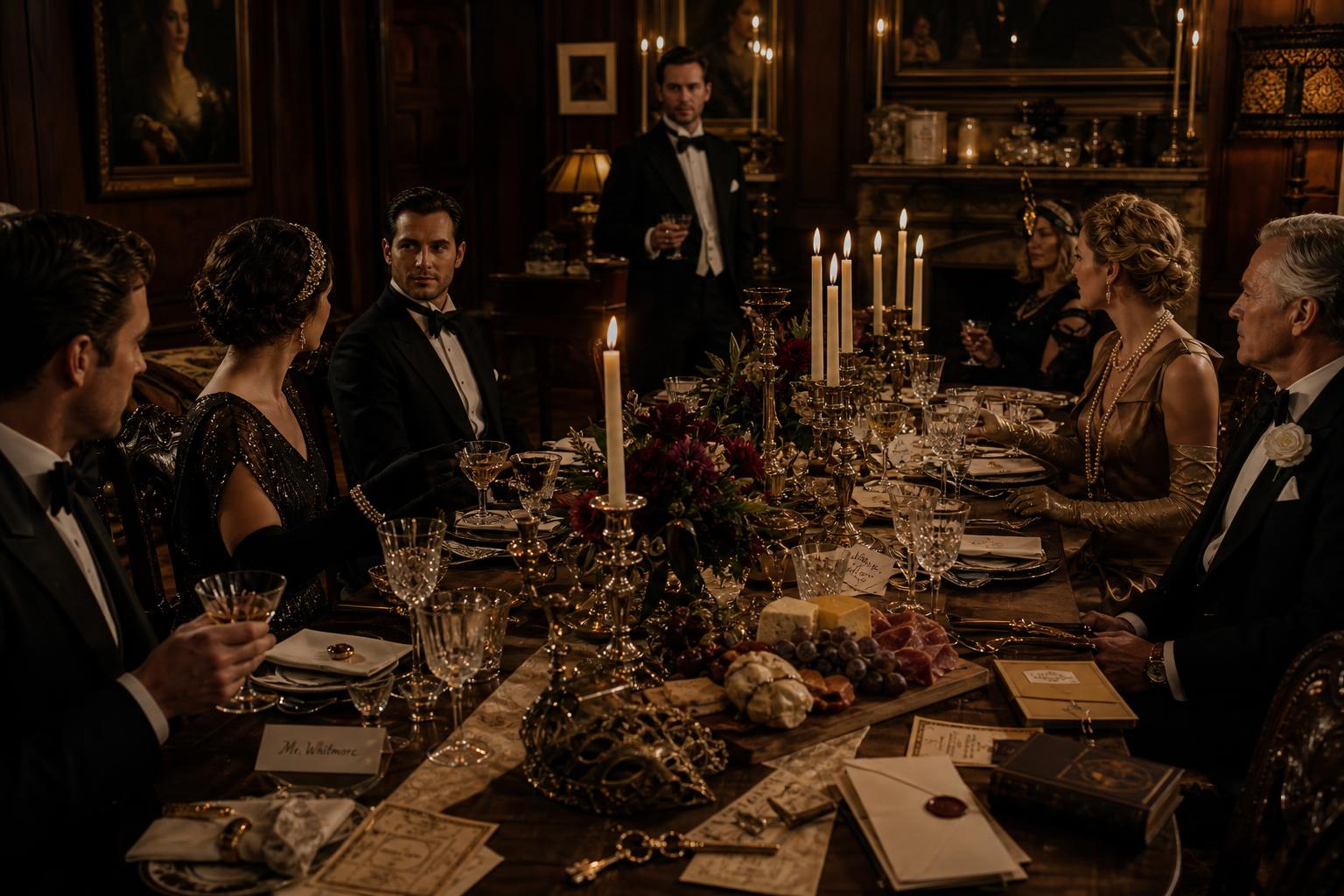
Introduction to Murder Mystery Parties
What Makes a Murder Mystery Party So Engaging
A murder mystery party blends interactive storytelling, themed entertainment, and social play into one memorable event. Unlike a standard dinner party, guests do not simply attend; they become characters with motives, secrets, and clues to uncover. This format turns the evening into a shared experience where conversation has purpose and every detail, from costumes to table settings, helps build suspense.
The appeal of murder mystery parties has grown alongside the popularity of immersive entertainment. Escape rooms, live-action roleplay, and interactive theater have all shown that people enjoy experiences where they actively participate rather than passively watch. A murder mystery party offers that same energy in a more personal setting, making it ideal for birthdays, Halloween gatherings, corporate team-building events, and even small dinner parties at home.
The Core Elements of the Experience
At its heart, a murder mystery party revolves around a fictional crime, a cast of suspects, and a sequence of revelations. Guests are usually assigned roles before the event or when they arrive, and each character comes with a backstory that shapes how they interact with others. As the evening unfolds, players gather evidence, question one another, and try to identify the culprit before the final reveal.
Why Theme Matters
A strong theme gives the party its identity and helps guests step into the world of the story. Popular settings include a 1920s speakeasy, a glamorous Hollywood awards night, a Victorian manor, or a spooky masquerade ball. Themed costumes, props, and decor do more than look impressive; they provide visual cues that make the mystery feel believable and exciting.
Planning for Atmosphere and Participation
Successful murder mystery parties depend on atmosphere as much as plot. Lighting, music, invitations, and food presentation all contribute to immersion. Even simple touches, such as aged paper clues or labeled evidence bags, can make the event feel polished. Hosts should also consider guest comfort, since the best mysteries balance structure with flexibility and allow both outgoing and quieter participants to enjoy the game.
Because the format encourages teamwork, improvisation, and problem-solving, it naturally creates lively conversation. That is one reason these parties remain so popular: they transform ordinary gatherings into story-driven celebrations where every guest has a role to play.
Choosing Your Party Theme and Setting
A successful murder mystery party begins with a clear theme and an immersive setting. These two elements shape every later decision, from costumes and invitations to props, menu choices, and even the style of clues guests will encounter. When the theme feels cohesive, guests step into character more easily, and the event becomes far more memorable.
Why the Theme Matters
The theme acts as the creative framework for the entire party. A 1920s speakeasy mystery creates a very different atmosphere than a Victorian manor whodunit or a glamorous Hollywood awards-night scandal. Choosing the right concept helps define the tone, whether you want the evening to feel elegant, comedic, suspenseful, or family friendly. A strong theme reduces planning stress because it gives you a filter for every choice you make.
It also helps match the party to your guest list. Adults may enjoy darker plots, complex motives, and dramatic costumes, while mixed-age groups often respond better to lighter mysteries with playful twists. If you are hosting eight to twelve guests, a detailed narrative with assigned roles usually works well. For larger groups, a broader theme with flexible character types can keep participation manageable.
Popular Murder Mystery Party Themes
Some themes remain popular because they are easy to recognize and simple for guests to dress for. A roaring 1920s party offers instant visual appeal through flapper dresses, fedoras, jazz decor, and gold accents. A masquerade ball adds elegance and mystery while allowing guests to participate with minimal costume effort. A country manor setting works especially well for traditional mystery fans who enjoy classic detective fiction.
Matching Theme to Occasion
Season and event type can also guide your decision. Halloween naturally suits gothic mansions, haunted estates, or supernatural mysteries. A birthday celebration may benefit from a glamorous casino or celebrity scandal theme that feels festive rather than grim. During the winter holidays, a snowed-in lodge mystery can feel timely and atmospheric. The best theme is one that feels exciting but practical for your space, budget, and guests.
Choosing the Right Setting
Your venue should support the illusion of the story. Hosting at home is often the most cost-effective option, and separate rooms can be used for clue reveals, suspect interviews, or dramatic entrances. Apartments can still work beautifully with a tighter plot and focused decor. If your budget allows, renting a private dining room, community hall, or historic venue can instantly elevate the experience.
Creating Atmosphere Through Space
Lighting, layout, and sound all influence immersion. Dim lighting, candles, and carefully placed lamps can make a room feel secretive and theatrical. Background music should reflect the era or mood, such as jazz for a 1920s mystery or classical strings for a formal estate setting. Even small details, like handwritten place cards or vintage-style framed photos, can strengthen the illusion.
Practical Planning Considerations
Before finalizing your setting, think about guest comfort and logistics. Ensure there is enough seating, room for movement, and a central area for key scenes. Food service should not interrupt gameplay, so buffets and passed appetizers often work better than elaborate plated meals. According to event planning surveys, hosts consistently rank flow and comfort among the top factors affecting guest satisfaction, often above expensive decor.
Blending Theme and Setting Seamlessly
The most effective parties make the setting feel like a natural extension of the theme. A glamorous mystery in a plain room can still succeed if fabrics, lighting, and props transform the space convincingly. What matters most is consistency. When the visual details, storyline, and guest experience all align, the party feels polished, immersive, and ready for unforgettable character-driven moments.
Planning the Guest List and Roles
A successful murder mystery party begins with a carefully planned guest list. Unlike a standard gathering, this format depends on the right number of participants, balanced personalities, and roles that keep everyone involved. Most home murder mystery games work best with 8 to 12 guests, although some kits support as few as 6 or as many as 20. Choosing the right size matters because too few players can make the story feel thin, while too many can leave quieter guests without enough opportunities to participate.
Matching the Guest List to the Game Format
Before sending invitations, review the structure of your chosen mystery. Some games assign every guest a critical role, while others include optional background characters. If your game requires exactly 10 players, inviting 12 without a backup plan can create confusion. It is often smart to invite one or two extra people only if the game allows flexible roles or if you expect cancellations.
Guest chemistry also matters. A strong mix of outgoing and reserved personalities usually creates the best energy. Highly theatrical guests often enjoy playing suspects with dramatic secrets, while more analytical friends may prefer investigator-style roles. When the cast reflects different social strengths, the evening feels more dynamic and inclusive.
Assigning Roles Strategically
Role assignment should never feel random if you want the party to run smoothly. Consider each guest’s comfort level with improvisation, costumes, and public interaction. Someone who loves attention may thrive as the eccentric millionaire or suspicious detective, while a guest attending their first themed party may feel more comfortable with a simpler role.
Balancing Major and Minor Characters
Every mystery has a few central figures and several supporting roles. Try to distribute these fairly so no one feels overlooked. If one guest receives pages of dramatic backstory while another gets only a few lines, engagement can drop quickly. The best party hosts either choose a game with balanced character depth or personalize the experience by adding small motivations, secrets, or side objectives to lighter roles.
Sending Character Information in Advance
Guests are more likely to participate confidently when they receive their roles early. Sending character descriptions one to two weeks ahead of the party gives everyone time to prepare a costume, practice an accent, or think about how to portray their part. This advance notice also helps guests understand the tone of the event, whether it is glamorous 1920s noir, spooky Victorian suspense, or campy modern comedy.
What to Include in Each Role Packet
A useful character packet should explain the guest’s identity, relationship to other characters, possible motives, and any costume suggestions. Keep key secrets private, but provide enough detail for players to feel grounded. For example, telling a guest they are “the victim’s business partner hiding financial trouble” instantly gives them a motive and a performance angle.
Planning for No-Shows and Last-Minute Changes
Even well-organized parties need flexibility. Have a plan for absent guests by identifying which roles can be merged, reassigned, or simplified. Some hosts keep one neutral narrator character available to help bridge gaps in the story. Preparation behind the scenes ensures the mystery stays immersive, even if the final guest count changes hours before the first accusation begins.
Costume Ideas for Every Character Type
A memorable murder mystery party depends on guests feeling instantly connected to their roles, and costume design is one of the fastest ways to create that connection. The best outfits do more than look stylish; they signal status, motive, personality, and era at a glance. Whether your party leans toward a glamorous 1920s manor, a noir detective story, or a modern whodunit, costumes help guests step into character with confidence and make interactions more immersive from the moment they arrive.
Dressing the Detective
The detective is often the anchor of the evening, so this costume should communicate authority, intelligence, and a touch of theatrical flair. A classic detective look usually includes a trench coat, muted suit, leather shoes, and a notebook or magnifying glass as a prop. For a vintage setting, a fedora and pocket watch can reinforce the period. In a modern mystery, a tailored blazer, dark jeans, and an earpiece-style accessory can make the character feel current without losing the investigative edge.
Small Details That Sell the Role
Accessories matter because they provide visual shorthand. A detective with a slightly rumpled coat suggests long hours on the case, while polished shoes and a crisp tie imply a methodical, disciplined personality. Even simple additions such as fake case files, a badge, or reading glasses can make the costume more convincing and give the guest easy conversation starters.
Glamorous Suspects and Social Elites
Every murder mystery benefits from at least one glamorous suspect. These characters often include heiresses, celebrities, socialites, or wealthy hosts, and their costumes should project elegance with a hint of excess. Floor-length gowns, satin gloves, statement jewelry, and faux fur wraps work beautifully for women, while tuxedos, velvet dinner jackets, silk pocket squares, and polished loafers create the same effect for men.
A 1920s-inspired mystery remains one of the most popular party formats, and for good reason. According to fashion historians, flapper silhouettes, beaded dresses, and Art Deco accessories remain instantly recognizable symbols of the era. That recognition helps guests identify the setting quickly. When costumes clearly reflect the story world, guests need less explanation and engage more naturally with the plot.
The Mysterious Stranger
The mysterious stranger is a favorite because the look can be dramatic without being complicated. Dark colors, layered fabrics, and partially concealed features create intrigue. A long coat, gloves, scarf, or dramatic hat can all suggest secrecy. In masquerade-style mysteries, a decorative mask adds instant tension and elegance. The goal is not to hide the guest completely, but to create visual uncertainty that encourages other players to ask questions.
Balancing Mystery and Comfort
A practical costume always performs better than an elaborate one that is difficult to wear. Masks should allow clear vision, hats should stay secure, and coats should not be too heavy for indoor use. Comfort supports performance, especially at parties that last several hours and involve mingling, dining, and moving between rooms.
The Butler, Maid, or Trusted Staff Member
Household staff characters are staples of manor-house mysteries because they naturally move through every social circle. Their costumes should look neat, functional, and slightly understated compared with the guests of honor. A butler might wear a black suit, white gloves, and a serving tray prop, while a maid costume could include a black dress, white apron, and modest headpiece. In a modern setting, staff roles can shift into caterers, assistants, or security personnel.
These costumes are especially useful for shy guests because they provide a built-in reason to observe others. A staff character can overhear secrets, notice suspicious behavior, and share key information without seeming intrusive. That makes the role both approachable and dramatically important.
Villains, Rogues, and Red Herrings
Some characters are designed to look suspicious from the start. A gambler, rival business partner, disgraced doctor, or eccentric inventor can all benefit from a costume with sharper visual contrast. Dark velvet, bold patterns, unusual jewelry, or a cane can suggest danger or unpredictability. Facial hair, whether real or costume-based, can also shift the tone of a character dramatically.
Using Color to Signal Intent
Color psychology can help guests understand a role before a single line is spoken. Deep red often conveys passion or volatility, black suggests secrecy or power, and emerald or purple can imply wealth and eccentricity. While color meanings are not universal, they are widely used in costume and stage design because audiences respond to them quickly. Strategic color choices can make even budget-friendly costumes feel intentional and story-driven.
Everyday Characters With Strong Personality
Not every guest wants to wear formalwear or a highly theatrical outfit, and that is perfectly fine. Journalists, neighbors, artists, professors, and family friends can all be dressed using items many people already own. Tweed jackets, cardigans, patterned scarves, suspenders, and vintage-inspired accessories can create a distinctive character without requiring a full costume purchase. This approach is practical, especially since surveys from the National Retail Federation regularly show Halloween and costume spending varies widely by household budget.
For hosts, offering flexible character types increases participation. Guests are more likely to commit when they know they can assemble a convincing look from their own closet. A strong costume is not always the most expensive one; it is the one that communicates character clearly.
Coordinating Costumes Across the Party
A cohesive visual style makes the event feel polished. If the mystery has a specific era, share a short costume guide in advance with examples of silhouettes, fabrics, and accessories. If the setting is broader, assign social categories such as law enforcement, aristocracy, staff, or suspicious outsiders. This keeps the room visually balanced and helps guests identify relationships more easily.
Host Tips for Easy Costume Planning
A simple reference table can help guests choose quickly:
| Character Type | Key Clothing Elements | Useful Accessories |
|---|---|---|
| Detective | Trench coat, suit, neutral tones | Notebook, badge, magnifying glass |
| Socialite | Gown or tuxedo, luxe fabrics | Jewelry, gloves, pocket square |
| Stranger | Dark layers, dramatic outerwear | Mask, gloves, hat |
| Staff Member | Uniform-style black and white attire | Tray, apron, white gloves |
| Rogue | Bold or dark statement pieces | Cane, ring, dramatic watch |
When guests understand the visual language of their roles, the party atmosphere becomes richer, more believable, and far more entertaining for everyone involved.
DIY Props That Build Suspense
Why Suspense Props Matter
In a murder mystery party, props do more than decorate a room. They shape the emotional rhythm of the evening by guiding attention, planting doubt, and making guests feel as though every object could hide a clue. Well-designed DIY props are especially effective because they can be tailored to the story, the suspects, and the setting without requiring a large budget. A handwritten note, a locked box, or a bloodstained glove can instantly transform an ordinary living room into a scene charged with tension.
Suspense works best when props suggest meaning before they fully reveal it. Psychologists often note that uncertainty heightens engagement because people naturally seek patterns and explanations. At a party, this means guests become more invested when they encounter items that raise questions. A prop should invite interpretation, not simply provide decoration. The most memorable pieces are those that seem ordinary at first glance but become significant as the mystery unfolds.
Letters, Notes, and Hidden Messages
One of the easiest and most powerful DIY suspense props is the written clue. A tea-stained letter, a torn diary page, or a hastily scribbled warning can create immediate intrigue. Aging paper with brewed black tea and lightly singeing the edges produces a convincing vintage effect. If your party has a 1920s, Victorian, or noir theme, this small detail adds authenticity while also signaling importance.
Making Messages Feel Urgent
To build suspense, the wording matters as much as the appearance. Instead of writing direct exposition, use fragments that imply danger or betrayal. A note reading, “I should never have trusted him,” creates more tension than one that plainly identifies the culprit. You can also hide messages in books, behind picture frames, or under serving trays so discovery feels accidental. The act of finding a clue often excites guests more than the clue itself.
Locked Containers and Restricted Access
Few objects create anticipation like something guests cannot open immediately. A locked jewelry box, sealed envelope, or chained trunk introduces a physical barrier that mirrors the mystery’s emotional barrier. DIY versions are simple to make using thrifted boxes, inexpensive padlocks, and decorative labels. The key can be hidden in another room, carried by a character, or revealed only after a challenge is completed.
A locked prop works because it controls pacing. Rather than giving information all at once, it delays revelation and encourages speculation. Guests may debate what is inside long before they gain access, which keeps energy high between major plot points. Suspense grows in the gap between discovery and explanation, making restricted-access props especially useful for hosts who want to manage the flow of the game.
Evidence Displays That Feel Real
Creating a small evidence area can make the party feel immersive and investigative. A table with labeled objects such as a broken watch, a lipstick-marked glass, or a photograph with a face crossed out gives guests a focal point for discussion. Presentation matters here. Use index cards, manila folders, and string tags to mimic police or detective archives. Even simple household items gain dramatic weight when displayed as evidence.
Using Visual Contrast
Props become more striking when they contrast with their surroundings. A white glove with a red stain, a pristine invitation torn in half, or a silver candlestick placed under a spotlight naturally draws the eye. If possible, use dim ambient lighting with one brighter lamp over the evidence table. This technique does not require expensive equipment, but it helps create the cinematic feeling that something important has happened.
Sound, Movement, and Interactive Details
Suspense is not only visual. DIY props that involve sound or motion can make guests noticeably more alert. A battery-operated clock that ticks loudly, a phone that rings at a scripted moment, or a hidden speaker playing footsteps in the hallway can shift the mood instantly. These elements work because they interrupt conversation and force attention toward the unfolding story.
Interactive props are equally effective. A drawer that sticks before opening, a portrait that conceals a clue behind it, or a music box that plays when handled can turn passive observation into active investigation. According to event design professionals, interactive environments consistently increase guest participation because people remember what they physically do more than what they simply see. When guests touch, open, or trigger a prop, they feel closer to the mystery.
Low-Cost Materials With High Impact
Many suspense props can be made from affordable supplies. Thrift stores often provide old frames, boxes, candlesticks, and glassware for a fraction of retail cost. Craft paper, twine, sealing wax, and acrylic paint can dramatically alter basic objects. The table below shows a few practical examples.
| Prop | DIY Materials | Suspense Effect |
|---|---|---|
| Secret letter | Tea, paper, envelope, pen | Suggests hidden motives |
| Locked box | Thrifted box, padlock, label | Delays revelation |
| Evidence tag display | String, cards, household objects | Encourages investigation |
| Altered portrait | Old frame, printed photo, marker | Implies conflict or secrecy |
The key is not complexity but intention. A few carefully chosen props that support the storyline will create far more suspense than a room crowded with random decorations.
Decor Ideas for an Immersive Scene
Creating a believable murder mystery party starts with decor that does more than look attractive. The setting should pull guests into the story immediately, helping them feel as though they have stepped into another world rather than simply entered a decorated room. Strong visual cues, thoughtful lighting, and carefully chosen props can transform an ordinary living room, dining area, or rented venue into a scene worthy of suspicion, secrets, and dramatic reveals.
Start With a Cohesive Visual Theme
The most effective party decor begins with a clear era, location, or mood. A 1920s speakeasy mystery will call for very different details than a Victorian manor, glamorous Hollywood whodunit, or modern crime investigation. Consistency matters more than extravagance, because repeated visual signals help guests understand the world they are entering. Color palettes are especially useful here. Deep burgundy, black, gold, and ivory work well for elegant mysteries, while dusty rose, silver, and candlelight tones suit historical settings.
Textures also contribute to immersion. Velvet table runners, lace overlays, antique-style frames, and weathered wood accents create depth that plain party supplies cannot match. Even inexpensive materials can look convincing when coordinated carefully. For example, battery candles, thrifted books, and printed labels can create a convincing old-world atmosphere without requiring a large budget.
Use Lighting to Shape Suspense
Lighting has a measurable effect on mood, and event designers often treat it as one of the most important environmental tools. Warm, dim lighting tends to encourage intimacy and mystery, while bright overhead light can flatten the atmosphere. If possible, replace harsh ceiling lights with lamps, candles, string lights, or LED uplighting. A slightly shadowy room feels far more theatrical, especially when guests are searching for clues or interrogating one another.
Layer Light Sources for Depth
Instead of relying on one central source, combine several smaller lights around the room. Place candles on dining tables, use wall sconces or lamps in corners, and highlight clue stations with focused light. This layered approach creates visual contrast and guides attention naturally. In a detective-themed setup, a desk lamp illuminating a “case file” table can become both practical and atmospheric.
Dress the Entryway as the First Scene
The entrance sets expectations before guests even speak to one another. A welcome sign styled as a newspaper headline, police notice, estate invitation, or theater marquee instantly establishes tone. Adding a coat rack with vintage hats, a framed portrait of the “victim,” or a small evidence board near the door gives guests something to react to immediately.
A simple check-in table can also become part of the story. Instead of plain name tags, provide character cards, sealed envelopes, or invitation scrolls. The first thirty seconds matter, because they determine whether guests feel like attendees or participants. When decor supports the narrative from the doorway onward, immersion begins effortlessly.
Create Story Zones Throughout the Space
One of the smartest ways to decorate for a murder mystery party is to divide the venue into distinct narrative areas. This technique mirrors immersive theater design, where each section of a room contributes to world-building. A lounge can become the suspect interview area, a dining table can serve as the formal banquet scene, and a sideboard can function as the evidence station.
Key Zones to Consider
A few dedicated spaces make the event easier to follow and more visually engaging.
| Zone | Purpose | Decor Ideas |
|---|---|---|
| Entry area | Introduces the setting | Themed signage, portraits, guest dossiers |
| Dining table | Central social scene | Candles, formal place settings, cryptic menu cards |
| Clue station | Displays evidence | String board, magnifying glass, labeled envelopes |
| Photo corner | Encourages interaction | Backdrop, props, themed furniture |
| Bar area | Supports atmosphere | Custom drink labels, vintage glassware, secret notes |
These zones help guests move through the story naturally while giving the room a richer, more intentional design.
Style the Table as a Dramatic Focal Point
For many parties, the dining or refreshment table becomes the visual center of the evening. A layered tablescape can communicate luxury, danger, or intrigue depending on the mystery theme. Start with a textured base such as a dark linen cloth or sequined runner, then add height using candlesticks, floral arrangements, or stacked books. If the story includes a wealthy host, polished glassware and metallic accents reinforce that image.
Add Narrative Details to Place Settings
Small details can turn a standard table into an interactive scene. Name cards can identify characters rather than guests. Menus can include suspicious descriptions or hidden clues. Napkin rings, wax seals, and miniature keys can hint at secrets yet to be revealed. Decor becomes more memorable when it serves both beauty and storytelling, allowing guests to discover plot elements while they eat and mingle.
Incorporate Props That Feel Like Evidence
Props are essential in murder mystery decor because they blur the line between set dressing and gameplay. A fake will, broken jewelry, coded letters, newspaper clippings, and “forensic” markers all add realism. According to event planning trends, interactive decor consistently performs better than passive decor because guests engage with it directly rather than simply observing it.
Use props strategically rather than overcrowding every surface. A blood-stained glove on a side table or a half-burned note in a tray can be more effective than dozens of random objects. The goal is to create intentional suspicion, not visual clutter. Framed family photos, locked boxes, and labeled evidence bags are especially useful because they suggest backstory without requiring explanation.
Finish With Sensory and Photographic Touches
An immersive scene is strengthened when decor appeals to more than sight alone. Soft jazz, classical music, or noir-inspired instrumentals can reinforce the chosen era. Subtle scents, such as cedar, rose, or vanilla, can make a room feel more layered, though they should remain light enough not to interfere with food. Fabric draping can soften modern spaces and hide everyday distractions like televisions or storage shelves.
A themed photo area is also worth including, since guests increasingly expect shareable moments at events. A backdrop with velvet curtains, a detective office set, or a grand manor portrait wall gives attendees a reason to stay in character. When decor supports interaction, atmosphere, and storytelling at once, the party feels less like a gathering and more like a living mystery unfolding in real time.
Food and Drinks to Match the Mystery
Building a Menu That Feels Like Part of the Plot
A memorable murder mystery party does more than dress guests in period costumes and scatter clues around the room. Food and drinks should reinforce the atmosphere, helping every course feel like evidence from the case. When the menu reflects the setting, whether it is a 1920s speakeasy, a Victorian manor, or a glamorous Hollywood gala, guests become more immersed in the story from the first sip to the final reveal.
For the strongest effect, match dishes to the era and tone of the mystery. A Roaring Twenties party works well with shrimp cocktail, deviled eggs, oysters, and small tea sandwiches, all foods associated with upscale entertaining in that period. A classic English manor mystery might feature roast beef sliders, savory tarts, scones, and trifle-inspired desserts. Serving recognizable, themed foods makes the event feel intentional rather than random, and it also gives guests conversation starters while they compare theories.
Themed Drinks That Set the Mood
Drinks often create the quickest visual impact. Signature cocktails can be named after suspects, clues, or fictional locations, turning the bar into part of the entertainment. For example, a deep red berry cocktail can become “The Crimson Clue,” while a smoky bourbon drink might be called “The Detective’s Pour.” Nonalcoholic options deserve equal creativity, such as sparkling lemonade with rosemary, blackberry mocktails, or iced tea served in vintage glassware.
Presentation Matters as Much as Flavor
Glassware, garnishes, and labels help transform ordinary beverages into immersive props. A simple drink instantly feels more theatrical when served in coupe glasses, mason jars, crystal tumblers, or apothecary-style bottles, depending on the theme. Edible glitter, citrus twists, dark cherries, and herb sprigs add color and drama without requiring complicated recipes. Small printed drink cards can also tie each beverage to the storyline.
Practical Hosting for Smooth Service
While dramatic presentation matters, convenience is equally important. Murder mystery parties usually involve movement, clue hunting, and conversation, so finger foods and easy-to-carry drinks are ideal. Mini quiches, stuffed mushrooms, crostini, skewers, and bite-size desserts reduce mess and keep guests engaged. According to catering industry trends, small-plate and grazing-style service remains popular because it encourages mingling and flexible pacing, both essential for interactive events.
Dessert as a Final Clue
Dessert can even become part of the mystery itself. A cake decorated with a cryptic message, cookies shaped like magnifying glasses, or chocolate-covered strawberries labeled as “forbidden evidence” add a playful final touch. When every bite supports the theme, the menu becomes more than refreshment and starts acting like another character in the story.
Games, Clues and Interactive Activities
Designing the Mystery Experience
A memorable murder mystery party depends on interactive gameplay that keeps guests curious, involved, and eager to participate. The best activities do more than fill time; they create momentum, encourage conversation, and turn passive attendees into amateur detectives. For a murder mystery theme party, games and clues should feel woven into the story rather than added as separate entertainment. When every note, prop, and challenge reveals something meaningful, the evening becomes far more immersive.
A strong structure usually includes an opening incident, a sequence of discoveries, and a final accusation round. This format works well because it gives guests a clear sense of progression. In many hosted mystery games, the ideal play window is between 90 minutes and three hours, which allows enough time for clue gathering without losing energy. If your guest list includes 8 to 15 people, assigning each person a role with motives and secrets can create especially lively interactions.
Creating Clues That Feel Clever
The most effective clues balance difficulty and accessibility. If clues are too obvious, the mystery feels flat; if they are too obscure, guests may become frustrated. A practical approach is to include several clue types, such as written messages, hidden objects, coded notes, and witness statements. This variety supports different problem-solving styles and keeps the experience dynamic.
Physical and Visual Clues
Physical clues add excitement because guests can touch, inspect, and debate them together. A torn photograph, a lipstick-stained glass, a fake will, or a monogrammed handkerchief can all suggest relationships and motives. Visual evidence is especially useful because people process images quickly, making these props memorable throughout the game.
Puzzle-Based Discoveries
Simple puzzles can deepen engagement without slowing the party. A cipher hidden inside a diary entry or a combination lock attached to a suspect’s box can reveal key evidence at the right moment. Keep puzzle logic intuitive and connected to the storyline. For example, a victim’s birthday might unlock a coded drawer, making the solution feel satisfying rather than random.
Interactive Activities That Keep Guests Involved
Beyond clue hunting, interactive activities help maintain energy between major reveals. A suspect interrogation round is one of the most effective options. Guests can question one another in character, compare alibis, and spot contradictions. This works particularly well when hosts provide each character with two or three secrets that should only emerge under pressure.
Timed Challenges and Mini Games
Timed activities create urgency, which naturally raises excitement. A ten-minute scavenger hunt for hidden evidence can energize the room, while a forensic-style station with fingerprint cards or handwriting samples adds thematic flair. Even simple voting cards for “most suspicious guest” can encourage participation and spark playful debate.
Managing Flow and Pacing
Pacing matters as much as creativity. Introduce clues in waves so guests are never overwhelmed. Early clues should establish motives, middle clues should complicate assumptions, and later clues should narrow the suspect pool. Hosts should also prepare backup hints in case the group stalls. Well-paced interaction ensures that every guest, from outspoken performers to quieter observers, has a chance to contribute meaningfully while the mystery continues unfolding.
Hosting Tips for a Smooth Event
Plan the Experience Around the Mystery
A memorable murder mystery party depends on clear structure and steady pacing. Before guests arrive, map the evening from welcome drinks to the final reveal. Most home-hosted mystery events run best at 2 to 4 hours, which gives enough time for character introductions, clue sharing, and dramatic accusations without losing energy. If your guest list is large, assign simple roles to a few players and more detailed backstories to key suspects so everyone stays involved.
Match the Setup to Your Space
Your layout should support conversation and movement. Create one main gathering area for announcements, then use smaller corners or tables for private clue exchanges. Good lighting matters: keep it dim enough for atmosphere but bright enough for guests to read cards, notes, or prop evidence. If you are serving food, place it away from the central action so guests can snack without interrupting important scenes.
Keep Guests Comfortable and Engaged
The best hosts balance immersion with practicality. Send invitations at least 2 to 3 weeks in advance so guests have time to prepare costumes. Include the dress code, start time, and whether they will receive a character beforehand. This reduces confusion and helps everyone arrive ready to participate.
Guide the Flow Without Taking Over
As host, think of yourself as both organizer and narrator. Begin with a short explanation of the rules, especially if some guests have never played a murder mystery game. During the party, gently move the story forward by announcing rounds, introducing clues, or prompting quieter guests with questions. A smooth event feels guided, not controlled, so leave room for spontaneous interactions and unexpected humor.
Prepare the Essentials in Advance
Strong preparation prevents awkward pauses. Print extra copies of character sheets, clue cards, and the event timeline in case something gets misplaced. Test any music playlist, speaker setup, or themed lighting before guests arrive. If you are using props such as fake evidence, locked boxes, or handwritten letters, place them in order of use to avoid confusion.
Food, Timing, and Backup Plans
Simple menu choices work best because guests will be talking, moving, and acting in character. Finger foods, mini desserts, and pre-poured drinks are usually easier than full plated meals. Build in a 15-minute buffer for late arrivals or costume adjustments. If someone cancels last minute, be ready to reassign their clues or adapt the story so the mystery still unfolds naturally.
Budget-Friendly Party Planning Ideas
Set a Smart Budget First
Planning a memorable murder mystery party does not require a huge budget. The most effective approach is to decide on a firm spending limit before buying anything. According to event planning surveys, food, decor, and entertainment typically consume the largest share of party costs, so assigning a clear amount to each category helps prevent overspending. A simple budget creates better choices and keeps the theme cohesive.
Prioritize What Guests Notice Most
For a murder mystery theme party, guests usually remember the atmosphere, costumes, and interactive elements more than expensive extras. That means you can save money by focusing on a few high-impact details. Dim lighting, printable clue cards, and thrifted props such as candlesticks, vintage frames, or old books can create a dramatic setting for very little cost. Visual storytelling matters more than luxury.
Save on Decor and Props
Affordable decor often comes from items you already own or can repurpose. Black tablecloths, white candles, and handwritten place cards instantly suggest mystery and suspense. If you want a more polished look, dollar stores and secondhand shops are excellent sources for masks, faux jewels, and antique-style accessories. Printing themed signs at home is usually far cheaper than ordering custom decorations online.
DIY Details That Add Character
Homemade props can make the party feel more immersive without stretching the budget. Create evidence folders, suspect profiles, or newspaper clippings using free design tools. A small snack table labeled as a “detective’s station” adds charm while serving a practical purpose. Even simple background music can elevate the mood, and many streaming platforms offer ready-made jazz, noir, or suspense playlists.
Keep Food and Costumes Affordable
Food costs can rise quickly, so choose easy, crowd-pleasing options such as finger foods, pasta trays, or themed snacks instead of a full catered meal. For costumes, encourage guests to assemble outfits from their own closets. A scarf, hat, gloves, or costume jewelry can transform everyday clothing into character attire, making the event stylish, interactive, and cost-effective.
Conclusion: Bringing the Mystery to Life
A memorable murder mystery party succeeds when costumes, props, and decor work together to create a believable world guests can step into the moment they arrive. Whether you choose a glamorous 1920s manor, a haunted Victorian estate, or a modern crime scene, the strongest events are built on consistency. Every visual detail, from character wardrobes to table settings and clue placement, helps transform a simple gathering into an immersive experience.
Turning Ideas Into Atmosphere
The most effective hosts focus on atmosphere first, then layer in interactive elements. Lighting, music, and themed decorations establish mood quickly, while carefully selected props make the mystery feel tangible. A faux evidence board, handwritten invitations, vintage candlesticks, or labeled suspect files can elevate the experience without requiring an extravagant budget. In fact, many successful themed parties rely more on creativity than cost, using DIY pieces to deliver personality and suspense.
Making Guests Part of the Story
Guest participation is what truly brings the mystery to life. Encouraging attendees to dress in character, speak in role, and engage with clues creates energy that ordinary parties rarely match. Even simple additions, such as secret motives, scripted reveals, or timed discoveries, can increase excitement and keep everyone involved. The more interactive the setting feels, the more unforgettable the event becomes.
Creating an Experience Worth Remembering
A well-planned murder mystery party offers more than entertainment; it gives guests a shared story to solve together. By combining thoughtful decor, expressive costumes, and meaningful props, you create an occasion that feels cinematic, social, and delightfully suspenseful. With the right details in place, your party will not just follow a theme, it will make every guest feel like they have stepped inside the mystery itself.
FAQ
What makes a murder mystery theme party memorable?
A great murder mystery party blends storytelling, atmosphere, and participation. Guests should feel as though they have stepped into another world, whether that is a glamorous 1920s mansion, a haunted Victorian estate, or a modern crime scene. The most memorable events usually combine coordinated costumes, themed props, and immersive decor so every detail supports the plot. Even simple additions, such as labeled evidence cards or character name tags, can make the experience feel polished and interactive.
How much does it typically cost to host one?
Costs vary widely depending on guest count and how elaborate the setup becomes. A small gathering of eight to ten people can often be hosted for $100 to $300 if you use DIY decorations, printable invitations, and budget-friendly props. A larger or more detailed party with rented furniture, premium costumes, and catered food may range from $500 to $1,500 or more. Many hosts save money by focusing spending on high-impact items like lighting, table settings, and a few standout props rather than decorating every corner.
Do guests need to dress in character?
Costumes are not always mandatory, but they significantly improve the experience. When guests dress according to the party’s theme, they engage more naturally with the mystery and help create a visually cohesive setting. If some attendees are hesitant, provide a simple dress code or suggest easy accessories such as feather boas, detective hats, gloves, or fake mustaches. Low-pressure costume guidance often increases participation without making guests uncomfortable.
What are the easiest props and decor to prepare?
The simplest options are items that instantly signal mystery and drama. Candles, dim lighting, vintage frames, faux evidence markers, handwritten clues, and dramatic table linens all work well. Printable signs and thrifted decor can also create a convincing atmosphere at a low cost. If time is limited, focus on the entryway and main gathering space, since those areas shape guests’ first impressions and set the tone for the entire evening.


