

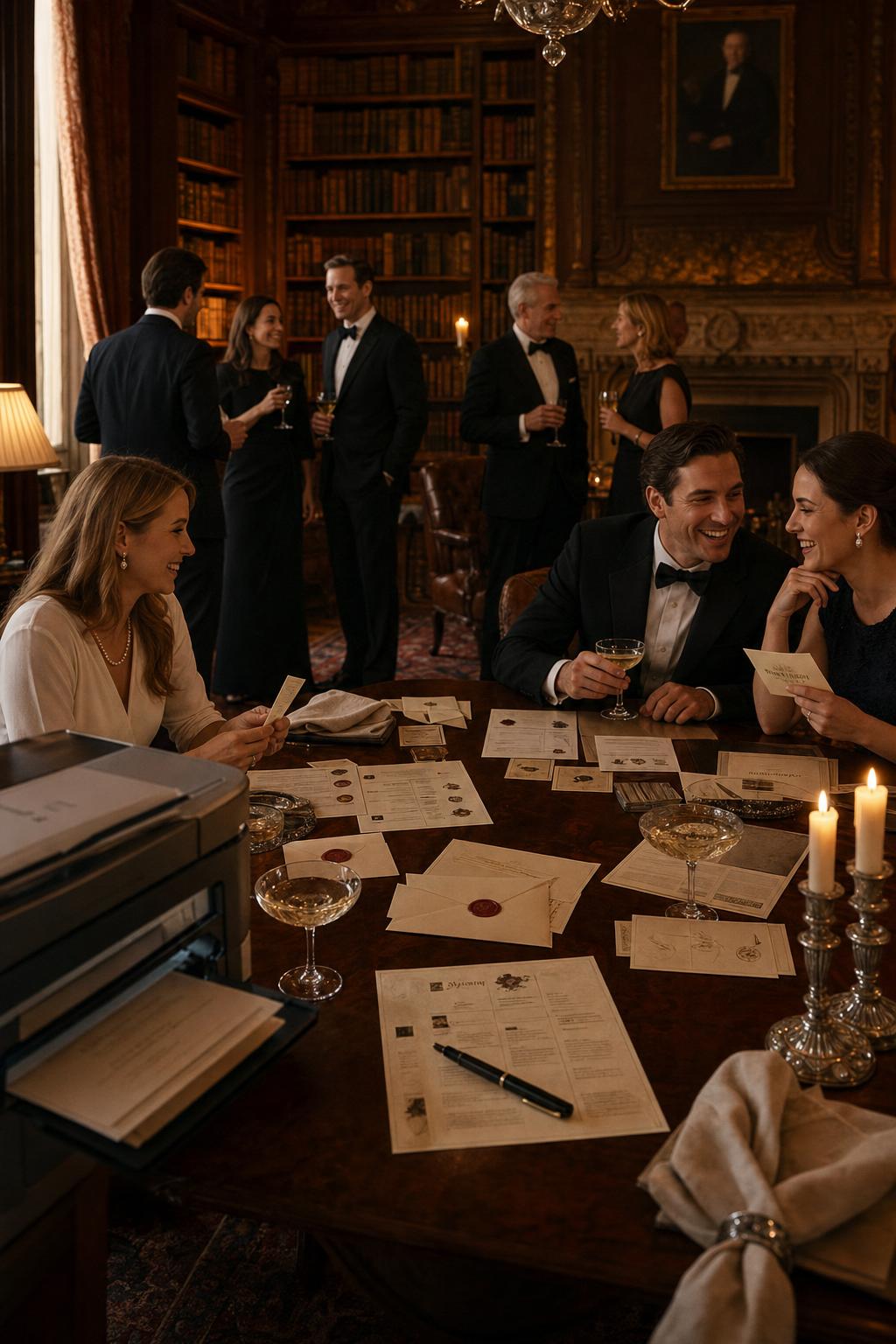
Introduction to Instant Murder Mystery Games
Instant murder mystery games turn an ordinary evening into an interactive whodunit with almost no preparation. Instead of waiting for a boxed set to arrive or spending weeks planning a themed party, hosts can download, print, and play within hours. That convenience has made these games increasingly popular for birthdays, dinner parties, team events, and family gatherings, especially as people look for social activities that feel more memorable than a standard movie night.
What Makes an Instant Murder Mystery Game Different
At its core, an instant murder mystery game is a ready-made party experience delivered digitally. After purchase, the host typically receives a package containing character sheets, invitations, rules, clues, and solution materials. In many cases, everything arrives as PDF files that can be printed at home, making setup far faster than traditional hosted mystery events. The biggest advantage is speed: a group can decide in the afternoon and still be solving a fictional crime that evening.
Unlike elaborate live-action roleplaying events, instant murder mystery games are designed for accessibility. Players do not need acting experience, expensive costumes, or deep familiarity with game mechanics. Most formats guide participants through simple objectives, scripted prompts, and rounds of clue sharing. This structure helps even first-time players feel comfortable joining in.
Why These Games Appeal to Modern Hosts
Convenience is only part of the appeal. Instant games also offer strong value compared with many other group entertainment options. A single downloadable kit can often entertain between 6 and 20 players, depending on the title, which makes the cost per guest relatively low. For comparison, a restaurant outing, escape room booking, or ticketed event can cost significantly more per person. That affordability makes mystery games attractive for budget-conscious hosts who still want an experience that feels special.
Flexible for Different Occasions
Another reason for their popularity is flexibility. Some games are written for formal dinner parties, while others suit casual game nights, office socials, holiday gatherings, or teen celebrations. Themes can range from 1920s mansions and masquerade balls to modern corporate scandals and spooky Halloween settings. Because the materials are digital, hosts can often choose a game that matches the tone, age range, and size of their group without much compromise.
How the Experience Usually Works
Most instant murder mystery games follow a straightforward flow. Guests receive character identities and background information before or at the start of the event. As the game progresses, they reveal secrets, question one another, and examine clues that gradually narrow the suspect list. Some versions include optional props, themed recipes, or music suggestions, but these extras are not essential. The real entertainment comes from conversation, suspicion, and surprise.
A Social Game, Not Just a Puzzle
What sets the format apart from solo mystery books or digital detective apps is its social energy. Players are not merely solving a case; they are performing motives, bluffing, and reacting in real time. That mix of storytelling and deduction creates a lively atmosphere where every guest has a role in the unfolding drama, making the night feel participatory rather than passive.
What an Instant Murder Mystery Game Is
A Ready-to-Play Party Experience
An instant murder mystery game is a downloadable party game designed to be played with minimal preparation, often on the same day it is purchased. Unlike traditional boxed games or custom-hosted mystery events that may require weeks of planning, this format gives hosts immediate access to everything needed to run an interactive whodunit. In most cases, the game is delivered as a digital file, usually a PDF, that can be downloaded, printed, and used within minutes.
The appeal lies in its speed and convenience. A host does not need to hire actors, buy expensive props, or write a storyline from scratch. Instead, the game package typically includes character profiles, invitations, host instructions, clues, evidence sheets, and a final solution. This structure allows players to step into a dramatic scenario quickly while still enjoying the suspense, humor, and social interaction that make murder mystery parties so memorable.
How the Format Works
At its core, an instant murder mystery game turns guests into characters in a fictional crime story. Each player receives a role with a background, motives, secrets, and objectives. As the event unfolds, participants question one another, reveal selected information, and try to determine who committed the fictional crime. The host guides the flow of the evening, but the game materials do most of the heavy lifting.
What Players Usually Receive
Most instant games are built around a clear set of printable materials. While the exact contents vary by publisher, a typical package includes the following elements:
| Component | Purpose |
|---|---|
| Character sheets | Explain each guest’s identity, personality, and secrets |
| Host guide | Provides setup instructions and timing |
| Clue rounds | Introduce new evidence as the game progresses |
| Invitations | Help assign roles before the event |
| Solution sheet | Reveals the murderer and explains the motive |
This plug-and-play design is what makes the format “instant.” According to event industry trends, printable party games have grown in popularity because they reduce both cost and planning time, especially for home gatherings of 6 to 20 players.
What Makes It Different From Other Party Games
An instant murder mystery game is more immersive than a standard board game and more structured than casual party conversation. Players are not just answering trivia or completing challenges; they are actively performing roles within a story. That roleplay element creates a stronger sense of involvement, even for guests who are not experienced actors.
Flexibility for Different Occasions
Another major advantage is adaptability. These games are available in themes ranging from 1920s speakeasies and masquerade balls to holiday dinners and corporate team-building events. Some are written for adults, while others are family-friendly. Because the materials are digital, hosts can often reprint lost pages, email roles in advance, and adjust the experience for their group size.
The result is a form of entertainment that combines storytelling, problem-solving, and social play in one package. For busy hosts, it offers a practical way to create an engaging themed event without the usual logistical burden. For guests, it delivers the fun of becoming suspects, detectives, and storytellers for an evening, all through a game that can be organized tonight and played with surprisingly little effort.
Why Download Print and Play Appeals Tonight
Instant entertainment without the wait
One of the biggest reasons download, print, and play murder mystery games appeal tonight is simple: they remove nearly every barrier between intention and action. Traditional party planning often involves shipping delays, store visits, and the risk that a chosen game may not arrive in time. A digital format solves that immediately. After purchase, hosts can typically access files within minutes, print the materials at home, and begin preparing the experience the same evening.
This convenience matches modern consumer behavior. Digital entertainment has trained people to expect fast access, whether they are streaming a film, joining an online class, or downloading a playlist. A print-and-play mystery fits naturally into that expectation. Instead of postponing fun until next weekend, players can turn a quiet evening into an event with very little lead time.
A practical solution for spontaneous gatherings
Not every memorable party is planned weeks in advance. Sometimes friends are already coming over, family members are visiting unexpectedly, or a host suddenly needs an activity that can engage a mixed group. In those moments, speed and flexibility matter more than elaborate preparation. A downloadable murder mystery offers both.
Because the materials are digital, the host can often decide how polished or simple the event will be. Character sheets can be printed in black and white for speed, or on heavier paper for a more immersive feel. Invitations, clue cards, and host guides can be used as-is or customized. That adaptability makes the format appealing for everything from casual game nights to birthdays and holiday gatherings.
Easy to match different group sizes
Another advantage is that many print-and-play games are designed for varied attendance. If six people show up instead of eight, or if a couple of extra guests join at the last minute, the host may still be able to run the game successfully. That is especially useful tonight, when plans can change quickly and hosts need an option that feels reliable rather than rigid.
Cost-effective fun with strong replay value
Affordability also drives the appeal. Compared with booking a live event, dining out as a group, or buying boxed party kits for rush delivery, a downloadable game is often a budget-friendly entertainment choice. The host usually pays once for the files and can print only what is needed. For households watching spending, that matters.
A simple comparison shows why the format feels accessible:
| Entertainment option | Typical group cost | Availability tonight |
|---|---|---|
| Live hosted mystery event | $150–$500+ | Rare |
| Escape room for 6–8 players | $180–$320 | Limited by booking |
| Boxed party game with shipping | $25–$60 | Not immediate |
| Download print-and-play mystery | $10–$30 | Usually instant |
The value is not only financial. Many downloadable games include reusable host instructions, optional decorations, and alternate role assignments. That means the purchase can support more than one gathering, especially for hosts who enjoy organizing themed events.
Immersion that feels personal
A print-and-play game also appeals because it creates a more personal atmosphere than passive entertainment. Watching a movie is easy, but participating in a mystery invites conversation, improvisation, and shared laughter. Players become suspects, investigators, or secret schemers, which naturally increases engagement.
Customization enhances the experience
Hosts can tailor the tone to the audience. A family group may prefer light comedy, while adult friends might enjoy a darker detective theme. Music, snacks, costumes, and room setup can all be adjusted without changing the core game. That level of control helps the evening feel curated rather than generic.
Screen-light social play for today’s households
Even though the game is delivered digitally, the actual experience often pulls people away from screens. That balance is especially attractive now, when many people want entertainment that is convenient but not entirely device-based. Printing the materials creates a tactile activity that encourages face-to-face interaction, reading physical clues, and discussing theories in real time.
For hosts looking for something immediate, affordable, social, and memorable, download print-and-play offers a rare combination that fits the pace of modern life while still delivering the charm of classic party gaming.
How These Games Work Step by Step
Instant murder mystery games are designed to remove the usual planning burden and let a group start playing with minimal preparation. In most cases, the host purchases a downloadable package, prints the materials, assigns characters, and guides players through a structured sequence of scenes, clues, and accusations. The appeal lies in how quickly the experience comes together: many printable mystery kits can be prepared in under an hour, while the actual gameplay often lasts between 90 minutes and 3 hours depending on group size and complexity.
From Download to Setup
The process usually begins with a digital file, most often a PDF bundle. This bundle typically includes host instructions, character sheets, invitations, evidence cards, solution notes, and scene-by-scene guidance. Some games also include optional extras such as name tags, themed menus, décor suggestions, or soundtrack ideas. Because the materials are prewritten, the host does not need to invent a plot or manage complicated rules from scratch.
After downloading, the host reviews the package and checks the recommended player count. Many instant games are built for groups of 6 to 12, though some can stretch with optional characters. Matching the game to the exact number of guests is important, because each role usually contains unique information that drives the mystery forward. Once the count is confirmed, the host prints the necessary pages and separates them by character or scene.
Assigning Roles and Briefing Players
Each player receives a character identity, often with a backstory, motives, secrets, and relationship notes. In a well-designed game, these details are distributed carefully so no single person knows everything at the start. That controlled information flow is what creates tension, suspicion, and surprise during play.
What a character packet usually includes
A character packet often contains the player’s public persona, private objectives, and specific facts to reveal only at certain moments. For example, one guest may know they argued with the victim earlier that evening, while another may secretly possess a missing key or overheard an important conversation. These hidden details encourage roleplay without requiring acting experience, which makes the format accessible to casual groups.
Before the game starts, the host explains the basic rules. Players are usually told to stay in character, share information according to the instructions, and avoid inventing facts that contradict the written plot. This keeps the mystery fair and ensures the final solution remains logically solvable.
How Gameplay Unfolds
Most instant murder mystery games move through several rounds or scenes. At the beginning, the host introduces the setting, such as a manor house, a 1920s speakeasy, or a corporate gala. The “murder” is then announced, either immediately or after a short opening interaction. From there, players question one another, reveal clues, and defend themselves against suspicion.
The role of scenes, clues, and timed reveals
A typical structure uses staged information releases. In round one, players may only know basic motives and alibis. In round two, new evidence appears, such as a letter, a fingerprint report, or a witness statement. By round three, deeper secrets emerge and alliances often shift. This pacing matters because it prevents the game from peaking too early.
Why the host matters
Even in a printable game, the host acts as a light facilitator. The host keeps the rounds moving, distributes clue cards at the right time, and answers procedural questions. In some games, the host also plays a character; in others, they remain outside the mystery to manage flow more smoothly. A strong host does not dominate the story but ensures everyone stays engaged.
Solving the Mystery
As the final stage approaches, players usually make accusations or submit written guesses. Some games ask each participant to identify the killer, explain the motive, and describe how the crime was committed. This structure rewards attention to detail rather than random guessing. According to party game publishers, the most satisfying mysteries are those where the solution feels surprising but fully supported by earlier clues.
What makes the format work so well
The step-by-step design succeeds because it combines simplicity with structure. Players are never asked to memorize long rules, yet they still experience discovery, deduction, and social interaction. Printable mystery games also scale well for birthdays, dinner parties, team events, and holiday gatherings, making them a flexible entertainment option that feels far more elaborate than the setup actually requires.
Choosing the Right Mystery for Your Group
Selecting the best instant murder mystery game is not just about picking an interesting plot. The right choice shapes the entire evening, influencing how engaged guests feel, how easily the game runs, and whether everyone leaves wanting to play again. A well-matched mystery creates momentum from the first accusation to the final reveal, while a poor fit can leave players confused, overwhelmed, or underwhelmed.
Start with Group Size and Structure
The first factor to consider is the number of players. Most printable murder mystery games are designed for a specific cast size, often ranging from 6 to 20 participants. Choosing a game that closely matches your guest count matters because each character usually carries clues, motives, and scripted interactions that support the story. If a game written for 10 players is forced onto a group of 7, key plot threads may disappear. On the other hand, squeezing 14 guests into a game built for 8 can leave some people without meaningful roles.
It also helps to think about the structure of your group. Some parties include a core of enthusiastic extroverts, while others are made up of quieter guests who may prefer lighter improvisation. A mystery with flexible dialogue and clear character goals often works better for mixed groups than one requiring theatrical performance from everyone.
Matching Roles to Personalities
A strong host looks beyond numbers and considers personality fit. Guests who enjoy attention may thrive as suspicious aristocrats, ambitious business owners, or dramatic ex-spouses. More reserved players often do better with roles that still matter to the plot but do not demand constant spotlight time. This balance keeps the game inclusive and prevents a few dominant personalities from controlling the experience.
Consider Theme and Tone
Theme has a major impact on player enthusiasm. A 1920s speakeasy mystery, a glamorous Hollywood scandal, or a spooky manor house investigation can all be excellent choices, but only if the setting appeals to your group. People are far more likely to participate fully when the scenario feels fun and accessible rather than forced.
Tone matters just as much as theme. Some mysteries lean into comedy, with exaggerated suspects and absurd twists. Others aim for suspense, realism, or even light horror. Choosing the right tone helps set expectations early. For example, a playful office party may respond better to a humorous whodunit than to a dark psychological thriller. In contrast, a close-knit friend group hosting a Halloween gathering might enjoy something more atmospheric.
Evaluate Complexity and Play Time
Not every group wants the same level of challenge. Some printable mysteries are designed for casual entertainment and can be explained in under 10 minutes. Others involve layered evidence, secret objectives, and multiple rounds of revelations. According to event planning surveys, interactive party activities tend to hold attention best when they last between 1.5 and 3 hours, making game length an important practical consideration.
Simple Games for First-Time Players
If your guests are new to murder mystery parties, start with a straightforward format. Games with clear instructions, concise character sheets, and guided rounds reduce confusion and help players settle in quickly. This is especially useful for family gatherings, workplace socials, or mixed-age groups.
Advanced Mysteries for Experienced Players
For seasoned players, a more intricate mystery can be rewarding. These games often include red herrings, hidden alliances, and evidence that must be pieced together carefully. Experienced groups usually enjoy the added depth because it creates stronger debate and more satisfying deductions.
Think About Practical Hosting Needs
A downloadable game should fit your available time and resources. Some hosts want a true download, print, and play tonight option with minimal preparation. Others are happy to spend extra time assigning roles, decorating the room, or preparing themed food. Before choosing a mystery, check what materials are included and what the host must organize separately.
A practical comparison can help narrow your options:
| Factor | Best Choice for Casual Groups | Best Choice for Enthusiast Groups |
|---|---|---|
| Preparation time | Under 30 minutes | 1 hour or more |
| Character depth | Simple and clear | Detailed and layered |
| Tone | Light and social | Dramatic or immersive |
| Game length | 60 to 90 minutes | 2 to 3 hours |
Age Range and Social Comfort
Age appropriateness should never be overlooked. A mystery written for adults may include romantic secrets, crime details, or humor that does not suit younger players. Likewise, a very tame game may feel flat for an adult-only dinner party. The best mystery respects your group’s comfort level while still giving everyone enough intrigue to stay invested.
Social familiarity also plays a role. A group of close friends can usually handle bolder accusations, secret betrayals, and playful conflict. In contrast, coworkers or newly acquainted guests may respond better to a lighter format that encourages interaction without putting anyone on the spot too aggressively.
Choose Replay Value and Flexibility
If you host often, look for mysteries with adaptable roles, expandable player counts, or themes that feel fresh across different occasions. Some games include optional suspects or host notes for scaling up and down, which can be especially useful when guest lists change at the last minute. That flexibility makes planning easier and helps ensure the evening feels smooth rather than improvised under pressure.
What You Need Before Guests Arrive
Gather the Core Materials
A successful instant murder mystery game depends less on elaborate props and more on having the essentials ready before the first guest knocks. At minimum, you need the downloadable game files, a working printer, enough paper for every participant, and a way to organize character materials. Most printable mystery kits include character sheets, clue pages, host instructions, and sometimes invitations or name tags. Review the file contents as soon as you download them so you can confirm nothing is missing and avoid last-minute surprises.
Printing deserves more attention than many hosts expect. If your game has eight players and each player receives three to five pages, you may need 24 to 40 printed pages before extras. Add host notes, solution sheets, and spare copies, and the total can quickly exceed 50 pages. Check ink levels and paper supply in advance, especially if you are printing on a home printer, where low black ink is one of the most common delays.
Prepare the Guest List and Roles
Before guests arrive, confirm exactly how many people are attending and match that number to the game format. Many instant murder mystery games are designed for a fixed range, such as six to ten players. If your group size changes at the last minute, the host may need to reassign roles or remove optional characters. That is why it helps to finalize attendance at least several hours ahead of time.
Assign Characters Thoughtfully
Character assignment can shape the entire evening. If possible, give outgoing guests roles with more dialogue and quieter guests parts that allow participation without pressure. A balanced cast usually creates smoother interaction and better pacing. Sending roles in advance can also improve the experience, because guests have time to understand their motives, secrets, and relationships before play begins.
Set Up the Space
Your room does not need to look like a theater set, but it should support conversation, movement, and visibility. Arrange seating so players can easily talk in small groups, then return to a central area for announcements. Good lighting matters more than decoration because players will be reading clues and notes throughout the game. If music is part of the atmosphere, keep it low enough that guests can hear one another clearly.
Create a Simple Host Station
Set aside one table or counter for the host materials. Keep printed instructions, spare pens, extra character sheets, and the final solution in one place. This small preparation step prevents confusion once the game begins and allows you to answer questions quickly without breaking the flow.
Have Practical Extras Ready
Even casual game nights run better with a few backup items. Pens are essential, since many players like to jot down suspicions or timelines. Name tags can help if guests do not know one another well, especially in larger groups. Snacks and drinks should be easy to manage and not overly messy, because players will be handling paper materials.
Timing and Comfort Matter
Most printable murder mystery games last between 60 and 120 minutes, depending on group size and complexity. Plan around that window by making sure guests are comfortable before the first round starts. A clear schedule, organized materials, and a prepared space let the evening begin smoothly and keep the focus on solving the mystery rather than fixing preventable problems.
How to Host a Smooth Game Night
Set the Stage for an Easy, Enjoyable Evening
A smooth game night rarely happens by accident. It comes from thoughtful preparation, clear communication, and a setup that lets guests focus on having fun instead of figuring out logistics. When you are hosting an instant murder mystery game, the advantage is speed: you can download, print, and play the same day. Even so, a little planning makes the experience feel polished rather than rushed.
Start by confirming your guest count early. Most mystery games work best when the number of players matches the available character roles, so accuracy matters more here than it might for a casual board game night. If your game supports eight to ten players, for example, inviting exactly that range helps preserve the story structure and keeps everyone involved. According to event planning best practices, hosts who communicate expectations in advance reduce no-shows and confusion significantly, especially for themed gatherings.
Choose the Right Space and Timing
Your venue does not need to be elaborate, but it should support conversation. Murder mystery games depend on players hearing clues, asking questions, and staying engaged with the unfolding plot. A noisy sports bar atmosphere or a cramped room with limited seating can weaken the experience. A dining table, living room, or open-plan kitchen area usually works well because guests can move around while still staying connected to the action.
Timing also matters. For most groups, two to three hours is a comfortable window for a complete mystery game night, including arrival, introductions, gameplay, and light breaks. If guests are new to roleplay-style games, build in extra time for reading character sheets and understanding the rules. A start time around 7 p.m. often works well for adults because it allows people to arrive after work without pushing the event too late into the night.
Match the Mood to the Game
Atmosphere shapes participation. Simple touches such as dimmed lighting, a themed playlist, and printed name cards can make the game feel immersive without adding much cost. In the United States, the average host spends roughly $30 to $75 on casual home entertaining for small groups, but a murder mystery night can feel memorable with far less if the focus stays on presentation and flow.
Prepare Materials Before Guests Arrive
The fastest way to lose momentum is to begin printing pages or sorting character packets after people walk in. Prepare everything beforehand. Print all character sheets, clue cards, host instructions, and any optional decorations in advance. If possible, organize each player’s materials in separate envelopes labeled by character name. This small step creates a cleaner start and reduces the chance of handing out the wrong information.
Food and drinks should also be easy to manage. Choose items that can be served buffet-style or eaten without interrupting gameplay. Finger foods, small desserts, and pre-poured drinks work better than messy meals requiring constant cleanup. If the game includes dramatic reveals or timed rounds, you do not want guests leaving the table repeatedly to handle complicated serving arrangements.
Explain the Rules Without Overloading People
One of the host’s most important jobs is making the game feel accessible. Not every guest will be familiar with murder mystery formats, and some may feel hesitant about acting in character. A short, confident introduction helps. Explain the objective, the general flow of the game, and how much roleplaying is expected. Reassure guests that they do not need theater experience to participate fully.
Keep Instructions Simple
Focus on the essentials first. Players usually need to know three things: who they are, what information they can share, and when key events happen. Avoid long speeches that delay the fun. Instead, give a brief overview, then let the game teach itself through play. Clarity beats complexity every time.
Keep the Energy Moving
Pacing is what separates a memorable game night from one that drags. As host, pay attention to the room. If one guest dominates every conversation, gently redirect attention to quieter players. If the group seems stuck, offer a subtle prompt or remind them to review their clues. Good hosts act like facilitators, keeping everyone included without taking over the mystery.
Breaks should be intentional rather than random. A short pause halfway through can help guests refresh drinks, compare notes informally, and return with renewed focus. In group entertainment settings, attention tends to dip after about 60 to 90 minutes, so a well-timed reset can improve engagement.
Handle Common Problems Gracefully
Even well-planned evenings can hit small bumps. Someone may arrive late, a guest may cancel, or a player may struggle to stay in character. The key is to stay flexible. If a cancellation happens, check whether the game includes adaptable roles or host-controlled characters. If not, assign a confident guest to cover a lighter secondary part.
Make Guests Feel Comfortable
Not everyone enjoys performance at the same level. Some players will fully embrace accents and dramatic accusations, while others prefer solving the puzzle quietly. Both styles are valid. A successful game night is not about forcing extroversion; it is about creating participation that feels natural. When guests feel comfortable, the story unfolds more smoothly, and the entire evening becomes more entertaining for everyone involved.
Add Small Touches That Elevate the Experience
Memorable hosting often comes down to details. A printed suspect board, simple costume suggestions, or a themed signature drink can make the night feel special without creating extra stress. These touches signal care and help guests step into the world of the game quickly, especially when the event is planned on short notice.
Tips to Make the Mystery More Immersive
Set the Scene Before the First Clue
An instant murder mystery game becomes far more memorable when players feel they have stepped into a believable world rather than simply opened a PDF. Atmosphere is the fastest way to increase immersion, and it does not require a large budget. Lighting a room with lamps instead of bright ceiling lights, adding era-appropriate music, and using simple printed props can transform an ordinary evening into an event. Research on event design consistently shows that sensory cues strongly influence engagement, because people respond emotionally to sound, visuals, and setting long before they process rules or objectives.
Use Theme-Matched Details
Small details often create the biggest effect. If the mystery is set in the 1920s, jazz playlists, vintage-style invitations, and character name cards instantly reinforce the setting. If it is a manor-house crime, candles, silver trays, and handwritten notes can suggest elegance and secrecy. Consistency matters more than cost. A few coordinated details are usually more effective than many unrelated decorations.
Encourage Players to Stay in Character
Immersion deepens when guests commit to their roles. Before the game begins, give everyone a few minutes to read their character background and goals. Encourage them to adopt a voice, attitude, or signature phrase that fits the role. This does not mean everyone must become a trained actor. Even light roleplay helps players separate themselves from everyday conversation and enter the mystery more fully.
Make Character Motivation Clear
Players engage more naturally when they understand what their character wants. A suspect with a secret debt, a hidden romance, or a professional rivalry has a reason to ask questions and react strongly. Motivation drives interaction, and interaction is what makes a mystery feel alive rather than scripted. If needed, the host can quietly remind hesitant players of their objectives between rounds.
Use Props and Printed Materials Strategically
Physical items make clues feel more authentic. A sealed envelope, a torn letter, a fake newspaper clipping, or a printed will can create a stronger reaction than simply reading information aloud. Studies in educational psychology often note that tactile interaction improves attention and recall, which is useful in mystery games where players must track details carefully.
Pace the Reveal of Information
A common mistake is sharing too much too early. Strong mysteries build tension by releasing information in stages. Let players absorb each clue, discuss theories, and form suspicions before introducing the next twist. Pacing creates suspense, and suspense keeps energy high throughout the evening. If the game includes multiple rounds, use each one to raise stakes, deepen motives, or challenge assumptions.
Give Guests Time to Investigate
Silence can be useful. After a major reveal, resist the urge to explain everything immediately. Players need space to question one another, compare evidence, and notice contradictions. These moments often produce the most entertaining accusations and discoveries.
Support the Experience as Host
The host plays a major role in immersion. Welcoming guests in character, explaining rules clearly, and guiding transitions smoothly helps maintain momentum. If confusion arises, answer questions without breaking the mood more than necessary. A confident host keeps the mystery believable, even when players become loud, competitive, or unexpectedly creative.
Add Food and Drinks That Fit the Story
Themed refreshments can subtly reinforce the setting. A formal dinner mystery feels richer with labeled courses, while a casual detective party may suit cocktails and finger foods. Even simple menu names can strengthen the illusion and make the night feel thoughtfully designed.
Common Mistakes and Easy Fixes
Choosing the Wrong Game for Your Group
One of the most common problems with an instant murder mystery night is picking a game that does not match the size, age range, or energy level of the group. A script written for 12 highly theatrical players can fall flat if only 7 guests attend or if most people prefer a casual, low-pressure evening. Before downloading, check the player count, estimated play time, and whether the game is designed for adults, teens, or mixed ages. Many printable mystery kits clearly state these details, and using them as a filter prevents avoidable frustration.
Easy fix: Match complexity to the occasion
For a first-time host, a shorter game with simple character goals usually works best. If your gathering includes families or reluctant participants, choose a format with guided clues and lighter roleplay. A group of experienced players, by contrast, may enjoy hidden motives, red herrings, and longer accusation rounds. The right fit matters more than the most elaborate storyline.
Leaving Preparation Until the Last Minute
Because printable games are marketed as instant, hosts sometimes assume no preparation is needed. In reality, even a well-designed game benefits from 20 to 45 minutes of setup. Character sheets need printing, invitations may need sending, and clues should be organized in the order they appear. If this step is rushed, players can receive the wrong materials or miss key information, which weakens the entire experience.
Easy fix: Use a simple hosting checklist
Create a short checklist before guests arrive. Confirm the number of players, print one extra copy of every essential document, label envelopes clearly, and read the host guide from start to finish. According to event planning surveys, checklists can reduce task errors by more than 30 percent in structured activities, and the same principle applies here. Small preparation steps create a smoother, more immersive game night.
Overcomplicating the Atmosphere
Some hosts believe they need full costumes, elaborate props, and themed food to make the evening successful. While these extras can be fun, they are not what makes the mystery work. The real value comes from clear instructions, engaged players, and a story that moves at a steady pace. Overinvesting in decorations can also distract from the actual gameplay.
Easy fix: Focus on clarity first
A few thoughtful touches, such as printed name tags, dim lighting, or background music, are usually enough. Prioritize readable materials and a comfortable play space over expensive details. If players understand their roles and the clue flow, the game will feel polished even with minimal extras.
Not Guiding the Group During Play
Even strong game materials can stall if the host becomes too hands-off. Players may hesitate, talk over one another, or miss the moment to reveal evidence. In those cases, the mystery loses momentum and quieter guests may disengage.
Easy fix: Host with a light touch
Keep the game moving by announcing each round clearly, reminding players of their objectives, and stepping in when discussion drifts too far. A confident but unobtrusive host helps every player stay involved and keeps the mystery exciting from the first clue onward.
Best Occasions for a Print and Play Mystery
Last-Minute Gatherings Made Easy
A print and play mystery is ideal when plans come together quickly and you need entertainment without shipping delays or complicated setup. Because the game is delivered instantly, hosts can download the files, print the materials, and start preparing in under an hour. That convenience makes it especially useful for spontaneous dinner parties, casual weekend get-togethers, or evenings when guests are already on the way.
Birthday Parties and Milestone Celebrations
Mystery games add structure and excitement to birthdays by giving guests a shared activity instead of relying only on food and conversation. For adult birthday parties, a murder mystery can turn a standard celebration into an immersive event with roles, clues, and dramatic reveals. Milestone occasions such as 30th, 40th, or 50th birthdays work particularly well because guests are often ready for something more memorable than a traditional party format.
Why Group Interaction Matters
Research from event industry surveys consistently shows that interactive entertainment increases guest engagement and recall. A mystery format encourages everyone to participate, whether they enjoy acting, problem-solving, or simply observing the unfolding story. That balance makes it more inclusive than games that depend entirely on trivia knowledge or physical skill.
Holiday Events and Seasonal Parties
Print and play mysteries also fit naturally into holiday hosting. Halloween is an obvious match, but they work equally well for New Year’s Eve, Christmas gatherings, and even Valentine’s parties with a themed storyline. Since many holiday hosts already manage food, decorations, and guest lists, having a ready-to-use downloadable game reduces planning pressure while still delivering a polished experience.
Family Reunions, Team Nights, and Virtual-Friendly Fun
For family reunions, a mystery gives relatives of different ages something to do together beyond small talk. For workplace socials or team-building nights, it promotes communication, collaboration, and lighthearted competition. Many print and play formats can also be adapted for hybrid or remote groups, which is valuable as virtual social events remain common. In 2024, flexible home entertainment continues to grow as people look for affordable, reusable experiences that feel personal and interactive rather than passive.
Conclusion
An instant murder mystery game offers a rare blend of convenience, creativity, and social energy, making it one of the easiest ways to host a memorable gathering on short notice. With a downloadable format, simple printing, and minimal setup, players can move from planning to play in under an hour, which is especially valuable when compared with traditional party entertainment that often requires shipping time, props, or extensive preparation. For busy hosts, that speed is not just helpful; it is often the deciding factor between an ordinary evening and an event guests will remember.
Why It Works So Well
The appeal also lies in how effectively these games combine structure with spontaneity. A well-designed mystery gives each participant a role, motive, and set of clues, yet the real entertainment comes from improvisation, accusation, and unexpected twists during play. In practice, this means the same game can feel different with every group. A family gathering may lean into humor, while a dinner party with close friends may become surprisingly competitive. That replayable social dynamic is a major reason printable mysteries continue to grow in popularity within the broader party game market.
A Practical Choice for Modern Hosts
From a practical standpoint, printable games are also cost-efficient. Many downloadable mystery kits cost far less than boxed party games, and they often support groups of 6 to 20 players, lowering the per-person cost significantly. Hosts can also tailor the experience by adjusting costumes, food, music, and pacing without changing the core game materials. This flexibility makes the format suitable for birthdays, team-building events, holiday parties, and casual weekend get-togethers alike.
Ready for Tonight’s Game Night
When you want entertainment that feels immersive without becoming complicated, a print-and-play mystery is a smart solution. It delivers fast access, strong engagement, and a built-in conversation starter, all while giving guests a chance to step into character and share a genuinely interactive experience. With the right downloadable kit, tonight’s party can become a suspense-filled event in just a few printed pages.
FAQ
How quickly can I start playing?
One of the biggest advantages of an instant murder mystery game is speed. In most cases, you can purchase, download, and print the materials in under 15 minutes, assuming you have a stable internet connection and a home printer. For a typical game designed for 6 to 12 players, setup often takes another 10 to 20 minutes, depending on whether you want simple play or a more decorated experience. That means many hosts can realistically organize the entire evening in 30 minutes or less.
What do I need to print?
Most downloadable kits include character sheets, invitations, host instructions, clue cards, and solution documents. Some also provide optional extras such as name tags, themed menus, or printable decorations. In practical terms, a standard game usually requires between 15 and 40 pages total, though this varies by player count and design complexity. If you want to save ink, many hosts print only the essential gameplay pages and share background details digitally.
Can I play without color printing?
Yes. The majority of printable mystery games are fully playable in black and white. Color can improve presentation and make certain sections easier to distinguish, but it is rarely essential. Before printing, check whether the files use color-coded clues or role markers. If they do, adding labels or highlighting by hand is usually enough to keep everything clear.
How many players can join?
Player capacity depends on the specific game, but most home-friendly mystery kits support 6 to 20 players. Smaller groups often create a more focused, character-driven experience, while larger groups add energy and unpredictability. If your attendance is uncertain, look for flexible games that include expandable roles or optional characters so you can adjust without rewriting the event.
Are these games good for beginners?
Absolutely. Many instant mystery games are written for first-time hosts and casual players, with step-by-step instructions and structured rounds that keep the evening moving. A well-designed kit explains when to distribute clues, how to guide discussions, and when to reveal major twists. This format reduces pressure on the host while helping guests feel comfortable participating, even if they have never tried roleplay before.
What if my group is not theatrical?
That is a common concern, and it usually is not a problem. Players do not need acting experience to enjoy the format. Most guests simply read their character goals, ask questions, and react to new information. The fun comes from solving the mystery, sharing suspicions, and uncovering secrets rather than delivering dramatic performances.
Can I use an instant game for birthdays, team events, or holidays?
Yes. Murder mystery games work well for birthdays, dinner parties, family gatherings, office socials, and seasonal celebrations. Many hosts choose themes that match the occasion, such as 1920s glamour, haunted manor settings, or holiday banquets. Because the materials are downloadable, they are also useful for last-minute planning when booking outside entertainment is not practical.


