

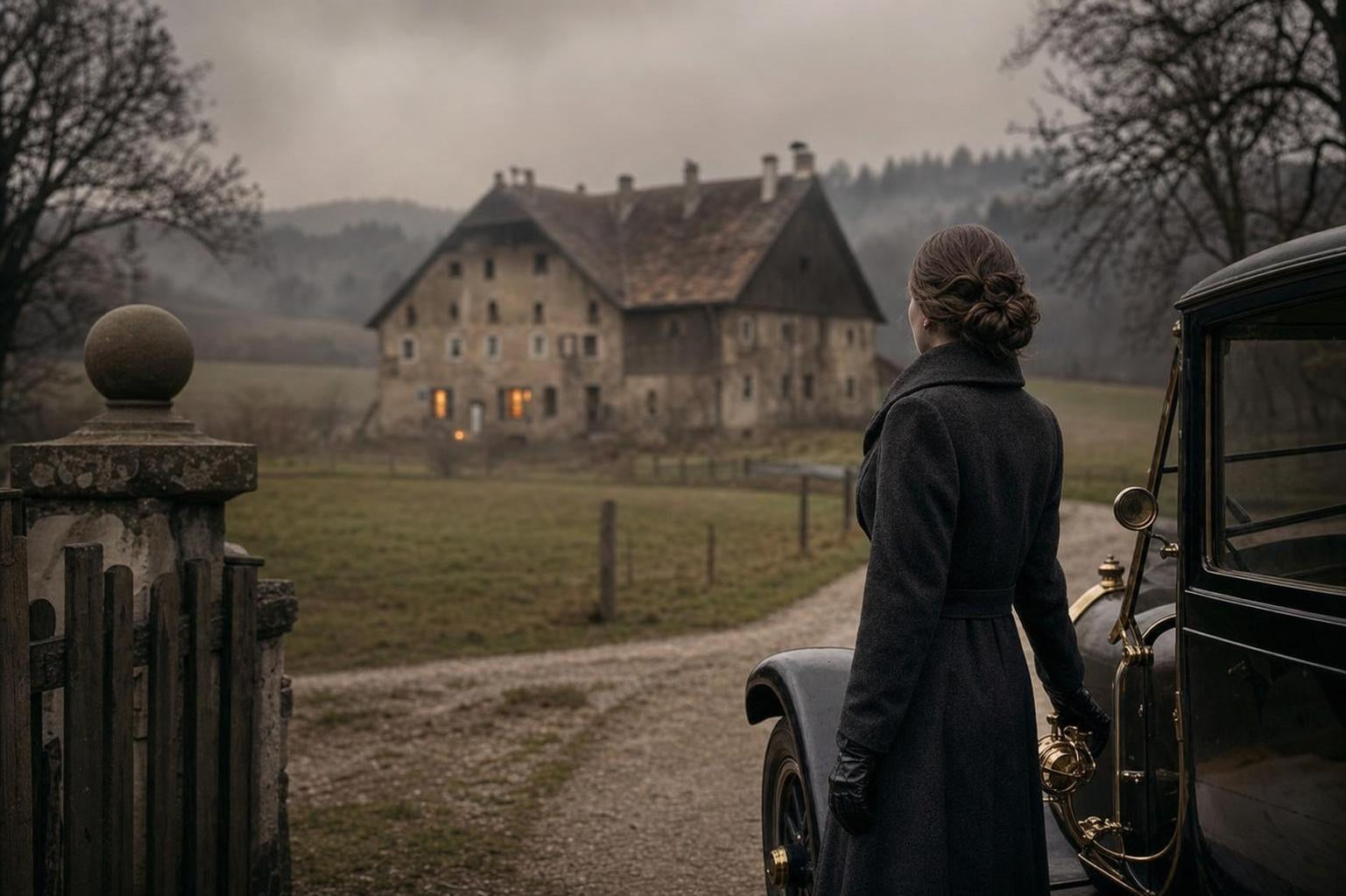
Introduction to the Hinterkaifeck Murders
A Crime That Still Haunts Germany
The Hinterkaifeck murders remain one of the most chilling unsolved crimes in European history. In March 1922, six residents of a remote Bavarian farmstead called Hinterkaifeck were brutally killed, yet the case has never been definitively solved. More than a century later, the mystery continues to fascinate historians, criminologists, and true crime readers because of its disturbing details and the strange events reported before the killings.
Located near the town of Gröbern, about 70 kilometers north of Munich, Hinterkaifeck was an isolated property surrounded by woods and fields. Its distance from neighboring homes contributed to the eerie atmosphere that later defined the case. The victims were Andreas Gruber, his wife Cäzilia, their widowed daughter Viktoria Gabriel, Viktoria’s two children, Cäzilia and Josef, and the family’s maid, Maria Baumgartner, who had arrived only hours before the murders.
Why the Case Became Legendary
What makes this crime especially unsettling is not only the violence, but the bizarre circumstances surrounding it. In the days leading up to the murders, Andreas Gruber reportedly discovered unexplained footprints in the snow leading from the forest to the farm, but none leading away. Family members also mentioned hearing strange noises in the attic and noticing a missing house key. These details have fueled decades of speculation about whether the killer had been watching the family, or even hiding on the property before the attack.
A Scene Full of Questions
Investigators believed the victims were killed with a mattock, a farm tool similar to a pickaxe. Four of the victims were lured one by one into the barn, where they were murdered. The maid and young Josef were then killed inside the house. Even more disturbing, evidence suggested the killer remained at the farm for several days afterward, feeding the animals and eating food from the kitchen.
Enduring Historical Interest
The Hinterkaifeck case has inspired books, documentaries, podcasts, and academic analysis. Despite modern reviews of the evidence, no theory has fully explained the crime. Its enduring power lies in the combination of isolation, family tragedy, and unanswered questions, making it a defining example of how some mysteries resist resolution and continue to unsettle the public imagination today.
Life at Hinterkaifeck Farm Before the Crime
An Isolated Bavarian Homestead
Before it became synonymous with one of Germany’s most haunting criminal cases, Hinterkaifeck was simply a small, remote farmstead in Bavaria. Located near the town of Gröbern, between Munich and Ingolstadt, the property sat in relative isolation, surrounded by fields, woods, and rough country tracks. In the early 1920s, this kind of separation was not unusual for rural farms, but at Hinterkaifeck the distance from neighbors added a distinct sense of vulnerability. Daily life depended on self-sufficiency, hard labor, and close family cooperation.
The farm was owned by Andreas Gruber, who lived there with his wife Cäzilia, their widowed daughter Viktoria Gabriel, Viktoria’s two young children, Cäzilia and Josef, and at times a maid. Like many Bavarian farms of the period, Hinterkaifeck functioned as both a home and a workplace. Animals had to be fed, crops maintained, tools repaired, and food prepared without the conveniences that urban households were beginning to adopt. Electricity was not standard in such isolated homes, and much of the family’s routine would have followed daylight and seasonal demands.
The Gruber-Gabriel Household
Family Structure and Tensions
The people living at Hinterkaifeck formed a multi-generational household, a common arrangement in rural Germany after World War I. Such homes often relied on every member contributing labor, from childcare to stable work. Yet the Gruber family was not regarded as ordinary by local standards. Andreas Gruber had a reputation for being harsh, controlling, and difficult. Historical accounts suggest that the family’s relationships were strained, and rumors circulated in the surrounding community about serious domestic dysfunction.
One of the most disturbing aspects of life before the murders involved allegations of incest between Andreas Gruber and his daughter Viktoria. In fact, court records indicate that both were punished in 1915 for an incestuous relationship, a scandal that would have deeply affected their standing in conservative Catholic Bavaria. This social stigma likely intensified the family’s isolation, making Hinterkaifeck not just geographically remote, but emotionally and socially cut off as well.
Daily Work and Rural Routine
Despite the tension, farm life demanded discipline. Cows needed milking twice a day, hay had to be stored, and grain or root crops managed carefully to survive the year. Children in such households often helped from a young age, balancing chores with limited schooling. Food production was central to survival, and families like the Grubers typically kept livestock including cattle, pigs, and chickens.
Signs of Unease Before the Murders
In the weeks before the crime, several unsettling incidents reportedly disrupted this routine. Andreas Gruber spoke of strange footprints in the snow leading from the forest to the farm, but not back again. He also mentioned hearing unexplained noises in the attic and discovering a newspaper from Munich that no one in the household claimed to have brought home. Most troubling, the family’s previous maid had left the farm months earlier, allegedly because she believed the house was haunted.
These reports remain difficult to verify in every detail, but they have become central to the mystery because they suggest that life at Hinterkaifeck had grown increasingly uneasy even before the murders occurred. Whether these events pointed to an intruder, heightened paranoia, or coincidence, they reveal a household already living under pressure in a place where privacy, fear, and isolation shaped everyday existence.
The Gruber Family and Other Victims
The Six Lives Lost at Hinterkaifeck
The Hinterkaifeck murders were not the killing of a single household head, but the destruction of an entire family and their newly hired maid. In March 1922, six people were found dead on the isolated Bavarian farmstead: Andreas Gruber, his wife Cäzilia, their widowed daughter Viktoria Gabriel, Viktoria’s two children Cäzilia and Josef, and the family’s maid, Maria Baumgartner. Understanding who these victims were is essential, because the case becomes far more haunting when viewed not just as a mystery, but as a tragedy that erased multiple generations at once.
Andreas and Cäzilia Gruber
Andreas Gruber, aged 63, was the patriarch of the farm. Contemporary accounts often describe him as harsh, controlling, and deeply feared within the household. His wife, Cäzilia Gruber, was about 72 years old, making her the oldest victim. The couple had lived a rural life shaped by the demanding realities of early twentieth-century Bavaria, where small farms depended on constant labor and family discipline.
A Troubled Household
The Gruber home was reportedly marked by tension long before the murders. Andreas in particular attracted suspicion and criticism from neighbors, and later retellings of the case frequently mention allegations of abusive behavior within the family. While some details remain difficult to verify with modern standards, investigators at the time were aware that the household’s internal relationships were strained, a factor that has influenced theories about motive ever since.
Viktoria Gabriel and Her Children
Viktoria Gabriel, Andreas and Cäzilia’s daughter, was approximately 35 years old and widowed after her husband died in the First World War. She lived at Hinterkaifeck with her parents and children, helping manage the farm. Her daughter, also named Cäzilia, was 7 years old, while her son Josef was only about 2 years old at the time of the murders.
Questions Around Josef’s Paternity
Josef’s parentage became one of the most discussed elements of the case. Some locals believed Viktoria was involved in a dispute over who the boy’s father was, and this speculation fed several suspect theories. Although such rumors cannot be treated as proof, they mattered because in a small rural community, family reputation, inheritance, and legitimacy could carry enormous social weight. These tensions may have widened the circle of possible motives.
Maria Baumgartner, the Final Victim
Maria Baumgartner, the family’s new maid, had arrived at Hinterkaifeck only hours before the killings. She was around 44 years old and had replaced a previous maid who reportedly left because she believed the farm was haunted. Maria likely knew little about the family’s troubles, making her death especially tragic. She appears to have been an unintended victim only in the sense that she happened to be present that night, yet she became part of one of Germany’s most infamous criminal cases.
Why the Victims Matter
The ages of the victims, ranging from a toddler to an elderly woman, underscore the brutal indiscrimination of the crime. This was not a targeted attack on one individual alone; it was the annihilation of a household, which is one reason the case continues to disturb historians and true crime researchers alike.
The Days Leading Up to the Murders
An Isolated Farm Under Growing Strain
In the final days before the Hinterkaifeck murders, the atmosphere around the remote Bavarian farm appears to have grown increasingly tense. Hinterkaifeck sat in relative isolation, positioned between the towns of Gröbern and Kaifeck, a setting that already contributed to its eerie reputation. In 1922, rural farms depended heavily on routine, familiarity, and close observation of the land. Any disruption to that rhythm would have stood out sharply. Reports from the period suggest that unusual events began to accumulate in the days before the six residents were killed, creating a pattern that later investigators and historians found deeply unsettling.
The Gruber family, who lived and worked on the property, were not strangers to hardship or local scrutiny. Andreas Gruber, the patriarch, had a reputation for being harsh and difficult, and the family itself was often the subject of gossip. Yet even against that background, the incidents reported shortly before the murders seemed extraordinary. These details matter because they suggest the killer may have been watching the farm, testing access points, or even hiding nearby before the attack took place.
Strange Signs Around the Property
One of the most frequently cited warning signs involved footprints in the snow. Andreas Gruber reportedly discovered tracks leading from the nearby forest toward the farm, but none leading back. In a rural setting, where residents were highly attuned to movement across fields and paths, this would have been alarming. The implication was simple but chilling: someone had approached the property and remained there. Whether the tracks belonged to a trespasser, a drifter, or the eventual murderer has never been proven, but the detail remains one of the most haunting elements in the case.
Missing Keys and Unexplained Noises
Gruber also mentioned that a set of house keys had gone missing. On a farmstead, keys were not a trivial matter. They controlled access to living quarters, storage spaces, and outbuildings that contained tools, food, and animals. Their disappearance suggested either carelessness, theft, or deliberate preparation by someone intending to move freely around the property. Combined with the footprints, the missing keys strengthened the sense that the farm’s security had already been compromised.
At around the same time, family members reportedly heard strange noises in the attic. Such sounds might be dismissed in another context as the natural creaking of an old structure, but the residents believed something was wrong. Gruber is said to have searched the building without finding an explanation. That failure is significant. If someone had indeed been hiding in the attic or another concealed area, the farm’s layout could have allowed them to remain undetected for days.
The Maid’s Departure and Rising Fear
Perhaps the clearest sign of unease came from the household staff. The family’s previous maid had left the farm months earlier, allegedly because she believed it was haunted. While that claim may reflect superstition rather than evidence, it reveals that the property already inspired fear among those who lived there. On 31 March 1922, a new maid, Maria Baumgartner, arrived at Hinterkaifeck. Tragically, she would be dead within hours.
A Routine Day Before Disaster
Despite these disturbing signs, life on the farm appears to have continued outwardly as normal. Animals still needed feeding, meals had to be prepared, and work could not simply stop. That ordinary routine makes the final days especially disturbing. The family seems to have sensed danger without fully grasping its source, leaving them exposed to whoever was moving ever closer within the silence surrounding Hinterkaifeck.
Discovery of the Crime Scene
An Eerie Silence at Hinterkaifeck
In the days leading up to the discovery, the isolated farmstead of Hinterkaifeck had already become the subject of quiet concern. Located roughly 70 kilometers north of Munich, the property sat in a remote area near Gröbern, separated from neighboring homes by fields and woodland. In March 1922, such isolation was not unusual for Bavarian farms, but it also meant that unusual events could go unnoticed for longer than they might in a village center. When members of the Gruber family failed to appear in public, neighbors began to sense that something was wrong.
The family’s absence became increasingly suspicious after young Cäzilia Gruber did not attend school on Friday, March 31, and the family was also missing from Sunday church services. In a rural Catholic community, missing church without explanation was highly unusual and often enough to trigger concern. Yet despite these warning signs, no one immediately forced entry onto the property. This delay would become one of the most haunting aspects of the case, as evidence later suggested that the killer may have remained on the farm for some time after the murders.
The Search Begins
By April 4, 1922, concern had grown strong enough that several neighbors decided to investigate. Among those who approached the farm were Johann Schwaiger and Lorenz Schlittenbauer, both familiar with the family and the property. Their visit was not a formal police search but rather a practical response from local residents who feared illness, accident, or some other emergency. What they encountered instead would become one of the most infamous crime scenes in German history.
Entering the Barn
The first horrifying discovery was made in the barn. There, investigators and neighbors found the bodies of four members of the household: Andreas Gruber, his wife Cäzilia, their widowed daughter Viktoria, and seven-year-old Cäzilia, Viktoria’s daughter. The victims had been arranged in a manner that suggested they were killed one by one after being lured into the barn. This detail has long fueled speculation that the murderer used either familiarity or deception to draw each person away from the house.
The condition of the bodies indicated extreme violence. All four had suffered fatal blows, later believed to have been inflicted with a mattock, a farming tool combining features of an axe and hoe. The brutality of the attack shocked even experienced investigators, especially because the victims appeared to have been killed in close quarters, with little chance to escape.
More Victims Inside the House
After the barn was searched, attention turned to the farmhouse itself. Inside, two more bodies were discovered: two-year-old Josef, asleep in his cot, and the family’s maid, Maria Baumgartner, in her bedchamber. Maria had arrived only hours before the murders, replacing a previous maid who had reportedly left the farm because she believed it was haunted. The fact that the new maid was killed on her very first night added a chilling layer to the case.
Signs of Life After Death
One of the most disturbing features of the discovery was evidence suggesting that someone remained at Hinterkaifeck after the murders. Animals had been fed, meals appeared to have been prepared, and the household showed signs of continued use. In 1922, this detail deeply unsettled both police and the public because it implied a killer who was not merely violent, but calm enough to live among the dead. Reports also indicated that smoke had been seen rising from the chimney in the days after the family was killed.
This apparent post-crime activity transformed the case from a brutal family murder into something even more sinister. It suggested planning, confidence, and an intimate knowledge of farm routines. For many observers, this was the detail that made Hinterkaifeck unforgettable.
The Immediate Response
Once the scale of the crime became clear, local authorities were summoned, and the farm quickly drew police, officials, and curious onlookers. Unfortunately, the crime scene was not preserved according to modern forensic standards. In the early 1920s, investigative procedures were far less rigorous, and numerous people entered the property before evidence could be properly documented. This contamination likely damaged the investigation from the start.
A Scene That Raised More Questions
The discovery of the crime scene did not provide clarity; instead, it opened a maze of questions. Why were the victims drawn separately into the barn? Who cared for the livestock afterward? How could six people be murdered on an occupied farm without nearby residents hearing enough to intervene? The scene at Hinterkaifeck was not just tragic; it was profoundly puzzling, setting the stage for decades of theories, accusations, and unanswered suspicion.
How the Murders Were Carried Out
The Sequence of Violence on the Farm
On the night of March 31, 1922, the killer at Hinterkaifeck appears to have acted with methodical control rather than sudden frenzy. Investigators concluded that six people were murdered: Andreas and Cäzilia Gruber, their widowed daughter Viktoria Gabriel, Viktoria’s two children, Cäzilia and Josef, and the family’s new maid, Maria Baumgartner. Evidence suggested that four victims were lured one by one from the farmhouse into the barn, where they were attacked and killed. This detail remains one of the most chilling aspects of the case, because it implies planning, patience, and familiarity with the family’s routines.
The first victims were likely Andreas, his wife Cäzilia, their daughter Viktoria, and young Cäzilia. In the barn, investigators found their bodies covered with hay, indicating that the murderer took time after the attacks to conceal them. Such behavior points to a perpetrator who was not merely escaping in panic but was instead calm enough to manage the crime scene. Autopsy reports later suggested that at least some victims did not die instantly, making the attack even more horrifying.
The Murder Weapon and Physical Evidence
The Mattock Theory
Authorities believed the murders were committed with a mattock, a farm tool similar to a pickaxe with a broad blade. The injuries described in official reports were consistent with repeated blows from a heavy, sharp-edged instrument. In 1923, a mattock believed to be the murder weapon was reportedly found hidden on the property. Although forensic science at the time was limited, the discovery reinforced the theory that the killer used a tool already available on the farm, which may indicate opportunism combined with local knowledge.
The physical evidence also suggested close-range attacks. There were no signs of a gun being used, and the victims appear to have been overpowered individually. This would have required strength, timing, and the ability to avoid raising immediate alarm. Because the farm was isolated, screams may not have carried far, but the killer still had to control multiple victims across different parts of the property.
The Murders Inside the House
The Final Two Victims
After the barn killings, the murderer entered the house and killed two-year-old Josef and the maid Maria Baumgartner. Maria had arrived only hours earlier and likely knew little about the household, making her especially vulnerable. She was found dead in her bedchamber, suggesting she may have been attacked in her sleep. Josef was killed in his cot, an act that has led many historians to argue that the murderer intended to eliminate every possible witness, regardless of age.
What makes the crime even more disturbing is what happened afterward. Neighbors later observed that the farm did not appear immediately abandoned. Animals had been fed, bread had been cut, and smoke was seen from the chimney in the days after the murders. These details strongly suggest the killer remained on the property for some time, moving through the same rooms as the victims and maintaining a grim imitation of ordinary farm life.
The Investigation and Early Suspects
A Crime Scene That Immediately Troubled Investigators
When authorities finally reached Hinterkaifeck on 4 April 1922, they encountered a scene so disturbing that it shaped the investigation from the very beginning. Six people had been killed: Andreas and Cäzilia Gruber, their widowed daughter Viktoria Gabriel, Viktoria’s two children Cäzilia and Josef, and the family’s maid, Maria Baumgartner. Four of the victims were found in the barn, while Maria and young Josef were discovered inside the house. The placement of the bodies suggested that the killer had lured, or intercepted, victims one by one before moving through the farmhouse.
Investigators quickly recognized that this was not a random robbery. Although some money and valuables remained on the property, the murderer appeared to have stayed at the farm for a period after the killings. Food had been eaten, livestock had been tended, and neighbors later reported signs of activity from the property in the days between the murders and the discovery of the bodies. This detail became one of the most chilling aspects of the case, because it implied unusual confidence, familiarity with farm routines, or both.
Early Investigative Challenges
The inquiry faced serious limitations almost immediately. Rural Bavaria in 1922 did not have access to the forensic tools that modern investigators rely on today. Crime scene preservation was poor by contemporary standards, and numerous people entered the property before evidence could be properly secured. Curious locals, officials, and even photographers moved through the farmhouse and barn, potentially contaminating footprints, fingerprints, and other trace evidence.
The Suspected Murder Weapon
A mattock, a farm tool similar to a pickaxe, was widely believed to be the murder weapon. It was reportedly found days later on the property, hidden in the attic or under loose boards, depending on the account. The victims’ injuries were consistent with heavy blunt-force trauma. While this gave police a likely instrument, it did not bring them much closer to identifying the killer. The weapon pointed to brutality, not identity, and because it was an ordinary farm implement, it offered little unique evidentiary value.
Strange Clues Before the Murders
What made the case especially unsettling were reports of odd events in the days leading up to the crime. Andreas Gruber had allegedly found unfamiliar footprints in the snow leading from the forest to the farm, but not away from it. He also mentioned hearing noises in the attic and discovering a newspaper from Munich that no one in the household recognized. A set of keys reportedly went missing as well. These details encouraged the theory that someone had been watching the family, or even hiding on the property, before the murders occurred.
The First Circle of Suspicion
Because the killings seemed personal and the farm was isolated, investigators first focused on people who knew the family. The Grubers were not widely liked. Andreas in particular had a reputation for being harsh, controlling, and deeply unpopular in the local community. Years earlier, Andreas and Viktoria had even been convicted of incest, a scandal that damaged the family’s standing and fueled gossip for years. This social isolation widened suspicion rather than narrowing it, because many villagers had reasons to resent or avoid the household.
Lorenz Schlittenbauer
Among the earliest and most persistent suspects was Lorenz Schlittenbauer, a neighbor who had reportedly been involved with Viktoria Gabriel. He was also considered a possible father of young Josef, though paternity was never definitively established. Schlittenbauer’s behavior after the bodies were discovered drew attention. Some witnesses thought he acted too calmly at the scene, and others found it suspicious that he seemed familiar with parts of the property despite the horror inside.
Police examined his possible motives, including jealousy, financial disputes, and personal conflict with Viktoria and her family. Yet suspicion alone was not enough. Schlittenbauer denied involvement, and despite repeated scrutiny over the years, investigators never produced conclusive evidence linking him to the murders. His case illustrates a recurring problem in Hinterkaifeck: many theories sounded plausible, but none could be proven.
Other Suspects and Expanding Theories
Investigators also considered drifters, former workers, and men with military experience after World War I. Bavaria in the early 1920s was politically unstable, economically strained, and still marked by wartime trauma. Violent crime, while not common in such isolated farm settings, was not unimaginable in a society dealing with dislocation and hardship. Some theories proposed robbery gone wrong, while others suggested revenge or a family-related dispute.
Why No Early Suspect Could Be Charged
Despite more than 100 individuals being questioned over time, no suspect could be formally tied to the crime with sufficient evidence. Testimony was inconsistent, physical evidence was compromised, and rumor often blurred into fact. The investigation became trapped between local knowledge and legal proof, leaving authorities with a case that was rich in suspicion but poor in certainty.
Theories About the Killer
Why the Case Inspires So Many Suspects
The Hinterkaifeck murders have generated endless speculation because the crime scene suggested both planning and familiarity. In March 1922, six people were killed on the isolated Bavarian farmstead: Andreas and Cäzilia Gruber, their widowed daughter Viktoria Gabriel, Viktoria’s two children Cäzilia and Josef, and the maid Maria Baumgartner. Investigators quickly realized this was not a simple robbery. Money reportedly remained in the house, the livestock were cared for after the murders, and someone appeared to stay on the property for several days. Those details have made the identity of the killer one of the most debated questions in German criminal history.
The Family Insider Theory
One of the earliest and most persistent ideas is that the killer was someone personally connected to the Gruber family. This theory rests on the belief that the murderer knew the routines of the household and understood how to lure victims one by one into the barn, where four of the six victims were killed. Such a method implies patience, confidence, and a close awareness of who would respond first.
Motive Through Resentment or Shame
The Gruber family had a troubled reputation in the community. Andreas Gruber, in particular, was widely disliked, and there were longstanding rumors of incest between Andreas and his daughter Viktoria. In a conservative rural village in the early 1920s, such allegations carried enormous social stigma. Some researchers believe a relative, acquaintance, or former associate may have acted out of rage, humiliation, or moral outrage. Because village life was tightly knit, personal grievances could simmer for years.
The Rejected Suitor Theory
Another major suspect category centers on Viktoria Gabriel’s relationships. After her husband Karl Gabriel died in World War I, Viktoria was linked to several men. The most discussed was Lorenz Schlittenbauer, a neighbor who had reportedly been involved with her and may have believed he was the father of young Josef. Paternity disputes mattered greatly at the time because they affected inheritance, reputation, and financial responsibility.
Why Lorenz Schlittenbauer Drew Attention
Schlittenbauer attracted suspicion partly because of his behavior after the bodies were discovered. Accounts suggest he moved through the crime scene with unusual confidence, including handling the bodies in ways some found strange. Critics argued this indicated prior knowledge. Supporters of his innocence countered that he was a local farmer responding to a horrifying emergency in a practical, unceremonious way. He was questioned repeatedly, but no conclusive evidence tied him to the murders. Even so, his name remains central because he had motive, proximity, and a complicated emotional history with the family.
The Vengeful Outsider Theory
Some investigators and later writers have proposed that the killer was not a family insider but an outsider with a grudge. This theory often points to the unsettled atmosphere of postwar Germany. In 1922, Bavaria was dealing with political instability, economic hardship, and social unrest. Veterans, drifters, and itinerant workers moved through rural areas, and many people had access to farm tools like the mattock believed to have been used in the killings.
Signs of Surveillance
Reports from before the murders strengthen the outsider theory in a different way. Andreas Gruber allegedly found unfamiliar footprints in the snow leading to the farm but not away from it. There were also claims of strange noises in the attic and missing keys. If these reports were accurate, they suggest someone may have been watching the property in advance, learning the layout and waiting for the right moment. That behavior could fit a transient offender or a stalker-like intruder rather than a neighbor acting impulsively.
The Karl Gabriel Survival Theory
One of the most sensational theories claims Viktoria’s husband, Karl Gabriel, did not actually die in the war and later returned to kill the family. Historically, Karl was reported killed in France in 1914, and military records support that conclusion. Still, rumors persisted for decades that he survived and came back to find his wife involved with another man and his family disgraced.
Why It Endures Despite Weak Evidence
This theory survives largely because it offers a dramatic narrative of betrayal and revenge. It also reflects the uncertainty of the era, when wartime deaths were not always immediately clear to families. However, most historians consider this explanation highly unlikely. There is no reliable documentary evidence placing Karl near Hinterkaifeck in 1922, and the theory depends more on folklore than on verifiable fact.
The Most Plausible View
Modern assessments usually favor a suspect from the victims’ social circle rather than a random stranger. The killer seemed comfortable remaining at the farm, feeding animals, and moving around without panic. That level of composure suggests familiarity with rural work and with the property itself. Yet the lack of forensic preservation, combined with contradictory witness statements, means every theory remains incomplete, leaving the case suspended between evidence, rumor, and fear.
Why the Case Remains Unsolved
A Crime Scene Compromised From the Start
One of the main reasons the Hinterkaifeck murders remain unsolved is that the investigation began under deeply flawed conditions. In 1922, modern forensic science was still limited, especially in rural Bavaria. Investigators did not have access to DNA testing, advanced blood analysis, or reliable crime scene preservation methods. Even more damaging, the farm was not properly secured after the bodies were discovered. Neighbors, curious locals, and officials moved through the property, potentially disturbing footprints, fingerprints, and other physical clues that might have identified the killer.
The handling of the victims also weakened the case. Reports indicate that the bodies were examined on-site, but the scene had already been contaminated. Important details may have been lost before trained investigators could document them. In a case where the murderer appeared to know the property well and may have remained there after the killings, every disturbed object mattered.
Limited Forensic Tools and Investigative Methods
The Constraints of 1920s Policing
Police in the early twentieth century relied heavily on witness statements, confessions, and visible physical evidence. In the Hinterkaifeck case, that created a major problem because there were no reliable eyewitnesses to the murders themselves. Much of the timeline had to be reconstructed from indirect observations, such as when the family was last seen or when smoke was noticed coming from the chimney.
Without modern laboratory support, investigators could not test trace evidence in ways that are routine today. Hair, fibers, tool marks, and biological material could not be analyzed with precision. Even if the killer left behind significant evidence, authorities may not have had the means to interpret it. This technological gap is one of the strongest explanations for why suspicion never turned into proof.
A Web of Rumors, Motives, and Suspects
The case also remains unresolved because it generated too many plausible theories. Over the years, suspicion fell on family members, neighbors, drifters, former employees, and possible robbers. Some theories focused on personal revenge, while others suggested inheritance disputes or hidden family secrets. Because valuables were reportedly left behind, robbery did not appear to be the primary motive, which only made the killings more puzzling.
Why Strong Suspicions Were Not Enough
Several suspects attracted serious attention, but none could be conclusively tied to the crime. Some gave inconsistent statements, while others were linked through rumor rather than evidence. In small rural communities, gossip can quickly shape an investigation, and that appears to have happened here. Suspicion is not the same as proof, and police lacked the forensic support needed to close the gap.
Time, Death, and the Loss of Evidence
As decades passed, the chances of solving the case declined sharply. Witnesses died, memories faded, and records became harder to verify. Although German police reportedly reviewed the case again in later years, no definitive answer emerged. The passage of time turned an already difficult investigation into a historical mystery, leaving only fragments of testimony, incomplete documentation, and enduring questions about who entered Hinterkaifeck and why they were never caught.
Hinterkaifeck in German Folklore and True Crime
From Rural Tragedy to National Obsession
The Hinterkaifeck murders occupy a rare place where documented crime and modern folklore overlap. In March 1922, six people were found murdered on an isolated Bavarian farmstead near Gröbern, about 70 kilometers north of Munich. The victims included Andreas and Cäzilia Gruber, their widowed daughter Viktoria Gabriel, her two children, and the family’s maid. What transformed the case from a brutal homicide into a cultural legend was not only its violence, but the unsettling details reported before the killings: footsteps in the snow, missing keys, strange noises in the attic, and a newspaper from Munich that no one in the household recognized.
Why the Case Feels Folkloric
The Power of Unexplained Details
German folklore has long featured haunted farmhouses, forest dangers, and uncanny intruders, especially in rural Bavaria, where oral storytelling remained strong well into the twentieth century. Hinterkaifeck fits this tradition almost too perfectly. The farm’s isolation, the family’s reports of eerie disturbances, and the unknown killer’s apparent decision to remain on the property for days after the murders all gave the story an almost supernatural shape. Even though police treated it as a criminal investigation, public memory absorbed it as something darker and less rational.
Rumor, Shame, and Village Memory
Another reason the case entered folklore is the social atmosphere surrounding it. Reports of incest allegations involving Andreas Gruber and Viktoria Gabriel added a layer of taboo that encouraged rumor and moral interpretation. In many folk traditions, communities explain shocking violence through stories of hidden sin, curses, or retribution. While there is no evidence of paranormal causes, the moralized retellings helped the murders endure in regional imagination.
Hinterkaifeck in True Crime Culture
A Template for Unsolved Mystery
Within German true crime, Hinterkaifeck remains one of the country’s most analyzed cold cases. Historians, journalists, and criminologists have revisited witness statements and forensic limitations for decades. Because the crime scene was badly contaminated and investigative methods in 1922 were limited, the case produced more questions than answers. That uncertainty is central to its appeal. Like London’s Jack the Ripper case, Hinterkaifeck survives because it resists closure.
Today, podcasts, documentaries, books, and online forums continue to revisit the murders, often balancing archival fact with the eerie atmosphere that made the case legendary. The result is a story that belongs equally to criminal history and to the shadowy realm of folklore.
Conclusion: Why the Mystery Still Haunts People
More than a century later, the Hinterkaifeck murders still grip the public because they combine brutal violence, eerie isolation, and unanswered questions in a way few crimes ever have. Six people were killed on a remote Bavarian farm in 1922, yet no one was ever definitively brought to justice. That absence of closure keeps the case alive.
The Power of the Unknown
What makes this mystery especially disturbing is not only the crime itself, but the unsettling details surrounding it. Reports of footsteps in the snow, strange noises in the attic, and the killer allegedly remaining on the farm afterward create a narrative that feels almost unreal. Each unresolved detail invites fresh speculation, drawing in historians, criminologists, and curious readers alike.
A Case That Refuses to Fade
Hinterkaifeck endures because it sits at the intersection of fact and folklore. The known evidence is chilling enough, but the gaps in the story allow imagination to take over. In that space between documented history and enduring legend, the mystery continues to haunt generations worldwide.
FAQ About the Hinterkaifeck Murders
What happened at Hinterkaifeck?
The Hinterkaifeck murders refer to the killing of six people on a remote Bavarian farmstead in Germany in March 1922. The victims were Andreas and Cäzilia Gruber, their widowed daughter Viktoria Gabriel, her two children, Cäzilia and Josef, and the family’s maid, Maria Baumgartner. Most were lured to the barn and killed with a mattock, making the case especially brutal.
Why is the case so famous?
The mystery remains compelling because the killer was never identified, despite extensive investigation. Reports claimed the family noticed strange footprints in the snow, heard unexplained noises in the attic, and found a missing newspaper before the murders. Even more unsettling, evidence suggested someone stayed on the farm for days afterward, feeding livestock and eating meals.
Was there ever a main suspect?
Several suspects were questioned, including neighbors and relatives, but no charge was proven. Historians and criminologists still debate motives involving inheritance, revenge, or family secrets, which keeps the case alive in true-crime discussions today.


