Introduction: The Murder Mystery Dilemma
Planning a murder mystery event sounds exciting at first: a dramatic reveal, suspicious guests, clever clues, and a memorable night of laughter and intrigue. Yet once the idea moves from imagination to execution, many hosts face a surprisingly practical question: should you write your own murder mystery or buy a ready-made one? That decision shapes everything from budget and preparation time to story quality and guest experience.
Why This Choice Matters
A murder mystery party is more than a theme. It is a structured form of interactive entertainment that depends on pacing, character balance, and clear instructions. If the plot is confusing or the clues are too obvious, guests may lose interest. If the setup is too complicated, the host can end up stressed instead of enjoying the event. The dilemma is not simply creative versus convenient; it is about matching effort, skill, and expectations.
In recent years, the popularity of immersive social events has grown alongside demand for at-home entertainment. Commercial mystery kits now serve a wide range of audiences, from small dinner parties to large corporate team-building events. At the same time, many creative hosts are drawn to the idea of building a custom story tailored to inside jokes, family dynamics, or a specific occasion.
The Appeal of Writing Your Own
Creating an original mystery offers a level of personalization that purchased games rarely match. You can design suspects around your guests, set the story in a meaningful location, and control the tone, whether elegant, comedic, or darkly theatrical. For writers, teachers, and detail-oriented planners, that freedom can be deeply rewarding. A homemade mystery can feel unique in a way no boxed script ever will.
The Hidden Complexity
However, writing a successful mystery is harder than it looks. A satisfying plot needs motive, opportunity, red herrings, and a logical solution. Characters must each have enough information to stay engaged without exposing the ending too early. Even experienced writers can struggle to balance fairness and surprise, which is why professionally designed games often go through rounds of testing and revision.
The Case for Buying One
Buying a murder mystery kit reduces uncertainty. Most commercial options include character sheets, invitations, clue rounds, and host instructions, allowing preparation to focus on presentation rather than structure. Prices often range from $20 to $100, depending on complexity and group size, which can be cost-effective when compared with the hours required to write and troubleshoot an original game.
Finding the Honest Comparison
The real question is not which option is universally better. It is which option fits your time, confidence, budget, and goals for the event.
What Counts as a Murder Mystery Experience
A murder mystery experience is any structured activity in which participants uncover a fictional crime through clues, character motives, and staged revelations. In practical terms, it sits somewhere between interactive theater, puzzle solving, and social gaming. The format can be casual or elaborate, but the defining feature is that guests are not just watching events unfold; they are actively interpreting evidence and forming conclusions.
Core Elements That Define the Experience
At minimum, a murder mystery experience includes a victim, a set of suspects, and information that is intentionally distributed over time. Players may receive character sheets, witness statements, physical props, or scripted scenes. The goal is usually to identify the killer, explain the motive, and sometimes reconstruct the timeline of the crime. Interactivity is what separates a murder mystery from a standard detective story.
In many commercial kits, the structure is divided into rounds. Each round reveals new facts, encourages questioning, and narrows the field of suspects. A home-written version may be looser, but it still needs the same backbone: conflict, secrecy, and solvable logic. If the answer depends only on a surprise twist with no fair clues, most players will not view it as a satisfying mystery.
Common Formats
The experience can take several forms depending on the audience and setting. A dinner party mystery is one of the most popular options, especially for groups of 6 to 20 people. Guests play assigned roles while eating, socializing, and trading information. Other versions include boxed tabletop games, large-scale corporate events, virtual mysteries hosted over video calls, and immersive theater productions with professional actors.
What Does Not Fully Qualify
Not every crime-themed activity counts as a true murder mystery experience. A simple trivia night about famous detectives, for example, may be entertaining but lacks investigation and player agency. Likewise, an escape room with a crime backdrop is not automatically a murder mystery unless solving the case is central to the gameplay. Theme alone is not enough; deduction must drive the experience.
Why This Distinction Matters
Understanding what qualifies helps when comparing whether to write your own mystery or buy one. A genuine murder mystery requires more than dramatic names and a dead body in the first scene. It needs balanced clues, believable suspects, and enough structure to keep players engaged without confusion. According to event industry estimates, interactive mystery dinners remain a strong niche because they combine social participation with narrative tension, making them memorable for birthdays, team-building events, and private parties alike.
The Player Experience
From the guest perspective, the experience should feel collaborative, suspenseful, and fair. Players want room to improvise, but they also need clear objectives. That balance is often the difference between a forgettable party game and a compelling mystery night.
Why People Want to Write Their Own
The appeal of creating a mystery from scratch
For many hosts, the idea of writing a murder mystery from scratch is deeply appealing because it promises complete creative control. Instead of adapting to a prewritten script, they can shape every detail around their group, venue, and preferred tone. A host planning a birthday party, team event, or family gathering may want inside jokes, familiar settings, or characters inspired by real personalities. Writing their own mystery makes that possible in a way an off-the-shelf game rarely can.
There is also a strong sense of ownership involved. Creating the plot, suspects, motives, and clues can feel more meaningful than simply purchasing a ready-made package. In the same way that some people prefer cooking a meal from scratch rather than ordering catering, writing a mystery can become part of the entertainment itself. The process is not just administrative; for many, it is a creative project that feels rewarding before the party even begins.
Personalization is a major driver
One of the biggest reasons people choose to write their own is personalization. A custom mystery can be tailored to a specific audience in ways commercial kits often cannot. For example, a corporate team-building event may need workplace-friendly humor and roles that suit mixed comfort levels, while a close friend group may enjoy sharper comedy, hidden rivalries, and more dramatic reveals.
Matching the event to the audience
A self-written mystery also allows the host to match complexity to the players. Research on game engagement consistently shows that people enjoy interactive experiences more when the difficulty feels appropriate rather than overwhelming. If guests are new to roleplay, the host can simplify the structure. If the group loves puzzles, red herrings and layered clues can be expanded. This flexibility is a major advantage and often explains why writing from scratch seems worth the effort.
Creative satisfaction and storytelling ambition
Some people are drawn to the challenge because they genuinely love storytelling. Mystery writing offers a satisfying blend of logic and imagination. The writer must balance character development, pacing, clue placement, and the final reveal so the solution feels surprising but fair. That challenge can be exciting, especially for people who enjoy writing fiction, designing games, or hosting immersive events.
The belief that homemade means better value
Another reason people want to write their own is the assumption that it will save money. A commercial murder mystery kit may cost anywhere from $20 to over $100, depending on format and group size, so writing one yourself can appear more economical at first glance. If the host already has time, writing skills, and a clear concept, that may be true. However, what many people are really seeking is not just lower cost, but a better fit for their exact vision, guest list, and event atmosphere.
Emotional investment in a unique experience
At its core, the desire to write a mystery often comes from wanting the event to feel unique and memorable. Hosts do not just want a game; they want an experience that reflects their personality and effort. That emotional investment is powerful, and it explains why so many people are tempted to create their own before comparing the practical realities involved.
Why People Choose to Buy One
Convenience Often Wins
For many hosts, the biggest reason to buy a murder mystery instead of writing one is simple: convenience. Creating a full mystery from scratch takes far more time than most people expect. A solid game needs a believable plot, character backstories, clues, red herrings, a clear solution, and a structure that keeps guests engaged from beginning to end. Even a short party game can require 10 to 20 hours of planning and writing, especially for someone without experience in game design or event writing.
A purchased mystery removes that workload immediately. Instead of starting with a blank page, the host receives a ready-made framework that has usually been tested, edited, and formatted for easy use. This is especially appealing for busy people planning birthdays, team events, fundraisers, or holiday gatherings, where time is already limited.
Professional Structure and Better Game Flow
Another major advantage is quality control. A well-designed commercial mystery is typically built to maintain pacing, balance suspicion among players, and reveal information at the right moments. That matters because one of the hardest parts of writing your own mystery is avoiding plot holes or making the solution either too obvious or impossible to solve.
Tested Materials Reduce Risk
When people buy a mystery, they are often paying for reliability as much as creativity. Many published kits have been used by hundreds or even thousands of groups. That testing helps identify weak clues, confusing instructions, or characters that do not contribute enough to the story. As a result, the host can feel more confident that guests will actually enjoy the experience rather than struggle through an unbalanced game.
This is particularly valuable for first-time hosts. If someone has never run an interactive mystery before, a proven script or kit can reduce stress and make the event feel much more polished.
Stronger Presentation and Guest Experience
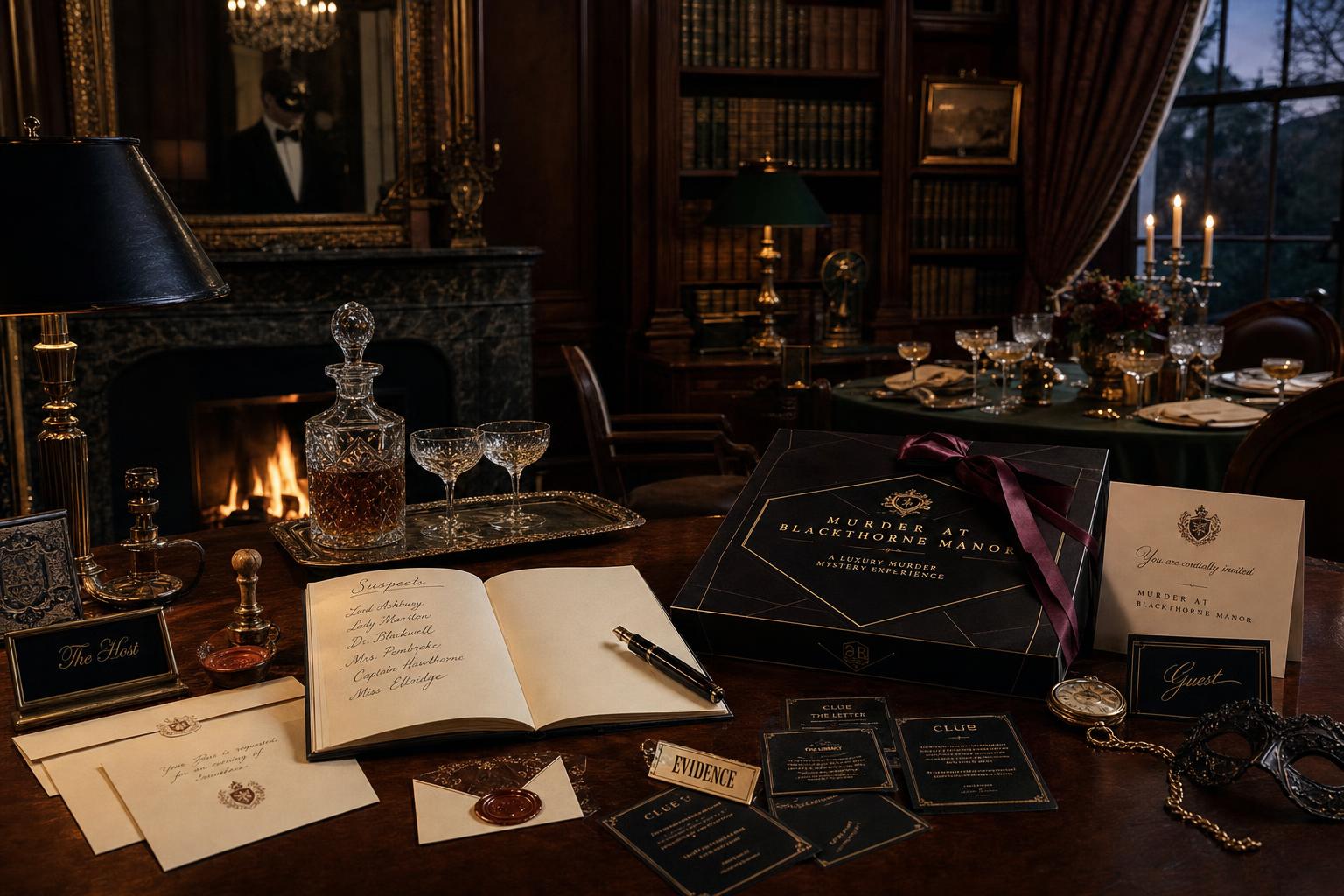
Bought mysteries also tend to offer a more complete presentation package. Many include invitations, character sheets, host guides, evidence cards, printable props, and costume suggestions. These extras improve immersion and save the host from designing every detail alone.
Value Beyond the Purchase Price
Although some people assume buying a mystery is expensive, the numbers are often reasonable. Digital murder mystery kits commonly range from $15 to $50, while premium hosted experiences or large-group packages can cost more. Compared with the time required to write, edit, and organize an original game, many hosts see this as good value.
The table below shows why purchased mysteries appeal to different types of buyers:
| Buyer Type | Main Reason for Buying |
|---|---|
| Busy host | Saves planning time |
| First-time organizer | Reduces uncertainty |
| Corporate planner | Provides professional structure |
| Family event host | Easier for mixed-age groups |
Creative Confidence Matters Too
Not everyone feels comfortable writing dialogue, building suspense, or managing multiple character motivations. Buying a mystery allows people to deliver a memorable event without needing to become amateur playwrights. In many cases, the decision is not about lacking imagination. It is about choosing a practical, dependable option that makes entertaining others easier and more enjoyable.
The Real Cost of Writing Your Own
Time Is the First and Biggest Expense
Writing your own murder mystery can seem like the cheaper option at first. There is no upfront purchase price, no licensing fee, and no need to browse catalogs for a ready-made script. However, the real cost of creating a mystery from scratch is usually measured in time before money. For most people, time is the resource that disappears fastest.
A playable murder mystery is more than a clever idea. It requires a full plot, believable suspects, a victim, motives, clues, red herrings, scene structure, character briefs, and a satisfying reveal. Even a short mystery for eight to ten players can take 15 to 30 hours to draft, test, and revise. A more polished game with layered clues and stronger character arcs can easily demand 40 hours or more, especially if the writer wants the experience to feel balanced and professional.
That time commitment grows when the writer has limited experience in interactive storytelling. Unlike a short story, a murder mystery must work as both entertainment and structure. Guests need enough information to participate, but not so much that the solution becomes obvious too early. That balance often takes several rounds of adjustment.
Creative Labor Adds Up Quickly
The writing process itself includes many hidden stages that people often underestimate. First comes concept development, where the setting, tone, and central crime are chosen. Then comes plotting, which is usually the most difficult part because every clue must connect logically. After that, character creation begins, and each guest role needs a distinct voice, motive, and relationship to the victim.
Building a Coherent Mystery
A successful mystery depends on internal logic. If one clue contradicts another, or if the murderer’s motive feels weak, players notice. That means the host-writer must track timelines, alibis, secrets, and evidence carefully. In practice, many amateur writers spend hours fixing plot holes that only become visible once the whole game is assembled.
Writing for Real Players
Characters also need to be playable, not just interesting on paper. Some guests enjoy dramatic roles, while others prefer lighter participation. A custom mystery should account for different personalities, confidence levels, and group dynamics. That often means rewriting character sheets so each person has enough to do without overwhelming quieter players.
Testing and Revision Have a Cost Too
One of the biggest differences between writing your own mystery and buying one is that purchased games have usually been tested. A self-written mystery rarely works perfectly on the first try. Clues may be too vague, the pacing may drag, or one character may accidentally dominate the story.
To avoid that, the writer often needs a trial run or at least outside feedback. Friends or family may review the script, but that still requires coordination and additional time. In professional publishing, playtesting is standard because it reveals confusion points and weak scenes. Without testing, the host takes on the risk that the event may feel disorganized.
Financial Costs Still Exist
Although writing your own mystery avoids a direct purchase, it is not truly free. There are still practical expenses involved in turning a draft into a polished party experience.
| Expense Type | Typical Range | Notes |
|---|---|---|
| Printing character packets | $10–$40 | Depends on guest count and color printing |
| Props and decorations | $20–$150 | Optional, but often expected for immersion |
| Design software or templates | $0–$50 | If you want polished invitations or handouts |
| Editing help | $0–$100+ | If hiring a freelancer or proofreader |
These numbers may seem modest, but they add to the value of the writer’s labor. If someone spends 25 hours writing and values their time at even $20 per hour, the effective cost becomes $500, far above the price of many ready-made mystery kits.
Stress, Risk, and Opportunity Cost
Another often ignored cost is stress. Hosting a murder mystery already involves invitations, food, scheduling, and guest management. Writing the entire game adds another layer of responsibility. If the mystery falls flat, the host cannot blame unclear instructions from a publisher. They own every weak twist, missing clue, and awkward pause.
There is also the issue of opportunity cost. The hours spent writing could have been used on menu planning, decorating, rehearsing, or simply enjoying the lead-up to the event. For busy hosts, that tradeoff matters. A purchased mystery may cost money, but it can save enough time and mental energy to make the overall experience far more efficient.
When Writing Your Own Still Makes Sense
Despite these costs, creating your own mystery can be worthwhile in the right situation. It works best for people who genuinely enjoy writing, want a highly personalized story, or need a theme that is difficult to find commercially. A custom script can include inside jokes, family references, workplace dynamics, or a setting tailored exactly to the guest list.
In those cases, the value comes from the creative experience itself, not just the final party product. The key is to recognize that writing your own mystery is rarely the budget shortcut it appears to be. It is a creative project with real demands on time, attention, and planning, and those demands should be weighed honestly before deciding which route offers the better overall value.
The Real Cost of Buying a Mystery
Buying a ready-made murder mystery can look like the faster, cheaper option, especially for hosts, teachers, team leaders, or event planners working under pressure. At first glance, a downloadable kit priced between $20 and $80 seems far more practical than writing an original game from scratch. Yet the real cost of buying a mystery is not limited to the purchase price. It includes the hidden trade-offs in customization, replay value, production quality, and the time required to adapt the material to a specific audience.
Upfront Price Versus Total Value
Commercial mystery packages are sold at a wide range of price points. Simple printable party games often start around $15 to $30, while premium hosted experiences, boxed sets, or corporate team-building packages can run from $100 to several hundred dollars. In some cases, live entertainment companies charge $500 or more for facilitated events. These figures matter, but they only tell part of the story.
A low-cost mystery may provide character sheets, invitations, clues, and a host guide, but it may also require substantial editing before use. If the tone feels too generic, the cast size does not match the guest list, or the references feel outdated, the buyer must spend additional time revising the script. That labor has a cost, even if no money changes hands. For a busy organizer, time is often the most expensive resource.
The Cost of Limited Customization
One of the biggest compromises in a purchased mystery is flexibility. Most prewritten games are designed for broad appeal, which means they often rely on familiar tropes, simplified character arcs, and fixed plot structures. That can work well for casual entertainment, but it may feel restrictive for niche audiences or branded events.
When “Plug and Play” Is Not Really Plug and Play
A mystery written for eight adults at a cocktail party may not suit a classroom of teenagers, a mixed-age family reunion, or a company retreat. Names, motives, humor, and difficulty level may all need adjustment. If the organizer spends three or four hours rewriting roles, replacing clues, and rebalancing the ending, the convenience advantage starts to shrink quickly.
In professional settings, customization matters even more. A corporate event may need industry-specific references, inclusive character design, or team-based mechanics. Buying a generic package and modifying it internally can become less efficient than expected, particularly when several stakeholders need approval.
Replay Value and Audience Familiarity
Another hidden cost is limited reuse. Most purchased mysteries are designed to be experienced once by a specific group. After the solution is known, the same participants cannot fully enjoy it again. This makes the cost per use relatively high unless the organizer plans to run the game for multiple separate groups.
Quality Differences Across Products
Not all mystery kits offer the same value. Some are tightly edited, well paced, and professionally formatted. Others contain weak dialogue, plot holes, or confusing instructions. Because the market includes independent creators, large publishers, and downloadable templates, quality can vary dramatically.
Evaluating What You Actually Receive
A useful way to assess value is to compare what is included. Some products provide only a script and character bios, while others include evidence cards, printable décor, music cues, and hosting timelines. The broader the package, the more likely it is to save preparation time. Still, buyers should read reviews carefully, because presentation does not always equal strong storytelling.
Licensing, Printing, and Add-On Expenses
The purchase price may also exclude practical extras. Printable games require paper, ink, and sometimes cardstock or envelopes. For larger events, those costs add up. A 20-person mystery with multi-page packets can easily require 80 to 120 printed pages, which may cost noticeably more if produced professionally.
Licensing can also affect total cost. Some products are sold for personal use only, meaning schools, libraries, or businesses may need a separate commercial license. Others charge extra for expansion packs, additional characters, or digital assets. What appears affordable at checkout may become significantly more expensive once all required components are included.
Convenience Has a Price
Buying a mystery absolutely offers benefits. It reduces creative pressure, shortens planning time, and gives less experienced hosts a proven structure. For many people, that convenience is worth paying for. Still, the smartest comparison is not between buying and writing in theory, but between the sticker price and the full practical cost of making the mystery work well for your audience.
Time, Stress, and Planning Load
The Hidden Cost of Doing It Yourself
When people compare writing their own murder mystery with buying a ready-made one, they often focus on money first. In practice, time and mental effort usually matter more. A custom mystery can easily take 15 to 40 hours to outline, draft, test, and refine, depending on the number of guests and the complexity of the plot. That estimate rises quickly if you want personalized character backstories, clue trails, printable evidence, and a dramatic final reveal that actually holds together under scrutiny.
A strong mystery is not just a fun premise. It requires internal logic, pacing, and enough structure to keep guests engaged without making the solution obvious too early. Hosts often underestimate how long it takes to balance those moving parts. What sounds simple at first, such as assigning motives and planting clues, becomes a genuine writing and event-design project once real players are involved.
Planning Pressure Before the Party
The planning load also extends beyond writing. If you create the mystery yourself, you are responsible for every operational detail that supports the story. That includes invitations, character assignments, clue distribution, timing, props, rules, and contingency plans for guests who arrive late or do not fully participate. Each small decision adds cognitive load, especially when the event date is approaching.
Why Stress Builds Quickly
Stress tends to rise because a murder mystery party combines creative work with live event management. Unlike writing for yourself, this format must function in real time with unpredictable people. If one clue is confusing, one character lacks motivation, or one scene drags, the host usually has to fix it on the spot. That pressure can turn what should feel exciting into a task list that keeps expanding.
For busy hosts, this matters. A person planning around work, family, or other commitments may not have spare evenings available for script revisions and playtesting. Even a well-organized host can feel stretched when the mystery is only one part of a larger party plan involving food, décor, seating, and guest communication.
What Buying Saves You
Buying a prewritten murder mystery reduces that burden significantly. Most commercial kits are designed to cut preparation time to 2 to 6 hours, mainly for reading materials, assigning roles, and organizing supplies. That is a major difference from building a game from scratch. The host still needs to prepare, but the hardest design work has already been done.
A Practical Comparison
| Task | Write Your Own | Buy a Mystery |
|---|---|---|
| Plot creation | 5–12 hours | 0 hours |
| Character writing | 4–10 hours | 0–1 hour |
| Clue structure and testing | 3–8 hours | 1–2 hours |
| Printing and setup | 2–4 hours | 1–3 hours |
| Total typical prep | 15–40 hours | 2–6 hours |
This time savings often translates directly into lower stress. Instead of worrying whether the mystery works, the host can focus on delivery and atmosphere. That shift is especially valuable for first-time hosts, who may not yet know how much guidance guests need during gameplay.
When the Extra Work Is Worth It
There are cases where writing your own mystery makes sense. If you enjoy storytelling, have strong organizational skills, and want a deeply personalized experience, the planning load may feel rewarding rather than draining. For example, a host creating a mystery around family jokes, workplace themes, or a milestone birthday can produce something uniquely memorable.
Still, it is important to be realistic. Creative satisfaction does not eliminate logistical pressure. A custom mystery offers flexibility, but it also asks the host to become writer, editor, producer, and facilitator at the same time. That trade-off is often the deciding factor for people choosing between originality and convenience.
Matching the Choice to Your Schedule
The best option often depends less on budget and more on bandwidth. If you have several weeks, enjoy iterative writing, and do not mind troubleshooting details, creating your own mystery can be a fulfilling project. If your schedule is tight or you want a smoother path to hosting, buying a ready-made game can protect your energy while still delivering a strong guest experience.
In many real-world cases, the difference is not whether you can write one yourself, but whether you want to spend your limited time planning mechanics instead of enjoying the event itself.
Creative Control vs Convenience
The Core Trade-Off
When deciding whether to write your own murder mystery or buy a ready-made one, the biggest tension usually comes down to creative control versus convenience. Both options can produce a memorable evening, but they serve very different priorities. If you want a highly personalized experience, writing your own game gives you freedom over the plot, suspects, clues, pacing, and tone. If you want to save time and reduce stress, a purchased kit offers structure, tested materials, and a faster route to hosting.
For many hosts, this decision is less about artistic ambition and more about resources. A custom mystery can take anywhere from 10 to 30 hours to outline, draft, revise, and format, depending on complexity and guest count. By contrast, a commercial murder mystery kit can often be downloaded instantly and prepared in one to three hours, especially if character sheets and host instructions are already included.
What Creative Control Really Gives You
Writing your own mystery allows you to shape every element around your audience. You can tailor the humor to your friends, set the story in a familiar location, or build characters inspired by inside jokes and real dynamics. That level of customization can make the event feel more immersive because guests recognize that the experience was designed specifically for them.
Personalization and Flexibility
A homemade mystery also gives you flexibility when standard kits fall short. If your group has twelve players instead of eight, or if you need roles that suit shy participants and outspoken performers equally, you can design accordingly. You can also control difficulty. Some groups enjoy intricate clue chains and red herrings, while others prefer a lighter, more social game. With a custom script, you decide how challenging the mystery should be.
There is also creative satisfaction in building a story from scratch. For hosts who enjoy writing, plotting motives, and planting clues, the preparation itself can be part of the fun. The event becomes not just a party, but a creative project with a strong personal stamp.
Where Convenience Wins
Buying a murder mystery is often the better choice when time, confidence, or logistics are limited. Most commercial kits are designed to be accessible, with clear instructions, printable invitations, role descriptions, clue cards, and solution guides. That structure removes much of the guesswork that can make first-time hosting stressful.
Reliability and Speed
A purchased mystery has usually been tested across multiple groups, which means the pacing, clue balance, and character distribution are more likely to work smoothly. That matters because one weak plot hole can derail a mystery, especially if guests become confused about motives or timelines. Convenience is not just about saving time; it is also about reducing the risk of design mistakes.
The financial side can also favor convenience. While custom writing may seem free, the hidden cost is your time. If a downloadable kit costs $20 to $50, that may be far more economical than spending an entire weekend creating materials yourself. For busy hosts planning food, décor, and scheduling, that trade can be worthwhile.
Choosing Based on Your Hosting Style
The best option depends on what kind of host you are. If you love storytelling, enjoy detailed preparation, and want a mystery that feels deeply original, creative control may be worth the extra effort. If you prefer a smoother planning process and want dependable results without extensive writing, convenience is likely the smarter path.
A Practical Middle Ground
Some hosts combine both approaches by buying a kit and then customizing names, setting details, or dialogue. This hybrid method preserves the efficiency of a ready-made structure while allowing enough personalization to make the event feel unique. For many people, that balance offers the strongest mix of originality, ease, and confidence.
Guest Experience and Game Quality
When people compare writing a murder mystery from scratch with buying a ready-made game, guest experience and overall game quality usually matter more than cost or convenience. A mystery party succeeds when players feel immersed, understand their roles, and stay engaged from the opening scene to the final accusation. Whether the host creates the game personally or purchases a professionally designed package can shape each of those outcomes in very different ways.
What Guests Notice First
Most guests do not evaluate a murder mystery by asking how much effort the host invested. They notice whether the evening feels smooth, exciting, and easy to follow. If clues arrive at the right pace, characters have believable motives, and everyone has something meaningful to do, the game feels polished. If the rules are confusing or one player dominates while others sit quietly, the experience can feel uneven even when the story idea is strong.
A bought game often performs well in these early moments because it has usually been tested with multiple groups. Publishers commonly refine instructions, clue timing, and character balance after observing where players get stuck. That testing process can dramatically improve usability. In entertainment design, repeated playtesting is one of the clearest predictors of quality because it reveals confusion points that creators often miss.
The Strengths of a Custom-Written Mystery
A homemade mystery can deliver an experience that feels uniquely personal. The host can tailor the setting, humor, and references to the guest list, which often increases emotional investment. A group of coworkers may enjoy an office-themed crime, while a family gathering may respond better to inside jokes and familiar dynamics. Customization can create stronger engagement because players recognize details designed specifically for them.
Personalization and Player Fit
One major advantage of writing your own game is the ability to match roles to personalities. A shy guest can receive a simpler character with clear prompts, while an outgoing friend can handle a dramatic suspect with secrets and speeches. This kind of fit is harder to achieve with a generic boxed game. When roles align with comfort levels, participation tends to rise, and the host can reduce the risk of awkward silence or disengagement.
Where Homemade Games Can Struggle
The challenge is that strong ideas do not automatically produce strong gameplay. Writing a compelling mystery requires more than inventing a victim and a culprit. The host must manage pacing, clue logic, red herrings, character motivations, and fairness. If the murderer is too obvious, the game ends early. If the solution depends on hidden information no one could reasonably discover, guests may feel frustrated rather than impressed.
Balance, Structure, and Replay Feel
Professional games often include structured rounds, evidence packets, and scripted reveals that keep momentum steady. A first-time writer may unintentionally create dead zones where guests are unsure what to ask or do next. In many social games, momentum is critical. Studies on event engagement consistently show that confusion and downtime reduce satisfaction faster than moderate story flaws. In practice, that means a technically imperfect but well-paced purchased game may outperform a creative but loosely structured homemade one.
The Quality Advantage of Purchased Games
A purchased mystery usually offers consistency. Character booklets are formatted clearly, clues are distributed intentionally, and the final solution has been checked for plot holes. Higher-end games may also include invitations, costume suggestions, host guides, and optional evidence props. These details improve presentation and reduce cognitive load for the organizer, which indirectly improves the guest experience.
Comparing Common Quality Factors
| Factor | Write Your Own | Buy One |
|---|---|---|
| Personalization | Very high | Moderate |
| Playtested structure | Often limited | Usually strong |
| Ease for host | Low to moderate | High |
| Risk of plot holes | Higher | Lower |
| Unique experience | Very high | Moderate to high |
Choosing Based on Your Audience
For a casual group that values humor, novelty, and personal touches, a custom mystery can be memorable even if it is slightly rough around the edges. For a mixed group, corporate event, or milestone celebration where smooth execution matters, a purchased game often provides a safer path to quality. The best choice depends on whether your priority is originality or reliability, and how confident you are in designing an experience that feels fun from every guest’s perspective.
Customization, Themes, and Flexibility
One of the biggest differences between writing your own murder mystery and buying a ready-made package is the level of creative control you want. For some hosts, customization is the entire appeal. They want the story to reflect their guests, the setting, and the tone of the evening. Others would rather skip the design work and use a polished script that already delivers a reliable experience. The better choice depends on how much flexibility matters to you and how much time you are willing to invest to achieve it.
Why customization matters
A murder mystery feels more memorable when it fits the group. If you are writing your own game, you can tailor character roles to real personalities, inside jokes, and guest dynamics. A dramatic friend can become the suspicious aristocrat, while the quiet observer can play the detective. This kind of personalization often increases participation because guests feel the event was built specifically for them.
Customization also helps with practical details. You can adjust the mystery for group size, age range, venue limitations, and desired complexity. For example, a party for eight close friends can support deeper secrets and more layered clues, while a corporate team-building event may need simpler motives and clearer structure. A custom-written mystery lets you control pacing, difficulty, and even how competitive the game feels.
What bought mysteries offer
Purchased murder mystery kits are usually less flexible, but many are more adaptable than people assume. Quality kits often include optional characters, alternate endings, and host notes for different group sizes. Some publishers provide themes ranging from 1920s speakeasies to haunted manors, high school reunions, or futuristic space stations. That variety means buyers can often find a close thematic match without starting from scratch.
The advantage of tested structure
The strongest benefit of a prewritten mystery is that the format has usually been play-tested. That matters because flexibility is only useful if the game still works. A custom story may sound brilliant on paper but fall apart if clues are too vague or the solution is too obvious. Bought kits reduce that risk by offering balanced suspect motives, timed reveals, and clearer instructions for hosts.
Theme selection and creative range
If theme is your top priority, writing your own mystery gives you unlimited range. You can build a plot around a family reunion, a wedding weekend, a charity gala, or a niche fandom that commercial kits may never cover. This is especially useful for unusual venues or highly specific audiences.
When flexibility becomes a burden
However, total freedom can create decision fatigue. Every added choice, from costume style to clue format, increases planning demands. In contrast, a purchased mystery narrows the options and makes execution faster. Industry listings show that many commercial kits are designed for groups of 6 to 20 players, which covers a large share of home parties. For hosts who value convenience over originality, that level of flexibility is often more than enough.
The real question is not whether one option is more flexible in theory, but whether that flexibility will genuinely improve your event.
Best Choice by Event Type
Choosing whether to write your own murder mystery or buy a ready-made package often depends less on creativity and more on the type of event you are hosting. The right choice varies according to group size, time available, budget, and how much customization the occasion truly needs. A birthday party with close friends has very different demands from a corporate team-building night or a charity fundraiser, and those differences matter when deciding which route delivers the best experience.
Private Parties and Family Gatherings
For small private events, buying a prewritten mystery is usually the strongest option. Most home hosts are balancing food, invitations, decorations, and timing, so creating a full script, character list, clue trail, and solution can become overwhelming. A purchased game reduces preparation time dramatically, often cutting planning from 10 to 20 hours of writing and testing down to just a few hours of setup and printing.
When Convenience Matters Most
Birthday dinners, holiday parties, and casual weekend gatherings benefit from structure. A commercial kit typically includes clear instructions, assigned roles, and pacing guidance, which helps the evening run smoothly even if the host has never organized interactive entertainment before. Ease of use is often more valuable than originality in these settings, especially when guests mainly want to laugh, socialize, and participate without confusion.
Corporate Events and Team Building
Corporate groups often benefit more from purchased mysteries as well, particularly when attendance is above 15 people. Professional packages are usually designed with scalability in mind and may include facilitator notes, timed rounds, and icebreaker elements that support collaboration. Since many companies use events to improve communication and morale, reliability is essential.
Why Professional Design Helps
In workplace settings, a poorly balanced homemade mystery can create awkward downtime or unclear objectives. A tested commercial game is more likely to keep everyone involved. Some providers even offer versions tailored to leadership training, problem-solving, or cross-department interaction. When the event budget already covers venue, catering, and staff time, spending on a polished mystery often makes practical sense.
Themed Celebrations and Niche Audiences
Writing your own mystery becomes the better choice when the event revolves around a highly specific theme or audience. For example, a couple hosting a 1920s engagement party, a library planning a literary whodunit, or a fan group wanting references to a favorite series may find generic kits too broad. In these cases, personalization creates stronger immersion than convenience alone.
Custom Stories Create Memorable Moments
A homemade mystery allows you to include inside jokes, familiar locations, and characters inspired by real guests. That can make the event feel unique in a way a standard package cannot. However, this approach works best when the writer has enough time to test the plot and ensure clues are logical.
Large Public Events and Fundraisers
For public-facing events, buying is usually the safer choice. Fundraisers, community theater nights, and ticketed dinners involve reputation, guest expectations, and financial stakes. A proven mystery with clear production materials lowers risk and supports smoother execution. When guests are paying, consistency matters more than experimentation, and that often makes a purchased game the smartest fit.
Who Should Write Their Own Mystery
Writers, Hosts, and Creative Planners
Writing your own murder mystery is best suited to people who enjoy building stories from scratch and want full control over tone, pacing, and character design. If you already like outlining plots, inventing suspects, or shaping dramatic reveals, creating your own game can be deeply rewarding. It allows you to tailor the mystery to a birthday, team event, holiday party, or classroom setting in ways a prewritten kit cannot always match.
For example, a host planning a family reunion may want inside jokes, familiar locations, and roles designed around real personalities. A custom mystery can include those details naturally. That level of personalization often makes guests feel more invested, which can improve participation and create stronger memories.
People With Time to Prepare
Custom mysteries demand planning
The biggest factor is time. A solid murder mystery usually requires a believable setup, a victim, several suspects, motives, clues, red herrings, and a satisfying solution. Even a short game can take several hours to outline and draft, while a more polished version may take much longer if you also prepare invitations, character sheets, and evidence props.
Hosts who have weeks to prepare are in a stronger position than those organizing an event at the last minute. If you enjoy revising details and testing whether clues make sense, writing your own version may be a good fit. If your schedule is already crowded, the creative freedom may start to feel like pressure instead of fun.
Audiences Needing a Specific Fit
Some groups benefit especially from a homemade mystery because their needs are highly specific. Corporate teams may want themes tied to workplace communication. Teachers may need age-appropriate content aligned with reading levels. Friend groups may want a mystery that is less theatrical and more puzzle-driven.
When standard kits fall short
Prewritten mysteries often assume a certain party size, tone, or complexity level. If your group falls outside those assumptions, writing your own can solve the problem. You can control game length, simplify rules, or create flexible roles for guests who prefer lighter participation. This is especially useful because many commercial kits are designed for fixed casts, often between 6 and 20 players, which may not suit every event.
Best for Experienced Organizers
People who have hosted interactive events before usually handle custom mysteries more successfully. They understand pacing, guest energy, and how to keep activities moving. Writing your own mystery works best when creativity, preparation time, and audience awareness all come together, especially for hosts who want an experience that feels truly original.
Who Should Buy a Mystery Instead
When Buying Makes More Sense
Buying a ready-made murder mystery is often the smarter choice for hosts who want a polished experience without investing hours in writing, testing, and organizing. A custom mystery can take 10 to 20 hours or more to outline, script, balance, and format, especially for first-time writers. By contrast, a purchased game usually arrives with character sheets, clues, host instructions, and a structured timeline already prepared.
For busy people, that time difference matters. If you are planning a birthday party, team event, fundraiser, or holiday gathering, convenience may outweigh creativity. Buying instead of writing reduces stress and allows you to focus on invitations, food, costumes, and guest enjoyment rather than plot mechanics.
Ideal Buyers
First-Time Hosts
If you have never run a murder mystery before, buying one can prevent common mistakes. New hosts often underestimate how hard it is to keep the plot clear while still making it surprising. A professionally designed mystery is more likely to include balanced clues, believable motives, and a manageable pace.
Large Groups and Corporate Events
For larger events, structure becomes even more important. A group of 12 to 30 players needs clear roles and reliable timing. In workplace settings, hosts also need content that is appropriate, inclusive, and easy to facilitate. Many commercial mystery kits are designed specifically for these situations, often including scalable roles and printable materials.
People Who Want Proven Quality
A purchased mystery is also ideal for anyone who values tested entertainment over experimentation. Established publishers often refine their games based on customer feedback, which can improve clarity and replay value. Some kits even include video elements, soundtrack suggestions, or expansion characters.
Budget Versus Value
Although buying a mystery involves an upfront cost, usually between $20 and $100 for most downloadable or boxed options, that price can be reasonable when compared with the time and effort required to create one from scratch. For hosts who want a smooth, engaging event with less risk, buying is often the practical choice
Hybrid Option: Customize a Ready-Made Game
Why the hybrid approach appeals to many hosts
For many people, the smartest choice sits between writing a mystery from scratch and buying a fully fixed package. A customized ready-made game gives you structure, pacing, and tested gameplay while still leaving room for personal touches. This option is especially useful for hosts who want a polished experience without spending 10 to 20 hours building clues, motives, and character arcs themselves.
A strong commercial murder mystery kit usually includes the essentials: suspect profiles, scripted reveals, evidence prompts, and a solution that has already been play-tested. That foundation reduces the risk of plot holes or uneven difficulty. At the same time, customization lets you adapt the story to your guests, venue, and event style.
What you can realistically customize
Characters, setting, and tone
The easiest elements to modify are character names, occupations, and relationships. For example, a 1920s speakeasy mystery can become a corporate retreat scandal or a birthday-party whodunit with only moderate rewriting. You can also adjust the tone from dramatic to comedic, depending on your audience.
Hosts often personalize invitations, costume suggestions, and in-game references so players feel more connected. Small changes can create a surprisingly original experience even when the core plot remains intact.
Difficulty and game length
Many ready-made games can also be trimmed or expanded. If your group prefers a faster evening, you can remove side clues or simplify red herrings. If players enjoy deeper roleplay, you can add custom secrets, extra evidence, or short improvised scenes between rounds.
Cost, effort, and practical value
In most cases, this hybrid route is more affordable than commissioning a custom mystery and far less demanding than writing one alone. Ready-made games commonly cost between $20 and $80, while full custom development can cost significantly more in time or money. The hybrid model works well for hosts who want creative control without total creative burden.
It is not perfect, though. Some plots are harder to adapt cleanly, and heavy edits can accidentally disrupt the original logic. Still, for many hosts, customizing a proven game offers the best balance of convenience, originality, and confidence.
Conclusion: Which Option Is Honestly Better
The honest answer depends on what you value most
There is no universal winner between writing your own murder mystery and buying one, because the better option is the one that matches your time, budget, confidence, and goals. If you want complete creative control, personalized characters, and a story tailored to a specific group, writing your own can be deeply rewarding. It also lets you shape the difficulty, tone, and pacing in ways a prewritten kit cannot always match.
When buying makes more sense
For most hosts, however, buying a murder mystery is often the more practical choice. A professionally designed game usually saves hours of planning, reduces the risk of plot holes, and provides a smoother experience for guests. Considering that many downloadable mystery kits cost far less than the value of 10 to 20 hours of writing and organizing, the convenience is significant. If your priority is hosting a fun, low-stress event, buying is usually the smarter option.
When writing your own is worth it
Writing your own mystery becomes the stronger choice when the event itself is highly personal. A birthday party, team-building night, or family gathering may benefit from inside jokes, familiar settings, and custom roles that make the experience unforgettable. In those cases, the extra effort can produce something far more meaningful than an off-the-shelf package.
The clearest way to decide
The simplest test is to ask whether you want to be a writer first or a host first. If you are excited by plotting clues, building suspects, and revising scenes, create your own. If you mainly want guests to arrive, play, and have a great time without heavy preparation, buy one. Both options can deliver a memorable night, but the best choice is the one that helps you enjoy the process as much as the party itself.
FAQ: Common Questions About Writing or Buying a Murder Mystery
Is it cheaper to write your own mystery or buy one?
In pure cash terms, writing your own murder mystery can cost less upfront, especially if you already enjoy creative writing. However, time is the hidden expense. A polished mystery party script often takes 10 to 30 hours to outline, draft, test, and revise. By contrast, prewritten kits usually range from $20 to $100, depending on length, player count, and included materials. For many hosts, buying becomes more economical when time, printing, and planning stress are considered.
How difficult is it to create a good mystery?
A strong murder mystery requires more than a clever ending. It needs clear motives, balanced clues, believable suspects, and a structure that keeps players engaged. The hardest part is avoiding plot holes while making the solution feel surprising but fair. For example, if one suspect has an obvious motive and no one else does, players may solve the case too early. Good design depends on pacing and misdirection, not just imagination.
Can beginners still write one successfully?
Yes, especially for small gatherings. A beginner can create a simple mystery by limiting the suspect list, using a familiar setting, and focusing on character secrets rather than complex forensic details. Smaller games are easier to manage and test.
When is buying the better option?
Buying is often the smarter choice when you need reliability, speed, or a smoother guest experience. Commercial mysteries are usually tested for flow, clue balance, and player participation. That matters for birthdays, corporate events, or holiday parties where entertainment must work on the first try.
What should you check before purchasing?
Look at player count, theme, age suitability, replay value, and whether the kit includes invitations, character sheets, and host instructions. Reviews are especially useful because they reveal whether the mystery is intuitive or confusing.


