

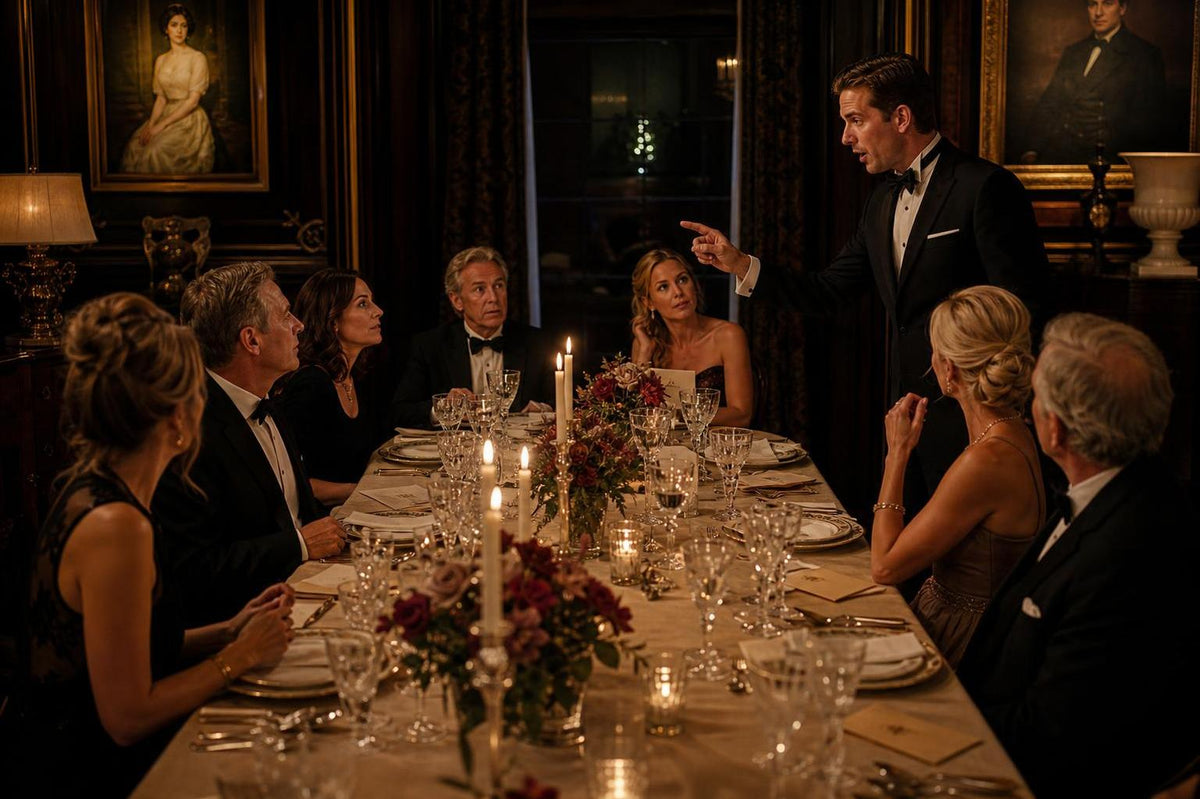
Introduction: Why a 10-Player Murder Mystery Works
A 10-player murder mystery hits a sweet spot between intimacy and spectacle. It is large enough to create the layered suspicion, shifting alliances, and dramatic reveals that make the genre so entertaining, yet small enough for every guest to stay involved. For hosts planning a memorable whodunit night, this number often delivers the best balance of structure, energy, and manageability.
The Ideal Group Size for Intrigue
With 10 players, you have enough characters to build a convincing web of motives, secrets, and relationships. In smaller games, the suspect pool can feel limited, making the solution easier to predict. In much larger groups, some participants may fade into the background or struggle to track the story. A cast of 10 gives each person a meaningful role while preserving the complexity that keeps players guessing.
This size also supports classic mystery design. A strong murder mystery usually needs a victim, a killer, several red herrings, and multiple witnesses with partial information. Ten participants create room for all of these elements without overwhelming the table. Each guest can hold a clue, a secret, or a personal agenda that contributes to the unfolding drama.
Social Energy Without Chaos
A 10-person event tends to generate lively conversation naturally. There are enough people for side discussions, whispered accusations, and strategic partnerships, which helps the evening feel dynamic rather than scripted. At the same time, the host can still guide the experience without needing a microphone, rigid timekeeping, or extensive logistics.
Everyone Gets a Chance to Shine
One of the biggest advantages of this format is participation. In a group of 10, quieter guests are less likely to be lost in the crowd, and more outgoing players still have plenty of people to interact with. That balance makes the game more inclusive and often leads to better roleplay, sharper deductions, and more memorable moments.
Practical for Hosts
From a hosting perspective, 10 players is also highly workable. Seating, food, invitations, and character assignments remain manageable in most homes. A dining table, living room, or backyard setup can usually accommodate the group comfortably. Compared with parties of 14 or more, planning for 10 often reduces costs and coordination challenges while still feeling like a substantial event.
Because of that, this format appeals to both first-time hosts and experienced entertainers. It offers enough scale to feel special, enough mystery to stay compelling, and enough flexibility to adapt to different themes, from glamorous 1920s mansions to modern crime scenes.
Choose the Right Mystery Format
Selecting the best format is one of the most important decisions when planning a murder mystery for 10 players. The structure you choose shapes the pacing, the level of interaction, and how confident guests feel once the game begins. With a group this size, the ideal format should keep everyone involved without becoming confusing or overly scripted. A well-matched format can turn a simple party into an immersive evening of deduction, roleplay, and memorable twists.
Scripted vs. Flexible Formats
A scripted mystery gives each player a defined character, a backstory, and often specific lines or scene prompts. This format works especially well for hosts who want a strong narrative arc and clear progression. Because players know when to reveal clues or deliver information, the game tends to move smoothly. For a 10-player group, this can reduce awkward pauses and help quieter guests participate with more confidence.
A flexible format, by contrast, gives players goals, secrets, and motives but allows them to improvise dialogue. This style often feels more natural and social, especially if your guests enjoy roleplaying. It also creates room for spontaneous alliances, accusations, and red herrings. However, it requires players who are comfortable thinking on their feet. If half the group prefers structure and the other half enjoys improvisation, a hybrid format often works best.
When Scripted Play Works Best
Scripted mysteries are ideal for mixed-age groups, first-time players, or events where timing matters. If you are hosting during a dinner party, for example, a structured game can be divided neatly between courses. Many commercial mystery kits are built this way, often lasting between 90 minutes and 3 hours, which suits most home gatherings.
When Flexible Play Shines
Improvisational formats are strongest when your guests already know one another and enjoy interactive entertainment. These games can feel less like a performance and more like a living social puzzle. For a large group of 10, this can create a lively atmosphere, provided the host gives clear rules and enough clues to prevent the story from drifting.
Match the Format to Your Group
The best mystery format depends on your players’ personalities as much as the story itself. A group of enthusiastic extroverts may thrive in a dramatic 1920s speakeasy mystery filled with secrets and theatrical reveals. A quieter group may prefer a clue-driven investigation where players gather evidence at their own pace. Player comfort is just as important as theme.
Consider Game Flow and Host Workload
Some formats demand more from the host than others. Script-heavy games may require advance printing, character assignments, and scene management. More open-ended mysteries may need the host to guide conversations, answer rule questions, and nudge the plot forward. For 10 players, choosing a format with clear instructions can significantly reduce stress and improve the experience for everyone.
A Quick Comparison
| Format | Best For | Main Advantage | Main Challenge |
|---|---|---|---|
| Scripted | Beginners, dinner parties | Clear structure | Less spontaneity |
| Flexible | Confident, social groups | Natural interaction | Can lose direction |
| Hybrid | Mixed groups | Balance of guidance and freedom | Requires thoughtful setup |
Think About Theme and Setting
Format and theme should support each other. A formal manor-house murder often suits a structured approach, while a modern crime party or masquerade can benefit from freer interaction. When the format fits the setting, players understand their roles faster and engage more deeply with the mystery unfolding around them.
Build the Guest List and Assign Roles
A successful murder mystery night for ten players starts with matching the right people to the right experience. With a larger group, the guest list affects pacing, energy, and how easily everyone stays engaged. Ten players is an ideal size because it creates enough suspects, motives, and alliances to make the story feel layered without becoming unmanageable. The key is to invite people who will participate actively, listen well, and enjoy a little theatrical fun, even if they are not natural performers.
Choose Guests Who Fit the Format
When building your list, think beyond simple availability. A murder mystery works best when guests are comfortable speaking in character, asking questions, and reacting to surprises. That does not mean every player must be outgoing. In fact, a balanced mix often produces the best results. A few expressive personalities can drive momentum, while more observant guests often excel at catching clues and inconsistencies others miss.
It also helps to consider existing relationships. If everyone already knows one another, the game usually starts faster because players feel less self-conscious. If some guests are new to the group, assigning them roles with clear objectives can help them settle in quickly. Chemistry matters as much as enthusiasm, especially in a game built on conversation and suspicion.
Balance Personalities Across the Cast
A ten-player mystery usually includes a range of role types, such as a confident host figure, a secretive suspect, a comic relief character, and one or two guests with strong hidden motives. Assigning these thoughtfully can dramatically improve the evening.
Match Role Complexity to Player Style
Some guests will love a role packed with backstory, secrets, and shifting alliances. Others may prefer a simpler part with a few clear talking points. If a first-time player receives the most complicated character, they may feel overwhelmed and disengage. By contrast, giving an experienced or enthusiastic guest a central role often keeps the plot moving smoothly.
As a practical rule, assign high-complexity roles to players who enjoy improvisation and can think quickly. Reserve lighter roles for guests who are less familiar with party games or who may be attending mainly for the social experience. This approach keeps the game accessible while preserving dramatic tension.
Avoid Social Bottlenecks
In larger mystery games, one problem can derail the flow: too many important clues concentrated in one person’s hands. If a shy guest holds half the plot, the group may struggle to uncover essential information. Spread key revelations across several players so no single participant becomes a bottleneck. Well-distributed roles create more natural conversation and prevent long stretches where only two people dominate the action.
Send Invitations With Useful Context
Once the guest list is set, communicate early. Let players know the event involves interactive roleplay, light deduction, and costume-friendly participation if desired. According to event planning surveys from platforms such as Eventbrite, guests are more likely to commit when expectations are clear in advance. A short description of tone, time commitment, and level of involvement helps people arrive prepared and excited.
Share Role Packets Strategically
For a ten-player game, role packets should usually go out several days before the event. This gives guests time to read their background, understand their objectives, and think about costume ideas. However, avoid oversharing spoilers. Send only what each player needs to know, and keep major twists reserved for the night itself. Preparation increases confidence, but mystery depends on controlled information.
Build Flexibility Into the Lineup
Even with careful planning, cancellations happen. For that reason, choose a game designed specifically for ten players or one that can scale down to eight or nine if needed. Some hosts also keep one or two adaptable roles in reserve, allowing the story to remain coherent if attendance changes at the last minute.
A well-built guest list does more than fill seats. It shapes the rhythm of the investigation, the quality of the interactions, and the likelihood that every player feels involved from the first accusation onward.
Plan the Story, Theme, and Setting
A memorable murder mystery night starts long before guests arrive. For a 10-player whodunit, the story, theme, and setting do most of the heavy lifting because they shape every clue, motive, and interaction. When the narrative framework is clear, players spend less time feeling confused and more time accusing, defending, and uncovering secrets. The best hosts choose a concept that is dramatic enough to sustain suspicion across ten characters, yet simple enough for everyone to follow after a quick briefing.
Build a Story That Supports Ten Distinct Roles
With ten players, your plot needs enough interpersonal tension to keep everyone relevant. A good rule is to create a victim, a killer, and eight other suspects who each have a believable connection to the crime. In practice, that means every character should have a motive, a secret, and a relationship conflict. If only two or three guests have meaningful backstories, the rest can feel like extras rather than suspects.
A strong structure often begins with a central event, such as a gala, reunion, inheritance reading, or corporate celebration. These scenarios naturally gather a large group in one place and provide reasons for friction. For example, a wealthy patriarch’s birthday dinner can involve jealous heirs, a resentful business partner, a hidden lover, and a staff member who knows too much. This gives the host room to distribute clues evenly while making each role feel necessary.
Choose a Theme That Guests Can Instantly Understand
The theme should be recognizable within seconds. Guests engage faster when they can immediately picture the world they are entering. Popular options include a 1920s speakeasy, a Victorian manor, a Hollywood awards party, or a masquerade ball. These themes work well because they come with built-in costume ideas, social hierarchies, and dramatic expectations.
For a group of ten, simplicity matters. A highly niche setting may require too much explanation, while a familiar theme lets players improvise naturally. According to event industry surveys, immersive parties with clear visual themes tend to generate higher guest participation because attendees understand how to dress and behave. In a murder mystery, that translates into stronger roleplay and fewer awkward pauses.
Match Theme to Player Personality
Think about your guest list before locking in the concept. If your players enjoy theatrical costumes, a glamorous period setting can be ideal. If they prefer humor and light improvisation, a campy cruise ship murder or reality TV finale may work better. The most successful theme is not always the most elaborate one; it is the one your group will actually embrace.
Design a Setting That Feels Interactive
The physical environment should support the fiction. You do not need a mansion to host a manor-house mystery, but you do need the room to feel intentional. Divide your space into functional zones where conversations and clue discoveries can happen naturally. A dining table can become the banquet hall, a side room can serve as the study, and a hallway table can display evidence.
Use Atmosphere to Reinforce Suspense
Lighting, music, and props help guests suspend disbelief. Dim lighting, battery candles, printed invitations, name cards, and era-appropriate playlists can transform an ordinary home. Research on experiential events consistently shows that sensory details improve immersion and memory, which is why even small touches matter. A sealed envelope marked “confidential” often creates more excitement than an expensive decoration.
Keep the Plot Manageable
Complexity is useful only when it remains playable. Ten-player mysteries should have layered suspicion, but the core crime must still be understandable. Avoid overloading the game with multiple murders, secret twins, or five unrelated subplots. Instead, focus on one crime supported by a few strong twists, such as a blackmail scheme, a forged will, or a hidden alliance between suspects.
A practical planning method is to map the story in a simple table before writing character briefs.
| Element | What to Define |
|---|---|
| Victim | Why they were targeted |
| Killer | Means, motive, and opportunity |
| Suspects | Personal stakes and secrets |
| Clues | What players can discover |
| Red herrings | Misleading but plausible details |
| Reveal | How the truth becomes undeniable |
Balance Drama With Accessibility
The ideal mystery gives every player a reason to speak. Build scenes where information must be traded, denied, or exposed. If one guest misses a clue, the game should still move forward through conversation. That balance between structure and freedom is what turns a themed gathering into a genuinely gripping social game, especially when ten players are all trying to outwit one another at once.
Create Invitations and Pre-Game Briefings
Set the Tone Before Guests Arrive
For a 10-player murder mystery, the invitation does more than share a date and address. It establishes the mood, signals the level of commitment, and helps guests arrive ready to play. A strong invitation should include the party theme, start time, expected duration, dress guidance, and whether guests will receive a character in advance. For most home games, planning for 2.5 to 4 hours is realistic, especially when you include mingling, clue reveals, food, and the final accusation round.
The wording should match the atmosphere of your event. A 1920s speakeasy mystery benefits from dramatic language, while a modern detective party may sound sharper and more playful. Clarity matters as much as style, because confusion before the event often leads to late arrivals, weak costumes, or guests who do not understand their role in the game.
What to Include in the Invitation
A complete invitation should answer the practical questions while building anticipation. Include the location, arrival time, whether dinner is served, and what guests need to bring. If costumes are optional, say so directly. If they are encouraged, offer simple examples so guests do not feel intimidated. For instance, “cocktail attire with a vintage twist” is easier to follow than a vague request to “dress in character.”
Character Assignments and RSVP Timing
For a group of 10, send invitations at least three to four weeks ahead. That gives guests time to RSVP and allows you to assign roles thoughtfully. Once attendance is confirmed, send each player a short character packet with their name, background, relationships, and any secrets they should protect. This early briefing improves participation because guests have time to absorb the role instead of improvising everything at the door.
Build a Useful Pre-Game Briefing
A pre-game briefing keeps the evening organized and prevents the common problem of players missing key rules. Send a written overview one week before the party, then repeat the essentials in a five- to ten-minute welcome speech when everyone arrives. Explain the objective, how clues will be shared, whether players may lie, and when accusations can be made. If your mystery kit includes rounds, tell guests how each phase works.
Keep Rules Simple and Memorable
The best briefing is short, confident, and specific. Remind players to stay engaged, avoid dominating every conversation, and make sure quieter guests have room to participate. If someone is playing the victim before the “murder” occurs, clarify exactly when that person exits active play or shifts into a host-assisted role. Good briefings reduce awkward pauses and increase immersion, helping the night feel polished from the very first interaction.
Prepare Costumes, Props, and Decor
Build the Atmosphere Before Guests Arrive
For a 10-player murder mystery, costumes, props, and decor do more than make the room look festive. They help guests step into character quickly, reduce awkwardness at the start of the evening, and make the story feel believable. A well-dressed space also creates instant photo opportunities, which can raise engagement and excitement before the first clue is even revealed.
Start by matching your visual style to the game’s setting. If your mystery takes place in the 1920s, think velvet table runners, gold accents, faux pearls, and jazz-era details. If it is a manor-house crime, use candlesticks, framed portraits, old books, and handwritten place cards. Consistency matters more than cost. A few coordinated pieces usually create a stronger effect than many unrelated decorations.
Keep Costumes Simple and Achievable
Guests are far more likely to participate fully when costume expectations feel manageable. Instead of requiring elaborate outfits, provide a short style guide with each invitation. Suggest colors, signature accessories, and a few easy examples drawn from common wardrobe items. A “wealthy socialite” might need only a black dress, costume jewelry, and gloves, while a “detective” may need a trench coat, notebook, and hat.
Offer Backup Accessories
Even enthusiastic guests sometimes arrive underprepared. Keep a small costume station near the entrance with spare items such as boas, clip-on bow ties, costume rings, suspenders, hats, or fake mustaches. This solves last-minute problems and helps everyone feel included. Low-cost accessories can dramatically improve immersion without requiring anyone to spend heavily.
Use Props That Support Gameplay
Props should not just look good; they should reinforce the mystery. Character folders, sealed clues, name cards, fake evidence, and themed invitations all make the event feel polished. If your game includes secret motives or hidden relationships, present those details in aged envelopes or labeled dossiers. Physical objects help players remember information better than verbal instructions alone.
A few tactile items can also guide the flow of the evening. A toy revolver, a missing necklace, a forged letter, or a suspicious glass vial can become memorable focal points during questioning. According to event-planning research, interactive elements increase guest participation because people respond more actively to objects they can hold, inspect, or discuss.
Label Key Items Clearly
Not every prop should be touchable or important. To avoid confusion, separate decorative items from game-critical evidence. You can do this subtly by placing essential props in marked envelopes, on a dedicated evidence tray, or beside printed clue cards. This keeps the mystery moving and prevents accidental misinterpretation.
Decorate for Mood, Not Clutter
Lighting has one of the biggest effects on atmosphere. Dim lamps, battery candles, and warm bulbs usually work better than bright overhead lighting. Music also matters. A curated playlist matched to the theme can fill quiet moments and maintain tension. For example, soft instrumental jazz, classical strings, or cinematic suspense tracks can support conversation without overpowering it.
Create Distinct Zones
In a larger gathering, room layout affects how naturally guests interact. Set up separate areas for dining, mingling, and clue discovery. A drinks table can become a social hub, while a smaller side table can display evidence or victim-related items. Defined spaces help ten players circulate comfortably and keep the event from feeling chaotic.
Personalized details elevate the experience further. Printed menus, themed signage, and in-character labels for food or cocktails make the party feel intentional. Even inexpensive printable decor can create a premium effect when the design is cohesive and the presentation is neat.
Set the Schedule for the Night
A well-planned timeline is the backbone of a smooth murder mystery for 10 players. With a larger group, even small delays can ripple through the evening, so setting a clear schedule helps guests stay engaged and keeps the story moving. Most successful mystery parties run between 2.5 and 4 hours, depending on how much socializing, dining, and roleplay you want to include. Building a realistic structure in advance prevents the event from feeling rushed or disorganized.
Start with the Full Event Window
Before assigning activity blocks, decide how long the entire night should last. For 10 players, a three-hour format often works well because it gives enough time for introductions, clue discovery, discussion, and the final accusation without exhausting guests. If you are serving a full meal, you may want to extend the event closer to four hours. If the gathering is more casual with snacks and drinks, three hours is usually ideal.
Guests also appreciate knowing the expected end time before they arrive. Clear timing makes attendance easier and reduces mid-game interruptions. When invitations include a start and finish window, players are more likely to arrive on time and commit fully to the experience.
Break the Night into Manageable Segments
A strong mystery party schedule usually works best when divided into stages. The opening 20 to 30 minutes can be reserved for arrival, drinks, and character introductions. This gives players time to settle in and begin interacting naturally. For a group of 10, this early social period is especially useful because it helps everyone learn names, roles, and relationships before the main investigation begins.
Plan Time for Clues and Interaction
The core gameplay often takes 90 to 120 minutes. During this period, players question one another, reveal secrets, and react to new evidence. If your game kit includes multiple rounds, assign approximate times to each one. For example, you might allow 30 minutes for the first round of mingling, 20 minutes for a clue reveal, another 30 minutes for deeper investigation, and 15 minutes for private note-taking before accusations.
This structure keeps momentum high while still allowing flexibility. Too much unstructured time can cause energy to dip, while overly strict timing may make players feel pressured.
Build in Hosting Buffers
Even the best plans need breathing room. Add 10 to 15 minute buffers between major segments for bathroom breaks, food service, or late arrivals. These small cushions are invaluable in a 10-player setting, where conversations naturally take longer and group transitions can be slower.
Sample Three-Hour Flow
| Time | Activity |
|---|---|
| 7:00 PM | Guest arrival and character introductions |
| 7:30 PM | First round of gameplay |
| 8:00 PM | Clue reveal and discussion |
| 8:20 PM | Second round of investigation |
| 9:00 PM | Final accusations |
| 9:20 PM | Solution reveal and awards |
A schedule like this gives the evening rhythm while leaving enough room for spontaneous moments, which are often the most memorable parts of a great mystery night.
Food, Drinks, and Hosting Logistics
Planning a Menu That Supports the Game
For a murder mystery party for 10 players, food should enhance the evening rather than distract from it. The best approach is to serve dishes that are easy to eat while standing, mingling, and questioning suspects. Finger foods, small plates, and buffet-style options work especially well because they reduce interruptions and keep the story moving. A menu built around bite-sized appetizers, sliders, skewers, stuffed mushrooms, or mini desserts lets guests stay engaged without balancing complicated meals.
Timing matters just as much as menu choice. If your game runs for two to three hours, consider serving substantial snacks before the main investigation begins and lighter sweets later. According to event planning norms, guests typically consume 6 to 8 appetizer pieces per person per hour when food is the primary offering, so for 10 players, preparing around 60 to 80 pieces per hour is a practical benchmark. That estimate helps prevent shortages while avoiding excessive waste.
Drinks That Fit the Theme and Flow
Drinks can reinforce the atmosphere and make the event feel more immersive. A signature cocktail or mocktail tied to the mystery theme adds personality without creating extra work. For example, a dark berry punch, sparkling “poison” lemonade, or a smoky old-fashioned can become part of the evening’s visual storytelling. Nonalcoholic options are essential, and they should be just as appealing as alcoholic drinks so every guest feels included.
It also helps to create a self-serve drink station. This reduces the host’s workload and allows players to refresh their glasses without stopping the action. Water, soda, wine, and one or two themed specialty drinks are usually enough. In home entertaining, a simple rule is to plan for two drinks per guest during the first hour and one drink per hour after that, adjusting based on the length of your event and whether food is substantial.
Setting Up the Space for Smooth Hosting
Layout and Movement
A successful whodunit night depends on how easily guests can move, talk, and gather clues. Arrange furniture to create open conversation zones rather than a formal seated dinner layout. Players need room to circulate, hold private conversations, and react dramatically to revelations. A central table for evidence cards, name tags, props, or printed instructions can keep materials organized and accessible.
Lighting should support the mood without making reading difficult. Dim lamps, candles, or string lights can create suspense, but guests still need enough brightness to read character sheets and clue cards. Background music should remain low enough that dialogue stays clear, since conversation drives the experience.
Host Preparation
Before guests arrive, label food, chill drinks, set out napkins and plates, and test any music or lighting. Preparation in advance is one of the biggest hosting advantages, especially for interactive parties where the host may also be playing a role. If possible, use disposable or easy-clean serving ware to simplify cleanup.
Managing Timing, Comfort, and Guest Experience
A well-hosted mystery night feels structured without seeming rigid. Build in a short arrival window, a clear game start time, and natural pauses for refilling plates or drinks. Guests are more comfortable when expectations are obvious, so brief instructions at the beginning can prevent confusion later. If any attendees have dietary restrictions, plan alternatives ahead of time. Even one vegetarian platter or gluten-free dessert option can make the gathering feel thoughtful, polished, and welcoming for everyone.
How to Run the Game Smoothly
Set the Pace Before Guests Arrive
Running a murder mystery for ten players becomes much easier when the host handles the logistics before the first guest knocks. Preparation is the biggest factor in keeping the game smooth, especially with a larger group where delays multiply quickly. Print character sheets, clue cards, rules, and any scripted announcements in advance. If the game kit includes secret objectives or timed reveals, sort them into labeled envelopes so you are not searching through papers mid-scene.
It also helps to prepare the room layout with the game in mind. Ten players need enough space to mingle, sit, and split into smaller conversations without constant interruption. A dining table alone can feel restrictive, so many hosts use a main gathering area plus one or two side spaces for private discussions. In party planning research, crowding is one of the most common causes of social fatigue, and that applies strongly to interactive games. When guests can move naturally, the mystery feels more immersive and less chaotic.
Explain the Rules Clearly
A smooth game depends on everyone understanding how play works from the start. Before character roleplay begins, give a short but structured briefing. Explain the objective, the expected tone, how clues will be shared, and whether players are allowed to lie in character. Clarify practical details too, such as how long each round lasts and when everyone should return to the main room.
Keep Instructions Short but Specific
Long explanations can drain energy before the game even starts. Aim for a rules overview of about five minutes, then answer questions. Players do not need every detail at once; they need enough confidence to begin. For example, tell them when to open each envelope, how accusations will work, and whether the murderer is trying to avoid detection or complete extra goals. That structure prevents confusion later.
Manage Time in Rounds
With ten players, unstructured play can easily drift. A round-based format keeps momentum high and ensures every guest gets a chance to participate. Many successful mystery parties use three to five rounds of 15 to 25 minutes each, depending on complexity. This gives enough time for investigation while preventing conversations from stalling.
Use a Simple Timing Framework
A clear schedule helps players stay focused. The format below works well for most ten-player games:
| Phase | Suggested Length | Purpose |
|---|---|---|
| Introduction | 10 minutes | Rules, character setup, opening story |
| Round 1 | 20 minutes | First mingling and clue discovery |
| Round 2 | 20 minutes | Deeper questioning and alliances |
| Round 3 | 20 minutes | Final evidence and suspicions |
| Accusations | 10 minutes | Players present theories |
| Reveal | 5 minutes | Solution and ending |
This structure totals about 85 minutes, though many hosts stretch the full event to two or three hours by adding food breaks and social time.
Keep Everyone Involved
One challenge in larger mystery games is uneven participation. Some guests naturally dominate conversations, while quieter players may fade into the background. As host, your role is to protect the balance of the experience. If you notice someone being left out, gently redirect attention by asking their character a question or prompting a small-group exchange.
Use Host Prompts to Maintain Energy
Prepared prompts are especially useful when the room loses momentum. You might announce that new evidence has been found, that a witness has remembered something important, or that all players must now share one suspicion. These nudges create fresh movement without feeling forced. In live event design, facilitators often use timed interventions every 15 to 20 minutes to sustain engagement, and the same principle works well here.
Watch for Common Slowdowns
Most pacing problems come from a few predictable issues. Players may cling to close friends instead of mingling, spend too long reading materials, or become unsure what to do next. When that happens, step in confidently and briefly. A host who appears calm and organized helps guests relax and follow the flow.
Handle Food, Drinks, and Distractions Wisely
Food can enhance the atmosphere, but it should not interrupt the mystery. Finger foods, pre-poured drinks, and a self-serve station are usually better than a meal that requires everyone to stop for 30 minutes. If dinner is part of the evening, serve it either before the game starts or between major rounds. The smoother the hospitality setup, the smoother the gameplay feels.
Messy foods, loud kitchen activity, and constant refills can break immersion. Keep essentials accessible so guests are comfortable without needing your attention every few minutes. That allows you to focus on guiding the story, answering rule questions, and making sure every reveal lands at the right moment.
Keep All 10 Players Engaged
Design the Night So Everyone Has a Job
With 10 players at the table, engagement does not happen by accident. In larger murder mystery groups, the biggest risk is that two or three outspoken guests dominate the action while quieter players drift into the background. The best hosts prevent that by giving every participant a clear reason to speak, observe, and influence the outcome. A strong character packet should include motives, secrets, relationships, and at least one useful clue. When each guest holds information that matters, conversation becomes naturally distributed instead of centered on a few personalities.
A practical rule is to make sure every player has at least two meaningful connections to other characters. For example, one guest may be hiding a financial dispute, while another knows about a suspicious alibi. A third may have overheard an argument before the victim died. These overlapping threads create a web of interaction that keeps all 10 players involved rather than waiting passively for the host to move the story forward.
Use Structured Rounds to Balance Participation
Large groups benefit from light structure. Free-form play can be fun, but without guidance, it often leads to side conversations and missed clues. Breaking the event into timed rounds helps maintain momentum. Many successful hosts use three or four rounds of 15 to 20 minutes, with a new reveal or objective introduced in each phase. This format gives players repeated chances to reset, regroup, and reenter the action.
Prompt Every Guest to Contribute
At the start of each round, invite players to share one discovery, accusation, or question. This does not need to feel rigid. It simply ensures that everyone speaks at least once before the loudest investigators take over. In team-building settings, facilitators often use this method because participation rises significantly when each person receives a defined moment to contribute.
Mix Social Energy With Puzzle Solving
Engagement stays high when the evening includes more than interrogation. Some players love dramatic roleplay, while others prefer logic and deduction. A well-run mystery serves both styles. Include hidden documents, contradictory witness statements, or physical evidence that guests can examine together. Then pair those clues with character-driven moments such as private bargains, public accusations, or surprise revelations.
Give Quiet Players Spotlight Moments
Not every guest will fight for attention, so build in scenes that naturally highlight them. A sealed note delivered midway through the game, a secret task, or a sudden revelation tied to one character can instantly pull a quieter player into the center. Spotlight moments are especially effective in groups of 10 because they refresh the room’s energy and remind everyone that any character could change the case.
When players feel informed, necessary, and visible, the mystery remains lively from the first clue to the final accusation.
Add Twists, Clues, and Memorable Moments
A great murder mystery party becomes unforgettable when the host carefully layers surprise, logic, and theatrical fun. For a 10-player game, this matters even more, because a larger group creates more conversations, more alibis, and more chances for dramatic reveals. The goal is not to confuse guests with random information, but to give them enough material to investigate while keeping the story lively.
Build Twists That Feel Earned
The best twists are believable in hindsight. Instead of introducing a shocking detail with no setup, plant small hints early. A missing key, a torn note, or a suspicious timeline can later become the basis for a major revelation. This approach rewards attentive players and makes the mystery feel satisfying rather than arbitrary.
A useful structure is to include one mid-game twist and one final reveal trigger. For example, a character who seemed to be a witness may actually have been blackmailing the victim. Later, players might discover that the apparent murder weapon was planted to mislead the group. These turns keep energy high without overwhelming guests.
Keep Every Player Relevant
In a 10-player mystery, no one should feel like an extra. Give each character at least one secret, one relationship, and one clue to share. Even innocent characters should hold information that matters. This creates a web of suspicion and encourages quieter guests to participate.
Use Clues With Variety
Strong mysteries mix physical, verbal, and behavioral clues. A handwritten invitation can suggest motive, while overheard dialogue can expose contradictions. Behavioral clues are especially effective in live games, because players naturally react to pressure. A guest who avoids a topic or changes their story can become just as suspicious as someone holding a coded message.
Pace Information Carefully
Do not release every clue at once. Spread discoveries across the evening so players stay engaged. Many hosts divide clues into rounds, with each round revealing a new layer of motive, means, or opportunity. In mystery design, this pacing mirrors effective storytelling: tension rises as certainty falls.
Create Memorable Moments
Memorable scenes often come from interactive reveals. A sealed envelope opened at dessert, a hidden object found under a chair, or a sudden announcement that the lights went out at the exact time of the crime can transform a simple party into an event guests talk about later. According to event psychology research, people remember peaks and surprises more vividly than steady activity, so designing a few standout moments can elevate the entire night.
A well-timed accusation, a dramatic confession, or an unexpected alliance can carry the story smoothly into the next phase of the party.
Common Problems and How to Fix Them
Hosting a murder mystery for ten players can be unforgettable, but larger groups often create a few predictable challenges. The good news is that most issues are easy to solve with a little planning and quick thinking during the event.
Uneven Participation
One of the most common problems is that a few guests dominate the conversation while quieter players fade into the background. In a ten-person game, this can weaken the mystery because important clues may never surface. To fix this, assign every character at least one clear objective, secret, or clue that must be shared at some point. As host, you can also prompt quieter guests with simple questions in character, helping them rejoin the action naturally.
Keeping Everyone Involved
A useful technique is to structure the evening in rounds. For example, after each major reveal, pause the group and invite every player to share one suspicion or piece of information. This keeps the game balanced and prevents stronger personalities from controlling the entire story.
Confusion About Rules or Backstory
Another frequent issue is player confusion. If guests do not understand the setting, timeline, or goals, they may spend more time asking logistical questions than solving the crime. This is especially common when first-time players are involved.
To prevent this, provide a one-page summary before the game begins. Include the premise, the victim, the time period, and basic rules for clue sharing. According to event planning surveys, guests retain information better when instructions are given both verbally and in writing, which makes a short printed guide especially effective.
Simplifying the Setup
If your mystery kit includes complex mechanics, explain only what players need in the first 10 minutes. Additional twists can be introduced later. This avoids overwhelming the group and helps the night start with energy instead of hesitation.
Pacing Problems
A ten-player mystery can also lose momentum if scenes drag on too long. Long gaps between discoveries may cause attention to drop. The easiest fix is to prepare timed reveals every 20 to 30 minutes, such as a new clue, witness statement, or secret note. This creates steady movement and gives players fresh material to discuss.
Last-Minute No-Shows
If one guest cancels, the story can become unbalanced. For flexibility, choose a mystery designed for expandable groups or prepare one backup character that can be removed without harming the plot. That small adjustment can save the entire evening without forcing a full rewrite.
Conclusion: Host a Whodunit Guests Will Remember
A successful murder mystery night for ten players is not just about the script. It depends on thoughtful planning, smooth pacing, and guest engagement from the moment invitations go out to the final reveal. When you match the right story to your group, assign characters carefully, and prepare clues in advance, you create an experience that feels immersive rather than chaotic.
What Makes a Big Whodunit Work
With ten players, structure matters even more. Larger groups bring more energy, but they also require clearer organization. A host who provides concise rules, keeps the timeline moving, and ensures every guest has a reason to participate can turn a complex game into a memorable social event. In party planning surveys, interactive experiences consistently rank among the most memorable forms of home entertainment because they combine conversation, problem-solving, and performance in one format.
Balancing Mystery and Fun
The best events strike a balance between challenge and accessibility. If clues are too vague, guests may lose interest. If the solution is too obvious, the suspense disappears. Well-timed reveals, character secrets, and moments for collaboration help keep everyone invested. Even simple touches such as themed food, background music, and printed evidence cards can elevate the atmosphere and make the evening feel polished.
Creating Lasting Memories
What guests often remember most is not whether they solved the case, but how the night made them feel. A shy player who unexpectedly delivers a dramatic accusation, a clever detective who spots a hidden motive, or a room full of laughter after a shocking twist can become the stories people retell long after the party ends. That emotional payoff is what makes a murder mystery stand out from an ordinary dinner gathering.
Your Role as Host
As the host, your job is to guide rather than control. Stay flexible, encourage quieter players, and keep the energy upbeat if the game slows down. Preparation gives you confidence, but adaptability makes the night shine. With the right setup, your ten-player whodunit can feel cinematic, social, and unforgettable, setting the stage for guests to ask when the next mystery will begin.
FAQ: Murder Mystery for 10 Players
How long does a 10-player murder mystery usually take?
Most 10-player murder mystery games run between 2 and 4 hours, depending on the complexity of the plot, the experience level of the group, and whether dinner is included. A streamlined party with pre-assigned roles and clear instructions may finish in about two hours, while a more theatrical evening with costume changes, breaks, and extended interrogation scenes can easily stretch longer. If you are hosting first-time players, it is wise to allow extra time for introductions and rule explanations so nobody feels rushed.
What affects the pace of the game?
The biggest factors are structure and player engagement. Games with multiple rounds, hidden clues, and secret objectives naturally take longer than simple scripted formats. A host can keep momentum high by setting time limits for each phase and gently guiding quieter guests into the action.
Do all 10 players need speaking roles?
Yes, ideally every guest should have an active part in the mystery. In a group of ten, balanced participation is important because too many passive roles can make the game feel uneven. Well-designed kits usually give each character a motive, relationships, and at least one secret to reveal. Even shy players can enjoy themselves when their role includes clear prompts and manageable dialogue rather than heavy improvisation.
What if someone cancels at the last minute?
Last-minute cancellations are common, so flexibility matters. Some mystery games are written for exactly ten characters, while others allow the host to remove or combine roles. Before buying a kit, check whether it supports adjustable player counts. If not, the host can sometimes step in as a minor character or rewrite a missing guest’s clues into another role. Having one extra invited guest or a backup participant can save the evening.
Should the host play or stay neutral?
Either approach can work, but for a larger group, a neutral host is often easier. Managing clue distribution, timing, food, and rule questions takes attention, and staying outside the suspect pool helps the event run smoothly. However, some hosts enjoy playing a small supporting character while still coordinating logistics. The best choice depends on how self-sufficient your group is.
Is a scripted or improvised game better?
For mixed groups, scripted games are usually more accessible. They reduce pressure, keep the story coherent, and help first-time players stay involved. Improvised formats can be hilarious and memorable, but they work best when guests are confident, creative, and comfortable staying in character for long stretches.
Do costumes and props really matter?
They are not essential, but they significantly improve immersion. A simple accessory, themed invitation, or printed clue card can make the mystery feel more vivid. According to event industry surveys, themed social gatherings often generate higher guest participation because visual details encourage people to commit to the experience. Even low-cost props can turn a standard party into a memorable whodunit night.


