

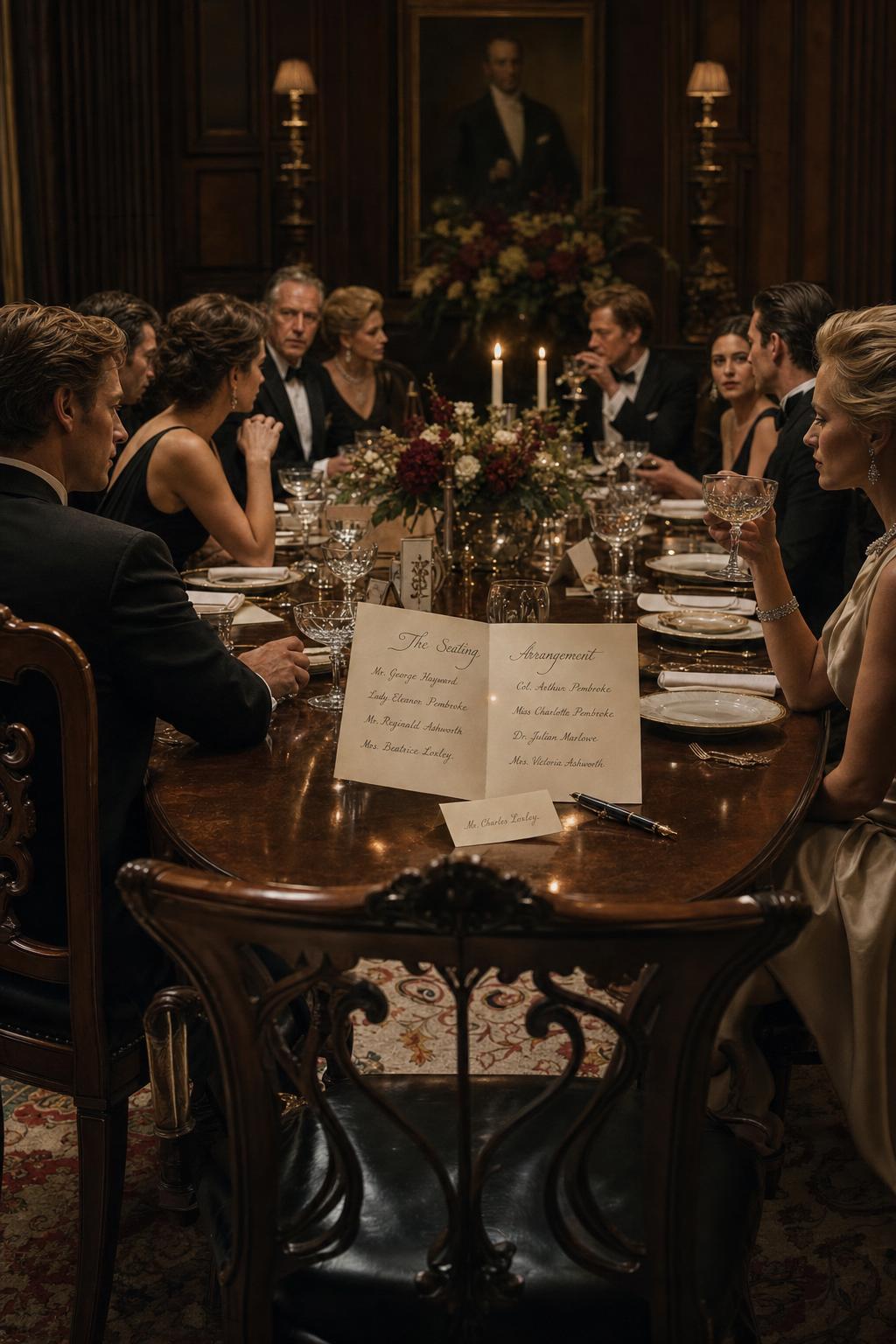
Introduction: Why Seating Shapes the Mystery
A murder mystery party lives or dies by how people interact, and seating is one of the simplest ways to control that energy. In a typical social gathering, guests often choose familiar faces and settle into comfortable conversation. At a mystery event, however, the goal is different. You want suspicion, alliances, overheard clues, and just enough tension to keep everyone engaged. A thoughtful seating plan turns the table into part of the game, shaping who talks, who watches, and who becomes the center of attention.
Seating as a Storytelling Tool
In live mystery entertainment, physical placement affects narrative flow almost as much as the script itself. Guests seated beside trusted friends may stay in their comfort zone, while those placed near new personalities are more likely to ask questions and reveal character details. Seating creates opportunities for drama by placing rivals close together, separating obvious allies, or positioning a secretive character where several people can observe them at once.
This matters because group dynamics influence participation. Event planners often note that smaller conversational clusters form naturally within minutes of seating. If those clusters are intentional, the host can guide the mystery without appearing to do so. A guest with a crucial clue, for example, becomes far more effective when seated near outspoken players who will draw them into discussion.
The Psychology Behind Guest Placement
Comfort, tension, and attention
People respond strongly to proximity. Research in social psychology has long shown that where individuals sit affects perceived status, involvement, and willingness to speak. Someone seated at the center of a long table is often seen as more important, while guests at the ends may observe more than they contribute. In a murder mystery setting, that perception can be used strategically. A suspicious seat can make a character feel suspicious before they say a word.
The right arrangement also balances comfort with unease. Too much familiarity can flatten the game, but too much social pressure can silence quieter guests. Effective seating keeps everyone included while still encouraging intrigue, side glances, and whispered theories.
Turning Dinner Into Drama
More than just logistics
A seating plan is not only about fitting people around a table. It is a practical design choice that influences pacing, clue distribution, and emotional payoff. Hosts who plan seating carefully often find that conversations feel more natural, accusations emerge faster, and every reveal lands with greater impact. In that sense, the table is not just furniture. It is a stage for suspicion, where every chair helps shape the mystery unfolding around it.
Core Principles of a Dramatic Seating Plan
A murder mystery dinner thrives on controlled tension, strategic proximity, and purposeful separation. A dramatic seating plan is not simply about fitting guests around a table; it is about shaping the flow of suspicion, conversation, and revelation. When seats are assigned with intention, every glance, whispered theory, and sudden accusation feels more theatrical. The goal is to create an environment where guests are comfortable enough to participate, yet positioned in ways that naturally spark intrigue.
Balance Character Dynamics and Real Personalities
The strongest seating plans consider both the fictional roles in the game and the real-world personalities of the guests. In most murder mystery formats, players receive secrets, motives, and alliances. Seating two highly suspicious characters together can generate immediate friction, while placing a secret ally across the table can force them to communicate through subtle cues. This arrangement encourages performance without making interactions feel forced.
At the same time, real guest behavior matters just as much. Extroverted guests often help energize quieter tables, while shy participants may perform better when seated beside supportive friends. According to event engagement research, social comfort strongly influences participation levels in group activities. A dramatic plan works best when fictional conflict is layered over genuine social ease, allowing guests to lean into the game rather than withdraw from it.
Use Proximity to Create Suspicion
Physical distance shapes emotional distance. Guests seated next to one another tend to exchange more side comments and private theories, while those opposite each other are more likely to engage in direct confrontation. This makes proximity one of the most powerful tools in a murder mystery setting.
Strategic Pairings
Place rivals close enough to react to each other’s statements in real time. A jealous heir beside a smug solicitor, for example, creates immediate opportunities for tense exchanges. Meanwhile, seat the most observant or analytical guest where they can see the entire table. This gives them a natural role as investigator and often increases the pace of discussion.
Purposeful Separation
Separation can be just as dramatic as closeness. If two characters share a secret, placing them apart forces them to communicate carefully, heightening the sense of conspiracy. Likewise, distancing a dominant personality from their closest friends can prevent private chatter from overpowering the group dynamic.
Control the Energy of the Table
A good seating plan distributes energy evenly. If all the loud, witty, or theatrical guests are clustered together, one side of the table may dominate while the other fades into the background. Instead, spread expressive players throughout the room so that momentum circulates. This is especially important at larger dinners of eight to twelve guests, where uneven conversation can quickly stall immersion.
Sightlines and Accessibility
Guests should be able to make eye contact easily with key suspects and conversational leaders. Round tables often work best because they improve visibility and reduce social hierarchy. Rectangular tables can still be effective, especially if the host places central characters near the middle rather than at the ends. Clear sightlines help every accusation land with greater impact, making the unfolding mystery feel more vivid and interactive.
Build in Opportunities for Revelation
The most memorable seating plans create natural moments for discovery. A guest who overhears a clue, notices a nervous reaction, or catches an exchanged glance becomes more invested in the story. By arranging seats to encourage observation, interruption, and reaction, the host turns the table itself into part of the performance, ensuring that drama emerges organically from every course and conversation.
Know Your Guest Roles Before You Seat Anyone
Before assigning a single chair, you need to understand who each guest will be in the story. In a murder mystery party, seating is not just about comfort or convenience. It shapes suspicion, conversation flow, clue sharing, and the emotional energy at the table. A strong seating plan begins with the roles your guests will play, because the wrong placement can flatten tension, while the right one can turn an ordinary dinner into a lively, theatrical experience.
Why roles matter more than friendships
Many hosts make the mistake of seating people only by real-life relationships. While that may feel safe, it often weakens the game. Murder mystery events work best when the fictional identities take priority. If one guest is secretly blackmailing another, or if two characters are rivals, placing them on opposite ends of the room may reduce the number of meaningful exchanges. By contrast, seating them within easy speaking distance encourages natural conflict and sharper improvisation.
In most commercial murder mystery kits, characters are written with clear motives, alliances, and secrets. Some are central suspects, while others mainly provide clues or comic relief. Knowing which category each guest falls into helps you decide who should be visible, who should be paired, and who may need support from stronger personalities nearby.
Identify the key character types
A practical way to begin is by grouping roles into broad functions within the mystery. This gives structure to your seating decisions and helps balance the room.
Central suspects
These are the characters most likely to attract attention. They usually have strong motives, dramatic backstories, or direct links to the victim. Central suspects should be seated where they can be seen and heard easily, often near the middle of the table or in positions that naturally draw interaction from multiple sides.
Connectors and information carriers
Some characters exist to move the plot along. They may know several secrets, overhear important details, or act as links between rival groups. These guests should not be isolated. Place them where conversation can travel through them, allowing clues to circulate without feeling forced.
Quiet or first-time players
Not every guest arrives ready to perform. Some may be shy, unfamiliar with roleplay, or attending their first mystery dinner. Giving these players highly demanding seats can backfire. Instead, place them beside confident, generous guests who can draw them in. A supportive neighbor often matters more than a dramatic position.
Big personalities and scene-stealers
Every group has one or two people who naturally dominate discussion. In a murder mystery, that energy can be useful, but only if managed carefully. If several strong personalities are clustered together, they may overpower the table. Spacing them out creates multiple lively zones instead of one noisy corner.
Match guest ability to role complexity
Not all roles require the same level of improvisation. Some involve layered deception, while others are more straightforward. If your game includes 8 to 12 players, which is a common range for home mystery parties, assigning the most complex roles to your most expressive guests usually improves pacing. Meanwhile, simpler roles can still feel rewarding when seated near active conversationalists.
Read the role sheet before planning seats
A good host studies each character brief in advance. Look for romantic ties, family feuds, business conflicts, hidden alliances, and any scripted moments that may benefit from proximity. Seating should amplify the written drama, not fight against it. Once you know who needs access to whom, the rest of the seating plan becomes far more strategic and far more entertaining for everyone involved.
Match the Table Layout to the Story
A murder mystery party works best when the seating plan reinforces the plot rather than simply filling chairs. The shape of the table, the distance between guests, and the visibility across the room all influence how secrets are shared, accusations are made, and alliances form. In practical terms, layout affects conversation flow as much as character assignment does. A well-matched table arrangement can turn an ordinary dinner into a scene that feels theatrical, tense, and memorable.
Why layout changes the mood
Different table formats create different kinds of energy. A long rectangular table often feels formal and hierarchical, which suits stories involving aristocratic families, corporate rivalries, or inheritance disputes. Guests can easily identify who appears to hold power at the head of the table, and that visual cue supports dramatic storytelling. By contrast, a round table creates a more democratic atmosphere, ideal for mysteries where everyone is equally suspicious and no single guest should dominate the scene too early.
Sightlines and suspicion
One of the most important factors is who can see whom. In social event planning, sightlines strongly influence participation because guests are more likely to engage when they can make eye contact comfortably. For a mystery dinner, this matters even more. If a suspected blackmailer is seated directly opposite the detective, every glance becomes charged. If two secret allies are tucked side by side in a corner with poor visibility, their subplot may disappear from the evening.
Choosing the right format for your plot
A banquet-style rectangular layout is excellent for stories with factions. One side of the table can subtly represent one family branch, business camp, or political bloc, while the opposite side represents another. This arrangement naturally encourages verbal sparring across the table. A U-shaped setup works especially well for larger groups, often between 10 and 20 guests, because it keeps the center open for clues, toasts, or dramatic reveals while preserving visibility.
Round and cabaret options
Round tables are useful when your mystery depends on shared discussion and rotating suspicion. Event research consistently shows that round seating supports more balanced conversation than linear layouts, since no one is visually isolated at the ends. If you are hosting a larger party in one room, cabaret-style seating, with guests grouped at separate round tables angled toward a focal point, can support a story featuring teams, competing investigators, or multiple witness circles.
Matching layout to character dynamics
The best seating plan aligns physical placement with narrative tension. Put rivals within speaking distance, but not so close that they can whisper unnoticed all night. Seat a gossip where they can observe entrances, reactions, and side conversations. Place a nervous suspect near a confident interrogator to create pressure. If the host character is meant to control the room, position them where they can address everyone without shouting.
Practical example
Imagine a 12-person 1920s manor-house mystery. A long table would suit the setting, with the wealthy widow at one end and the family solicitor at the other. The estranged nephew could sit opposite the housekeeper, allowing class tension to surface naturally. Meanwhile, the doctor and the detective should have clear lines of sight to most guests, since both roles depend on reading behavior.
Balancing drama with comfort
Even the most dramatic arrangement must still function as a dinner party. Leave enough elbow room for plates, clues, and note-taking. In hospitality planning, 24 inches per guest is a common minimum for comfortable dining, while 30 inches feels more generous. When guests are physically comfortable, they stay engaged longer, making every accusation, revelation, and silence land more effectively.
Place Key Characters for Maximum Suspicion
Turn Seating Into a Story Engine
In a murder mystery party, seating is never just about comfort or convenience. Where each guest sits shapes what everyone notices, suspects, and remembers. A smart seating plan can make innocent comments sound incriminating, create visual tension across the table, and encourage the exact kind of side conversations that keep a mystery alive. When key characters are placed with intention, the room begins to generate drama on its own.
The most suspicious seating arrangements usually rely on proximity, visibility, and contrast. A guest seated near the victim will naturally attract attention after the crime is revealed, especially if other players remember a heated exchange or a whispered remark. Likewise, someone positioned directly across from a crucial witness can create a subtle adversarial dynamic before a single clue is read aloud. In live mystery events, hosts often find that players form first impressions within minutes, and those impressions are heavily influenced by physical placement.
Seat the Prime Suspect Where Everyone Can Watch
A prime suspect should rarely be hidden at the edge of the room. Instead, place this character in a position that feels socially important and visually exposed. Central seats amplify scrutiny, because more guests can observe facial expressions, reactions, and body language. If the suspect is meant to appear polished and confident, a seat near the middle of the main table reinforces status while making every denial feel performative.
Why visibility matters
People are more likely to suspect characters they can consistently see. In group settings, visible participants tend to receive more conversational attention, which means their statements are remembered more clearly. That memory effect is useful in a mystery, because even harmless remarks can later be reinterpreted as clues. A central placement also allows the suspect to interact with multiple players without needing to move constantly, keeping them active in the narrative.
Place the Victim for Maximum Ripple Effect
If your format begins before the murder occurs, the victim’s seat matters just as much as the suspect’s. The victim should be close enough to several major players that many people can claim a connection, but not so isolated that only one person appears to have motive or opportunity. A good rule is to seat the victim beside one tense relationship and across from another. That arrangement creates multiple lines of suspicion immediately.
Build motive through adjacency
Seating the victim next to a jealous business partner, estranged spouse, or disgruntled heir gives every shared glance extra weight. Across the table, place someone with a secret to protect. This setup lets different guests interpret the same moment in different ways. One player may focus on the argument at the victim’s side, while another notices the silent stare from across the room. Ambiguity is more powerful than obvious guilt.
Use Witnesses to Complicate the Truth
Witness characters are often underused, yet they are essential for suspicion. A witness should sit where they can plausibly observe key interactions without seeming too powerful. If they are too central, their testimony can feel definitive. If they are too distant, their information loses credibility. The ideal witness seat is slightly off-center, with a clear line of sight to the victim, suspect, and at least one secondary character.
Separate Allies and Force Friction
Many hosts instinctively seat allied characters together, but that can reduce dramatic potential. When co-conspirators, family members, or close friends sit side by side, they can easily reinforce each other and appear too coordinated. Separating them introduces uncertainty. One ally may be forced to defend another from across the table, while a private signal becomes much harder to hide.
Strategic distance creates pressure
Physical separation also increases the chance of miscommunication, which is excellent for mystery pacing. A character who cannot quietly clarify a story with their ally may contradict them in public. That contradiction does not need to reveal the truth; it only needs to create doubt. Suspicion grows fastest when characters who should align fail to do so smoothly.
Put Red Herrings Near Conflict, Not Answers
A red herring works best when seated close to emotional heat. Place this character near the victim, a witness, or a known rival so they are naturally drawn into tense exchanges. However, avoid placing them in the exact seat that controls the mystery. Their role is to attract suspicion, not solve the plot too early. For example, an eccentric neighbor seated beside the victim may seem guilty because of strange behavior, while the actual killer remains composed in a more respectable position.
Balance the Room for Layered Suspicion
The strongest seating plans avoid making one person look guilty too soon. Instead, distribute suspicious energy across the table. Seat one obvious suspect in a visible position, one quieter suspect near a key clue, and one misleading character close to the victim. This layered arrangement mirrors effective mystery writing, where multiple plausible interpretations remain active at once. When guests can point to several believable suspects, the game feels richer, smarter, and far more dramatic.
Use Proximity to Create Alliances and Conflict
Why seating distance shapes the story
In a murder mystery party, proximity is never neutral. Where guests sit determines who whispers, who watches, who interrupts, and who begins to trust or suspect one another. A well-designed seating plan turns ordinary conversation into plot development. When two characters are placed close together, they naturally exchange more comments, share clues faster, and build a visible connection that other players notice. By contrast, separating key personalities can create frustration, secrecy, and delayed revelations that heighten dramatic tension.
Social dynamics research consistently shows that physical closeness increases interaction frequency. In event settings, people are far more likely to speak repeatedly with those beside or opposite them than with guests several seats away. For a murder mystery host, that simple principle becomes a storytelling tool. Seats are not just logistical choices; they are narrative devices that influence pacing, alliances, and conflict throughout the evening.
Building alliances through strategic placement
If you want certain guests to cooperate, seat them within easy conversational reach. This works especially well for characters who share motives, hidden histories, or overlapping objectives. A blackmailer and their reluctant accomplice, for example, should be close enough to exchange subtle remarks without crossing the room. Their nearness encourages side conversations, meaningful glances, and coordinated reactions when evidence appears.
Pairing complementary personalities
Proximity is especially effective when personalities complement each other. A bold, outspoken character seated next to a cautious observer can create a strong investigative duo. The outspoken guest drives discussion, while the quieter player notices details and feeds information back into the exchange. Together, they often become an alliance that feels organic rather than forced.
This also helps less confident participants engage more fully. If a shy guest receives a role with useful secrets, placing them beside an experienced or expressive player can draw them into the action. The stronger social energy of one guest often activates the contribution of the other, making the entire table feel more alive.
Creating conflict by controlling access
Just as closeness can unite, it can also provoke. Seating rivals near each other creates immediate friction because they cannot easily avoid eye contact, commentary, or accusations. A jealous spouse beside a charming suspect, or a business partner across from the person who ruined a deal, creates a live wire at the table. Every toast, clue, and question gains extra charge when emotional opponents are forced into repeated interaction.
Productive tension versus chaotic disruption
The goal is productive conflict, not total disorder. Guests who are likely to dominate aggressively should not all be clustered together, or the table may become noisy without advancing the mystery. Instead, distribute high-conflict personalities so each tense relationship has room to breathe. One strong rivalry can energize a section of the table; too many concentrated in one area can drown out quieter but important plotlines.
A useful approach is to alternate pressure points. Place one antagonistic pairing near a cooperative duo, then balance that with a suspicious loner across from a persuasive socialite. This creates multiple emotional currents at once, making the event feel layered and dynamic.
Using distance to delay or intensify revelations
Not every important relationship should begin in close quarters. Sometimes separation is more dramatic. If two characters share a secret that should emerge later, placing them apart can delay coordination and increase the chance of contradictory statements. That distance often leads to accidental exposure, especially once guests begin moving between courses or mingling after the meal.
A simple seating strategy
The table below shows how proximity can shape likely outcomes during play.
| Seating relationship | Likely effect on gameplay |
|---|---|
| Side by side allies | Faster trust, private exchanges, coordinated stories |
| Opposite-seat rivals | Frequent confrontation, visible reactions, public tension |
| Separated co-conspirators | Delayed planning, inconsistent details, surprise reveals |
| Neutral guest between enemies | Built-in buffer, eavesdropping, comic or strategic mediation |
Reading the room as the host
Even the best plan should reflect real personalities, not just fictional roles. A guest who loves improvisation may thrive beside an adversary, while a quieter attendee may contribute more when seated near supportive players. The strongest murder mystery seating plans blend character logic with human comfort, using proximity to spark exactly the right amount of alliance, suspicion, and conflict.
Balance Practical Hosting With Theatrical Drama
Design for Suspense Without Sacrificing Comfort
A murder mystery party works best when storytelling and hospitality support each other. While dramatic seating can heighten suspicion, alliances, and surprise reveals, guests still need to hear clues, reach food, and stay comfortable for several hours. A smart seating plan treats the table as both a stage and a social space. The goal is not chaos for its own sake, but controlled tension that keeps the game lively without making the event feel disorganized.
In practice, this means thinking beyond character dynamics alone. A guest playing the jealous ex may belong across from the wealthy victim’s business partner, but that pairing should also make sense in terms of conversation flow, visibility, and physical access. If one side of the table is too crowded or too far from the action, even the strongest character assignment can fall flat. Good hosting ensures every guest feels included in the unfolding drama.
Keep Sightlines and Sound in Mind
Make Every Clue Easy to Follow
One of the biggest practical mistakes hosts make is arranging guests for maximum conflict while ignoring how people actually communicate. In group dining settings, most comfortable conversation happens within a range of about 4 to 6 feet, and hearing drops noticeably when guests are seated too far from the speaker or around obstructive centerpieces. If players cannot catch accusations, alibis, or whispered revelations, the mystery loses momentum.
Round tables often help because they improve eye contact and distribute attention more evenly. Rectangular tables can also work well, especially if key characters are placed at the center rather than isolated at the ends. If your game includes scripted announcements, evidence reveals, or a host-led detective segment, seat quieter guests closer to where those moments will happen. This keeps everyone engaged and reduces the need to repeat important information.
Use Placement to Shape Energy
Alternate Intensity With Ease
A table full of highly performative guests can become noisy and competitive, while a cluster of reserved players may struggle to participate. Balance is essential. Place confident improvisers near quieter guests who may benefit from conversational prompts, but avoid overwhelming them with too many dominant personalities at once. Strategic contrast creates a more natural rhythm, allowing dramatic scenes to build without exhausting the room.
It also helps to consider practical guest needs alongside theatrical goals. Older relatives, guests with mobility concerns, or anyone likely to step away frequently should have easy access to exits and aisles. Players wearing elaborate costumes may need more space than usual, especially if hats, capes, or props are involved. A glamorous villain in feathered shoulders may look spectacular, but not if they spend the evening knocking over glasses.
Support Service, Food, and Flow
Drama should never interfere with the basics of hosting. Guests need enough elbow room to eat, servers need clear paths if the meal is plated, and shared dishes must remain reachable. Industry event planners often allow 24 inches of table width per seated guest as a minimum for comfort, with more space preferred for formal or themed dinners. That guideline is especially useful for murder mystery events, where guests may also handle clue cards, notebooks, or props.
If the evening includes multiple rounds of interaction, leave room for movement between scenes. A seating plan should encourage intrigue, not trap people in awkward logistics. When practical hosting is handled well, the theatrical elements feel effortless, and every suspicious glance or dramatic accusation lands with greater impact.
Seating Plans for Different Group Sizes
Small Gatherings: 6 to 8 Guests
A smaller murder mystery party creates an intimate, high-tension atmosphere where every glance, whisper, and accusation feels amplified. With only six to eight guests, the seating plan should encourage direct interaction rather than distance. A round table works especially well because it keeps everyone equally visible and prevents any one player from feeling isolated from the action. If a round table is not available, a compact rectangular table can still be effective, provided guests are seated close enough to read expressions and react quickly.
In this size group, character placement matters more than physical spacing. Seat the most outspoken or improvisational guests beside quieter players to keep conversation balanced. If two guests are naturally competitive, placing them opposite each other can heighten dramatic exchanges without letting them dominate side conversations. Every seat becomes part of the performance, so think of the arrangement as casting a scene rather than simply assigning chairs.
Best Layout Strategy
For six to eight players, the strongest approach is to create a single conversation zone. Avoid splitting guests across multiple surfaces or corners of the room. Research on group communication consistently shows that smaller groups perform better when all participants maintain clear sightlines, which is especially useful in a game built on suspicion and storytelling.
Medium Parties: 9 to 12 Guests
With nine to twelve guests, the challenge shifts from intimacy to managing energy and visibility. This is often the ideal size for a murder mystery because it allows enough personalities for alliances, secrets, and red herrings without becoming chaotic. A large oval or rectangular table usually works best, as it gives structure while still allowing players to track reactions across the room.
At this size, it helps to distribute strong personalities evenly. Avoid clustering all the funniest, loudest, or most experienced players together, because that can create one dominant section and one passive section. Instead, alternate social styles and place confident guests near those who may need encouragement to participate. If the host is also playing, a central seat along the long side of the table often provides the best vantage point for guiding the pace discreetly.
Creating Dramatic Cross-Talk
A medium group benefits from intentional opposition. Seat likely rivals across from one another, while placing secret allies at slight angles so they can exchange subtle looks without appearing too obvious. This arrangement supports both public drama and private suspicion, which are essential ingredients in a successful mystery evening.
Large Groups: 13 to 20 Guests
Larger groups require more deliberate planning because conversation can fragment quickly. Once attendance rises above twelve, a single table may no longer support equal participation. In many cases, a U-shaped setup or two connected banquet tables is more practical than one long line of seats. This preserves visibility while giving the host room to move, observe, and deliver clues.
For thirteen to twenty guests, seating should be designed in clusters that still feel connected to the central plot. Place highly engaged guests at anchor positions, such as the ends of the U or the center of each table section, where they can help sustain momentum. Guests who know each other well should not all sit together, or they may drift into unrelated conversation. Mixing friend groups increases interaction and keeps the mystery at the forefront.
When to Use a Seating Chart
For large parties, a formal seating chart is almost always worthwhile. Event planning data regularly shows that structured seating improves guest interaction at organized dinners, particularly when the activity depends on participation. A planned layout reduces awkwardness and supports the game’s pacing far better than letting everyone choose seats freely.
Adapting for Unusual Spaces
Not every host has a formal dining room, and that is perfectly manageable. In open-plan homes, smaller lounge clusters can work if each guest still has a clear role in the main action. Bar stools, side chairs, and dining seats can be combined as long as no one feels physically removed from the group. The goal is not perfect symmetry but shared visibility, easy conversation, and strategic placement that turns the room itself into part of the mystery.
Common Seating Mistakes to Avoid
Prioritizing Convenience Over Interaction
One of the most common mistakes in a murder mystery seating plan is arranging guests purely for convenience. It may seem easiest to seat couples together, place close friends in clusters, or group guests by age, but this often reduces the dramatic tension and social discovery that make these events memorable. A successful mystery dinner works best when conversation feels dynamic, unexpected, and slightly unpredictable.
When familiar groups stay together, they tend to speak mostly to each other. That can limit clue-sharing, character development, and the playful suspicion that drives the evening forward. Instead, mix personalities and social circles so guests have a reason to engage beyond their comfort zone. For example, placing a naturally talkative guest beside a quieter but imaginative player can create a balanced exchange that keeps both involved.
Ignoring Character Roles and Story Dynamics
Another major error is forgetting that seating should support the narrative, not just the meal. In many murder mystery games, certain characters have rivalries, alliances, secrets, or motives that become more entertaining when seated strategically. If key players are too far apart, important interactions may feel forced or delayed.
Keeping Suspects Visible
Guests who play central roles should usually remain highly visible and accessible to the table. If the most suspicious character is tucked into a corner or seated far from the host, they may struggle to command attention. Likewise, a guest with critical clues should not be isolated from the people most likely to question them.
A practical approach is to place high-impact characters where they can easily interact with multiple guests. This helps the story unfold naturally and keeps energy evenly distributed across the room.
Creating Social Imbalance at the Table
Seating plans can also fail when they overload one section of the table with strong personalities while leaving another side flat. If all the extroverts, improvisers, or confident performers sit together, that area may dominate the event while quieter guests become passive observers. Good hosting means distributing energy intentionally.
Balancing Participation
Aim for a mix of conversational styles at each table or section. This does not mean forcing incompatible personalities together without thought. Rather, it means ensuring every guest has at least one natural conversational bridge and one intriguing wildcard nearby. Event planners often use this principle in networking dinners because balanced seating increases participation and satisfaction.
Overlooking Practical Comfort
Even the most dramatic seating arrangement can fail if guests are physically uncomfortable. Limited elbow room, poor sightlines, or placing someone far from people they can hear clearly can weaken engagement. Comfort supports immersion, especially during a multi-course dinner or game lasting two to three hours.
If costumes, props, or note cards are involved, allow enough space for movement and interaction. A well-designed seating plan should feel effortless, even when it has been carefully engineered for maximum suspicion, conflict, and fun.
Step-by-Step Guide to Building Your Seating Chart
Start with the guest list and game roles
A strong murder mystery seating plan begins with two practical documents: your final guest list and the character roster. Before assigning any seat, confirm who is attending, who is bringing a partner, and whether any guests have accessibility, hearing, or mobility needs. This prevents last-minute reshuffling, which can weaken the dramatic structure you are trying to create.
Next, match each guest to a role that suits their personality and comfort level. Outgoing guests often thrive in suspicious, talkative, or high-status roles, while quieter guests may prefer observant characters with fewer spotlight moments. If your game includes 8 to 12 players, which is common for home mystery kits, seat assignments matter even more because every interaction carries greater narrative weight.
Map the table before placing people
Once roles are assigned, sketch your table layout. A round table encourages equal participation, while a long rectangular table naturally creates visual tension between opposite sides. If you are hosting 10 guests at a rectangular table, for example, placing key suspects at the center positions usually gives them the most conversational influence.
Identify dramatic zones
Think of the table in zones rather than individual chairs. Seats near the host are ideal for guests who may need prompts. Corner or end seats can work well for dominant personalities because they often command attention. Guests who are likely to improvise confidently should be placed where they can energize quieter neighbors without overpowering the entire room.
Place high-conflict characters strategically
The best mystery seating charts do not separate tension; they stage it deliberately. Seat rivals within speaking distance, but not always directly beside each other. Opposing characters across the table can exchange glances, accusations, and reactions that heighten suspense. Meanwhile, allies or secret co-conspirators should be close enough to communicate naturally without making their connection too obvious.
Balance energy and participation
Avoid clustering all your strongest personalities together. If three highly theatrical guests sit side by side, they may dominate the game while others disengage. Instead, distribute confident players around the table to create a more even rhythm. Event planners often use this same principle at formal dinners because balanced seating improves overall conversation flow.
Test the chart against practical needs
After drafting the arrangement, review it for logistics. Make sure every guest can hear key clues, see props, and access food or drinks comfortably. If one player has an essential reveal later in the evening, avoid placing them too far from the action. A beautiful dramatic layout fails if guests cannot participate easily.
Do a final story check
Read through the chart one last time and ask whether each seat supports the mystery. Who can whisper? Who can challenge whom? Where will the biggest reactions happen? A successful seating chart is not random furniture placement; it is part of the storytelling engine, shaping suspicion, alliances, and memorable moments from the first course onward
Conclusion: Turn Your Table Into Part of the Plot
A great murder mystery party is not driven by costumes and clues alone. The seating plan is part of the storytelling machinery, shaping who overhears what, where alliances form, and how tension travels around the table. When guests are placed with intention, even a simple dinner setup can feel like a stage where every glance, interruption, and accusation matters.
Why placement changes the experience
Thoughtful seating helps balance personalities, sustain conversation, and create dramatic contrast. Putting a confident improviser beside a quieter guest can draw them into the action, while separating close friends often prevents side conversations from weakening the game. Hosts who mix suspects, secrets, and social dynamics usually get stronger participation because the table itself keeps the narrative moving.
Small choices, big dramatic payoff
A seat near the host can give a hesitant player more guidance. A rival placed directly across the table creates visual friction. A guest holding a key clue may be more effective between strong talkers who naturally pull information out. These subtle decisions turn logistics into atmosphere, making reveals feel earned rather than random.
Make every place setting serve the story
The best seating plan is both practical and theatrical. It supports food service, comfort, and visibility while also encouraging suspicion, humor, and surprise. When you design the table as carefully as the guest list, your dining room becomes an active part of the mystery, ready to carry the plot into every course and every conversation.
FAQ: Murder Mystery Seating Plan Questions
How do you seat guests who do not know each other?
Place unfamiliar guests beside confident, talkative players who can draw them into the story. In social event planning, mixed seating often improves conversation quality because it prevents closed groups from forming. For a murder mystery, this matters even more, since clues, motives, and suspicions need to circulate naturally across the table.
Should the murderer sit in the center?
Not always. A central seat gives that character visibility, but a slightly less obvious position can create better suspense. The ideal placement depends on your room layout, number of players, and how often that guest must interact with others during key scenes.
What if some guests are shy?
Seat quieter players near supportive friends or highly engaged guests. This reduces pressure while still keeping them involved. Avoid isolating shy attendees at table ends where they may speak less and miss important exchanges.
Can couples sit together?
Usually, separating couples creates more dramatic interaction and broader conversation, unless your game specifically benefits from keeping certain alliances close.


