

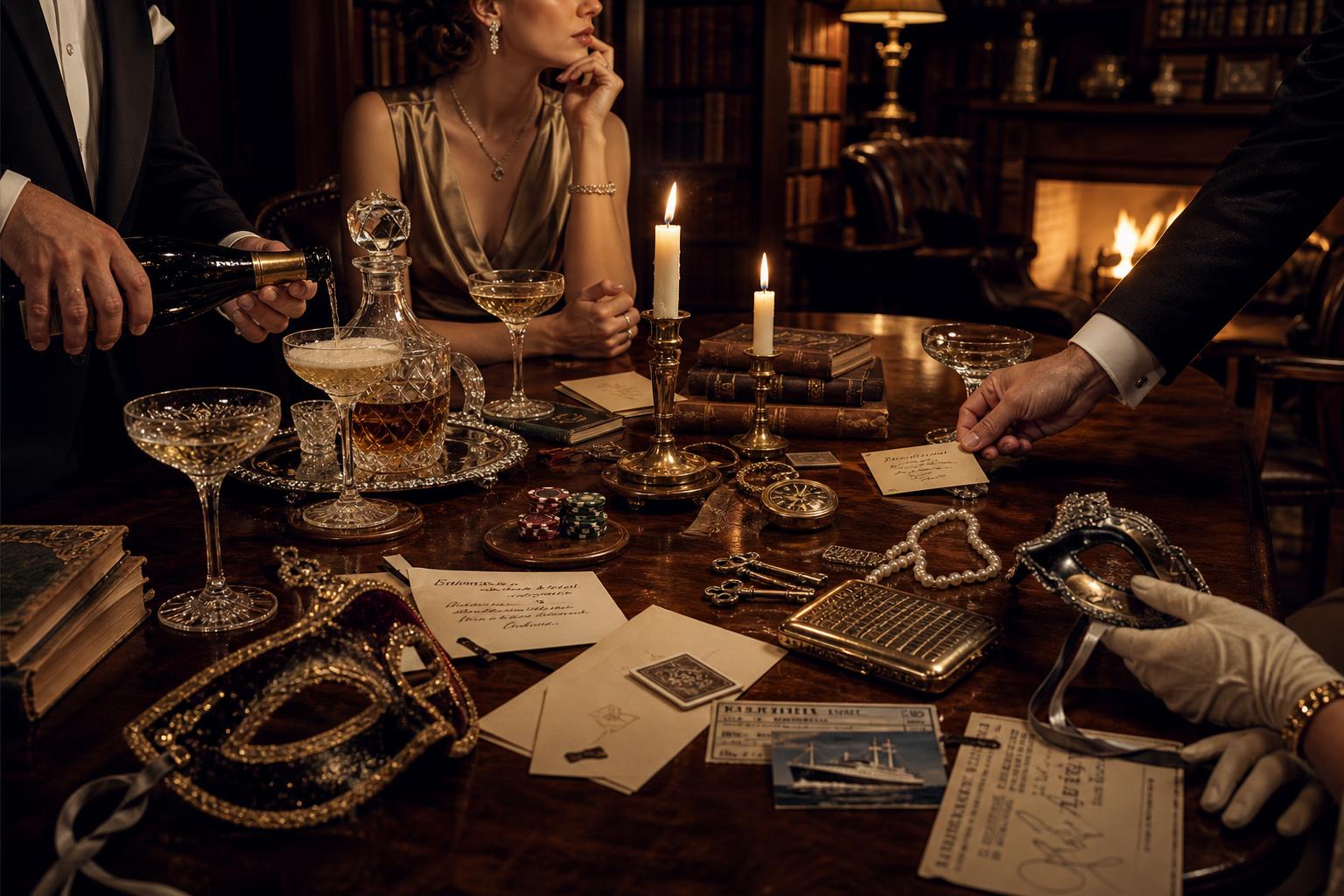
Introduction to Murder Mystery Themes
Murder mystery themes turn an ordinary gathering into an interactive story where every guest becomes a suspect, sleuth, or secret keeper. For game night hosts, the setting is more than decoration; it shapes the tone, pacing, and level of immersion. A well-chosen theme gives players instant context, helping them understand character motives, social dynamics, and the kind of clues they should expect. Whether the atmosphere is glamorous, eerie, or comedic, the right backdrop makes the mystery feel vivid from the first accusation.
Why Themes Matter in Murder Mystery Games
A strong theme provides structure. Instead of solving an abstract puzzle, players investigate within a recognizable world, such as a 1920s mansion, a luxury train, or a haunted hotel. This familiarity lowers the barrier to entry, especially for first-time players, because they can quickly grasp the social rules and dramatic possibilities of the setting. Theme also influences gameplay style. A noir-inspired mystery may encourage suspicion and sharp dialogue, while a masquerade ball can emphasize hidden identities and dramatic reveals.
Themes also help hosts coordinate every part of the event. Invitations, costumes, music, food, and props all become easier to plan when tied to a clear concept. For example, a Victorian theme naturally suggests candlelight, formal attire, and coded letters, while a modern celebrity party might feature gossip magazines, paparazzi references, and social media clues. This cohesion often determines whether the evening feels like a simple party game or a fully immersive experience.
What Makes a Theme Popular
Popular murder mystery themes usually combine easy visual appeal with strong storytelling potential. Guests are more likely to engage when they can immediately picture the world they are entering. Settings with built-in tension, such as isolated estates or high-society galas, work especially well because they create believable reasons for secrets, rivalries, and betrayal.
Accessibility and Atmosphere
The best themes are accessible without being bland. A casino night, for instance, is easy to decorate and understand, yet it still offers glamour, risk, and deception. Historical themes remain common because they add elegance and distance from everyday life, allowing players to perform more boldly. Contemporary settings, however, can feel relatable and fast-paced, especially for casual groups.
Replay Value for Game Night
Another reason certain themes endure is replay value. According to the board game and party game market’s steady growth over recent years, hosts increasingly seek experiences that feel fresh but manageable. A versatile theme can support different plots, character types, and difficulty levels, making it useful for birthdays, holidays, corporate events, or dinner parties. That flexibility is why murder mystery themes remain a standout choice for memorable social entertainment.
Why Setting Shapes Game Night
Setting as the Engine of Immersion
In a murder mystery game, setting does far more than provide background decoration. It establishes the emotional tone, defines the social rules of the story, and gives players immediate clues about how they should behave. A 1920s speakeasy invites secrecy, glamour, and coded conversations, while a remote manor house suggests isolation, suspicion, and old grudges. Before a single accusation is made, the setting has already begun shaping the experience.
This matters because immersion is one of the strongest predictors of player enjoyment. According to game design research, players engage more deeply when narrative, environment, and mechanics reinforce one another. In a murder mystery format, the setting acts as the bridge between those elements. It helps guests understand the world quickly, making roleplay feel less awkward and more intuitive. When people know whether they are supposed to be aristocrats, detectives, astronauts, or wedding guests, they can step into character with greater confidence.
How Setting Influences Player Behavior
A well-chosen setting also affects how players interact with each other. Social dynamics change depending on the world the game creates. In a glamorous Hollywood party theme, players may lean into gossip, rivalry, and public performance. In a haunted mansion scenario, they often become more cautious, secretive, and dramatic. The environment gives permission for certain kinds of behavior, which helps conversations feel natural rather than forced.
Tone, Tension, and Pacing
Different settings create different rhythms for the evening. A cruise ship mystery can feel lively and fast-moving because the setting suggests crowded spaces, shifting alliances, and limited escape routes. By contrast, a Victorian estate often supports slower reveals and more layered motives. The setting controls pacing by influencing what kind of suspense feels believable.
It also shapes tension. Closed environments, such as trains, islands, or snowed-in lodges, tend to heighten stakes because they remove outside help. This “locked room” effect has been popular in mystery fiction for over a century because it concentrates suspicion. Players feel that every person in the room matters, which keeps engagement high.
Why Familiar Settings Often Work Best
Many of the most popular murder mystery themes rely on settings people already recognize from books, films, and television. Familiarity reduces the learning curve. Guests do not need a long explanation to understand a masquerade ball, a wedding reception, or a Wild West saloon. They bring built-in expectations, and those expectations make the game easier to enter.
The Power of Shared Cultural References
Shared references also improve costume choices, dialogue, and improvisation. If everyone understands the conventions of a noir detective story, they can contribute to the atmosphere more effectively. This shared understanding turns the setting into a collaborative tool, not just a visual theme. It is one reason classic settings remain consistently successful for parties of mixed ages and experience levels.
Matching Setting to the Group
The best setting is not always the most elaborate one; it is the one that matches the group’s interests and comfort level. A corporate team-building event may respond well to a polished casino or gala theme, while a close group of friends might enjoy something more theatrical, such as a supernatural castle or sci-fi station. Age range matters too. Broadly accessible settings usually perform better when the guest list includes newcomers.
When the setting aligns with player expectations, the game becomes easier to host, easier to play, and far more memorable. That is why theme selection is not a minor detail but a core part of designing a successful murder mystery night.
Classic Mansion Mystery
Why the Mansion Setting Endures
The classic mansion mystery remains one of the most beloved settings for murder mystery game nights because it instantly creates atmosphere. A sprawling estate, locked rooms, hidden passages, and a guest list full of secrets give players everything they need to step into a dramatic story. This theme draws heavily from the traditions of Golden Age detective fiction, where country houses and aristocratic estates served as the backdrop for some of the genre’s most memorable crimes.
Part of the setting’s appeal is its familiarity. Even people who have never read Agatha Christie or watched a period detective drama understand the visual language of a grand mansion. They picture candlelit corridors, stormy weather, portraits staring from the walls, and a wealthy host with complicated relationships. That shared cultural understanding helps guests immerse themselves quickly, which is especially useful for party games where players need to engage with the story from the start.
Core Elements of a Classic Mansion Mystery
A successful mansion mystery usually depends on a few recognizable ingredients. The first is isolation. Whether the estate is cut off by snow, rain, or distance from town, the sense that no one can easily leave raises the tension. It also narrows the suspect pool, making every guest seem more suspicious.
The second element is social complexity. Mansions imply status, inheritance, and family history. That naturally introduces motives such as greed, jealousy, revenge, and scandal. A victim in this setting is often a patriarch, heiress, lawyer, or blackmail victim, which gives every character a plausible reason to lie.
The Role of Architecture in Suspense
The mansion itself often functions like a character. Long hallways, libraries, conservatories, servant staircases, and sealed wings create opportunities for clues and misdirection. In many mystery narratives, architecture shapes the investigation by controlling who could move where and when. A locked study or hidden door can transform a simple whodunit into a layered puzzle.
Because of this, hosts can use the physical layout of their own event space to reinforce the theme. A dining room can become the formal banquet hall, while a quiet side room can serve as the scene of the crime. Even in a small home or apartment, labels, lighting, and props can suggest a much larger estate.
Character Types That Fit the Theme
One reason this setting works so well for groups is that it supports a wide range of dramatic roles. Players can become suspicious heirs, stern butlers, estranged relatives, ambitious fiancés, housekeepers, family doctors, or visiting business partners. These archetypes are easy to understand, but they still leave room for improvisation and humor.
Balancing Drama and Accessibility
For a game night, the best mansion mysteries combine rich backstory with clear motivations. If every character has at least one secret and one connection to the victim, players have enough material to role-play without feeling overwhelmed. This balance matters because most party guests are not trained actors. A theme succeeds when it encourages participation rather than intimidation.
Historical touches can deepen the experience, but they do not need to be rigidly accurate. A vaguely Edwardian or 1920s-inspired setting often works better than a heavily researched period piece, because it allows players to recognize the style without getting lost in technical details. The goal is not perfect reenactment but immersive storytelling.
Why It Works So Well for Game Night
The mansion mystery is especially effective because it supports both structured play and spontaneous interaction. Hosts can provide clue cards, timelines, and suspect dossiers, while guests naturally create side conversations, accusations, and alliances. The setting encourages people to investigate, gossip, and speculate, which keeps energy high throughout the evening.
Another advantage is flexibility. A classic mansion mystery can be played as serious and suspenseful, or as theatrical and campy. That range makes it suitable for many audiences, from first-time players to dedicated mystery fans. According to event industry surveys, immersive and interactive parties consistently rank among the most memorable social experiences, largely because guests become active participants rather than passive observers.
Atmosphere on a Practical Budget
This theme also delivers strong results without requiring extravagant spending. A few carefully chosen details, such as vintage-style invitations, dim lighting, old books, candlesticks, and formal dress, can create a convincing mood. Soundtracks featuring piano, strings, or thunder effects add another layer of tension. Because the mansion setting is so iconic, guests often fill in the rest with their imagination, making it one of the most cost-effective and rewarding murder mystery themes available.
Best Occasions for This Theme
Classic mansion mysteries work particularly well for birthdays, dinner parties, Halloween gatherings, and corporate team-building events. The setting gives every attendee a reason to interact, question others, and stay engaged with the unfolding plot. It also transitions smoothly into related themes, such as masquerade mysteries, inheritance disputes, or vintage detective stories, allowing hosts to tailor the experience to the tone of the event.
Roaring 1920s Speakeasy
Why the Speakeasy Setting Works So Well
A Roaring 1920s speakeasy is one of the most effective settings for a murder mystery game night because it instantly creates atmosphere, tension, and style. The era combined glamour with danger in a way few themes can match. Between 1920 and 1933, the United States lived under Prohibition, a nationwide ban on the manufacture, sale, and transportation of alcoholic beverages under the 18th Amendment and the Volstead Act. Rather than ending drinking, Prohibition helped fuel an underground nightlife economy built on secret bars, coded passwords, and organized crime.
That historical backdrop gives hosts a rich foundation for storytelling. A speakeasy is never just a bar. It is a hidden world where jazz musicians, socialites, bootleggers, corrupt officials, and ambitious outsiders all cross paths. In a murder mystery, that mix is ideal because every guest can plausibly have a secret, a motive, or a dangerous connection. Suspicion feels natural in a room where nobody is being entirely honest.
Built-In Drama and Character Variety
One reason this theme remains popular is the sheer range of characters it supports. Guests can arrive as flappers, club owners, gangsters, singers, detectives, politicians, reporters, or wealthy patrons. Each role feels distinct, yet all belong in the same environment. That flexibility makes the speakeasy setting especially useful for groups with different comfort levels around roleplay, since some players can lean into dramatic personas while others choose subtler parts.
Social Tension Beneath the Glamour
The 1920s are often remembered for fringe dresses, champagne towers, and lively dance floors, but the decade also carried sharp social contrasts. Women gained the right to vote nationally in 1920, urban culture expanded rapidly, and jazz became a defining sound of the era, particularly through the influence of Black musicians during the Harlem Renaissance. At the same time, inequality, political corruption, and criminal violence remained widespread. Bringing those tensions into a mystery adds depth beyond costumes and décor.
A host can use this contrast to shape the plot. The victim might be a bootlegging rival, a crooked police captain, or a singer who knew too much. The suspects may all be smiling in public while hiding debts, affairs, blackmail, or smuggling operations. The elegance of the setting makes betrayal feel even sharper.
Atmosphere That Guests Recognize Instantly
The speakeasy theme also benefits from strong visual and cultural recognition. Even guests who know little about Prohibition usually understand the mood: dim lighting, jazz music, hidden entrances, velvet tables, and whispered deals. That familiarity lowers the barrier to participation. Players can step into the world quickly without needing extensive background reading.
Easy Details That Strengthen Immersion
Small touches can make the setting feel authentic. A password at the door, mocktail menus served in coupe glasses, and period-inspired slang help establish tone immediately. Music matters too. Up-tempo jazz, blues, and swing-influenced tracks create energy, while softer instrumentals can underscore clue reveals or interrogations. Historically, by the late 1920s, thousands of illegal drinking establishments operated in major cities like New York and Chicago, giving the theme a basis in real urban nightlife.
Strong Plot Hooks for a Game Night
From a game design perspective, the speakeasy setting offers clear and compelling plot mechanics. Illegal alcohol creates smuggling routes, hidden ledgers, bribery, and territorial disputes. Performers and patrons introduce gossip networks and overheard conversations. Law enforcement can be either threat or accomplice. Every element naturally produces clues.
A mystery in this setting can begin with a raid, a missing shipment, a stolen necklace, or a dead body discovered behind the stage just before midnight. Because the world is already secretive, twists feel believable rather than forced. That makes the Roaring 1920s speakeasy a setting that is not only stylish, but consistently playable, dramatic, and memorable for murder mystery fans.
Hollywood Glamour and Scandal
Few settings suit a murder mystery game better than old Hollywood, where dazzling premieres, whispered affairs, and carefully guarded reputations create instant tension. The world of classic cinema was built on spectacle. In the 1920s through the 1950s, major studios such as MGM, Paramount, and Warner Bros. shaped stars into larger-than-life icons, while fan magazines sold the fantasy of elegance and perfection. Behind that polished image, however, lay fierce rivalries, contract disputes, hidden romances, and public scandals. That contrast makes Hollywood an especially rich backdrop for a game night centered on secrets and suspicion.
Why Hollywood Works So Well for Murder Mysteries
Hollywood combines luxury with danger in a way few settings can match. A glamorous awards banquet, a private mansion in the hills, or a film set after midnight all feel cinematic before the first clue even appears. Players immediately understand the stakes because fame itself becomes part of the mystery. In this setting, a suspect may kill to protect a career, bury a scandal, secure a leading role, or stop damaging gossip from reaching the press.
The setting also offers a strong visual identity. Velvet gowns, tuxedos, flashbulbs, champagne towers, and art deco interiors help guests step into character quickly. Even simple decorations can evoke the era, which is one reason Hollywood-themed mysteries remain popular for parties. Hosts can create atmosphere without elaborate world-building, since most players already recognize the symbols of celebrity culture.
Built-In Character Archetypes
Another strength of this theme is its cast of instantly engaging roles. Hollywood naturally supports dramatic personalities, and that helps players improvise. A mystery might include a fading silent film star, an ambitious young actress, a ruthless studio executive, a gossip columnist, a blacklisted screenwriter, or a loyal assistant who knows too much. Each character arrives with believable motives and social connections, making the investigation feel layered rather than random.
Secrets Behind the Spotlight
The best Hollywood mysteries thrive on private truths hidden beneath public image. A beloved actor may be bankrupt. A director celebrated as a genius may have stolen a script. A glamorous marriage may exist only for publicity. These contradictions mirror the real studio era, when image management was a serious business. By the 1930s, studios often controlled actors’ appearances, interviews, and even relationships to maintain marketable personas. In a game setting, that historical reality gives every conversation extra tension.
Scandal as a Story Engine
Scandal is what transforms glamour into suspense. In a Hollywood mystery, nearly every clue can be tied to reputation. A missing photograph, a forged contract, a hidden pregnancy, or a secret meeting with a rival studio can all serve as compelling evidence. Because celebrity culture depends on visibility, even small discoveries feel explosive.
High Stakes, Personal Motives
Unlike some mystery settings where motives feel abstract, Hollywood keeps them personal and immediate. Careers can collapse overnight. During the studio system’s peak, stars were often bound by restrictive contracts, and a single scandal could lead to suspension, recasting, or financial ruin. That pressure creates believable desperation, which is essential for a satisfying whodunit.
Ideal Scenes for Game Night
A Hollywood-themed game can unfold at a film premiere, an Oscar-style ceremony, a wrap party, or a secluded estate after a major announcement. Each scenario offers a natural mix of guests, gossip, and opportunity. The host can introduce clues through screen tests, telegrams, jewelry, studio memos, or press clippings, all of which reinforce the period feel while keeping the mystery interactive.
Because the setting is so theatrical, it also encourages roleplay without intimidating less experienced players. Guests can lean into accents, dramatic entrances, and witty dialogue, or simply enjoy the intrigue from the sidelines. That flexibility makes Hollywood glamour and scandal one of the most entertaining and accessible murder mystery themes for a memorable game night.
Masquerade Ball Intrigue
Why the Masquerade Ball Works So Well
A masquerade ball is one of the most dramatic and versatile settings for a murder mystery game night. It combines elegance, secrecy, and social tension in a way few themes can match. Historically, masquerade balls became especially fashionable in Renaissance Italy and later spread across Europe, where masks allowed guests to move beyond normal class and social boundaries. That same idea makes the setting perfect for mystery: when everyone is disguised, identity becomes a puzzle in itself.
For players, the appeal is immediate. The visual style is rich, with velvet, candlelight, chandeliers, and ornate masks creating a sense of occasion before the game even begins. More importantly, the setting naturally supports deception. A guest can hide not only their face, but also their motives, alliances, and past grievances. In a murder mystery, that means every conversation carries extra weight, and every reveal feels more satisfying.
Built-In Suspense and Character Conflict
The masquerade ball theme thrives on hidden intentions. In many classic mystery settings, players must work to justify why characters are secretive. At a masked ball, secrecy is expected. A noblewoman may be meeting a blackmailer in disguise. A wealthy host may be concealing financial ruin. A servant may be impersonating a guest. These twists feel believable because the setting encourages roleplay built around performance and concealment.
Masks as More Than Decoration
Masks are not just costume pieces; they are functional storytelling tools. They symbolize dual identity, social ambition, and emotional distance. In gameplay, they can also support practical mechanics. A mistaken identity subplot becomes easier to stage, and clues involving appearance, voice, or movement become more meaningful. If one guest was seen arguing in a gold feathered mask, players must determine whether that description identifies the culprit or merely a disguise.
This creates a stronger layer of intrigue than many standard party themes. According to event industry surveys, immersive experiences consistently rank among the most memorable social gatherings, and masquerade mysteries fit that trend because they encourage active participation rather than passive observation.
Atmosphere, Clues, and Thematic Details
A successful masquerade mystery depends on atmosphere. Music, dim lighting, handwritten invitations, and formal titles all help establish tone. The setting also opens the door to highly thematic clues. A torn ribbon, a wax seal, a dance card, or a missing mask can all become central evidence. These details feel organic rather than forced, which helps the mystery remain immersive.
Social Rituals That Deepen the Game
Traditional ball customs can add structure to the evening. Announced arrivals, formal dances, private salons, and midnight unmasking all provide natural moments for revelations. A host might schedule the discovery of the crime just before the unmasking, raising the stakes as players realize the killer may be standing only feet away.
Because the setting blends glamour with danger, it appeals to a wide range of players. Some enjoy the theatrical costumes, while others are drawn to deduction and psychological tension. That balance is why Masquerade Ball Intrigue remains one of the most popular settings for murder mystery game night, especially for groups that want a theme that feels both sophisticated and deliciously suspicious.
Victorian and Gothic Settings
Why This Setting Endures
Victorian and Gothic settings remain among the most popular murder mystery themes because they combine elegance, secrecy, and dread in a way few other backdrops can match. A candlelit manor, a fog-heavy London street, or a remote estate on the moors instantly suggests hidden motives and dangerous family histories. For game night, this atmosphere works especially well because players can step into a world where social rules are strict, appearances matter, and nearly everyone has something to hide.
The Victorian era, broadly spanning 1837 to 1901 during Queen Victoria’s reign, was marked by rapid industrial change, class tension, and fascination with science, crime, and the supernatural. Gothic fiction, which flourished before and during this period, added decaying architecture, emotional intensity, and a sense of lurking terror. When these influences merge, they create a setting that feels both historically grounded and theatrically mysterious.
Core Elements of a Victorian-Gothic Mystery
A strong Victorian-Gothic mystery usually depends on setting as much as plot. The location is never just a backdrop; it becomes an active force shaping suspicion and fear. A sprawling mansion with locked wings, servant passages, and a neglected library naturally encourages secrets. Rain, gaslight, portraits, and old letters deepen the sense that the past is pressing in on the present.
Atmosphere and Visual Style
The visual language of this theme is especially effective for immersive play. Velvet drapes, silver candlesticks, black lace, pocket watches, and handwritten invitations immediately establish tone. Even simple details can transform a room. Dim lighting and period-inspired music often do more to create suspense than elaborate props.
This setting also benefits from contrast. Refinement sits beside decay, wealth beside ruin, and civility beside violence. That tension gives hosts and players rich material for character creation, from stern aristocrats to nervous governesses and ambitious doctors.
Character Types That Fit Naturally
Victorian and Gothic mysteries support memorable roles because the social world is so layered. Guests can portray titled nobles, heirs, maids, spiritualists, detectives, physicians, or family friends with questionable intentions. These archetypes are familiar enough to be accessible, yet flexible enough to allow surprising twists.
Social Hierarchy as a Source of Conflict
Class divisions are particularly useful in mystery design. In Victorian Britain, domestic service was a major employer; by the late nineteenth century, more than one million women worked as servants in England and Wales. That historical reality creates believable tension between those who command and those who observe. Servants may know the household’s darkest truths, while upper-class characters may be desperate to protect reputation at any cost.
Ideal Plots and Game Night Appeal
This theme excels with inheritance disputes, blackmail, forbidden romances, séances, missing wills, and suspicious deaths after dinner. Because Victorian society placed enormous value on propriety, the gap between public behavior and private wrongdoing becomes a powerful engine for suspense. A seemingly respectable host may be bankrupt, a grieving widow may be lying, and a trusted physician may be concealing scandal.
Best Venues and Mood
Victorian-Gothic mysteries work especially well in older homes, libraries, dining rooms, or venues with dramatic architectural details. However, even a modern apartment can capture the feeling through thoughtful staging and language. The key is immersive storytelling, where every clue, costume, and conversation reinforces the mood of elegance shadowed by menace.
For players who enjoy theatrical roles, layered motives, and a setting rich with visual and emotional texture, Victorian and Gothic themes offer one of the most rewarding murder mystery experiences available.
Small Town and Cozy Crime
Why Small Towns Make Murder Mysteries So Addictive
Small-town settings are a natural fit for cozy crime because they combine intimacy, routine, and hidden tension. In a village, seaside hamlet, or quiet market town, everyone appears to know everyone else. That familiarity creates the perfect illusion of safety, which makes a murder feel especially disruptive. For game night, this contrast is powerful: players begin with a comforting setting, then uncover rivalries, secrets, and motives beneath the surface.
The appeal is also practical. A small town offers a contained suspect pool, recognizable landmarks, and social connections that are easy for players to track. Instead of navigating a sprawling city with dozens of unrelated characters, participants can focus on a tightly woven community where the baker knows the mayor, the librarian remembers old scandals, and the innkeeper hears everything. This structure keeps the mystery approachable without making it simplistic.
The Core Ingredients of Cozy Crime
Familiar Places With Dark Undercurrents
A hallmark of cozy crime is the use of ordinary, inviting locations. Bookshops, tea rooms, churches, bed-and-breakfasts, and garden fêtes all create a warm atmosphere that lowers defenses. When a crime interrupts these spaces, the shock feels sharper and more memorable. This is one reason the genre has remained so durable in fiction, television, and interactive entertainment.
Writers and game designers often rely on this contrast because it encourages curiosity rather than dread. Unlike hard-boiled detective stories, cozy mysteries usually avoid graphic violence and focus instead on clues, relationships, and deduction. The result is suspenseful but accessible, making the theme especially well suited to mixed-age groups or casual players who want intrigue without horror.
A Community Full of Secrets
In small-town mysteries, social history is often the real evidence. Long-held grudges, inheritance disputes, romantic entanglements, and class tensions can all become motives. Because residents have known one another for years, every conversation carries subtext. A polite exchange at the bakery may conceal decades of resentment.
For game night, this dynamic gives players rich material to explore. A single clue can point in several directions because relationships overlap. The victim may have been a beloved volunteer publicly, yet privately involved in blackmail or fraud. That layered characterization keeps the mystery engaging and rewards attentive players.
Why This Theme Works So Well for Game Night
Easy Immersion and Strong Roleplay
Small-town cozy crime is immediately understandable. Most players can picture the setting without lengthy explanation, which helps them step into character quickly. Whether the story unfolds during a harvest festival or at a charity auction, the environment feels vivid and socially active.
This setting also supports strong roleplay because characters tend to have clear identities within the community. The doctor, florist, schoolteacher, and local journalist each bring built-in perspectives and plausible connections to the crime. That clarity helps players engage faster, while the hidden motives keep the experience unpredictable. The balance between comfort and suspicion is exactly what makes small-town and cozy crime such an enduring murder mystery favorite.
Cruise Ship and Train Mysteries
Why These Moving Settings Create Instant Suspense
Cruise ships and trains are classic murder mystery settings because they combine glamour, confinement, and a built-in cast of strangers. In both environments, suspects are gathered in a limited space, escape is difficult, and every interaction feels charged with possibility. That structure naturally supports the core mechanics of a mystery game night: hidden motives, shifting alliances, and a steady rise in tension.
A train carriage or ocean liner also creates a strong sense of momentum. The story is literally moving forward, which helps players feel that time matters. On a train, the next station may bring a witness, a clue, or a chance for the culprit to disappear. On a cruise ship, the vast sea isolates everyone, turning the vessel into a floating stage where secrets cannot easily be left behind. That mix of elegance and entrapment is what makes these themes so enduring.
The Enduring Appeal of Train Mysteries
Train mysteries have been popular for more than a century, helped by the golden age of detective fiction. Famous examples such as Murder on the Orient Express cemented the image of luxurious compartments, formal dinners, and passengers with carefully concealed pasts. Historically, long-distance rail travel peaked in the early 20th century, and that era still shapes the aesthetic of many mystery games today.
Built-In Dramatic Structure
A train offers natural story beats. Each stop can introduce a new development, while the narrow corridors and private cabins create opportunities for overheard conversations and hidden evidence. The social layout matters too. First-class passengers, staff, and fellow travelers all occupy different roles, giving hosts easy ways to assign characters with conflicting interests.
Because trains are linear spaces, players can quickly understand the environment. That clarity helps game flow. Guests know where events happen, where clues might be planted, and why everyone remains within reach of the investigation.
Why Cruise Ship Mysteries Feel So Rich
Cruise ship mysteries bring a different energy. They often feel more expansive and glamorous, with ballrooms, dining decks, theaters, and private suites offering multiple zones for intrigue. Modern cruise ships can carry 3,000 to 6,000 passengers, though mystery games usually narrow the focus to a select group of guests and crew. That contrast between a huge vessel and a tightly framed suspect list creates an appealing dramatic illusion.
Social Variety and Hidden Agendas
A cruise setting supports a wide range of character types, from wealthy vacationers and entertainers to officers and hospitality staff. This variety makes it easier to build motives around money, romance, inheritance, blackmail, or professional rivalry. The ship itself can become part of the mystery, with missing luggage, altered manifests, or secrets tied to a previous port of call.
Choosing Between the Two for Game Night
Train themes often suit groups that want a tighter, more traditional detective atmosphere. Cruise ship themes work especially well for players who enjoy spectacle, layered social drama, and a slightly broader cast. Both settings encourage costumes, immersive invitations, and clue-based storytelling, but they create different moods.
Atmosphere Comparison
| Setting | Core Mood | Best For |
|---|---|---|
| Train | Elegant, tense, intimate | Classic detective stories |
| Cruise Ship | Glamorous, social, expansive | High-drama ensemble play |
Whether the mystery unfolds in a sleeper car or under chandelier light on the promenade deck, these moving settings keep every suspect close and every secret under pressure.
How to Choose the Right Theme
Choosing the right murder mystery theme can determine whether game night feels merely entertaining or truly unforgettable. A strong theme shapes the story, costumes, character dynamics, and level of immersion. Because murder mystery parties rely on participation, the best setting is not always the most elaborate one. Instead, it should match your group’s interests, comfort level, and event style.
Start with Your Guest List
The first factor to consider is who will be playing. A theme that excites one group may fall flat with another. For example, a 1920s speakeasy mystery often works well for adults who enjoy dressing up and improvising in character, while a haunted mansion setting may appeal to mixed-age groups because it feels familiar and theatrical without requiring deep historical knowledge.
Group size also matters. Some themes naturally support larger casts. A masquerade ball or Hollywood awards night can easily include many suspects, while a small countryside manor mystery may feel more intimate and better suited to eight to ten players. According to party game retailers, most boxed murder mystery kits are designed for between 6 and 20 participants, so checking theme flexibility before buying or planning is essential.
Match the Theme to the Occasion
The event itself should influence your choice. A birthday party may benefit from a playful or glamorous setting, while a Halloween gathering often pairs well with darker themes such as Victorian horror or a cursed carnival. Seasonal alignment can also improve atmosphere. Winter events often suit manor house or holiday gala mysteries, while summer parties may work better with tropical resort, cruise ship, or backyard barbecue crime scenarios.
Consider Venue and Budget
Your available space and decorating budget should guide the final decision. A theme that fits your environment will feel more convincing and cost less to stage. For instance, a formal dining room can easily become an aristocratic estate, while a casual apartment may be better suited to a modern dinner party gone wrong. Choosing a setting that complements your real location reduces preparation stress and helps guests suspend disbelief.
Balance Complexity and Accessibility
Some murder mystery themes involve intricate backstories, period language, or layered clues. These can be rewarding for experienced players but intimidating for beginners. If your guests are new to roleplay, choose a theme with recognizable tropes, such as a train murder, wedding reception scandal, or school reunion secret. Familiar settings make it easier for players to improvise and stay engaged.
Focus on Fun Over Perfection
The most successful theme is one that encourages participation. Even a simple setting can create memorable moments if guests feel comfortable joining in. A well-matched theme always outperforms an overly ambitious one that leaves players confused, underprepared, or disconnected from the story.
Tips for Hosting an Immersive Night
Set the Scene Before Guests Arrive
A memorable murder mystery evening depends on immersion from the first minute. Long before the first accusation is made, the setting should signal that this is not an ordinary game night. Lighting is one of the easiest tools to use well. Dim lamps, candles, or warm string lights can instantly shift a living room into a moody manor, smoky speakeasy, or glamorous 1920s ballroom. Music matters just as much. A curated playlist matched to the chosen setting helps guests stay in character and reduces awkward silences during clue reading or roleplay.
Decor does not need to be expensive to be effective. A few carefully chosen props, such as handwritten invitations, labeled evidence envelopes, vintage glasses, or themed table settings, can create a stronger atmosphere than a room crowded with unrelated decorations. Consistency is more important than complexity, especially when hosting at home.
Choose a Theme That Fits Your Group
Not every mystery setting works for every guest list. Some groups enjoy dramatic roleplay and elaborate costumes, while others prefer light humor and simple participation. Choosing a theme that matches your guests’ comfort level can significantly improve engagement. For example, a noir detective mystery may appeal to fans of classic crime stories, while a masquerade murder or Hollywood scandal theme may suit a more social, theatrical crowd.
Match Complexity to Experience
First-time players usually do better with straightforward rules, clear motives, and shorter character briefs. Experienced groups often enjoy layered plots, hidden alliances, and misleading evidence. Many commercial mystery kits are designed for six to ten players, which is a practical range because it allows enough interaction without becoming difficult to manage. If your group is larger, assigning a co-host to help guide the evening can keep the pace smooth.
Encourage Costumes and Character Play
Costumes are one of the fastest ways to deepen immersion. Guests do not need professional outfits; even a few themed accessories can help them feel part of the story. A feather headband, detective hat, fake pearls, or dark suit can transform participation. Sending character details in advance gives guests time to prepare and often leads to better in-game conversations.
Give Players Easy Ways to Stay In Character
Some guests may feel hesitant about acting. To help, provide simple prompts, such as secret goals, signature phrases, or relationship notes. These small cues make roleplay easier and more natural. The goal is not perfect performance but active involvement.
Plan Food, Timing, and Flow Carefully
An immersive night works best when practical details support the experience instead of interrupting it. Finger foods are usually better than full plated meals because they allow guests to mingle and continue discussing clues. Drinks can also reinforce the theme, whether through mocktails, wine labels, or creatively named cocktails.
Timing matters as much as atmosphere. Most successful mystery parties last between two and four hours, giving enough time for introductions, clue reveals, and final accusations without losing energy. A clear structure helps guests stay engaged while leaving room for spontaneous suspicion, humor, and dramatic reveals.
Conclusion: Picking the Perfect Mystery
Choosing the right murder mystery theme can turn an ordinary gathering into a memorable, highly interactive game night. The best setting depends on your group’s size, comfort with roleplay, and the atmosphere you want to create. A glamorous 1920s speakeasy mystery, for example, suits players who enjoy costumes and dramatic dialogue, while a modern detective case often works better for first-time participants who prefer familiar settings and simpler clues.
Matching Theme to Your Guests
A successful mystery party starts with understanding your audience. Families and mixed-age groups usually respond well to lighter themes, such as manor house whodunits or train-based investigations, because these settings feel classic without becoming too intense. Adult groups may prefer darker or more complex scenarios, especially when the game includes layered motives, hidden alliances, and red herrings. The more closely the theme matches player expectations, the more naturally guests engage with the story.
Balancing Complexity and Fun
Complexity also matters. Research from event planners and party game publishers consistently shows that games with clear objectives and manageable character roles tend to keep players involved longer. If guests spend too much time confused by rules, the energy drops quickly. A well-chosen mystery balances challenge with accessibility, giving everyone a chance to participate, question suspects, and uncover clues without feeling overwhelmed.
Creating an Unforgettable Experience
The most popular settings endure because they offer instant mood and structure. A haunted mansion suggests secrets, a masquerade ball invites deception, and a remote island creates tension through isolation. These built-in storytelling advantages make preparation easier and immersion stronger. By selecting a theme that fits your guests, your space, and your desired tone, you set the stage for a game night filled with suspense, laughter, and unforgettable reveals.
FAQ: Murder Mystery Themes for Game Night
Which murder mystery theme is best for beginners?
For first-time hosts, classic manor house and 1920s speakeasy themes are usually the easiest to run. These settings are familiar, which helps guests understand their roles quickly and improvise with confidence. A traditional country estate mystery often includes recognizable character types such as the wealthy host, suspicious heir, or secretive butler, making the game accessible even for players who have never tried immersive roleplay before.
How do I choose the right theme for my group?
The best theme depends on your guests’ interests, comfort level, and group size. A Hollywood red carpet mystery suits outgoing players who enjoy dramatic reveals, while a masquerade ball works well for guests who like costumes without heavy acting. For smaller groups, intimate settings like a private yacht or family reunion can feel more focused. Larger groups often benefit from broader themes such as a haunted hotel, where multiple subplots can unfold naturally.
Does the setting affect gameplay?
Yes, the setting strongly shapes the tone, pacing, and complexity of the evening. Historical themes may require more costume effort, but they often create stronger immersion. Modern settings, such as a corporate retreat or luxury resort, are easier to stage using everyday props. According to party planning surveys, themed events with coordinated décor and dress expectations tend to produce higher guest engagement because players feel more involved in the story world.
Are seasonal themes a good idea?
Seasonal mysteries can be especially memorable. A Victorian Christmas gathering, Halloween séance, or New Year’s Eve gala adds built-in atmosphere and simplifies decoration choices. Matching the mystery to the time of year also helps guests connect with the event more naturally, making the game night feel cohesive rather than improvised.


