

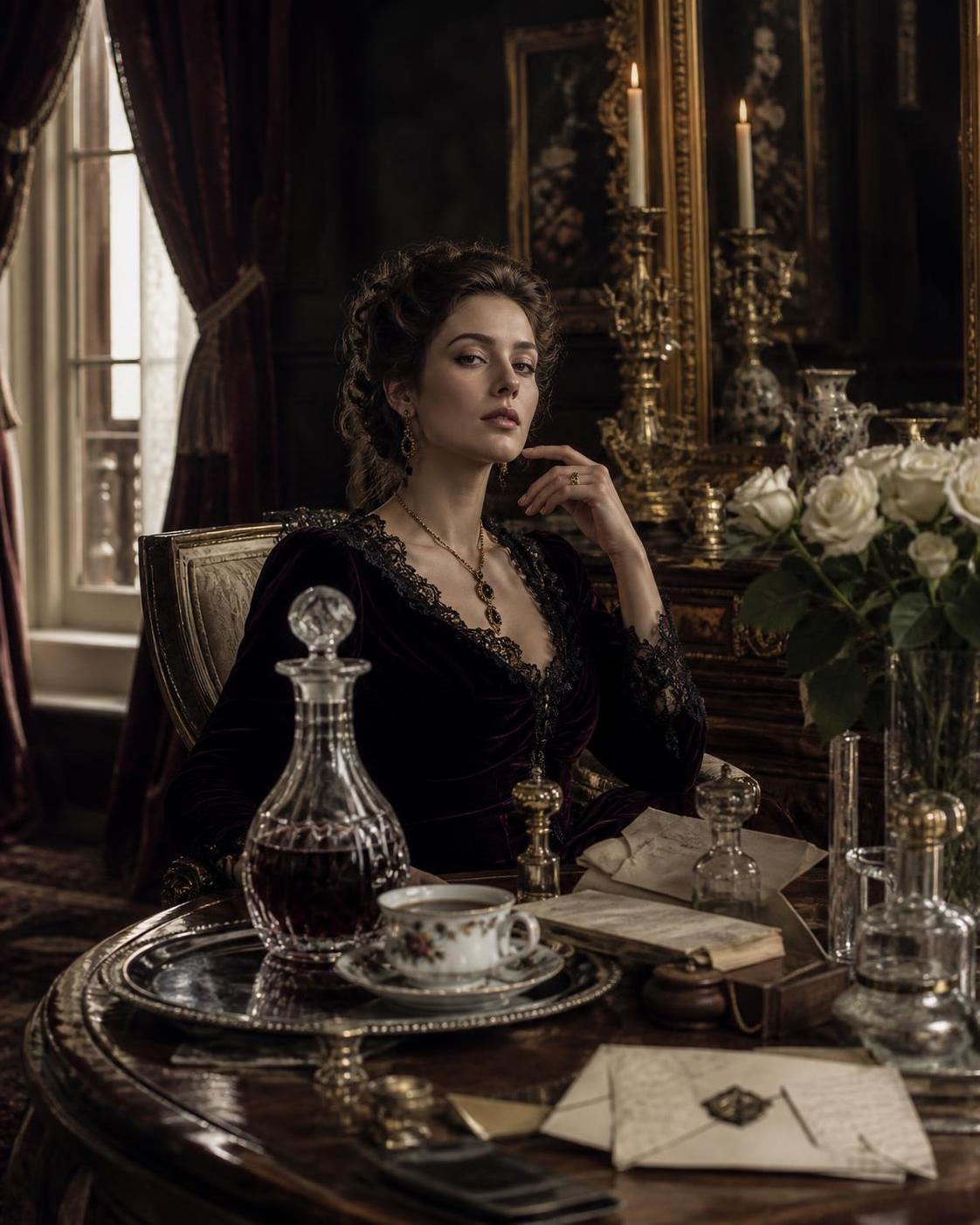
Introduction to Female Poisoners
Why Poison Became a Notorious Weapon
Across history, poisoning has occupied a unique place in the public imagination, especially when associated with women. In many societies, poison was seen as a silent, indirect, and highly calculated method of killing, unlike open violence on a battlefield or in a duel. Because it could be administered through food, drink, or medicine, it often appeared in domestic spaces where women traditionally held authority. This association helped create the enduring figure of the female poisoner in historical records, court documents, and popular legend.
Poison also offered practical advantages. Substances such as arsenic, hemlock, belladonna, and antimony were, at different times, accessible through apothecaries, gardens, or household use. Before modern forensic science developed in the nineteenth century, many poisons were difficult to detect. Arsenic, for example, was sometimes called “inheritance powder” because it was colorless, tasteless in many preparations, and frequently linked to suspicious deaths involving money or property.
The Historical Context Behind the Myth
Power, Restriction, and Opportunity
The story of female poisoners cannot be separated from the limited social and legal power women often faced. In eras when women had few direct means to influence inheritance, marriage, or personal freedom, poison was portrayed as a weapon of secrecy and control. Some cases were real and well documented, while others were exaggerated by rumor, misogyny, or political propaganda. As a result, the line between historical fact and sensational storytelling is often blurred.
In early modern Europe, accusations of poisoning could spread rapidly, particularly among noble courts where rivalry was intense. Women who were intelligent, politically active, or unconventional were especially vulnerable to suspicion. Their reputations could be permanently shaped by claims that were never fully proven.
Famous Patterns in Poisoning Cases
Motives and Methods
Many alleged female poisoners were said to act for reasons such as revenge, financial gain, political ambition, or escape from abusive relationships. In some documented cases, repeated low doses were used to mimic natural illness, making detection even harder. This method contributed to poison’s fearsome reputation as a crime that attacked both the body and trust itself.
What makes these women historically significant is not only the crimes they committed or were accused of committing, but also what their stories reveal about gender, fear, justice, and social power. Their lives sit at the intersection of criminal history and cultural myth, setting the stage for some of the most infamous names in history.
Why Poison Became a Weapon
A Silent Tool of Power
Poison became a weapon because it offered something few other methods of violence could: secrecy, control, and plausible deniability. In many historical societies, open physical force was associated with soldiers, rulers, or men who held legal and social power. Poison, by contrast, could be used quietly within households, courts, and private chambers, making it especially attractive in environments where direct confrontation was dangerous or impossible.
Its appeal also came from accessibility. Long before modern forensic science, toxic substances could be found in plants, minerals, and household compounds. Arsenic, hemlock, belladonna, and aconite were all known in different periods for their harmful effects. Arsenic became particularly notorious because it was often colorless, tasteless, and easy to mix into food or drink, earning the later nickname “inheritance powder” in Europe.
Why Poison Thrived in History
Limited Detection Methods
For much of history, poison was difficult to prove. Symptoms such as vomiting, stomach pain, fever, or weakness could easily be mistaken for common illnesses like dysentery or foodborne disease. Before the development of toxicology in the nineteenth century, many suspicious deaths remained exactly that: suspicious, but unproven.
This uncertainty made poison uniquely useful. A stabbing or shooting left obvious evidence of attack, but poisoning could resemble natural decline. In royal courts and aristocratic households, where succession, wealth, and political rivalry were constant pressures, this ambiguity created opportunity.
A Weapon of the Powerless and the Powerful
Poison is often described as the weapon of the weak, but history shows it served both the marginalized and the elite. For people with limited physical or political power, it could level the field. A servant, spouse, or court insider might gain access to a target in ways an armed attacker never could. At the same time, nobles and rulers used poison to remove rivals without public scandal.
This dual nature helps explain why poison appears so often in stories about famous female poisoners. Women in many eras were excluded from formal power yet deeply involved in domestic spaces where food, medicine, and caregiving overlapped. That did not make poisoning uniquely female, but it did make women more likely to be suspected of using methods tied to the private sphere.
Fear, Myth, and Social Anxiety
More Than a Murder Method
Poison inspired extraordinary fear because it violated trust. It turned the shared table, the medicine bottle, or the cup of wine into a threat. Unlike battlefield violence, poisoning suggested betrayal from someone nearby. That emotional charge made poison central not only to criminal history but also to political propaganda and moral panic.
Accusations of poisoning were sometimes exaggerated or weaponized themselves. In periods of instability, rumors about secret toxins could damage reputations, justify arrests, or reinforce stereotypes about ambition, deceit, and hidden influence. This is one reason poison occupies such a powerful place in the history of infamous women: it sat at the intersection of crime, gender, fear, and power.
Poison, Power, and Gender
Why Poison Became a Gendered Weapon
Across many periods of history, poison occupied a distinctly gendered place in the public imagination. While men were more often associated with open violence, duels, or warfare, women who killed were frequently imagined as secretive, domestic, and calculating. Poison fit that stereotype perfectly. It could be administered in food, drink, medicine, or cosmetics, all areas traditionally linked to women’s household roles. This association helped turn poisoning into a cultural symbol of female transgression, even though men also used poison throughout history.
The historical record shows that accusations of poisoning often reflected social anxiety about women’s influence as much as actual criminal behavior. In societies where women had limited legal, political, and economic power, poison appeared to offer an indirect means of control. A wife trapped in an abusive marriage, a noblewoman navigating court intrigue, or a healer familiar with herbs might all be viewed with suspicion. In many cases, the fear centered not only on death itself, but on the unsettling idea that a woman could exercise lethal power without physical force.
Domestic Spaces and Hidden Authority
The Household as a Site of Risk
The home was one of the few arenas where many women held recognized authority, and that made it symbolically important in poisoning narratives. Preparing meals, dispensing remedies, and managing servants gave women access to substances that could heal or harm. In early modern Europe, arsenic was especially feared because it was difficult to detect before modern toxicology emerged in the nineteenth century. The Marsh test, developed in 1836, was one of the first reliable methods for identifying arsenic in forensic investigations, transforming how poisoning cases were prosecuted.
Before such scientific advances, suspicion often depended on rumor, reputation, and gender expectations. A sudden illness after dinner could easily become evidence of malicious intent. This dynamic made poison allegations powerful tools in family disputes, inheritance conflicts, and political struggles.
Power, Reputation, and Moral Panic
Female poisoners became enduring figures not only because of their crimes, but because they embodied broader fears about hidden female agency. Cases involving women such as Giulia Tofana or the Marquise de Brinvilliers gained notoriety partly because they seemed to invert accepted gender norms. These women were portrayed as using intelligence, patience, and emotional restraint in deadly ways, qualities that male-dominated societies often found especially threatening when exercised outside approved roles.
Between Reality and Myth
Not every famous female poisoner was accurately represented. Sensational trials, pamphlets, and later novels often exaggerated their cunning and cruelty. Historians now recognize that some stories were shaped by misogyny, class prejudice, and fascination with scandal. Even so, these narratives reveal an important truth: poison was never just a method of murder. It was also a language through which societies debated women’s autonomy, domestic authority, and moral legitimacy.
That is why the female poisoner remains such a compelling historical figure, standing at the intersection of crime, gender expectations, and the unequal distribution of power.
Locusta of Ancient Rome
The Empire’s Most Notorious Poisoner
Among the women remembered for murder by stealth, Locusta of Ancient Rome stands as one of the most infamous. Active during the first century CE, she became closely associated with the imperial court, where poison could serve as a political weapon as effective as any sword. Ancient writers including Tacitus, Suetonius, and Cassius Dio describe her as a professional maker of lethal compounds, hired to eliminate rivals and secure succession. Although these sources were often hostile, sensational, and shaped by elite Roman prejudice, they agree on one point: Locusta’s reputation was extraordinary even by Roman standards.
Her story unfolded in a society where poisoning inspired deep fear. Romans knew a great deal about toxic plants and minerals, and accusations of secret poisoning appeared frequently in political and domestic scandals. Within that climate, Locusta emerged not merely as a criminal but as a specialist whose skills were considered valuable by the most powerful people in the empire.
Poison and Power in Nero’s Rome
Locusta is most famously linked to the reign of Emperor Nero, who ruled from 54 to 68 CE. According to ancient accounts, she was recruited in the plot to kill Britannicus, Nero’s stepbrother and a potential rival to the throne. Britannicus died in 55 CE during a banquet, reportedly after drinking poisoned wine. Tacitus recounts that an initial poison acted too slowly, leading to demands for a faster and more reliable preparation. This detail, whether fully accurate or not, helped cement Locusta’s image as a technician of death rather than a random assassin.
The alleged murder of Britannicus mattered because succession in Rome was often unstable. Nero had become emperor at about 16 years old, and any surviving claimant from the Julio-Claudian line posed a threat. In that environment, poison offered plausible deniability. A sudden illness could be explained away, especially in an age without forensic science. Locusta’s expertise therefore fit the needs of a court built on suspicion, ambition, and carefully staged appearances.
A Specialist Rewarded by the State
What makes Locusta especially striking is that she was not simply tolerated; she was reportedly protected and rewarded. Ancient sources claim Nero granted her immunity, estates, and even pupils, suggesting she may have been encouraged to train others in toxicology. If true, that would represent a remarkable transformation of a condemned poisoner into a state-supported instrument of imperial policy.
This patronage also reveals how Roman justice could bend around power. A person accused of poisoning might face severe punishment, yet someone useful to the emperor could escape it. Locusta’s career illustrates that contradiction vividly.
Between History and Legend
Modern historians treat the surviving stories with caution. Roman authors often used tales of poison, sexual corruption, and hidden murder to dramatize tyranny, especially under unpopular rulers like Nero. Women connected to court intrigue were frequently portrayed in exaggerated or moralizing ways. As a result, some details of Locusta’s life may have been amplified to create a symbol of decadence and cruelty.
Still, complete invention is unlikely. The consistency of her appearance across multiple sources suggests a real figure whose notoriety became legendary. Her name itself turned into a byword for poisoning. That kind of cultural afterlife usually rests on at least a core of historical truth.
The End of Locusta
Locusta’s protection ended with Nero’s downfall in 68 CE. After the emperor’s suicide, the new regime moved quickly to erase figures associated with his excesses. Sources report that Emperor Galba ordered her execution. Some accounts add that she was paraded in chains before being put to death, a public demonstration that the new government intended to restore moral order after Nero’s reign.
Why Her Legacy Endured
Locusta endured in historical memory because she embodied several Roman anxieties at once: the fear of invisible murder, the corruption of imperial power, and the danger of specialized knowledge used without restraint. Unlike battlefield killers, she represented death delivered privately, intimately, and often at the dinner table. Her legend has therefore survived not only as a biography, but as a warning about what happens when technical skill serves political paranoia.
In the broader history of female poisoners, Locusta occupies a unique place because her crimes were tied not to household disputes alone, but to the fate of an empire.
Giulia Tofana and Aqua Tofana
The Woman Behind History’s Most Notorious Poison
Among the most infamous names in the history of poisoning, Giulia Tofana stands out for the scale, secrecy, and cultural impact of her alleged crimes. Active in seventeenth-century Italy, she is widely associated with Aqua Tofana, a poison said to have killed hundreds of men, most often husbands. Although the historical record is clouded by rumor, religious politics, and sensational retellings, Tofana’s story has endured because it sits at the intersection of crime, gender, and survival in early modern Europe.
Giulia Tofana is believed to have operated primarily in Palermo, Naples, and Rome during a period when women had few legal or social avenues for escaping abusive or unwanted marriages. In that context, the legend of a discreet poison sold to desperate wives became both terrifying and strangely understandable to later audiences. Whether every detail is true remains debated, but Aqua Tofana became one of history’s most feared toxic substances.
What Was Aqua Tofana?
Aqua Tofana was reputedly a clear, tasteless, and odorless liquid that could be administered in small doses over time. Contemporary and later accounts often claimed it contained arsenic, lead, and belladonna, though exact formulations were never definitively recorded. This uncertainty has only deepened its mystique. In an age before modern forensic science, a poison that mimicked ordinary illness would have been especially effective.
The poison was allegedly packaged in deceptive containers, sometimes disguised as cosmetics or devotional items. One popular story says it was sold in bottles resembling Manna of Saint Nicholas of Bari, a religiously themed product that would not arouse suspicion in a deeply Catholic society. This method of concealment reflects the practical intelligence attributed to Tofana and her network.
Why It Was So Difficult to Detect
Seventeenth-century medicine lacked reliable toxicology. Symptoms such as vomiting, weakness, stomach pain, and gradual physical decline could easily be attributed to common diseases. A victim might worsen over several days or weeks, allowing the death to appear natural. This slow-action quality made Aqua Tofana especially dangerous, because it did not necessarily provoke immediate alarm among relatives, physicians, or clergy.
Giulia Tofana’s Alleged Network
Many accounts portray Tofana not as an isolated killer but as the center of a broader operation involving female assistants and clients. She was said to provide poison primarily to women seeking release from violent, coercive, or deeply unhappy marriages. Some reports suggest that she and her associates offered instructions on dosage, timing, and how to avoid suspicion. If true, this would make her enterprise unusually organized for the period.
The number most often repeated is that more than 600 men may have died from Aqua Tofana between the 1630s and 1650s. Historians treat that figure cautiously, since it comes from sources shaped by fear and moral panic. Even so, the persistence of such a high estimate shows how profoundly Tofana’s reputation shocked contemporaries.
Arrest, Confession, and Execution
The downfall of Giulia Tofana is usually linked to a client who lost her nerve. According to the most common version, a woman prepared to poison her husband but became frightened at the last moment and warned him instead. Under pressure, the plot unraveled and authorities traced the poison back to Tofana. She reportedly sought sanctuary in a church, but was eventually arrested.
Conflicting Historical Accounts
The exact details of her trial and death vary across sources. Some narratives state that she confessed under torture and admitted responsibility for hundreds of murders. Others suggest that later writers exaggerated her confession to create a more dramatic morality tale. Most versions agree, however, that she was executed in Rome around 1659, along with several associates. The case then entered popular imagination, where fact and legend quickly merged.
Gender, Power, and the Meaning of the Legend
What makes Giulia Tofana historically significant is not only the alleged body count, but also what her story reveals about women’s lives. In early modern Italy, marriage was often economically and socially binding, and divorce was extremely limited. For women trapped in abusive households, options were scarce. This does not excuse murder, but it helps explain why the legend of Aqua Tofana spread with such force. It represented a hidden form of power in a world that denied women open authority.
At the same time, the story reflects male anxieties about domestic vulnerability. The home, supposedly the center of order and obedience, became in this narrative the site of secret female revenge. Food, drink, medicine, and cosmetics all turned into possible instruments of death. That fear helped transform Tofana from an alleged criminal into a near-mythic figure.
A Lasting Cultural Legacy
Giulia Tofana’s name has appeared in crime histories, operas, novels, and discussions of famous poison cases for centuries. Even composers such as Mozart have been linked to rumors involving Aqua Tofana, though no credible evidence supports those claims. The endurance of these associations shows how Aqua Tofana became shorthand for the perfect undetectable poison, regardless of historical certainty.
Today, historians approach the case with caution, separating documented evidence from embellished storytelling. Yet the fascination remains strong because Tofana’s legend captures a rare and unsettling combination of chemistry, secrecy, and social rebellion. In the broader history of female poisoners, she occupies a singular place as both a probable criminal and a symbol shaped by the fears of her age.
Catherine Deshayes La Voisin
The Woman at the Center of Seventeenth-Century Parisian Scandal
Catherine Deshayes, better known as La Voisin, remains one of the most notorious alleged poisoners in European history. Active in seventeenth-century France, she became infamous not only for accusations of murder by poison, but also for her connection to fortune-telling, occult rituals, and one of the greatest criminal investigations of Louis XIV’s reign. Her name is inseparable from the Affair of the Poisons, a scandal that exposed the dark underside of aristocratic life in Paris and revealed how fear, ambition, and superstition could intersect in deadly ways.
Born around 1640, Catherine Deshayes was married to a jeweler named Antoine Monvoisin, from whom her famous nickname likely derived. She lived in Paris during a period when the city was both politically powerful and socially volatile. The court of Louis XIV projected grandeur and order, yet beneath that polished surface, many people, including nobles, sought secret means to secure love, wealth, influence, or revenge. In that environment, practitioners who offered forbidden services could attract a surprisingly elite clientele.
From Fortune-Teller to Alleged Poison Merchant
La Voisin first gained attention as a fortune-teller and seller of remedies. Such services were not unusual at the time, especially among women who operated on the margins of accepted medicine and religion. She reportedly provided horoscopes, love charms, and consultations to clients anxious about marriage, inheritance, and court politics. Over time, authorities came to believe that her business expanded into far more dangerous territory.
Investigators accused La Voisin of supplying poisons disguised as powders, medicines, or cosmetics. In an age before modern forensic science, poisoning inspired particular terror because it was difficult to detect and easy to imagine. Arsenic, in particular, had a grim reputation across Europe. Whether every accusation against her was true remains debated by historians, but contemporary officials portrayed her as a central figure in a clandestine network that sold lethal substances to desperate clients.
Why Poison Cases Spread Fear
Poison was seen as a uniquely sinister weapon because it could be administered in private, often within the home, and without open violence. This made it especially alarming in elite society, where meals, inheritance disputes, and intimate relationships created opportunities for suspicion. In La Voisin’s case, the fear surrounding poison was amplified by claims that she served members of the nobility, suggesting that criminal conspiracy had penetrated the highest social ranks.
The Affair of the Poisons
The scandal that cemented La Voisin’s place in history erupted in the late 1670s and became known as the Affair of the Poisons. The investigation began after authorities uncovered a wider network of fortune-tellers, alchemists, and alleged poisoners operating in and around Paris. As interrogations expanded, often under torture, numerous names surfaced, including those of prominent aristocrats.
La Voisin was arrested in 1679. Testimony linked her not only to poison sales but also to black masses and rituals supposedly intended to influence lovers or secure royal favor. Some of the most sensational allegations involved Madame de Montespan, the influential mistress of Louis XIV. Although the king moved to contain the political damage, the scandal deeply embarrassed the court and intensified public fascination with hidden vice among the elite.
A Climate of Panic and Suspicion
The Affair of the Poisons led to the creation of a special tribunal called the Chambre Ardente. Between 1679 and 1682, the court investigated hundreds of suspects. Historical records indicate that more than 300 people were implicated, while dozens were executed or imprisoned. In such a climate, rumor and fear could become as powerful as evidence, making it difficult to separate proven crimes from exaggerated accusations.
Trial, Execution, and Historical Legacy
La Voisin was convicted and executed by burning in 1680, a punishment reserved for particularly grave offenses. Her refusal to fully confess under questioning only added to her mystique. To contemporaries, she embodied a terrifying blend of criminality, sorcery, and social corruption. To later generations, she became a symbol of how women operating outside conventional power structures could be demonized as well as feared.
Interpreting La Voisin Today
Modern historians approach La Voisin with caution. There is little doubt that she was involved in illicit practices, yet the full scale of her crimes may never be known with certainty. The records of the Affair of the Poisons were shaped by political pressure, religious anxiety, and sensational testimony. Even so, her story reveals important truths about gender, power, and fear in early modern France.
More Than a Criminal Figure
La Voisin’s enduring notoriety comes from more than the allegations themselves. She occupied a world where medicine, magic, and crime overlapped, and where elite clients could secretly depend on women they publicly condemned. Her case illustrates how poison scandals often reflected broader social tensions, including distrust of women’s knowledge, obsession with court intrigue, and anxiety over invisible forms of violence. In the history of famous female poisoners, La Voisin stands out not simply for the crimes attributed to her, but for the extraordinary scandal that made her a legend.
Mary Ann Cotton
A Life Framed by Poverty and Suspicion
Mary Ann Cotton remains one of the most notorious women in British criminal history, often cited among the most infamous female poisoners of the nineteenth century. Born Mary Ann Robson in County Durham, England, in 1832, she lived during a period marked by industrial hardship, high mortality, and limited opportunities for working-class women. These conditions formed the backdrop to a life that would later horrify Victorian society and fascinate historians.
Cotton married multiple times and moved frequently across northern England. On the surface, her story resembled that of many poor Victorian women who endured unstable employment, repeated childbirth, and the ever-present threat of disease. Yet the pattern surrounding her family life was deeply disturbing. Husbands, children, and other close relations repeatedly fell ill and died, often after suffering gastric symptoms that doctors of the time commonly attributed to “fever” or intestinal complaints. Because such illnesses were widespread, her actions escaped serious scrutiny for years.
The Pattern of Deaths
What made Mary Ann Cotton’s case so chilling was not a single dramatic murder, but the repetition of death within her household. Historians believe she may have been responsible for the deaths of as many as 21 people, though only one murder was definitively tried in court. Her suspected victims included several of her children, three husbands, a lover, and even her own mother. While the exact number remains debated, the concentration of deaths around her was extraordinary even by Victorian standards.
Why Arsenic Was So Effective
Arsenic was one of the most common poisons of the era. It was inexpensive, widely available, and present in products such as rat poison. More importantly for a killer, arsenic poisoning often mimicked the symptoms of natural illness, including vomiting, stomach pain, and diarrhea. In an age before modern forensic science, this made it a terrifyingly practical weapon.
Mary Ann Cotton allegedly used this reality to her advantage. Insurance payouts and parish relief appear to have provided a financial motive in several cases. Small life insurance policies on working-class family members were not unusual at the time, and Cotton reportedly collected money after a number of deaths. This pattern strengthened suspicions that her crimes were driven not by sudden rage, but by calculated financial opportunism.
Investigation and Arrest
The case against Cotton began to solidify in 1872 after the death of her stepson, seven-year-old Charles Edward Cotton. A local parish official, Thomas Riley, had grown uneasy about the number of deaths connected to her and became particularly alarmed when she discussed placing the boy in the workhouse. When the child died soon afterward, Riley urged closer examination.
The Forensic Breakthrough
Unlike many earlier deaths in Cotton’s circle, Charles Edward’s body was exhumed and tested. The examination revealed arsenic in his system, providing the crucial evidence authorities needed. This was a significant moment in Victorian criminal investigation, showing how emerging forensic methods could expose crimes that had previously been hidden behind the language of ordinary sickness.
Cotton was arrested and charged with the boy’s murder. Although many suspected she had killed numerous others, prosecutors focused on the case they could most clearly prove. This was a common legal strategy in the nineteenth century, especially when forensic evidence was limited and witness testimony could be inconsistent.
Trial, Conviction, and Public Reaction
Mary Ann Cotton’s trial took place in 1873 at Durham Assizes. The proceedings attracted intense public attention, in part because the idea of a mother and wife systematically poisoning those closest to her violated Victorian ideals of femininity and domestic care. Women were often imagined as moral guardians of the home, so a female serial poisoner seemed especially monstrous to the public imagination.
The prosecution argued that Cotton had administered arsenic to Charles Edward for financial and personal convenience. Her defense attempted to challenge the medical evidence and delay proceedings by claiming pregnancy, a tactic that temporarily postponed execution after conviction. Ultimately, however, the jury found her guilty.
Execution and Legacy
Mary Ann Cotton was executed by hanging on March 24, 1873, at Durham Gaol. She was about 40 years old. Reports from the time suggest the execution was botched, with death taking longer than expected, adding another grim detail to an already notorious case.
Her legacy has endured because her crimes reveal several unsettling truths about Victorian Britain: the vulnerability of children, the limitations of early medicine, and the ease with which domestic murder could remain hidden. Cotton’s story also helped cement the cultural image of poison as a quiet, intimate, and deeply deceptive method of killing, one that depended less on force than on trust. In the broader history of female poisoners, she stands as a figure whose crimes were inseparable from the social conditions that allowed them to go unnoticed for so long.
Belle Gunness
The Woman Behind the Legend
Belle Gunness remains one of the most chilling figures in American criminal history. Often grouped with poisoners, she is more accurately remembered as a suspected serial killer who may have used multiple methods, including strychnine and other toxic substances, to eliminate victims. Born Brynhild Paulsdatter Størseth in Norway in 1859, she immigrated to the United States in the 1880s and eventually settled in Indiana. There, she built the outward image of a hardworking widow and farm owner, a persona that helped conceal the violence many historians now associate with her name.
Her story stands out because it combines several elements that made female poisoners especially difficult to detect in earlier eras. She operated within domestic spaces, exploited social trust, and often targeted people with whom she had financial ties. At a time when forensic science was limited and communication between jurisdictions was inconsistent, a person like Gunness could move through suspicion with alarming ease.
A Pattern of Death and Financial Gain
Much of what is known about Belle Gunness comes from court records, newspaper reports, and later historical investigations. While some details remain disputed, the broad pattern is striking. Her first husband, Mads Sorenson, died in 1900 on the very day that two life insurance policies overlapped, allowing a larger payout. Authorities considered the death suspicious, but no conviction followed. This pattern of death followed by financial benefit would become central to her reputation.
After Sorenson’s death, Gunness married Peter Gunness in 1902. He died less than a year later under unusual circumstances involving a heavy meat grinder or sausage machine falling on him. Again, the death brought financial consequences favorable to Belle. Such repeated tragedies surrounding one individual drew attention, yet the standards of proof at the time made prosecution difficult.
Why Poison Was a Plausible Tool
Although Belle Gunness is not exclusively documented as a poisoner in the way some historical women were, poison was widely suspected because it fit both the era and her circumstances. Strychnine, a common poison in the late nineteenth and early twentieth centuries, was accessible in agricultural communities and often difficult to trace conclusively. In domestic murder cases of the period, poison offered privacy, control, and the appearance of natural illness. For a woman managing a household and farm, administering toxic substances would not have seemed impossible or unusual to investigators familiar with similar crimes.
The Lonely Hearts Scheme
One of the darkest aspects of the Belle Gunness case involves the men she allegedly lured to her Indiana farm through personal advertisements. These notices often promised companionship, marriage, and the possibility of a stable future. Several men reportedly arrived carrying savings, land-sale proceeds, or cash. Many were never seen again.
This strategy reveals how Gunness may have weaponized social expectations. In the early 1900s, matrimonial ads were a legitimate way for isolated people to seek partners. By presenting herself as a respectable widow, she attracted men who were emotionally vulnerable and financially useful. Historians and crime writers have long argued that this combination of romantic deception and economic motive made her especially dangerous.
The Farm Fire and Grim Discovery
In April 1908, a fire destroyed Belle Gunness’s farmhouse in La Porte, Indiana. Investigators found the bodies of her children and a headless female corpse believed to be Belle. Yet the mystery deepened when authorities searched the property more thoroughly. They uncovered numerous human remains buried on the farm, many dismembered. Estimates vary, but some accounts suggest she may have killed at least 14 people, while sensational reports pushed the number higher.
Did Belle Gunness Escape?
The identification of Belle’s body was never entirely certain. Questions about the corpse’s size and the missing head fueled speculation that she staged her own death and fled. This uncertainty helped transform her from a criminal suspect into a near-mythic figure in American folklore. Whether she died in the fire or escaped, the evidence from the farm established her as one of the most feared women in U.S. history.
Historical Significance
Belle Gunness occupies a unique place in discussions of female killers because her case blurs categories. She was linked to insurance fraud, domestic murder, possible poisoning, and serial predation. Her crimes also illustrate the vulnerabilities of the era: weak record-sharing, limited forensic toxicology, and strong cultural assumptions that women were naturally nurturing rather than lethal. Those assumptions, in many historical cases, gave female offenders valuable cover
Nannie Doss
The “Giggling Granny” Behind a String of Murders
Nannie Doss remains one of the most notorious female poisoners in American history, remembered for the chilling contrast between her cheerful public image and her deadly private actions. Born Nancy Hazle in 1905 in Alabama, she later became known by several nicknames, including “The Giggling Granny” and “The Lonely Hearts Killer.” These labels reflected both her unsettling demeanor and the methodical way she targeted those closest to her.
Doss confessed in 1954 to killing multiple family members, though the exact number of victims is still debated. Most historians agree she murdered at least 11 people between the 1920s and 1954, including husbands, children, grandchildren, her mother, and a sister. Her preferred weapon was arsenic, a poison that was tragically common in household products at the time and difficult to detect before modern forensic testing became routine.
A Pattern Hidden in Domestic Life
What made Nannie Doss especially disturbing was how thoroughly her crimes were woven into ordinary domestic life. She did not stalk strangers or act in sudden violence. Instead, she poisoned people within her own family circle, often while appearing to care for them. This pattern allowed her to evade suspicion for years, particularly in an era when many deaths from stomach illness or sudden decline were not rigorously investigated.
Marriages, Motive, and Opportunity
Doss was married five times, and four of her husbands died under suspicious circumstances. Her second husband, Frank Harrelson, reportedly died after drinking poisoned whiskey. Later, her third husband, Arlie Lanning, died suddenly, and shortly afterward his house burned down, allowing Doss to collect insurance money. Her fourth husband, Richard Morton, also died after becoming ill. Her final husband, Samuel Doss, was the case that ultimately exposed her.
Financial gain played a role in some killings, but money alone does not fully explain her actions. Investigators and later commentators noted her fascination with romance magazines and lonely hearts columns. She seemed to pursue an idealized vision of marriage, then eliminate partners who disappointed or angered her. In this sense, her crimes reflected a mix of resentment, fantasy, and calculated self-interest.
The Investigation That Ended the Murders
Samuel Doss’s death in 1954 prompted closer scrutiny because his doctor suspected poisoning. An autopsy revealed a massive amount of arsenic in his system, and authorities quickly focused on Nannie. Under questioning, she confessed not only to his murder but to a wider series of deaths stretching back decades. Reports from the time described her as oddly lighthearted during interviews, even smiling and laughing as she recounted grim details.
Why Her Case Still Resonates
Nannie Doss’s story continues to fascinate because it shattered assumptions about who a serial killer could be. She was a grandmother, a homemaker, and by outward appearances an unremarkable Southern woman. Her case demonstrated that serial murder can hide behind familiarity, gender expectations, and domestic routine. It also highlighted the limitations of mid-20th-century death investigations, when poison could pass unnoticed unless a physician insisted on further examination.
Her crimes remain a stark example of how trust within families can be exploited with devastating consequences, making her one of the most infamous figures in the history of female poisoning.
How Female Poisoners Shaped Public Fear
Poison as a Crime of Intimacy
Female poisoners occupied a unique place in the public imagination because poison itself was seen as a hidden, intimate, and deeply unsettling weapon. Unlike murder committed in public with obvious force, poisoning often happened at the dinner table, in medicine, or in the sickroom. These were spaces associated with care, domesticity, and trust. When women were accused of using poison, the crime appeared to invert expected gender roles, turning the figure of the nurturer into a secret destroyer.
This contrast made such cases especially sensational. In early modern Europe and well into the nineteenth century, newspapers, pamphlets, and courtroom reports amplified the idea that poison was a weapon particularly suited to women because it required patience, access, and deception rather than physical strength. Whether this belief reflected reality or prejudice, it helped create a lasting cultural stereotype.
Media, Myth, and Moral Panic
Why these cases spread so widely
Public fear grew not only from the crimes themselves but from how they were reported. Famous cases such as those of Giulia Tofana, Mary Ann Cotton, and Madame de Brinvilliers became the subject of rumor long before modern mass media existed. Printed broadsides and serialized reports often exaggerated body counts, motives, and methods. In Victorian Britain, for example, poisoning cases received intense press coverage because arsenic was cheap, widely available, and difficult to detect before advances in forensic science.
By the mid-nineteenth century, arsenic had become so associated with covert murder that Britain passed the Arsenic Act of 1851, restricting casual sales. This legal response shows how individual cases could trigger broader social anxiety. Fear was not limited to specific criminals; it extended to everyday household products, medicines, and even family relationships.
The fear of the “undetectable” woman
Another reason these stories endured was the belief that female poisoners could evade justice for long periods. Before reliable toxicology tests, many deaths from poisoning were mistaken for natural illness. The development of the Marsh test in 1836, which improved arsenic detection, changed criminal investigations dramatically. Yet the earlier uncertainty had already fed a powerful fear: that murder could happen quietly, repeatedly, and inside the home without visible signs.
Gender, Suspicion, and Social Control
How stereotypes shaped public reaction
The fear surrounding female poisoners often revealed more about society than about crime statistics. Women accused of poisoning were frequently portrayed as manipulative, sexually immoral, greedy, or unnaturally ambitious. Their stories became cautionary tales about what happened when women stepped outside accepted social roles. In this way, poison narratives reinforced broader anxieties about marriage, inheritance, domestic authority, and female independence.
At the same time, these cases made ordinary acts seem suspicious. A wife preparing broth, a daughter administering medicine, or a servant mixing a tonic could all be viewed through a darker lens. Public fear of female poisoners transformed domestic trust into potential danger, helping explain why these women remain so prominent in historical memory and true-crime storytelling.
Legacy in Crime and Culture
From Court Records to Cultural Myth
The legacy of history’s most famous female poisoners extends far beyond the crimes themselves. In many cases, their names survived because poisoning occupied a unique place in the public imagination. Unlike open violence, poison suggested calculation, secrecy, and betrayal, qualities that made these women both feared and sensationalized. Court documents from early modern Europe show that poisoning accusations often attracted extraordinary attention, especially when the accused was a wife, healer, or noblewoman. Their stories were repeated in pamphlets, ballads, and later in novels, turning criminal cases into enduring legends.
Why Female Poisoners Became Iconic
Female poisoners became especially prominent in cultural memory because poison was historically seen as a weapon that did not rely on physical strength. This perception aligned with gender stereotypes of earlier centuries, leading writers and officials to portray women poisoners as uniquely deceptive. In reality, historical evidence suggests that men also used poison, but women were more likely to be remembered for it. The cases of figures such as Giulia Tofana and Mary Ann Cotton demonstrate how criminal acts could become symbols of broader social anxieties about domestic life, trust, and female autonomy.
The Role of Media and Moral Panic
Printed media played a major role in shaping these reputations. In seventeenth- and nineteenth-century Europe, sensational reporting often blurred fact and rumor. A poisoning case could be expanded into a morality tale about greed, lust, or social disorder. This exaggeration helped create cultural archetypes rather than balanced historical portraits. As a result, some women were remembered less as individuals and more as embodiments of danger within the home.
Influence on Literature, Theater, and Modern Storytelling
The image of the female poisoner has had a lasting influence on literature and entertainment. From Renaissance revenge dramas to modern true-crime documentaries, poisoners appear as complex villains who combine intelligence with concealment. Agatha Christie, for example, frequently used poison in her mysteries, reflecting its long association with intimate crime. These portrayals continue to fascinate audiences because they raise questions about motive, power, and the hidden tensions of everyday relationships.
Reassessment by Modern Historians
Recent scholarship has begun to reassess these women with greater nuance. Historians now examine legal bias, unreliable testimony, and the social pressures surrounding many accusations. This does not erase the crimes, but it does reveal how crime and culture shaped each other, ensuring that the legacy of female poisoners remains as much about storytelling as about guilt.
Conclusion
A Dark Mirror of Power, Fear, and Survival
The stories of history’s most famous female poisoners continue to fascinate because they reveal far more than individual crimes. They expose the social pressures, gender expectations, and political tensions of their times. In many eras, poison was seen as a weapon of secrecy, one that required access, patience, and calculation rather than physical force. For women who were often denied open power, that association made poison both a practical tool and a lasting cultural symbol.
Why These Cases Still Endure
What keeps figures such as Locusta, Giulia Tofana, and other alleged poisoners alive in public memory is the mixture of fact, rumor, and fear surrounding them. Some were clearly guilty, while others were shaped by exaggeration, propaganda, or misogynistic suspicion. Historical records were not always neutral, and accusations against women often reflected broader anxieties about female influence within households, courts, and communities. As a result, these cases must be read not only as criminal histories, but also as stories about how societies constructed guilt.
Legacy in History and Popular Culture
Their legacy remains powerful in books, films, and academic debate because poisoning occupies a unique place in the imagination. Unlike public violence, it suggests intimacy and betrayal, often occurring at the dinner table, in medicine, or behind palace walls. That combination of domestic familiarity and deadly intent has made female poisoners enduring symbols of hidden danger.
Reading the Past with Caution
Examining these women closely reminds us that history is rarely simple. Some were murderers, some may have been scapegoats, and many became legends larger than life. Their stories challenge readers to question sources, weigh evidence carefully, and understand how fear can transform real people into myth.
FAQ
Were female poisoners really more common than male poisoners?
Historical records often make female poisoners seem unusually common, but that impression is shaped by both reality and storytelling. Poison was associated with domestic spaces, food preparation, and caregiving, roles historically assigned to women. Because of that, accusations against women were more culturally believable. In early modern Europe, poisoning cases involving women also attracted intense public attention, which helped preserve them in chronicles, pamphlets, and court records.
Why was poison such a feared method of murder?
Poison inspired fear because it was invisible, intimate, and difficult to detect. Unlike weapons that left obvious wounds, toxic substances could be slipped into meals, drinks, or medicine. Before modern forensic toxicology developed in the nineteenth century, proving poisoning was extremely hard. The Marsh test, introduced in 1836, became one of the first reliable ways to detect arsenic, a poison frequently linked to notorious criminal cases.
Were all famous female poisoners proven guilty?
No. Some women were convicted on strong evidence, while others were condemned through rumor, political hostility, or sensational journalism. In several famous cases, historians still debate whether the accused were calculating murderers, convenient scapegoats, or victims of misogynistic mythmaking.
Why do these stories still fascinate readers?
These cases endure because they combine crime, power, secrecy, and gender expectations. They reveal how societies feared women who operated outside accepted roles, while also showing how legend can distort historical truth.


