

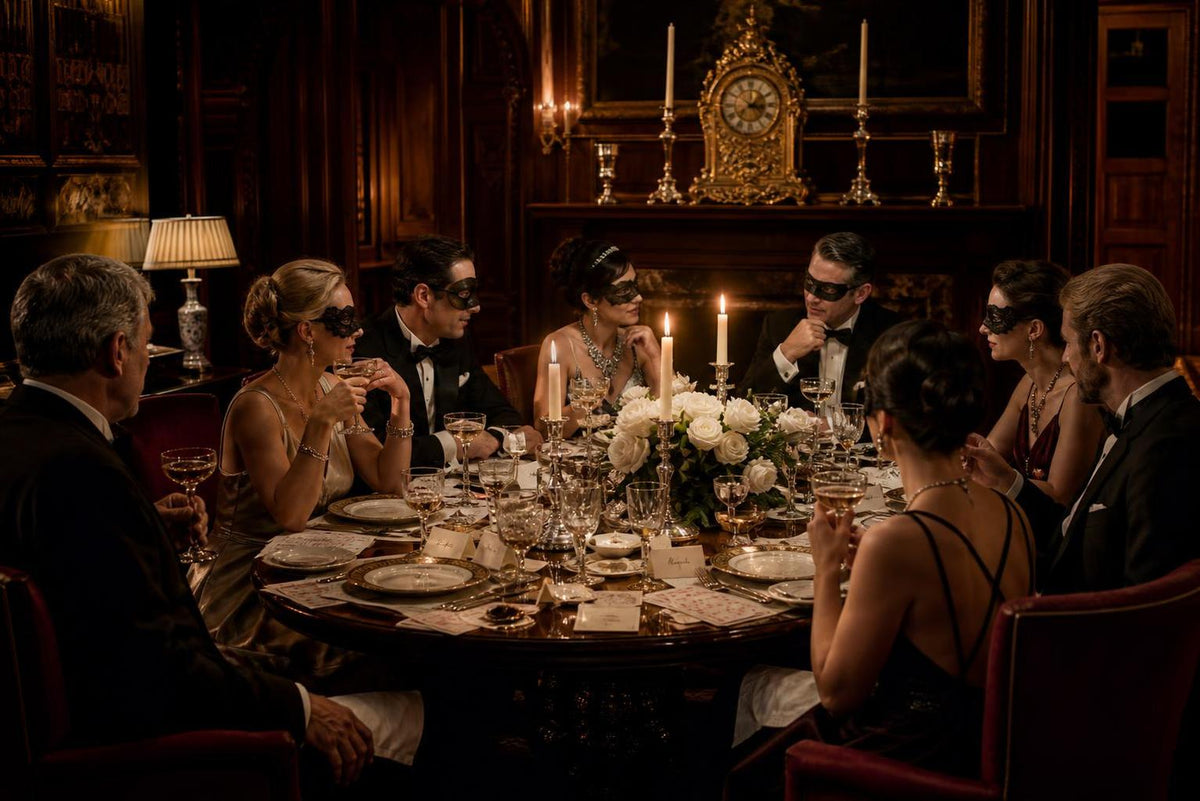
Introduction: Why Murder Mystery Games Fit New Year’s Eve
New Year’s Eve is built around shared anticipation, lively conversation, and memorable moments, which is exactly why murder mystery games feel so natural at the center of the celebration. Unlike passive entertainment, a mystery game gives every guest a role in the evening’s momentum. People are not just waiting for midnight; they are actively questioning suspects, uncovering clues, and shaping the story together. For a group of eight, that balance is especially effective, because the party is large enough to create intrigue and competing theories, yet small enough for everyone to stay involved.
A Social Format That Keeps Everyone Engaged
One of the biggest challenges of New Year’s Eve hosting is maintaining energy across several hours. Guests often arrive at different times, food is served in stages, and the countdown itself does not happen until late in the night. A murder mystery game solves this by creating structured interaction without making the evening feel rigid. Instead of relying only on music, drinks, or small talk, the host introduces a shared objective that naturally sparks conversation.
With eight players, the format works particularly well because each person can receive a meaningful character and enough screen time to matter. In larger groups, quieter guests can disappear into the background. In smaller groups, the mystery may feel too easy or lacking in tension. Eight players often hits the sweet spot, offering enough suspects, motives, and alliances to keep the plot interesting while still being manageable in a home setting.
The Perfect Match for New Year’s Eve Atmosphere
New Year’s Eve already carries a sense of drama, glamour, and transition, making it an ideal backdrop for a themed mystery. Guests are often more willing to dress up, play along, and embrace a little theatricality on December 31 than they might at an ordinary dinner party. Whether the setting is a roaring 1920s gala, a masquerade ball, or a modern penthouse celebration, the mystery blends seamlessly with the festive mood.
Built-In Excitement Before Midnight
A well-timed game also helps avoid the common lull that can happen between dinner and the countdown. Instead of checking phones or drifting into separate conversations, players stay focused on revelations and accusations. This pacing matters, because research on social gatherings consistently shows that interactive activities increase guest participation and recall more than passive entertainment alone. People tend to remember what they did, not just what they watched.
Why Eight Players Creates the Best Balance
For hosts planning a 2026 New Year’s Eve party, eight-player murder mystery games are especially practical. They fit comfortably around a dining table, require less space than larger party formats, and make it easier to coordinate costumes, clue packets, and timing. They also allow for a satisfying mix of personalities, from the dramatic accuser to the quiet observer who notices the crucial detail everyone else missed.
Easy to Personalize for Your Guest List
Another advantage is flexibility. An eight-player cast can usually accommodate a close friend group, four couples, or a mixed gathering without becoming logistically overwhelming. That makes the experience feel personal, immersive, and surprisingly easy to host, setting up the rest of the evening with energy and purpose.
What Makes a Great 8-Player NYE Mystery Game
The Ideal Fit for a New Year’s Eve Group
A great 8-player New Year’s Eve mystery game succeeds because it matches the energy, size, and expectations of the party. Eight players is a sweet spot for social deduction and character-driven storytelling. It is large enough to create shifting alliances, hidden motives, and surprising reveals, yet small enough that every guest can remain actively involved. In practice, this matters because player engagement drops quickly when too many people compete for limited clues or speaking time.
For New Year’s Eve specifically, the best mystery games balance structure with celebration. Guests want a compelling plot, but they also want room for drinks, photos, snacks, and the countdown itself. A strong game does not demand constant concentration for three straight hours. Instead, it creates clear scenes, manageable objectives, and natural pauses so the evening feels festive rather than exhausting.
Strong Roles Keep Everyone Invested
The most memorable 8-player mystery games give each participant a meaningful role. Every character should have a reason to be present, a secret worth protecting, and a relationship to at least two or three other players. When roles are too thin, quieter guests can disappear into the background. When they are too complicated, players spend more time reading than interacting.
Balanced Character Design
A well-designed cast includes a mix of personalities and play styles. Some guests enjoy dramatic accusations, while others prefer solving clues quietly. The best games support both. For example, one character may be a glamorous host with public influence, while another may be an accountant hiding financial fraud. Both can shape the story in different ways. Balance is essential because no player should feel like a side character in someone else’s game.
Pacing Matters More Than Complexity
On New Year’s Eve, pacing often determines whether a mystery game feels exciting or awkward. A game that runs between 90 and 150 minutes usually works best for eight players, especially if the event includes dinner or a midnight toast. According to event-hosting trends reported by party planners, activities with defined time blocks tend to hold adult group attention better than open-ended formats.
Built-In Moments for Socializing
The strongest games include phases for introductions, clue exchanges, accusations, and final theories. This structure helps guests know what to do without making the experience feel rigid. It also allows the host to pause naturally for serving food or refreshing drinks. A mystery game should enhance the party, not compete with it.
Theme, Tone, and Replay Appeal
A New Year’s Eve setting works especially well when the game’s theme feels glamorous, suspenseful, or celebratory. Masquerade balls, black-tie galas, luxury penthouses, and retro countdown parties all fit the occasion. The tone should also match the guest list. Some groups want comedy and chaos, while others prefer a darker, more cinematic mystery.
Accessibility for Mixed Experience Levels
Not every guest arrives ready to perform like an actor. Great 8-player games include easy-to-follow instructions, concise role sheets, and straightforward clue systems. This accessibility is crucial when the group includes both first-timers and experienced players. If setup takes 45 minutes of explanation, momentum is lost before the mystery begins.
Host-Friendly Design Makes a Big Difference
The best games are also practical for the organizer. Clear prep instructions, printable materials, and optional costume suggestions reduce stress. A host managing invitations, food, and timing needs a game that is simple to run. Some premium mystery kits even include scripted introductions or evidence cards, which can cut preparation time significantly.
A truly great 8-player NYE mystery game combines engaging roles, smooth pacing, festive atmosphere, and easy hosting tools. When those elements work together, the game becomes more than entertainment; it becomes the centerpiece that keeps guests talking, laughing, and accusing each other well past the first champagne pour.
How to Choose the Right Theme for Your Group
Choosing the right theme can make or break a New Year’s Eve murder mystery for eight players. A strong theme does more than provide decoration ideas; it shapes the tone, character dynamics, costume expectations, and level of immersion your group will enjoy. Because New Year’s Eve already carries a sense of anticipation and celebration, the best theme should amplify that energy while matching the personalities and preferences of your guests.
Match the Theme to Your Group’s Personality
Start by thinking about who will actually be playing. A group of close friends who love theatrical roleplay may thrive in a glamorous 1920s speakeasy or a scandal-filled Hollywood awards party. By contrast, a mixed group of couples, coworkers, or newer acquaintances may feel more comfortable with a lighter, more accessible setting such as a masquerade ball or luxury cruise. Comfort level matters, especially in a game where players are expected to question one another, improvise, and stay in character for several hours.
Age range and shared interests also influence theme selection. If your group enjoys classic detective stories, a vintage manor-house mystery can feel instantly familiar. If they prefer modern pop culture, a celebrity gala or tech-billionaire penthouse setting may generate more excitement. According to event planning surveys, interactive themes perform best when guests recognize the setting quickly, because they spend less time learning the premise and more time engaging with the experience.
Consider Costume Effort and Accessibility
A theme should feel exciting, not stressful. One of the most common reasons guests disengage from party games is that they feel underprepared or intimidated by costume requirements. Themes with flexible dress codes, such as black-tie intrigue, winter masquerade, or casino night, tend to work well because most players can assemble an outfit without making a major purchase.
Keep Preparation Realistic
If your chosen mystery requires highly specific historical clothing or elaborate props, participation may drop. For an eight-player gathering, every guest has a visible role, so it helps to choose a theme where everyone can contribute equally. The easier it is to dress the part, the more confident players usually feel when stepping into character.
Balance Drama, Humor, and Complexity
Not every group wants the same emotional experience. Some players want a suspenseful, clue-heavy mystery with betrayals and hidden motives, while others prefer witty dialogue and exaggerated characters. The right theme should support the mood you want for the evening. A noir-inspired New Year’s party may feel intense and stylish, while a disco-themed mystery can create a more playful atmosphere.
Choose a Theme That Supports the Game Structure
For eight players, themes with clear social roles often work especially well. Settings like aristocratic estates, corporate galas, reunion parties, or exclusive clubs naturally give each character a reason to attend and a motive to interact. This structure helps prevent awkward gaps in conversation and keeps the story moving smoothly.
Align the Theme With Your Celebration Style
Because this is a New Year’s Eve event, the theme should complement the larger party. If you plan a formal dinner, an elegant ballroom or high-society countdown theme fits naturally. If the night will be more casual, a cozy ski lodge mystery or retro house party may feel more authentic. The best theme connects the murder mystery to the celebration itself, making the game feel like a seamless part of the evening rather than a separate activity.
A well-chosen theme sets expectations early, encourages participation, and helps every guest feel included before the first clue is even revealed.
Best Classic Whodunit Games for 8 Players
Why classic whodunits still work for New Year’s Eve
Classic whodunit games remain a reliable choice for eight-player gatherings because they balance structure, suspense, and social interaction without requiring complicated rules. For a New Year’s Eve party, that matters. Guests often arrive with different levels of enthusiasm, attention span, and experience with roleplay. A traditional murder mystery gives everyone a clear objective, enough freedom to improvise, and a familiar narrative arc that keeps the evening moving.
For an eight-player group, classic formats are especially effective because they create a manageable suspect pool. With fewer than six players, the mystery can feel too narrow. With more than ten, some participants may struggle to stay involved. Eight tends to be the sweet spot: large enough for hidden motives, alliances, and red herrings, yet small enough that every character can influence the outcome. That balance is one reason many published mystery kits are designed around groups of eight to ten.
What defines a “classic” whodunit game
A classic whodunit usually draws on recognizable detective fiction traditions. Think country manor scandals, glamorous dinner parties, inheritance disputes, black-tie affairs, or 1920s-style intrigue. The best versions use simple but compelling mechanics: each player receives a character background, secret information, and personal goals, while the host reveals clues over several rounds. Players question one another, compare stories, and gradually identify contradictions.
Core elements that make the format timeless
The enduring appeal comes from a few proven features. First, there is a closed circle of suspects, which ensures the killer is always in the room. Second, every character has something to hide, even if they are innocent. Third, clues are distributed gradually, preventing the mystery from being solved too early. Finally, the social element matters as much as deduction. A strong classic game rewards both sharp reasoning and persuasive performance.
Top classic whodunit styles that suit eight players
Not every murder mystery theme feels equally “classic.” Some settings consistently deliver better results for a New Year’s Eve event because they are easy to understand and fun to dress for.
Manor house mysteries
The manor house scenario is arguably the most iconic whodunit format. Guests play aristocrats, staff members, heirs, or family friends gathered in an isolated estate after a shocking death. This setup works beautifully for eight players because each role can have a distinct relationship to the victim. One may be a disinherited nephew, another a loyal housekeeper, another a business partner with debts. The setting naturally supports secrets, old grudges, and hidden rooms.
1920s and speakeasy mysteries
Roaring Twenties mysteries are another excellent fit. They combine classic detective energy with festive style, making them ideal for New Year’s Eve. Sequins, jazz-age costumes, and prohibition-era drama create instant atmosphere. For eight players, this theme often includes a nightclub owner, singer, bootlegger, detective, socialite, and rival gangster, giving the group a lively mix of personalities.
Why period themes perform well
Period settings help players step into character faster because the social roles are exaggerated and easy to grasp. A stern inspector or scandal-prone heiress is simpler to play than a highly technical modern character. That accessibility makes classic themes more inclusive, especially when some guests are new to role-based games.
What to look for when choosing a game
When selecting a classic whodunit for eight players, look for a kit with balanced character involvement. The best games avoid giving two players all the important information while leaving others with minor side plots. Check whether the game is written specifically for eight or whether eight is just the minimum. A purpose-built eight-player mystery usually distributes clues more evenly.
Below is a quick comparison of useful selection criteria:
| Feature | Why it matters for 8 players |
|---|---|
| Fixed character count | Ensures every role is essential |
| Multiple clue rounds | Keeps pacing steady over 1.5 to 3 hours |
| Clear host instructions | Reduces confusion during setup |
| Strong motives for all suspects | Prevents obvious early solutions |
| Costume-friendly theme | Increases immersion and participation |
Recommended gameplay experience
A strong classic mystery for eight players usually lasts between 90 and 180 minutes, depending on how much guests enjoy improvisation. Many hosts find that two hours is ideal for New Year’s Eve because it leaves room for dinner, drinks, and the midnight countdown. If your group prefers lighter play, choose a game with scripted prompts. If they enjoy theatrical interaction, select one with open-ended interrogation and optional side objectives.
Hosting tips for smoother play
Set the tone early by sending character briefs before the party. That gives guests time to understand their roles and, if they want, coordinate costumes. During the game, reveal clues at regular intervals so quieter players have opportunities to re-enter the conversation. Classic whodunits are at their best when every guest feels like both suspect and detective, and an eight-player table gives just enough room for that tension to thrive.
Best Glamorous and Party-Themed Mysteries
Why glamour works so well for New Year’s Eve mystery games
A New Year’s Eve murder mystery feels more memorable when the setting already carries style, excess, and a little danger. Glamorous and party-themed mysteries are especially effective for groups of eight because they give every player a reason to dress up, adopt a larger-than-life persona, and lean into dramatic social interaction. Instead of relying only on clue solving, these games create entertainment through atmosphere. Sequins, champagne towers, velvet ropes, and celebrity guest lists naturally raise the stakes and make even simple conversations feel theatrical.
For an eight-player group, this theme also helps balance participation. In a glamorous setting, each character can have a distinct public image and a private motive. One guest may be a fading movie star, another a ruthless publicist, another a wealthy investor, and another a rival performer. That structure gives players immediate hooks for roleplay, which is important because strong engagement often matters as much as puzzle complexity in party games. According to event industry surveys, immersive social entertainment continues to grow because guests increasingly value interactive experiences over passive activities, especially during holiday celebrations.
The most appealing glamorous mystery settings
Hollywood after-parties and awards-night scandals
Hollywood remains one of the strongest backdrops for a party mystery because it combines ambition, vanity, and hidden grudges. An awards-night after-party can easily support eight suspects with believable rivalries. A producer might be covering up a financial disaster, a nominee may suspect vote tampering, and a journalist could be chasing a career-making exposé. These stories work well because the setting is instantly recognizable, allowing players to understand the tone without lengthy explanation.
Masquerade balls and high-society galas
Masquerade themes add elegance while also serving the mystery itself. Masks create uncertainty, mistaken identity, and secret meetings, all of which strengthen the plot. In a New Year’s Eve context, a gala at a mansion, luxury hotel, or private club feels especially fitting. The countdown to midnight can become a built-in dramatic device, with revelations timed around the final toast. This kind of setting often appeals to mixed groups because it feels sophisticated without requiring deep knowledge of any specific fandom or genre.
Fashion launches, yacht parties, and VIP lounges
Modern glamorous mysteries often move beyond classic mansions into trendier spaces. A fashion launch party can revolve around stolen designs, influencer rivalries, or brand sabotage. A yacht party introduces physical isolation, which is ideal for mystery pacing because no one can simply leave. A VIP lounge or rooftop celebration can capture the energy of urban nightlife while keeping the cast tight and manageable. These settings feel contemporary and can attract players who want a mystery that feels more like a stylish social event than a traditional detective game.
What makes these games ideal for eight players
With eight players, the best glamorous mysteries usually offer clear character differentiation and enough interpersonal conflict to keep everyone involved. Smaller groups can struggle if one or two roles dominate the action, but an eight-player cast is large enough to support layered alliances without becoming chaotic. In a party-themed mystery, every character should have a social function within the event itself, such as host, guest of honor, performer, sponsor, critic, or gatekeeper.
A strong design also ensures that clues emerge through conversation rather than only through written evidence. That matters on New Year’s Eve, when players often want a lively, flowing experience instead of a quiet, puzzle-heavy session. The best titles in this category blend accusation, flirtation, gossip, and revelation. They let players feel as though they are inside a glossy thriller rather than merely reading from a script.
Choosing the right tone for your group
Campy glamour versus serious sophistication
Not every glamorous mystery aims for the same mood. Some embrace camp, with outrageous characters, absurd scandals, and playful humor. Others lean toward polished suspense, where betrayals feel sharper and the social stakes are more believable. Choosing the right tone depends on your group. If your players enjoy improvisation and laughter, a campy celebrity scandal may land better. If they prefer immersion and deduction, a refined gala mystery may be the stronger choice.
Matching costumes and setting to the experience
Costuming can significantly improve participation. Even simple additions like cocktail attire, costume jewelry, silk gloves, or masquerade masks help players step into character quickly. When the visual theme aligns with the mystery, guests tend to stay engaged longer and interact more confidently. That is why glamorous mysteries are often among the best-performing New Year’s Eve party formats for eight players, especially when hosts want a game that feels festive, dramatic, and effortlessly social.
Best Funny and Lighthearted Mystery Games
Not every New Year’s Eve mystery has to feel grim or intensely dramatic. For many groups of eight, the best experience comes from a game that mixes suspense with laugh-out-loud moments, playful character roles, and a tone that keeps everyone relaxed. A lighthearted murder mystery works especially well at holiday gatherings because players often have mixed levels of experience. Some guests love improvisation, while others simply want a structured activity that feels social rather than intimidating.
Why Humor Works for New Year’s Eve Groups
Comedy lowers the pressure and helps guests participate more freely. In an eight-player setting, that matters because every person has a visible role in the evening. A funny mystery gives players permission to exaggerate accents, lean into absurd motives, and enjoy the performance side of the game without worrying about getting every clue perfectly right. That balance between deduction and entertainment is often what makes a party memorable.
Humorous mystery games also suit the festive mood of New Year’s Eve. The holiday already carries a sense of celebration, sparkle, and playful energy, so a story filled with eccentric suspects or ridiculous secrets feels more natural than a bleak crime drama. Many hosts find that lighter themes keep the room energized through dinner, drinks, and countdown activities.
What Makes a Mystery Feel Lighthearted
A game does not become funny just because it includes a few jokes. The strongest lighthearted mysteries usually combine accessible rules, colorful characters, and a premise that invites creative interaction. Instead of focusing on violence or psychological tension, they emphasize misunderstandings, social chaos, hidden agendas, and comic reveals. The murder itself is typically treated as a fictional device rather than a disturbing event.
Character Design Matters
Characters are often the biggest source of humor. A washed-up magician, a dramatic socialite, a suspiciously cheerful butler, or a self-proclaimed wellness guru can all create instant comedic chemistry. For an eight-player group, this variety is ideal because it gives each guest a distinct identity without making the cast feel overcrowded. The best games provide enough background to inspire roleplay while leaving room for personal interpretation.
Pacing Should Stay Flexible
Lighthearted games tend to work best when the pacing is forgiving. Guests may pause for snacks, drift into side conversations, or spend extra time joking in character. A rigid mystery can lose momentum in that environment, but a flexible one keeps the fun alive. Short clue rounds, clear objectives, and easy-to-follow prompts help maintain structure without limiting spontaneity.
Popular Styles of Funny Mystery Games
Some of the most successful comedic mysteries use themes that are instantly recognizable. A glamorous awards show scandal, a chaotic family reunion, or a retro disco party gives players a shared frame of reference from the start. These settings make it easier for guests to improvise and often lead to stronger costume choices, which can significantly increase engagement.
Another popular approach is parody. Games that spoof detective fiction, reality television, celebrity culture, or high society often land well because players understand the jokes immediately. In practice, this means less time explaining the world and more time enjoying it. For New Year’s Eve, party-centric settings are especially effective because they mirror the real event and help blend the game into the celebration.
Choosing the Right Game for Eight Players
When selecting a funny mystery for exactly eight players, hosts should check whether the game was designed for that number rather than adapted awkwardly from a larger cast. A well-built eight-player game ensures everyone has meaningful information, believable motives, and enough interaction to stay involved. If one or two roles feel passive, the humor can fade quickly.
Best Fit for Mixed Experience Levels
Groups with first-time players usually benefit from games with simple instructions and strong character prompts. Experienced players may enjoy more improvisation, but beginners often engage more when the script gives them a clear personality and a few memorable secrets. The ideal choice offers easy entry with room for theatrical flair, allowing both shy and outgoing guests to contribute naturally.
A funny, low-stress mystery can turn an ordinary party into a standout New Year’s Eve event, especially when the goal is shared laughter as much as clever deduction.
Best Immersive and Roleplay-Heavy Options
For groups that want more than a simple whodunit, the most immersive New Year’s Eve murder mystery games turn eight players into active performers. Instead of merely reading clues and guessing the culprit, guests adopt motives, secrets, alliances, and dramatic objectives that shape the entire evening. This style works especially well on New Year’s Eve because the holiday already carries built-in suspense, countdown energy, formal attire, and a sense of occasion that naturally supports theatrical play.
What Makes a Game Truly Immersive
An immersive murder mystery for eight players usually gives every participant a distinct character identity with enough depth to sustain conversation for several hours. The strongest designs include personal backstories, hidden relationships, conflicting goals, and social prompts that encourage players to improvise rather than wait for scripted turns. In practice, this means each guest has something meaningful to do, even when they are not directly discussing the murder.
A roleplay-heavy format also benefits from balanced information distribution. If one player receives all the important clues while others get only decorative details, immersion collapses quickly. Better games spread critical knowledge across the cast so that everyone becomes relevant to the investigation. For an eight-player party, this balance is especially important because the group is small enough for every absence in engagement to be noticeable.
Best Fit for New Year’s Eve Atmosphere
New Year’s Eve themes pair naturally with glamorous, high-drama settings. Games set at a masquerade ball, luxury hotel gala, celebrity countdown party, or black-tie penthouse event often feel more immersive than generic mystery setups because they mirror the real celebration around them. When players can dress for the setting and step directly into the fiction, the line between party and game becomes much thinner.
Why the Holiday Enhances Roleplay
The countdown structure of the evening adds urgency. Hosts can time major reveals around drinks, dinner, or the final hour before midnight, making the mystery feel like part of the event rather than a separate activity. According to event industry surveys, themed participation tends to increase guest engagement at social gatherings, and murder mystery parties consistently rank among the most interactive home entertainment formats because they combine conversation, costume, and problem-solving in one experience.
Features to Prioritize When Choosing
When comparing immersive options, look first at character quality. The best games avoid flat stereotypes and instead provide layered roles with believable motives. A suspicious socialite is more interesting when she is also hiding financial trouble, a secret romance, and a rivalry with the host. These overlapping tensions create organic scenes that feel less mechanical.
Next, consider how much improvisation the game expects. Some titles are lightly guided, with structured rounds and clear clue packets. Others are almost freeform, asking players to stay in character for most of the night. For mixed-experience groups, a semi-structured game is often the strongest choice because it preserves immersion without overwhelming quieter guests.
Host Support Matters
Even highly theatrical games need practical support materials. Strong packages include host guides, invitation templates, costume suggestions, evidence cards, and pacing instructions. For an eight-player New Year’s Eve party, this support can save significant preparation time and reduce confusion once guests arrive. A well-organized host packet often makes the difference between smooth immersion and awkward pauses.
Ideal Player Group for Roleplay-Heavy Games
These options are best for groups that enjoy conversation, improvisation, and character acting more than pure deduction. If your guests like party games such as social deduction titles, tabletop roleplaying, escape rooms, or interactive theater, they will likely appreciate a deeper murder mystery format. Players who enjoy staying in character can transform even a modestly written scenario into a memorable event.
That said, immersion does not require professional acting. The most successful groups are usually those willing to commit to the premise, react dramatically, and build on each other’s ideas. In an eight-player setting, even one enthusiastic participant can raise the energy, but a full table of engaged guests creates the richest experience.
Common Trade-Offs to Expect
The deepest roleplay games sometimes sacrifice speed for atmosphere. They may require longer setup, more reading in advance, and stronger facilitation from the host. Some also place less emphasis on hard evidence, which can frustrate players who prefer tightly logical deduction. That is why it helps to match the game style to the group rather than choosing solely by theme.
Best Use Case
If your goal is to create a memorable New Year’s Eve centerpiece rather than just an after-dinner activity, immersive and roleplay-heavy games are often the strongest option. They reward costume effort, encourage guest interaction, and turn a standard party into a shared story, making them especially appealing for hosts who want the night to feel cinematic, social, and unmistakably festive.
How to Host a Smooth New Year’s Eve Mystery Night
Plan the Evening Around Pace and Participation
A successful New Year’s Eve mystery night depends less on elaborate props and more on clear structure, steady pacing, and guest involvement. For an eight-player murder mystery, the host should think like both an event planner and a game facilitator. New Year’s Eve already carries built-in excitement, so the mystery should complement that energy rather than compete with it. A practical target is a total event length of three to four hours, which gives enough time for arrivals, character introductions, clue discovery, food breaks, and the final reveal before midnight.
The smoothest parties usually begin with guests receiving character details in advance. Sending roles at least one week early helps players prepare simple costume touches, accents, or backstories. That preparation matters because participation rises when guests feel confident. According to event industry surveys, themed gatherings often see stronger engagement when attendees know expectations beforehand, and mystery parties benefit from that same principle. Even a short email with character goals, relationships, and suggested attire can dramatically reduce awkwardness during the opening half hour.
Set Up the Space for Easy Flow
The room layout should support conversation, movement, and clue sharing. In most homes, a living room and dining area combination works well for eight players because it allows guests to split into smaller groups without feeling isolated. Keep lighting bright enough for reading clue cards, but warm enough to preserve atmosphere. If you use candles, LED versions are safer and easier to manage around food and costumes.
Create Distinct Activity Zones
A simple setup works best. Dedicate one area for snacks and drinks, one for core gameplay materials, and one for seated discussion. This prevents bottlenecks and keeps the mystery from stalling. If every clue, envelope, and prop is piled onto one table, guests may miss important information or interrupt each other constantly. Labeling materials by round or time slot also helps maintain order and avoids accidental spoilers.
Balance Food, Drinks, and Gameplay
New Year’s Eve hosting can go wrong when dinner service interrupts the mystery at key moments. The easiest solution is to serve bite-sized, low-mess foods that guests can eat while talking. Mini quiches, skewers, stuffed mushrooms, and dessert bars are easier to manage than full plated meals. If you want a more formal dinner, schedule it before the game begins or between major rounds.
Alcohol should be handled thoughtfully. A celebratory cocktail adds fun, but too much too early can derail the plot. Offer water and nonalcoholic options just as prominently as champagne. For an eight-person party, one drink station is usually enough, and self-serve setups reduce host workload. The host’s main job during the game is to guide momentum, answer rules questions, and keep quieter guests involved.
Keep the Mystery Organized and Inclusive
Use a Simple Hosting Timeline
A reliable timeline prevents confusion. Guests arrive and mingle first, then receive a short rules explanation, followed by introductions in character. After that, move through clue rounds with visible transitions. A sample structure is shown below.
| Time | Activity |
|---|---|
| 8:00 PM | Guest arrival and welcome drinks |
| 8:30 PM | Character introductions |
| 9:00 PM | First clue round |
| 10:00 PM | Food and social break |
| 10:30 PM | Final accusations |
| 11:00 PM | Reveal and free time before midnight |
This kind of schedule keeps the evening moving without making it feel rigid. Build in flexibility for guests who love improvisation, but maintain enough direction that no one feels lost. The best hosts gently steer, not dominate, making sure every player has a moment to contribute, question, and suspect others as the countdown to midnight approaches.
Tips for Costumes, Food, and Decorations
Costumes That Elevate the Mystery
A strong costume plan can turn a simple game night into an immersive New Year’s Eve event. For an eight-player murder mystery, encourage guests to dress within the game’s theme while keeping comfort in mind for a party that may last four to six hours. If the setting is a 1920s speakeasy, think sequins, suspenders, pearls, and fedoras. If it is a glamorous modern gala, cocktail dresses, velvet blazers, and metallic accessories fit naturally with the holiday atmosphere.
Keep Costume Guidance Simple
The best approach is to give each guest two or three signature ideas rather than a complicated shopping list. This reduces stress and increases participation. Hosts can also suggest inexpensive options from items people already own, since themed accessories often create the strongest visual effect. A satin glove, costume jewelry, or a pocket square can communicate character quickly without requiring a full outfit overhaul.
Food That Supports Gameplay
Food should feel festive without interrupting the flow of clues, conversations, and accusations. In practice, bite-sized and low-mess dishes work best because players need one hand free for notes, cards, or props. Mini quiches, stuffed mushrooms, sliders, skewers, and puff pastry appetizers are reliable choices for winter entertaining. For dessert, macarons, brownies, and sparkling cupcakes match the celebratory mood while remaining easy to serve.
Timing Matters as Much as the Menu
Serve the main appetizers before the mystery reaches its most interactive phase. This prevents guests from missing key reveals while standing in line for food. A self-serve drink station also helps maintain momentum. According to catering industry trends, interactive beverage tables remain popular because they reduce host workload and keep guests circulating naturally through the room.
Decorations That Build Atmosphere
Decorations should reinforce both the mystery theme and the New Year’s Eve setting. Start with lighting, since dimmer, warmer light instantly creates drama. Candles, LED votives, string lights, and gold or silver accents can make an ordinary dining room feel cinematic. Add themed details such as suspect name cards, faux evidence envelopes, vintage clocks, or black-and-gold table runners.
Focus on High-Impact Visual Zones
Concentrate your budget on the entryway, dining table, and photo area. These are the spaces guests notice most and photograph most often. A simple backdrop with metallic fringe, balloons, and themed props can double as décor and entertainment, helping the evening feel polished from the moment guests arrive.
Conclusion: Picking the Best Game for Your Countdown Party
Match the Game to Your Group
Choosing the right New Year’s Eve murder mystery game for eight players comes down to group personality, pacing, and party goals. A lively crowd that enjoys improvisation will usually get more from a character-driven game with secrets, shifting alliances, and dramatic reveals. A mixed group, especially one with first-time players, often benefits from a more structured format with clear clues, guided rounds, and simple rules that keep everyone involved without confusion.
Balance Theme, Complexity, and Timing
For a countdown party, timing matters almost as much as theme. Most eight-player murder mystery games run between 90 minutes and 3 hours, so the best choice depends on whether the game is the main event or one highlight in a larger evening. If dinner, drinks, and midnight traditions are also on the schedule, a shorter game with minimal setup can fit more naturally. If the mystery is the centerpiece, a deeper experience with layered motives and evidence will feel more rewarding.
Practical Details That Matter
The strongest pick is not always the most elaborate one. Replay value, hosting effort, and guest comfort all influence success. Some games require costumes, printed materials, or a host who manages clues, while others are nearly plug-and-play. If your guests prefer low-pressure fun, choose a game that emphasizes social interaction over performance. If they love puzzles, select one with stronger deduction mechanics and a tighter evidence trail.
Focus on the Experience
Ultimately, the best game is the one that keeps all eight players engaged, laughing, and talking long after the final accusation. A well-matched mystery can turn an ordinary gathering into a memorable New Year’s Eve event, setting the perfect tone before the clock strikes midnight.
FAQ: Best New Year’s Eve Murder Mystery Games for 8 Players
Which murder mystery games work best for exactly eight players?
The strongest options for an eight-person New Year’s Eve party are games designed with fixed character counts, because they keep motives, clues, and alibis tightly balanced. Titles built for eight players usually assign every guest a meaningful role, avoiding the common problem of “extra” characters who contribute little to the plot. For 2026 party planning, hosts often favor boxed kits or downloadable games that include invitations, suspect booklets, and solution guides, making setup faster and more reliable.
Are downloadable or boxed games better for New Year’s Eve?
Both formats can work well, but the best choice depends on your hosting style. Downloadable murder mystery games are ideal for last-minute planners because they can be purchased instantly and printed at home. Boxed sets, however, often feel more premium and may include props that heighten immersion. If your group enjoys costumes, themed evidence, and scripted reveals, a physical kit can add extra excitement to the countdown atmosphere.
How long should an eight-player game last?
Most eight-player murder mystery games run between 1.5 and 3 hours, which fits neatly into a New Year’s Eve schedule. Shorter games suit casual gatherings with dinner and drinks, while longer formats work better when the mystery is the evening’s main event. A practical approach is to begin around 8:30 p.m., leaving time for socializing before midnight.
What themes are most popular for New Year’s Eve?
For this occasion, glamorous themes tend to perform best. Masquerade balls, 1920s parties, Hollywood scandals, and luxury penthouse settings match the celebratory tone of New Year’s Eve especially well. These themes also make it easier for guests to dress up without needing highly specific costumes, which improves participation and keeps the event feeling festive rather than complicated.


