

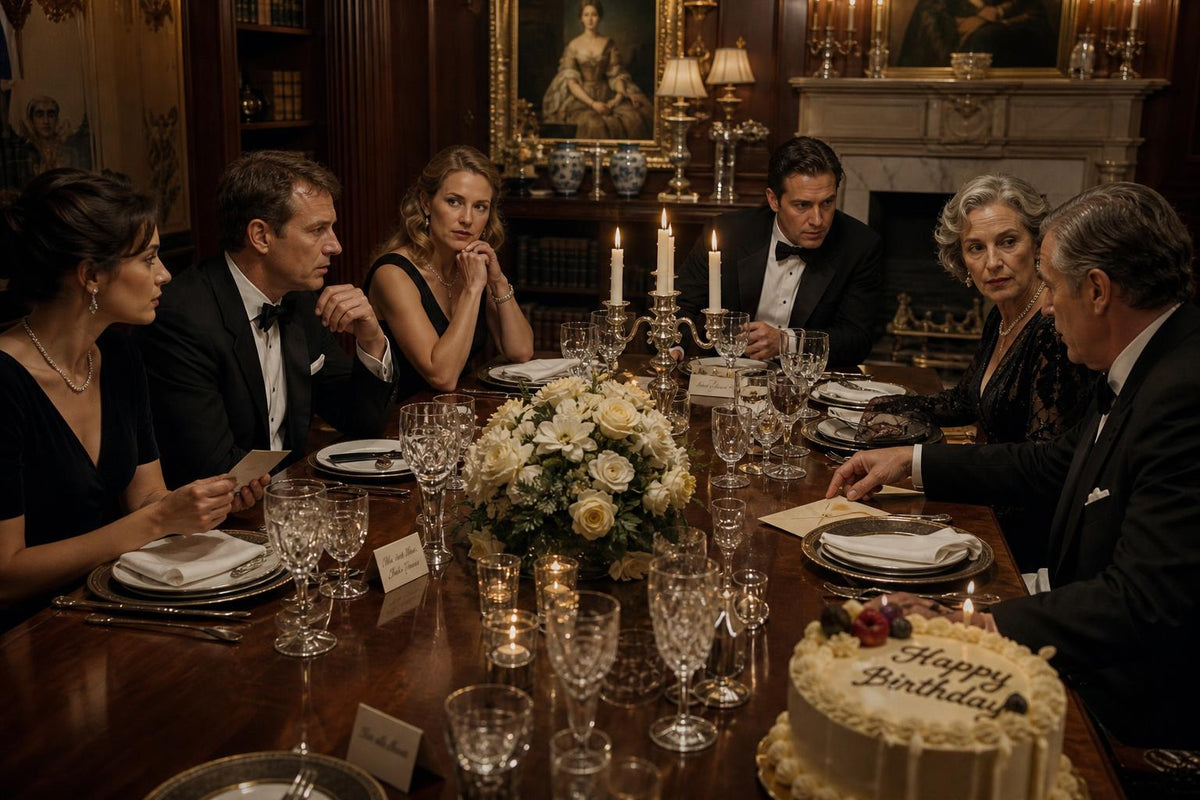
Introduction to a 6-Player Birthday Mystery
A 6-player birthday mystery turns an ordinary celebration into an interactive story filled with secrets, suspicion, and surprise. Instead of simply attending a party, guests become characters in a dramatic plot where every conversation matters. In the context of a birthday event, this format works especially well because it combines social fun with a shared objective: solving a fictional crime before the final reveal.
Why This Party Format Works So Well
Mystery games have grown steadily in popularity as hosts look for experiences that feel more memorable than standard dinners or game nights. A six-player setup is especially effective because it is large enough to create tension and varied motives, yet small enough for everyone to stay involved. With only six characters, each guest has a meaningful role, and no one fades into the background.
The birthday setting adds another layer of excitement. Familiar friends are suddenly cast as suspects, witnesses, or possible masterminds, which creates instant energy. That contrast between real-life celebration and fictional danger is what makes the experience so entertaining. Guests can laugh, improvise, and compete while still enjoying cake, drinks, and conversation.
What Players Can Expect
At its core, a birthday murder mystery gives each participant a character profile, background information, and private objectives. One guest may be hiding a financial secret, another may have a grudge against the victim, and someone else may know more than they admit. As the game unfolds, players question one another, reveal clues, and piece together timelines.
The Ideal Group Size
Six players is often considered a sweet spot for mystery gameplay. It allows for a balanced cast without overwhelming the host or slowing the pace. In larger games, some participants may speak less or struggle to track details. In a six-person mystery, the action stays focused, making it easier to sustain suspense from beginning to end.
Setting the Tone for Suspense
A strong introduction helps guests understand that this is more than a themed party. It is a structured experience built around roleplay, deduction, and social interaction. Atmosphere matters just as much as the script. Music, invitations, costumes, and themed decorations can all reinforce the mystery and encourage players to commit to their roles.
Because the game is designed for a birthday celebration, the tone can be adjusted to suit the group. Some hosts prefer lighthearted comedy, while others lean into dramatic twists. Either way, the result is a party format that feels immersive, personal, and full of momentum, making it an ideal foundation for a night of guaranteed suspense.
Why 6 Players Works Best
The sweet spot between simplicity and suspense
A six-player format is often the ideal size for a birthday murder mystery because it balances dramatic tension with practical ease. With fewer than six players, the story can feel too transparent. Motives become obvious quickly, and there are not enough perspectives to create meaningful doubt. With more than six, the game can become harder to manage, especially in a birthday setting where guests may want a mix of structure, conversation, and celebration rather than a highly complex rules-heavy experience.
Six players creates a social dynamic where everyone matters. Each guest has enough speaking time to develop a character, reveal clues, and react to accusations without being overshadowed. At the same time, there are enough suspects to keep the mystery alive. In many party game formats, five to eight participants is considered the strongest range for engagement, and six often lands right in the middle of that sweet spot.
Every player gets a meaningful role
One of the biggest strengths of a six-person mystery is role distribution. In larger groups, some participants naturally become observers rather than active contributors. In a six-player game, however, every character can be written with a clear purpose, a distinct personality, and a believable connection to the crime.
Better character depth
With six roles, hosts can assign richer backstories and stronger motives. That means each player has enough material to perform without feeling overwhelmed by too many details. A guest might be the jealous business partner, the estranged sibling, the loyal best friend, the secret rival, the suspicious neighbor, or the charming outsider. Because the cast is compact, these relationships are easier for everyone to remember, which helps the mystery unfold smoothly.
Easier clue tracking
Players are far more likely to follow the evidence when there are only five other people to watch. They can remember who said what, compare alibis, and notice contradictions. This makes the game feel more rewarding because success depends on observation rather than luck or confusion.
Ideal for birthday party energy
Birthday gatherings usually work best when activities feel immersive but not exhausting. A six-player mystery fits neatly into that atmosphere. It can typically be played in 60 to 90 minutes, which is long enough to build suspense but short enough to leave room for food, cake, gifts, and casual conversation.
A group of six also works well in most homes, apartments, or private dining rooms. Everyone can sit around one table or move comfortably through a small party space. That physical closeness matters because it encourages eye contact, side conversations, and spontaneous reactions, all of which make accusations more entertaining.
Stronger interaction and fewer dead moments
In a six-player setup, the pace stays lively. There is less waiting for turns, fewer repeated explanations, and more direct engagement between players. When one person reveals a secret, everyone else immediately feels the impact. That creates a tighter narrative rhythm and helps maintain attention throughout the game.
Easier hosting and planning
For the organizer, six is also a practical number. Costumes, invitations, food planning, and seating arrangements are simpler to coordinate. If one guest is new to murder mystery games, the smaller group also makes it easier to guide them without slowing down the experience for everyone else.
Because of that balance of depth, manageability, and suspense, six players consistently delivers one of the most satisfying birthday murder mystery experiences.
Choosing the Right Theme
Selecting the right theme is the foundation of a memorable birthday murder mystery for 6 players. With a smaller group, every character matters, so the setting must feel immersive without becoming complicated. A strong theme helps guests understand the tone, dress the part, and step into the story quickly. It also shapes the invitations, decorations, menu, and even the pacing of the evening, making the entire event feel cohesive rather than improvised.
Match the Theme to Your Group
The best murder mystery theme is one your guests will genuinely enjoy. Consider their personalities, sense of humor, and comfort with roleplay. If your group loves glamour and drama, a 1920s speakeasy or Hollywood scandal theme can create instant excitement. If they prefer something lighter, a masquerade ball or country manor mystery may feel more approachable. For a group that enjoys pop culture and modern references, a reality TV reunion or luxury yacht party can work especially well.
Because there are only six players, each participant will likely have more dialogue, clues, and influence over the outcome than in larger games. That means the theme should be easy to understand from the start. Simple, recognizable settings often perform better than highly niche concepts, especially if some guests are new to murder mystery parties.
Balance Atmosphere and Practicality
A great theme should be dramatic, but it also needs to be practical to host. Some settings are visually striking yet easy to recreate at home. A vintage dinner party, for example, can be built with candles, printed name cards, and classic music. By contrast, a futuristic sci-fi mystery may sound exciting but require more effort in costumes and decor to feel convincing.
Consider Costumes and Props
Costumes are one of the fastest ways to bring a theme to life, but they should not become a barrier to participation. Choose a concept that allows guests to assemble outfits from items they already own or can buy affordably. Themes like noir detective, aristocratic estate, or glamorous casino night usually offer flexibility. Accessible costume ideas increase enthusiasm and reduce last-minute stress.
Props should support the story rather than overwhelm it. A sealed letter, a fake jewel, or a suspicious glass can add tension without cluttering the experience. In a six-player game, small details stand out more, so a few well-chosen items are often more effective than elaborate staging.
Think About Tone
Not every murder mystery needs to feel dark and serious. In fact, birthday celebrations often benefit from a tone that blends suspense with fun. Decide early whether you want the evening to feel comedic, elegant, spooky, or intense. This choice affects everything from character names to background music.
Popular Theme Styles for Six Players
For smaller parties, certain themes consistently work well because they keep the cast focused and the motives believable.
| Theme | Why It Works for 6 Players |
|---|---|
| 1920s Speakeasy | Stylish, familiar, and easy to costume |
| Manor House Mystery | Classic format with clear suspects |
| Masquerade Ball | Elegant atmosphere and built-in intrigue |
| Hollywood Scandal | Dramatic personalities and strong secrets |
| Casino Night | Fast-paced, glamorous, and socially dynamic |
Keep Character Roles Distinct
A six-player mystery thrives when every role feels unique. The theme should naturally support contrasting personalities such as the host, rival, outsider, confidant, socialite, or investigator. Distinct roles help players remember their motives and interact more confidently. Themed character variety is especially important in smaller games because there is no room for forgettable suspects.
When choosing your theme, imagine how easily each guest can picture their character and start improvising. If the answer is immediate, you likely have a strong concept. If the setting requires too much explanation, it may slow the energy of the party and weaken the suspense you want to build.
Building a Suspenseful Story
Establishing Tension From the First Scene
A memorable murder mystery begins by making players feel that something is wrong before anyone can explain why. In a birthday murder mystery for six players, suspense should start almost immediately, ideally within the first five to ten minutes of the experience. That opening window matters because attention is highest at the beginning, and early uncertainty encourages guests to lean in, ask questions, and invest emotionally in the unfolding plot.
The first scene should introduce a setting that appears festive on the surface but carries a subtle sense of unease underneath. A birthday dinner, private party, or weekend gathering works well because it naturally brings all six characters together. Suspense grows when ordinary celebration is interrupted by hints of conflict, hidden motives, or unfinished business. A strained toast, a missing gift, or an unexpected guest can all signal that the evening is heading somewhere darker.
Creating Strong Secrets for Every Character
Suspense depends on information being carefully controlled. If every player knows too much too soon, the mystery collapses. If they know too little, the story feels flat. The most effective structure gives each of the six players a secret that matters personally and connects to the larger crime. These secrets do not all need to be criminal. In fact, mixing serious and smaller secrets often makes the story more believable.
For example, one character may be hiding debt, another an affair, another a forged document, and another a long-standing grudge against the victim. When players realize that almost everyone has something to lose, suspicion spreads naturally. According to storytelling research often cited in narrative design, audiences remain most engaged when they are balancing multiple plausible explanations rather than following a single obvious answer. In practical terms, that means at least three characters should seem capable of committing the murder at different points in the game.
Layering Personal Stakes
Personal stakes are what turn a puzzle into drama. A suspect who lies only to protect themselves is interesting, but a suspect who lies to protect a sibling, save a reputation, or avoid financial ruin is far more compelling. These motivations create emotional complexity, and emotional complexity is one of the strongest engines of suspense.
When writing character briefs, give each player a public identity and a private fear. The contrast between those two elements creates tension in every conversation. A charming best friend may secretly resent the victim. A successful business partner may be close to bankruptcy. A devoted relative may have discovered a will that changes everything.
Pacing Revelations for Maximum Impact
A suspenseful story should not release its best information all at once. Instead, revelations should arrive in stages, with each one changing how players interpret what came before. This technique keeps the mystery active rather than static. In a six-player format, three rounds of discovery often work especially well: an opening phase of introductions and suspicion, a middle phase of evidence and contradiction, and a late phase of major revelations.
Using Red Herrings Without Frustrating Players
Red herrings are essential, but they must feel fair. A good red herring points attention in the wrong direction while still fitting the logic of the story. A bad one relies on impossible facts or information no player could reasonably uncover. The goal is not to trick players unfairly; it is to make them question their assumptions.
Fair Clues Versus False Confusion
A fair clue can be interpreted in more than one way. For instance, a threatening message may suggest murderous intent, yet later turn out to be connected to blackmail instead. That kind of reversal is satisfying because the clue was real, only misunderstood. By contrast, random twists with no setup weaken suspense because they replace tension with confusion.
Making the Final Accusation Feel Earned
The ending of a suspenseful story should feel surprising but inevitable. Players should be able to look back and see that the truth was always present, even if they missed it. In mystery design, this balance is often considered the gold standard because it rewards attention while preserving shock.
For a birthday murder mystery, the final accusation works best when the killer’s motive is both logical and emotionally charged. Perhaps the murder was triggered by betrayal, inheritance, humiliation, or revenge tied directly to the celebration itself. That connection gives the story thematic unity and makes the reveal more powerful. When the final evidence exposes not just who committed the crime but why the birthday setting mattered, suspense transforms into payoff, and players remain engaged right up to the next twist.
Creating the Six Characters
A memorable six-player birthday murder mystery lives or dies by its cast. Strong characters create suspicion, spark conversation, and give every guest a reason to participate. In a game built for exactly six players, each role must feel essential, distinct, and fun to perform. The goal is not simply to assign names and occupations, but to design personalities, motives, secrets, and relationships that naturally generate tension throughout the party.
Start with Clear Character Archetypes
When building six characters, variety matters more than complexity at first. Guests need to understand who they are within minutes, especially if some players are new to roleplay. A practical approach is to begin with recognizable archetypes, then add layers that make them less predictable. For example, the charming best friend, the jealous sibling, the ambitious business partner, the mysterious ex, the loyal employee, and the seemingly harmless neighbor all offer immediate dramatic potential.
These archetypes work because players can quickly step into them without needing theatrical experience. A strong murder mystery character should be easy to grasp but difficult to fully trust. That balance keeps the game accessible while preserving suspense. If every role feels vague, players hesitate. If every role feels obvious, the mystery becomes flat.
Give Every Character a Motive
A satisfying mystery requires that all six characters could plausibly have wanted the victim dead. In classic detective fiction, motive usually falls into a few categories: money, revenge, jealousy, fear, or self-protection. For a birthday murder mystery, these motives can be adapted into playful but compelling conflicts. One guest may have been cut out of a will, another may have discovered a betrayal, while someone else could be hiding a scandal the victim threatened to expose.
The key is to make motives believable without making them identical. If all six suspects are simply “angry,” the story lacks texture. Instead, connect each motive to the character’s personal history. A business partner might fear financial ruin, while a sibling might resent years of favoritism. These differences help players improvise naturally because their emotional stakes feel specific.
Motive and Opportunity Must Intersect
Motive alone is not enough. Each character also needs some opportunity to commit the crime, even if that opportunity later proves misleading. Perhaps one person had access to the victim’s drink, another was seen near the study, and another knew the security code. Suspense grows when clues point in multiple directions at once. This structure encourages debate and prevents the mystery from collapsing too early.
Build Interconnected Relationships
The best six-character mysteries feel like a web, not a row of isolated suspects. Every character should have a relationship with at least two others, and ideally all six should be linked in some way. This creates a dynamic room where players constantly exchange information, accusations, and half-truths.
For example, the victim’s sibling may secretly distrust the business partner, who once dated the ex, who now confides in the neighbor, who owes money to the employee, who witnessed an argument involving the sibling. With only six players, these connections should be tight and intentional. According to event planners who run hosted mystery dinners, smaller casts often produce stronger engagement because each participant receives more speaking time and more influence over the plot.
Create Secrets Beyond the Murder
Not every secret should relate directly to the killing. In fact, side secrets make the mystery richer because they generate false leads and emotional reactions. One character may be lying about an affair, another about debt, another about stealing from the victim, and another about being in the house at an unusual hour for an innocent reason. These hidden truths give players something to protect, which makes interrogation more entertaining.
Why Red Herrings Matter
A good red herring distracts without feeling unfair. If a character hides a forged signature or a fake engagement, that secret should be dramatic enough to attract suspicion while still making sense once revealed. Readers and players alike enjoy discovering that someone was dishonest, just not dishonest in the way they first assumed.
Balance Spotlight Time
In a six-player game, no one should feel like an extra. Each character needs at least one major reveal, one meaningful relationship conflict, and one clue tied to their behavior. If one role contains all the drama while another only exists to deliver a single fact, engagement drops quickly.
A useful planning method is to map each character across three categories:
| Character Element | What to Include |
|---|---|
| Public Identity | What everyone knows immediately |
| Private Secret | What the character wants hidden |
| Story Function | How the character advances suspicion or clues |
This framework ensures every role contributes on multiple levels. Equal narrative weight keeps all six players invested from the opening scene onward.
Match Characters to Party Tone
Because this is a birthday event, the tone should usually lean toward stylish suspense rather than grim realism. Characters can still have serious motives, but their presentation should be entertaining. A glamorous socialite, a dramatic chef, or a polished lawyer often works better in a party setting than a bleakly realistic suspect with no flair. Humor, rivalry, and theatrical entrances can all coexist with a clever murder plot.
Practical Role Design Tips
Write each role sheet in a voice that helps the player perform instantly. Include a short backstory, a personality cue, a goal for the evening, and two or three people they should question. This gives structure without scripting every line. The result is a cast that feels alive, suspicious, and perfectly engineered for birthday-night intrigue.
Planning Clues and Red Herrings
A six-player birthday murder mystery lives or dies on information control. The best games give guests enough evidence to feel clever while preserving enough uncertainty to keep everyone suspicious. When planning clues and red herrings, the goal is not to confuse players randomly. Instead, it is to create a trail of believable details that gradually narrows the field, encourages discussion, and rewards close attention. In a compact six-player format, every clue matters more because there are fewer suspects, fewer alibis, and fewer side conversations to absorb weak plotting.
Building a Fair Clue Structure
A strong mystery usually works best when the host plants three to five core clues that point toward the real culprit from different angles. In a six-player game, this range is ideal because it gives enough material for deduction without overwhelming guests. One clue might establish motive, another opportunity, and another means. For example, a torn invitation could reveal resentment, a missing cake knife could suggest the murder weapon, and a witness statement could place one guest near the scene at the critical moment.
Fairness is essential. Readers of classic detective fiction often expect what mystery writers call “play fair” plotting, where the audience has access to the same essential facts as the detective. Your party guests should feel the same. If the killer can only be identified because of a secret detail revealed at the very end, the solution feels arbitrary rather than satisfying. Every major revelation should have been foreshadowed somewhere in the game materials, dialogue, or physical props.
Layering Clues Across the Party
The most effective clue design spreads information across several formats so players stay engaged. A written clue can establish facts, while a spoken accusation can add emotion, and a prop can make the mystery feel tangible. In practice, this means one player might receive a private character card mentioning an old financial dispute, while another discovers a lipstick mark on a glass, and a third overhears a timeline inconsistency during introductions.
Timing Matters
Clues should not all appear at once. If everything is revealed in the first ten minutes, the mystery loses momentum. A better structure is to divide discoveries into stages. Early clues should open multiple possibilities. Mid-game clues should challenge first impressions. Late clues should connect earlier fragments into a coherent pattern. This pacing mirrors successful party game design, where engagement tends to peak when new information arrives every 15 to 20 minutes.
Designing Red Herrings That Feel Believable
A red herring is most effective when it grows naturally from a character’s secrets rather than existing only to mislead. If one guest lied about where they were during the toast, that lie should protect something personal, such as an affair, a debt, or a surprise gift, not simply exist to waste time. Good red herrings create temporary suspicion with logical justification. They deepen character drama while still allowing the true solution to emerge.
For a six-player birthday mystery, two or three meaningful red herrings are usually enough. More than that can make the plot feel cluttered. One suspect might have argued with the victim earlier, another may have fingerprints on the weapon because they handled it innocently, and a third could be hiding unrelated theft. Each detail should be suspicious on the surface but explainable in hindsight.
Avoiding Frustrating Misdirection
Red herrings should never directly contradict the final answer. If a clue strongly proves that one person committed the murder, only to be dismissed later without explanation, players may feel cheated. Instead, misleading evidence should be interpretable in more than one way. A threatening text message, for instance, could sound murderous at first but later turn out to concern a business dispute or ruined party surprise.
Matching Clues to Character Roles
Because there are only six players, each character should have a distinct relationship to the victim. This makes clue placement cleaner and suspicion easier to track. A practical model is shown below.
| Character role | Useful clue type | Red herring angle |
|---|---|---|
| Best friend | Emotional motive | Hidden jealousy |
| Sibling | Family dispute | Secret inheritance talk |
| Coworker | Professional rivalry | Stolen office funds |
| Neighbor | Opportunity evidence | Noise complaint conflict |
| Ex-partner | Romantic motive | Unsent apology letter |
| Party planner | Access to props and venue | Surprise gone wrong |
This structure helps ensure that every player has something to reveal and something to hide. Balanced suspicion keeps all six guests involved, which is especially important in smaller groups where disengagement is more noticeable.
Testing the Mystery Before the Party
Before hosting, read through the entire sequence from the perspective of a guest who knows nothing. Check whether the killer can be identified through logic rather than luck. Then test whether the red herrings are strong enough to create debate but not so strong that they overwhelm the truth. If possible, ask a friend to review the setup. Even a quick test can reveal missing motives, timeline gaps, or clues that are too obvious.
When clues and red herrings are planned carefully, your birthday murder mystery becomes more than a party activity. It becomes a shared investigation where every conversation, accusation, and discovery pushes the story forward.
Setting Up the Party Space
Create an Immersive Layout
The party space shapes how believable and exciting your murder mystery feels. For a six-player birthday murder mystery, the ideal setup is intimate rather than sprawling. A room of about 150 to 250 square feet usually works well, giving guests enough freedom to move, whisper, and investigate without losing the sense of closeness that keeps tension high. Arrange the space so players can easily see one another during group scenes, but still have corners or side areas for private conversations and secret alliances.
A central table can act as the investigation hub. This is where you place clue cards, notebooks, pens, and any shared evidence. If food is part of the event, keep dining items on a separate surface so the mystery materials remain organized and visible. Clear zones make gameplay smoother, especially when players need to shift quickly between socializing and solving the case.
Use Lighting and Decor to Build Suspense
Lighting has a major effect on atmosphere. Soft, warm lighting or dimmed lamps create a dramatic mood without making it difficult to read clues. Avoid overly dark rooms, since players still need to examine written materials and facial expressions. Candles, battery-powered lanterns, or string lights can add theatrical flair while remaining practical and safe.
Decor should support the story theme. If the mystery takes place in a glamorous manor, use black, gold, or deep red accents. If it is set in the 1920s, add vintage-style frames, faux pearls, or old-fashioned tableware. The goal is not expensive decoration but visual consistency. Even a few well-chosen props can make the setting feel intentional and memorable.
Small Details That Elevate the Scene
Background elements often have an outsized impact. Printed name cards in character, a mock newspaper headline, or an “evidence board” on a wall can instantly make guests feel part of the narrative. Hosts who include sensory details, such as jazz music for a speakeasy theme or classical music for an aristocratic setting, often find that players stay in character longer and engage more deeply.
Organize Clues for Easy Flow
A successful mystery party depends on pacing, and the room setup can support that. Place clues in stages rather than displaying everything at once. For example, keep round-one evidence in sealed envelopes and reveal later items only when the script or host instructions call for them. This prevents confusion and helps maintain suspense.
Keep Essential Materials Accessible
Each player should have a seat, a writing surface, and easy access to their character packet. If possible, label envelopes or folders clearly so no one accidentally reads another player’s information. For six players, this level of organization is manageable and highly effective. Simple preparation reduces interruptions, allowing the story to unfold naturally.
Balance Comfort With Drama
Because birthday parties often last two to four hours, comfort matters as much as style. Ensure there is enough seating, good airflow, and room for drinks away from important papers. A well-prepared space helps guests relax, participate confidently, and focus on the unfolding mystery rather than practical distractions.
Costumes, Props, and Invitations
Setting the Tone Before Guests Arrive
For a six-player birthday murder mystery, costumes, props, and invitations do more than decorate the evening. They establish the story world, signal the level of immersion, and help guests feel comfortable stepping into character. A well-prepared mystery party often feels polished not because it is expensive, but because every visual detail supports the theme. Research from event planning surveys consistently shows that themed gatherings with coordinated visual elements are remembered more vividly than standard parties, largely because guests engage multiple senses throughout the experience.
Invitations are the first clue. Rather than sending a generic message, design an invitation that hints at the plot, setting, or era. If your mystery takes place in a 1920s mansion, the wording can sound formal and secretive. If it is a modern crime thriller, a sleek dossier-style invitation works better. Include the date, time, location, dress expectations, and a short teaser that builds suspense without revealing too much.
Invitations That Build Anticipation
A strong invitation should balance practical details with theatrical flair. Digital invitations are convenient and affordable, but they can still feel immersive when styled carefully. Printed invitations, however, often create a stronger first impression and can double as keepsakes.
What to Include
Each invitation should clearly explain the guest’s role in the experience. Mention whether costumes are required, encouraged, or optional. For a six-player game, assigning characters in advance is especially helpful because it gives each guest time to prepare. You can also include a brief character description, such as occupation, personality, or possible connection to the victim.
A simple table can help organize the essentials:
| Element | Purpose |
|---|---|
| Theme teaser | Creates intrigue |
| Character assignment | Helps guests prepare |
| Dress guidance | Reduces uncertainty |
| Party logistics | Prevents confusion |
Costumes That Encourage Participation
Costumes do not need to be elaborate to be effective. In fact, the best mystery party outfits are often built from clothing guests already own, enhanced with one or two recognizable accessories. Accessibility matters more than perfection, especially when hosting a mixed group with different budgets and comfort levels.
Encourage guests to focus on silhouette and mood rather than historical accuracy. A vintage-inspired dress, a blazer with a pocket square, or dark monochrome clothing can instantly suggest character. Hosts can also prepare a small backup costume station with hats, gloves, costume jewelry, or fake mustaches for anyone who arrives underdressed.
Props That Make the Mystery Feel Real
Props create interaction points and reinforce the narrative. Useful items include suspect dossiers, handwritten notes, labeled evidence bags, and themed table décor. Even inexpensive objects can feel convincing when presented thoughtfully. A toy magnifying glass, old-style envelopes, or a mock newspaper clipping can transform a dining room into an investigation scene.
Prioritizing High-Impact Details
Focus first on props guests will actually touch or read. Interactive items are more memorable than purely decorative ones. For example, a sealed clue envelope or a staged “crime scene” centerpiece adds immediate drama. Lighting also functions like a prop. Dim lamps, candles, or battery-powered lanterns can heighten tension while keeping the room practical for conversation and gameplay.
Hosting and Game Flow
Setting the Stage for a Smooth Experience
A six-player birthday murder mystery works best when the host treats the evening like a guided story rather than a rigid script. Pacing, clarity, and atmosphere are what turn a simple party game into a memorable event. For a group of six, the ideal playtime is usually between 90 minutes and 2.5 hours, depending on how much roleplay, food service, and clue discussion you include. That size is especially effective because every guest stays involved, while the host can still manage the action without needing assistants or complicated side rules.
Before guests arrive, prepare character packets, clue cards, and any props in clearly labeled envelopes. Assign roles in advance if possible. This helps avoid delays and gives players time to understand their motives, relationships, and secrets. If your guests are new to murder mystery games, a short pre-event message explaining the tone, costume expectations, and basic objective can reduce confusion and improve confidence once play begins.
Structuring the Game Flow
A strong game flow usually follows four simple phases: introduction, character immersion, investigation, and accusation. Each phase should feel distinct, but the transitions must remain natural so players never feel abruptly pushed forward.
Opening the Party
Start with a brief welcome that explains the setting, the rules, and the host’s role. Keep this introduction under 10 minutes. Guests should know whether they are expected to stay in character the entire time, how clues will be distributed, and when they will be allowed to make accusations. Clear instructions early on prevent most gameplay problems later.
Once the basics are covered, let players mingle in character. This opening social period is important because it creates early alliances, suspicions, and comic tension. In many successful party kits, this phase lasts around 20 to 30 minutes and gives everyone a chance to establish personality before the central crime takes over the room.
Managing the Investigation
After the crime is revealed, move into the investigative portion with deliberate pacing. Release clues in stages rather than all at once. Staggered information keeps energy high and prevents dominant personalities from solving everything too quickly. For six players, two or three rounds of clue reveals usually work well. Each round can include private information, shared evidence, or prompted conversations between specific characters.
Balancing Energy, Food, and Interaction
Food and gameplay should support each other, not compete. If you are serving a birthday meal, place it either before the murder is announced or between clue rounds. Trying to deliver major plot details while guests are distracted by cutting cake or refilling drinks often weakens momentum. A practical approach is to serve lighter finger foods during roleplay and save the cake for a natural pause in the investigation.
Keeping Every Player Engaged
In a smaller group, there is nowhere to hide, which is an advantage if managed well. Watch for quieter guests and give them openings by asking in-character questions or prompting them to reveal a clue. At the same time, gently contain guests who dominate every exchange. A balanced table creates better suspense than a loud table.
Timing the Final Accusation
The accusation phase should begin only after enough evidence has circulated for players to make informed guesses. Ask each guest to name the killer, explain their reasoning, and identify at least one supporting clue. This structure encourages participation and makes the reveal feel earned rather than random. When the solution is announced, the birthday celebration naturally carries forward with reactions, laughter, and post-game discussion about the best lies, smartest deductions, and most convincing performances.
Food, Drinks, and Atmosphere
Setting the Scene with Smart Menu Choices
For a birthday murder mystery for 6 players, food should enhance the drama rather than distract from it. The best approach is to serve dishes that are easy to eat while mingling, questioning suspects, and uncovering clues. Finger foods, small plates, and make-ahead appetizers work especially well because they keep the evening moving smoothly. Mini quiches, stuffed mushrooms, bruschetta, and skewers are popular choices that feel party-ready without requiring guests to sit down for a formal meal.
Drinks That Match the Mystery
A themed drink menu can make the event feel far more immersive. Signature cocktails or mocktails tied to the story add personality and help guests step into character. For example, a deep red berry punch can hint at suspense, while a sparkling elderflower drink brings a refined, old-fashioned tone. According to hospitality industry trends, themed beverages often increase guest engagement because they create a stronger sensory connection to the event. Even simple drink labels with playful names can make a noticeable difference.
Balancing Style and Practicality
It is also important to offer a balance of alcoholic and non-alcoholic options so every guest feels included. Water, soda, and one or two specialty drinks are usually enough for a group of six. Too many choices can clutter the setup and pull attention away from the game itself. A curated selection feels more intentional and supports the overall atmosphere.
Creating an Immersive Atmosphere
Atmosphere is where the mystery truly comes alive. Lighting should be soft but functional, with candles or LED lamps adding tension without making clue cards hard to read. Background music can subtly shape the mood; instrumental jazz, classical pieces, or cinematic suspense tracks are especially effective. Decorations do not need to be elaborate, but details such as vintage glassware, dark table linens, or printed suspect dossiers can transform an ordinary room into a believable crime scene.
Small Details, Big Impact
Scent, sound, and visual styling all influence how memorable the night feels. When food, drinks, and décor support the storyline, guests are more likely to stay engaged, improvise confidently, and enjoy every reveal as the mystery unfolds.
Conclusion: Make the Night Unforgettable
Bring the Story to Life
A birthday murder mystery for 6 players turns an ordinary gathering into an immersive event filled with suspense, laughter, and memorable twists. With the right setup, each guest becomes part of the narrative, not just an observer. That level of participation is why interactive party formats continue to grow in popularity, especially for small-group celebrations where conversation and connection matter most.
Why This Format Works So Well
For six players, the experience stays balanced and manageable. Everyone gets meaningful screen time, clues remain easy to track, and the host can maintain momentum without the confusion that often comes with larger groups. A smaller cast creates stronger engagement, making reveals more dramatic and character dynamics more entertaining.
The Final Ingredient
Atmosphere is what elevates the evening from fun to unforgettable. Thoughtful invitations, themed food, simple decorations, and well-timed clue drops can transform a living room into a crime scene worth talking about long after the candles are blown out. When mystery, celebration, and shared performance come together, the result is a birthday night guests will remember for years.
FAQ
How long does a birthday murder mystery for 6 players usually take?
Most 6-player murder mystery games run between 90 minutes and 3 hours, depending on the script, the complexity of clues, and how much time guests spend improvising. A streamlined party version may fit into a two-hour celebration, while a more detailed format with costumes, dinner courses, and reveal scenes can last longer.
Is 6 players the ideal group size?
Yes, six players is often a sweet spot for suspense and participation. It is small enough that every guest stays involved, yet large enough to create layered motives, secrets, and alliances. With fewer people, the mystery can feel too simple; with more, some players may get less spotlight time.
What if extra guests attend?
If more than six people are coming, hosts can assign some attendees as observers, detectives, or supporting characters. Another option is choosing a flexible mystery kit that allows role expansion without weakening the storyline.
Do players need acting experience?
Not at all. Most birthday murder mystery games are designed for beginners, with character guides, scripted prompts, and clue cards that make participation easy. The goal is not performance perfection, but shared fun, tension, and memorable interaction as the mystery unfolds.


