

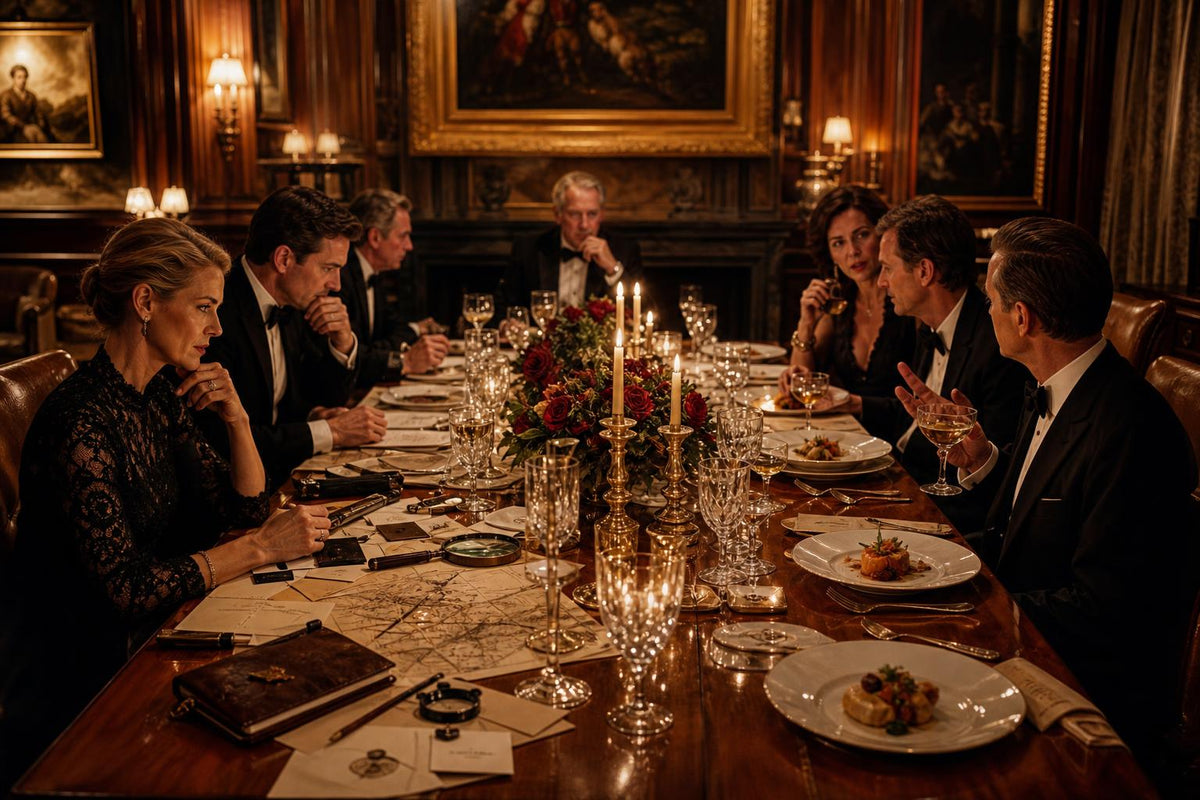
Introduction: Crime Game vs Murder Mystery Dinner
At first glance, a crime game and a murder mystery dinner can seem almost identical. Both invite participants into a world of clues, suspects, motives, and suspense. Both are popular for parties, team-building events, and social gatherings because they transform guests from passive attendees into active players. Yet despite these similarities, the two experiences are not the same. Understanding the distinction helps hosts choose the right format for their audience, budget, and event goals.
Why the Confusion Happens
The confusion is understandable because both formats are built around solving a fictional crime. In each case, players may question characters, examine evidence, and try to identify the culprit before the final reveal. According to event industry trend reports, immersive entertainment has grown steadily over the last decade, with interactive dining and mystery-based games becoming especially popular for birthdays, corporate functions, and holiday parties. As a result, the terms are often used interchangeably in marketing, even when the experiences differ significantly.
What a Crime Game Usually Involves
A crime game is typically structured more like a puzzle-driven activity. Players focus on gathering facts, analyzing evidence, and working through a case using logic. The format may be played at home, online, or in person, and it often emphasizes teamwork and deduction over theatrical performance. Some crime games resemble escape rooms without locked doors, while others feel like detective board games brought to life.
Focus on Investigation
In most crime games, the central appeal is the investigative process. Participants are usually not expected to stay in character for long periods. Instead, they act as detectives, reviewing witness statements, timelines, and physical clues to solve the mystery efficiently.
What a Murder Mystery Dinner Typically Offers
A murder mystery dinner combines storytelling, character performance, and a shared meal. Guests are often assigned roles, encouraged to dress up, and invited to interact as part of the narrative. The dining element is essential, with the mystery unfolding between courses or throughout the evening. This format tends to be more theatrical and social than analytical.
Focus on Entertainment and Atmosphere
Rather than centering only on solving the case, a murder mystery dinner prioritizes atmosphere, roleplay, and dramatic fun. For example, one guest may play a suspicious heir while another portrays a secretive business partner, creating a lively experience where conversation is just as important as deduction.
Why the Difference Matters
Choosing between these formats affects pacing, preparation, and guest expectations. A crime game suits groups that enjoy strategy and problem-solving, while a murder mystery dinner is often better for those who want immersive entertainment with a strong social element.
What Is a Crime Game?
A crime game is an interactive experience built around solving, preventing, or sometimes committing a fictional crime within a structured set of rules. Unlike passive entertainment, such as watching a detective film or reading a mystery novel, a crime game asks participants to take an active role in the unfolding scenario. Players gather clues, question suspects, interpret evidence, and make decisions that influence the direction of play. The central appeal lies in combining storytelling with problem-solving, creating a format that feels both immersive and mentally stimulating.
The Core Idea Behind a Crime Game
At its heart, a crime game revolves around a criminal event, most often theft, fraud, kidnapping, or murder. The players are usually assigned roles such as detectives, investigators, witnesses, suspects, or even criminals. Their objective depends on the game design. In some formats, everyone works together to identify the culprit. In others, one player hides their guilt while the rest attempt to expose them. This structure creates tension, strategy, and social interaction all at once.
What separates a crime game from a standard board game is its emphasis on narrative investigation. The rules matter, but the story matters just as much. A well-designed crime game gives players fragments of information rather than the full picture. That uncertainty encourages deduction, discussion, and competing theories. According to market research from Statista, the global board games market has shown steady growth in recent years, with social deduction and mystery-based formats becoming increasingly popular among adults seeking group entertainment beyond traditional party games.
Common Formats of Crime Games
Crime games appear in several formats, and each offers a slightly different experience. Tabletop crime games often include case files, evidence cards, maps, witness statements, and timelines. These are popular for home gatherings because they require little more than a table and a group willing to engage with the mystery.
Tabletop and Card-Based Experiences
In tabletop versions, players may work through a prewritten case using physical materials. Some games are cooperative, meaning all players share information and solve the case together. Others introduce hidden motives or secret objectives, making trust part of the challenge. Games like Sherlock Holmes Consulting Detective helped define this category by focusing less on winning through points and more on reasoning through evidence.
Digital and Hybrid Crime Games
Digital crime games use apps, websites, or video game mechanics to deepen immersion. A mobile app might reveal new evidence over time, simulate text messages from suspects, or unlock audio interviews. Hybrid formats combine physical components with digital storytelling, offering a more cinematic experience. This style has grown in popularity because it blends the tactile appeal of tabletop play with the flexibility of technology.
Key Elements That Define the Experience
Most crime games share several defining features. First is a central mystery that gives the game purpose. Without a compelling crime to investigate, the experience loses momentum. Second is evidence, which may include alibis, forensic reports, photographs, coded messages, or contradictory testimonies. Third is player interaction. Even solo crime games rely on the player actively connecting details, while group games add debate, persuasion, and collaboration.
Roleplay and Decision-Making
Many crime games also include a roleplaying element, though usually lighter than in full tabletop role-playing games. Players may speak in character, defend themselves against accusations, or reveal information strategically. This adds emotional texture to the investigation. A suspect who appears nervous may be innocent, while a confident witness may be lying. These social cues make the game feel dynamic rather than mechanical.
Decision-making is equally important. Players must decide which clues matter, whom to trust, and when to make an accusation. In some games, accusing too early can lead to penalties or failure. That pressure mirrors the logic of real investigations, where incomplete information can easily produce the wrong answer.
Why People Enjoy Crime Games
The popularity of crime games comes from their ability to satisfy multiple interests at once. They appeal to people who enjoy puzzles, storytelling, teamwork, and suspense. A crime game can turn an ordinary evening into a shared investigation where every participant feels involved. Because the format rewards observation and reasoning rather than physical skill, it is accessible to a wide range of players and age groups.
Another reason for their appeal is replayable social energy. Even when a case can only be solved once, the conversations, accusations, and revelations make each session memorable. In group settings, the entertainment often comes as much from how people react as from the final solution itself. That blend of mystery, strategy, and social performance is what makes crime games distinct, and it also helps explain why they are often compared with experiences like murder mystery dinners, even though the two are not exactly the same.
What Is a Murder Mystery Dinner?
A murder mystery dinner is an interactive social event that combines a meal with a live, unfolding whodunit story. Guests do not simply sit back and watch; they become part of the experience by questioning suspects, gathering clues, and trying to identify the fictional killer before the final reveal. Unlike a traditional dinner party or a passive theater performance, this format blends entertainment, roleplay, and problem-solving into one structured evening.
The concept has grown steadily in popularity because it appeals to several interests at once. It offers the suspense of a detective story, the energy of live performance, and the comfort of a shared meal. In the United States alone, the broader escape room and immersive entertainment market has expanded significantly over the past decade, and murder mystery dinners have benefited from the same demand for participatory experiences rather than passive outings.
How the Experience Works
Most murder mystery dinners follow a clear sequence. Guests arrive and are introduced to the setting, which may involve a 1920s speakeasy, a glamorous manor house, a wedding reception, or a corporate gala gone wrong. At some point early in the evening, a fictional crime occurs, usually a murder, and the investigation begins.
Participants may be assigned characters in advance or on arrival. Some events use professional actors for the main roles, while others ask every guest to play a suspect or witness. Throughout the meal, information is revealed in stages. Guests listen to testimony, examine clues, ask questions, and compare theories with others at their table. By dessert or the final act, they submit their guess about the murderer, motive, and method.
The Role of the Meal
The dinner element is more than a backdrop. It creates a relaxed social rhythm that separates each stage of the mystery. For example, appetizers may coincide with introductions, the main course with the investigation, and dessert with the final accusation. This pacing helps the event feel organized and gives guests time to discuss evidence naturally.
In many venues, the meal also supports the theme. A Victorian mystery might feature formal plated service, while a mafia-themed event may use family-style dining. This attention to atmosphere is one reason murder mystery dinners often feel more immersive than standard party games.
Key Features That Define a Murder Mystery Dinner
A murder mystery dinner is distinguished by its combination of narrative structure and audience involvement. The story is usually scripted, but the interactions inside that framework can vary widely depending on the guests. This creates a balance between planned entertainment and spontaneous social play.
Interactive Investigation
The central feature is active participation. Guests are expected to think like detectives, even if they are not performing as actors. They may interview suspects, inspect written clues, or notice inconsistencies in alibis. This makes the experience mentally engaging in a way that ordinary dinner entertainment is not.
Character-Based Roleplay
Many events encourage costumes, accents, or in-character conversation. Even light roleplay can make the evening more memorable, especially for groups celebrating birthdays, team-building events, or holiday parties. Research on experiential events consistently shows that people remember activities more strongly when they involve personal participation and emotional engagement.
A Structured Yet Social Format
Because the mystery unfolds in acts, the evening has a built-in progression. At the same time, guests are free to socialize, compare notes, and debate theories. This dual structure makes murder mystery dinners especially appealing for mixed groups, since both outgoing and quieter participants can contribute in different ways.
Where Murder Mystery Dinners Are Commonly Held
These events can take place in restaurants, hotels, private homes, banquet halls, or even aboard trains and cruise ships. Commercial productions often sell tickets to the public, while private hosts may purchase boxed kits or downloadable scripts for home gatherings. According to event industry trends, themed group experiences remain especially popular for corporate functions and milestone celebrations because they encourage interaction more effectively than standard seated dinners.
Public Events Versus Private Parties
Public murder mystery dinners usually feature professional performers, fixed scripts, and a polished production style. Private versions are often more flexible and budget-friendly, though they may rely more heavily on guests to embrace the format. Both can be successful, but the atmosphere differs depending on whether the event is theatrical or home-hosted.
Why People Enjoy Them
Part of the appeal lies in the blend of suspense and sociability. A murder mystery dinner gives people something immediate to talk about, which can reduce awkwardness and spark conversation among strangers. It also creates a sense of shared purpose, since everyone is working toward the same goal of solving the crime.
For many guests, the biggest draw is the chance to step briefly into another world. The event feels more dynamic than a normal dinner and less intimidating than full improvisational theater. That middle ground helps explain why murder mystery dinners remain a popular choice for groups seeking interactive entertainment with a clear storyline.
Core Differences at a Glance
At first glance, a crime game and a murder mystery dinner may seem interchangeable because both revolve around suspects, clues, and the thrill of solving a fictional crime. In practice, however, they deliver very different experiences. The distinction matters for hosts, event planners, and players because the format affects pacing, audience participation, cost, and the overall atmosphere of the event.
Format and Structure
A crime game is usually designed as an interactive activity in which participants actively investigate a case. Players may search for evidence, decode messages, interview characters, or work through puzzles to identify the culprit. The structure is often flexible, and many crime games can be played at home, in teams, or even online. Some resemble escape rooms, while others function like tabletop deduction games.
A murder mystery dinner, by contrast, is built around a shared meal and a staged social experience. Guests typically dine while a scripted mystery unfolds around them. In many cases, each attendee receives a character role, background information, and possible motives. Rather than focusing mainly on puzzle-solving, the evening emphasizes performance, conversation, and immersive entertainment.
How the experience unfolds
In a crime game, progress is often tied to completing tasks or uncovering clues in sequence. The game may have rounds, timed challenges, or evidence packets that unlock the next stage. In a murder mystery dinner, the event usually moves through acts, with revelations appearing between courses such as appetizers, main dishes, and dessert. This creates a more theatrical rhythm.
Player Participation
One of the biggest differences lies in how people participate. Crime games usually reward analytical thinking. Players are expected to compare evidence, spot inconsistencies, and build a logical case. Success often depends on observation and reasoning rather than performance skills.
In a murder mystery dinner, participation is more social and character-driven. Guests may stay in role, trade secrets, accuse one another, and improvise dialogue. Even when there is a final solution, the entertainment value often comes from the interactions rather than the accuracy of the investigation alone. This makes the format especially appealing for birthdays, corporate parties, and themed celebrations where conversation is part of the fun.
Setting and Atmosphere
A crime game can work in many environments, including living rooms, classrooms, offices, and virtual platforms. Because the focus is on solving the case, the setting can be simple. Printed clues, digital files, or a mobile app may be enough to create tension and engagement.
A murder mystery dinner depends more heavily on atmosphere. Lighting, costumes, table settings, and themed menus often enhance the experience. The dinner element encourages a slower, more elegant pace, while the mystery adds suspense. As a result, the event often feels closer to interactive theater than to a traditional game night.
Time commitment and planning
Most crime games can be completed in 60 to 120 minutes, although complex versions may last longer. They are often easier to set up and can suit smaller budgets. A murder mystery dinner usually requires more planning because it combines entertainment with food service, seating arrangements, and character assignments. These events commonly last two to four hours, depending on the number of guests and the script.
Cost, Complexity, and Audience Fit
From a practical standpoint, crime games are often more accessible. A downloadable game kit may cost far less than hosting a full dinner event, and the materials can sometimes be reused. This makes crime games a strong option for families, friend groups, and team-building sessions that prioritize problem-solving.
Murder mystery dinners tend to involve higher costs because they may include catering, venue decoration, costumes, or professional actors. However, they also provide a richer sense of occasion. For groups that enjoy roleplay and social immersion, that added investment can be worthwhile.
Quick Comparison Table
| Feature | Crime Game | Murder Mystery Dinner |
|---|---|---|
| Primary focus | Solving clues and puzzles | Social roleplay during a meal |
| Typical setting | Home, office, online, classroom | Dining venue or themed home setup |
| Participation style | Investigative and logical | Performative and conversational |
| Average duration | 1 to 2 hours | 2 to 4 hours |
| Planning needs | Moderate | Higher |
| Budget range | Usually lower | Usually higher |
Choosing based on event goals
If the goal is mental challenge and active investigation, a crime game is usually the better fit. If the goal is a memorable evening centered on food, character interaction, and immersive storytelling, a murder mystery dinner offers a distinctly different kind of entertainment.
Gameplay and Guest Participation
How the Core Experience Differs
The biggest difference between a crime game and a murder mystery dinner often appears in how gameplay unfolds and how actively guests are expected to participate. While both formats revolve around solving a fictional crime, they create very different social dynamics. A crime game usually emphasizes structured problem-solving, clue analysis, and collaborative deduction. A murder mystery dinner, by contrast, tends to blend storytelling, character performance, and social interaction with the mystery itself.
In a typical crime game, participants are given evidence such as witness statements, timelines, maps, photographs, or coded messages. The group works through these materials step by step, much like a team tackling an escape room puzzle without being physically locked in. The focus is usually on logic, observation, and deduction. Players may debate motives, compare alibis, and test theories until they identify the culprit. The experience is often driven by the game system rather than by live performance.
A murder mystery dinner usually places guests inside the story. Instead of simply reviewing clues, attendees may be assigned characters, secrets, and objectives. They interact over the course of a meal, gathering information through conversation and staged reveals. In many commercial murder mystery events, actors guide the plot while guests question suspects and interpret dramatic scenes. This format often feels more theatrical, with the mystery unfolding as entertainment as much as gameplay.
The Role Guests Play
Active Solvers vs Social Performers
Guest participation in a crime game is generally direct and task-oriented. Everyone is encouraged to contribute ideas, inspect evidence, and help solve the case. This makes the format especially appealing for groups that enjoy board games, puzzles, or analytical challenges. Participation is less about acting ability and more about engagement with the material. Even quieter guests can play a meaningful role by spotting inconsistencies or organizing information.
At a murder mystery dinner, participation can vary widely depending on the event design. Some are highly interactive, requiring guests to stay in character, improvise dialogue, and pursue hidden agendas. Others are more relaxed, allowing attendees to simply observe scenes and make guesses between courses. Because of this range, murder mystery dinners can be either immersive or intimidating. Guests who love performance may thrive, while those uncomfortable with roleplay may participate less fully.
A useful distinction is that a crime game often asks, “Can you solve this case?” while a murder mystery dinner asks, “Can you inhabit this world while solving it?” That difference shapes the energy of the event from the start.
Structure, Pace, and Group Dynamics
How Interaction Changes the Experience
Crime games usually move at a controlled pace. Players review one set of clues, discuss possibilities, and then unlock or receive the next stage. This structure creates a clear sense of progression and often keeps the group focused on a shared objective. Because everyone is working on the same problem, the format can support teamwork well, especially in small to medium groups of four to twelve players.
Murder mystery dinners tend to be looser in structure because social interaction is part of the entertainment. Guests may split into side conversations, form suspicions based on personality rather than evidence, or miss details while food is being served. That unpredictability can be part of the fun, but it also means the mystery may feel less precise. In larger groups, often 10 to 30 guests, participation can become uneven if a few outgoing personalities dominate the room.
Accessibility for Different Audiences
From a hosting perspective, crime games are often easier to manage because the rules and materials define participation clearly. Players know what they need to do, and the host usually acts as facilitator rather than performer. This makes crime games popular for family gatherings, team-building sessions, and game nights. According to event industry trend reports, interactive home entertainment has grown steadily since 2020, with mystery-based formats benefiting from demand for screen-free group activities.
Murder mystery dinners can deliver a memorable atmosphere, but they often require more preparation. Hosts may need costumes, seating plans, scripts, props, and a schedule that fits meal service. The payoff is a richer dramatic experience, especially for birthdays, themed parties, or corporate events where spectacle matters as much as the solution.
Which Format Feels More Engaging?
Matching the Format to the Group
Neither format is automatically better; engagement depends on the guests. A crime game is usually more satisfying for people who want a fair-play mystery built on evidence and reasoning. A murder mystery dinner is often better for groups that enjoy improvisation, humor, and theatrical interaction. If the goal is concentrated teamwork, a crime game often wins. If the goal is lively entertainment with mystery layered into the evening, a murder mystery dinner may be the stronger choice.
The key is understanding whether guests want to analyze a crime or perform inside one.
Setting, Atmosphere, and Format
Where the Experience Takes Place
One of the clearest differences between a crime game and a murder mystery dinner is the setting in which the experience unfolds. A murder mystery dinner is usually tied to a specific venue and social environment, most often a restaurant, banquet hall, private event space, or historic hotel. The physical setting matters because it helps establish the illusion of stepping into a dramatic story. Guests are not simply playing a game; they are entering a staged world where décor, costumes, lighting, and table arrangements support the narrative.
A crime game, by contrast, is often more flexible in location and structure. It may be hosted at home, played online, organized in an office, or run as part of a team-building event. In many cases, the environment is functional rather than theatrical. The focus is less on immersive dining and more on solving clues, interpreting evidence, and collaborating with other players. This makes crime games easier to adapt to different group sizes and budgets.
Atmosphere and Social Energy
The atmosphere of a murder mystery dinner tends to be lively, theatrical, and highly interactive. Guests are often encouraged to dress in character, mingle between courses, and engage in improvised conversations. The entertainment value comes not only from solving the fictional crime but also from the performance itself. According to event industry reports, immersive entertainment has grown steadily in popularity because audiences increasingly value participatory experiences over passive ones. A murder mystery dinner fits this trend by blending dining, theater, and social play into one event.
Performance-Driven Engagement
In a murder mystery dinner, the energy often resembles a stage production mixed with a party. Some events use professional actors to guide the plot, while others assign roles directly to guests. This creates a setting where personality, humor, and dramatic reveals are central to the experience. Even participants who are not focused on deduction can still enjoy the evening through conversation and performance.
A crime game usually creates a different mood. It is often more analytical, puzzle-oriented, and structured around investigation. Players may spend more time reading case files, comparing timelines, examining motives, or decoding hidden information. The atmosphere can still be exciting, but the excitement comes from discovery and reasoning rather than theatrical spectacle. For groups that enjoy logic, strategy, and problem-solving, this format can feel more rewarding.
How the Format Shapes the Experience
The format of each activity also influences pacing and participant expectations. A murder mystery dinner generally follows a scheduled progression tied to the meal. For example, introductions may happen during drinks, the crime may be revealed before the main course, and the final accusation may arrive near dessert. This creates a natural rhythm and allows the event to feel polished and ceremonial.
Structured Play Versus Open Investigation
Crime games are often less dependent on hospitality timing and more driven by gameplay mechanics. Some are box-based experiences with evidence packs, while others use apps, websites, or live facilitators. Sessions may last anywhere from 60 minutes to several hours, depending on complexity. Because of this, crime games can offer greater replay variety and more control over pacing.
The distinction matters when choosing the right experience. If the goal is elegant entertainment with strong social flair, a murder mystery dinner offers a memorable event format. If the goal is collaborative deduction in a more adaptable setting, a crime game provides a practical and intellectually focused alternative.
Planning, Hosting, and Budget
Choosing the Right Format for Your Event
When comparing a crime game with a murder mystery dinner, planning starts with understanding how each format shapes the event. A crime game is usually more flexible, often built around clue solving, team competition, and player-driven investigation. A murder mystery dinner, by contrast, is typically more structured, with scripted roles, timed reveals, and a stronger theatrical element. That difference affects everything from guest preparation to food service and venue layout.
For hosts, the first practical question is scale. A crime game can work well for small groups of six to ten people, but many commercial kits also support larger parties of 20 or more by dividing guests into teams. Murder mystery dinners often require a more specific guest count because characters are assigned in advance. If one guest cancels at the last minute, the host may need to rewrite roles or redistribute key information. That makes murder mystery dinners less forgiving when attendance changes unexpectedly.
Hosting Requirements and Guest Experience
The hosting style also differs significantly. A crime game usually asks the host to act as a facilitator rather than a director. Guests can move at their own pace, review evidence, and collaborate naturally. This format is especially effective for mixed groups where some people love roleplay and others prefer puzzles. Because participation can be lighter, guests often feel less pressure to perform.
Managing Structure and Flow
A murder mystery dinner demands more coordination. The host may need to assign characters before the event, share costume suggestions, and explain rules in advance. During the party, the evening often follows a sequence of scenes or rounds, sometimes between courses of a meal. This can create a memorable, immersive atmosphere, but it also increases the workload. Timing matters more, and the host may need to keep guests on script so the story unfolds properly.
In practice, this means a murder mystery dinner is often better suited to milestone celebrations, corporate entertainment, or groups that enjoy dramatic interaction. A crime game is often easier for casual gatherings, family events, or parties where guests arrive with different comfort levels.
Budget Considerations
Budget is another major point of difference. A crime game is often the more affordable option because it can be hosted with fewer extras. Many downloadable game kits cost between $20 and $50, and some premium boxed experiences range from $40 to $100 depending on complexity and group size. If the event is held at home, costs may be limited to snacks, drinks, and simple printed materials.
Typical Cost Comparison
| Expense Category | Crime Game | Murder Mystery Dinner |
|---|---|---|
| Game kit | $20–$100 | $30–$120 |
| Food and drink | Optional light catering | Full meal often expected |
| Costumes/props | Minimal | Often encouraged or required |
| Venue needs | Flexible | Dining-friendly setup preferred |
A murder mystery dinner usually carries higher total costs because dinner is part of the experience. Even a home-hosted version may require a multi-course meal, themed décor, and character accessories. If hosted at a restaurant or event venue, per-person pricing can rise quickly. Commercial murder mystery dinner events in the United States commonly range from $50 to over $120 per guest, depending on location and menu.
Time Investment Before the Event
Time is just as important as money. A crime game can often be prepared in a few hours, especially if materials are ready to print and the rules are simple. The host may only need to organize clues, set up the room, and explain the objective. Murder mystery dinners generally require more lead time. Character assignments, menu planning, seating arrangements, and scripted pacing all add preparation layers.
Matching Effort to Outcome
That extra effort can absolutely pay off when the group wants a polished, theatrical evening. However, hosts looking for low-stress entertainment with strong replay value often prefer crime games. The best choice depends on whether the priority is immersive performance or accessible, puzzle-centered fun, and that distinction often shapes the overall success of the event.
Which Experience Is Best for Your Group?
Choosing between a crime game and a murder mystery dinner depends less on which format is “better” and more on what your group enjoys most. Both experiences center on suspense, deduction, and social interaction, but they create very different energy in the room. A crime game usually emphasizes puzzles, evidence, and active problem-solving, while a murder mystery dinner leans into character play, theatrical storytelling, and a shared meal.
Consider Your Group’s Personality
The best starting point is your group’s natural dynamic. If participants are competitive, curious, and eager to crack clues, a crime game often delivers the strongest fit. These experiences reward observation, logic, and teamwork. Players may analyze witness statements, compare timelines, or uncover hidden motives, making the event feel closer to an escape room or detective case file than a stage performance.
A murder mystery dinner suits groups that enjoy conversation, humor, and improvisation. Instead of focusing primarily on solving structured puzzles, guests often interact in character, trade secrets, and react to dramatic reveals throughout the evening. This format works especially well for people who like themed events but may not want the pressure of constant analytical problem-solving.
Match the Format to the Occasion
The occasion itself can strongly influence the right choice. For corporate team-building, crime games are often effective because they encourage collaboration under a clear objective. Research on team activities consistently shows that shared problem-solving can improve communication and engagement, particularly when teams must combine different perspectives to reach a solution.
Best for Celebrations and Social Evenings
For birthdays, anniversaries, or holiday gatherings, a murder mystery dinner can feel more festive. The meal creates a built-in social structure, and the unfolding plot gives guests something to discuss between courses. Because the evening is paced around dining, it can feel more relaxed than a clue-heavy game that demands continuous attention.
Think About Group Size and Participation Style
Group size matters. Crime games can work well in small to medium groups, often around 4 to 20 players depending on the format. Smaller teams allow everyone to contribute directly to examining evidence and discussing theories. In very large groups, however, some players may become observers unless the game is specifically designed for multiple teams.
Murder mystery dinners are often better suited to larger gatherings because participation can happen at different levels. Some guests may fully embrace a role, while others simply enjoy watching the drama unfold. That flexibility makes the format accessible for mixed groups with different comfort levels.
Energy Level and Time Commitment
A crime game typically creates a high-engagement, fast-moving atmosphere. Sessions often run from 60 to 120 minutes, with players actively focused on clues throughout. A murder mystery dinner usually lasts longer, often two to three hours, because the story unfolds alongside food service and social interaction.
Practical Factors to Weigh
Budget, venue, and hosting effort also shape the decision. A crime game may be easier to run in offices, living rooms, or rented event spaces with minimal catering. A murder mystery dinner usually requires more coordination, especially if costumes, seating plans, and meal timing are part of the experience.
Quick Comparison
| Factor | Crime Game | Murder Mystery Dinner |
|---|---|---|
| Main appeal | Puzzle-solving | Roleplay and storytelling |
| Ideal mood | Focused and interactive | Social and theatrical |
| Best group type | Analytical, competitive | Expressive, conversational |
| Typical duration | 1–2 hours | 2–3 hours |
| Hosting complexity | Moderate | Higher |
If your group wants to solve, choose a crime game. If they want to perform, mingle, and immerse themselves in a themed evening, a murder mystery dinner is usually the stronger match.
Conclusion: Choosing the Right Mystery Experience
Matching the Experience to Your Occasion
Choosing between a crime game and a murder mystery dinner ultimately depends on the kind of experience you want to create. While both center on suspense, clues, and problem-solving, they deliver that excitement in very different ways. A crime game usually emphasizes active investigation, puzzle-solving, and teamwork, making it ideal for players who enjoy immersive challenges and a faster pace. A murder mystery dinner, by contrast, blends storytelling with social interaction and dining, offering a more theatrical and conversational atmosphere.
Consider Group Size, Energy, and Setting
The right choice often comes down to practical details. For example, crime games are often better suited to groups that want hands-on participation and flexible venues, whether at home, in an escape-room-style setting, or during a team-building event. Murder mystery dinners tend to work especially well for birthdays, corporate banquets, and celebratory evenings where guests want entertainment without constant physical activity. In many hosted mystery dinner events, groups can range from 8 to more than 50 participants, showing how adaptable the format can be for larger gatherings.
Entertainment Style Matters
If your guests enjoy decoding evidence, racing against the clock, and feeling like detectives, a crime game may be the stronger fit. If they prefer character-driven fun, dramatic reveals, and a slower, more social evening, a murder mystery dinner may deliver more value. Neither format is better in absolute terms; the best option is the one that aligns with your audience’s expectations, comfort level, and reason for gathering.
Budget and Planning Expectations
Budget can also influence the decision. A self-hosted crime game may be relatively affordable, especially with downloadable kits, while a full murder mystery dinner often involves food, décor, costumes, or professional actors, which can raise costs. Even so, many hosts find the added atmosphere worthwhile because it creates a memorable, all-in-one event. By understanding these differences clearly, you can select a mystery experience that feels engaging, appropriate, and genuinely unforgettable for everyone involved.
FAQ: Crime Games and Murder Mystery Dinners
What is the main difference between a crime game and a murder mystery dinner?
The biggest difference is format and focus. A crime game is usually centered on solving a case through clues, puzzles, witness statements, and deduction. Players often act as investigators, working individually or in teams to identify a culprit, motive, or sequence of events. A murder mystery dinner, by contrast, combines storytelling with a shared meal and social performance. Guests are often assigned characters and encouraged to interact in role while the mystery unfolds around courses.
In practical terms, crime games tend to feel more like structured problem-solving experiences, while murder mystery dinners emphasize immersive entertainment and group interaction.
Are crime games always more serious?
Not necessarily. Many crime games use realistic evidence, timed challenges, and logical deduction, but tone varies widely. Some are dark and suspenseful, while others are light, theatrical, or even comedic. The same is true for murder mystery dinners. Although the word “murder” sounds dramatic, many events are designed to be playful rather than grim.
Tone depends on the audience
For corporate teams, a crime game may highlight collaboration and analytical thinking. For birthdays or private parties, a murder mystery dinner may lean into humor, costumes, and exaggerated characters. Audience expectations usually shape the experience more than the category name alone.
Which option is better for parties?
That depends on the kind of gathering you are planning. If guests enjoy puzzles, hidden clues, and active problem-solving, a crime game may be the stronger choice. If they prefer conversation, themed dining, and character-driven fun, a murder mystery dinner often works better.
Group size and pacing
Murder mystery dinners are especially popular for medium to large groups because the meal naturally structures the evening. Crime games can be more flexible, ranging from small home experiences to large-scale hosted events. According to event industry trends, interactive entertainment continues to grow because it gives guests a more memorable role than passive attendance.
Do players need acting experience?
Usually not. Most murder mystery dinners are written for beginners, with simple character prompts and room for improvisation. Crime games generally require even less performance, since the emphasis is on observation and deduction rather than roleplay. Clear instructions and good hosting matter far more than acting skill.
Can the two formats overlap?
Yes, and many modern events blend both styles. A hosted evening might include a full dinner service alongside evidence packs, suspect interviews, and team-based clue solving. In those cases, the event sits somewhere between theatrical mystery and investigative game design.
Hybrid experiences are increasingly common
This hybrid model appeals to hosts who want both social atmosphere and intellectual challenge, especially for mixed groups where some guests enjoy performance and others prefer solving the case.


