

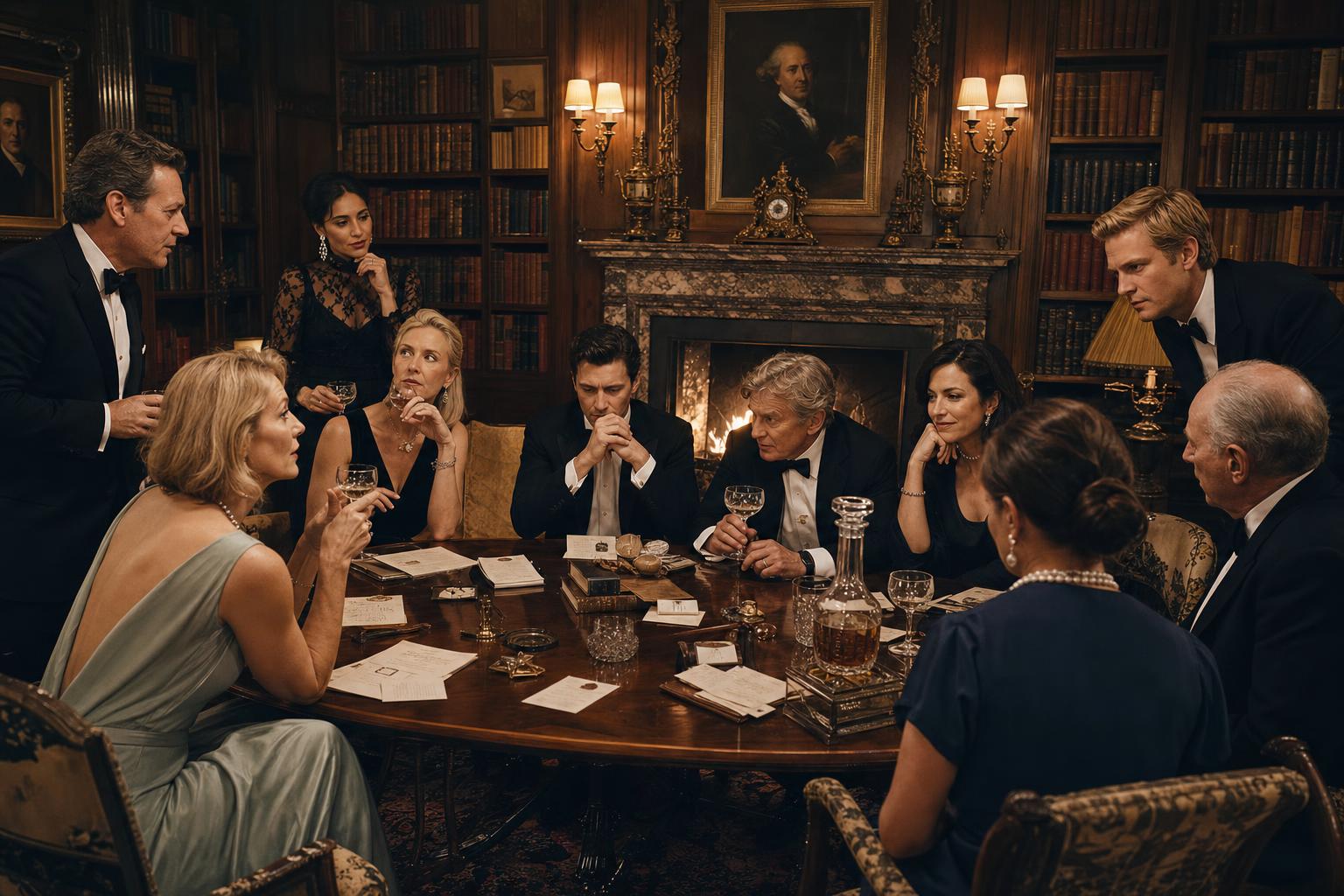
Introduction to Murder Mystery Games
Murder mystery games turn a social gathering into an interactive story where every guest becomes part of the plot. In a typical game, players take on fictional roles, uncover clues, question one another, and work toward solving a staged crime. The format blends party entertainment, light roleplay, and puzzle-solving, making it especially appealing for groups that want something more memorable than a standard dinner or game night.
Why Murder Mystery Games Work So Well for Groups
The core appeal of murder mystery games lies in their ability to involve everyone at once. Unlike many party games that leave some people waiting for a turn, a mystery game gives each participant a reason to engage from the beginning. Players may be suspects, witnesses, investigators, or characters hiding secrets of their own. That structure creates natural conversation and keeps energy high throughout the event.
For larger gatherings, this format is particularly effective because it transforms group size into an advantage. With 10 players, the story can include more motives, more alibis, and more unexpected twists. A bigger cast often leads to richer interactions, since players have more personalities to question and more information to piece together. The social dynamics become part of the challenge, which is one reason these games remain popular for birthdays, team events, and holiday parties.
What Players Can Expect
Most murder mystery games follow a simple structure, even when the story itself is dramatic. Guests usually receive character backgrounds before the event or at the start of play. As the game unfolds, they reveal information, respond to accusations, and search for hidden details that help explain what happened. Some games are heavily scripted, while others allow more improvisation.
Common Game Elements
A well-designed mystery game often includes several familiar features:
| Element | Purpose |
|---|---|
| Character roles | Give each player a unique identity and motive |
| Clue rounds | Release information gradually to build suspense |
| Secret objectives | Encourage roleplay and strategic interaction |
| Final accusation | Let players guess the culprit before the reveal |
These elements help maintain pacing and ensure that every participant has something meaningful to do. In many commercial kits, a full session lasts between 90 minutes and three hours, depending on complexity and group enthusiasm.
Why 10 Players Is an Ideal Number
A 10-player murder mystery often strikes the right balance between variety and manageability. Smaller games can feel limited in scope, while very large groups may become harder to organize. With 10 people, hosts can offer a story that feels expansive without becoming chaotic. There is enough room for layered relationships, conflicting testimonies, and side plots that make the investigation more immersive.
This size also supports a wide range of themes, from classic manor-house murders to 1920s speakeasies, masquerade balls, or modern crime settings. Because of that flexibility, 10-player murder mystery games are often among the most versatile options available, giving hosts plenty of ways to match the tone of their event and the personalities of their guests.
Why 10 Players Is an Ideal Group Size
The Sweet Spot Between Energy and Manageability
A 10-player group is often the ideal size for a murder mystery game because it balances social energy with practical gameplay. With fewer than eight players, the mystery can feel too narrow, with limited suspects, motives, and interactions. Once a group grows beyond twelve, however, the experience can become harder to manage, especially for hosts trying to keep everyone engaged. Ten players sits comfortably in the middle, creating a lively atmosphere without overwhelming the structure of the game.
In most murder mystery formats, each participant is assigned a distinct role, secret objectives, and background information. With ten people, writers and hosts have enough room to introduce meaningful complexity. There can be multiple red herrings, layered relationships, and conflicting testimonies, all without making the story confusing. This size allows the mystery to feel rich rather than crowded, which is one of the biggest reasons it works so well.
Better Role Distribution and Character Variety
A group of ten gives the game enough space for a diverse cast of characters. Instead of relying on a handful of broad stereotypes, the story can include a wider range of personalities, professions, and motives. That variety improves immersion because players are more likely to receive roles that feel unique and memorable.
Stronger Character Dynamics
With ten characters in play, the host can build stronger interpersonal connections into the plot. For example, one guest might be the victim’s business rival, another a jealous sibling, another a secret ally, and another a witness hiding key information. These overlapping relationships create natural tension and conversation, which are essential to a successful mystery night.
This number also helps quieter players participate more comfortably. In a very small group, each person may feel intense pressure to perform constantly. In a much larger group, quieter guests can disappear into the background. Ten players creates enough conversational space for different play styles, allowing both outgoing and reserved participants to contribute.
Easier Hosting and Smoother Pacing
From a hosting perspective, ten players is highly practical. It is large enough to feel like an event, yet still small enough for the organizer to manage invitations, costumes, seating, clues, and timing. Most homes can comfortably accommodate ten guests around a dining table or in a living room setup, which makes planning simpler than for larger parties.
A Manageable Number of Interactions
The number of possible one-to-one interactions rises quickly as groups get bigger. In a ten-player game, there are 45 possible pairings, which is plenty to generate intrigue while remaining manageable. By comparison, a 14-player group creates 91 possible pairings, nearly doubling the complexity. That difference affects everything from clue tracking to discussion flow.
Because of this, ten-player mysteries often maintain better pacing. Players have enough people to question and observe, but not so many that important details get lost. The host can also guide rounds, reveal evidence, and answer questions without constant interruptions.
Ideal for Social Engagement
Ten players is also excellent for creating a memorable social atmosphere. It is large enough for alliances, suspicion, and surprise reveals to feel dramatic, yet intimate enough that everyone can learn each other’s roles and stay invested in the outcome. In party gaming, engagement often drops when players wait too long for their turn to speak or act. A ten-person setup reduces that problem significantly.
For groups of friends, coworkers, or family members, this size encourages active participation, balanced storytelling, and consistent momentum, making it one of the most reliable formats for an entertaining murder mystery experience.
What Makes a Great Large-Group Mystery
Balancing Scale, Structure, and Suspense
A great large-group mystery does more than simply add extra suspects to a standard party game. For a group of 10 players, the experience must be designed to keep everyone involved, informed, and entertained without letting the story become chaotic. In smaller mysteries, a few dominant personalities can carry the action. In larger groups, however, the structure has to work harder. Every player needs a reason to participate, a distinct role to inhabit, and enough information to feel useful.
The best mysteries for bigger groups are built around shared momentum. That means the game should create frequent opportunities for interaction rather than relying on long monologues or a single investigator to drive the plot. A well-designed scenario gives each participant secrets, motives, and clues that connect naturally to several other characters. This web of relationships is what transforms a large gathering from a passive audience into an active investigation.
Strong Character Design Matters More in Bigger Games
In a 10-player mystery, character quality is often the difference between a memorable night and a confusing one. If roles feel interchangeable, players can lose interest quickly. The strongest games give each character a clear identity, a personal objective, and a believable connection to the crime. That does not mean every role must be equally dramatic, but it does mean every player should feel relevant.
Distinct Roles Prevent Players From Disappearing
When groups get larger, quieter guests can easily fade into the background unless the game actively pulls them in. Strong role design helps solve this problem. A suspicious business partner, a jealous sibling, a nervous assistant, and a secret witness all create different social energies. These differences encourage conversation because players are not just asking, “Who did it?” They are also asking, “What are you hiding?”
A practical benchmark used by many successful party mystery publishers is that every character should hold at least one unique clue and one unique motive. This ensures that no one is merely decorative. Even a player who is not central to the murder can still influence the investigation by revealing an alibi, exposing a lie, or connecting two unrelated facts.
Clue Distribution Must Be Fair and Manageable
One of the biggest challenges in large-group mysteries is information overload. If too many clues are introduced too quickly, players forget details. If too few are shared, the game stalls. Great mysteries solve this by pacing revelations in stages. Instead of dumping every fact at the beginning, they release information through rounds, scenes, or timed prompts.
Layered Clues Keep Everyone Engaged
Layered clue design works especially well for 10-player games because it supports both casual and competitive participants. Early clues should establish the setting and broad suspicions. Midgame clues can deepen relationships and expose contradictions. Late clues should sharpen the accusation phase and make the final reveal feel earned.
The most effective mysteries also mix clue types. Physical evidence, overheard conversations, hidden motives, and timeline inconsistencies appeal to different styles of thinking. Some players excel at logic, while others are better at reading behavior. A large-group game becomes richer when it allows both approaches to matter.
Pacing and Social Flow Are Essential
A mystery for 10 players should feel lively, not crowded. That requires thoughtful pacing. If one phase lasts too long, attention drops. If scenes move too fast, players miss important details. Many successful murder mystery formats aim for 90 to 150 minutes, which is long enough for immersion but short enough to maintain energy.
Built-In Interaction Creates Better Group Dynamics
The best large-group mysteries create natural reasons for players to circulate, question one another, and form temporary alliances. This social movement is crucial because it prevents the game from becoming a static reading exercise. For example, a scenario set at a family estate, corporate gala, or reunion dinner naturally supports side conversations and conflicting loyalties.
A strong host guide also improves flow. In larger games, clear instructions reduce confusion and help transitions feel smooth. When players understand when to reveal information, when to negotiate, and when to accuse, the mystery feels polished rather than overwhelming.
Replay Value and Accessibility Add Lasting Appeal
For larger gatherings, accessibility matters almost as much as story quality. A great mystery should be easy to explain to first-time players while still offering enough depth for experienced guests. Straightforward rules, readable character sheets, and flexible hosting options make a major difference, especially when not everyone arrives ready to roleplay at the same level.
Replay value can also come from variable endings, hidden side goals, or characters whose secrets reshape the story depending on how players interact. In a 10-player setting, those shifting dynamics often matter more than a single clever twist, because the real magic comes from how the group brings the mystery to life.
Best Murder Mystery Game Types for 10 Players
Why 10 Players Is an Ideal Group Size
A 10-player murder mystery game sits in a sweet spot between intimacy and complexity. With fewer than eight players, mysteries can feel too linear, and some roles may lack depth. With more than 12, the game can become harder to manage, especially for first-time hosts. At 10 players, there is enough room for layered motives, secret alliances, red herrings, and meaningful interaction without overwhelming the group.
This size also supports a balanced cast. Most well-designed mystery games for 10 include a victim, a murderer, several suspects with believable motives, and a few wildcard characters who complicate the investigation. That structure creates the tension that makes the genre so entertaining. Every player has a reason to participate, and no one is left feeling like an extra in the story.
Classic Whodunit Games
The classic whodunit remains one of the best formats for a 10-person gathering. These games usually revolve around a single murder, a fixed set of suspects, and a trail of clues that players uncover through conversation and deduction. Because the format is familiar, it works especially well for mixed groups where some guests are experienced roleplayers and others are completely new.
A 10-player cast gives this style enough variety to feel rich without becoming confusing. For example, a manor-house mystery might include the wealthy host, a jealous heir, a suspicious butler, a family friend, a business rival, and several guests with hidden agendas. The appeal of the classic format lies in clarity: players know the objective, understand the stakes, and can focus on interrogation and theory-building.
Best for Traditional Game Nights
Classic whodunits are particularly effective when the group wants a structured evening with a clear beginning, middle, and reveal. They often last between 1.5 and 3 hours, which suits dinner parties and weekend gatherings. Many commercial kits are written specifically for 8 to 10 players, making setup easier for hosts.
Themed Murder Mystery Games
For larger social groups, themed mysteries often create the strongest engagement. A strong setting gives players instant inspiration for costumes, accents, and behavior, which helps break the ice early. Popular themes for 10 players include 1920s speakeasies, masquerade balls, Hollywood scandals, haunted mansions, and cruise ship murders.
A themed game works well because it gives each character a vivid identity. In a 10-player 1920s mystery, for instance, the cast might include a jazz singer, bootlegger, detective, politician, socialite, and newspaper reporter. These recognizable archetypes make roleplay easier and encourage dramatic interactions. Immersion becomes a major advantage, especially when the host adds matching music, décor, or food.
Strong Themes That Scale Well
Not every theme fits every group size. For 10 players, the best themes are those that naturally support multiple suspects and intersecting relationships. Settings with built-in social tension, such as weddings, reunions, corporate retreats, or aristocratic estates, tend to produce the most satisfying gameplay because everyone has a plausible reason to be present.
Competitive Deduction Games
Some murder mystery formats lean more heavily into deduction than performance. In these games, players focus less on acting and more on gathering evidence, analyzing contradictions, and solving the case efficiently. This style appeals to groups that enjoy board games, escape rooms, or logic puzzles.
With 10 players, competitive deduction can become especially dynamic. The larger suspect pool increases uncertainty, while still allowing each participant enough speaking time to present an alibi or challenge another player’s story. Some games even assign secret objectives beyond solving the murder, such as protecting a scandal, exposing a thief, or hiding an affair. These secondary goals deepen the strategy and prevent the experience from becoming a simple guessing exercise.
Roleplay-Heavy Mystery Games
For outgoing groups, roleplay-heavy mysteries can be the most memorable option. These games prioritize character secrets, dramatic reveals, and improvisation over strict clue tracking. A 10-player cast is large enough to sustain side conversations and shifting alliances, which are essential to this format.
When Personality Drives the Game
Roleplay-centered mysteries work best when players are comfortable speaking in character and reacting creatively. In practice, that means the game may unfold differently each time, even with the same script. One group may turn a suspect into a comic relief figure, while another may create a tense psychological showdown. That unpredictability is part of the appeal.
Host-Led Versus Boxed Game Formats
The final choice often comes down to how much effort the organizer wants to invest. A boxed or downloadable game for 10 players offers convenience, prewritten roles, and clear instructions. A host-led custom mystery allows more flexibility and personalization, but it requires stronger planning and moderation. For most groups, a structured game with adaptable character notes provides the best balance between ease and replay value, especially when hosting a larger social event.
Top Murder Mystery Cases for 10 Players
Finding the right case for a group of ten is about more than simply picking a popular title. A larger cast needs balanced participation, clear motives, manageable complexity, and enough dramatic tension to keep every player engaged from the opening clue to the final accusation. In a ten-player format, the best murder mystery cases create room for alliances, suspicion, hidden agendas, and memorable reveals without overwhelming guests with too many disconnected details.
What Makes a Murder Mystery Case Work for 10 Players
A ten-player mystery sits in a sweet spot between intimate and expansive. With fewer than eight players, some games can feel too narrow, limiting the number of suspects and side plots. With more than twelve, pacing can become harder to control, especially for first-time hosts. At ten players, a case can support a fully developed suspect list, multiple red herrings, and a satisfying evidence trail while still allowing each participant enough speaking time.
The strongest cases for this group size usually assign every character a meaningful secret. That matters because player engagement rises when each guest has something to protect or reveal. In practical terms, a ten-person mystery should give each role a reason to interact with at least three or four others. This web of relationships keeps conversations active and prevents quieter players from fading into the background.
Key Design Features to Look For
A well-built case for ten players typically includes a central murder, a secondary scandal, and several personal conflicts. That layered structure helps the game feel rich rather than linear. If the mystery relies only on one clue chain, players may solve it too quickly. By contrast, a case with hidden affairs, financial motives, rivalries, or blackmail creates a more immersive experience.
Hosts should also look for flexibility. Some commercial mystery kits are written for exactly ten participants, while others allow expansion or contraction by one or two roles. That flexibility is useful because real-world gatherings often change at the last minute.
Best Types of Murder Mystery Cases for Larger Groups
Not every theme works equally well for ten players. Some settings naturally support a broad cast and dramatic motives, making them especially effective for larger groups.
Mansion and Country Estate Mysteries
The classic manor-house murder remains one of the best formats for ten players. A wealthy host, estranged relatives, staff members, business partners, and unexpected guests all fit naturally into the setting. This structure gives the case a familiar logic that players understand immediately, which reduces setup confusion.
A country estate mystery also supports strong visual roleplay. Characters can include the heir, the housekeeper, the lawyer, the family doctor, the scandal-prone socialite, and the mysterious outsider. Because these archetypes are recognizable, players often slip into character more easily, even if they have never attended a murder mystery before.
Why This Format Performs So Well
Estate mysteries work because everyone has a plausible reason to be present at the same place and time. That may sound simple, but it solves one of the biggest design problems in party mysteries: credibility. When all ten players belong in the story, the investigation feels smoother and more convincing.
1920s Speakeasy and Jazz Club Cases
A Prohibition-era setting is another excellent choice for ten players. Speakeasies, cabarets, and jazz clubs naturally bring together performers, gangsters, investors, police informants, and glamorous patrons. The result is a case with built-in tension and style.
These mysteries often succeed because they combine murder with organized crime, hidden debts, and secret identities. A victim in this setting might be a club owner, a singer, or a mob-connected fixer, giving nearly every character a believable motive. For hosts, this theme is especially appealing because costumes are easy to source and instantly recognizable.
Hollywood, Awards Night, and Celebrity Scandal Cases
Cases set in old Hollywood or at a modern awards gala are ideal when the group enjoys theatrical play. Ten players can easily fill roles such as actors, directors, agents, journalists, rivals, and sponsors. The social hierarchy in these settings creates immediate conflict, which helps conversations start quickly.
A celebrity mystery also benefits from public image versus private truth. One character may be hiding a career-ending affair, another may be covering up financial fraud, and another may be desperate for revenge after professional sabotage. These layers make the investigation feel dynamic rather than mechanical.
Masquerade Ball and High-Society Intrigue Cases
A masquerade setting adds mystery before the murder even begins. Masks, aliases, and secret meetings give ten-player groups plenty to explore. This type of case is particularly effective when the host wants a more elegant, suspenseful atmosphere.
Because identity can be partially concealed, masquerade cases often include misdirection that feels organic rather than forced. Players can trade rumors, challenge alibis, and question whether someone is truly who they claim to be. That ambiguity works especially well in a group of ten, where there are enough participants to sustain uncertainty without making the story impossible to follow.
Standout Case Structures That Keep 10 Players Engaged
Beyond theme, structure determines whether a mystery remains compelling through the full session. Most successful ten-player cases run between 90 minutes and three hours, depending on complexity. According to party game publishers and host guides, games in this range tend to maintain attention best because they allow enough time for discovery without causing fatigue.
The Balanced Suspect Model
In the strongest cases, all ten players are suspects in some way, even if a few are less likely than others. This is important because obvious innocence can reduce involvement. If one or two characters are clearly irrelevant, those players may disengage.
A balanced suspect model gives every participant a motive, means, or suspicious behavior. For example, one guest may have argued with the victim, another may have forged a document, another may have tampered with medication, and another may have lied about their whereabouts. Even if only one committed the murder, everyone has something to explain.
The Secret Objective Layer
Many modern mystery kits improve replayability by adding personal objectives beyond solving the crime. A character may need to recover a letter, protect a reputation, expose a rival, or secure an inheritance. These side goals are especially valuable in ten-player games because they create conversation even when the murder investigation temporarily slows.
Why Side Goals Matter
Without secondary objectives, players often focus only on waiting for the next clue. With side goals, they become active participants in shaping the story. That shift turns the event from a passive puzzle into a social strategy experience.
Cases That Work Best for Mixed Experience Levels
In many ten-person groups, some players will be enthusiastic roleplayers while others will be trying a murder mystery for the first time. The best cases accommodate both. They provide enough guidance for beginners while leaving room for improvisation.
The following table highlights what to prioritize when choosing a case:
| Feature | Why It Matters for 10 Players |
|---|---|
| Clear character briefs | Helps guests understand motives quickly |
| Multiple clue rounds | Prevents early stagnation |
| Flexible difficulty | Supports both beginners and experienced players |
| Strong relationship map | Encourages active discussion |
| Distinct character roles | Reduces confusion between suspects |
Choosing Based on Group Personality
A dramatic group may enjoy betrayal-heavy stories with blackmail and shocking reveals. A more casual group may prefer a humorous mystery with exaggerated characters and lighter stakes. Neither approach is inherently better; the right choice depends on how your guests like to interact.
If your players enjoy deduction, choose a case with stronger evidence logic and fewer random twists. If they prefer performance, select a story with vivid characters and interpersonal conflict. The most successful hosts match the case to the group rather than forcing the group into a style that does not fit.
Practical Hosting Insight
For ten players, it is often wise to choose a case where the murderer does not need advanced acting skills to succeed. Overly demanding villain roles can create imbalance if assigned to a shy guest. A well-designed case should let the culprit blend in through evidence and motive, not just performance ability.
How to Identify a Truly Memorable Case
A memorable ten-player murder mystery usually leaves guests talking about specific moments rather than only the final answer. They remember the forged will, the hidden engagement, the fake alibi, or the dramatic accusation that changed the room’s energy. That kind of impact comes from cohesive storytelling, not just clever clues.
The best cases for ten players create a sense that everyone mattered. Each character should influence the narrative, whether by revealing evidence, spreading suspicion, or forcing another player to confess a secret. When a mystery achieves that balance, the game feels less like a scripted party activity and more like a shared story unfolding in real time.
For hosts selecting from the many available options, the smartest approach is to prioritize structure, theme compatibility, and character depth. When those three elements align, a ten-player murder mystery becomes immersive, social, and satisfyingly unpredictable, setting up the rest of the planning process around invitations, roles, and atmosphere.
How to Choose the Right Case for Your Group
Choosing the best murder mystery case for a group of 10 is about more than picking an interesting title. The right case shapes pacing, participation, and overall enjoyment, especially in larger groups where energy can rise quickly and attention can split. A well-matched game keeps everyone involved, gives each player a meaningful role, and avoids the common problem of a few dominant personalities taking over the investigation.
Match the Case to Group Experience
One of the first things to consider is how familiar your group is with murder mystery games. If most players are new, a case with straightforward rules, clear character motivations, and structured clue reveals usually works best. Beginner-friendly games reduce confusion and help players focus on roleplay and deduction rather than mechanics. In contrast, experienced groups often enjoy layered plots, misleading evidence, and hidden alliances that create a more demanding challenge.
A useful benchmark is complexity. Many commercial mystery games rate difficulty on a scale from easy to advanced. For a mixed-experience group, moderate complexity is often the safest choice because it gives confident players enough to explore without overwhelming newcomers. This balance is especially important in a 10-player setting, where uneven understanding can slow the game.
Consider Group Personality and Play Style
Every group brings a different social dynamic. Some players love dramatic accents, improvisation, and theatrical reveals, while others prefer solving puzzles through logic and careful discussion. The best case fits the way your group naturally interacts. A highly performative case may shine with outgoing players, but a quieter group may engage more deeply with a structured investigation that emphasizes clues over acting.
Competitive vs. Collaborative Energy
Some mystery cases encourage players to protect secrets, mislead others, or pursue personal objectives alongside solving the crime. These formats can be exciting, but they work best with groups that enjoy friendly competition. If your players prefer teamwork, choose a case where information sharing is central and the mystery unfolds through collective deduction. The social tone of the game matters as much as the plot itself.
Check Character Balance for 10 Players
In larger games, character distribution becomes critical. A strong case gives each participant a reason to be present, a distinct personality, and at least one useful piece of information. If two or three roles feel underwritten, those players may disengage, which affects the entire table. Look for games specifically designed for 10 participants rather than smaller cases stretched with optional roles.
What Balanced Roles Look Like
Balanced cases usually include a mix of suspects, witnesses, red herrings, and socially influential characters. They also avoid making the murderer too obvious or too passive. Ideally, every player should have moments to speak, react, and contribute. Reviews often reveal whether a game succeeds here, and they are worth checking before buying.
Think About Time, Setting, and Practical Setup
A 10-player murder mystery typically lasts between 90 minutes and three hours, depending on complexity and hosting style. Before choosing a case, consider how much time your group can realistically commit. A dense Victorian mystery may be brilliant, but not if your event only allows a short evening window. Theme also matters. Settings like 1920s speakeasies, haunted manors, or modern corporate scandals appeal to different audiences and can influence costume enthusiasm and immersion.
Format and Hosting Needs
Some cases require a host to manage clues and pacing, while others allow everyone to play. Host-led games can run more smoothly, especially for beginners, but they require extra preparation. Downloadable kits are often cheaper and faster to access, while boxed sets may include props that enhance atmosphere. Choosing a case that fits your space, schedule, and hosting capacity helps the event feel seamless rather than stressful.
Use Reviews and Replay Value as Final Filters
Before making a final choice, compare player feedback, especially comments about clarity, engagement, and whether all 10 roles feel necessary. If you host regularly, replay value is another smart consideration. Some games offer alternate endings, variable clues, or flexible character assignments, which can make future sessions more worthwhile for social groups or clubs.
Hosting Tips for a Smooth Game Night
Plan the Experience Before Guests Arrive
A successful murder mystery party for ten players depends as much on smart hosting as it does on the game itself. Larger groups create more energy, but they also introduce more chances for confusion, delays, and side conversations. Preparing the structure of the evening in advance helps everyone stay engaged and ensures the mystery unfolds at the right pace.
Start by reading the game materials thoroughly at least a few days ahead of time. Many hosts underestimate how helpful it is to know the character backgrounds, clue flow, and likely sticking points before the first guest arrives. If the game includes secret envelopes, evidence cards, or timed reveals, organize them in the order they will be used. A simple folder system or labeled trays can save valuable time during the event.
Set Up the Space for Group Interaction
With ten players, room layout matters more than many hosts expect. A cramped table can make it difficult for guests to move, whisper, or form temporary alliances, all of which are central to a good mystery game. Ideally, create one main gathering area for announcements and several smaller spaces where players can talk privately.
Seating and Movement
If your game night is seated around dinner, assign places only if the game benefits from it. Otherwise, flexible seating often works better because it encourages natural interaction. Make sure there is enough lighting for players to read clues comfortably. According to common event-planning guidance, guests generally need at least 24 inches of table width per person for comfortable dining, and that spacing becomes even more important when papers, props, and drinks are involved.
Keep the Rules Clear and Simple
One of the fastest ways to lose momentum is to begin with a long, complicated explanation. Instead, give players only the information they need to start. Explain the objective, the basic flow of the game, and any important rules about revealing clues or staying in character. Then let the action begin.
Use a Quick Host Briefing
A short opening script can be extremely effective. In two or three minutes, clarify whether guests should solve the mystery competitively or collaboratively, how rounds will work, and when they can ask the host for help. Clear expectations reduce awkward pauses and help less experienced players feel comfortable participating.
Match Food and Drinks to the Format
Food should support the game, not interrupt it. For a ten-player mystery night, choose items that are easy to eat and unlikely to damage printed materials. Finger foods, small plates, and pre-portioned desserts usually work better than messy meals that require constant serving.
If alcohol is part of the evening, keep it moderate. Mystery games rely on memory, attention, and conversation, so overly strong drinks can weaken the experience. Offering water and nonalcoholic options also helps guests stay focused over a two- to three-hour event, which is the typical length for many commercial murder mystery kits.
Manage the Energy of a Larger Group
Ten players can produce wonderful chemistry, but they can also split into dominant talkers and quiet observers. As host, watch for guests who are being left out and gently bring them back into the action by asking what their character thinks or whether they noticed a clue. Balanced participation makes the game more satisfying for everyone.
Keep the Night Moving
Pacing is essential. If a discussion drags, introduce the next clue or announce a time check. If players seem lost, offer a subtle hint rather than a full explanation. Good hosting is not about controlling every moment; it is about keeping the mystery lively, organized, and immersive so each guest has a real chance to enjoy the story.
Common Challenges With Larger Groups
Coordination Becomes More Complex
Running a murder mystery game with ten players can be highly entertaining, but larger groups introduce logistical challenges that smaller tables rarely face. The first issue is coordination. With ten participants, simply finding a date and time that works for everyone becomes harder, and once the game begins, keeping all players aligned on rules, objectives, and pacing requires more active hosting. In many social games, setup time increases as group size grows, and murder mystery formats are no exception because each player often receives unique character information, motives, and clues.
Managing Attention and Engagement
A second challenge is maintaining consistent engagement. In a ten-player game, quieter participants can easily fade into the background while more outspoken players dominate discussions. This can reduce enjoyment and make the mystery feel less interactive for part of the group. Balanced participation is essential because the genre depends on conversation, suspicion, and collaborative deduction. Hosts often need to encourage turn-taking or create moments where every character has a reason to speak.
Information Overload and Pacing
Larger groups also create a greater volume of information. Ten suspects mean more alibis, more relationships, and more possible contradictions to track. For new players especially, this can feel overwhelming. A mystery that is too dense may slow momentum, while one that is too simple can feel unsatisfying. The best games for larger groups usually solve this by distributing clues in stages, allowing players to absorb details gradually rather than all at once.
Side Conversations Can Derail the Mystery
Another common issue is the rise of side conversations. In a group of ten, it is natural for players to split into pairs or small clusters, but too much fragmentation can cause important clues to be missed. If one conversation reveals a critical fact while others are distracted, the overall experience becomes uneven. Strong game structure helps prevent this by creating designated rounds for group discussion and private exchanges.
Space, Noise, and Practical Setup
Physical setup matters more with larger groups as well. Ten players need enough seating, room to move, and an environment where dialogue can still be heard clearly. In a noisy setting, subtle clues and accusations lose impact. Food, props, and printed materials also require more preparation at this size. Even simple hosting details, such as name tags or character sheets, can make a measurable difference in keeping the experience organized and immersive for everyone involved.
Conclusion: Planning the Perfect 10-Player Mystery
A 10-player murder mystery offers one of the best balances between variety, energy, and manageability. With enough participants to create layered motives, secret alliances, and dramatic reveals, this group size supports richer storytelling than smaller games while remaining far easier to organize than very large party formats.
Why Ten Players Works So Well
For hosts, ten guests usually means every character can feel essential to the plot. That matters because engagement rises when each player has meaningful information, a clear objective, and at least one relationship that shapes the investigation. In many published mystery games, this size also allows a healthy mix of suspects, witnesses, and red herrings without overwhelming first-time players.
Making the Experience Memorable
The strongest results come from matching the case to your group’s style. A theatrical crowd may enjoy costume-heavy period mysteries, while casual players often prefer modern settings with simpler rules. Preparation is the real advantage: sending character details early, setting expectations, and choosing a game with structured clue delivery can dramatically improve pacing.
Choosing the Right Case
When comparing titles, focus on replay value, difficulty, and hosting support. Some games emphasize deduction, while others lean into roleplay and comedy. The best choice is the one that fits your guests’ comfort level and keeps everyone involved from the opening scene to the final accusation.
FAQ: Murder Mystery Games for 10 Players
How long does a 10-player murder mystery game usually take?
Most murder mystery games for 10 players run between 90 minutes and 3 hours, depending on complexity, hosting style, and whether dinner is included. Boxed party games often stay closer to two hours, while immersive hosted experiences can stretch longer. If your group is new to the format, plan extra time for character introductions, clue reading, and discussion so nobody feels rushed.
Are murder mystery games for 10 players hard to organize?
They are usually easier to organize than people expect. A 10-player format is large enough to create interesting suspect dynamics but still small enough for one host to manage comfortably. Many commercial kits include invitations, character sheets, evidence, and step-by-step instructions. Digital downloads can simplify preparation even further, especially for last-minute events. The key is assigning roles early and making sure each guest understands the tone, whether it is serious, theatrical, or comedic.
What if not everyone likes acting?
That is completely normal. Most games do not require strong acting skills. Players mainly need to read their role information, ask questions, and react to clues. Some guests enjoy performing dramatically, while others prefer solving the puzzle quietly. A well-designed game supports both styles, which is why 10-player mysteries work well for mixed groups.
Can 10 players all get meaningful roles?
Yes, and that is one of the biggest advantages of this group size. In a 10-player game, writers can give each character a motive, secret, or relationship that matters to the case. This creates better engagement than oversized party formats, where some guests may feel less involved. For birthdays, team events, or dinner parties, 10 players is often a sweet spot for balanced gameplay and lively conversation.


