

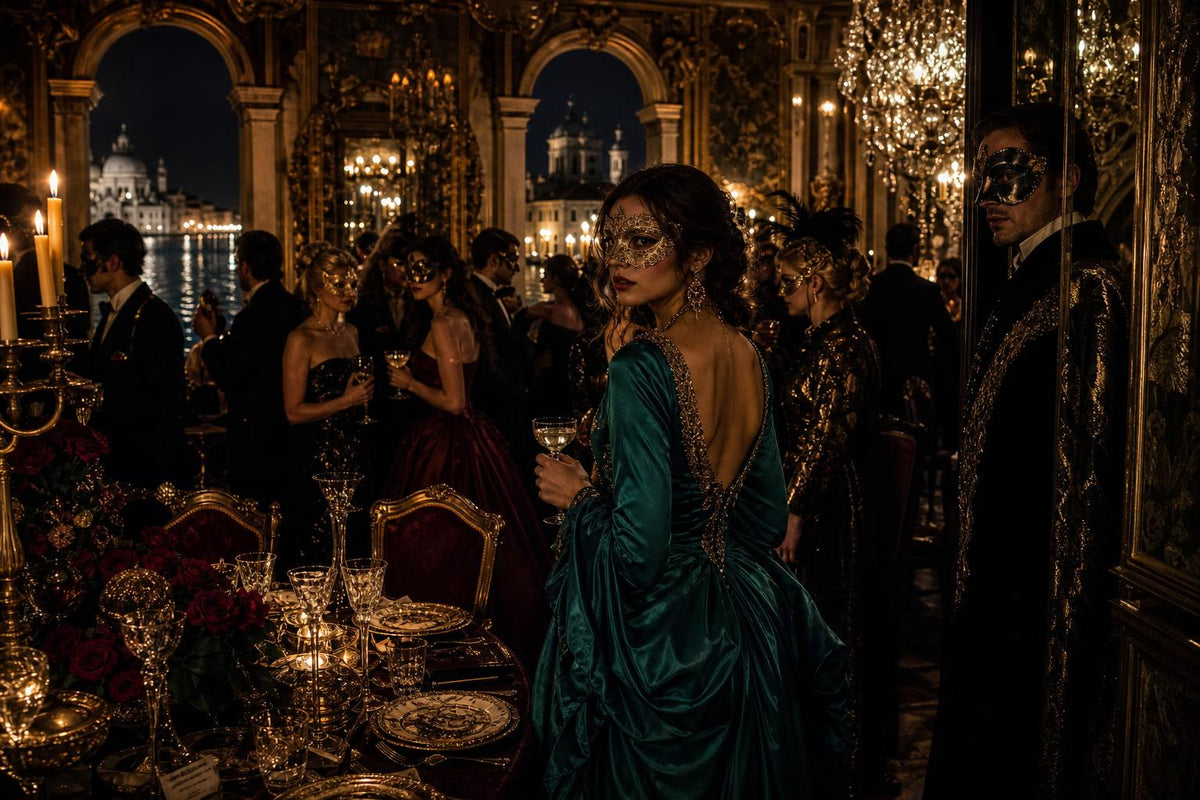
Introduction to a Venetian Murder Mystery
Venice has long occupied a special place in the popular imagination, and that makes it an ideal setting for an immersive murder mystery. With its moonlit canals, hidden courtyards, and grand palazzos, the city naturally evokes secrecy, elegance, and danger. For a masquerade party, a Venetian murder mystery creates an atmosphere that feels both theatrical and intimate, drawing guests into a world of whispered alliances and carefully concealed identities.
Why Venice Is the Perfect Backdrop
A successful murder mystery depends on setting, and few locations offer as much dramatic potential as Venice. Built across more than 100 small islands and connected by over 400 bridges, the city is famous for its labyrinthine layout. That geography is more than picturesque; it supports the suspense at the heart of the game. Narrow passageways, candlelit salons, and masked strangers all contribute to a sense that anyone could be hiding a motive.
The Power of the Masquerade
The Venetian mask is not just a decorative accessory. Historically, masks played a significant role in Venice’s Carnival traditions, allowing wearers to move across social boundaries with unusual freedom. In a party game, that tradition becomes a storytelling tool. Masks heighten mystery by obscuring expression and identity, making every conversation feel layered with possibility. A compliment may be sincere, a confession may be false, and a friend may be the prime suspect.
Setting the Tone for the Game
The appeal of a Venetian murder mystery lies in its blend of glamour and tension. Guests are not simply attending a themed event; they are stepping into a narrative shaped by intrigue, betrayal, and performance. Rich visual details such as black lace, gold accents, antique invitations, and classical music help establish the mood from the moment players arrive. These elements encourage participation and make even first-time players feel part of the drama.
A Story That Invites Participation
Unlike passive entertainment, a murder mystery asks every guest to contribute. One player may be a noble with debts, another a performer guarding a scandal, and another a merchant with political ambitions. This interactive structure keeps energy high and conversation flowing, which is why murder mystery parties remain popular for birthdays, corporate events, and seasonal celebrations. Industry surveys on experiential entertainment have shown growing demand for participatory social events, especially those that combine roleplay with elegant design. In a Venetian setting, that demand is met with unforgettable style and suspense.
Why Venice Fits a Masquerade Mystery
A City Built on Secrecy and Spectacle
Venice feels almost designed for a masquerade mystery. Few cities combine beauty, theatricality, and hidden history so completely. Built across more than 100 small islands linked by canals and over 400 bridges, Venice creates a setting where movement is fluid, visibility is limited, and every turn suggests a secret. In a murder mystery, atmosphere matters as much as plot, and Venice delivers both in abundance.
The city’s architecture strengthens this effect. Gothic palaces rise directly from the water, narrow alleys twist unexpectedly, and candlelit interiors seem to preserve centuries of whispered intrigue. Unlike modern cities with open grids and bright lighting, Venice naturally encourages suspense. A masked guest slipping through a stone passage or boarding a gondola at midnight feels believable rather than exaggerated. That sense of plausibility helps players immerse themselves in the story.
The Historical Link Between Masks and Mystery
Masks are not simply decorative in Venice; they are rooted in the city’s cultural identity. The Venetian Carnival dates back centuries, with formal recognition often traced to the 13th century. During Carnival, masks allowed citizens of different classes to mingle more freely, temporarily softening social boundaries. This tradition gave Venice a rare association with anonymity, role-playing, and concealed motives, all of which are essential ingredients in a strong mystery narrative.
Anonymity as a Storytelling Device
A masquerade changes how characters interact. When faces are hidden, status becomes uncertain and intentions become harder to read. That uncertainty creates natural tension. In a mystery game, a mask can symbolize deception, protection, seduction, or fear. A noble host, a jealous rival, or a silent servant can all become more compelling when identity is partially obscured. Venice makes this device feel authentic, not forced, because masking has long been part of its public rituals.
Water, Isolation, and Dramatic Movement
Venice also supports mystery through its geography. Because transport historically depended on boats, arrivals and departures feel more dramatic than in ordinary settings. A suspect crossing the Grand Canal or disappearing into a private dock introduces visual flair while reinforcing isolation. Water surrounds every scene, creating the impression that escape is possible yet difficult.
A Setting Rich in Social Intrigue
Venice was once one of Europe’s most powerful maritime republics, especially between the 14th and 16th centuries. Its wealth came from trade, diplomacy, and political strategy, making it a city historically associated with ambition and hidden agendas. That legacy suits murder mystery storytelling perfectly. Behind elegant banquets and masked dances, there can be disputes over inheritance, forbidden romance, political betrayal, or stolen jewels.
Elegance with an Edge
What makes Venice especially effective is the contrast between glamour and danger. Murano glass chandeliers, velvet costumes, and gilded ballrooms create visual opulence, while shadowed canals and locked chambers introduce menace. This duality keeps a masquerade mystery engaging because the setting feels luxurious without losing suspense. Readers and players are drawn to the fantasy, yet they remain alert to the threat beneath the surface.
Why It Resonates with Modern Audiences
Modern audiences continue to associate Venice with romance, artistry, and enigma. Films, novels, and travel imagery have reinforced its reputation as a city of beauty tinged with melancholy. That cultural familiarity helps guests quickly understand the tone of a masquerade mystery set there, allowing the game to establish intrigue from the very first invitation.
What Makes This Party Game Special
A Theme That Feels Instantly Cinematic
What sets Murder Mystery in Venice apart from ordinary party games is its ability to turn a social gathering into a fully immersive experience. The Venetian setting carries a natural sense of drama, elegance, and intrigue. With canals, masked identities, noble families, and whispered secrets as part of the atmosphere, players are not simply answering trivia or completing challenges. They are stepping into a story that feels rich, theatrical, and memorable from the moment the game begins.
A masquerade theme is especially powerful because it gives guests permission to play a role. Costumes and masks create a layer of mystery that enhances every interaction. Even shy guests often find it easier to participate when they can hide behind a character. This makes the game more inclusive than many traditional party activities, which often rely on loud competition or quick improvisation.
Built for Social Interaction
Conversation Becomes the Gameplay
Unlike board games that keep players focused on pieces, cards, or screens, this format makes conversation the central mechanic. Guests gather clues by talking, observing behavior, and comparing stories. That structure naturally encourages mingling, which is one of the biggest goals of any successful party. Instead of forcing awkward introductions, the game gives everyone a reason to approach one another.
This social design is particularly effective for mixed groups. At many events, friends stay with familiar circles, but a murder mystery creates cross-group interaction. One guest may hold a clue, another may have a motive, and someone else may be hiding a key detail. Because information is distributed across the room, participation feels purposeful rather than random.
A Balance of Structure and Freedom
Easy to Host, Rich to Experience
Another reason this party game stands out is its balance between organization and creativity. The host typically receives a clear framework, including character backgrounds, clues, and event progression. That structure reduces planning stress while still leaving room for spontaneous moments. Players can interpret their roles in different ways, which means no two games unfold exactly alike.
According to event industry surveys, interactive entertainment consistently ranks among the most memorable features of themed gatherings because guests remember what they did, not just what they saw. A murder mystery supports that principle perfectly. Rather than being passive attendees, guests become active participants in the evening’s unfolding drama.
Strong Replay Value
Even when the same core mystery is used, the experience can feel different depending on the guest list, performance styles, and pacing. One group may lean into comedy, while another emphasizes suspense and deduction. That flexibility gives the game high replay value, especially for hosts who enjoy seasonal parties, birthday celebrations, or corporate events.
Ideal for a Masquerade Atmosphere
Style and Story Work Together
Many party games can be adapted to a theme, but few feel as naturally suited to a masquerade as a Venetian murder mystery. The visual elegance of masks, candlelight, and period-inspired décor supports the narrative rather than distracting from it. Every design choice, from invitations to music, can reinforce the game world.
Because of that harmony between setting, storytelling, and guest interaction, the party becomes more than entertainment. It becomes a shared experience with suspense, laughter, and memorable reveals, making it especially effective for hosts who want an evening that feels distinctive and elevated.
Core Story and Theme Setup
A memorable masquerade murder mystery begins with a strong narrative spine. In a Venice-inspired party game, the story should evoke candlelit palazzos, hidden motives, and the tension of a city built on secrets. Venice is an ideal setting because its history naturally supports intrigue. During the height of the Venetian Republic, the city was a major trading power, connecting Europe with the East and attracting merchants, nobles, diplomats, and spies. That mix of wealth and ambition makes the backdrop feel both elegant and dangerous.
Building the Venetian Atmosphere
The theme works best when the setting feels specific rather than generic. Instead of simply calling it an Italian masquerade, anchor the game in recognizable Venetian imagery such as moonlit canals, masked guests arriving by gondola, and music echoing through a grand palazzo. The annual Carnival of Venice, which dates back to at least the 12th century, is especially useful as inspiration because masks historically allowed people to blur class distinctions and conceal identity. That detail is perfect for a murder mystery, where deception is part of the entertainment.
A host can frame the evening around a lavish celebration held by a powerful patron, perhaps a merchant prince, a noble family, or a cultural society. The event should feel glamorous on the surface while hinting at private rivalries underneath. Guests are not merely attending a costume party; they are stepping into a world where every smile may hide a grudge.
Establishing the Central Crime
At the heart of the game is the murder itself, and it should be introduced with dramatic clarity. A strong setup often begins with a victim who has influence, enemies, and secrets. In a Venetian setting, that could be an art collector unveiling a priceless relic, a politician negotiating a dangerous alliance, or a courtesan who knows too much about the city’s elite. The murder should matter to everyone in the room, giving each character a reason to care.
Why Motive Matters
The most engaging mysteries rely on credible motives. Jealousy, revenge, inheritance disputes, political betrayal, and stolen trade agreements all fit naturally within the Venetian theme. For example, if the victim controlled access to a lucrative spice route, several suspects could benefit from their death. Historically, Venice built enormous wealth through maritime commerce, so trade-based conflict feels authentic and raises the stakes beyond a simple personal feud.
Designing Characters That Fit the Theme
Characters should reflect the social complexity of Venice. A balanced cast might include nobles, merchants, artists, servants, foreign visitors, and clergy. This variety creates richer interactions because each role brings a different perspective and a different kind of secret. A masked countess may be protecting her family name, while a ship captain may be hiding smuggling debts. Distinct personal agendas make conversations more dynamic and help players stay immersed.
Secrets Beneath the Masks
Masks are more than decoration in this format; they symbolize the game’s central idea that identity is unstable. A well-designed story uses that symbolism directly. Characters can conceal forbidden romances, financial ruin, political loyalties, or false names. When players slowly reveal these layers, the theme becomes part of the mechanics rather than just the décor.
Creating Emotional and Dramatic Tension
To keep the story compelling, the tone should balance elegance with unease. Venice offers that contrast naturally: beauty on the surface, danger underneath. References to foggy canals, locked salons, whispered accusations, and disappearing documents help maintain suspense. The result is a setting where every interaction feels theatrical, giving the masquerade party both style and narrative momentum.
Characters, Masks, and Roles
A masquerade murder mystery succeeds when identity becomes both a costume and a clue. In a Venice-inspired setting, characters are not simply party guests with scripted lines; they are social archetypes shaped by secrecy, status, and spectacle. The right combination of masks and roles gives players a reason to perform, suspect, and deceive. It also creates the dramatic tension that makes a mystery party memorable, because every conversation can carry two meanings: what a character says openly and what they hide behind the mask.
Why Character Design Matters
Strong character design is the engine of immersion. In live mystery games, participants engage more confidently when they understand who they are, what they want, and how they relate to others. Research on role-play and interactive events consistently shows that players respond best to clear motivations and manageable secrets, rather than overly complex backstories. A well-built role should give each guest enough information to act decisively while leaving room for improvisation.
In a Venetian masquerade theme, this matters even more because the setting naturally encourages intrigue. Historically, masks in Venice were used not only during Carnival but also in gambling houses, political meetings, and romantic encounters. That cultural history gives the party host a rich framework for assigning roles that feel authentic. A merchant can hide debts, a noble can conceal scandal, and a performer can overhear truths others miss. Each role gains dramatic power when tied to the social fluidity masks once enabled.
The Symbolism of Masks
Masks are more than decorative accessories. They function as visual storytelling tools that signal personality, class, and intent before a player says a word. In a murder mystery, that instant impression helps guests step into character quickly, especially if some attendees are new to role-play.
Traditional Venetian Styles
Several classic Venetian mask styles can reinforce role identity. The Bauta, with its angular shape and full-face coverage, suggests authority, secrecy, and public power. It suits magistrates, wealthy patrons, or politically connected figures. The Colombina, often ornate and half-faced, conveys elegance and flirtation, making it ideal for courtesans, socialites, or performers. The long-beaked Medico della Peste creates an unsettling presence and works especially well for physicians, alchemists, or suspicious outsiders. A simple black Volto can fit almost anyone, which makes it useful for characters whose plain appearance hides dangerous motives.
Using Masks as Clues
A host can also turn masks into evidence. A cracked mask may suggest a struggle. Gold leaf on one guest’s gloves might match another guest’s missing headdress. A ribbon tied inside a mask could identify ownership or reveal a secret alliance. These details make the costume part of the investigation rather than mere decoration. When physical props support the narrative, players feel that the world is coherent and interactive.
Choosing Roles That Create Conflict
The best mystery casts are balanced. Every player should have a purpose, a relationship to the victim, and at least one tension point with another guest. In practical terms, that means mixing social ranks, professions, and private agendas so that suspicion can move naturally around the room.
Effective Role Types
A Venetian masquerade often benefits from a cast that includes nobles, merchants, artists, servants, clergy, diplomats, and criminals. Nobles bring inheritance disputes and political rivalries. Merchants introduce money problems, smuggling, or business betrayal. Artists and musicians can act as observers who move between groups without raising alarm. Servants often know more than anyone expects, which makes them excellent witnesses or manipulators. Clergy and diplomats add moral pressure and international stakes, widening the mystery beyond a single household.
Secrets, Objectives, and Alibis
Each role should include three essentials: a public identity, a private secret, and a specific objective for the evening. For example, a countess may publicly seek to honor the host, secretly plan to recover stolen letters, and privately suspect her brother of blackmail. These layered goals encourage active play. Alibis should also be imperfect. If every guest has a flawless timeline, the mystery stalls. If every guest has no explanation at all, the story feels chaotic. The most engaging games give players partial truths that can be challenged through conversation.
Matching Roles to Guests
Not every participant wants the same level of performance. Some enjoy dramatic speeches, while others prefer solving clues quietly. A good host assigns roles accordingly. Outgoing guests often thrive as suspects with influence, such as nobles or opera stars. More reserved players may enjoy investigators, scholars, or attendants whose power comes from observation. This approach improves participation because players feel comfortable rather than overwhelmed.
Encouraging Embodiment
Simple prompts help guests inhabit their roles. A signature phrase, a rumor they believe, or a relationship they must protect can transform hesitant attendees into active participants. Even small instructions, such as “never answer directly when asked about the docks,” create behavior that feels theatrical and suspicious. Over the course of the evening, these cues turn costumes into characters and characters into the living heart of the mystery.
How the Game Works for Guests
Stepping Into Character
For guests, a murder mystery in Venice begins the moment they arrive. Instead of simply attending a party, each person becomes part of a living story shaped by secrets, alliances, and suspicion. In most masquerade-style mystery games, every guest receives a character profile before the event or at check-in. This profile usually includes background information, personality traits, relationships with other characters, and private objectives. These details give every player a reason to participate, even if they are naturally shy or unfamiliar with roleplaying.
The Venetian setting makes this especially immersive. Masks create instant intrigue, while the atmosphere of candlelight, classical music, and Renaissance-inspired décor helps guests suspend disbelief. A merchant, noble, artist, diplomat, or courtesan can all fit naturally into the world of the game, allowing players to engage with the story in a way that feels theatrical without being intimidating.
Understanding the Core Objective
At its heart, the game asks guests to solve a fictional murder while protecting their own secrets. Most players are not passive observers. They must gather clues, question other guests, compare stories, and decide whom to trust. In many professionally designed mystery games, the structure is built around three simultaneous goals: uncovering the killer, revealing hidden motives, and advancing personal agendas. This layered format keeps the experience dynamic, because even innocent characters may lie for reasons unrelated to the crime.
Guests quickly learn that not every conversation is straightforward. One player may conceal a financial scandal, another may be hiding a forbidden romance, and someone else may know a crucial fact but refuse to share it without leverage. This creates the social tension that makes murder mystery games so memorable. According to event industry surveys, interactive entertainment consistently ranks among the most engaging party formats because it encourages direct participation rather than passive watching.
How a Typical Round Unfolds
Arrival and Briefing
The first phase usually begins with a host introduction. Guests are welcomed, given the basic rules, and reminded of the setting. They may receive envelopes containing clues, maps, or event-specific instructions. At this stage, the host explains practical expectations, such as staying in character when possible, mingling with multiple people, and avoiding the invention of facts not included in the game materials.
Investigation and Social Play
Once the game starts, guests circulate freely. They ask questions, trade information, and observe behavior. This part often feels like a blend of theater, puzzle-solving, and networking. The best guest experience comes from active curiosity. Players who move around the room, revisit earlier conversations, and compare conflicting accounts tend to uncover the most useful insights.
Some games introduce timed clue drops or scripted announcements. For example, a new witness statement may be revealed after dinner, or a hidden letter may appear midway through the evening. These developments keep momentum high and prevent the mystery from becoming static.
Accusation and Reveal
Near the end, guests usually submit their theories. They may identify the murderer, explain the motive, and describe how the crime was committed. In some formats, points are awarded for correct deductions and completed side objectives. The final reveal is often one of the most entertaining moments, especially when players discover how many misleading assumptions shaped their investigation.
Tips for Guests to Enjoy the Experience
Play Boldly, Not Perfectly
Guests do not need acting experience to succeed. The goal is not a flawless performance but enthusiastic participation. Speaking in character, asking direct questions, and reacting dramatically can all enhance the atmosphere. Confidence matters more than polish.
Listen for Motive and Contradiction
Strong players pay attention to inconsistencies. If one guest claims to have been in the ballroom at midnight while another places them on the terrace, that contradiction may matter. Motive is equally important, since mystery plots often revolve around jealousy, revenge, inheritance, or political ambition.
Balance Fun With Strategy
The most successful guests combine social energy with careful observation. They enjoy the masquerade, but they also track names, timelines, and relationships. A simple note card can help players remember critical details, especially in games with ten or more characters, where overlapping secrets can become complex very quickly.
Why Guests Find It So Memorable
A masquerade murder mystery works because it transforms guests from spectators into collaborators. They are not just attending a themed evening; they are shaping it through every accusation, confession, and alliance. That sense of involvement is what elevates the event from a standard costume party into an experience guests will talk about long after the masks come off.
Planning the Perfect Masquerade Party
A memorable masquerade party begins with intentional planning, especially when the event is built around a Venetian murder mystery theme. The goal is to create an atmosphere that feels elegant, secretive, and immersive from the moment guests arrive. Every decision, from invitations to lighting, should reinforce the sense of stepping into another world. Venetian masquerades historically flourished during the Renaissance, when masks allowed nobles and commoners to mingle anonymously, adding intrigue and social freedom. That legacy makes the masquerade format especially suited to a mystery game, where hidden motives and concealed identities heighten suspense.
Setting the Tone Before Guests Arrive
The experience should start well before the party itself. Invitations are the first opportunity to establish mood and expectations. A digital invite can work, but a printed card with ornate typography, gold accents, or deep jewel tones instantly signals formality and drama. Include clear guidance about attire, mask styles, arrival time, and whether guests will receive character roles in advance. If the murder mystery involves assigned personas, sending background details early gives guests time to prepare and arrive in character.
Choosing a Strong Visual Theme
A cohesive visual theme helps transform an ordinary gathering into a believable Venetian scene. Rich colors such as burgundy, emerald, sapphire, black, and gold evoke the opulence associated with Carnival in Venice. Fabrics matter as much as color. Velvet table runners, lace overlays, satin ribbons, and candlelight-inspired décor create texture and depth. If real candles are impractical, warm LED alternatives can still produce a soft glow that flatters masks and costumes.
A successful room design does not require a huge budget. Strategic details often have the greatest impact. Feather centerpieces, antique-style frames, faux pearls, and gilded trays can create a luxurious impression without overwhelming the space. Background music should also support the illusion. Instrumental classical selections, baroque pieces, or cinematic tracks with dramatic strings work especially well during guest arrival and clue-reveal moments.
Costumes, Masks, and Guest Participation
Costuming is central to the masquerade experience because it turns guests from observers into participants. Encourage formalwear or theatrical attire rather than generic party clothes. Long dresses, tailored suits, capes, gloves, and embellished accessories all contribute to the atmosphere. Masks should feel distinctive but still allow guests to eat, drink, and speak comfortably. Venetian-inspired styles such as the bauta, colombina, and volto are popular choices because they are recognizable and visually striking.
Helping Guests Feel Confident
Not every guest will be comfortable assembling an elaborate outfit alone, so practical support increases participation. Share inspiration images, affordable shopping suggestions, or simple DIY ideas ahead of time. Some hosts also keep a small supply of extra masks at the entrance. This is useful because it preserves the theme even if someone arrives unprepared. According to event industry surveys, themed parties with clear dress guidance typically see stronger guest engagement than events with vague costume expectations, largely because people feel more certain about how to participate.
Designing the Space for Mystery and Flow
The layout of the venue should support both social interaction and gameplay. Guests need enough room to mingle, question one another, and move between activity zones without congestion. A dedicated welcome area can introduce the theme, while separate spaces for dining, clue discovery, and dramatic reveals help the evening feel structured. If possible, create one especially striking focal point, such as a masked portrait wall, a faux canal-inspired backdrop, or a grand table displaying envelopes, clues, and suspect profiles.
Lighting and Atmosphere
Lighting has an outsized effect on immersion. Bright overhead lights can flatten the mood, while layered lighting creates intimacy and suspense. Use lamps, wall sconces, string lights, and candles or LED candles to build visual contrast. Slightly dim surroundings encourage guests to lean into the mystery, but visibility must remain high enough for reading clues and navigating safely. Fragrance can also shape perception. Subtle scents like amber, rose, or sandalwood can make the environment feel more luxurious, though they should never be overpowering.
Food, Drinks, and Thematic Details
A masquerade menu should feel refined yet manageable. Finger foods and small plates are ideal because they allow guests to continue mingling and investigating. Italian-inspired selections such as bruschetta, risotto bites, stuffed mushrooms, and tiramisu cups fit the Venetian theme naturally. Signature drinks add another layer of storytelling. A deep red cocktail can hint at danger, while a sparkling gold mocktail reinforces glamour.
Integrating the Mystery Into Hosting
The strongest parties weave the murder mystery into every element rather than treating it as a separate activity. Place cryptic notes beside platters, name cocktails after suspects, or hide clues within place cards and décor. Timing matters as well. Build the evening in stages so guests have moments to socialize, gather evidence, and react to new revelations. When the environment, menu, costumes, and pacing all support the same narrative, the masquerade becomes more than a party and starts to feel like a living story.
Decor, Food, and Atmosphere
Setting the Scene with Venetian Elegance
A successful masquerade party depends on creating an environment that feels mysterious, opulent, and immersive from the moment guests arrive. For a “Murder Mystery in Venice” theme, the decor should evoke the romance of canals, candlelit palazzos, and secretive masked gatherings. Rich jewel tones such as deep burgundy, emerald, navy, and gold instantly suggest Venetian luxury, while black accents add dramatic tension that suits the mystery element.
Tables dressed in velvet or satin runners can transform an ordinary room into a theatrical setting. Gold candelabras, antique-style frames, and clusters of faux pearls help reinforce the period feel without requiring an extravagant budget. Masks displayed as centerpieces or hung along walls create visual continuity and remind guests that disguise is central to the evening’s intrigue.
Lighting as a Storytelling Tool
Lighting has a major impact on atmosphere, and softer illumination is usually more effective than bright overhead fixtures. Warm candles, LED lanterns, and dimmed lamps can make the space feel intimate and suspenseful. In event design research, ambient lighting is consistently linked to emotional engagement because it shapes how guests perceive comfort, elegance, and drama. For this theme, a slightly shadowy room encourages whispered conversations and heightens the sense that clues may be hidden anywhere.
Designing a Venetian-Inspired Menu
Food should feel indulgent yet practical, especially since guests may be socializing, investigating clues, and staying in character. Venetian cuisine offers excellent inspiration because it combines refinement with approachable small plates. Cicchetti, the traditional Venetian answer to tapas, are ideal for a mystery party. Bite-sized servings of crostini, marinated vegetables, olives, cheeses, and seafood allow guests to eat easily while mingling.
A menu can also include risotto balls, herb-roasted chicken skewers, and miniature pastries filled with custard or chocolate. These choices feel elevated without becoming too formal. If you want to reference Venice more directly, seafood options such as shrimp, smoked salmon, or calamari can nod to the city’s maritime history, which has shaped its cuisine for centuries.
Drinks That Match the Mood
Beverages should support the theme visually as well as gastronomically. Serve sparkling wine, Italian-inspired cocktails, or nonalcoholic spritzes in elegant glassware to enhance the sense of occasion. Deep red drinks and golden cocktails complement the color palette beautifully. A signature drink with a thematic name, such as “The Doge’s Secret” or “Canal of Shadows,” adds personality and gives guests another talking point during the game.
Building an Atmosphere Guests Remember
Atmosphere is more than decor and food; it is the emotional texture of the evening. Music is especially important here. Instrumental classical pieces, Italian opera selections, or cinematic tracks with suspenseful undertones can quietly reinforce the setting without overpowering conversation. Scent can also contribute. Notes of amber, sandalwood, or light floral fragrance can make the room feel layered and luxurious.
Encouraging Immersion Through Details
Small details often create the strongest impression. Personalized place cards, faux clue scrolls, and staff or hosts dressed in period-inspired attire make the experience feel intentional. When every visual and sensory element supports the narrative, guests are far more likely to suspend disbelief and fully embrace the masquerade mystery.
Hosting Tips for a Smooth Experience
Set the Scene Early
A successful masquerade murder mystery depends on clear preparation before guests arrive. Send invitations at least two to three weeks in advance so attendees have time to plan costumes, especially if masks or Venetian-inspired outfits are encouraged. Include practical details such as start time, expected duration, dress code, and whether guests will receive character roles beforehand. This reduces confusion and helps everyone arrive ready to participate.
Atmosphere matters just as much as organization. Venice-themed décor, candle-style lighting, gold accents, and dramatic music can transform an ordinary room into an immersive setting. Even small touches, such as labeled tables, themed drinks, or printed clue cards, make the event feel polished. According to event planning research, guests often form first impressions within the first few minutes of arrival, so the entrance, greeting, and visual setup deserve extra attention.
Keep the Game Structure Simple
The best party hosts understand that clarity creates confidence. Murder mystery games are most enjoyable when players know what they are supposed to do at each stage. Before the action begins, explain the basic rules in a short welcome speech. Cover how clues will be shared, when accusations can be made, and how character objectives work. Avoid overloading guests with too much information at once.
Make Role Distribution Easy
If your group includes first-time players, assign roles that match personalities and comfort levels. Outgoing guests may enjoy suspicious or theatrical characters, while quieter participants often do better with roles that still matter but require less improvisation. A group of eight to twelve players is often ideal because it allows enough interaction without becoming chaotic. If your guest count is larger, consider pairing some attendees or adding nonessential observer roles to keep the experience manageable.
Balance Entertainment With Practical Hosting
A smooth evening requires attention to pacing, food, and flow. Serve menu items that are easy to eat while standing or mingling, since complicated meals can interrupt gameplay. Finger foods, small desserts, and signature cocktails usually work better than a formal plated dinner. If masks are worn for long periods, provide water stations and comfortable seating so guests can take short breaks without losing momentum.
Plan for Timing and Transitions
Most murder mystery parties run best at two to three hours, which is long enough for suspense but short enough to maintain energy. Build in natural transitions between introductions, clue reveals, and the final accusation. Soft background music can fill quiet moments and prevent awkward pauses. It also helps to keep a printed schedule nearby so you can guide the room without appearing rushed.
Prepare for the Unexpected
Even well-planned parties benefit from flexibility. Some guests will arrive late, forget costume details, or need extra help understanding their role. Keep a few spare masks, printed summaries, and simple backup instructions on hand. If someone becomes confused, a quick private explanation is often enough to bring them back into the story.
Encourage Participation Without Pressure
Not every guest will perform dramatically, and that is perfectly fine. The goal is shared fun, not professional acting. Encourage interaction by asking open-ended questions and rewarding curiosity, but never force anyone into the spotlight. When guests feel comfortable, they are far more likely to engage naturally with the mystery and each other.
Who This Game Is Best For
Ideal Players and Party Settings
Murder Mystery in Venice is best suited to hosts and guests who want more than a standard party game. It works especially well for groups that enjoy light roleplay, social deduction, and immersive storytelling without needing the complexity of a full tabletop role-playing campaign. Because the theme blends intrigue, masks, and elegant deception, it naturally fits a masquerade party, upscale birthday celebration, Halloween gathering, or themed corporate event.
The game is particularly appealing to adults and older teens who like interactive entertainment. Players do not need acting experience to participate successfully. In fact, many murder mystery formats are designed so that even quieter guests can contribute by asking questions, sharing clues, and forming theories. This makes the experience more inclusive than people often expect. A well-structured mystery gives every participant a reason to engage, whether they prefer being dramatic and outspoken or observant and analytical.
Great for Mixed Personality Groups
Social, Creative, and Competitive Guests
One of the strongest advantages of this type of game is its flexibility across different personality types. Extroverted players often enjoy stepping into character, making bold accusations, and driving the energy of the room. Meanwhile, introverted guests may prefer studying evidence, noticing inconsistencies, and solving the case through careful reasoning. That balance can create a richer experience than games that reward only speed or loud participation.
It is also ideal for groups that want a shared activity with a clear structure. Unlike open-ended mingling, a murder mystery gives guests a common purpose. According to event planning trends, interactive experiences continue to grow in popularity because they encourage conversation and reduce awkwardness among people who may not know each other well. In a Venice-themed setting, costumes and masks add another layer of engagement, helping guests feel part of the story almost immediately.
Best Group Size and Experience Level
This game is usually best for medium-sized groups, where there are enough players to create suspense but not so many that key details get lost. It is an excellent choice for first-time mystery players, seasoned party hosts, and anyone looking to turn a themed evening into something memorable and participatory.
Conclusion: Bring Venice to Life
A Venice-themed murder mystery does more than entertain guests for an evening; it transforms a gathering into a vivid, shared story filled with intrigue, elegance, and suspense. By combining masked identities, candlelit décor, period-inspired costumes, and a carefully paced game, hosts can recreate the atmosphere that makes Venice such an enduring symbol of mystery and romance.
Why This Theme Works So Well
The strength of this party concept lies in its natural blend of visual drama and interactive storytelling. Venice already evokes secret meetings, grand palazzos, hidden motives, and lavish celebrations, making it an ideal backdrop for a murder mystery. When guests step into character, they become active participants rather than passive attendees, which increases engagement and creates memorable moments throughout the event.
Turning Details Into Immersion
Small touches often make the biggest difference. A richly worded invitation, a playlist of classical or Italian-inspired music, and authentic-looking masks can instantly set expectations. Even simple menu choices such as sparkling drinks, antipasti, and decadent desserts help reinforce the setting and make the experience feel cohesive.
Creating a Night Guests Remember
Whether you are planning an intimate dinner party or a larger masquerade celebration, the key is to balance structure with spontaneity. Give guests enough clues, character motivation, and atmosphere to guide the evening, while leaving room for improvisation, laughter, and surprise. With the right preparation, your murder mystery in Venice can feel less like a party and more like stepping into another world.
FAQ
What makes a Venice-themed murder mystery ideal for a masquerade party?
A Venice setting naturally complements a masquerade because masks, intrigue, and hidden identities are already part of the city’s cultural image. This creates instant atmosphere and gives guests a clear roleplaying framework. Compared with standard party games, murder mysteries also encourage interaction, making them especially effective for groups of 8 to 20 players, where conversation drives the experience.
How long should the game last?
Most hosted murder mystery games run between 90 minutes and 3 hours, depending on group size, complexity, and whether dinner is included. For a masquerade party, a two-hour format often works best because it balances storytelling with socializing, costume photos, and refreshments.
Do guests need acting experience?
Not at all. The best games are designed for beginners, with character cards, prompts, and simple objectives that help everyone participate comfortably. More confident guests can improvise, while quieter players can still contribute by asking questions, sharing clues, and forming suspicions.
What should the host prepare in advance?
The host should organize invitations, assign characters early, prepare masks or dress guidance, and set the mood with candlelight, Venetian décor, and dramatic music.


