

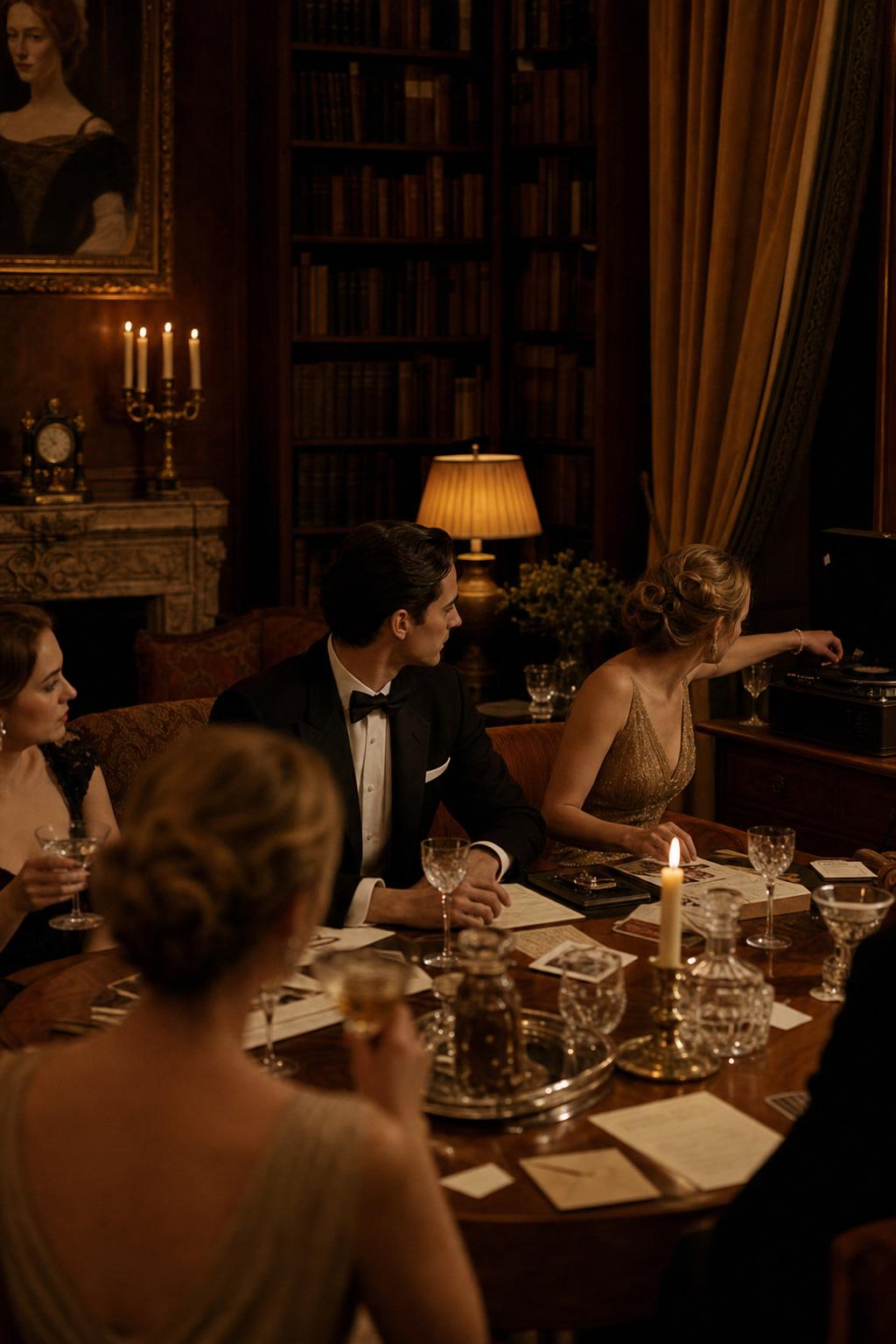
Introduction to Murder Mystery Music
Murder mystery music does far more than fill silence during a party. It shapes the emotional atmosphere of the room, guiding guests into a world of suspicion, intrigue, and theatrical fun. For a game night built around hidden motives and dramatic reveals, the right soundtrack becomes an essential storytelling tool rather than a decorative extra. From the first guest arrival to the final accusation, music helps transform an ordinary living room into a convincing scene of elegant danger.
Why Music Matters in a Mystery Setting
Sound has a measurable effect on how people interpret events and environments. Studies in psychology and media have shown that tempo, harmony, and instrumentation can influence tension, anticipation, and even memory. In a murder mystery game, those effects are especially useful. A slow piano phrase, a distant violin, or a jazzy noir arrangement can make players feel as though they have stepped into a detective film or a candlelit manor filled with secrets.
More importantly, music supports immersion. Guests are often balancing roleplay, clue gathering, and social interaction at the same time. A carefully chosen soundtrack helps maintain the illusion of the setting, whether the theme is a 1920s speakeasy, a Victorian estate, or a modern crime thriller. Without that sonic backdrop, even the best-written mystery can feel flatter and less cohesive.
The Core Elements of Murder Mystery Music
Not every dramatic song fits a mystery playlist. The most effective selections usually share a few recognizable qualities. They often feature moderate or slow tempos, rich instrumental textures, and an undercurrent of suspense. Genres such as classical chamber music, dark jazz, cinematic orchestral scores, and ambient sound design are especially popular because they create tension without overwhelming conversation.
Mood Over Distraction
The best murder mystery music enhances the experience without demanding attention. Lyrics can sometimes pull players out of character, especially if the words are familiar or too emotionally direct. Instrumental tracks are often the safer choice because they provide atmosphere while leaving space for dialogue, deduction, and surprise reveals. This is why many hosts lean toward film-score-inspired playlists or vintage jazz recordings with subtle dramatic flair.
Matching Music to the Game’s Theme
A successful playlist should reflect the specific style of the mystery. A glamorous masquerade murder benefits from waltzes, harpsichord passages, or operatic undertones, while a detective noir scenario works better with smoky saxophone, brushed drums, and moody piano. If the game has a horror edge, sparse ambient textures and dissonant strings can heighten unease.
Pacing the Evening
Music should also evolve with the event. Early tracks can feel elegant and inviting as guests arrive, then gradually become more suspenseful as clues emerge. During major reveals, a sharper cinematic cue can amplify the drama. Thoughtful pacing keeps the energy aligned with the story, helping every twist feel more vivid and memorable for everyone involved.
Creating a More Memorable Game Night
When chosen with care, murder mystery music becomes part of the narrative architecture of the evening. It encourages participation, reinforces setting, and gives each scene a stronger emotional pulse. For hosts who want their game night to feel polished, immersive, and genuinely thrilling, the soundtrack is not an afterthought but one of the most effective tools available.
Why Music Matters at Game Night
A murder mystery party lives or dies by atmosphere, and music is one of the fastest ways to create it. Before guests solve clues, question suspects, or accuse the wrong person, they respond emotionally to the room. Sound shapes that response almost instantly. In game design and event planning alike, background music is often treated as a subtle detail, yet it has a measurable effect on attention, memory, pacing, and mood. At a game night built around suspense, that effect becomes even more important.
Music Sets the Emotional Tone
When people walk into a room filled with tense strings, smoky jazz, or cinematic piano, they immediately understand that this is not an ordinary gathering. Music acts like a narrative shortcut. It signals whether the evening should feel elegant, eerie, playful, or dangerous. In a murder mystery setting, that tonal cue helps guests step into character more quickly and engage with the fiction without needing long explanations.
Research in consumer and cognitive psychology has repeatedly shown that music influences emotional interpretation. The same environment can feel warmer, more dramatic, or more suspenseful depending on the soundtrack. That emotional framing matters at game night because immersion encourages participation. Guests who feel the mood are more likely to speak in character, pay attention to clues, and invest in the unfolding story.
It Helps Players Suspend Disbelief
Even the best-written mystery game asks players to pretend a little. A dining room becomes a manor house, a friend becomes a detective, and a printed clue becomes critical evidence. Music helps bridge the gap between reality and imagination. Instead of relying only on decorations or costumes, hosts can use sound to make the fictional world feel continuous.
Sound Creates a Shared Mental Space
A carefully chosen playlist gives everyone the same emotional reference point. If the music suggests 1920s intrigue, noir tension, or gothic suspense, players begin imagining the same kind of story world. That shared mental space reduces awkwardness and makes roleplay feel more natural. In practical terms, music lowers self-consciousness, which is often the biggest barrier for first-time players.
Music Supports Pacing and Flow
Game nights can lose momentum when transitions feel clumsy. Guests may pause too long between rounds, drift into unrelated conversation, or struggle to sense when the energy should rise. Music can quietly solve that problem. Faster, more rhythmic tracks can accompany clue reveals or timed challenges, while slower instrumental pieces work well during discussion and deduction.
Hosts often underestimate how useful music is as a pacing tool. In film, soundtracks guide viewers through tension and release. At game night, playlists can do something similar. A subtle shift from ambient background music to more dramatic orchestration tells players that something important is happening. That cue keeps the evening moving without constant verbal direction from the host.
It Reduces Silence Without Competing for Attention
Silence can be uncomfortable in social games, especially when players are thinking, reading, or deciding what to say next. A good playlist fills those gaps and keeps the room feeling alive. At the same time, game-night music should not dominate the experience. Lyrics that are too recognizable or volume that is too high can distract from conversation and clue-solving.
The Best Game-Night Music Stays Functional
Instrumental tracks are often the safest choice because they support concentration. Film scores, dark jazz, chamber music, and low-tempo electronic ambience all work well depending on the mystery theme. Volume matters just as much as genre. A useful rule is that guests should never need to raise their voices to be heard. The ideal soundtrack is noticed emotionally more than intellectually.
Music Makes the Event More Memorable
People tend to remember experiences as a combination of story and sensation. Music strengthens both. A playlist can make a particular reveal feel shocking, a suspect entrance feel theatrical, or a final accusation feel genuinely climactic. Later, guests may not recall every clue, but they will remember how the night felt.
There is also a practical branding benefit for hosts. A distinctive soundtrack makes the event feel curated rather than improvised. That matters whether the gathering is a casual party at home or a polished hosted event. Memorable sensory details increase the chance that guests will talk about the experience afterward, share photos or videos, and want to attend the next mystery night.
Music Encourages Social Confidence
Not every guest arrives ready to perform. Some are shy, some do not know the rules yet, and some need time to warm up socially. Music helps smooth that early phase by giving the room energy before conversation fully takes off. It removes the starkness of an empty soundscape and makes interactions feel less exposed.
In that sense, music is not just decoration. It is a social tool, a pacing device, and an immersion engine. For a murder mystery game night, it turns a simple gathering into an experience that feels cinematic, cohesive, and alive.
Core Elements of a Mystery Playlist
A strong mystery playlist does more than fill silence. It shapes tension, guides pacing, and helps players feel as if they have stepped into a dimly lit manor, a smoky jazz club, or a rain-soaked city street. For a murder mystery game night, music becomes an invisible host, subtly directing emotion without interrupting conversation. The best playlists balance atmosphere with practicality, creating a soundscape that supports clues, character reveals, and dramatic accusations.
Atmosphere as the Foundation
The first core element of a mystery playlist is atmosphere. Mystery stories rely on emotional suggestion, and music is one of the fastest ways to establish it. Minor keys, slow tempos, and layered instrumentation often create suspense because listeners naturally associate these qualities with uncertainty and danger. Film score research has shown that dissonance and unresolved harmonies increase feelings of tension, which is why so many classic thriller soundtracks use them so effectively.
A playlist for game night should reflect the setting of the mystery. A Victorian whodunit may call for chamber music, piano nocturnes, or orchestral pieces with elegant restraint. A noir detective theme works better with brushed drums, upright bass, muted trumpet, and smoky jazz vocals. If the mystery has a modern psychological edge, ambient electronic tracks with pulsing rhythms can create a more unsettling tone. Matching the music to the narrative world helps guests stay immersed from the moment they arrive.
Pacing the Night Through Sound
A mystery playlist should also support the rhythm of the evening. Not every moment in a game night carries the same emotional weight, so the music should evolve accordingly. Early in the event, tracks can be intriguing but relatively light, encouraging mingling and conversation. As the investigation deepens, the music can become darker, slower, or more dramatic. During key reveals or accusation rounds, a more intense musical backdrop can heighten anticipation.
Building Musical Phases
One effective approach is to divide the playlist into phases that mirror the structure of the game. The opening phase introduces the world with stylish, inviting tracks. The middle phase increases tension with more suspenseful selections. The final phase should feel urgent and cinematic, supporting the climax without overwhelming players. This structure keeps the playlist from feeling repetitive and gives the night a natural emotional arc.
For example, a three-hour mystery party might begin with elegant instrumental jazz for the first 45 minutes, shift into moodier orchestral or ambient tracks for the next 90 minutes, and finish with sharper, more dramatic cues during the final reveal. Intentional pacing makes the playlist feel like part of the storytelling rather than random background noise.
Instrumental Versus Vocal Choices
Another essential element is deciding how much of the playlist should be instrumental. In most cases, instrumental music works best because lyrics can compete with dialogue, clue reading, and roleplay. Since murder mystery games depend on listening carefully, songs with prominent vocals may distract players or make it harder to follow the action.
When Vocals Can Work
Vocals are not always a problem, however. They can be useful during arrival, dinner service, or breaks between major scenes. A torch song, a blues standard, or a haunting indie ballad can add personality if placed strategically. The key is moderation. If every track includes lyrics, guests may focus more on the songs than on the mystery itself. Instrumentals usually provide the most flexible backdrop, especially during active gameplay.
Consistency Without Monotony
A great mystery playlist needs a coherent identity, but it should not sound identical from start to finish. Consistency comes from shared mood, genre, or instrumentation. Variety comes from changes in tempo, texture, and intensity. This balance prevents listener fatigue while preserving immersion.
A playlist that jumps abruptly from classical strings to upbeat pop can break the illusion of the game. On the other hand, 20 nearly identical suspense tracks may fade into the background so completely that they lose emotional impact. The strongest playlists maintain a recognizable tone while introducing enough contrast to keep the ear engaged. Curation matters more than sheer length.
Volume, Length, and Practical Use
Even the best track selection can fail if the playlist is not practical for live use. Volume should remain low enough for easy conversation, generally around the level of soft restaurant background music. If guests must raise their voices, the music is too loud. Sound quality also matters; poorly mixed or distorted tracks can feel more irritating than atmospheric.
Planning for Duration
Length is equally important. A playlist should exceed the expected event time so it does not loop too quickly. For a two- to three-hour game night, four hours of music is a safe target. Streaming data shows that listeners notice repetition quickly in social settings, especially when a playlist contains fewer than 40 tracks. Building in extra material helps preserve the illusion of a living, unfolding scene.
Thoughtful mystery playlists succeed because they combine atmosphere, pacing, restraint, and usability into one seamless experience, allowing every clue, suspicion, and dramatic pause to land with greater effect.
Best Genres for Suspense and Intrigue
Choosing the right music genre can transform a casual gathering into a gripping whodunit. In a murder mystery game night, sound does more than fill silence. It shapes pacing, sharpens emotional cues, and quietly guides players toward suspicion, urgency, or uneasy laughter. The most effective genres for suspense and intrigue share one trait: they create atmosphere without overpowering conversation. Because players need to hear clues, debate motives, and stay immersed in the story, the ideal soundtrack balances tension, subtlety, and dramatic color.
Classical and Orchestral Scores
Classical music remains one of the strongest choices for mystery settings because it carries emotional depth without relying on lyrics. String sections, piano motifs, and restrained crescendos can suggest secrecy, danger, or revelation in a way that feels elegant rather than distracting. Composers such as Claude Debussy, Camille Saint-Saëns, and Dmitri Shostakovich offer pieces that range from delicate unease to full dramatic intensity.
Why orchestral music works so well
Orchestral tracks are especially effective because they mirror the emotional structure of a mystery. Slow passages can underscore investigation scenes, while sharper movements heighten moments of accusation or surprise. Film score traditions have proven this for decades. According to industry reports from the global film music market, soundtrack-driven listening has grown steadily through streaming platforms, showing how strongly audiences connect instrumental music with narrative immersion. For a game night, that same principle helps players feel as though they are inside a cinematic plot.
Jazz Noir and Lounge
Few genres evoke intrigue as immediately as jazz noir. Smoky saxophone lines, brushed drums, upright bass, and moody piano instantly suggest hidden motives and late-night secrets. This style works particularly well for murder mysteries set in the 1920s, 1930s, or 1940s, but it also suits modern stories with a stylish, urban edge.
The appeal of subtle sophistication
Jazz noir adds personality without overwhelming the room. Unlike highly dramatic orchestral pieces, it can sit in the background while still reinforcing a sense of danger and elegance. A slow instrumental jazz track can make guests feel as though every glance across the table matters. If your game includes detectives, socialites, or shadowy suspects, this genre supports the theme beautifully.
Best use cases for jazz noir
Jazz noir is ideal during guest arrivals, character introductions, and early clue gathering. It creates an immediate mood of sophistication while leaving room for conversation. As the night progresses, slightly darker or more dissonant jazz selections can deepen the tension.
Dark Ambient and Cinematic Electronica
For hosts who want a more modern or psychological atmosphere, dark ambient music and cinematic electronica are powerful options. These genres often use drones, echoing textures, low-frequency pulses, and sparse melodic fragments to create unease. Rather than announcing suspense loudly, they let it creep in gradually.
Building tension through texture
Dark ambient works because it triggers anticipation. Research in music psychology has shown that low tones, unresolved harmonies, and irregular rhythmic patterns often increase feelings of uncertainty in listeners. In a murder mystery setting, that uncertainty is valuable. It keeps players alert and subtly reinforces the idea that something is wrong beneath the surface.
This genre is especially effective for stories involving hidden rooms, betrayal, psychological twists, or contemporary crime themes. It can also bridge transitions between scenes, helping the evening feel cohesive and immersive.
Gothic and Victorian-Inspired Instrumentals
If your mystery game leans toward candlelight, manor houses, and old family secrets, gothic instrumentals are a natural fit. Organ, harpsichord, cello, and minor-key piano pieces can create a sense of age, decay, and restrained menace. These sounds are strongly associated with classic detective fiction and period thrillers.
Matching music to setting
The closer the soundtrack matches the narrative setting, the stronger the immersion. A Victorian murder mystery with modern pop in the background can feel disjointed, while a carefully chosen gothic playlist makes every clue feel more believable. This is why themed entertainment experiences, from escape rooms to immersive theater, invest heavily in sound design. Music helps players suspend disbelief and commit to the world around them.
Minimalist Piano and Chamber Music
Not every mystery needs overt drama. Sometimes the most effective suspense comes from restraint. Minimalist piano and chamber music offer a quieter, more intellectual tone that suits refined mysteries and puzzle-heavy games. Repeating motifs and subtle harmonic shifts can create emotional tension without drawing too much attention.
When less is more
This genre works best during investigation phases, especially when players are reading evidence, solving riddles, or discussing timelines. Because the arrangements are sparse, they support concentration while still maintaining atmosphere. For hosts concerned about music becoming intrusive, this is one of the safest and most versatile choices.
Blending genres for a dynamic playlist
The strongest murder mystery playlists often combine several genres rather than relying on one style all night. Classical pieces can open the evening with grandeur, jazz noir can support social interaction, and dark ambient tracks can intensify the final reveal. This layered approach keeps the soundtrack from feeling repetitive and allows the music to evolve with the story.
A well-structured playlist should reflect the rhythm of the game itself. Early tracks can be inviting and mysterious, middle selections can become tenser and more complex, and later music can feel urgent or ominous as accusations escalate. By choosing genres that support suspense, intrigue, and narrative flow, hosts can turn background music into one of the most memorable elements of the entire experience.
Matching Music to Game Themes
Why theme-first music selection matters
A murder mystery game feels more convincing when the soundtrack supports the world players are stepping into. Music shapes expectation before a single clue is revealed. In tabletop design and live event planning, audio is often treated as environmental storytelling, and research in consumer psychology consistently shows that background music influences mood, attention, and perceived immersion. For a game night, that means the right playlist can make guests feel as if they have entered a foggy Victorian manor, a smoky jazz club, or a glamorous 1920s estate.
Matching music to game themes begins with identifying the emotional core of the scenario. A classic whodunit usually benefits from restrained tension, elegant pacing, and subtle unease. By contrast, a campy mystery party may call for playful suspense and theatrical flair. The goal is not simply to choose “mysterious” songs, but to select tracks whose instrumentation, tempo, and atmosphere reinforce the setting. Theme alignment makes the experience feel intentional rather than random.
Building a soundtrack around setting
The easiest way to match music to a game theme is to start with place and period. If your mystery is set in Victorian London, chamber music, solo piano, and dark orchestral pieces can suggest candlelit rooms and social formality. If the game takes place on a luxury train in the 1930s, jazz, swing, and Art Deco-inspired instrumentals instantly establish time and class. For a modern detective thriller, ambient electronic textures or minimalist cinematic scores can create a sharper, more contemporary edge.
Period authenticity versus modern accessibility
Strict historical accuracy is not always necessary. In fact, many hosts get better results by choosing music that feels emotionally accurate rather than museum-precise. A neo-noir playlist with modern instrumental jazz may work beautifully for a 1940s-inspired mystery because it captures the same emotional language. This is especially useful when guests have varied tastes. The soundtrack should support the game, not distract from it with overly academic choices.
A practical approach is to blend era-specific anchors with accessible modern tracks. For example, one-third authentic period music, one-third cinematic instrumental pieces, and one-third subtle ambient tracks often creates a balanced listening experience. This keeps the room immersive while avoiding repetition over a two- or three-hour session.
Matching music to mystery tone
Not every murder mystery aims for the same emotional response. Some are eerie and psychological, while others are witty, glamorous, or even absurd. Tone should guide the energy of the playlist. Slow strings, distant piano, and low drones work well for suspense-heavy games where clues unfold gradually. Upbeat jazz or quirky orchestration fits social mysteries that emphasize character banter and surprise reveals. Gothic themes often benefit from organ, choir, or dramatic classical passages, used sparingly to avoid overwhelming conversation.
Tempo, dynamics, and player focus
For most game nights, moderate or slow tempos are more effective than high-energy tracks. Music between roughly 60 and 100 beats per minute tends to sit comfortably in the background, allowing players to talk, think, and role-play. Sudden volume spikes, aggressive percussion, or lyrical songs with prominent vocals can interrupt deduction and dialogue. Instrumentals are usually the safest choice because they provide atmosphere without competing for attention.
The table below shows how theme, tone, and musical style can align.
| Game theme | Best musical style | Mood created |
|---|---|---|
| Victorian manor | Chamber music, dark classical, piano | Elegant tension |
| 1920s speakeasy | Jazz, swing, brushed drums | Glamour and intrigue |
| Noir detective case | Instrumental jazz, muted trumpet, ambient score | Suspicion and grit |
| Gothic castle | Organ, strings, choral ambience | Dread and drama |
| Modern thriller | Minimal electronic, cinematic ambient | Urgency and focus |
Structuring the playlist across the night
A strong playlist should evolve with the game. Early arrivals need welcoming music that introduces the setting without feeling too intense. Once the mystery begins, the soundtrack can become more focused and atmospheric. During clue reveals or accusation rounds, slightly darker or more dramatic tracks help heighten tension. This progression mirrors film scoring, where music supports narrative movement rather than staying emotionally flat.
Creating musical phases
Divide the playlist into sections that reflect the evening’s rhythm. The opening phase should be social and inviting. The investigation phase can become subtler, with repetitive, low-distraction instrumentals. The final reveal phase may include richer orchestration or more pronounced suspense motifs. If your playlist runs about 90 minutes, it can be looped once for a typical party, though a 2.5-hour list usually feels more natural and less repetitive.
Hosts should also test transitions in advance. A jarring shift from light cocktail jazz to horror strings can break immersion unless the game itself changes tone sharply. Smooth sequencing is just as important as track selection. Crossfading, consistent volume levels, and genre continuity all help the soundtrack feel curated.
Common mistakes to avoid
Many playlists fail because they prioritize famous songs over functional atmosphere. Recognizable tracks can pull players out of character, especially if they associate the song with another film, meme, or event. Another common issue is lyrical overload. Even excellent songs can become distracting when guests are reading clues or interrogating suspects. Finally, avoid making every track ominous. Constant intensity causes listener fatigue, reducing the impact of truly dramatic moments.
A better strategy is to think like a director. Every piece of music should serve the room, the pacing, and the story world players are inhabiting. When soundtrack choices reflect theme with care, the mystery feels deeper, richer, and far more memorable.
Building the Perfect Playlist Flow
A great murder mystery playlist is not just a collection of songs; it is a carefully paced soundtrack that shapes tension, guides emotion, and keeps players immersed from the first clue to the final reveal. The best flow mirrors the structure of the evening itself. As guests arrive, music should feel intriguing but not overpowering. As the plot thickens, the soundtrack can become darker, richer, and more dramatic. By the time accusations start flying, every note should support the suspense in the room.
Match the Music to the Game’s Timeline
The easiest way to build flow is to think in phases rather than individual tracks. Most murder mystery parties unfold in recognizable stages, and your playlist should follow that same arc. During the opening, lighter instrumental jazz, noir-inspired piano, or elegant lounge music helps establish atmosphere without distracting conversation. This is the moment for subtle intrigue rather than full suspense.
As the game moves into clue gathering and character interaction, the playlist can introduce more texture. Mid-tempo cinematic pieces, moody strings, and vintage detective themes work especially well here because they create momentum while leaving space for players to think and speak. Music should enhance the mystery, not compete with it.
When the game reaches its most intense point, the flow should tighten. Tracks with stronger percussion, ominous harmonies, or dramatic orchestral swells can raise the emotional stakes. In film scoring, tempo and dynamics are often used to signal urgency, and the same principle works beautifully at game night. A rise from 70 beats per minute to around 100 can subtly increase energy without making the room feel chaotic.
Use Genre Blending to Maintain Interest
A playlist that stays in one sonic lane for too long can feel flat, even if every song fits the theme. Blending complementary genres keeps the experience fresh while preserving cohesion. For a murder mystery setting, combinations such as jazz noir, classical suspense, dark cabaret, ambient electronica, and cinematic soundtrack pieces often work well together.
Creating Smooth Transitions
The key is to connect songs through mood, instrumentation, or tempo. A smoky saxophone piece can lead naturally into a string-driven suspense track if both share a similar emotional tone. Likewise, a minimalist piano composition can bridge louder dramatic songs and prevent the playlist from feeling abrupt. Flow depends less on genre labels and more on emotional continuity.
A practical approach is to group tracks in small clusters of three to five songs with a shared feel. One cluster might evoke elegant deception, another quiet investigation, and another full-scale confrontation. This method makes the playlist feel intentional rather than random.
Control Energy Without Overwhelming the Room
One common mistake is making the playlist too intense too early. If every track sounds like the final scene of a thriller, players can become fatigued and the dramatic peaks lose impact. Strong flow relies on contrast. Quieter passages make tense moments feel bigger, and restrained tracks can actually heighten suspense because they leave room for anticipation.
Volume Matters as Much as Song Choice
Even the perfect song can fail if it is too loud. Background music for social deduction games should usually sit low enough that players can speak comfortably without raising their voices. Research on hospitality sound design often places conversational background music around 60 to 70 decibels, which is generally enough to create ambiance without dominating the space. During reveal moments or breaks between rounds, you can briefly raise the volume for effect, then bring it back down.
Build Around Key Moments
The strongest playlists are designed with specific scenes in mind. Think about where you want musical cues to support the experience. Guest arrival, the reading of the backstory, discovery of major clues, accusation rounds, and the final unmasking all benefit from distinct musical textures. You do not need a separate track for every event, but having anchor songs for major transitions creates a more theatrical experience.
| Game Phase | Musical Style | Purpose |
|---|---|---|
| Arrival | Soft jazz, piano, lounge | Establish setting and elegance |
| Investigation | Mid-tempo noir, ambient suspense | Support focus and curiosity |
| Accusations | Dramatic orchestral, dark cabaret | Increase tension and urgency |
| Reveal | Cinematic climax, bold strings | Deliver payoff and drama |
Test the Playlist Before Game Night
A playlist may look perfect on paper and still feel uneven in practice. Listening through it from start to finish is essential. Pay attention to sudden jumps in volume, tracks that drag, or songs with lyrics that pull attention away from gameplay. In many cases, instrumental music works best because it avoids competing with character dialogue and clue reading.
Fine-Tuning for Your Audience
Audience matters too. A group that enjoys theatrical roleplay may love bold, dramatic soundtrack pieces, while a more casual crowd may respond better to stylish background jazz with occasional suspense cues. The perfect playlist flow is always part theme, part pacing, and part audience awareness, which is what transforms background music into an active part of the mystery experience.
Practical Tips for Hosting with Music
Match the Playlist to the Game’s Rhythm
A murder mystery party works best when the music feels like an invisible host guiding the room. Timing matters as much as song choice. Start with softer, atmospheric tracks while guests arrive, mingle, and learn their roles. Instrumental jazz, noir piano, or cinematic strings help create intrigue without distracting from introductions. As the game progresses, raise the energy slightly during clue reveals, interrogations, or dramatic turns. Studies in environmental psychology show that background music can influence mood, pace, and social interaction, making it a practical tool rather than simple decoration.
Build in Phases
Organizing the playlist in phases prevents awkward shifts. A useful structure is a 15 to 20 minute welcome segment, a 45 minute investigation section, and a more intense final reveal sequence. This approach keeps the soundtrack aligned with the event’s emotional arc. If your game night lasts two to three hours, prepare at least 30 percent more music than you think you need so tracks do not repeat too soon.
Control Volume and Sound Quality
Even the perfect playlist can fail if guests cannot hear each other. Background music should support conversation, not compete with it. A good rule is to keep volume around the level of easy restaurant conversation. If people must raise their voices, the music is too loud. Place speakers at the edges of the room rather than in one central blast zone. This creates more even coverage and avoids overwhelming guests seated nearby.
Test the Room Before Guests Arrive
Room acoustics change everything. Hard floors, bare walls, and large windows can make music sound sharper and louder than expected. Do a full sound check in advance using the exact device and speaker setup you plan to use. Walk around the room and listen from different spots. If possible, use a speaker with adjustable equalizer settings and reduce heavy bass, which can muddy dialogue and make spoken clues harder to follow.
Use Music Cues to Support Hosting
Music can also serve as a subtle event management tool. A track change can signal dinner service, the start of a new round, or the transition to the final accusation. This helps the evening feel polished without constant verbal direction. For example, switching from lounge jazz to suspenseful orchestral music can instantly tell guests that the stakes have risen.
Prepare for Practical Disruptions
Reliable hosting means planning for interruptions before they happen. Streaming is convenient, but it depends on stable internet. Download your playlist offline or keep a backup device ready. Notifications can also break immersion, so enable do not disturb mode on phones, tablets, or laptops connected to speakers.
Keep a Backup Plan
The table below shows a simple hosting checklist for music setup:
| Element | Best Practice |
|---|---|
| Playlist length | Prepare 2.5 to 3 hours for a 2 hour event |
| Internet access | Download tracks offline |
| Volume | Keep low enough for easy conversation |
| Speaker placement | Use edge placement for balanced sound |
| Backup | Have a second device or portable speaker |
Tailor Music to Your Guest List
A successful soundtrack considers the people in the room. If guests are new to murder mystery games, familiar styles can make the experience more welcoming. If your group loves theatrical roleplay, bolder cinematic music may enhance immersion. The best hosting music feels intentional, flexible, and almost effortless, even though careful planning makes that effect possible.
Common Playlist Mistakes to Avoid
Letting the Mood Drift
A murder mystery playlist should feel like an invisible host, guiding tension without stealing attention. One of the most common mistakes is mixing songs that break the atmosphere. If a suspenseful instrumental track is suddenly followed by an upbeat pop anthem, the illusion collapses. Guests may laugh, but not for the reasons you intended. For a game night built on intrigue, consistency matters more than variety.
A strong playlist usually stays within a defined emotional range. Dark jazz, cinematic strings, noir piano, and subtle ambient pieces often work well together because they support a shared tone. According to event planning surveys, music is one of the top factors influencing perceived atmosphere, often ranking alongside lighting and décor. That means even a well-decorated room can feel off if the soundtrack sends mixed signals.
Choosing Music That Competes With Conversation
Another frequent error is selecting tracks that are too loud, too lyrical, or too dramatic. Murder mystery games depend on clear conversation, clue-sharing, and roleplay, so music should enhance the background rather than dominate it. Songs with heavy vocals can distract players, especially during key reveals or character interrogations.
Why Instrumentals Often Work Better
Instrumental music gives you emotional texture without forcing guests to process extra language. Film-score-inspired tracks, soft jazz ensembles, and moody classical selections create tension while leaving mental space for gameplay. If you do use songs with lyrics, keep them sparse and stylistically aligned with the setting.
Ignoring Pacing Across the Night
Many hosts build a playlist as if every moment of the evening has the same energy. In reality, a successful soundtrack should evolve. Early arrivals benefit from lighter, welcoming tracks, while the investigation phase can support deeper suspense. As the final accusation approaches, the music can become slightly more intense.
Matching Music to Game Stages
A practical approach is to divide the playlist into sections. The opening should feel elegant and inviting. The middle should sustain curiosity without becoming repetitive. The final stretch should subtly raise stakes. This progression helps guests feel the story unfolding, even if they do not consciously notice the shift.
Making the Playlist Too Short
A final mistake is underestimating runtime. If your game lasts three hours and your playlist runs only 45 minutes, repetition becomes obvious fast. Repeated tracks can weaken immersion and make the event feel less polished. Aim for a playlist that exceeds the expected game length by at least 30 to 60 minutes, giving you flexibility as the mystery deepens.
Conclusion: Set the Scene for Mystery
Why the Right Music Matters
A murder mystery game night depends on more than clever clues and dramatic reveals. Music shapes the emotional texture of the evening, guiding guests from light curiosity to genuine suspense. A well-chosen playlist can make a dining room feel like a foggy manor, a jazz lounge, or a candlelit crime scene without changing a single piece of décor. Studies in consumer and environmental psychology have repeatedly shown that background music influences mood, attention, and perceived atmosphere, which makes it one of the most effective tools for immersive hosting.
Building an Experience, Not Just a Playlist
The most memorable mystery playlists do more than fill silence. They create pacing. Early tracks should invite guests in with elegance and intrigue, while the middle of the evening can lean into tension, secrecy, and sharper dramatic cues. As accusations rise and suspects defend themselves, the soundtrack should subtly intensify the stakes. Instrumental pieces often work best during clue reading or roleplay because lyrics can distract from conversation, while vocal jazz, noir ballads, or cinematic themes can heighten transitions between rounds.
Matching Tone to Theme
A 1920s speakeasy mystery calls for very different music than a Victorian whodunit or a modern detective thriller. Matching genre to setting helps players stay immersed and makes the event feel intentional. For example, smoky jazz supports a classic noir narrative, while orchestral suspense better suits a manor-house murder. Even a short playlist of 20 to 30 songs can cover a two- to three-hour party if arranged thoughtfully and looped strategically.
Small Details Create Big Impact
Volume, timing, and consistency matter just as much as song choice. Music should support the room, not overpower it. Aim for atmosphere over distraction, keeping levels low enough for guests to hear every accusation, alibi, and gasp. When paired with dim lighting, themed food, and character-driven gameplay, the right soundtrack transforms an ordinary gathering into a fully realized mystery. With the scene set through sound, every knock at the door, every whispered theory, and every final reveal feels richer, sharper, and far more unforgettable.
FAQ: Murder Mystery Music and Playlists
How do you choose the right music for a murder mystery game?
The best playlist matches the setting, era, and pacing of your event. A 1920s speakeasy mystery benefits from jazz and smoky instrumentals, while a Victorian manor theme works better with classical chamber music. For modern detective parties, cinematic suspense scores and low-tempo electronic tracks can create tension without overwhelming conversation. A useful rule is to prioritize atmosphere over attention so the music supports the story rather than distracting guests.
How long should a murder mystery playlist be?
A strong playlist usually runs two to four hours, depending on the structure of the evening. Most game nights last around three hours, including arrivals, clue reveals, dining, and final accusations. If the playlist is too short, repetition becomes noticeable and can break immersion. Streaming platforms like Spotify and Apple Music make it easy to build longer queues with similar tracks, but it is smart to review transitions so sudden genre changes do not disrupt the mood.
Should lyrics be avoided?
In many cases, yes. Instrumental music is often the safest choice because lyrics can compete with dialogue, and murder mystery games depend heavily on listening, questioning, and roleplay. However, selective vocal tracks can work during arrival periods or dramatic scene changes. For example, a haunting torch song can heighten a noir theme, while a vintage ballroom vocal can reinforce a period setting.
What types of tracks work best?
The most effective selections include orchestral suspense, jazz noir, ambient piano, and subtle cinematic soundscapes. Tempo matters as much as genre. Slower tracks help build unease, while slightly faster pieces can underscore moments of discovery. Sound effects, such as thunder or creaking floors, should be used sparingly. Overusing them can feel theatrical rather than elegant.
Can you use pre-made playlists?
Absolutely. Pre-made playlists save time and often provide a polished starting point. Still, customizing them is important because every party has a different tone. A family-friendly gathering may need lighter, playful mystery music, while an adults-only dinner party can lean into darker, more dramatic compositions.


