

Murder Mystery Games Blog
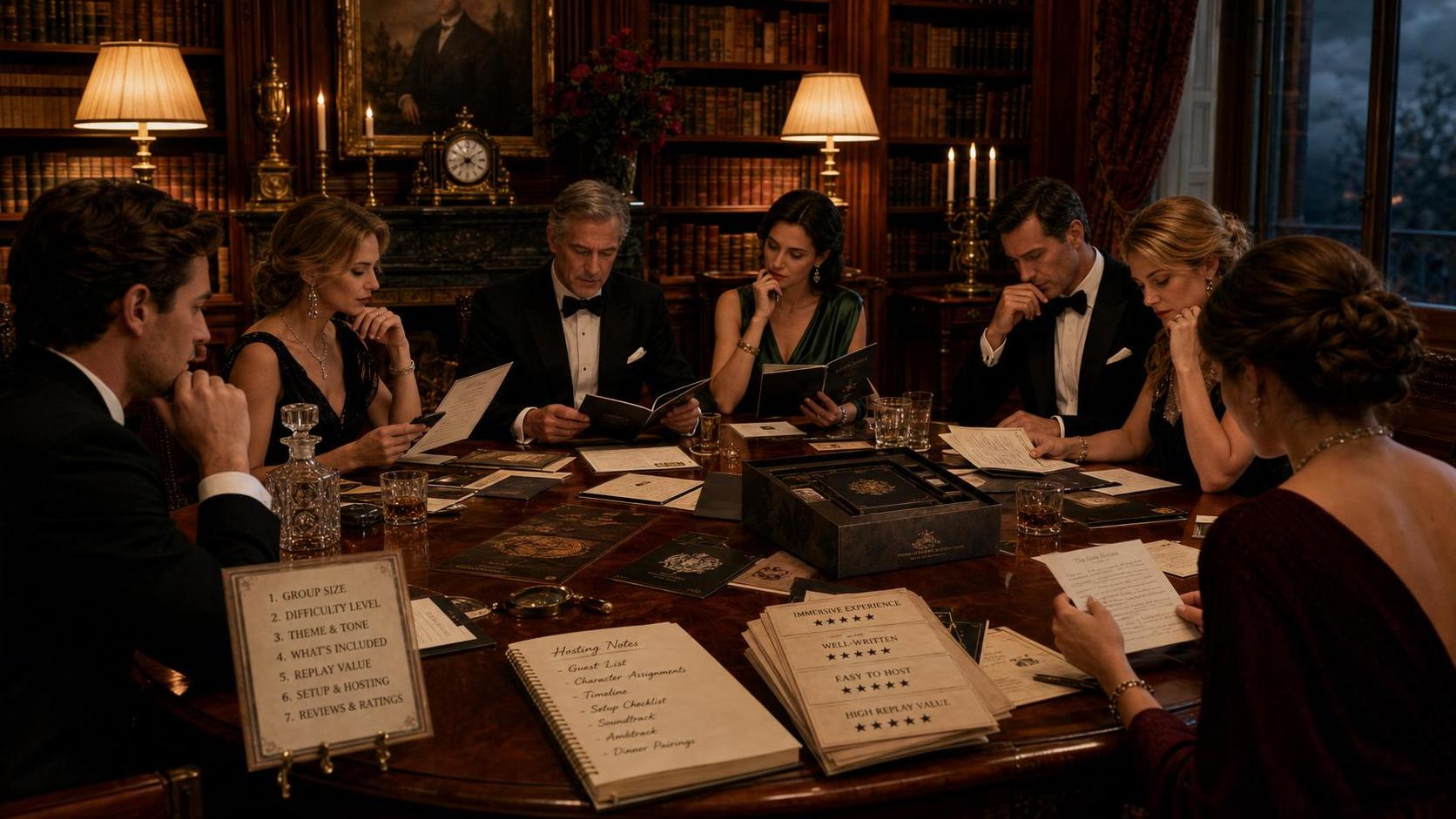

From Poe to Netflix: The Evolution of Crime Fiction
Introduction: Why Crime Fiction Endures Crime fiction has remained one of literature’s most resilient forms because it speaks to a deep human need for order, explanation, and emotional release. From Edgar Allan Poe’s pioneering detective tales in the nineteenth century to today’s binge-worthy Netflix thrillers, stories about crime invite audiences to confront fear from a safe distance. They transform chaos into narrative, offering readers and viewers the satisfaction of seeing clues assembled, motives exposed, and hidden truths brought to light. A Genre Built on Curiosity At its core, crime fiction endures because it is powered by curiosity. A crime creates an immediate question: who did it, how, and why? That structure is almost universally compelling. Scholars of narrative often note that mystery plots mirror the way people solve problems in real life, moving from uncertainty toward understanding. This makes the genre intellectually engaging as well as emotionally gripping. The Pleasure of Pattern and Resolution Readers are drawn to the genre’s promise that even the darkest events can be examined and understood. Whether in Arthur Conan Doyle’s logical investigations or modern police procedurals, crime fiction rewards attention to detail. It turns observation into suspense, and suspense into resolution. That pattern helps explain why detective and crime novels consistently rank among the world’s best-selling categories, with mystery and thriller sales representing a major share of commercial fiction markets in the United States and United Kingdom. Reflecting Social Fears and Moral Questions Crime fiction also survives because it adapts to the anxieties of each era. Victorian mysteries explored urbanization and class tension. Hard-boiled fiction reflected corruption and disillusionment in the early twentieth century. Contemporary crime dramas often address surveillance, forensic science, gender violence, and institutional failure. In this way, the genre is never only about solving a case; it is also about examining the society in which that crime occurs. More Than Entertainment The best crime fiction asks difficult questions about justice, guilt, and power. It can challenge official narratives, expose prejudice, or reveal how fragile social order really is. That moral complexity gives the genre unusual depth. Audiences may arrive for the puzzle, but they stay for the psychological insight and social relevance. From Page to Screen Its enduring popularity has also been strengthened by its flexibility across media. Crime fiction thrives in short stories, novels, radio dramas, films, television series, podcasts, and streaming platforms. Each new format reshapes the genre while preserving its central appeal: the irresistible pursuit of truth. Before Poe: Early Roots of Crime Stories Ancient and Classical Foundations Long before Edgar Allan Poe formalized detective fiction, societies were telling stories about crime, guilt, justice, and investigation. Some of the earliest roots appear in ancient literature, where disputes, murders, and acts of deception drove dramatic tension. In Greek tragedy, for example, Sophocles’ Oedipus Rex centers on uncovering a killer through testimony, deduction, and revelation. Although it is not a detective story in the modern sense, its structure anticipates later crime fiction by making the search for truth the engine of the plot. Biblical narratives also contributed important patterns. The story of Susanna and the Elders, later expanded in the Book of Daniel, presents an early example of cross-examination exposing false witnesses. This emphasis on evidence and reasoning would become essential to later crime narratives. Crime, Punishment, and Moral Order in the Middle Ages During the medieval period, stories involving crime were often tied to religious or moral instruction rather than suspense alone. Murder, theft, betrayal, and fraud appeared in chronicles, ballads, and saints’ lives, usually to demonstrate the consequences of sin. Justice was less about solving a puzzle and more about restoring divine or social order. Yet even in this period, proto-investigative elements emerged. In some Arabic and Persian tales from the One Thousand and One Nights, characters use observation, inference, and disguise to uncover wrongdoing. One frequently cited example is “The Three Apples,” a murder tale involving a hidden corpse, multiple suspects, and a ruler demanding the culprit be found. Its layered plot resembles later mystery fiction surprisingly closely. Early Modern Influences By the seventeenth and eighteenth centuries, crime stories became more secular and psychologically complex. Printed pamphlets about notorious murders and public executions were widely read in England and Europe. These “true crime” accounts mixed fact, sensationalism, and moral commentary, showing that audiences were already fascinated by criminal minds and judicial processes. The Rise of Criminal Biography A major development came with collections such as The Newgate Calendar, first published in the eighteenth century. These biographies of criminals presented detailed accounts of offenses, trials, and punishments. While often moralizing, they also gave readers recurring character types, urban settings, and procedural detail. This helped establish crime as a literary subject rather than merely a legal matter. Gothic Shadows and Rational Inquiry At the same time, Gothic fiction introduced dark atmospheres, hidden secrets, and violent acts. Writers like Horace Walpole and Ann Radcliffe emphasized fear and suspense, while Enlightenment thinking encouraged faith in reason. The eventual fusion of Gothic mystery with rational problem-solving created the conditions from which Poe’s groundbreaking detective tales would emerge in the nineteenth century. Poe and the Birth of the Detective The Invention of a New Literary Mind When readers discuss the origins of modern crime fiction, Edgar Allan Poe stands at the beginning of the trail. Long before Sherlock Holmes, Hercule Poirot, or the psychologically complex investigators of streaming dramas, Poe created a character who transformed mystery into a structured intellectual game. In the 1840s, his stories introduced the idea that crime could be solved not by chance, confession, or brute force, but through disciplined observation and analytical reasoning. Poe’s most important contribution came through C. Auguste Dupin, the Parisian sleuth who appeared in “The Murders in the Rue Morgue” in 1841, followed by “The Mystery of Marie Rogêt” in 1842 and “The Purloined Letter” in 1844. These three stories are widely recognized as the foundation of detective fiction. Dupin was not a police officer, which was itself significant. He was an independent thinker, a brilliant outsider whose intelligence exposed the limitations of official institutions. Dupin and the Logic of Detection What made Dupin revolutionary was not simply that he solved crimes. It was how he solved them. Poe emphasized ratiocination, a term he used to describe a method of logical analysis that moved beyond ordinary deduction. Dupin studies details others dismiss, reconstructs motives, and enters the mind of both criminal and witness. This mental process became the template for generations of fictional detectives. In “The Murders in the Rue Morgue,” often called the first true detective story, Dupin investigates a brutal double murder in a locked room. The tale established several conventions that still define the genre today. It featured an apparently impossible crime, a baffled police force, misleading evidence, and a final explanation that reorders chaos into clarity. The locked-room mystery, later embraced by writers such as John Dickson Carr, begins here. The Detective, the Narrator, and the Reader Poe also introduced a narrative structure that became enormously influential. Dupin’s brilliance is filtered through an admiring unnamed companion, a model later echoed in Dr. Watson’s relationship with Holmes. This device serves two purposes. It highlights the detective’s exceptional mind while also guiding the reader through the puzzle at a measured pace. The narrator sees much, but understands less, allowing the final revelation to feel both surprising and earned. Crime Fiction Meets Modern Urban Anxiety Poe’s detective stories emerged during a period of rapid urban growth, rising newspaper circulation, and increasing public fascination with sensational crime. Cities in the nineteenth century felt crowded, anonymous, and unstable. Poe captured that atmosphere by placing mystery within modern streets, apartments, and bureaucracies rather than castles or mythic landscapes. Crime became a social phenomenon, not just a moral failing. “The Mystery of Marie Rogêt” demonstrates this especially well. Inspired by the real-life death of Mary Rogers in New York, Poe used fiction to analyze a crime that had captivated newspaper readers. He effectively merged journalism and storytelling, showing that detective fiction could engage with real public fears and media culture. That blend remains central to crime narratives today, from paperback procedurals to prestige television. A Lasting Blueprint Nearly every major detective archetype owes something to Poe. The eccentric genius, the less capable police force, the loyal narrator, the hidden clue, and the climactic explanation all trace back to Dupin. Arthur Conan Doyle openly acknowledged the debt, and later writers expanded Poe’s formula into hard-boiled fiction, police procedurals, and psychological thrillers. Without Poe, crime fiction would likely exist in a very different form, lacking the analytical core that still drives the genre from Victorian magazines to Netflix series. Victorian Expansion and Sherlock Holmes Empire, Industry, and the New Urban Mystery The rise of Sherlock Holmes cannot be separated from the vast transformations of Victorian expansion. Between 1837 and 1901, Britain became the world’s largest imperial power, governing nearly one quarter of the global population by the century’s end. At the same time, industrial growth reshaped daily life at home. Railways connected cities, telegraph lines accelerated communication, and London grew into a sprawling metropolis of more than 6 million people by 1900. These changes created the perfect setting for modern crime fiction: a world that was richer, faster, more crowded, and far more difficult to fully understand. Arthur Conan Doyle introduced Holmes in A Study in Scarlet in 1887, at a moment when readers were fascinated by both scientific progress and social instability. Victorian Britain celebrated reason, classification, and order, yet it also produced poverty, anonymity, and fear. Holmes emerged as a figure who could navigate this contradiction. He was not simply a detective solving puzzles; he was a symbolic answer to the anxieties of a rapidly expanding society. London as a Character In Holmes stories, London is more than a backdrop. It functions as a living system of streets, classes, professions, and secrets. The city reflected the consequences of Victorian expansion in concentrated form. Wealth from empire and industry sat beside slums, opium dens, and criminal networks. A gentleman’s club in the West End and a dockside warehouse along the Thames could belong to the same narrative world. Mapping Disorder Through Detection Holmes’s investigations often depend on reading the city with extraordinary precision. He notices mud on boots, train schedules, cigar ash, handwriting, and accents. These details matter because Victorian life produced an overwhelming amount of information. Holmes turns that chaos into meaning. His method reflects the era’s faith in observation and emerging forensic logic, even before many police procedures were fully standardized. This is one reason Holmes felt modern. He used chemistry, disguise, and deduction in ways that mirrored the period’s growing respect for expertise. While Edgar Allan Poe’s Dupin had already established the brilliant detective, Holmes placed that figure inside a distinctly Victorian machinery of cabs, newspapers, legal institutions, and imperial trade. Imperial Reach and Hidden Influence Victorian expansion also widened the geographical scope of crime fiction. Holmes stories repeatedly point beyond Britain’s borders, showing how empire brought distant conflicts back to London drawing rooms. In The Sign of Four, the plot depends on treasure from India and the aftermath of colonial violence. In “The Adventure of the Speckled Band,” imperial experience shapes the villain’s character and household. These stories suggest that crime in Britain was not purely local; it was entangled with imperial movement, military service, and global commerce. The Foreign and the Familiar Conan Doyle often used imperial references to create suspense, though modern readers may also notice the prejudices embedded in those portrayals. The Victorian imagination frequently treated colonized places as exotic, dangerous, or morally unstable. Holmes stories reflect that mindset while also revealing a deeper truth: empire made the boundaries between domestic safety and foreign threat increasingly fragile. What happened abroad could return home in unexpected forms. Holmes and the Professional Detective Ideal Holmes also captured a changing idea of authority. The nineteenth century saw the growth of organized policing, yet public confidence in official institutions was uneven. Scotland Yard detectives appear throughout the canon, but they are often slower or less imaginative than Holmes. This contrast appealed to readers who admired expertise but distrusted bureaucracy. Science, Class, and Individual Genius Holmes’s success rests on individual intelligence, but it is supported by Victorian structures of knowledge. He belongs to a culture that prized cataloguing, measurement, and rational inquiry. At the same time, Watson makes Holmes accessible by translating brilliance into narrative. Their partnership joins scientific detachment with human experience, allowing readers to enjoy both the puzzle and its emotional stakes. In this way, Sherlock Holmes became the defining detective of the Victorian age: a character shaped by urban growth, imperial reach, and the promise that reason could still impose order on an expanding, uncertain world. The Golden Age Puzzle Mystery A New Kind of Crime Story Between the two world wars, crime fiction entered what many critics call its Golden Age, a period when the detective story became a refined intellectual game. While Edgar Allan Poe and Arthur Conan Doyle had already established the foundations of modern detection, writers of the 1920s and 1930s transformed the genre into something more structured, social, and playful. The focus shifted from raw sensation and urban menace toward carefully designed mysteries in which readers were invited to compete with the detective. This era flourished particularly in Britain, though its influence spread internationally. The puzzle mystery became a cultural phenomenon, appearing in bestselling novels, magazine serials, and even stage adaptations. Readers were not simply consuming stories about crime; they were participating in a mental exercise. Fair play became a defining principle, meaning the author should provide enough clues for an attentive reader to solve the case before the final reveal. The Rules of the Game The Golden Age mystery often followed a recognizable formula, but that predictability was part of its appeal. A murder, usually committed in a contained setting such as a country house, village, train, or isolated island, disrupted an apparently orderly world. A limited circle of suspects, each with motives and secrets, gave the story its structure. The detective then sifted through alibis, physical evidence, and psychological inconsistencies until the hidden pattern emerged. Fair Play and Formal Design Writers and critics of the period sometimes treated detective fiction almost like a sport. In 1929, Ronald Knox published his famous “Ten Commandments” for detective fiction, discouraging supernatural solutions and insisting on logical explanation. Around the same time, S. S. Van Dine proposed similar rules in the United States. These guidelines reflected a broader belief that the mystery should be solvable through reason, not arbitrary surprise. That formal design encouraged elegant plotting. Red herrings, concealed identities, forged documents, and misleading testimony became standard tools. Yet the best authors used these devices with precision rather than excess. The pleasure came from seeing how every clue, however trivial it first appeared, fit into a coherent whole. The Queens of the Form No discussion of the Golden Age is complete without Agatha Christie, whose commercial and artistic impact remains extraordinary. Christie published 66 detective novels and 14 short-story collections, and works such as The Murder of Roger Ackroyd and Murder on the Orient Express redefined what a mystery could do with narration and structure. Her detectives, Hercule Poirot and Miss Marple, represented two different but equally effective modes of inquiry: one methodical and theatrical, the other quietly observant. Dorothy L. Sayers brought a more literary sensibility to the form through Lord Peter Wimsey, combining intricate plotting with class observation and emotional depth. Ngaio Marsh and Margery Allingham, often grouped with Christie and Sayers as the “Queens of Crime,” expanded the genre’s range further. Together, these writers proved that puzzle mysteries could be both popular entertainment and sophisticated fiction. Why Readers Loved It The appeal of Golden Age mysteries was not limited to clever endings. These novels offered reassurance during a period marked by war trauma, economic instability, and social change. In many stories, crime threatened the community, but detection restored order. The detective functioned almost as a moral mathematician, turning confusion into clarity. Escapism with Structure Readers also enjoyed the enclosed worlds these books created. A manor house, a snowbound train, or a quiet parish became a stage on which human greed, jealousy, and ambition could be examined safely. Violence was present, but often filtered through wit, decorum, and distance. That balance made the stories gripping without becoming unbearable. The genre’s popularity can also be measured institutionally. The Detection Club, founded in 1930, brought together leading mystery writers including Christie, Sayers, and G. K. Chesterton. Their collaboration signaled that detective fiction had become a serious and self-aware literary community. Lasting Influence on Modern Crime Fiction Although later hard-boiled writers criticized Golden Age mysteries as artificial, the puzzle tradition never disappeared. Contemporary novels, films, and series continue to borrow its architecture. From Knives Out to modern locked-room thrillers on streaming platforms, creators still rely on the Golden Age promise that careful observation can uncover hidden truth. Its legacy lies in that enduring contract between writer and reader: the mystery is difficult, but not impossible; deceptive, but not dishonest. That balance remains one of crime fiction’s most satisfying achievements. Hard-Boiled Crime and Noir From Drawing Rooms to Dark Streets If classic detective fiction often unfolds in orderly parlors and country estates, hard-boiled crime and noir drag the genre into the city’s alleys, bars, and cheap hotel rooms. Emerging prominently in the United States during the 1920s and 1930s, hard-boiled fiction replaced the cerebral puzzle with a harsher vision of crime shaped by corruption, violence, and social decay. These stories reflected a changing modern world marked by Prohibition, organized crime, economic instability, and growing distrust of institutions. Writers such as Dashiell Hammett and Raymond Chandler transformed crime fiction by shifting attention from the mystery alone to the damaged environments surrounding it. Hammett, who had worked as a Pinkerton detective, brought procedural texture and street-level realism to novels like The Maltese Falcon in 1930 and Red Harvest in 1929. Chandler followed with The Big Sleep in 1939, introducing Philip Marlowe, a private investigator whose moral code survives in a deeply compromised Los Angeles. In these works, solving the crime matters, but understanding the rot beneath respectable society matters just as much. Defining the Hard-Boiled Hero The hard-boiled protagonist differs sharply from earlier sleuths such as Sherlock Holmes or Hercule Poirot. Rather than relying on detached brilliance, this investigator survives through toughness, instinct, and endurance. He is often cynical, underpaid, and physically vulnerable, yet still guided by a personal sense of justice. This moral ambiguity is central to the form. The detective may bend rules, trade insults, or navigate criminal circles, but he remains one of the few figures trying to resist total corruption. Language, Style, and Atmosphere A defining feature of hard-boiled fiction is its prose. The language is lean, sharp, and unsentimental, often driven by clipped dialogue and vivid metaphor. Chandler in particular became famous for similes that were both poetic and abrasive, giving noir its distinctive verbal texture. This style helped create an atmosphere where every room seemed smoky, every smile suspicious, and every deal potentially fatal. The settings are equally important. Instead of insulated country houses, readers encounter urban landscapes shaped by class tension, political graft, and vice economies. Cities in noir are not merely backdrops; they function almost as characters, pressing in on everyone who inhabits them. Place becomes destiny, and the environment itself often seems complicit in crime. Noir as Mood and Worldview Although the terms are often used together, hard-boiled and noir are not identical. Hard-boiled usually refers to a literary style and type of detective story, while noir describes a broader mood of fatalism, alienation, and moral darkness. In noir, characters are frequently trapped by desire, greed, or past mistakes. Even when the truth is uncovered, justice may remain incomplete or meaningless. The Rise of Film Noir Noir expanded dramatically through cinema in the 1940s and 1950s. Films such as Double Indemnity in 1944, The Big Sleep in 1946, and Out of the Past in 1947 translated literary darkness into visual form through shadow-heavy lighting, oblique camera angles, and urban nightscapes. Many film noirs were influenced not only by American crime writing but also by German Expressionist cinematography, which intensified their psychological unease. Women in noir were also written differently from earlier crime fiction. The femme fatale became one of the genre’s most recognizable figures: intelligent, alluring, and dangerous, often exposing male weakness rather than simply serving as victim or reward. While sometimes shaped by gender stereotypes, these characters also disrupted conventional moral order and added complexity to the genre’s power dynamics. Lasting Influence on Modern Crime Storytelling The influence of hard-boiled crime and noir remains enormous. Contemporary novels, prestige television, graphic novels, and streaming dramas continue to borrow their tone, antiheroes, and urban pessimism. Series such as True Detective, Mindhunter, and many Nordic noir productions echo the tradition’s belief that crime reveals deeper fractures in society. Even when updated for new settings, the core noir insight endures: crime is rarely an isolated act; it is a symptom of a broken world. This shift permanently widened the possibilities of crime fiction. The genre no longer had to offer neat solutions or reassuring order. It could instead confront readers with compromised institutions, flawed investigators, and endings that sting rather than comfort. In that sense, hard-boiled crime and noir did not just darken the detective story; they made it more psychologically and socially expansive. Postwar Shifts: Police, Psychology, and Society The years after 1945 transformed crime fiction as profoundly as they reshaped everyday life. In the aftermath of World War II, readers confronted a world marked by urban expansion, bureaucratic growth, and deep psychological unease. Crime stories could no longer rely only on elegant puzzles or isolated country-house murders. Instead, they increasingly reflected modern institutions, damaged inner lives, and societies struggling with new forms of disorder. This postwar turn helped move the genre from classic detection toward the darker, more complex narratives that still dominate books, film, and streaming television. The Rise of the Police Procedural One of the most important developments was the growing prominence of the police procedural. Earlier detective fiction often centered on a brilliant amateur or eccentric private investigator who solved crimes through individual genius. Postwar fiction, by contrast, paid greater attention to the actual mechanics of law enforcement. Writers began depicting investigations as collective efforts involving patrol officers, detectives, forensic specialists, and administrative systems. This shift reflected real social change. Police forces in the United States and Britain became more professionalized during the mid-twentieth century, with greater emphasis on training, recordkeeping, and scientific methods. Crime fiction responded by showing how cases were built through interviews, lab reports, surveillance, and interdepartmental cooperation. Ed McBain’s 87th Precinct novels, beginning in 1956, became especially influential because they presented the city as a living system and the police station as a workplace shaped by routine, pressure, and institutional limits. Procedure as Drama The procedural format created a new kind of suspense. Rather than asking only who committed the crime, these stories asked how truth could be assembled from fragments. Delays, paperwork, jurisdictional conflicts, and human error became part of the narrative tension. This made crime fiction feel more realistic and also more democratic, since success no longer depended on one extraordinary mind alone. Psychology Moves to the Center At the same time, postwar crime fiction became far more interested in psychology. The war had exposed millions to trauma, displacement, and moral ambiguity, while the growing cultural influence of psychoanalysis encouraged writers to explore motive in greater depth. Criminals were no longer merely villains to be unmasked; they were often portrayed as fractured, obsessive, or socially alienated individuals. Patricia Highsmith exemplified this development. In novels such as Strangers on a Train and The Talented Mr. Ripley, suspense emerges not from a tidy investigation but from the unstable minds of characters who blur the line between victim and perpetrator. Readers are drawn into anxiety, desire, and self-deception, making crime fiction less about restoring order and more about exposing the instability beneath ordinary life. Society as a Source of Crime Postwar writers also increasingly treated crime as a social phenomenon rather than a purely personal failing. Rapid suburbanization, class tension, racial inequality, and Cold War paranoia all entered the genre. In many stories, the setting itself generates pressure: crowded cities, anonymous apartment blocks, and expanding consumer culture create environments where loneliness and violence can flourish. Noir and Social Disillusionment Film noir and noir fiction captured this mood with particular force. Their shadowed streets and compromised protagonists suggested that corruption was not exceptional but systemic. Institutions meant to provide safety could also produce fear, whether through prejudice, surveillance, or abuse of power. This broadened crime fiction’s scope, allowing it to critique the very societies from which crime emerged. A Bridge to Contemporary Crime Storytelling These postwar changes laid the groundwork for modern crime fiction across media. Ensemble investigations, psychologically layered offenders, and socially embedded crimes now define many of the genre’s most successful forms. From literary novels to prestige television, the legacy of the postwar era remains visible in stories that treat crime not as an isolated puzzle, but as a window into the structures, anxieties, and contradictions of modern life. Global Crime Fiction and New Voices Crime Fiction Crosses Borders Crime fiction is no longer dominated by a handful of British and American traditions. In the twenty-first century, the genre has become unmistakably global, shaped by writers who use murder, corruption, and investigation to explore the pressures of modern life in very different societies. Translation, streaming platforms, and international publishing have helped readers discover stories from Scandinavia, Latin America, Africa, South Asia, and East Asia, expanding what crime fiction can sound like and what it can examine. The rise of “Nordic noir” offers one of the clearest examples of this shift. Authors such as Stieg Larsson, Henning Mankell, and Jo Nesbø brought bleak landscapes, social critique, and emotionally burdened detectives to a worldwide audience. Their success proved that readers were eager for crime novels rooted in local realities yet connected to universal anxieties, including inequality, misogyny, state failure, and alienation. What made these books travel was not just suspense, but their ability to show crime as a symptom of deeper fractures. Regional Voices, New Perspectives As global readership widened, publishers began paying closer attention to writers outside the traditional centers of the genre. In Latin America, crime fiction often intersects with political violence, dictatorship, and urban instability. Writers such as Claudia Piñeiro of Argentina and Leonardo Padura of Cuba use investigation to reveal class tension and institutional decay. Their novels frequently blur the line between detective story and social novel, making the search for truth feel both personal and historical. In Africa, a growing number of crime writers have redefined the field with stories grounded in postcolonial realities, economic change, and local justice systems. South African authors like Deon Meyer and Margie Orford, for instance, write within a society still marked by apartheid’s legacy, where crime narratives naturally engage with race, power, and trauma. The mystery becomes a way of reading the nation itself, not merely solving a puzzle. Urban Change and Social Reality In South Asia, crime fiction has also gained new energy. Writers such as Abir Mukherjee, Vaseem Khan, and Kalpana Swaminathan have shown how the genre can move between colonial history, contemporary megacities, and intimate moral conflict. Their work often captures the density of places like Mumbai or Calcutta, where law, class, and survival intersect in vivid ways. Crime fiction here becomes a map of social complexity. The Influence of Screen Adaptation Television and streaming have accelerated the global circulation of crime stories. Series adapted from international novels, alongside original productions like Money Heist, Sacred Games, and Babylon Berlin, have trained audiences to embrace subtitles, unfamiliar settings, and culturally specific storytelling. This has changed publishing as well. A successful adaptation can transform a regional writer into an international name almost overnight, while also encouraging publishers to seek fresh voices with cinematic potential. Why New Voices Matter New writers are reshaping crime fiction by challenging who gets to investigate, who gets believed, and whose communities are represented. Increasingly, protagonists include women, migrants, queer characters, journalists, and ordinary citizens rather than only hardened detectives. This diversification broadens the moral and emotional range of the genre. It also reflects a world in which crime is inseparable from surveillance, displacement, digital life, and contested identity. The result is a richer, less predictable genre. Global crime fiction still delivers suspense and revelation, but it now does so through a wider chorus of languages, histories, and social experiences, opening the door to forms that earlier traditions rarely imagined. True Crime, Prestige TV, and Streaming The Rise of Crime as Premium Entertainment The relationship between crime storytelling and screen culture changed dramatically in the streaming era. What was once dominated by procedural network dramas and made-for-television documentaries has evolved into a sophisticated ecosystem where true crime, prestige television, and on-demand platforms shape one another. This shift reflects both industrial change and audience appetite. Viewers no longer consume crime stories only as weekly entertainment; they now approach them as cultural events, binge-worthy investigations, and social conversations. Prestige television helped elevate crime narratives by treating them as vehicles for psychological depth, moral ambiguity, and cinematic craft. Series such as The Sopranos, The Wire, and True Detective demonstrated that crime fiction could deliver the thematic complexity once associated mainly with literary novels or art-house cinema. These shows did not simply ask who committed the crime. They examined institutions, class, corruption, masculinity, and the fragility of justice. In doing so, they expanded the genre’s cultural legitimacy. How Streaming Changed the Genre Streaming platforms accelerated this transformation by changing how crime stories are distributed and consumed. Netflix, which surpassed 260 million global subscribers in 2024, helped normalize binge viewing, allowing serialized mysteries to unfold over hours rather than fit into rigid broadcast schedules. This format suits crime especially well because suspense thrives on accumulation. Each episode can deepen uncertainty, introduce conflicting testimony, and encourage viewers to become investigators themselves. The Binge Effect The binge model altered narrative pacing. Traditional television often required partial resolution within each episode, but streaming crime dramas can sustain tension across an entire season. This structure mirrors the experience of reading a long detective novel, where clues gain meaning gradually. It also encourages online theorizing, recap culture, and algorithm-driven recommendation loops that keep audiences inside the genre. Streaming also globalized crime fiction. A viewer in Chicago can move from an American docuseries to a Scandinavian noir, a Spanish thriller, or a Korean police drama in one evening. This circulation has broadened tastes and introduced audiences to different legal systems, visual styles, and cultural anxieties, while preserving the genre’s core fascination with guilt, motive, and punishment. The True Crime Boom If prestige TV gave crime artistic status, true crime gave it documentary urgency. Productions such as Making a Murderer, The Jinx, and Serial turned real cases into serialized investigations with enormous public impact. Making a Murderer became one of Netflix’s earliest nonfiction sensations, while Serial reportedly reached more than 300 million downloads over time, proving that crime storytelling could dominate both video and audio platforms. Ethics and Audience Complicity True crime’s popularity raises difficult ethical questions. Unlike fictional detectives, real victims and families live with the consequences of renewed attention. Critics argue that some productions aestheticize suffering or privilege suspense over accuracy. Yet supporters contend that the genre can expose wrongful convictions, institutional failure, and neglected cases. The best examples balance narrative tension with accountability, reminding audiences that crime is not merely content but lived trauma. Why Crime Thrives Now Crime remains central to streaming culture because it combines emotional intensity, narrative propulsion, and social relevance. It satisfies curiosity while offering a framework for discussing race, gender, power, and media itself. In the age of prestige TV and digital platforms, crime fiction has become more than a genre. It is a flexible storytelling mode that connects nineteenth-century literary fascination with modern habits of watching, listening, and endlessly searching for the truth. From Page to Screen: Netflix and Modern Adaptation Streaming as the New Crime Scene Netflix has become one of the most influential forces in the modern life of crime fiction, reshaping how literary stories are adapted, distributed, and consumed. Where earlier screen versions of crime novels were often constrained by broadcast schedules or studio formulas, streaming platforms allow for longer arcs, darker tones, and more psychologically layered storytelling. This has been especially important for crime fiction, a genre that depends on suspense, ambiguity, and character depth as much as plot. The platform’s global reach also changes the stakes of adaptation. A detective story that once belonged primarily to one national tradition can now reach viewers in more than 190 countries within days. This has helped revive interest in source material while introducing audiences to new styles of crime storytelling, from Nordic noir to British procedural drama and literary gothic mystery. Why Crime Fiction Thrives on Netflix Crime fiction adapts particularly well to the streaming model because its structure naturally encourages binge-watching. Cliffhangers, hidden motives, and gradual revelations fit neatly into serialized viewing habits. Netflix has leaned into this by favoring limited series and multi-episode narratives that preserve more of a novel’s complexity than a two-hour film usually can. A useful example is The Fall of the House of Usher, which transforms Edgar Allan Poe’s themes into a contemporary serialized drama. Rather than offering a strict page-to-screen retelling, the adaptation uses Poe’s imagery, mood, and moral decay as building blocks for a modern corporate horror-crime narrative. This reflects a broader Netflix strategy: adaptation as reinterpretation rather than simple reproduction. Fidelity Versus Reinvention Modern audiences rarely expect total loyalty to a text. Instead, successful adaptations often balance recognition with surprise. Netflix productions frequently update settings, diversify casts, and expand minor characters to reflect current cultural conversations. In crime fiction, this can sharpen themes of class, surveillance, corruption, and gendered violence that were less explicit in older works. That approach can be risky. Readers may resist major changes, especially when beloved detectives or iconic plots are altered. Yet reinvention often keeps classic material alive. Sherlock Holmes-inspired series, for instance, continue to thrive because each version emphasizes different anxieties, whether they involve technology, urban isolation, or institutional mistrust. Data, Audience, and Algorithmic Storytelling Netflix does not adapt books in a cultural vacuum. Its decisions are informed by viewing data, completion rates, and regional demand. This creates a more targeted adaptation environment than traditional television ever allowed. Factor Effect on Adaptation Global analytics Encourages stories with cross-market appeal Binge viewing habits Favors serialized mysteries over standalone films Audience retention data Rewards strong openings and frequent twists The Visual Language of Contemporary Adaptation Netflix-era crime adaptations also rely heavily on atmosphere. Muted palettes, fragmented timelines, and intimate close-ups translate literary interiority into visual form. In this way, the platform has helped redefine adaptation itself, turning crime fiction from something merely transferred to screen into something recomposed for a digital, global audience. Why Crime Fiction Keeps Evolving Changing fears, changing crimes Crime fiction endures because it mirrors the anxieties of each era. In the nineteenth century, Edgar Allan Poe’s detective stories reflected urban growth, anonymity, and the unsettling idea that evil could hide in ordinary streets. By the early twentieth century, writers such as Agatha Christie turned crime into an intellectual puzzle, offering readers order restored through logic during periods of social uncertainty. As societies changed, so did the genre’s central questions. Today, crime fiction responds to a world shaped by surveillance, cybercrime, misinformation, and global networks. A modern investigator may analyze phone metadata as readily as footprints or fingerprints. This evolution keeps the genre relevant because readers want stories that feel connected to the crimes, institutions, and moral tensions they recognize from real life. New formats reshape storytelling Another reason crime fiction keeps evolving is the influence of new media. Serialized Victorian fiction created suspense through cliffhangers, while paperback novels expanded access in the twentieth century. In the streaming era, television and digital platforms have transformed pacing, structure, and audience expectations. Netflix-style crime dramas often unfold across multiple timelines, using visual clues and unreliable perspectives to deepen mystery. The impact of audience participation Modern audiences are also more active interpreters. Online forums, fan theories, and social media discussions encourage viewers and readers to investigate alongside the detective. This participatory culture rewards layered plotting and ambiguous motives. Crime fiction is no longer just consumed; it is examined, debated, and decoded in public. Broader voices, deeper complexity The genre has also expanded because more writers are reshaping it from different cultural and social perspectives. Contemporary crime fiction increasingly explores race, gender, class, and institutional corruption, moving beyond the simple question of who committed the crime. Many stories now ask why justice fails and who benefits from that failure. From puzzle to social lens This shift has made crime fiction richer and more flexible. A murder mystery can still entertain, but it can also expose systemic inequality or challenge official narratives. That ability to combine suspense with social insight is precisely why the genre continues to adapt across generations and platforms. Conclusion: From Poe to Netflix A Genre Shaped by Every Era From Edgar Allan Poe’s analytical detective Dupin to Netflix’s psychologically layered investigators, crime fiction has continually reinvented itself to reflect changing fears, technologies, and social values. What began in the nineteenth century as a puzzle of logic and deduction evolved through the hard-boiled grit of the 1920s, the procedural realism of the postwar decades, and the morally complex storytelling that defines contemporary streaming drama. Each stage added new dimensions, expanding the genre beyond simple mystery into a broader examination of justice, power, and human behavior. Why Crime Fiction Still Captivates The genre’s endurance is tied to its unusual flexibility. Crime stories offer both structure and surprise: audiences expect a transgression, an investigation, and some form of revelation, yet the emotional and thematic possibilities remain vast. A Victorian reader encountering “The Murders in the Rue Morgue” sought intellectual intrigue, while a modern viewer watching series like Mindhunter or Broadchurch often looks for psychological depth, social critique, and serialized suspense. According to Netflix’s own public rankings, crime and thriller titles consistently perform among the platform’s most-watched categories, showing how strongly these narratives continue to resonate across global audiences. From Page to Screen, and Beyond What remains constant is the genre’s central question: how do people respond when order is broken? That question keeps crime fiction relevant, whether expressed through Poe’s precise reasoning, Agatha Christie’s elegant misdirection, Raymond Chandler’s cynicism, or today’s prestige television. As formats continue to shift across novels, film, podcasts, and streaming platforms, crime fiction proves not only durable but endlessly adaptable, carrying its dark fascination from the printed page into the digital age. FAQ: Common Questions About Crime Fiction What exactly counts as crime fiction? Crime fiction is a broad literary and screen category centered on crime, investigation, justice, and moral consequence. While many readers equate it with detective stories, the genre includes police procedurals, legal thrillers, psychological suspense, noir, capers, prison narratives, and courtroom dramas. The unifying feature is not simply the presence of a crime, but the way the story organizes tension around wrongdoing and its aftermath. Historically, crime fiction took recognizable shape in the nineteenth century. Edgar Allan Poe’s “The Murders in the Rue Morgue,” published in 1841, is often cited as the first modern detective story because it introduced analytical investigation as narrative structure. Since then, the genre has expanded across novels, pulp magazines, radio, film, television, and streaming platforms, proving remarkably adaptable to changing audiences and technologies. How is crime fiction different from mystery and thriller? These labels overlap, but they are not identical. A mystery usually emphasizes a puzzle: who committed the crime, how it happened, or why. A thriller tends to focus on danger, urgency, and high stakes, often revealing the criminal early so suspense comes from whether the protagonist can stop them. Crime fiction is the umbrella term that can contain both forms. For example, an Agatha Christie novel often asks readers to solve a carefully structured mystery alongside the detective. By contrast, many modern thrillers create momentum through pursuit, conspiracy, or imminent violence. A single work can blend all three modes, which is why bookstores, publishers, and streaming services often market them together despite meaningful differences in structure and tone. Why are detectives such enduring characters? Detectives endure because they provide order in stories shaped by disorder. A crime disrupts everyday life, and the investigator becomes the figure who interprets chaos, uncovers hidden motives, and guides readers through uncertainty. Whether amateur or professional, the detective often functions as both character and narrative tool. The appeal of the investigator’s perspective Readers are drawn to detectives because they combine intelligence, observation, and emotional distance with human vulnerability. Sherlock Holmes, Hercule Poirot, Miss Marple, Philip Marlowe, and contemporary television investigators all offer distinct methods of seeing the world. Some rely on logic, others on intuition, and still others on institutional procedure. That variety helps explain the genre’s longevity across cultures and eras. Why is crime fiction so popular across different media? Crime fiction consistently performs well because it satisfies several audience desires at once. It offers suspense, intellectual engagement, emotional release, and social commentary. According to publishing trend reports and streaming rankings, crime-related content remains one of the most consumed categories globally, especially in television drama and audiobooks. The genre also adapts easily to episodic formats. A novel series can sustain a recurring detective for decades, while television can build audience loyalty through case-of-the-week structures or season-long investigations. Netflix and other platforms have amplified this appeal by making international crime dramas more accessible, allowing viewers to move from British detective series to Nordic noir or Korean thrillers with minimal friction. Does crime fiction reflect real society, or is it mainly escapism? It does both. On one level, crime fiction is undeniably entertaining, offering the pleasure of suspense and resolution. On another, it often reflects social anxieties about class, gender, race, corruption, urban life, and institutional power. Victorian detective fiction emerged alongside modern policing and urban expansion, while twentieth-century noir reflected disillusionment, economic instability, and postwar unease. Social themes beneath the plot Many contemporary works use crime narratives to examine systemic issues rather than isolated wrongdoing. Police procedurals may explore bureaucracy and public trust, while psychological crime novels often focus on trauma, memory, or domestic abuse. Even highly commercial stories can reveal what a culture fears most at a given moment, which is one reason scholars continue to study the genre seriously. What are the major subgenres readers should know? Crime fiction includes several major branches, each with its own conventions. Classic detective fiction emphasizes clues and deduction. Hard-boiled fiction features cynical investigators, urban settings, and moral ambiguity. Noir is darker still, often highlighting doomed characters and corrupt systems. Police procedurals focus on official investigation methods, forensic work, and teamwork. Legal thrillers center on courts and attorneys, while psychological crime fiction explores motive, obsession, and unreliable perception. Is crime fiction only about solving murders? Not at all. Although homicide dominates many famous examples, crime fiction can revolve around fraud, kidnapping, espionage, organized crime, theft, cybercrime, or historical injustice. The central question is often less about the specific offense and more about power, motive, secrecy, and consequence. That flexibility has helped the genre evolve from Poe’s analytical tales to prestige television and streaming-era global franchises.
Learn more
Murder Mystery Games for 10 Players: Best Cases for Larger Groups
Introduction to Murder Mystery Games Murder mystery games turn a social gathering into an interactive story where every guest becomes part of the plot. In a typical game, players take on fictional roles, uncover clues, question one another, and work toward solving a staged crime. The format blends party entertainment, light roleplay, and puzzle-solving, making it especially appealing for groups that want something more memorable than a standard dinner or game night. Why Murder Mystery Games Work So Well for Groups The core appeal of murder mystery games lies in their ability to involve everyone at once. Unlike many party games that leave some people waiting for a turn, a mystery game gives each participant a reason to engage from the beginning. Players may be suspects, witnesses, investigators, or characters hiding secrets of their own. That structure creates natural conversation and keeps energy high throughout the event. For larger gatherings, this format is particularly effective because it transforms group size into an advantage. With 10 players, the story can include more motives, more alibis, and more unexpected twists. A bigger cast often leads to richer interactions, since players have more personalities to question and more information to piece together. The social dynamics become part of the challenge, which is one reason these games remain popular for birthdays, team events, and holiday parties. What Players Can Expect Most murder mystery games follow a simple structure, even when the story itself is dramatic. Guests usually receive character backgrounds before the event or at the start of play. As the game unfolds, they reveal information, respond to accusations, and search for hidden details that help explain what happened. Some games are heavily scripted, while others allow more improvisation. Common Game Elements A well-designed mystery game often includes several familiar features: Element Purpose Character roles Give each player a unique identity and motive Clue rounds Release information gradually to build suspense Secret objectives Encourage roleplay and strategic interaction Final accusation Let players guess the culprit before the reveal These elements help maintain pacing and ensure that every participant has something meaningful to do. In many commercial kits, a full session lasts between 90 minutes and three hours, depending on complexity and group enthusiasm. Why 10 Players Is an Ideal Number A 10-player murder mystery often strikes the right balance between variety and manageability. Smaller games can feel limited in scope, while very large groups may become harder to organize. With 10 people, hosts can offer a story that feels expansive without becoming chaotic. There is enough room for layered relationships, conflicting testimonies, and side plots that make the investigation more immersive. This size also supports a wide range of themes, from classic manor-house murders to 1920s speakeasies, masquerade balls, or modern crime settings. Because of that flexibility, 10-player murder mystery games are often among the most versatile options available, giving hosts plenty of ways to match the tone of their event and the personalities of their guests. Why 10 Players Is an Ideal Group Size The Sweet Spot Between Energy and Manageability A 10-player group is often the ideal size for a murder mystery game because it balances social energy with practical gameplay. With fewer than eight players, the mystery can feel too narrow, with limited suspects, motives, and interactions. Once a group grows beyond twelve, however, the experience can become harder to manage, especially for hosts trying to keep everyone engaged. Ten players sits comfortably in the middle, creating a lively atmosphere without overwhelming the structure of the game. In most murder mystery formats, each participant is assigned a distinct role, secret objectives, and background information. With ten people, writers and hosts have enough room to introduce meaningful complexity. There can be multiple red herrings, layered relationships, and conflicting testimonies, all without making the story confusing. This size allows the mystery to feel rich rather than crowded, which is one of the biggest reasons it works so well. Better Role Distribution and Character Variety A group of ten gives the game enough space for a diverse cast of characters. Instead of relying on a handful of broad stereotypes, the story can include a wider range of personalities, professions, and motives. That variety improves immersion because players are more likely to receive roles that feel unique and memorable. Stronger Character Dynamics With ten characters in play, the host can build stronger interpersonal connections into the plot. For example, one guest might be the victim’s business rival, another a jealous sibling, another a secret ally, and another a witness hiding key information. These overlapping relationships create natural tension and conversation, which are essential to a successful mystery night. This number also helps quieter players participate more comfortably. In a very small group, each person may feel intense pressure to perform constantly. In a much larger group, quieter guests can disappear into the background. Ten players creates enough conversational space for different play styles, allowing both outgoing and reserved participants to contribute. Easier Hosting and Smoother Pacing From a hosting perspective, ten players is highly practical. It is large enough to feel like an event, yet still small enough for the organizer to manage invitations, costumes, seating, clues, and timing. Most homes can comfortably accommodate ten guests around a dining table or in a living room setup, which makes planning simpler than for larger parties. A Manageable Number of Interactions The number of possible one-to-one interactions rises quickly as groups get bigger. In a ten-player game, there are 45 possible pairings, which is plenty to generate intrigue while remaining manageable. By comparison, a 14-player group creates 91 possible pairings, nearly doubling the complexity. That difference affects everything from clue tracking to discussion flow. Because of this, ten-player mysteries often maintain better pacing. Players have enough people to question and observe, but not so many that important details get lost. The host can also guide rounds, reveal evidence, and answer questions without constant interruptions. Ideal for Social Engagement Ten players is also excellent for creating a memorable social atmosphere. It is large enough for alliances, suspicion, and surprise reveals to feel dramatic, yet intimate enough that everyone can learn each other’s roles and stay invested in the outcome. In party gaming, engagement often drops when players wait too long for their turn to speak or act. A ten-person setup reduces that problem significantly. For groups of friends, coworkers, or family members, this size encourages active participation, balanced storytelling, and consistent momentum, making it one of the most reliable formats for an entertaining murder mystery experience. What Makes a Great Large-Group Mystery Balancing Scale, Structure, and Suspense A great large-group mystery does more than simply add extra suspects to a standard party game. For a group of 10 players, the experience must be designed to keep everyone involved, informed, and entertained without letting the story become chaotic. In smaller mysteries, a few dominant personalities can carry the action. In larger groups, however, the structure has to work harder. Every player needs a reason to participate, a distinct role to inhabit, and enough information to feel useful. The best mysteries for bigger groups are built around shared momentum. That means the game should create frequent opportunities for interaction rather than relying on long monologues or a single investigator to drive the plot. A well-designed scenario gives each participant secrets, motives, and clues that connect naturally to several other characters. This web of relationships is what transforms a large gathering from a passive audience into an active investigation. Strong Character Design Matters More in Bigger Games In a 10-player mystery, character quality is often the difference between a memorable night and a confusing one. If roles feel interchangeable, players can lose interest quickly. The strongest games give each character a clear identity, a personal objective, and a believable connection to the crime. That does not mean every role must be equally dramatic, but it does mean every player should feel relevant. Distinct Roles Prevent Players From Disappearing When groups get larger, quieter guests can easily fade into the background unless the game actively pulls them in. Strong role design helps solve this problem. A suspicious business partner, a jealous sibling, a nervous assistant, and a secret witness all create different social energies. These differences encourage conversation because players are not just asking, “Who did it?” They are also asking, “What are you hiding?” A practical benchmark used by many successful party mystery publishers is that every character should hold at least one unique clue and one unique motive. This ensures that no one is merely decorative. Even a player who is not central to the murder can still influence the investigation by revealing an alibi, exposing a lie, or connecting two unrelated facts. Clue Distribution Must Be Fair and Manageable One of the biggest challenges in large-group mysteries is information overload. If too many clues are introduced too quickly, players forget details. If too few are shared, the game stalls. Great mysteries solve this by pacing revelations in stages. Instead of dumping every fact at the beginning, they release information through rounds, scenes, or timed prompts. Layered Clues Keep Everyone Engaged Layered clue design works especially well for 10-player games because it supports both casual and competitive participants. Early clues should establish the setting and broad suspicions. Midgame clues can deepen relationships and expose contradictions. Late clues should sharpen the accusation phase and make the final reveal feel earned. The most effective mysteries also mix clue types. Physical evidence, overheard conversations, hidden motives, and timeline inconsistencies appeal to different styles of thinking. Some players excel at logic, while others are better at reading behavior. A large-group game becomes richer when it allows both approaches to matter. Pacing and Social Flow Are Essential A mystery for 10 players should feel lively, not crowded. That requires thoughtful pacing. If one phase lasts too long, attention drops. If scenes move too fast, players miss important details. Many successful murder mystery formats aim for 90 to 150 minutes, which is long enough for immersion but short enough to maintain energy. Built-In Interaction Creates Better Group Dynamics The best large-group mysteries create natural reasons for players to circulate, question one another, and form temporary alliances. This social movement is crucial because it prevents the game from becoming a static reading exercise. For example, a scenario set at a family estate, corporate gala, or reunion dinner naturally supports side conversations and conflicting loyalties. A strong host guide also improves flow. In larger games, clear instructions reduce confusion and help transitions feel smooth. When players understand when to reveal information, when to negotiate, and when to accuse, the mystery feels polished rather than overwhelming. Replay Value and Accessibility Add Lasting Appeal For larger gatherings, accessibility matters almost as much as story quality. A great mystery should be easy to explain to first-time players while still offering enough depth for experienced guests. Straightforward rules, readable character sheets, and flexible hosting options make a major difference, especially when not everyone arrives ready to roleplay at the same level. Replay value can also come from variable endings, hidden side goals, or characters whose secrets reshape the story depending on how players interact. In a 10-player setting, those shifting dynamics often matter more than a single clever twist, because the real magic comes from how the group brings the mystery to life. Best Murder Mystery Game Types for 10 Players Why 10 Players Is an Ideal Group Size A 10-player murder mystery game sits in a sweet spot between intimacy and complexity. With fewer than eight players, mysteries can feel too linear, and some roles may lack depth. With more than 12, the game can become harder to manage, especially for first-time hosts. At 10 players, there is enough room for layered motives, secret alliances, red herrings, and meaningful interaction without overwhelming the group. This size also supports a balanced cast. Most well-designed mystery games for 10 include a victim, a murderer, several suspects with believable motives, and a few wildcard characters who complicate the investigation. That structure creates the tension that makes the genre so entertaining. Every player has a reason to participate, and no one is left feeling like an extra in the story. Classic Whodunit Games The classic whodunit remains one of the best formats for a 10-person gathering. These games usually revolve around a single murder, a fixed set of suspects, and a trail of clues that players uncover through conversation and deduction. Because the format is familiar, it works especially well for mixed groups where some guests are experienced roleplayers and others are completely new. A 10-player cast gives this style enough variety to feel rich without becoming confusing. For example, a manor-house mystery might include the wealthy host, a jealous heir, a suspicious butler, a family friend, a business rival, and several guests with hidden agendas. The appeal of the classic format lies in clarity: players know the objective, understand the stakes, and can focus on interrogation and theory-building. Best for Traditional Game Nights Classic whodunits are particularly effective when the group wants a structured evening with a clear beginning, middle, and reveal. They often last between 1.5 and 3 hours, which suits dinner parties and weekend gatherings. Many commercial kits are written specifically for 8 to 10 players, making setup easier for hosts. Themed Murder Mystery Games For larger social groups, themed mysteries often create the strongest engagement. A strong setting gives players instant inspiration for costumes, accents, and behavior, which helps break the ice early. Popular themes for 10 players include 1920s speakeasies, masquerade balls, Hollywood scandals, haunted mansions, and cruise ship murders. A themed game works well because it gives each character a vivid identity. In a 10-player 1920s mystery, for instance, the cast might include a jazz singer, bootlegger, detective, politician, socialite, and newspaper reporter. These recognizable archetypes make roleplay easier and encourage dramatic interactions. Immersion becomes a major advantage, especially when the host adds matching music, décor, or food. Strong Themes That Scale Well Not every theme fits every group size. For 10 players, the best themes are those that naturally support multiple suspects and intersecting relationships. Settings with built-in social tension, such as weddings, reunions, corporate retreats, or aristocratic estates, tend to produce the most satisfying gameplay because everyone has a plausible reason to be present. Competitive Deduction Games Some murder mystery formats lean more heavily into deduction than performance. In these games, players focus less on acting and more on gathering evidence, analyzing contradictions, and solving the case efficiently. This style appeals to groups that enjoy board games, escape rooms, or logic puzzles. With 10 players, competitive deduction can become especially dynamic. The larger suspect pool increases uncertainty, while still allowing each participant enough speaking time to present an alibi or challenge another player’s story. Some games even assign secret objectives beyond solving the murder, such as protecting a scandal, exposing a thief, or hiding an affair. These secondary goals deepen the strategy and prevent the experience from becoming a simple guessing exercise. Roleplay-Heavy Mystery Games For outgoing groups, roleplay-heavy mysteries can be the most memorable option. These games prioritize character secrets, dramatic reveals, and improvisation over strict clue tracking. A 10-player cast is large enough to sustain side conversations and shifting alliances, which are essential to this format. When Personality Drives the Game Roleplay-centered mysteries work best when players are comfortable speaking in character and reacting creatively. In practice, that means the game may unfold differently each time, even with the same script. One group may turn a suspect into a comic relief figure, while another may create a tense psychological showdown. That unpredictability is part of the appeal. Host-Led Versus Boxed Game Formats The final choice often comes down to how much effort the organizer wants to invest. A boxed or downloadable game for 10 players offers convenience, prewritten roles, and clear instructions. A host-led custom mystery allows more flexibility and personalization, but it requires stronger planning and moderation. For most groups, a structured game with adaptable character notes provides the best balance between ease and replay value, especially when hosting a larger social event. Top Murder Mystery Cases for 10 Players Finding the right case for a group of ten is about more than simply picking a popular title. A larger cast needs balanced participation, clear motives, manageable complexity, and enough dramatic tension to keep every player engaged from the opening clue to the final accusation. In a ten-player format, the best murder mystery cases create room for alliances, suspicion, hidden agendas, and memorable reveals without overwhelming guests with too many disconnected details. What Makes a Murder Mystery Case Work for 10 Players A ten-player mystery sits in a sweet spot between intimate and expansive. With fewer than eight players, some games can feel too narrow, limiting the number of suspects and side plots. With more than twelve, pacing can become harder to control, especially for first-time hosts. At ten players, a case can support a fully developed suspect list, multiple red herrings, and a satisfying evidence trail while still allowing each participant enough speaking time. The strongest cases for this group size usually assign every character a meaningful secret. That matters because player engagement rises when each guest has something to protect or reveal. In practical terms, a ten-person mystery should give each role a reason to interact with at least three or four others. This web of relationships keeps conversations active and prevents quieter players from fading into the background. Key Design Features to Look For A well-built case for ten players typically includes a central murder, a secondary scandal, and several personal conflicts. That layered structure helps the game feel rich rather than linear. If the mystery relies only on one clue chain, players may solve it too quickly. By contrast, a case with hidden affairs, financial motives, rivalries, or blackmail creates a more immersive experience. Hosts should also look for flexibility. Some commercial mystery kits are written for exactly ten participants, while others allow expansion or contraction by one or two roles. That flexibility is useful because real-world gatherings often change at the last minute. Best Types of Murder Mystery Cases for Larger Groups Not every theme works equally well for ten players. Some settings naturally support a broad cast and dramatic motives, making them especially effective for larger groups. Mansion and Country Estate Mysteries The classic manor-house murder remains one of the best formats for ten players. A wealthy host, estranged relatives, staff members, business partners, and unexpected guests all fit naturally into the setting. This structure gives the case a familiar logic that players understand immediately, which reduces setup confusion. A country estate mystery also supports strong visual roleplay. Characters can include the heir, the housekeeper, the lawyer, the family doctor, the scandal-prone socialite, and the mysterious outsider. Because these archetypes are recognizable, players often slip into character more easily, even if they have never attended a murder mystery before. Why This Format Performs So Well Estate mysteries work because everyone has a plausible reason to be present at the same place and time. That may sound simple, but it solves one of the biggest design problems in party mysteries: credibility. When all ten players belong in the story, the investigation feels smoother and more convincing. 1920s Speakeasy and Jazz Club Cases A Prohibition-era setting is another excellent choice for ten players. Speakeasies, cabarets, and jazz clubs naturally bring together performers, gangsters, investors, police informants, and glamorous patrons. The result is a case with built-in tension and style. These mysteries often succeed because they combine murder with organized crime, hidden debts, and secret identities. A victim in this setting might be a club owner, a singer, or a mob-connected fixer, giving nearly every character a believable motive. For hosts, this theme is especially appealing because costumes are easy to source and instantly recognizable. Hollywood, Awards Night, and Celebrity Scandal Cases Cases set in old Hollywood or at a modern awards gala are ideal when the group enjoys theatrical play. Ten players can easily fill roles such as actors, directors, agents, journalists, rivals, and sponsors. The social hierarchy in these settings creates immediate conflict, which helps conversations start quickly. A celebrity mystery also benefits from public image versus private truth. One character may be hiding a career-ending affair, another may be covering up financial fraud, and another may be desperate for revenge after professional sabotage. These layers make the investigation feel dynamic rather than mechanical. Masquerade Ball and High-Society Intrigue Cases A masquerade setting adds mystery before the murder even begins. Masks, aliases, and secret meetings give ten-player groups plenty to explore. This type of case is particularly effective when the host wants a more elegant, suspenseful atmosphere. Because identity can be partially concealed, masquerade cases often include misdirection that feels organic rather than forced. Players can trade rumors, challenge alibis, and question whether someone is truly who they claim to be. That ambiguity works especially well in a group of ten, where there are enough participants to sustain uncertainty without making the story impossible to follow. Standout Case Structures That Keep 10 Players Engaged Beyond theme, structure determines whether a mystery remains compelling through the full session. Most successful ten-player cases run between 90 minutes and three hours, depending on complexity. According to party game publishers and host guides, games in this range tend to maintain attention best because they allow enough time for discovery without causing fatigue. The Balanced Suspect Model In the strongest cases, all ten players are suspects in some way, even if a few are less likely than others. This is important because obvious innocence can reduce involvement. If one or two characters are clearly irrelevant, those players may disengage. A balanced suspect model gives every participant a motive, means, or suspicious behavior. For example, one guest may have argued with the victim, another may have forged a document, another may have tampered with medication, and another may have lied about their whereabouts. Even if only one committed the murder, everyone has something to explain. The Secret Objective Layer Many modern mystery kits improve replayability by adding personal objectives beyond solving the crime. A character may need to recover a letter, protect a reputation, expose a rival, or secure an inheritance. These side goals are especially valuable in ten-player games because they create conversation even when the murder investigation temporarily slows. Why Side Goals Matter Without secondary objectives, players often focus only on waiting for the next clue. With side goals, they become active participants in shaping the story. That shift turns the event from a passive puzzle into a social strategy experience. Cases That Work Best for Mixed Experience Levels In many ten-person groups, some players will be enthusiastic roleplayers while others will be trying a murder mystery for the first time. The best cases accommodate both. They provide enough guidance for beginners while leaving room for improvisation. The following table highlights what to prioritize when choosing a case: Feature Why It Matters for 10 Players Clear character briefs Helps guests understand motives quickly Multiple clue rounds Prevents early stagnation Flexible difficulty Supports both beginners and experienced players Strong relationship map Encourages active discussion Distinct character roles Reduces confusion between suspects Choosing Based on Group Personality A dramatic group may enjoy betrayal-heavy stories with blackmail and shocking reveals. A more casual group may prefer a humorous mystery with exaggerated characters and lighter stakes. Neither approach is inherently better; the right choice depends on how your guests like to interact. If your players enjoy deduction, choose a case with stronger evidence logic and fewer random twists. If they prefer performance, select a story with vivid characters and interpersonal conflict. The most successful hosts match the case to the group rather than forcing the group into a style that does not fit. Practical Hosting Insight For ten players, it is often wise to choose a case where the murderer does not need advanced acting skills to succeed. Overly demanding villain roles can create imbalance if assigned to a shy guest. A well-designed case should let the culprit blend in through evidence and motive, not just performance ability. How to Identify a Truly Memorable Case A memorable ten-player murder mystery usually leaves guests talking about specific moments rather than only the final answer. They remember the forged will, the hidden engagement, the fake alibi, or the dramatic accusation that changed the room’s energy. That kind of impact comes from cohesive storytelling, not just clever clues. The best cases for ten players create a sense that everyone mattered. Each character should influence the narrative, whether by revealing evidence, spreading suspicion, or forcing another player to confess a secret. When a mystery achieves that balance, the game feels less like a scripted party activity and more like a shared story unfolding in real time. For hosts selecting from the many available options, the smartest approach is to prioritize structure, theme compatibility, and character depth. When those three elements align, a ten-player murder mystery becomes immersive, social, and satisfyingly unpredictable, setting up the rest of the planning process around invitations, roles, and atmosphere. How to Choose the Right Case for Your Group Choosing the best murder mystery case for a group of 10 is about more than picking an interesting title. The right case shapes pacing, participation, and overall enjoyment, especially in larger groups where energy can rise quickly and attention can split. A well-matched game keeps everyone involved, gives each player a meaningful role, and avoids the common problem of a few dominant personalities taking over the investigation. Match the Case to Group Experience One of the first things to consider is how familiar your group is with murder mystery games. If most players are new, a case with straightforward rules, clear character motivations, and structured clue reveals usually works best. Beginner-friendly games reduce confusion and help players focus on roleplay and deduction rather than mechanics. In contrast, experienced groups often enjoy layered plots, misleading evidence, and hidden alliances that create a more demanding challenge. A useful benchmark is complexity. Many commercial mystery games rate difficulty on a scale from easy to advanced. For a mixed-experience group, moderate complexity is often the safest choice because it gives confident players enough to explore without overwhelming newcomers. This balance is especially important in a 10-player setting, where uneven understanding can slow the game. Consider Group Personality and Play Style Every group brings a different social dynamic. Some players love dramatic accents, improvisation, and theatrical reveals, while others prefer solving puzzles through logic and careful discussion. The best case fits the way your group naturally interacts. A highly performative case may shine with outgoing players, but a quieter group may engage more deeply with a structured investigation that emphasizes clues over acting. Competitive vs. Collaborative Energy Some mystery cases encourage players to protect secrets, mislead others, or pursue personal objectives alongside solving the crime. These formats can be exciting, but they work best with groups that enjoy friendly competition. If your players prefer teamwork, choose a case where information sharing is central and the mystery unfolds through collective deduction. The social tone of the game matters as much as the plot itself. Check Character Balance for 10 Players In larger games, character distribution becomes critical. A strong case gives each participant a reason to be present, a distinct personality, and at least one useful piece of information. If two or three roles feel underwritten, those players may disengage, which affects the entire table. Look for games specifically designed for 10 participants rather than smaller cases stretched with optional roles. What Balanced Roles Look Like Balanced cases usually include a mix of suspects, witnesses, red herrings, and socially influential characters. They also avoid making the murderer too obvious or too passive. Ideally, every player should have moments to speak, react, and contribute. Reviews often reveal whether a game succeeds here, and they are worth checking before buying. Think About Time, Setting, and Practical Setup A 10-player murder mystery typically lasts between 90 minutes and three hours, depending on complexity and hosting style. Before choosing a case, consider how much time your group can realistically commit. A dense Victorian mystery may be brilliant, but not if your event only allows a short evening window. Theme also matters. Settings like 1920s speakeasies, haunted manors, or modern corporate scandals appeal to different audiences and can influence costume enthusiasm and immersion. Format and Hosting Needs Some cases require a host to manage clues and pacing, while others allow everyone to play. Host-led games can run more smoothly, especially for beginners, but they require extra preparation. Downloadable kits are often cheaper and faster to access, while boxed sets may include props that enhance atmosphere. Choosing a case that fits your space, schedule, and hosting capacity helps the event feel seamless rather than stressful. Use Reviews and Replay Value as Final Filters Before making a final choice, compare player feedback, especially comments about clarity, engagement, and whether all 10 roles feel necessary. If you host regularly, replay value is another smart consideration. Some games offer alternate endings, variable clues, or flexible character assignments, which can make future sessions more worthwhile for social groups or clubs. Hosting Tips for a Smooth Game Night Plan the Experience Before Guests Arrive A successful murder mystery party for ten players depends as much on smart hosting as it does on the game itself. Larger groups create more energy, but they also introduce more chances for confusion, delays, and side conversations. Preparing the structure of the evening in advance helps everyone stay engaged and ensures the mystery unfolds at the right pace. Start by reading the game materials thoroughly at least a few days ahead of time. Many hosts underestimate how helpful it is to know the character backgrounds, clue flow, and likely sticking points before the first guest arrives. If the game includes secret envelopes, evidence cards, or timed reveals, organize them in the order they will be used. A simple folder system or labeled trays can save valuable time during the event. Set Up the Space for Group Interaction With ten players, room layout matters more than many hosts expect. A cramped table can make it difficult for guests to move, whisper, or form temporary alliances, all of which are central to a good mystery game. Ideally, create one main gathering area for announcements and several smaller spaces where players can talk privately. Seating and Movement If your game night is seated around dinner, assign places only if the game benefits from it. Otherwise, flexible seating often works better because it encourages natural interaction. Make sure there is enough lighting for players to read clues comfortably. According to common event-planning guidance, guests generally need at least 24 inches of table width per person for comfortable dining, and that spacing becomes even more important when papers, props, and drinks are involved. Keep the Rules Clear and Simple One of the fastest ways to lose momentum is to begin with a long, complicated explanation. Instead, give players only the information they need to start. Explain the objective, the basic flow of the game, and any important rules about revealing clues or staying in character. Then let the action begin. Use a Quick Host Briefing A short opening script can be extremely effective. In two or three minutes, clarify whether guests should solve the mystery competitively or collaboratively, how rounds will work, and when they can ask the host for help. Clear expectations reduce awkward pauses and help less experienced players feel comfortable participating. Match Food and Drinks to the Format Food should support the game, not interrupt it. For a ten-player mystery night, choose items that are easy to eat and unlikely to damage printed materials. Finger foods, small plates, and pre-portioned desserts usually work better than messy meals that require constant serving. If alcohol is part of the evening, keep it moderate. Mystery games rely on memory, attention, and conversation, so overly strong drinks can weaken the experience. Offering water and nonalcoholic options also helps guests stay focused over a two- to three-hour event, which is the typical length for many commercial murder mystery kits. Manage the Energy of a Larger Group Ten players can produce wonderful chemistry, but they can also split into dominant talkers and quiet observers. As host, watch for guests who are being left out and gently bring them back into the action by asking what their character thinks or whether they noticed a clue. Balanced participation makes the game more satisfying for everyone. Keep the Night Moving Pacing is essential. If a discussion drags, introduce the next clue or announce a time check. If players seem lost, offer a subtle hint rather than a full explanation. Good hosting is not about controlling every moment; it is about keeping the mystery lively, organized, and immersive so each guest has a real chance to enjoy the story. Common Challenges With Larger Groups Coordination Becomes More Complex Running a murder mystery game with ten players can be highly entertaining, but larger groups introduce logistical challenges that smaller tables rarely face. The first issue is coordination. With ten participants, simply finding a date and time that works for everyone becomes harder, and once the game begins, keeping all players aligned on rules, objectives, and pacing requires more active hosting. In many social games, setup time increases as group size grows, and murder mystery formats are no exception because each player often receives unique character information, motives, and clues. Managing Attention and Engagement A second challenge is maintaining consistent engagement. In a ten-player game, quieter participants can easily fade into the background while more outspoken players dominate discussions. This can reduce enjoyment and make the mystery feel less interactive for part of the group. Balanced participation is essential because the genre depends on conversation, suspicion, and collaborative deduction. Hosts often need to encourage turn-taking or create moments where every character has a reason to speak. Information Overload and Pacing Larger groups also create a greater volume of information. Ten suspects mean more alibis, more relationships, and more possible contradictions to track. For new players especially, this can feel overwhelming. A mystery that is too dense may slow momentum, while one that is too simple can feel unsatisfying. The best games for larger groups usually solve this by distributing clues in stages, allowing players to absorb details gradually rather than all at once. Side Conversations Can Derail the Mystery Another common issue is the rise of side conversations. In a group of ten, it is natural for players to split into pairs or small clusters, but too much fragmentation can cause important clues to be missed. If one conversation reveals a critical fact while others are distracted, the overall experience becomes uneven. Strong game structure helps prevent this by creating designated rounds for group discussion and private exchanges. Space, Noise, and Practical Setup Physical setup matters more with larger groups as well. Ten players need enough seating, room to move, and an environment where dialogue can still be heard clearly. In a noisy setting, subtle clues and accusations lose impact. Food, props, and printed materials also require more preparation at this size. Even simple hosting details, such as name tags or character sheets, can make a measurable difference in keeping the experience organized and immersive for everyone involved. Conclusion: Planning the Perfect 10-Player Mystery A 10-player murder mystery offers one of the best balances between variety, energy, and manageability. With enough participants to create layered motives, secret alliances, and dramatic reveals, this group size supports richer storytelling than smaller games while remaining far easier to organize than very large party formats. Why Ten Players Works So Well For hosts, ten guests usually means every character can feel essential to the plot. That matters because engagement rises when each player has meaningful information, a clear objective, and at least one relationship that shapes the investigation. In many published mystery games, this size also allows a healthy mix of suspects, witnesses, and red herrings without overwhelming first-time players. Making the Experience Memorable The strongest results come from matching the case to your group’s style. A theatrical crowd may enjoy costume-heavy period mysteries, while casual players often prefer modern settings with simpler rules. Preparation is the real advantage: sending character details early, setting expectations, and choosing a game with structured clue delivery can dramatically improve pacing. Choosing the Right Case When comparing titles, focus on replay value, difficulty, and hosting support. Some games emphasize deduction, while others lean into roleplay and comedy. The best choice is the one that fits your guests’ comfort level and keeps everyone involved from the opening scene to the final accusation. FAQ: Murder Mystery Games for 10 Players How long does a 10-player murder mystery game usually take? Most murder mystery games for 10 players run between 90 minutes and 3 hours, depending on complexity, hosting style, and whether dinner is included. Boxed party games often stay closer to two hours, while immersive hosted experiences can stretch longer. If your group is new to the format, plan extra time for character introductions, clue reading, and discussion so nobody feels rushed. Are murder mystery games for 10 players hard to organize? They are usually easier to organize than people expect. A 10-player format is large enough to create interesting suspect dynamics but still small enough for one host to manage comfortably. Many commercial kits include invitations, character sheets, evidence, and step-by-step instructions. Digital downloads can simplify preparation even further, especially for last-minute events. The key is assigning roles early and making sure each guest understands the tone, whether it is serious, theatrical, or comedic. What if not everyone likes acting? That is completely normal. Most games do not require strong acting skills. Players mainly need to read their role information, ask questions, and react to clues. Some guests enjoy performing dramatically, while others prefer solving the puzzle quietly. A well-designed game supports both styles, which is why 10-player mysteries work well for mixed groups. Can 10 players all get meaningful roles? Yes, and that is one of the biggest advantages of this group size. In a 10-player game, writers can give each character a motive, secret, or relationship that matters to the case. This creates better engagement than oversized party formats, where some guests may feel less involved. For birthdays, team events, or dinner parties, 10 players is often a sweet spot for balanced gameplay and lively conversation.
Learn more
Murder Mystery Game Formats Compared: Box, App or PDF?
Introduction to Murder Mystery Formats Murder mystery games have evolved far beyond the classic party-in-a-box. Today, hosts can choose from boxed sets, app-based experiences, and printable PDF kits, each offering a different balance of convenience, immersion, and cost. Understanding these formats helps players match the game style to their event size, budget, and preferred level of preparation. Why Format Matters The format of a murder mystery game shapes the entire experience, from setup time to player interaction. A boxed game often includes printed character booklets, clues, invitations, and props, creating a tactile experience that feels polished and traditional. By contrast, app-based games streamline logistics through digital prompts, automated clue delivery, and built-in sound or video elements. PDF games sit in the middle, giving hosts downloadable materials they can print at home, often at a lower price point. According to consumer trends across tabletop and party gaming, digital convenience and printable flexibility have become increasingly popular, especially for casual hosts who want lower upfront costs or faster access. However, physical components still appeal strongly to players who value atmosphere and presentation. The Three Core Formats Boxed Murder Mystery Games Boxed formats are ideal for hosts who want an all-in-one package. Everything is usually prepared in advance, which reduces planning stress. These games often feel premium because players receive physical evidence, name tags, and themed accessories. The tradeoff is that boxed sets can be more expensive and may have fixed player counts. App-Based Murder Mystery Games App-driven mysteries are designed for modern convenience. Players may receive secret objectives, clues, or timed events directly on their phones. This format works especially well for remote groups or tech-friendly gatherings. Automation is the major advantage, since the app can manage pacing and reveal information at the right moment. Still, some players find screens less immersive than paper props and face-to-face deduction. PDF and Printable Kits PDF formats are popular because they are affordable and instantly accessible. A host can purchase, download, and print the game the same day. This makes them practical for last-minute parties or customized events. Some PDF kits also allow flexible editing, which can be useful for tailoring names or themes. The main drawback is that the host usually handles all printing, assembly, and organization. Choosing the Right Experience A small dinner party may benefit from the charm of a boxed set, while a larger or younger group might prefer the guided structure of an app. Printable PDFs often suit budget-conscious hosts who do not mind a little extra preparation. The best format depends on whether the priority is immersion, ease, or flexibility. How Boxed Murder Mystery Games Work What a boxed game typically includes A boxed murder mystery game is a physical kit designed to let a group host and play a complete mystery experience at home. Unlike app-based or printable formats, the boxed version arrives with tangible materials that guide players through the story, assign roles, and reveal clues in stages. Most commercial boxed sets are built for groups of 6 to 12 players, although some support larger parties or flexible casting by allowing certain roles to be removed. Inside the box, players usually find character booklets, invitations, costume suggestions, clue cards, evidence sheets, host instructions, and solution envelopes. Some premium editions also include props such as fake newspaper clippings, maps, photographs, or police reports. These physical components are central to the appeal. They create a stronger sense of occasion and often make the game feel more like an event than a simple party activity. The setup process Boxed murder mystery games generally require one person to act as the organizer or host. In many cases, the host reads the instructions in advance, assigns characters, and distributes invitations before the event. Some games are written so the host can also play, while others work best when the host stays outside the mystery to manage pacing and answer rules questions. Preparing roles and materials Before guests arrive, the organizer usually separates materials by character and by round. This matters because most boxed mysteries unfold in phases, and revealing information too early can spoil the plot. A typical setup may involve labeling envelopes, arranging props on a table, and preparing food or decorations that match the theme, such as a 1920s speakeasy, a country manor, or a Hollywood awards night. Because everything is physical, setup can take longer than with digital formats. However, that extra preparation often improves immersion. Guests receive printed role sheets and can hold, read, and compare clues directly, which many players find more engaging than scrolling on a phone. How gameplay unfolds Most boxed games follow a structured sequence. At the start, each player receives a character identity, background information, and private objectives. One guest is secretly the murderer, though in some designs the culprit is fixed and in others it may vary depending on choices made during setup. Players are encouraged to speak in character, share selected information, conceal secrets, and question one another to uncover motives and inconsistencies. Rounds, revelations, and accusations A boxed mystery often runs in three or four rounds, with each round introducing new evidence. Early rounds focus on establishing relationships and motives. Middle rounds reveal hidden alliances, timelines, and contradictory statements. Final rounds usually bring out the most incriminating clues, allowing players to make accusations before the official solution is read. The role of scripted prompts Many boxed games use scripted event cards or host read-aloud sections to keep the story moving. For example, a host may announce that the victim’s will has been discovered, that a witness has changed their statement, or that a missing object has been found. These prompts prevent the game from stalling and ensure that even less experienced players stay involved. This structure makes boxed games accessible. Players do not need to invent an entire mystery themselves; instead, they interact within a framework that balances roleplay with deduction. Strengths of the boxed format The biggest advantage of boxed murder mystery games is tactile immersion. Physical documents, sealed clues, and themed props create a richer atmosphere than many purely digital alternatives. For social gatherings, that matters. Research from the Event Manager Blog has repeatedly shown that interactive, themed experiences tend to increase guest engagement compared with passive entertainment formats. Another strength is convenience after purchase. Once the box arrives, there is no need for printers, app downloads, account creation, or screen sharing. Everything needed is in one package, which can reduce technical friction and make the event feel more polished. Best fit for certain groups Boxed games are especially well suited to players who enjoy dinner parties, costume elements, and face-to-face interaction. They also work well for households that prefer low-screen entertainment. For birthdays, holiday gatherings, and team socials, the physical presentation can make the evening feel memorable in a way that a PDF sometimes does not. Limitations to keep in mind Boxed formats do have trade-offs. They are usually more expensive than downloadable PDF games, with many retail sets priced between $25 and $60, while printable alternatives may cost under $20. Shipping time can also be a factor, especially for last-minute planners. Replayability is another limitation. Most boxed mysteries are designed to be played once by a specific group because the solution becomes known after the reveal. While the props may be reusable, the surprise is not. In addition, boxed games can be less flexible if guest numbers change suddenly, since each role is tied to printed materials. Why boxed games remain popular Despite those drawbacks, boxed murder mystery games remain a strong format because they combine structure, atmosphere, and ease of participation. They offer a ready-made social experience that feels substantial, theatrical, and easy to host for people who want something more tangible than an app and more polished than a stack of printed pages. How App-Based Murder Mystery Games Work The Core Structure of an App-Led Mystery App-based murder mystery games combine interactive storytelling, digital clue delivery, and guided progression into a format that feels closer to a playable crime drama than a traditional party game. Instead of relying on printed booklets, sealed envelopes, or a host reading scripts, the app becomes the game master. It introduces the scenario, assigns roles, reveals evidence, tracks progress, and often controls the pacing from one stage to the next. In most cases, players begin by downloading an app or opening a browser-based platform, then joining a session with a code. The game usually starts with a setup sequence that explains the fictional crime, the suspects, and the rules of play. Some titles are designed for solo or cooperative investigation, while others are built for groups, with each participant receiving private information through their own device. This digital delivery allows the game to create asymmetrical knowledge, where each player knows something others do not, a feature that is central to suspense and deduction. How the Gameplay Usually Unfolds Role Assignment and Briefing Many app-based mysteries assign each player a character at the beginning of the game. The app may provide a backstory, motives, secrets, and relationships to other suspects. In a group setting, this replaces the printed character packets common in boxed games. Because the information is delivered privately, the app can tailor what each person sees and even unlock additional details later. This structure works especially well for social deduction. One player may learn they argued with the victim, while another discovers they saw someone near the crime scene. The app can stagger these revelations to keep the conversation moving and prevent all evidence from appearing at once. Evidence Delivery and Puzzle Progression As the game advances, the app reveals clues in phases. These may include witness statements, photos, audio recordings, maps, text messages, or short video scenes. A 2023 report from Statista noted that mobile gaming remains one of the largest segments of the global games market, which helps explain why developers increasingly use multimedia features that printed formats simply cannot match. A well-designed app mystery does more than display clues. It often asks players to complete tasks before progressing, such as solving a cipher, matching timelines, identifying contradictions, or answering multiple-choice questions about the case. This creates a sense of momentum and gives structure to the investigation. Features That Make Apps Different Built-In Game Mastering One of the biggest advantages of app-based formats is that they automate administration. The app can explain rules, manage rounds, issue timed prompts, and confirm when players are ready to continue. That means no one has to sacrifice their own experience by acting as host all night. For newer players, this can significantly reduce friction. Instead of learning a thick rulebook, they follow on-screen instructions. For experienced groups, it keeps the session efficient and minimizes disputes about whether a clue was missed or a rule was misunderstood. Adaptive and Replay-Friendly Design Some apps include branching paths or variable solutions. The killer may change between sessions, or the app may randomize clue order, side objectives, or character pairings. This makes the format more replayable than many one-and-done printed mysteries. The app can also track player choices and adjust the experience. If a team struggles, it may offer hints. If they move quickly, it can unlock bonus evidence or optional challenges. This responsive design is one reason app-based mysteries appeal to players who want a smoother, more modern experience. Practical Considerations for Players Technology, Access, and Group Dynamics Despite their convenience, app-based mysteries depend on devices, battery life, screen comfort, and stable internet access if the game is cloud-based. A group of six players may each need a smartphone, or the game may work best with one tablet passed around. That affects the social atmosphere. Too much screen focus can reduce face-to-face interaction, especially compared with boxed formats that place physical materials in the center of the table. Pricing also varies. Some app mysteries are sold as premium downloads, while others use subscription models or in-app purchases. According to data from Sensor Tower and broader mobile market analyses, recurring digital monetization has become common across entertainment apps, and mystery games increasingly follow that pattern. Best Fit for Certain Players App-based murder mystery games are often ideal for tech-comfortable groups, remote play, and players who value convenience over tactile components. They are especially useful when organizers want quick setup, automated pacing, and immersive media elements. For households or friend groups that enjoy digital escape rooms, narrative puzzle apps, or cooperative detective games, this format can feel intuitive from the first scene. At the same time, players who love handwritten notes, costume-heavy roleplay, or the theatrical feel of passing around physical evidence may find app-led experiences slightly less tangible, even when the mystery itself is cleverly designed. How PDF Murder Mystery Games Work The core idea behind the format A PDF murder mystery game delivers the entire experience as a downloadable digital file rather than a boxed set or app-based platform. Players typically receive a package containing character sheets, invitations, host instructions, clue documents, solution notes, and sometimes printable props. The host downloads the files, prints what is needed, and runs the event in person or remotely. This format has become increasingly popular because it combines low cost, instant access, and flexible setup. In practical terms, a PDF game works like a self-contained script and evidence pack. Instead of relying on physical components manufactured in advance, the game uses digital documents that can be reproduced as needed. That means a group can buy a game one day and play it the same evening, which is a major advantage over shipping-dependent boxed products. For hosts planning last-minute parties, this convenience is often the deciding factor. What is usually included Most PDF murder mystery games are structured to guide both host and players from preparation to final reveal. A standard package often includes several distinct documents, each serving a specific role in gameplay. Host materials The host guide explains the story setup, timing, rules, and how clues should be distributed. In many games, the host also receives a master solution file that identifies the murderer, motive, and timeline of events. This document is essential because the host must understand the mystery well enough to keep the session moving smoothly. Player materials Each participant usually gets a character brief with background information, secrets, objectives, and relationship details. Stronger designs give every player a reason to engage, not just the guilty party. For example, one guest may be hiding financial fraud, while another is concealing an affair, creating multiple layers of suspicion beyond the central crime. Printable extras Some PDF games include invitations, name tags, menus, costume suggestions, evidence cards, or themed decorations. These extras help recreate the immersive feel of a boxed game without requiring manufactured components. While optional, they can significantly improve atmosphere, especially for dinner-party formats. How gameplay unfolds The actual flow of a PDF murder mystery game depends on the design, but most follow a recognizable sequence. Players are assigned characters before the event or at the start of the session. They read their materials, learn their motives and secrets, and begin interacting in character. The host introduces the crime scenario and then guides the group through rounds of discussion, clue reveals, and accusations. Many games are divided into acts. In Act One, players establish relationships and motives. In later acts, new evidence emerges, such as witness statements, letters, or forensic details. By the final stage, players must decide who committed the murder. Some games use score sheets, awarding points for correct guesses or successful roleplaying. Because the files are printable, hosts can adapt pacing more easily than with app-driven formats. They may pause for dinner, split clues between courses, or shorten sections for casual groups. This makes PDF games especially useful for mixed-age gatherings or social events where strict timing would feel awkward. Strengths of the PDF format The biggest strength of PDF games is flexibility. A single file can be printed at home, shared with remote participants, or partially displayed on a screen. Hosts can reprint lost pages, enlarge text for accessibility, or omit unnecessary extras. This level of control is harder to achieve with fixed boxed components. Cost is another major advantage. While boxed murder mystery games often range from $25 to $60, many PDF versions are sold for $10 to $30, depending on complexity and player count. For budget-conscious hosts, that price difference matters. There is also no waiting for delivery, making PDFs ideal for spontaneous planning. Limitations to consider PDF games do require more host involvement. Printing, organizing files, and distributing materials take time, and ink or paper costs can add up for larger groups. A poorly designed PDF can also feel less polished than a professionally produced box set, especially if layouts are cluttered or instructions are vague. Another limitation is that the experience depends heavily on presentation. Without strong hosting, players may simply read sheets and talk, rather than feel immersed in a dramatic mystery. For that reason, PDF games tend to work best when the host is willing to put in some preparation and energy. Best fit for players and hosts PDF murder mystery games are often the best choice for groups that value affordability, speed, and customization. They suit dinner parties, classroom activities, team-building sessions, and remote-friendly events where digital distribution is useful. For hosts who enjoy tailoring an experience rather than opening a ready-made box, the PDF format offers a practical and creative middle ground between physical and app-based play. Comparing Cost and Value Looking Beyond the Price Tag When comparing murder mystery game formats, cost and value are not always the same thing. A boxed game, an app-based experience, and a printable PDF may all promise an evening of entertainment, yet the real value depends on what players receive for the money. Factors such as replayability, production quality, convenience, hosting effort, and group size all affect whether a format feels worth its price. In general, PDF murder mystery games are usually the least expensive option. Many downloadable kits range from $10 to $30, making them attractive for budget-conscious hosts. App-based games often sit in the middle, with prices commonly between $15 and $40, though some charge per player or lock premium content behind in-app purchases. Boxed games are often the most expensive upfront, typically costing $25 to $60 depending on components, brand, and complexity. What You Actually Pay For Boxed Games A boxed murder mystery game often justifies its higher price through physical presentation. Buyers usually receive printed character booklets, invitations, clue cards, props, and sometimes themed decorations. This tactile experience can make the event feel more polished and immersive, especially for dinner parties or celebrations. The added value comes from convenience as well, since hosts do not need to print materials or manage digital access. However, the cost per use can be high if the game is played only once. Because many boxed mysteries contain fixed solutions and character assignments, replay value is limited. For a group of eight paying $40 for a single evening, the entertainment cost may still be reasonable, but it is not always the most economical format. App-Based Games App-based formats often deliver strong value through automation and ease of play. The app may handle clue distribution, timing, music, narration, and scoring, reducing the host’s workload. For players who want a streamlined experience, this convenience can be worth paying extra for. Some apps also support remote play, which adds flexibility that physical boxes cannot easily match. The downside is that value depends heavily on the app’s design and business model. A low upfront price may look appealing, but additional purchases can raise the total cost. If internet access, device compatibility, or account setup becomes a barrier, the perceived value drops quickly. Where PDFs Often Win Low Cost, High Flexibility PDF murder mystery games frequently offer the best cost-to-content ratio. For a relatively small fee, hosts can print only what they need, email materials to guests, and reuse digital files within the terms of the license. This format is especially cost-effective for larger groups, because the price is usually fixed rather than charged per participant. Another advantage is customization. Some PDF kits allow hosts to edit invitations, adapt character names, or choose between shorter and longer versions. That flexibility can increase value significantly, particularly for teachers, event planners, or families hosting multiple gatherings. Value Depends on the Occasion A simple comparison shows that the “best” value changes by context. A boxed game may offer the strongest atmosphere for a birthday dinner. An app may be ideal for tech-friendly groups wanting minimal setup. A PDF may deliver the smartest savings for hosts who prioritize affordability and adaptability. The most valuable format is the one that matches the group’s budget, expectations, and preferred style of play. Quick Cost Comparison Format Typical Price Range Best Value For PDF $10–$30 Budget hosts, large groups App $15–$40 Easy setup, remote or guided play Box $25–$60 Immersive in-person presentation Setup, Hosting and Ease of Play Getting Started with Each Format When comparing boxed kits, app-based games, and printable PDF mysteries, setup time is often the factor that most directly shapes the player experience. A boxed murder mystery usually arrives with physical invitations, suspect booklets, clue cards, props, and host instructions already organized. That makes the format appealing for people who want a tangible, ready-made package. In many cases, setup takes between 30 and 60 minutes, depending on how much decorating, costume planning, or food coordination the host adds. App-based formats are typically the fastest to launch. Once players download the app or access a browser-based platform, the host can often assign roles, send invites, and begin within 15 to 30 minutes. This convenience is especially valuable for last-minute gatherings or remote groups. Because many apps automate clue delivery, scoring, and timed reveals, they reduce the amount of manual preparation required before guests arrive. PDF murder mystery games sit somewhere in the middle. The files are immediately accessible after purchase, which removes shipping delays, but the host still needs to print materials, organize packets, and sometimes cut out clues or labels. For a group of eight to twelve players, printing and assembly can easily take 45 to 90 minutes. If the host wants to customize character names or adapt the script, setup may take longer, though that flexibility is also one of the format’s biggest strengths. Hosting Demands During the Game Ease of play is not only about preparation; it also depends on how much work the host must do once the game begins. Boxed games often require active facilitation. The host may need to hand out evidence at the right time, answer rules questions, and keep the pacing on track. This can be enjoyable for organized hosts who like directing the evening, but it can also pull attention away from socializing. Host Involvement by Format App-based games generally place the lightest burden on the host during play. Digital prompts can guide players through rounds, reveal clues automatically, and track progress without constant intervention. This structure helps maintain momentum and lowers the risk of missed information. For newer hosts, that built-in guidance can make the event feel far less intimidating. PDF games vary widely in complexity. Some are written almost like party scripts, while others function more like open-ended roleplay scenarios. In simpler versions, the host only needs to distribute materials and explain the rules. In more elaborate games, the host may act as moderator, narrator, or even a non-player character. As a result, the ease of hosting depends heavily on the quality of the PDF design rather than the format alone. Player Accessibility and Learning Curve From the player’s perspective, the easiest format is usually the one with the clearest instructions and least friction. Apps excel here because they can present information step by step, reducing confusion. Players who are comfortable with smartphones often find this intuitive, especially younger adults used to digital interfaces. However, technology can become a barrier if internet access is unreliable or if some guests dislike using screens during social events. Practical Comparison Table Format Typical Setup Time Host Effort During Play Player Learning Curve Box 30–60 minutes Moderate to high Low to moderate App 15–30 minutes Low Low PDF 45–90 minutes Moderate, but variable Moderate Boxed games are often easiest for mixed-age groups because printed materials feel familiar and require little technical knowledge. PDF games can also work well, but only if the host presents the materials clearly. In practice, the smoothest experiences come from matching the format to the group’s habits, attention span, and comfort with either physical props or digital tools. Immersion, Replayability and Guest Experience How format shapes immersion When people compare murder mystery games, they often focus on price or convenience first. Yet immersion is usually what determines whether guests remember the evening as merely entertaining or genuinely unforgettable. The format of the game—boxed set, app-based experience, or printable PDF—has a direct effect on how easily players step into character, follow clues, and stay emotionally invested in the story. A boxed game often creates the strongest immediate sense of occasion. Physical invitations, suspect cards, props, and evidence files give players something tangible to hold, which helps the fiction feel real. Research in game design regularly shows that tactile interaction increases engagement because players process information through multiple senses. In a murder mystery setting, that can translate into stronger roleplay and more enthusiastic participation, especially for first-time players. App-based games immerse players differently. They can deliver timed reveals, audio clips, video evidence, and automated prompts that keep the narrative moving. This can feel cinematic and polished, particularly for groups that enjoy digital entertainment. However, phones and tablets can also break the illusion if guests become distracted by notifications or focus more on screens than on each other. Digital immersion is powerful, but fragile. PDF games usually depend most heavily on the host and players to create atmosphere. On their own, printable materials may feel simpler, but that flexibility can be a strength. A creative host can pair a PDF kit with themed decorations, costumes, music, and custom food to build a highly immersive evening at low cost. In this format, immersion comes less from built-in production value and more from presentation. Replayability across different formats Replayability matters because many buyers want value beyond a single night. In most murder mystery games, the central solution limits full replay for the same group, since once the killer is known, suspense drops sharply. Still, replayability varies by format. Boxed games and repeat use A boxed game is often excellent for re-hosting with a new group. If the components are durable and reusable, one purchase can serve multiple parties. This makes boxed formats attractive for households that entertain often. Some premium sets even include alternate endings, bonus clues, or expandable character packs, which slightly extend their lifespan. App-based flexibility App games may offer the best structural replayability when developers include multiple cases, branching choices, or downloadable updates. A 2023 trend in party gaming showed rising demand for subscription-style content, where users access fresh mysteries without buying an entirely new product each time. For groups that meet regularly, this can be more economical over time than repeatedly purchasing physical kits. PDFs and customization PDF formats are highly adaptable. Hosts can reprint materials, adjust character assignments, and sometimes edit details to suit different audiences. That makes them especially useful for teachers, event planners, or large families. While the core mystery may not surprise returning players, the customization potential can make each session feel distinct enough for new participants. Guest experience and group dynamics The best format also depends on who is attending. Guest experience is shaped by ease of use, social flow, and comfort level with roleplay. For mixed-age or casual groups Boxed games tend to be the most approachable. Clear instructions and physical handouts reduce confusion, and guests who are less tech-savvy often feel more included. This matters because friction at the start of a party can lower participation for the rest of the event. For tech-friendly groups App-based formats work well for players who enjoy structured pacing and multimedia storytelling. They can reduce host workload significantly, which improves the experience for the organizer. A relaxed host usually creates a better atmosphere for everyone else. For budget-conscious or highly creative hosts PDF games often deliver the best balance of affordability and control. They are ideal when the host wants to tailor the evening to a venue, holiday theme, or specific guest list. The trade-off is that setup time may be longer, and the final experience depends more on execution than on the product alone. Choosing for memorable interaction Ultimately, guest satisfaction comes from how well the format supports conversation, suspicion, laughter, and dramatic reveals. A great murder mystery is not just solved; it is performed. The right choice depends on whether your priority is polished presentation, ongoing content, or creative freedom for the people around the table. Best Format for Different Party Types Choosing the best murder mystery format depends less on the game itself and more on the kind of gathering you are hosting. A boxed kit, app-based experience, or printable PDF can all deliver suspense and laughs, but each suits different party dynamics, budgets, and planning styles. The right fit helps guests stay engaged, reduces host stress, and creates a smoother evening from the first clue to the final accusation. Small Gatherings and Dinner Parties For intimate groups, especially six to ten guests, a boxed murder mystery game often works best. These kits usually include character booklets, invitations, clue cards, and host instructions, which makes them ideal for structured dinner parties where presentation matters. Because everything is prepacked, the host can focus on food, atmosphere, and pacing rather than assembling materials from scratch. Why Boxed Games Shine Here A boxed format suits guests who enjoy roleplay and face-to-face interaction. Physical props create a stronger sense of occasion, which is useful in smaller groups where every participant has a larger role. For example, if eight friends are gathering for a birthday dinner, a boxed set can feel more premium and immersive than reading from phones or printing loose pages. Many commercial kits are also designed for a fixed cast size, which helps maintain balance in a close-knit setting. Large Parties and Flexible Guest Counts When hosting a bigger event, such as a house party with 12 to 30 guests, a PDF murder mystery game is often the most practical option. Printable formats are usually easier to scale because the host can reproduce materials as needed. This flexibility is especially valuable when RSVPs change at the last minute, which is common in larger social events. Budget and Customization Advantages PDF games are typically among the most cost-effective choices. Instead of buying multiple boxed sets, hosts can print only what they need. They also allow quick edits, such as adding guest names, adjusting schedules, or sharing digital copies before the event. For office parties, school socials, or community gatherings, this format offers a strong balance between affordability and control. Casual Parties and Tech-Friendly Groups For relaxed gatherings, younger crowds, or guests comfortable using smartphones, an app-based murder mystery can be the strongest choice. Apps reduce setup time and often guide players through rounds automatically. This makes them useful for hosts who want entertainment without managing every clue by hand. Best for Fast Setup An app format works particularly well for spontaneous events, game nights, or mixed groups where not everyone wants deep character acting. Some apps include timers, audio, and automated reveals, which can keep energy high. In a 2023 consumer trend report from the Entertainment Software Association, 65% of Americans played video games regularly, showing how familiar digital interaction has become. That comfort can make app-led mysteries feel intuitive rather than distracting. Matching Format to Host Style The host’s personality matters as much as guest count. A detail-oriented planner may prefer the tactile control of a boxed game or the editable nature of a PDF. A host juggling music, drinks, and arrivals may appreciate the automation of an app. Practical Decision Factors A simple comparison can help narrow the choice: Party Type Best Format Main Strength Formal dinner party Boxed game Immersion and presentation Large mixed gathering PDF Flexibility and low cost Casual game night App Convenience and speed Last-minute event App or PDF Fast preparation Themed celebration Boxed game Strong atmosphere The most effective format is the one that matches guest expectations, venue style, and hosting effort, because a well-matched structure keeps the mystery entertaining instead of confusing. Pros and Cons at a Glance Choosing between a boxed murder mystery game, an app-based experience, or a printable PDF kit often comes down to convenience, budget, and the kind of atmosphere you want to create. Each format delivers the same core promise, solving clues, playing characters, and uncovering a culprit, but the experience can feel very different in practice. Box Games Boxed games are often the most tactile and immersive option. Physical props, printed invitations, suspect cards, and evidence files can make the event feel polished and theatrical. For hosts who value presentation, this format usually offers the strongest out-of-the-box atmosphere. Many commercial boxed sets are designed for groups of 6 to 12 players, which suits a typical dinner party. Strengths of Boxed Sets A major advantage is ease of use. Everything is packaged together, reducing preparation time and minimizing printing hassles. This can be especially helpful for first-time hosts who want structure and clear instructions. Drawbacks to Consider The biggest downside is flexibility. Boxed sets often support a fixed player count, so last-minute guest changes can be difficult to manage. They also tend to cost more, with many retail kits priced between $25 and $60, depending on complexity and included materials. App-Based Games App-based formats appeal to players who want speed, automation, and interactive features. Digital systems can assign roles instantly, track clues, and even add audio, video, or timed prompts. This makes them attractive for tech-comfortable groups and remote or hybrid events. Where Apps Excel Apps are usually the easiest to scale and update. Some support larger groups or multiple sessions without requiring new physical materials. They can also reduce host workload by automating rules and progression. Potential Limitations Technology can interrupt immersion if players spend too much time looking at screens. App experiences also depend on device compatibility, internet access in some cases, and battery life. Subscription or one-time app fees vary widely, but premium experiences may exceed the cost of a printable game. PDF Games Printable PDF games offer the most budget-friendly and flexible option. Hosts can often download them instantly, print only what they need, and adapt materials for different group sizes. Best Uses for PDF Formats PDF kits are ideal for planners who do not mind a little setup. Prices commonly range from $10 to $30, making them one of the most economical choices. Trade-Offs The trade-off is presentation. Unless the host adds decorations or premium printing, PDFs may feel less polished than boxed sets, though strong writing can still make the mystery highly engaging. How to Choose the Right Format Match the Format to Your Group Choosing between a boxed game, app-based experience, or printable PDF starts with understanding your players. Group size, age range, tech comfort, and available time all shape the best choice. A boxed murder mystery often suits families or party hosts who want a ready-made experience with physical clues, invitations, and character cards. These games feel tactile and immersive, which can increase engagement, especially for first-time players. An app-based format works well for groups that are comfortable using smartphones or tablets. It can simplify hosting because the software often manages clues, timing, and instructions automatically. This is especially useful for larger groups, where coordination can become difficult. In recent consumer gaming surveys, convenience and setup time are among the top factors influencing purchase decisions, which helps explain the growing popularity of digital party games. Consider Setup, Budget, and Replay Value Comparing Practical Factors A PDF format is usually the most budget-friendly option. It is often cheaper than boxed sets because there are no manufacturing or shipping costs, and many can be downloaded instantly. For hosts planning a last-minute event, that speed is a major advantage. However, PDFs may require more preparation, including printing, cutting materials, and organizing clues before guests arrive. Boxed games generally cost more, but they reduce prep work and provide a polished presentation. App-based games vary in price, with some charging a one-time fee and others using subscriptions or in-app purchases. When comparing value, think about replayability. Many murder mystery games are designed for one playthrough because the solution becomes known, though some apps offer multiple cases or branching outcomes. Think About Atmosphere and Hosting Style Experience Matters If your goal is a dramatic, screen-free evening, a boxed game may create the strongest atmosphere. If you want flexibility, portability, and quick access, PDF or app formats may be better. The right choice is the one that fits your hosting style, your guests’ expectations, and the kind of mystery experience you want to create together. Conclusion: Which Format Wins? The best choice depends on the experience you want There is no single winner in the debate over box, app, or PDF murder mystery games because each format excels in different situations. Boxed games usually offer the strongest tactile experience, with props, printed clues, and a polished party feel that works especially well for birthdays, dinner parties, and groups that value immersion. App-based games win on convenience, automation, and speed, making them ideal for tech-comfortable players who want guided gameplay and less host preparation. PDF formats stand out for affordability, flexibility, and instant access, which is why they are often the smartest option for budget-conscious hosts or last-minute planners. Matching format to player needs Practical value over hype For most groups, the real question is not which format is universally best, but which one best fits the group size, budget, hosting style, and desired atmosphere. If immersion matters most, choose a box. If ease matters most, choose an app. If customization and value matter most, choose a PDF. FAQ: Box, App or PDF? Which format is easiest for first-time hosts? For beginners, app-based games are often the simplest choice because setup is guided step by step. Many apps automate clue delivery, timing, and scoring, which reduces host workload. A boxed game is also beginner-friendly if you prefer physical materials and a more traditional party feel. PDF formats usually require the most preparation, since the host may need to print, organize, and distribute everything manually. Which option is most budget-friendly? In most cases, PDF murder mystery games are the lowest-cost option. They often range from a few dollars to around $25, while boxed sets commonly cost $20 to $50. App-based games vary widely, from free versions with limited features to premium experiences costing as much as boxed editions. What about replay value? Replay value depends on the storyline more than the format. However, once the solution is known, most mystery games have limited replayability with the same group. Boxed games may include reusable props, while apps sometimes offer downloadable expansions or extra cases.
Learn more
Last-Minute Party Idea: Instant Murder Mystery Download with No Waiting
Introduction: Why Instant Murder Mystery Downloads Save the Day When a party is approaching fast and the original plan falls apart, instant murder mystery downloads can turn a stressful situation into an impressive event with almost no delay. For hosts facing a last-minute birthday, team gathering, holiday get-together, or dinner party, the biggest advantage is simple: immediate access. Instead of waiting days for shipping or spending hours building a game from scratch, you can purchase, download, and start preparing within minutes. The Appeal of Instant Entertainment Traditional party planning often depends on lead time. Decorations, catering, and entertainment usually require advance booking, which is not always realistic. A downloadable murder mystery game removes one of the biggest obstacles by delivering a ready-made experience on demand. In many cases, the host receives character sheets, invitations, instructions, clues, and solution materials instantly by email or direct download. This convenience matters because modern consumers increasingly expect digital speed. According to widely reported e-commerce trends, digital products consistently rank among the fastest-growing online purchases because they eliminate shipping delays and geographic limitations. For party hosts, that means a complete entertainment package can be available the same evening it is needed. Why Murder Mystery Games Work So Well A murder mystery is especially effective as a last-minute solution because it offers more than passive entertainment. It gives guests a shared objective, encourages conversation, and creates structure for the event. Even if attendees do not know each other well, assigned roles and unfolding clues naturally break the ice. Built-In Engagement Unlike simply putting on a movie or setting out board games, a murder mystery creates momentum. Guests are not just attending; they are participating. Each person has a reason to speak, question others, and pay attention. That built-in interaction reduces the pressure on the host to keep the energy up throughout the night. Flexible for Different Groups Another reason these downloads save the day is adaptability. Many downloadable kits are designed for a range of group sizes, themes, and age brackets. Whether the event is a cozy dinner for eight or a larger celebration for twenty, there is usually a format that fits. Some games are written for casual players, while others include deeper plots for groups that enjoy theatrical roleplay. Fast Setup Without Looking Rushed One of the most surprising benefits is that a quick solution does not have to feel cheap or improvised. A well-designed downloadable kit often includes polished visual materials and clear hosting guidance, allowing the party to feel intentional rather than thrown together. What Hosts Usually Receive Item Purpose Character briefs Help guests understand their roles Invitations Set the tone before the event Clue sheets Drive the investigation forward Host guide Explains setup and game flow Solution pages Reveal the mystery clearly Because these materials are prepared in advance by the game creator, the host can focus on simple tasks like printing, assigning roles, and setting the scene. That efficiency is exactly what makes instant downloads such a lifesaver when time is short and expectations are high. What an Instant Murder Mystery Download Includes An instant murder mystery download is designed to remove the usual delays of party planning while still delivering a complete, immersive experience. Instead of waiting for printed kits or assembling materials from scratch, hosts receive a digital package they can access immediately after purchase. This makes the format especially useful for last-minute gatherings, birthdays, holiday parties, and team events where time is limited but expectations are still high. Core Game Materials Most instant murder mystery downloads include the essential documents needed to run the game from start to finish. At the center is the host guide, which explains how to organize the event, assign roles, pace the evening, and reveal clues. A strong host guide is especially valuable for first-time organizers because it reduces confusion and provides a clear structure. Players usually receive character packets that outline their identities, motives, secrets, and relationships to other suspects. These packets are what transform a simple party into an interactive experience. In many games, each guest has a reason to hide information, which keeps conversation lively and encourages improvisation. For example, one character may be protecting a scandal, while another is secretly connected to the victim through business or romance. Evidence, Clues, and Gameplay Structure A quality download also includes the materials that drive the investigation forward. These often come in the form of clue sheets, evidence cards, scripted rounds, or printable handouts. The best kits balance structure with flexibility, giving guests enough direction to stay engaged without making the evening feel rigid. How the mystery unfolds Many downloadable games are divided into rounds. In the first round, players introduce their characters and establish the setting. In later rounds, new evidence is revealed, alibis begin to crack, and motives become clearer. By the final stage, guests make accusations before the murderer is exposed. This staged format works well because it mirrors the pacing of a detective story and helps maintain momentum over 60 to 120 minutes, which is the typical runtime for many party mystery games. Printable Extras That Enhance the Experience Beyond the main script, instant downloads often include optional extras that make the event feel more polished. These may feature invitations, name tags, costume suggestions, menu ideas, and themed decorations. While not strictly necessary, these additions help create atmosphere with minimal extra effort from the host. Why extras matter A printable invitation can set the tone before guests even arrive, especially if it hints at the setting, such as a 1920s speakeasy, a haunted manor, or a glamorous awards gala. Name tags are practical because they help players stay in character and remember who is who. Costume guidance is also useful, since many guests appreciate simple ideas they can assemble from items they already own. Digital Convenience and File Formats One of the biggest advantages of an instant murder mystery download is convenience. Files are typically delivered as PDFs, which are easy to open on phones, tablets, and computers. Some packages also include editable files or separate versions for email distribution, making it easier to send character details privately. What to check before buying Hosts should confirm how many players the game supports, whether the roles are fixed or flexible, and if the materials are suitable for the age group attending. Some kits are written for 6 to 8 players, while others accommodate 20 or more. It is also worth checking whether the game is family-friendly, teen-appropriate, or written specifically for adults, since humor, themes, and complexity can vary significantly between products. A well-designed instant download gives hosts everything needed to start planning within minutes, turning a potentially stressful last-minute event into a structured, entertaining party experience that feels thoughtfully prepared rather than rushed. Who This Party Format Works Best For Hosts Who Need a Fast, Polished Solution An instant-download murder mystery party is ideal for hosts who want something memorable and structured without spending days planning. Traditional themed parties often require custom invitations, decorations, scripts, and activity planning. By contrast, a downloadable mystery kit can provide character briefs, clues, host instructions, and a timeline in minutes. That makes it especially useful for anyone organizing an event on short notice, whether because guests confirmed late or a previous plan fell through. This format also suits people who enjoy entertaining but do not want the pressure of inventing games from scratch. A well-designed mystery package creates a clear framework, so the host can focus on atmosphere, food, and guest comfort rather than managing every detail manually. Groups That Enjoy Interactive Social Events Murder mystery parties work best for guests who like participation over passive entertainment. Instead of simply watching a movie or sitting through a dinner, attendees take on roles, share information, and solve a central puzzle together. This makes the format a strong fit for friend groups that enjoy board games, escape rooms, trivia nights, or improv-style fun. Why Interaction Matters Interactive formats tend to keep energy levels higher throughout the event. According to event industry reporting, experiential gatherings consistently outperform passive formats in guest engagement because participants feel directly involved. In a murder mystery setting, every guest has a reason to speak, listen, and contribute, which can reduce awkwardness and help conversations start naturally. Ideal Occasions and Group Types This party style adapts well to several occasions because it combines entertainment with a built-in social structure. Occasion Why It Works Well Birthday parties Adds novelty and gives guests a shared activity Dinner parties Turns a meal into the center of the experience Family gatherings Encourages mixed-age interaction among adults and teens Team socials Supports collaboration, communication, and problem-solving Best Fit for Home Entertainers and Small Venues An instant mystery party is particularly effective for hosts using a home, apartment, or rented dining space. Because many kits are designed for 6 to 12 players, they fit the size of a typical private gathering better than large-scale party concepts. They also require relatively little equipment beyond printed materials, simple costumes, and seating. Flexible for Different Comfort Levels Not every guest wants to perform dramatically, and that is another reason this format works for many groups. Most games allow people to participate at different levels, from fully theatrical roleplay to light conversational involvement. That flexibility makes the experience accessible to both outgoing personalities and quieter guests, while still giving everyone a clear part in the evening. How to Choose the Right Mystery Theme Fast When you are planning a party on short notice, choosing the right mystery theme quickly can make the difference between a stressful scramble and an event that feels effortlessly immersive. A strong theme shapes the invitations, costumes, character dynamics, and even the energy in the room. Because murder mystery parties are highly interactive, the theme also affects how comfortable guests feel stepping into their roles. The fastest way to decide is to focus on your audience, your setting, and the amount of preparation time you realistically have. Start With Your Guest List The most effective shortcut is to match the mystery theme to the people attending. If your guests enjoy playful drama and light improvisation, a glamorous 1920s speakeasy or Hollywood scandal theme usually works well. If they prefer something more modern and familiar, a high school reunion, corporate retreat, or celebrity awards night can feel easier to understand right away. Familiar settings reduce explanation time, which matters when you are organizing an event at the last minute. Age range matters too. A mixed-age group often responds best to themes with broad cultural recognition, such as masquerade balls or mansion mysteries. By contrast, highly niche themes can slow things down if guests do not immediately understand the references. According to event planning surveys, themes with recognizable social roles tend to increase participation because guests can quickly imagine how to act in character. Match the Theme to Your Venue Your location should narrow your options fast. A small apartment can easily become a private dinner mystery, an inheritance reading, or an art gallery opening gone wrong. A backyard may suit a garden party crime or a wedding reception mystery. If you are hosting online, choose a theme that does not rely heavily on physical props or room-to-room movement. Use What the Space Already Offers One of the smartest last-minute strategies is to choose a mystery that fits your existing décor. If your dining room already feels formal, lean into a black-tie gala or manor house investigation. If your space is casual, a neighborhood block party or family gathering mystery may feel more natural. The less you need to transform the environment, the faster you can get everything ready. Consider the Tone You Want Not every murder mystery has the same mood. Some are comedic and exaggerated, while others aim for suspense and intrigue. Fast decision-making becomes easier when you ask one simple question: do you want guests laughing, competing, or seriously sleuthing? A comedic theme is often safest for spontaneous parties because it lowers pressure and encourages participation even from shy guests. Balance Complexity and Time A detailed detective plot can be exciting, but it may require more reading and setup. If time is limited, choose a theme with straightforward motives and clear character relationships. For example, a dinner party with family secrets is usually easier to run than a sprawling espionage mystery with multiple hidden agendas. In practice, simpler themes often create smoother gameplay because guests spend less time decoding the premise and more time interacting. Use Theme Popularity as a Shortcut If you are downloading a mystery instantly, popularity can be a useful filter. Themes that are consistently popular usually stay that way because they are easy to stage and broadly appealing. The table below shows common fast-choice options. Theme Best For Why It Works Fast 1920s Speakeasy Adults, costume lovers Recognizable style and roles Mansion Mystery Mixed groups Classic setup, easy to understand Masquerade Ball Formal gatherings Elegant, flexible costume options Reunion or Banquet Casual groups Minimal décor changes needed Choose a Theme That Simplifies Costumes Costumes can either energize guests or create resistance. For a last-minute event, pick a theme that allows people to use clothes they already own. Black dresses, suits, costume jewelry, scarves, and hats can support many mystery settings without requiring shopping. Easy costume themes improve attendance and reduce excuses, especially when invitations go out only a day or two ahead. A fast theme choice is really about removing friction. When the setting is familiar, the tone is clear, and the costumes are simple, guests can jump into the mystery almost immediately. Planning a Last-Minute Murder Mystery Party in One Day Pulling together a murder mystery party in a single day sounds ambitious, but it is surprisingly achievable with the right structure. The biggest advantage today is access to an instant murder mystery download, which removes the usual delays of shipping, custom printing, and weeks of preparation. Instead of building a game from scratch, hosts can focus on atmosphere, guest communication, and smooth execution. With a clear timeline, even a same-day event can feel polished, immersive, and memorable. Start With a Ready-to-Play Format The fastest route to success is choosing a game package designed for immediate use. A strong downloadable kit typically includes character sheets, invitations, host instructions, clues, and a scripted sequence of events. This can reduce planning time from several days to just a few hours. In practical terms, a host who starts at 9 a.m. can often have invitations sent by 10 a.m., materials printed by noon, and décor arranged by late afternoon. When selecting a theme, prioritize simplicity and flexibility. A classic manor-house mystery, 1920s whodunit, or modern dinner-party crime usually works better than a highly specialized setting that demands elaborate costumes or props. If guests have little notice, they are more likely to participate enthusiastically when the theme feels accessible. A black dress, suit jacket, costume jewelry, or fedora is easier to improvise than a full historical outfit. Match the Game to Your Guest Count One of the most common last-minute mistakes is choosing a mystery with the wrong number of roles. Some games are written for exactly eight players, while others allow expansion with optional suspects or side characters. Before downloading, confirm your realistic attendance range. If you invite 12 people on short notice, expect that a few may decline. A game that comfortably supports six to 10 players gives you room to adapt without rewriting the plot. Build a One-Day Planning Timeline A same-day party benefits from a simple schedule. The goal is not perfection; it is momentum. Divide the day into three phases: setup, communication, and hosting. During the morning, secure the game, confirm the guest list, and assign characters. By early afternoon, print materials and gather food. In the late afternoon or early evening, set the scene and review the host guide. A practical timeline might look like this: Time Task 9:00 a.m. Download the mystery kit and read host instructions 10:00 a.m. Invite guests and assign roles 12:00 p.m. Print character sheets, clues, and signage 2:00 p.m. Shop for food, drinks, and simple décor 5:00 p.m. Set up the party space and organize materials 7:00 p.m. Welcome guests and begin the first round This approach keeps the event manageable because each step supports the next. Decision speed matters more than elaborate planning when time is limited. Keep Food and Décor Effortless Food should be easy to serve and easy to eat while guests mingle, question one another, and search for clues. Finger foods, charcuterie boards, pasta trays, and bakery desserts work well because they require minimal last-minute cooking. If the party starts in the evening, a buffet format prevents interruptions to the game. According to consumer entertaining trends, hosts consistently favor self-serve food stations for casual gatherings because they reduce labor and encourage movement. Décor can also stay minimal while still creating mood. Candles, dim lighting, printed suspect signs, and a themed playlist can transform a room quickly. A few inexpensive touches often create more impact than a crowded setup. For example, red napkins, faux evidence cards, and a “crime scene” entry sign immediately signal the tone of the evening without demanding hours of crafting. Use Atmosphere to Cover Limited Prep Guests rarely judge a murder mystery party by the complexity of the centerpiece. They remember whether the event felt interactive and fun. Lighting, music, and confident hosting can make a simple living room feel theatrical. If you are short on time, invest energy in presentation rather than perfection. Communicate Clearly With Guests Last-minute events succeed when guests know exactly what to expect. Your invitation should include the start time, theme, costume guidance, and whether dinner is provided. It should also explain that each guest will receive a character role before arrival. This creates anticipation and reduces confusion. If possible, send character descriptions digitally so guests can review them on their phones even if they do not print anything. It also helps to set expectations about participation. Some guests may worry they need acting experience or advanced improvisation skills. Reassure them that the game is structured, beginner-friendly, and designed for entertainment rather than performance quality. That single clarification can improve acceptance rates significantly. Host With Confidence, Not Complexity The host’s role is to keep the pace moving. Read the instructions in full, separate materials by round, and place each envelope or sheet in order before guests arrive. During the party, introduce the premise clearly, explain how clues will be revealed, and guide transitions between scenes. If a player forgets a detail, gently redirect rather than stopping the game. Prepare for Small Surprises Same-day parties often involve minor unpredictability. A guest may arrive late, someone may not dress up, or a printer may run low on ink. Build in simple backups by keeping one or two extra pens, using digital copies on a tablet or phone, and choosing a game that does not collapse if one role is missing. Flexibility is the secret advantage of a last-minute host, because the goal is a lively experience, not a flawless production. When the structure is solid and the materials are ready instantly, one day is enough to create suspense, laughter, and a party guests will talk about long after the culprit is revealed. Setting Up Invitations, Roles, and Guest Expectations Send Invitations Fast Without Losing the Theme For a last-minute murder mystery party, invitations need to do two jobs at once: deliver practical details quickly and build excitement immediately. Since the host is working with an instant download format, digital invitations are usually the smartest choice. Email, text, private social groups, and event platforms all allow guests to receive the information within minutes, which is ideal when the party date is only a few days away. A strong invitation should clearly state the party time, location, dress expectations, and the fact that guests will be participating in a murder mystery game. It also helps to mention the expected duration. Most home murder mystery games run between two and four hours, depending on group size and whether food is served alongside gameplay. Including that estimate helps guests plan and arrive ready to participate fully. What to Include in the First Message The first invitation should be simple but specific. Tell guests whether they will receive a character role in advance or at the door. If the downloadable game includes assigned characters, send those details as soon as possible so guests have time to read their background and think about costume ideas. Even with only 24 to 48 hours of notice, many people enjoy pulling together a themed outfit from items they already own. Assign Roles in a Way That Keeps the Game Balanced Role assignment is one of the most important parts of setup because it directly affects how smoothly the mystery unfolds. Most downloadable kits are designed for a fixed number of players or a flexible range, such as 8 to 12 guests. Before assigning characters, confirm attendance carefully. A missing key role can disrupt clue distribution, motives, and the final reveal. When possible, match roles to personality. Outgoing guests often enjoy suspicious or dramatic characters, while quieter guests may prefer roles with lighter dialogue demands. This does not mean stereotyping players, but thoughtful pairing can make participation feel more natural. If the game includes host notes, use them. Many kits identify which characters are central to the plot and which are easier for beginners. Handling Late Changes Last-minute events often come with cancellations or plus-one surprises. To manage this, review the downloadable game for expandable or optional roles. Some mystery packs include extra suspects or simplified character sheets that can be added without affecting the storyline. If not, keep a short backup plan ready, such as reassigning one absent character’s clues to another guest. Set Clear Guest Expectations Early Guests enjoy murder mystery parties more when they know what kind of participation is expected. Some people hear “party” and assume casual mingling, while others expect full theatrical roleplay. Clarify the tone in advance. Let guests know whether the evening is lighthearted and playful or more immersive and performance-driven. It is also helpful to explain how much preparation is actually required. In most instant-download games, guests only need to read a brief character sheet and arrive willing to interact. Reassure hesitant attendees that no acting experience is necessary. That single note can improve participation significantly, especially for first-time players. Encourage Engagement Without Pressure The best guest experience comes from balancing structure with flexibility. Encourage costumes, accents, and in-character conversation, but avoid making anyone feel judged. When expectations are welcoming and clear, even a quickly organized mystery party can feel polished, immersive, and surprisingly memorable for everyone involved. Easy Decor, Food, and Atmosphere With Minimal Prep Create a Party Look in Minutes One of the biggest advantages of a last-minute murder mystery party is that the setting does not need elaborate styling to feel immersive. In fact, simple, intentional details often work better than overdesigned decorations because they let guests focus on the game itself. A few low-effort visual cues can transform an ordinary living room or dining area into a scene that feels dramatic, playful, and themed without requiring hours of preparation. Start with what you already have at home. Dim lighting instantly changes the mood, so table lamps, string lights, or battery candles can do more for atmosphere than expensive party supplies. If you have black, white, red, or gold tablecloths, napkins, or throws, use them to create a classic mystery aesthetic. These colors are strongly associated with elegance, suspense, and old-Hollywood drama, making them ideal for a murder mystery setting. Even a plain table can look event-ready with a dark fabric runner and a few candles placed at varying heights. Fast Decor That Feels Thematic Printed signs are another easy win. Because the party is built around an instant download, you can often print matching materials at home within minutes. A welcome sign, character cards, clue sheets, or a mock “case file” on the entry table immediately gives guests the sense that they are stepping into an experience rather than attending a standard gathering. If no printer is available, handwritten labels on folded paper still work surprisingly well and can even add a charming, improvised detective feel. Props do not need to be literal or expensive. Everyday objects such as old books, costume jewelry, gloves, empty picture frames, or sealed envelopes can be arranged around the room to suggest intrigue. Atmosphere comes from suggestion, not perfection. A small side table with a drink tray, a candle, and a few scattered papers can look like part of the story world with almost no effort. Serve Food That Is Easy to Manage Food should support the party, not dominate your schedule. Since murder mystery games are interactive and often run for 1.5 to 3 hours, the best menu is one that guests can eat easily between scenes or while mingling. Finger foods, prepared platters, and store-bought items are ideal because they reduce cleanup and keep the host available to guide the game. A practical approach is to build the menu around ready-to-serve options. Grocery stores now offer extensive prepared food selections, and according to the Food Marketing Institute, convenience remains one of the top drivers of food purchasing decisions for event hosts. Cheese boards, fruit trays, mini sandwiches, bakery desserts, and frozen appetizers can all be assembled quickly while still looking polished. Presentation matters more than cooking from scratch, so transferring items to serving trays or simple white plates can make even supermarket food feel intentional. Smart Menu Pairings If you want the food to reflect the mystery theme, use creative naming rather than complicated recipes. “Suspect Sliders,” “Clue Board,” or “Red Herring Dip” adds personality with no extra labor. Drinks can follow the same pattern. A signature cocktail or mocktail with a dramatic name helps tie the evening together, and a self-serve station prevents the host from being stuck behind the counter. Easy Option Prep Time Why It Works Cheese and crackers 10 minutes Elegant, filling, easy to replenish Frozen appetizers 20 to 30 minutes Minimal effort, served hot Veggie and dip tray 5 minutes Affordable and balanced Brownies or cookies 5 minutes Simple dessert with broad appeal Build Atmosphere Through Sound and Guest Experience Music is one of the fastest ways to shape mood. A jazz playlist, cinematic instrumental score, or vintage party soundtrack can make the room feel more immersive within seconds. Keep volume low enough for conversation, since dialogue is central to gameplay. The goal is tension and fun, not distraction. Small Touches With Big Impact Encourage guests to arrive in simple costume pieces if time allows, such as a scarf, hat, tie, or statement jewelry. This lowers pressure while still increasing participation. You can also greet each guest in character or hand them their role upon arrival to establish momentum immediately. These small actions create energy from the first five minutes, which is often more memorable than any elaborate decoration scheme. A final detail that helps everything feel cohesive is organization. Set out pens, printed materials, and name tags before guests arrive so the evening starts smoothly. When the environment feels prepared, even with minimal effort, guests are more likely to relax, engage, and fully enjoy the mystery unfolding around them. How to Host the Game Smoothly Without Stress Set Yourself Up for an Easy Win Hosting a murder mystery party at the last minute can feel intimidating, but the right approach makes it surprisingly manageable. The biggest secret is to simplify the experience before guests arrive. Instead of trying to create a theatrical production, focus on the essentials that make the game work: clear roles, readable materials, a comfortable space, and a steady pace. Most downloadable murder mystery kits are designed for convenience, which is why they have become so popular for home entertaining. In recent years, printable party games have grown alongside the broader digital entertainment market, with hosts increasingly choosing instant downloads because they remove shipping delays and reduce planning friction. A smooth event starts with realistic expectations. Your guests are not expecting a Broadway performance. They want to laugh, interact, and enjoy a memorable evening. If you treat the game as a guided social experience rather than a high-pressure production, you will naturally host with more confidence and less stress. Prepare the Materials in Advance One of the easiest ways to avoid chaos is to organize every game component before the first guest rings the bell. Print all character sheets, clue cards, host instructions, and any optional extras several hours ahead of time. If possible, place each character’s materials in separate envelopes labeled with names. This simple step prevents confusion and keeps the opening of the game moving quickly. Create a Host Pack Keep one folder or clipboard just for yourself. Include the master solution, the running order, and any scripted announcements. When everything is in one place, you will not need to shuffle through pages while guests are waiting. Preparation reduces decision fatigue, which is one of the main causes of hosting stress. If your game includes digital files, download them to your device before the party begins. Do not rely on internet access at the last minute. A stable setup matters, especially since household Wi-Fi can slow down when multiple guests connect at once. Match the Game to the Group A party runs more smoothly when the game fits the personalities in the room. Some groups love dramatic roleplay, while others prefer light conversation and simple clues. Choose a format that matches your guests’ comfort level. For example, if several attendees have never played a murder mystery before, a beginner-friendly game with straightforward instructions will work better than a highly complex plot. Keep the Schedule Flexible A common mistake is overplanning every minute. Instead, build a loose structure. Allow time for arrivals, character distribution, the main rounds of play, food breaks, and the final reveal. For a typical home mystery party, 90 minutes to 2.5 hours is a practical range, depending on group size and complexity. That window gives guests enough time to settle in without the evening feeling rushed. Use Natural Transitions Food and drinks can help pace the event. Serve snacks before the first round so guests can mingle and get comfortable in character. Then use a short break between clue phases to reset attention. These natural pauses make the game feel relaxed rather than rigid. Make Instructions Foolproof Guests enjoy the experience more when they know exactly what to do. At the start, explain the objective in plain language: stay in character if possible, share information as prompted, and try to identify the culprit by the end. Avoid long speeches. A concise two-minute overview is usually enough. If some players are shy, reassure them that acting talent is not required. Participation matters more than performance. This reduces anxiety immediately and helps quieter guests engage without feeling pressured. Help Guests Enter Character A quick introduction round can break the ice. Ask each person to share their character name and one dramatic detail. This gives everyone an easy starting point and creates momentum early in the game. Control the Environment Your space does not need elaborate decorations, but it should support conversation. Arrange seating so people can move easily and speak in small groups. Lower background music during clue-sharing sections so instructions are not missed. Good lighting also matters more than many hosts realize. If guests cannot read their sheets comfortably, the game slows down. A tidy, functional setup is often better than an overdecorated one. In event planning research, environmental clarity consistently improves guest comfort because people can quickly understand where to sit, eat, and interact. That same principle applies here. Have a Backup Plan for Small Problems Even well-run parties hit minor snags. Someone may arrive late, misplace a clue, or struggle to understand their role. The best response is to stay calm and keep the game moving. If needed, summarize missing information verbally rather than stopping everything to fix the issue perfectly. Focus on Energy, Not Perfection Guests remember the atmosphere more than tiny mistakes. If you stay upbeat, they usually follow your lead. A relaxed host creates relaxed players, and that is often the difference between a stressful evening and a seamless one. Keep Hosting Duties Light If possible, delegate one or two simple tasks, such as pouring drinks or helping hand out materials. Small support reduces your workload and frees you to guide the game. When the host is not overwhelmed, the entire party feels more polished, even when it was planned at the last minute. Common Last-Minute Problems and Quick Fixes When the Download Feels Slower Than the Clock One of the most common last-minute party problems is a slow or interrupted download. Even with modern broadband, home internet can dip unexpectedly, especially during peak evening hours when multiple devices are streaming. If your instant murder mystery file is taking too long, first confirm that your Wi-Fi is stable and that the purchase confirmation email has fully arrived. In many cases, switching from phone to laptop or reconnecting to the network solves the issue within minutes. Fast Recovery Steps If the file still will not open, check the format. Most downloadable party kits arrive as PDFs, which require a standard reader such as Adobe Acrobat or a built-in browser viewer. A quick refresh, a second download attempt, or opening the file in another browser often fixes the problem. Saving the file directly to your desktop also reduces confusion when time is tight. Printing Problems Right Before Guests Arrive Another frequent issue is discovering that the printer is out of ink, offline, or printing too slowly. This can feel disastrous, but it rarely is. A murder mystery party can still run smoothly with digital materials. Character sheets, clues, and host instructions can be shared by email, text, or a group chat. According to Adobe’s digital document usage trends, mobile document viewing has become routine for event planning, making screen-based play a practical backup. Simple No-Printer Alternatives If only one device is available, the host can read character briefs aloud and assign roles manually. You can also write essential clues on index cards or plain paper. The key is clarity, not perfection. Guests usually care more about momentum and fun than polished presentation. Missing Props, Costumes, or Food Hosts often worry that without themed decorations or elaborate outfits, the party will feel incomplete. In reality, atmosphere comes more from participation than purchases. A few quick substitutions, such as dim lighting, background music, and simple name tags, can create strong immersion. If themed snacks are not ready, serve easy crowd-pleasers already on hand. Keeping Energy High When something goes wrong, maintain pace. Start with introductions, assign characters, and begin the first round while minor issues are handled. A confident host can turn small setbacks into part of the experience, and guests will usually follow that energy rather than notice what was missing. Why Printable and Digital Party Kits Beat Traditional Planning Speed and Convenience When Time Is Tight Printable and digital party kits are ideal for hosts who need a polished event without the delays of traditional planning. Instead of spending days sourcing invitations, decorations, game materials, and themed props from multiple stores, a downloadable kit delivers everything instantly. That immediate access is a major advantage for last-minute celebrations, especially when guests are already invited and the clock is ticking. Traditional party planning often involves shipping delays, limited store inventory, and repeated errands. By contrast, digital kits can be purchased, downloaded, and used within minutes. A host can print materials at home or share them digitally, saving both time and stress while keeping the event organized and cohesive. Lower Costs Without Sacrificing Quality Better Value for Themed Events Digital party kits also tend to be more cost-effective. Buying individual party components separately can quickly add up, particularly for specialty themes like murder mystery parties. A single printable package often includes invitations, character cards, clue sheets, signage, and instructions for one set price. This bundled format reduces unnecessary spending while still creating an immersive guest experience. For example, professionally designed printable kits can cost far less than custom-ordered party supplies or boxed games, yet still provide a high-quality presentation. Because files can often be reprinted, hosts also gain flexibility if they need extra copies. Flexibility for Modern Hosts Easy Customization and Reuse Another key benefit is adaptability. Digital files are easy to personalize, whether that means editing guest names, adjusting schedules, or printing only the pages needed. This makes them especially useful for different group sizes and venues. Modern hosts value flexibility, and printable kits support that by combining convenience, affordability, and creative control in one practical solution. Conclusion: Pulling Off a Memorable Party With No Waiting A great party does not always require weeks of planning. With an instant murder mystery download, hosts can move from idea to execution in minutes while still creating an experience that feels polished, interactive, and memorable. That speed matters, especially when modern schedules are packed and spontaneous gatherings are increasingly common. Why Instant Access Changes Everything The biggest advantage is simple: no waiting means no lost momentum. When inspiration strikes, you can download the game, assign characters, print materials, and start setting the scene almost immediately. Instead of spending days sourcing entertainment, you focus on what guests will actually remember, including the laughs, the suspense, and the shared problem-solving. Memorable Results Without the Stress A murder mystery format naturally encourages conversation and participation, which helps guests connect faster than they might at a traditional dinner or casual get-together. Even a small group can feel fully engaged because everyone has a role in the unfolding story. With the right downloadable kit, last-minute hosting becomes less about compromise and more about delivering a surprisingly seamless event. FAQ: Instant Murder Mystery Downloads How do instant murder mystery downloads work? An instant murder mystery download is delivered immediately after purchase, usually through a confirmation page and email link. Most providers supply a ZIP or PDF file containing the host guide, character sheets, invitations, clues, and solution. Because digital delivery is automated, access typically takes less than five minutes, making it ideal for last-minute party planning. What is usually included? Core party materials A standard package often includes everything needed to run the event from start to finish. This may cover scripted introductions, printable evidence, suspect backgrounds, and hosting tips. Some kits also include music suggestions or themed recipes to help create atmosphere without extra preparation. Do I need special equipment or experience? In most cases, no special experience is required. You usually only need a printer or a device for digital sharing. Many games are designed for beginners, with step-by-step instructions and flexible timing. Guest counts commonly range from 6 to 20 players, so it is easy to match the game to your group size.
Learn more
Famous Unsolved Cases from Crime TV History
Introduction to Unsolved Crime TV Cases Unsolved crime cases have long occupied a unique place in television history, blending real-world mystery, emotional stakes, and public fascination into compelling programming. Within the broader landscape of true crime media, these cases stand out because they resist closure. Viewers are not simply watching a story unfold; they are confronting questions that remain unanswered, sometimes for decades. That uncertainty has helped make unsolved cases a defining feature of crime television, especially in series built around investigation, witness testimony, and public appeals. Why Unsolved Cases Captivate Audiences Part of the appeal lies in the tension between evidence and ambiguity. A solved case offers resolution, but an unsolved one invites the audience to think like investigators, weighing motives, timelines, and missing details. Programs such as Unsolved Mysteries, which first premiered in 1987, demonstrated how powerful this format could be. The show presented disappearances, suspicious deaths, and unidentified suspects in a way that encouraged viewers to engage directly with the material. In several instances, tips from the public contributed to breakthroughs, showing that crime TV could influence real investigations rather than merely dramatize them. The Role of Suspense and Participation Unlike fictional detective series, unsolved crime programs often rely on the fact that the ending is unknown. That creates a form of suspense that is both narrative and personal. Viewers may feel a strong connection to victims and families, particularly when interviews and archival footage are included. This emotional realism gives the genre much of its staying power and explains why audiences continue revisiting historic cases years after they first aired. How Television Shaped Public Memory Crime television has also played a major role in preserving and amplifying certain cases in public memory. Before streaming platforms and social media, broadcast programs were among the few ways a missing persons case or cold case could reach a national audience. In the United States, millions of households regularly watched crime-focused shows during the late 1980s and 1990s, helping transform local investigations into national conversations. From Case File to Cultural Phenomenon When a case is repeatedly featured, discussed, and reexamined on television, it can become larger than the original investigation. Media exposure can generate new leads, but it can also deepen speculation and mythmaking. That dual effect is central to understanding famous unsolved cases from crime TV history, where the line between public service, storytelling, and cultural obsession has often been remarkably thin. Why Unsolved Cases Captivate Audiences The Power of Uncertainty Unsolved cases hold a unique place in popular culture because they deny audiences the closure most stories promise. In traditional crime narratives, viewers expect a beginning, a middle, and a decisive end. Unsolved mysteries break that pattern, leaving behind unanswered questions that continue to echo long after the credits roll. That uncertainty creates a powerful psychological pull. Research in cognitive psychology suggests that people are especially likely to remember incomplete information, a tendency often linked to the Zeigarnik effect, where unfinished tasks or unresolved narratives stay active in the mind. When a case remains open, the audience becomes more than a passive observer. Viewers start comparing evidence, questioning motives, and testing theories as if they were investigators themselves. This participatory element helps explain why unsolved cases often generate decades of discussion across television specials, podcasts, online forums, and documentaries. Emotional Stakes and Human Drama Another reason these cases captivate audiences is the depth of their emotional impact. Behind every unsolved file is a victim, a family, and a community left without answers. The absence of resolution intensifies the tragedy, because justice feels delayed or denied. Crime television has long understood this dynamic, often framing unsolved cases not only as puzzles but as deeply human stories marked by grief, hope, and frustration. The Role of Empathy Empathy plays a major role in sustaining interest. Audiences imagine what it would feel like to live with uncertainty for years, or even generations. In many famous televised cases, interviews with relatives become the emotional center of the story. Their memories, appeals, and visible pain transform abstract investigations into personal narratives that resonate far beyond the original event. The Appeal of Amateur Detection Unsolved cases also thrive because they invite viewers to think critically. Unlike closed cases, where the facts are arranged into a final explanation, open mysteries leave room for interpretation. This creates a space for amateur detection, a major reason crime TV has remained so influential. Programs built around unresolved crimes often encourage audiences to notice inconsistencies, revisit timelines, and evaluate competing suspects. Media Evolution and Audience Participation The rise of digital media has amplified this fascination. A case once confined to a single television broadcast can now inspire thousands of social media posts, Reddit threads, and independent video analyses. In some instances, renewed public attention has even produced real investigative leads. The popularity of true crime content reflects this broader shift. According to industry reporting from Edison Research, true crime has consistently ranked among the most popular podcast genres in the United States, showing how strongly audiences respond to mystery-driven storytelling. Mystery, Meaning, and Cultural Memory At a deeper level, unsolved cases endure because they represent more than missing evidence or unknown offenders. They often reflect social fears about vulnerability, justice, and the limits of institutions meant to protect the public. An unsolved case lingers because it resists order, and that resistance makes it memorable. In crime TV history, these stories remain compelling not simply because they are mysterious, but because they challenge the belief that every crime can be explained, every victim avenged, and every story neatly finished. The Golden Age of Crime TV Mysteries Why the Genre Captivated Mass Audiences The golden age of crime TV mysteries emerged when broadcasters realized that viewers were not just watching for action, but for the intellectual thrill of solving a puzzle. From the 1970s through the 1990s, mystery-driven television became a cultural force, blending suspense, character drama, and procedural detail into a format that kept audiences returning week after week. During this period, crime series consistently ranked among the most-watched programs in the United States and the United Kingdom, with network hits often drawing 20 million or more viewers per episode. What made these shows so compelling was their structure. Each episode promised a central mystery, a set of clues, a cast of suspects, and a final reveal. That formula created a satisfying rhythm, but the best series elevated it with memorable detectives and emotionally resonant storytelling. Viewers were invited to participate, weighing evidence and motives alongside the investigator, which turned passive watching into an active experience. Signature Shows That Defined the Era Several landmark programs shaped public expectations of what a television mystery should be. Columbo, which debuted in 1971, inverted the traditional whodunit by showing the killer at the start. The suspense came from watching Lieutenant Columbo patiently dismantle the criminal’s confidence. Peter Falk’s rumpled detective became iconic because he relied less on force and more on observation, psychology, and persistence. The Rise of Character-Driven Detection Series such as Murder, She Wrote and Magnum, P.I. proved that mystery audiences also valued personality. Jessica Fletcher, played by Angela Lansbury, transformed the amateur sleuth into a television institution. At its peak, Murder, She Wrote was one of CBS’s strongest performers, running for 12 seasons and 264 episodes. Its success showed that viewers embraced recurring investigators who felt familiar, trustworthy, and clever. British television contributed equally influential titles. Inspector Morse, first airing in 1987, brought a more literary and introspective tone to the genre. Its slower pace, intricate plotting, and moral ambiguity appealed to audiences seeking sophistication rather than spectacle. This style helped establish the prestige mystery format that later series would refine. Why Unsolved Cases Became So Memorable Not every mystery ended with perfect closure, and that is partly why the era remains so fascinating. Some episodes left lingering ambiguity, unresolved motives, or open-ended interpretations that sparked discussion long after broadcast. In a pre-streaming world, viewers could not instantly replay scenes or search online theories, so these unanswered questions gained almost mythic status. The Power of Limited Information Writers often used incomplete evidence to mirror real investigations, where certainty is rare. That approach made certain fictional cases feel unusually authentic. A detective might identify the most likely suspect without obtaining a confession, or expose a crime while leaving one element unexplained. These narrative gaps invited audiences to debate possibilities, turning single episodes into enduring cultural memories. Lasting Influence on Modern Crime Television Today’s prestige crime dramas, from serialized detective stories to true-crime reenactments, owe a clear debt to this period. The golden age established the importance of methodical investigation, distinctive detectives, and audience participation. Modern shows may use darker visuals, forensic technology, or season-long arcs, but the core appeal remains the same: a mystery that challenges viewers to look closer, think harder, and question what they believe they know. That legacy is especially important when examining famous unsolved cases from crime TV history, because many of the most unforgettable examples were born in this era of disciplined storytelling and carefully crafted suspense. Cold Cases That Defined Television Television has long transformed unresolved crimes into cultural landmarks, turning police files into enduring public obsessions. Some cold cases became more than episodes or seasonal story arcs; they reshaped how audiences understood justice, evidence, and the limits of investigation. Across news magazines, true-crime documentaries, and dramatized series, these cases defined television by blending mystery with social anxiety. They also proved that unsolved crimes could hold attention for decades, especially when broadcasts introduced new witnesses, revived forgotten leads, or exposed investigative failures. Why Cold Cases Became Essential TV Cold cases fit television unusually well because they combine narrative suspense with real-world stakes. Unlike closed cases, they invite viewers into an ongoing process. Programs such as Unsolved Mysteries, America’s Most Wanted, and later streaming docuseries built loyal audiences by presenting crimes that remained open, incomplete, and emotionally charged. In many instances, broadcasts generated tips significant enough to alter investigations. According to the U.S. Department of Justice, hundreds of thousands of homicide cases have gone unsolved over the past several decades, giving television a vast archive of stories that are both personal and systemic. The Power of Public Participation One reason these stories defined the medium is that television made viewers feel useful. Rather than consuming a finished narrative, audiences were asked to remember faces, vehicles, timelines, and suspicious behavior. This participatory structure distinguished cold-case programming from ordinary crime drama. It also gave networks a public-service dimension, especially in the 1980s and 1990s, when hotline numbers and reenactments became familiar television language. Cases That Became Television Milestones Some investigations became inseparable from the history of crime TV itself. The disappearance of DB Cooper, though older than the true-crime boom, became a recurring television mystery because it offered every element producers wanted: a hijacking, ransom money, a vanishing suspect, and no definitive resolution. Repeated specials kept the case alive, and each new theory demonstrated television’s ability to recycle uncertainty into fresh intrigue. The murder of JonBenét Ramsey similarly became a defining media case. From the late 1990s onward, television coverage examined ransom notes, family interviews, forensic disputes, and media ethics. The case exposed how TV could both illuminate and distort an investigation. Competing specials often emphasized different suspects or theories, showing that unresolved crimes can become mirrors for broader cultural tensions around class, parenting, and sensationalism. The Cases That Changed Investigative Storytelling The 1999 disappearance of Hae Min Lee and the conviction of Adnan Syed later became central to serialized true-crime storytelling, especially after Serial reignited public debate. Television adaptations and companion documentaries followed, illustrating how one cold or contested case could migrate across formats. This evolution mattered because it shifted crime TV away from simple reenactment and toward deeper examination of timelines, phone records, witness credibility, and prosecutorial conduct. From Reenactment to Forensic Detail Earlier programs relied heavily on dramatization, but later series leaned into documents, interviews, and expert analysis. The unsolved murder of Elizabeth Short, known as the Black Dahlia case, exemplified this transition. Television treatments moved beyond lurid headlines to discuss postwar Los Angeles, media mythology, and investigative dead ends. In doing so, they taught audiences that a cold case is not just a puzzle but also a record of the era that produced it. Television’s Role in Reopening the Past Some cold cases gained new life because television returned to them with better tools and broader perspective. The murder of Sister Cathy Cesnik, explored in The Keepers, connected one unsolved death to allegations of abuse, institutional silence, and community trauma. The series demonstrated that modern television could investigate not only who committed a crime, but also why systems failed to pursue truth. That broader frame has become one of the defining features of contemporary crime programming. Lasting Influence on Audiences and Networks Cold cases that defined television did more than attract ratings. They changed production methods, audience expectations, and even law-enforcement communication. Networks learned that unresolved crimes could sustain long-form storytelling, while viewers became more literate in DNA evidence, chain of custody, and wrongful-conviction debates. In some cases, renewed exposure led to arrests or exonerations; in others, it simply preserved public memory when institutions had moved on. A Format Built on Unfinished Answers The enduring appeal of these cases lies in their incompleteness. Television thrives on tension, and no tension is more durable than a crime without closure. Whether focused on vanished suspects, disputed convictions, or investigative blind spots, these stories defined the medium because they turned uncertainty into structure. They also forced television to balance entertainment with responsibility, a challenge that remains central whenever a network revisits an open file, interviews grieving families, or asks millions of viewers to look again at evidence the world once stopped seeing. Disappearances That Still Haunt Viewers Why vanishings grip audiences so deeply Among all unsolved crimes featured on television, disappearances often leave the strongest emotional residue. A homicide case, while tragic, at least confirms what happened. A disappearance suspends everyone in a painful state of uncertainty. Families cannot fully grieve, investigators cannot close the file, and viewers are left replaying the smallest details, wondering which clue mattered and which moment changed everything. That unresolved tension is exactly why these stories remain so powerful years after they first aired. Crime television has long understood the dramatic force of a missing-person case. Programs built around real investigations, from network news specials to documentary series, frequently return to disappearances because they combine mystery, human vulnerability, and the unsettling idea that ordinary routines can suddenly collapse. In many countries, missing-person reports number in the hundreds of thousands annually, though most are resolved quickly. The rare cases that remain open become cultural touchstones precisely because they resist explanation. The cases that became part of TV history Some disappearances transcend a single episode and become defining moments in crime broadcasting. The 1981 disappearance of six-year-old Adam Walsh haunted viewers not only because of the child’s age, but because television brought his face into homes across America with unprecedented urgency. The case helped transform public awareness around missing children and eventually influenced national policy, including the later creation of systems for rapid child alerts. Another case that lingered in the public imagination was Maura Murray’s 2004 disappearance after a car crash in New Hampshire. Television coverage emphasized the baffling timeline: a crash on a rural road, a brief window before police arrived, and then no confirmed trace. Viewers were drawn to the ordinary details that became ominous in retrospect, from packed belongings to conflicting witness accounts. The absence of a clear narrative made the story especially durable. When the missing person becomes the entire mystery In many haunting TV cases, there is no confirmed crime scene, no body, and no reliable final witness. That vacuum invites theories, but it also magnifies fear. A person can seem to vanish from the map while surrounded by modern systems of surveillance and communication, which makes the mystery feel disturbingly contemporary. Cases such as Brandon Swanson, who disappeared in Minnesota in 2008 while speaking to his parents on the phone, are unforgettable because the final contact feels so close to rescue. Television’s role in shaping public memory Crime shows do more than report disappearances; they shape how the public remembers them. Reenactments, interviews, and recurring anniversary coverage can turn a local case into a national obsession. In some instances, that attention has practical value. Tips increase after broadcasts, age-progressed images reach wider audiences, and forgotten leads are revisited. Long-running programs centered on unsolved crimes have historically generated thousands of viewer tips, though only a fraction lead to breakthroughs. The double edge of exposure Still, television can complicate a disappearance as much as it clarifies one. Producers naturally focus on the most dramatic details, and that can flatten complex lives into a few memorable traits. A missing woman may be framed as the “perfect victim,” while a troubled young man may receive less sympathy despite equally mysterious circumstances. The storytelling choices made on screen influence which cases endure and which quietly fade. This dynamic is evident in the continuing fascination with Asha Degree, who vanished from North Carolina in 2000 at age nine. Her case has remained haunting because the central image is so stark: a child seen walking alone at night during a storm. Television repeatedly returns to that image because it is emotionally immediate, but the deeper tragedy lies in how little certainty exists beyond it. Why some disappearances never let go The most haunting disappearances share several traits. They involve relatable routines, narrow timelines, and just enough evidence to suggest meaning without delivering answers. Viewers imagine themselves in the same spaces: a roadside after dark, a dorm room, a shopping mall, a short walk home. The familiarity of the setting makes the unknown feel personal. The power of unresolved endings Unlike solved cases, disappearances deny narrative closure. There is no final courtroom scene, no confession, no definitive reconstruction. That incompleteness keeps the story active in the viewer’s mind. The disappearance of Brian Shaffer in 2006, after entering a Columbus bar and never being clearly seen leaving, remains one of the most discussed examples for exactly this reason. Surveillance footage, witness statements, and extensive searches created the appearance of solvability, yet the answer never came. The emotional legacy for viewers and families For families, every broadcast can reopen wounds, but it can also preserve hope. For viewers, these cases become more than mysteries; they become reminders of how fragile certainty really is. A disappearance story lingers because it offers no safe distance. It asks audiences to sit with ambiguity, to accept that some lives can slip out of public view while remaining painfully present in memory. That is why the most unforgettable disappearances in crime TV history continue to haunt audiences long after the credits roll. They are not simply stories about missing people. They are stories about unanswered time, interrupted lives, and the unbearable space between last sighting and lasting truth. Infamous Murders Without Answers Why These Cases Still Haunt the Public Some murders refuse to fade, not only because of their brutality, but because no definitive answer ever arrived. In the world of crime television, unsolved killings became enduring touchstones because they combined mystery, fear, and the unsettling possibility that a killer escaped justice. These cases often generated massive media attention, inspired documentaries and reenactments, and prompted repeated appeals from investigators. Yet despite advances in forensic science, many remain unresolved decades later. What makes an infamous unsolved murder especially compelling is the collision between evidence and uncertainty. There may be witnesses, suspects, timelines, and even physical clues, but the final link is missing. In some cases, early investigative mistakes damaged the search for truth. In others, the social climate of the time limited what police could see or prove. The result is a category of crimes that continues to fascinate viewers and frustrate detectives. The Black Dahlia Murder One of the most notorious unsolved murders in American history is the killing of Elizabeth Short, later dubbed the Black Dahlia. In January 1947, her body was discovered in Los Angeles, severely mutilated and posed in a vacant lot. The shocking nature of the crime, combined with sensational newspaper coverage, transformed the case into a national obsession. Media Frenzy and Investigative Chaos The Los Angeles Police Department reportedly pursued hundreds of leads and interviewed numerous suspects, but no one was ever convicted. False confessions complicated the investigation; more than 50 people are said to have admitted to the killing at various points, many of them unreliable. The press also played a destructive role, publishing lurid details and sometimes interfering with witness accounts. Even today, the Black Dahlia case is cited as an example of how public spectacle can overwhelm criminal investigation. The Zodiac Killer’s Unfinished Trail Between 1968 and 1969, a serial killer operating in Northern California murdered at least five people, though he claimed many more. Known as the Zodiac Killer, he taunted police and newspapers with coded letters, threats, and cryptic symbols. His communications turned the case into one of the most studied unsolved murder investigations in modern history. Ciphers, Claims, and Lasting Uncertainty Several of the Zodiac’s ciphers were solved, while others remained undeciphered for decades. In 2020, one 340-character cipher was cracked by private codebreakers, but it did not reveal the killer’s identity. Investigators examined multiple suspects over the years, with Arthur Leigh Allen often receiving the most attention, yet physical and circumstantial evidence never produced a conclusive match. The case remains influential because it sits at the intersection of homicide investigation and media performance. The killer appeared to understand how fear spreads through headlines. Crime TV repeatedly returned to Zodiac because the story offered everything audiences remember: coded messages, surviving victims, and a suspect list that never settled the question. The Murder of JonBenét Ramsey The 1996 killing of six-year-old JonBenét Ramsey in Boulder, Colorado, became one of the most publicized murder cases in the United States. Found dead in her family home the day after Christmas, JonBenét’s death immediately drew intense scrutiny because of the bizarre circumstances, including a lengthy ransom note discovered inside the house. Why the Case Became So Controversial From the beginning, the investigation was marked by conflict between law enforcement, prosecutors, and the media. Questions focused on whether the crime was committed by an intruder or someone inside the home. The crime scene was also criticized as compromised, with friends and family present before it was fully secured. DNA testing later excluded some early suspicions, but it did not identify a universally accepted perpetrator. The Ramsey case illustrates how celebrity, class, and media pressure can shape public understanding of a murder long before facts are firmly established. Television coverage turned every detail into a national debate, making the case both deeply familiar and persistently unresolved. The Villisca Axe Murders In June 1912, six children and two adults were bludgeoned to death in their home in Villisca, Iowa. The Villisca Axe Murders shocked the country, especially because the victims were an entire family and their young guests. The killer appeared to have moved through the house methodically during the night, leaving behind a scene of extraordinary violence. Early Twentieth-Century Limits The investigation suffered from the limitations of its era. Forensic science was primitive, crime scene preservation was poor, and local politics may have influenced the direction of the case. Several suspects emerged, including a traveling preacher who was tried twice, but no conviction held. More than a century later, the murders remain unsolved. Why the Case Endures The Villisca murders continue to attract attention because they reveal how vulnerable justice was before modern forensic methods. Today, investigators rely on DNA databases, blood pattern analysis, and digital records. In 1912, many of those tools did not exist, making certainty far harder to achieve. Common Threads in Unsolved Murder Cases Although these murders differ in time and circumstance, they share recurring patterns. Investigative missteps, contaminated scenes, unreliable witnesses, and media distortion appear again and again. In some cases, the killer exploited these weaknesses deliberately. In others, institutional limitations did the damage. Crime television helped preserve these stories because it translated case files into narrative form. Viewers were not just asked to observe a crime, but to participate mentally in the search for answers. That ongoing engagement is part of why infamous unsolved murders remain central to crime history, especially when every new theory reminds us that the truth may still be out there. How Crime TV Shaped Public Theories The Rise of Armchair Detectives Crime television did more than dramatize investigations; it changed how audiences think about real cases. From network documentaries to serialized reenactment shows, viewers were invited to study clues, compare suspects, and imagine motives from their living rooms. By the late twentieth century, programs centered on unsolved crimes had turned passive audiences into active interpreters. This shift mattered because public theories often escaped the screen and entered newspapers, call-in hotlines, and later online forums. Shows built around unresolved mysteries encouraged participation by design. They presented timelines, witness sketches, and forensic fragments in a way that made viewers feel capable of solving what professionals had not. In the United States, programs such as Unsolved Mysteries reached millions of households weekly during peak years, and some segments generated thousands of tips after broadcast. That response demonstrated a powerful feedback loop: television framed the mystery, and the public responded with theories shaped by that framing. Narrative Structure and Suspicion How Editing Influenced Belief Television storytelling relies on pacing, suspense, and selective detail. Those techniques are effective entertainment, but they also guide audience suspicion. When a segment lingers on a spouse’s inconsistent statement or repeats eerie music under a witness interview, viewers may infer guilt even when evidence is thin. In real investigations, ambiguity is common; on television, ambiguity is often arranged into a dramatic arc. This structure encouraged people to build theories around familiar patterns. A missing person case might be interpreted through the lens of a secret double life, while an unexplained death might be read as a cover-up because that is what crime TV repeatedly taught audiences to expect. As a result, public speculation often favored dramatic explanations over mundane but statistically plausible ones. The “CSI Effect” Before and Beyond Forensics Long before the term “CSI effect” became popular, crime TV had already elevated expectations about evidence. Viewers began to assume that every case should contain a decisive fingerprint, a hidden confession, or a final reveal. In reality, many historic unsolved cases lacked preserved evidence, reliable witnesses, or modern testing methods. Yet television trained audiences to believe that the truth was always one clue away. That expectation shaped public theories in two ways. First, people became more confident in interpreting limited forensic details. Second, they sometimes dismissed uncertainty as incompetence or conspiracy. In famous cold cases, this mindset fueled enduring claims that authorities ignored obvious suspects, even when surviving records showed a far messier evidentiary picture. Media Amplification in the Pre-Internet and Digital Eras From Tip Lines to Online Communities Before social media, television already functioned as a mass theory generator. Viewers discussed episodes at work, in schools, and through local media. Once internet forums emerged in the 1990s and 2000s, those conversations became permanent, searchable, and collaborative. A theory first suggested by a televised reenactment could evolve into a sprawling online narrative with maps, timelines, and suspect dossiers. The result was a new culture of participatory true crime. In some cases, public attention helped revive leads or identify overlooked witnesses. In others, it spread misinformation and unfair suspicion toward innocent people. Crime TV therefore shaped not only what audiences watched, but how entire communities learned to theorize about unsolved cases. Media Ethics and Real-Life Impact When Entertainment Meets Ongoing Human Tragedy Crime television has long transformed unsolved cases into compelling narratives, but media ethics become especially important when real victims, families, and communities are involved. Unlike fictional detective stories, these programs often revisit traumatic events that remain unresolved for decades. The stakes are not merely artistic or commercial. They affect reputations, public memory, and sometimes even active investigations. Television producers frequently frame cases with dramatic reenactments, ominous music, and selective interviews to sustain audience attention. While these techniques can increase awareness, they can also distort the public’s understanding of what actually happened. A case presented as a mystery with a likely villain may encourage viewers to form strong opinions before all facts are known. In real life, that can be deeply harmful, especially when individuals who were never charged become targets of suspicion. The Responsibility to Victims and Families For surviving relatives, renewed media attention can be both beneficial and painful. On one hand, national exposure has historically generated new tips. Programs such as America’s Most Wanted helped authorities capture hundreds of fugitives over its run, demonstrating that television can produce measurable public-safety outcomes. On the other hand, repeated retellings may reopen grief, reduce loved ones to plot devices, or prioritize sensational details over dignity. Consent, Sensitivity, and Representation Ethical storytelling requires more than legal permission. It demands sensitivity in how victims are represented. Families may agree to interviews in hopes of justice, yet editing choices can reshape their words or emotional tone. Responsible coverage avoids exploitative imagery, verifies timelines carefully, and gives context about the victim’s life beyond the crime itself. That approach helps preserve humanity in stories that might otherwise become pure spectacle. Influence on Investigations and Public Perception Media coverage can influence investigations in powerful ways. Publicity may surface witnesses who were previously silent, jog memories, or pressure agencies to devote more resources to cold cases. In some famous investigations, documentaries and television specials have revived public interest years after official momentum faded. However, attention is not always the same as accuracy. Trial by Television When a show strongly implies guilt, it can create a form of trial by television. Viewers may circulate theories online, contact employers, harass family members, or spread misinformation across social platforms. In the digital era, that impact lasts far longer than a single broadcast. Search engines and social media posts can preserve allegations indefinitely, even when later evidence contradicts them. Balancing Awareness With Accountability The most ethical crime programming balances storytelling with restraint. It distinguishes verified fact from speculation, identifies uncertainties clearly, and avoids presenting rumor as evidence. Strong journalism also includes expert voices, legal context, and transparency about what remains unknown. That balance matters because media narratives can shape real-world outcomes, from witness behavior to public trust in law enforcement. As audiences continue to consume unsolved-case programming through streaming platforms, podcasts, and social media clips, the ethical burden on creators only grows. Every retelling has the power to inform, mislead, comfort, or wound, making careful editorial judgment essential. Why These Cases Remain Unsolved The Limits of Evidence and Timing Many of the most famous cases featured in crime television history remain unresolved because critical evidence was weak, delayed, or mishandled from the beginning. In older investigations, detectives often worked without modern forensic tools such as advanced DNA profiling, digital tracking, or integrated national databases. A case that stalled in the 1970s or 1980s may have depended heavily on eyewitness memory, which research has repeatedly shown can be unreliable under stress. Even when physical evidence existed, poor storage conditions or contamination could make later testing impossible. When Early Mistakes Shape the Entire Case A single investigative error can affect a case for decades. If a crime scene is not secured properly, valuable trace evidence may be lost forever. If initial interviews are incomplete, suspects can refine alibis before police return with follow-up questions. Crime programs often highlight dramatic breakthroughs, but in reality, many unsolved cases are defined by what investigators never had, not just by what they failed to discover later. The Human Factor in Unsolved Investigations Some cases remain open because the people involved actively prevented resolution. Witnesses may fear retaliation, family members may withhold information, and suspects may die before confession or prosecution. In high-profile cases, intense media attention can also create problems by generating false leads. Investigators may receive thousands of tips, but only a small fraction prove useful. Sorting through that volume consumes time and resources, especially when departments are already stretched thin. Public Fascination Can Complicate the Truth Television exposure keeps cases alive in public memory, yet it can also distort them. Reenactments, selective editing, and simplified timelines may encourage viewers to form strong opinions before all facts are known. This can pressure investigators to chase popular theories rather than the most evidence-based ones. In some notorious cases, multiple suspects appear plausible, but plausibility is not proof, and prosecutors need a standard that can survive in court. Why Some Mysteries Endure Even with renewed attention, cold case units solve only a portion of long-dormant crimes. According to various law enforcement reviews, homicide clearance rates in the United States have declined from above 90 percent in the 1960s to roughly 50 percent in recent years. That broader trend helps explain why certain televised mysteries continue to resist closure: they sit at the intersection of limited evidence, human silence, and the demanding burden of proof required by the justice system. Conclusion: The Enduring Power of Mystery Why Unsolved Cases Still Captivate The most memorable stories in crime TV history are often not the ones neatly resolved in the final act, but the ones that leave questions hanging in the air. Unsolved cases endure because they invite audiences to participate, turning viewers into amateur detectives who revisit clues, motives, and missed opportunities long after the credits roll. That sense of uncertainty gives these cases unusual staying power across decades of television. The Cultural Legacy of Television Mysteries From cold-case disappearances to unexplained deaths, these narratives reflect more than suspense. They reveal public anxieties about justice, truth, and the limits of investigation. In many instances, programs built around unsolved crimes attracted millions of viewers, proving that mystery can be as compelling as resolution. The absence of answers often creates a deeper emotional response, especially when real families, flawed evidence, or contradictory witness accounts are involved. Why the Fascination Persists What keeps these cases alive is their ability to balance fact with possibility. Each unsolved story becomes a cultural artifact, shaped by media coverage, evolving forensic science, and changing public opinion. As new technologies emerge and old evidence is reconsidered, even decades-old cases can feel newly relevant. In that way, the enduring power of mystery lies not only in what remains unknown, but in humanity’s persistent drive to keep searching for the truth. FAQ: Famous Unsolved Cases from Crime TV History Why do some televised crime cases remain unsolved? Many cases featured on crime television remain open because evidence was limited, mishandled, or never found. In older investigations, forensic science lacked modern DNA testing, digital tracking, and surveillance tools. Programs such as Unsolved Mysteries and America’s Most Wanted often highlighted crimes from the 1970s through the 1990s, when investigative resources varied widely by jurisdiction. Even with national exposure, public tips do not always produce legally usable evidence. Which famous cases gained attention through crime TV? Several cases became widely known after repeated television coverage. The murder of Elizabeth Short, known as the Black Dahlia case, has been revisited for decades without a definitive resolution. The disappearance of Jimmy Hoffa remains one of America’s most discussed mysteries, despite countless theories. The case of DB Cooper, the unidentified hijacker who vanished after parachuting from a plane in 1971, also became a staple of crime documentaries and specials. Can television coverage help solve cold cases? Yes, television can generate new leads, revive witness memories, and pressure authorities to revisit dormant files. In some instances, renewed publicity has led to arrests years later. However, media attention is not a substitute for hard evidence, and many famous cases remain unresolved despite decades of public fascination and repeated investigative coverage.
Learn more
9 Clues That Would Challenge Even the Best Amateur Detectives
Introduction: Why Great Clues Mislead The Seductive Power of a “Perfect” Clue A great mystery clue feels deceptively decisive. It appears to point cleanly toward a suspect, a motive, or a hidden sequence of events. In detective fiction and real investigations alike, that sense of certainty is exactly what makes a clue dangerous. The most memorable clues are not always the most useful ones; often, they are the ones most likely to pull attention in the wrong direction. A fingerprint on a glass, a torn note in a pocket, or a witness who sounds completely sure can seem like the kind of evidence that solves a case in a single stroke. Yet investigators know that clues rarely speak for themselves. They must be interpreted, placed in context, and tested against other facts. Without that discipline, even strong evidence can become a trap. Why Smart People Fall for Misleading Evidence The challenge is not a lack of intelligence. In fact, the better a person is at spotting patterns, the easier it can be to build a convincing but incorrect theory from incomplete information. Psychologists have long documented how confirmation bias shapes decision-making: once people suspect a particular explanation, they tend to notice details that support it and discount those that do not. In an investigation, that bias can turn a clue from a useful lead into a false anchor. Context Changes Everything A clue only has meaning within a larger framework. A muddy footprint may suggest a hurried escape, but it could just as easily belong to a first responder, a neighbor, or an earlier visitor. A missing object may look like stolen evidence when it is simply misplaced. Even timing can distort interpretation. According to forensic best practices, evidence is strongest when corroborated by independent sources, not when treated as definitive on its own. Fiction, Reality, and the Art of Misdirection Mystery writers understand this principle well. The classic red herring works because readers, like detectives, want order. They want one clue to unlock everything. Arthur Conan Doyle, Agatha Christie, and countless modern crime writers build suspense by exploiting that expectation. A clue becomes powerful not because it is false, but because it is plausible enough to survive early scrutiny. In real cases, the stakes are much higher. Misread clues have contributed to wrongful accusations, stalled investigations, and overlooked suspects. Forensic science has improved dramatically over the past few decades, especially with advances in DNA analysis, digital evidence recovery, and crime scene reconstruction. Even so, experts consistently warn that evidence must be interpreted carefully, because data without context can mislead as easily as it can reveal. What Makes a Clue Truly Difficult The hardest clues are not the obscure ones. They are the clues that look obvious. They invite quick judgment, reward assumptions, and create the illusion that the case is already halfway solved. The nine clues ahead are challenging for exactly that reason: each one seems helpful at first glance, yet each has the potential to misdirect even a sharp, observant amateur detective. What Makes a Clue Truly Difficult Complexity Beyond the Obvious A difficult clue is not simply one that is hidden well. The hardest clues force a detective to question first impressions, separate noise from meaning, and recognize that the most visible detail is often the least important. In mystery writing and real investigations alike, a clue becomes challenging when it can support several plausible interpretations at once. That ambiguity slows reasoning, increases the chance of error, and rewards only the most disciplined observer. The human brain is naturally drawn to patterns, but that strength can become a weakness. When a clue appears to fit an expected narrative, many people stop looking deeper. A muddy footprint near a broken window seems to suggest forced entry, for example, yet the real significance may lie in the fact that the mud came from a garden on the opposite side of the house. Difficulty often comes from misdirection, not invisibility. The Role of Context A clue rarely exists in isolation. Its true meaning depends on timing, location, relationships, and surrounding evidence. A train ticket found in a victim’s coat pocket may look incriminating, but without knowing whether it was purchased that day, borrowed from someone else, or kept as an old receipt, the clue remains unstable. This is what makes certain evidence so demanding: it requires context before it becomes useful. Why Ordinary Details Become Extraordinary Some of the most difficult clues are deceptively mundane. A half-finished cup of tea, a missing button, or a clock that stopped at 8:17 may seem trivial. Yet in detective fiction, these details often matter precisely because they are easy to dismiss. An ordinary object becomes a difficult clue when it blends into everyday life while quietly contradicting the larger story. This principle appears frequently in classic mysteries. Writers such as Agatha Christie often used domestic details to conceal critical information, knowing readers would focus on dramatic evidence instead. The challenge lies in recognizing which ordinary fact is merely background and which one disrupts the logic of the scene. When Evidence Conflicts A truly difficult clue often creates tension with other facts. If every witness says the suspect was calm, but a torn photograph suggests emotional conflict, the detective must decide which signal deserves more weight. Conflicting evidence is difficult because it resists neat explanation. Rather than pointing clearly in one direction, it demands comparison, verification, and sometimes the rejection of testimony that initially seemed reliable. False Certainty and Cognitive Bias Psychologists have long noted that people overvalue evidence that confirms what they already believe. This tendency, known as confirmation bias, can make clues especially dangerous. A detective who already suspects a jealous business partner may interpret every financial record through that lens. The most difficult clues are often those that expose the investigator’s own assumptions. The Difference Between Hidden and Hard Not every concealed clue is intellectually demanding. A key taped under a drawer is hidden, but once found, its meaning may be obvious. A hard clue is different. It may be visible from the beginning yet remain unsolved because its significance is layered, misleading, or incomplete. The best challenging clues test observation, memory, logic, and restraint all at once, making them formidable even for experienced amateur detectives. Clue 1: The Witness Who Notices Too Much Why Hyper-Detailed Testimony Raises Suspicion In detective fiction and real investigations alike, the witness who remembers everything can be more troubling than the one who remembers very little. Human memory does not work like a video recording. Research in cognitive psychology has repeatedly shown that recall is selective, reconstructive, and vulnerable to suggestion. People often remember the broad shape of an event, but details such as exact wording, precise timestamps, or the order of minor actions tend to blur quickly, especially during stressful moments. That is why a witness who offers an unusually polished account may stand out. If someone can instantly report the color of a stranger’s shoelaces, the exact minute a door opened, and the specific brand of cigarette in an ashtray, an experienced investigator will not automatically be impressed. Instead, they may ask a harder question: how did this person come to notice so much in the first place? The Difference Between Natural Recall and Rehearsed Detail A credible witness usually remembers some things vividly and others imperfectly. They may be certain about a loud argument, a broken glass, or a face that frightened them, while struggling to recall whether the curtains were open or what song was playing. That unevenness often reflects genuine memory. By contrast, a rehearsed statement can sound strangely balanced, with every detail delivered at the same level of confidence. What Investigators Listen For Professionals often pay attention not just to what is said, but to how it is said. A witness who notices too much may reveal themselves through patterns in their storytelling. Consider the contrast below: Natural memory pattern Potentially suspicious pattern Strong recall of central events Strong recall of every event equally Some uncertainty or correction Immediate certainty without hesitation Sensory impressions mixed with gaps Highly organized chronology with no gaps Emotional reactions shape recall Detached precision on trivial details This does not prove deception on its own. Some people are naturally observant, and others may have focused on details because they sensed danger. Still, when testimony sounds more like a prepared script than lived experience, it becomes a clue worth testing. When Observation Becomes a Narrative Strategy In mysteries, the over-observant witness often serves a clever narrative function. They appear helpful because they provide information freely, yet that very generosity can be the warning sign. A liar may overcompensate by adding detail, believing that specificity creates credibility. In reality, fabricated stories often become too complete, as if the speaker is trying to close every possible gap before anyone can ask questions. A Classic Example of Overreach Imagine a neighbor claiming they glanced out the window for only a few seconds, yet they can describe the visitor’s height, accent, coat fabric, watch face, and the mud on one trouser cuff. Unless lighting, distance, and timing support that level of observation, the statement begins to strain belief. The issue is not the presence of detail alone, but whether the detail matches the witness’s actual opportunity to perceive it. Why This Clue Matters Early in an Investigation An over-detailed witness can redirect an entire case. If investigators accept the account too quickly, they may build timelines, motives, and suspect lists around unreliable information. That is why strong detectives compare testimony against physical evidence, other statements, and practical limits such as sightlines or duration. Excessive precision is not always insight; sometimes it is camouflage. For amateur detectives, this clue is especially important because polished confidence can be persuasive. The person who seems most cooperative may also be the one shaping the story most aggressively. Watching for that imbalance between normal human memory and suspiciously perfect recall is often the first step toward seeing that a witness is not merely observant, but personally invested in controlling what everyone else believes. Clue 2: The Message Hidden in Plain Sight Why obvious details are often ignored One of the most satisfying detective twists is the discovery that the crucial message was never truly hidden at all. Instead, it sat in plain sight, dismissed because it looked too ordinary to matter. This clue works so well because human attention is selective. Studies in cognitive psychology have repeatedly shown that people miss visible information when their focus is directed elsewhere, a phenomenon often called inattentional blindness. In practical terms, that means a note on a refrigerator, a phrase in a newspaper advertisement, or a pattern in a calendar can remain unnoticed even when dozens of people have already seen it. For amateur detectives, this kind of clue is especially challenging because it rewards patience over excitement. A locked drawer feels suspicious. A plain postcard does not. Yet the postcard may contain the more important lead, especially if its wording, punctuation, or placement feels slightly unusual. The message hidden in plain sight often depends less on secrecy and more on misdirection. Common forms this clue can take Writers and real investigators alike use visible messages in several clever ways. Sometimes the clue is embedded in an acrostic, where the first letter of each line spells out a name or location. In other cases, the message appears through repetition. A witness may keep mentioning the same time, object, or phrase, not because it is memorable, but because it is meaningful. Even something as simple as a shopping list can become suspicious if the first letters of each item form a recognizable word. Everyday objects as carriers Ordinary items are ideal vehicles for concealed meaning because they attract little scrutiny. A birthday card may include oddly capitalized letters. A bookshelf may be arranged so that certain titles create a sentence when read in sequence. A framed photograph might show a clock, a street sign, or a hand gesture that points toward a larger truth. Detectives who solve these clues tend to ask a simple but powerful question: why is this detail presented this way instead of another way? How to spot the pattern The best approach is to slow down and examine what seems too normal. Start by looking for inconsistencies in language. Misspellings, unusual spacing, repeated symbols, and awkward phrasing can all signal intent. Then consider context. If a message appears in a place where it does not quite belong, that mismatch may be the clue. For example, a formal letter that suddenly uses slang could indicate that specific words should be isolated and read differently. A useful method is to compare visible information side by side. Element What seems ordinary What may be meaningful Handwritten note Casual reminder Repeated initials or odd spacing Advertisement Standard copy Capital letters forming a code Photo display Decorative arrangement Sequence revealing a date or name Why this clue challenges smart readers This clue is difficult not because it is obscure, but because it exploits confidence. Skilled readers often search for complexity and assume the answer must be deeply buried. That expectation can blind them to simple evidence. In mystery fiction, the most memorable examples succeed because the reader had access to the clue all along. The revelation feels fair, yet surprising. A detective’s mindset To catch a message hidden in plain sight, investigators must balance skepticism with openness. They need to notice what everyone else overlooks without inventing patterns that are not there. That discipline separates random suspicion from real deduction, and it turns an ordinary object into the kind of clue that can quietly reshape the entire case. Clue 3: The Timeline That Almost Fits Why timelines are so persuasive A nearly perfect timeline is one of the most deceptive forms of evidence in any mystery. It feels orderly, measurable, and objective, which is exactly why it can mislead even sharp amateur detectives. When events appear to line up within a narrow window, the mind naturally starts filling in the missing pieces. That instinct is powerful, but it is not always reliable. In real investigations, timelines are often built from witness statements, phone records, receipts, security footage, and digital activity logs. Each source seems solid on its own, yet every one of them can contain small inaccuracies. A witness may remember seeing someone at 8:15 when it was actually closer to 8:30. A store receipt may show the time of purchase, but not the exact moment a person entered or left. Even surveillance systems can drift by several minutes if their internal clocks are not synchronized. The danger of “almost” The phrase “almost fits” is where this clue becomes truly interesting. A timeline that is completely impossible is easy to reject. A timeline that is perfectly consistent is easier to trust. But one that works with just a little adjustment creates doubt, and doubt invites interpretation. Imagine a suspect who claims to have left a restaurant at 9:05 p.m. A parking garage log places their car exiting at 9:14 p.m., while a witness near the crime scene reports seeing someone matching their description at 9:20 p.m. On paper, the sequence is plausible. The travel time between the two locations might be six minutes in light traffic, nine in normal conditions, and twelve if there was congestion. Suddenly, the timeline does not prove guilt or innocence. It simply hovers in that uncomfortable middle ground. Small gaps create big theories This is where amateur detectives often overcommit. They treat a narrow gap as if it were a solved equation. In reality, a difference of five to ten minutes can be enormous in an investigation. According to transportation studies in major cities, urban travel times can vary by more than 20 percent during short evening windows due to signals, pedestrian crossings, and localized congestion. That means a route estimated at eight minutes could reasonably take ten or more without anything suspicious happening. How investigators test a shaky sequence Professionals rarely accept a timeline at face value. They stress-test it. They compare independent sources, verify clock accuracy, and reconstruct movements under realistic conditions. The key question is not whether the timeline can fit, but how many assumptions are required to make it fit. Questions worth asking A strong review of this clue usually focuses on a few practical issues. Timeline Check Why It Matters Are all clocks synchronized? A three-minute device error can distort the full sequence. Is the witness estimate precise? Human memory for time is often approximate, not exact. Was travel time tested realistically? Traffic, weather, and route choice can change everything. Does the record show presence or just activity? A phone ping or card swipe does not always prove location. When the timeline becomes the trap The most compelling part of this clue is that it tempts people to stop looking. Once a sequence seems close enough, they begin shaping every other fact around it. That is how a timeline turns from a tool into a trap. Instead of asking what happened, the investigator starts asking how the existing theory could still work. That subtle shift matters. A timeline that almost fits may be pointing toward a hidden delay, an unreliable witness, or even an entirely different suspect whose movements were never examined with the same intensity. In difficult cases, the truth is often buried not in the broad outline of events, but in the stubborn little mismatch everyone was too eager to explain away. Clue 4: The Object Left on Purpose When Evidence Is Meant to Be Found Most amateur detectives are trained by habit to treat every object at a scene as accidental, forgotten, or dropped in haste. That assumption can be a trap. In many real investigations, an item is not merely present; it is positioned to be discovered. The difference matters because an intentionally placed object does more than exist as evidence. It communicates, distracts, misdirects, or pressures the person who finds it. A deliberately left object often serves as a message. It may be aimed at police, a victim, a witness, or a rival. In criminal psychology, this overlaps with what investigators sometimes call “staging,” where a scene is manipulated to create a false impression. Research discussed by the FBI and multiple forensic case studies has shown that staged scenes frequently include symbolic or unusually visible items, precisely because the offender wants the discovery to shape the narrative from the start. Recognizing Intentional Placement An object left on purpose usually has one defining feature: it feels too convenient. It appears in a location where it will almost certainly be noticed, yet its presence does not fully match the surrounding environment. A glove placed neatly in the center of a hallway, a photograph set upright on a desk, or a key left in plain sight can all signal intent rather than carelessness. Visibility, Symbolism, and Timing Investigators often evaluate three factors. First is visibility. If the object is positioned where the eye naturally lands, that is significant. Second is symbolism. Personal items, religious objects, handwritten notes, or items linked to a past event may be chosen because they trigger emotion or imply motive. Third is timing. If the object appears newly placed in an otherwise undisturbed setting, it may have been introduced after the main event occurred. These details are especially important because staged evidence tends to overperform. Genuine scenes are usually messy, inconsistent, and incomplete. False clues often look unusually clear, as though they were designed for an audience. Why Someone Would Leave It The motive behind a planted object varies. Sometimes the goal is misdirection. A suspect may leave another person’s belongings to shift suspicion. In other cases, the object is intended as intimidation, especially when it references a private memory or a prior threat. There are also offenders who seek recognition and leave a token as part of a repeated pattern, something criminologists have observed in certain serial offenses. A Practical Example Imagine a break-in where the room is ransacked, but a watch lies perfectly centered on the bed. If the watch belongs to an ex-partner, the obvious theory is revenge. Yet the neat placement may be the real clue. Burglars in a hurry rarely arrange objects with care. The watch may have been planted to redirect attention toward a personal conflict and away from financial fraud, insurance motives, or someone with routine access to the home. How Detectives Test the Clue A strong investigator does not ask only, “What is this object?” but also, “Who benefits from me noticing it first?” That question changes the analysis. Fingerprints, DNA, purchase history, and trace materials still matter, but context matters just as much. Was the item consistent with the victim’s habits? Did anyone mention it before it was officially found? Was it too clean, too exposed, or too narratively perfect? The Hidden Value of Doubt The best amateur detectives resist the urge to celebrate a dramatic discovery. An object left on purpose is often less valuable as direct evidence than as proof of manipulation. Once that possibility is recognized, the entire scene must be re-read with greater skepticism, patience, and attention to who is trying to write the story before the facts can speak. Clue 5: The Alibi Built on Small Truths Why Partial Honesty Makes an Alibi Stronger A weak alibi often collapses under pressure because it relies on a single sweeping claim. A stronger one, however, is usually constructed from small, verifiable truths. This is what makes Clue 5 so compelling in detective fiction and real investigations alike. When a suspect says they stopped at a convenience store at 8:10 p.m., called a friend at 8:17, and arrived home shortly after, each detail may be individually accurate. The deception lies not in every statement, but in the carefully hidden gap between them. Investigators know that people tend to trust stories containing checkable facts. Psychologists have long observed that specificity increases perceived credibility, even when the larger narrative is false. A receipt, a phone log, or a witness who remembers a brief interaction can all reinforce the illusion of innocence. The alibi feels reliable because parts of it are real. How Small Truths Hide Big Lies The danger of this kind of alibi is that it redirects attention. Instead of asking what happened during the unaccounted window, everyone becomes busy confirming the details that are easy to prove. A suspect may genuinely have been seen at a gas station, but that does not establish where they were twenty minutes later. In many cases, crimes occur within surprisingly short timeframes, sometimes under 15 minutes, which makes these narrow gaps critically important. The Strategic Use of Verifiable Details A person building an alibi on small truths often selects facts that are likely to survive scrutiny. Digital evidence is especially useful for this purpose. A timestamped purchase, a rideshare record, or a security camera image can anchor a story in reality. Yet none of these pieces necessarily account for the full timeline. Consider a suspect who appears on CCTV entering a café at 7:42 p.m. and whose card is used to buy coffee at 7:44. If the crime occurred at 8:05 just six blocks away, those earlier truths do not eliminate involvement. They simply create a comforting narrative structure around a missing segment. What Detectives Look For Experienced investigators test not only whether an alibi contains true statements, but whether those truths actually cover the relevant period. That distinction matters. An alibi is not validated by isolated facts; it is validated by continuity. Timeline Compression One common technique is timeline compression, where detectives map every confirmed event minute by minute. This can reveal that an apparently solid account still leaves enough time for travel, action, and return. In urban settings, six blocks may take only 8 to 10 minutes on foot, and less by car or bicycle. Behavioral Consistency Investigators also compare the suspect’s behavior with the confidence of the alibi. Someone who repeatedly emphasizes minor details may be trying to make the story sound fuller than it is. Overexplaining trivial moments can signal that the speaker wants those moments remembered more than the missing ones. Why This Clue Challenges Amateur Detectives Amateur sleuths often focus on contradiction, expecting lies to be obvious. But this clue works because the liar may sound consistent, calm, and factually accurate. The challenge is recognizing that truth can be used as camouflage. A believable alibi is not always false in its details; sometimes it is false in its design. That is what makes this clue so elegant. It asks the reader to stop thinking in terms of true or false and start thinking in terms of complete or incomplete. Once that shift happens, the innocent-looking timeline begins to reveal its most suspicious feature: not what is present, but what has been carefully left out. Clue 6: The Pattern That Suggests the Wrong Motive When Evidence Appears to Point in One Direction One of the most deceptive moments in any investigation comes when a clear pattern seems to reveal an obvious motive. At first glance, repeated actions, similar targets, or familiar timing can make a case look straightforward. Detectives, journalists, and even experienced analysts are vulnerable to this trap because the human brain is wired to seek order. According to cognitive psychology research, people routinely favor coherent explanations over incomplete ones, even when the available facts remain thin. In mystery scenarios, this often means a string of clues appears to support greed, revenge, jealousy, or fear. A missing document may suggest blackmail. A broken heirloom may imply family resentment. A sequence of anonymous messages may seem driven by intimidation. Yet a pattern can be genuine while the motive attached to it is entirely false. That distinction is what makes this clue so challenging. Why False Motive Patterns Are So Convincing A misleading motive pattern works because it combines repetition with emotional plausibility. If several incidents affect the same person, readers and investigators naturally assume that person is the intended target. If each event causes financial damage, money becomes the default explanation. In real-world criminal profiling, motive assumptions based too early on behavioral repetition have occasionally delayed broader lines of inquiry. The Role of Confirmation Bias Once a likely motive is proposed, every new detail tends to be interpreted through that lens. This is a classic case of confirmation bias, a phenomenon widely documented in behavioral science. Investigators may give extra weight to evidence that supports the favored theory and discount anomalies as irrelevant. In fiction, this is often the point where the smartest amateur detective pauses and asks not what fits, but what does not. A useful example is a suspect who appears to sabotage a business partner repeatedly. If the pattern suggests professional rivalry, every hostile act seems to confirm ambition or resentment. But if one incident quietly benefited a third party, the pattern may have been staged to manufacture a believable motive rather than reveal a real one. How to Test the Pattern Instead of Trusting It The key is to separate behavioral pattern from motive interpretation. A pattern answers the question of what keeps happening. Motive answers why it is happening. Those are not the same thing, and confusing them can derail the entire case. Questions That Expose the Weakness A strong investigator examines whether the pattern is too neat. Real motives are often messy, inconsistent, and influenced by opportunity. If every clue points perfectly toward one emotional explanation, that perfection may itself be suspicious. Ask whether the supposed motive explains timing, risk, and benefit equally well. If it only explains mood or symbolism, it may be incomplete. Consider whether someone else gains from the pattern being noticed. In many classic detective plots, the wrong motive is not an accident but a design. The culprit wants observers to see revenge because the truth is inheritance, access, or concealment. The visible pattern becomes camouflage. What This Clue Reveals About the Real Culprit A false motive pattern often indicates a perpetrator who is strategic rather than impulsive. Instead of merely committing an act, they are shaping interpretation. That suggests planning, awareness of other suspects, and confidence in how people read evidence. It also implies that the real breakthrough will come from the clue that interrupts the pattern, not the clues that reinforce it. For amateur detectives, this is where discipline matters most. The smartest move is not to reject patterns altogether, but to treat them as provisional. A pattern may be real, manipulated, or only partially understood. When the motive seems obvious too early, that is often the signal to look harder at who benefits from that obviousness. Clue 7: The Missing Detail No One Questions Why overlooked absences matter In mystery solving, people often focus on what is present: the footprint by the window, the torn note in the bin, the witness who swears they heard a scream at 9:15. Yet one of the strongest clues is sometimes what should be there but is not. Detectives call this a negative clue, and it can be more revealing than an obvious piece of evidence because most people never stop to question an absence. A missing detail works by disrupting expectation. If a room appears undisturbed after a supposed struggle, that calm itself becomes suspicious. If a person claims to have cooked dinner but there are no dirty pans, no food scraps, and no smell lingering in the kitchen, the story begins to weaken. In real investigations, these gaps matter because human routines leave patterns. When a pattern breaks, it often points toward planning, deception, or a timeline that does not fit. The psychology behind ignored gaps Most witnesses and amateur sleuths are drawn to dramatic details. A broken vase attracts more attention than a shelf with no dust disturbance. This happens because the brain is wired to notice additions rather than omissions. Cognitive researchers have long observed that people detect visible change faster than invisible absence, especially when they already believe they understand a scene. Expectation shapes perception When someone enters a familiar setting, they fill in missing information automatically. A detective might ask whether there was a family photo on the mantel, while everyone else assumes there must have been one because there usually is. That assumption can hide a crucial fact. If the expected object is missing, the absence may reveal motive. A removed photograph, for example, could suggest a strained relationship, an attempt to conceal identity, or a recently staged room. Common examples of the missing detail This clue appears in many forms, and its power comes from context rather than size. Consider a burglary where expensive electronics remain untouched, but a locked desk drawer has been emptied. The missing detail is not simply the stolen contents. It is the absence of random theft. That tells you the intruder may have known exactly what to look for. In another example, imagine a dog that never barked during a nighttime intrusion. The silence becomes evidence because it suggests the animal recognized the visitor. This type of reasoning became famous in classic detective fiction, but it also reflects practical investigative logic. Behavior that fails to occur can narrow suspects quickly. Reading a scene through routine A useful method is to ask what normal life would have left behind. A lived-in home usually shows minor disorder, recent use, and traces of habit. If a desk is too tidy, a sink too clean, or a calendar oddly blank, those missing signs may indicate someone edited the scene. Investigators often compare such details against known routines, phone records, and timestamps to test whether the environment matches the story being told. How amateur detectives can use this clue The key is disciplined observation. Instead of asking only, “What stands out?” ask, “What is absent that should reasonably be here?” That question shifts attention from spectacle to structure. It can expose false alibis, staged accidents, and misleading witness statements. Questions worth asking Expected detail Suspicious absence may suggest Signs of forced entry The victim knew the visitor Everyday clutter The scene was cleaned or staged Receipts, messages, or logs Someone removed timeline evidence Emotional reaction in testimony The witness may be rehearsed By training yourself to notice missing details no one else questions, you begin to see the hidden architecture of a mystery rather than just its surface drama. Clue 8: The Confession That Solves Nothing When a Confession Creates More Questions In detective fiction, a confession is supposed to bring clarity. It arrives like a final key, neatly unlocking motive, method, and identity. Yet the most unsettling confessions do the opposite. They appear to solve the case while quietly disrupting everything the investigator thought they understood. In this clue, the confession is not a resolution but a complication, because the person admitting guilt may be lying, protecting someone, or telling only a fragment of the truth. A false or incomplete confession is not merely a dramatic twist. It reflects a real investigative problem. Criminal justice researchers have documented that confessions can be unreliable under pressure, emotional strain, or strategic self-sacrifice. The Innocence Project has reported that false confessions played a role in roughly 29 percent of DNA exoneration cases in the United States, a statistic that reminds readers and detectives alike that an admission of guilt is not the same as proof. Why Someone Would Confess Falsely The obvious question is why any innocent person would confess. The answer often lies in context rather than logic. A suspect may believe they are shielding a spouse, child, or friend. They may be exhausted after hours of questioning, convinced that cooperation will reduce punishment, or emotionally broken by grief and guilt unrelated to the crime itself. The Difference Between Guilt and Responsibility One of the most effective ways to construct this clue is to separate moral guilt from legal guilt. A character may feel responsible for setting events in motion without actually committing the crime. For example, someone who supplied a key, concealed an argument, or failed to stop a dangerous confrontation may confess because they believe they caused the death, even if another person delivered the fatal act. That distinction keeps the confession believable while preserving the mystery. How Detectives Test the Confession A strong investigator does not reject a confession outright, but neither do they accept it at face value. They compare the statement against physical evidence, witness timelines, and details only the true perpetrator should know. If the confessor gets crucial facts wrong, such as the weapon used, the time of death, or the victim’s final movements, the confession begins to collapse. Evidence That Refuses to Fit This is where Clue 8 becomes especially powerful. The confession may contain emotionally convincing details, yet one stubborn fact remains incompatible. Perhaps the suspect claims to have entered through the study window, but forensic dust on the sill is undisturbed. Perhaps they describe a handwritten note that was actually typed. These inconsistencies matter because real solutions survive contact with evidence. Narrative Power in an Unsolved Admission From a storytelling perspective, the confession that solves nothing raises the stakes at exactly the right moment. By clue eight, readers expect momentum toward the answer. Instead, they receive a statement that feels definitive but proves unstable under scrutiny. That tension forces both detective and audience to reconsider every earlier clue. What This Clue Reveals About the Real Culprit Often, the failed confession tells us more about the true criminal than about the speaker. If someone is willing to confess falsely, the actual culprit may be exploiting loyalty, fear, or family pressure. In classic mystery structure, this clue frequently exposes the emotional architecture of the crime: who controls whom, who feels indebted, and who benefits when the investigation stops too soon. The result is a confession that sounds like an ending but functions as a trapdoor. Instead of closing the case, it reveals that the mystery has been built on hidden relationships, distorted memories, and a truth still waiting to be extracted. Clue 9: The Final Clue That Reframes Everything Why the Last Clue Matters More Than the First Eight In mystery structure, the final clue is rarely just another piece of evidence. It is the moment when scattered details stop behaving like isolated facts and begin forming a coherent pattern. For readers and amateur detectives alike, this kind of reveal is powerful because it does not merely answer a question; it changes the meaning of everything that came before. A footprint, a missed phone call, or a contradictory witness statement may have seemed minor earlier, yet the ninth clue forces those details into a new arrangement. This is what separates a satisfying puzzle from a random twist. In strong detective fiction, the last clue does not appear from nowhere. Instead, it exposes how earlier assumptions were flawed. According to common mystery-writing principles, the best revelations are both surprising and inevitable. Readers should feel startled, but they should also be able to look back and see that the answer was present all along. Reframing the Evidence When a final clue lands effectively, it often performs two functions at once. First, it identifies the hidden connection between prior clues. Second, it reveals that the investigation was guided by a false premise. Perhaps everyone assumed the victim was the intended target, when in fact the crime was staged to conceal theft. Perhaps the apparent timeline was wrong because one witness lied about something unrelated, causing the entire sequence of events to shift. The Power of Context A clue gains meaning through context, not through size or drama. A train ticket found in a coat pocket may seem straightforward, but if the final clue proves the coat belonged to someone else, the ticket becomes evidence of impersonation rather than travel. That kind of reinterpretation is especially compelling because it rewards careful attention rather than brute-force guessing. In classic detective storytelling, this technique appears repeatedly. Agatha Christie often used the final reveal to show that readers had accepted a misleading social assumption, while Arthur Conan Doyle frequently let Holmes expose the overlooked significance of an ordinary object. The lesson is clear: the most important clue is not always the loudest one. What Makes This Clue Feel Fair A fair final clue must be anchored in information already available to the audience. If it introduces a brand-new fact with no setup, it feels artificial. But if it clarifies a contradiction that has been visible for chapters, it creates a satisfying sense of intellectual payoff. That payoff matters because mystery readers are not just consuming events; they are actively testing theories. Signals Readers Often Miss The final clue commonly highlights one of several overlooked patterns. These include changes in language, impossible timing, or behavior that makes emotional sense only under a different motive. Consider the table below. Overlooked detail Initial interpretation Reframed meaning Broken watch Time of struggle Deliberate misdirection Nervous witness Fear of guilt Fear of exposure for another secret Missing key Evidence of forced entry Proof the victim knew the visitor Each example shows how interpretation, not evidence alone, drives the mystery. The Moment Everything Changes The brilliance of Clue 9 lies in its ability to transform investigation into understanding. By this stage, the strongest amateur detectives are not simply collecting facts; they are learning to question the frame around those facts. The final clue teaches that solving a mystery often depends less on discovering something new than on seeing the old evidence with disciplined clarity. Once that shift happens, motive, method, and opportunity stop competing as separate theories and begin aligning into a single, undeniable explanation that points directly toward the truth hidden in plain sight all along How Amateur Detectives Can Think More Like Pros Start With the Evidence, Not the Theory Professional investigators rarely begin with a dramatic explanation. They begin with verifiable facts: time stamps, witness locations, physical traces, and inconsistencies in statements. Amateur detectives often make the opposite mistake by locking onto a suspect or motive too early, then interpreting every clue through that lens. That approach creates confirmation bias, a well-documented cognitive error in which people favor information that supports what they already believe. A stronger method is to separate observation from interpretation. If a window is open, the fact is simply that it is open. The theory that someone escaped through it comes later and must be tested against other evidence, such as footprints, weather, or security footage. Build a Timeline With Discipline Why chronology matters One of the most effective professional habits is constructing a precise timeline. Investigators often solve cases by discovering that a person, event, or object could not have been where someone claimed. Even a difference of ten minutes can expose a false alibi or reveal an overlooked opportunity. Amateurs can improve by writing down each confirmed event in order and marking what is uncertain. This prevents memory from filling gaps with assumptions. In many real investigations, the breakthrough comes not from a spectacular clue but from noticing that one detail does not fit the sequence. Evaluate Witnesses Carefully Witness testimony can be useful, but it is not automatically reliable. Research in forensic psychology has repeatedly shown that memory is reconstructive, not perfectly recorded. Stress, darkness, distance, and suggestion can all distort recall. Professionals therefore compare witness accounts against physical evidence instead of treating them as final proof. Look for consistency, not confidence A confident witness is not always an accurate one. What matters more is whether their account remains stable across retellings and whether it aligns with independent facts. Consistency under scrutiny is often more valuable than dramatic certainty. Think in Probabilities Professional detectives often weigh scenarios by likelihood rather than chasing the most sensational explanation. The simplest answer is not always correct, but it is usually worth testing first. A missing item may be misplaced before it is stolen; a contradiction may come from panic before deception. By focusing on facts, timelines, witness reliability, and probability, amateur detectives can sharpen their reasoning and approach difficult clues with far more professional discipline and patience. Conclusion: Why the Best Mysteries Resist Easy Answers The Enduring Power of Uncertainty The most memorable mysteries are rarely the ones tied up with a perfect confession, a single overlooked fingerprint, or a final speech that explains everything. Great mysteries endure because they leave room for doubt, forcing readers to weigh motives, contradictions, and missing pieces long after the last clue appears. In fiction and in real investigations, certainty is often elusive. Studies of wrongful convictions have shown how easily confident narratives can overshadow incomplete evidence, reminding us that the neatest answer is not always the truest one. When Clues Complicate Rather Than Clarify What makes a case so compelling is often the way each clue opens new possibilities instead of closing them down. A witness statement may conflict with physical evidence. A timeline may seem airtight until one small detail shifts the entire sequence of events. The best amateur detectives understand that ambiguity is not failure; it is part of the puzzle itself. That tension keeps the investigation alive, rewarding patience, skepticism, and imagination. Why Readers Keep Looking Closer Mysteries that resist easy answers invite participation. Rather than passively receiving a solution, readers become interpreters, testing theories and revisiting details. That active engagement is why unresolved or layered cases remain so fascinating across generations, from classic locked-room puzzles to modern psychological thrillers where truth is fragmented and motive is never entirely clean. FAQ: Common Questions About Solving Complex Clues Why are some clues so difficult to interpret? Complex clues are designed to misdirect attention. In detective fiction and real investigations alike, a clue may appear obvious while hiding a second meaning. A partial fingerprint, an altered timestamp, or a misleading witness statement can all create false certainty. Studies in cognitive psychology show that people often favor the first plausible explanation, a bias known as anchoring. How can amateur detectives improve their reasoning? The best approach is to slow down and test every assumption. Skilled solvers compare each clue against known facts, timelines, and motives rather than relying on instinct alone. For example, if a suspect seems guilty because they were nearby, location must still be matched with opportunity and evidence. Is it better to focus on one clue at a time? Usually, no. Patterns matter more than isolated details. A single clue may be ambiguous, but several clues viewed together often reveal consistency or contradiction. What mistakes do people make most often? A common error is ignoring context. Another is treating coincidence as proof. Strong clue-solving depends on patience, cross-checking, and a willingness to revise theories quickly.
Learn more
Murder Mystery Bachelor Party Ideas: Which Game Makes the Night Legendary?
Introduction: Why a Murder Mystery Bachelor Party Works A bachelor party should feel memorable, social, and slightly unpredictable, and that is exactly why a murder mystery theme works so well. Instead of relying on the usual dinner-and-drinks formula, this format gives the group a shared mission: solve the crime, interrogate suspects, and outsmart each other before the final reveal. The result is a night that feels like entertainment and celebration at the same time, which is a major reason themed interactive events have grown in popularity across private parties and group travel experiences. Built-In Entertainment for the Whole Group One of the biggest challenges in planning a bachelor party is finding an activity that keeps everyone engaged. In many groups, guests come from different parts of the groom’s life, including childhood friends, coworkers, siblings, and college buddies. A murder mystery creates an instant structure that helps people mix naturally. Instead of awkward small talk, guests have roles, clues, and motives to discuss, which makes conversation easier and more entertaining from the start. It Encourages Participation Without Feeling Forced Unlike some party games that put too much pressure on guests, a murder mystery can be adapted to different personalities. Outgoing players can fully perform their characters, while quieter guests can participate by observing details and piecing together evidence. That flexibility matters, especially in mixed groups where not everyone wants to be the center of attention. It Feels More Original Than Standard Party Plans According to event industry trend reports, immersive experiences continue to outperform passive entertainment because people want shared moments worth talking about later. A murder mystery bachelor party delivers that in a way a standard bar crawl often cannot. Guests remember the accusations, surprise twists, and ridiculous alibis long after the night ends. Easy to Customize for Tone, Budget, and Setting Another reason this idea works is its versatility. It can be hosted at home, in a rented cabin, at a private dining room, or even across an entire weekend itinerary. The tone can lean classy, comedic, noir, or over-the-top absurd depending on the groom’s style. That makes it easier to match the party to the group rather than forcing the group into a generic template. A Strong Fit for Legendary Storytelling The best bachelor parties create stories people retell for years. A murder mystery naturally produces those moments, giving the groom a celebration that feels interactive, personal, and genuinely unforgettable. What Makes a Bachelor Party Game Legendary The Perfect Mix of Competition and Connection A legendary bachelor party game does more than fill time between drinks and dinner. It creates shared moments that people will talk about long after the wedding weekend ends. The best games balance competition, humor, and participation, giving every guest a reason to get involved rather than leaving half the group watching from the sidelines. According to event industry surveys, interactive group activities consistently rank among the most memorable parts of private celebrations because they encourage conversation and break up familiar social circles. Why Engagement Matters The strongest party games keep energy high by making guests feel essential to the experience. That means simple rules, fast pacing, and enough variety to suit different personalities. Some guests love strategy, others prefer improvisation, and a few just want an excuse to laugh. A game becomes legendary when it gives each type of player a chance to shine without becoming overly complicated or repetitive. Personalization Turns a Good Game Into a Great One Generic party games can be fun, but customized experiences are what make a bachelor party feel unique. Bringing in inside jokes, stories about the groom, or themed challenges tied to the group’s history instantly raises the stakes. For example, a trivia round based on the groom’s college years or travel adventures feels far more memorable than standard drinking prompts or random dares. Theme Creates Atmosphere A strong theme also transforms the room. Whether the group leans toward casino intrigue, detective drama, or over-the-top comedy, themed games create immersion. Murder mystery formats are especially effective because they combine roleplay, suspense, and social interaction in one structure. Guests are not just playing; they are actively shaping the night’s story. Memorable Games Create Stories Ultimately, legendary bachelor party games generate retellable moments. People remember the surprise accusation, the ridiculous bluff, or the quiet friend who unexpectedly stole the show. The most successful games are not necessarily the loudest or wildest. They are the ones that turn a gathering into an experience, giving the groom and his friends something far better than a schedule of activities: a story they helped create together. Murder Mystery Basics: How the Format Works The Core Structure of a Murder Mystery A murder mystery game turns guests into active participants in a fictional crime story. Instead of simply watching events unfold, players take on characters, gather clues, question one another, and try to identify the culprit before the final reveal. The format blends improvisation, light roleplay, deduction, and social interaction, which is why it works especially well for bachelor parties that need energy without requiring everyone to be a hardcore gamer. Most murder mystery experiences follow a familiar rhythm. First, each guest receives a character profile with background details, motives, and secrets. Then the host introduces the setting, such as a 1920s speakeasy, a casino night, or a Hollywood scandal. Once the “murder” occurs, players begin investigating through conversation, clue sharing, and accusation. By the end, everyone submits a guess, and the true killer is revealed. What Players Actually Do At its heart, the format is designed to keep everyone involved. Players are not solving a puzzle in silence; they are interacting constantly, which makes the game feel more like a party than a board game. A typical session includes reading character information, staying in role as much as possible, and responding to questions from other guests. Clues, Motives, and Red Herrings Good murder mystery games rely on three essential ingredients: clues, motives, and misdirection. Clues provide factual pieces of the case, motives explain why multiple characters could be guilty, and red herrings prevent the answer from feeling obvious too early. For example, one guest may have a financial motive, another may have a hidden affair, and a third may be lying about where they were during the crime. That layered structure keeps the group engaged. Why the Format Fits a Bachelor Party A bachelor party murder mystery works because it creates a shared objective while still leaving room for humor, drinking, and personality. Games typically last between 1.5 and 3 hours, depending on complexity and group size, which fits neatly into an evening plan. Many kits are built for groups of 6 to 20 players, making them practical for both intimate gatherings and larger celebrations. Host Role and Game Flow The host usually manages timing, distributes materials, and explains the rules, but does not need advanced acting skills. In many modern party kits, instructions are streamlined so setup takes less than 30 minutes. Some games are fully scripted, while others allow freer improvisation. That flexibility matters because bachelor party groups often include a mix of outgoing performers and quieter guests who prefer casual participation. In-Person vs. Downloadable Formats Today, murder mystery games come in boxed sets, printable downloads, and app-supported versions. Printable formats are especially popular because they are affordable, fast to organize, and easy to customize around the groom’s interests. Choosing the Right Mystery Game for the Groom Selecting the ideal mystery game for a bachelor party starts with one question: what kind of night will the groom actually enjoy? A murder mystery can turn an ordinary celebration into an immersive event, but the best choice depends on personality, group size, attention span, and the overall party atmosphere. A game that feels hilarious and energetic for one group may feel too structured or theatrical for another, so matching the format to the groom is essential. Start with the Groom’s Personality Some grooms love being the center of attention, while others prefer a more relaxed role. If the groom is outgoing, a character-driven mystery with dramatic reveals, secret motives, and costume opportunities can create a memorable experience. If he is more reserved, a lighter investigation-style game may work better, allowing him to participate without feeling pressured to perform. A good rule is to think about how he already enjoys entertainment. If he likes escape rooms, detective shows, or true crime podcasts, he may appreciate a puzzle-heavy mystery. If he prefers improv comedy, party games, or themed nights, a more playful and interactive format will likely land better. The game should feel tailored, not forced. Match the Game to the Group Dynamic The average bachelor party group often ranges from 8 to 15 people, and that matters when choosing a mystery game. Some boxed or downloadable games are designed for small groups, while others scale well for larger parties. A game with too many required roles can feel awkward if attendance drops, while one built for fewer players may leave guests underused. Consider Experience Levels Not every guest will be equally enthusiastic about roleplay. In mixed groups, choose a game with flexible participation, where highly engaged players can dive deep while quieter guests can still contribute by solving clues or questioning suspects. This balance keeps the event inclusive and avoids the common problem of a few players dominating the experience. Choose the Right Tone Tone can make or break the evening. Some murder mystery games lean into serious detective storytelling, while others are intentionally absurd, campy, or comedic. For a bachelor party, humor usually works best, especially when guests are eating, drinking, and socializing at the same time. According to event industry surveys, interactive entertainment tends to perform best when it allows for both structured play and casual conversation, rather than demanding constant focus for several hours. Themes That Often Work Well Popular options include casino mysteries, 1920s speakeasy plots, mafia stories, haunted mansion settings, and Hollywood scandals. These themes are familiar, easy to dress for, and naturally encourage banter. A recognizable setting helps guests get into character quickly, even if they have never played a mystery game before. Think About Timing and Setup A bachelor party schedule is often packed with dinner reservations, bar stops, or weekend travel, so the mystery game should fit the timeline. A two-hour game is usually easier to manage than a four-hour one. Pre-assigned characters, digital host guides, and printable clue packets can reduce setup stress significantly. Hosted vs. Self-Guided Formats Hosted games provide stronger pacing and can feel polished, especially for larger groups. Self-guided games are more flexible and budget-friendly, often costing far less than hiring live actors or event staff. If convenience matters most, downloadable kits are often the smartest choice because they can be customized, printed quickly, and adapted to the group’s energy in real time. Budget, Customization, and Replay Value Prices vary widely. A simple downloadable game may cost under $30, while a professionally hosted private event can run several hundred dollars. If the goal is a personalized celebration, look for games that let you rename characters, add inside jokes, or give the groom a starring role. Customization often creates more impact than complexity, especially for a one-night event. Classic Mansion Mystery Themes Why the Mansion Setting Never Fails A classic mansion mystery remains one of the most reliable choices for a murder mystery bachelor party because it instantly creates atmosphere. Guests understand the rules of the world the moment they hear “old estate,” “stormy night,” or “wealthy family gathering.” The setting evokes the same appeal found in enduring mysteries from Agatha Christie adaptations to modern ensemble whodunits like Knives Out, which grossed more than $300 million worldwide and proved that audiences still love aristocratic secrets, hidden motives, and dramatic reveals. Built-In Drama and Character Variety The mansion theme works especially well because it supports a wide range of character types without feeling forced. One guest can play the arrogant heir, another the suspicious butler, while others become a scandal-prone socialite, a family lawyer, or a long-lost relative. That flexibility makes it easier to assign roles that match personalities in the group, which is important at bachelor parties where some players love theatrical performance and others prefer lighter participation. Easy Ways to Raise the Stakes A mansion mystery also gives the host natural tools for tension. Locked studies, missing wills, secret passages, and inheritance disputes all create high-stakes conflict with minimal explanation. Even simple props such as faux invitations, vintage candlesticks, or labeled evidence cards can make the experience feel immersive. Because the theme is so familiar, players spend less time learning the premise and more time accusing, bluffing, and uncovering clues. Best Fit for Bachelor Party Energy For bachelor parties, this theme balances comedy and suspense better than many alternatives. It can be played seriously for a cinematic feel or with exaggerated characters for laughs. A mansion scenario also suits dinner-party pacing, allowing drinks, toasts, and side conversations to become part of the game rather than interruptions. If the group wants a night that feels stylish, competitive, and memorable, the classic mansion mystery offers a proven foundation for betrayal, surprise, and standout character moments. Casino and Vegas Mystery Themes Why a Vegas Setting Works So Well A casino and Las Vegas mystery theme brings instant energy to a bachelor party because it combines glamour, competition, and suspense in one setting. Guests already understand the visual language: poker chips, velvet ropes, fake money, lounge music, and high-stakes personalities. That familiarity helps everyone step into character quickly, even if they have never played a murder mystery game before. The result is a theme that feels accessible yet dramatic, making it ideal for mixed groups with different comfort levels. Built-In Drama and Character Variety Vegas mysteries naturally create strong motives and memorable roles. A suspect list can include a card shark, nightclub singer, casino owner, celebrity guest, security chief, or rival gambler. Each character fits the setting without feeling forced, which makes improvisation easier and often funnier. The best bachelor party games thrive on interaction, and this theme encourages bluffing, secret alliances, and playful accusations. Because casino culture is tied to risk and deception, the mystery feels believable from the start. Atmosphere That Elevates the Night Decor also does a lot of heavy lifting in a Vegas-themed game. Simple additions such as green felt table covers, gold accents, LED candles, and custom drink menus can transform a living room or rental suite. According to event industry surveys, immersive decor consistently improves guest participation because people feel more connected to the experience. Even a modest setup can feel premium when the theme is this visually recognizable. Best Fit for Bachelor Party Energy A casino mystery works especially well for groups that want a lively, social, and slightly theatrical evening rather than a quiet puzzle-solving session. It pairs naturally with cocktails, dress-up, and party games between story rounds. Hosts can also scale the tone, making it classy and noir-inspired or wild and comedic. That flexibility is valuable when planning for different personalities, ensuring the groom gets a night that feels both polished and unforgettable. Mafia, Mob, and Crime Boss Themes Why This Theme Works So Well A mafia-inspired murder mystery is a natural fit for a bachelor party because it blends swagger, secrecy, and high-stakes drama into one unforgettable setup. The world of crime bosses, rival families, and backroom deals gives every guest a role with instant personality. Instead of asking attendees to “get into character” from scratch, the theme does much of the work for them. A guest can arrive as a slick underboss, a nervous bookkeeper, or a sharp-tongued nightclub singer, and everyone immediately understands the tone. Built-In Drama and Easy Roleplay The strongest party themes create tension without requiring complicated rules, and mob stories excel at that balance. Popular culture has made the genre widely recognizable, from classic gangster films to modern crime dramas, so players quickly understand motives like loyalty, betrayal, greed, and revenge. That familiarity helps even first-time participants feel confident improvising. In practice, this often leads to better interaction than more abstract mystery settings, because guests already know how a crime family dinner, illicit deal, or power struggle should feel. Atmosphere That Feels Cinematic This theme also delivers visually. Dark suits, fedoras, cocktail dresses, cigars, jazz, and dim lighting can transform an ordinary venue into something cinematic without a massive budget. A few well-chosen props, such as fake cash, playing cards, or “confidential” envelopes, reinforce the illusion. According to event industry surveys, immersive décor and costume participation are among the top factors affecting guest satisfaction at themed parties, and gangster aesthetics score highly because they are both recognizable and easy to execute. Strong Options for Group Dynamics For bachelor parties, group chemistry matters more than perfect acting, and mafia themes support that beautifully. They allow for alliances, accusations, secret deals, and comedic power plays, all of which keep energy high across mixed personalities. Whether the groom wants a polished, classy evening or a rowdier night full of dramatic reveals, a mob-themed mystery provides a flexible framework that can shift with the group’s style. Spy, Heist, and Thriller Themes Why These Themes Elevate a Bachelor Party Spy, heist, and thriller scenarios bring instant momentum to a murder mystery bachelor party because they combine secrecy, competition, and cinematic style. Instead of relying only on scripted dialogue, these themes encourage players to trade clues, bluff convincingly, and form temporary alliances. That extra layer of strategy keeps guests engaged, especially in groups where some people are outgoing and others prefer a more observant role. A spy-themed game often works best when the group enjoys hidden identities, coded messages, and shifting loyalties. Guests may play double agents, handlers, or intelligence operatives, creating a fast-moving atmosphere where nobody fully trusts anyone. In practice, this structure mirrors popular party mechanics found in social deduction games, a category that has grown steadily in popularity over the past decade because it rewards interaction rather than passive participation. The Appeal of Heist Energy A heist-driven mystery adds a different kind of excitement. The central question is not only who committed the crime, but also how the plan unfolded, who betrayed the crew, and where the missing prize ended up. That structure naturally creates suspense because every character has a motive tied to money, revenge, or survival. Built-In Drama and Style Heist themes also make costume choices easy and memorable. Guests can arrive as masterminds, hackers, getaway drivers, casino insiders, or art thieves in tuxedos. This visual identity helps players step into character quickly, which is especially useful at bachelor parties where the goal is to get everyone participating within minutes, not after a long rules explanation. Thriller Elements That Keep the Night Moving A thriller framework raises the stakes through time pressure, blackmail, and unexpected reveals. Pacing matters in party games, and thriller themes support that by giving hosts opportunities to introduce secret evidence, intercepted messages, or last-minute twists. When designed well, these moments prevent energy dips and keep the groom at the center of a night that feels clever, competitive, and unforgettable. Horror and Dark Comedy Mystery Themes Why These Themes Elevate a Bachelor Party Horror and dark comedy mystery themes bring a sharper edge to a bachelor party than traditional whodunit formats. They combine suspense, absurdity, and theatrical tension, creating a setting where guests can laugh one moment and accuse each other the next. This balance works especially well for adult groups because it encourages bold character play without becoming overly serious. In party entertainment research, immersive formats consistently outperform passive activities because they keep guests interacting, improvising, and reacting in real time rather than simply observing. The Appeal of Horror With Humor A horror-themed mystery adds atmosphere through eerie settings, strange clues, and unsettling motives, while dark comedy prevents the experience from feeling too heavy. Imagine a cursed mansion, a failed séance, or a washed-up magician found dead after a disastrous performance. These setups create memorable contrast: dramatic reveals land harder when paired with ridiculous suspects, biting dialogue, or intentionally over-the-top secrets. For a bachelor party, that contrast matters because it supports both the celebratory mood and the thrill of competition. Best Fit for Guest Personalities This style is ideal for groups that enjoy sarcasm, pop culture references, and playful roleplay. Guests who may feel intimidated by a fully serious murder mystery often relax when the script allows for exaggerated humor. At the same time, horror elements such as hidden evidence, timed reveals, and ominous backstories keep the stakes feeling high. Practical Theme Variations A strong version of this theme can range from campy to gothic. Camp horror works well for lively groups, while a darker Victorian or supernatural setting suits players who enjoy immersive storytelling. The key is tone control: enough mystery to sustain intrigue, enough comedy to keep the room energized, and enough surprise to make every accusation feel like part of the show. In-Person vs Virtual vs Hybrid Game Formats Choosing the Right Format for Your Group When planning a murder mystery bachelor party, the format you choose shapes the entire energy of the night. In-person, virtual, and hybrid game styles each offer distinct advantages, and the best option depends on your group’s size, location, budget, and expectations. A party with eight guests in one city will likely need something very different from a group spread across three time zones. In-Person Games In-person murder mystery games deliver the most immersive experience. Guests can read body language, improvise naturally, and interact without the delays that often come with technology. This format works especially well for bachelor parties because it blends easily with dinner, drinks, costumes, and venue-based entertainment. According to event industry surveys, in-person gatherings still rank highest for perceived engagement and memorability, especially for social celebrations. Best Use Cases for In-Person Play If your group wants a high-energy, theatrical atmosphere, in-person is usually the strongest choice. It is ideal for private homes, rented cabins, restaurants with event rooms, or weekend getaway settings. The tradeoff is logistics: everyone must be available in the same place at the same time, and hosts may need to manage props, printed materials, and pacing. Virtual Games Virtual formats became far more popular after 2020, and they remain useful for bachelor parties with long-distance guests. A virtual murder mystery allows friends from different cities to participate without travel costs, making attendance easier and often more affordable. Platforms like Zoom or Discord can support character reveals, clue sharing, and moderated gameplay with minimal setup. Where Virtual Formats Shine Virtual games are best when convenience matters more than physical immersion. They can also work well for shorter events, usually between 60 and 120 minutes, compared with many in-person games that run two to four hours. However, virtual sessions depend heavily on internet quality, screen fatigue can reduce enthusiasm, and spontaneous side conversations are harder to manage. Hybrid Games Hybrid formats combine in-person guests with remote participants, offering flexibility for mixed-location groups. This can be a smart solution when most attendees are local but a few close friends cannot travel. Format Main Strength Main Challenge In-Person Maximum immersion More coordination Virtual Easy remote access Lower physical energy Hybrid Flexible participation Technical complexity Balancing Experience and Practicality A hybrid game can feel inclusive and modern, but it requires careful hosting. Audio quality, camera placement, and equal participation matter, especially if you want remote players to feel central rather than secondary. Hosted Game vs DIY Kit vs Printable Experience Choosing the Right Format for Your Group The best murder mystery bachelor party depends less on the theme and more on how the game is delivered. In practice, most options fall into three formats: a hosted game, a DIY kit, or a printable experience. Each creates a different energy, workload, and level of immersion. For a bachelor party, where timing, group chemistry, and entertainment value matter, understanding these differences can prevent a fun idea from turning into a logistical headache. A hosted game is usually run by a professional actor, game master, or entertainment company. They guide the plot, assign roles, manage clues, and keep the night moving. This format works especially well for larger groups or mixed crowds, because the host can pull quieter guests into the action and maintain momentum. According to event industry estimates, professionally hosted interactive parties often cost significantly more than self-run options, but they also reduce planning stress and improve pacing. Hosted Games: High Energy, Low Stress For groups that want a polished experience, hosted games offer the strongest structure. The host typically handles introductions, rules, scene transitions, and reveals, which means the organizer can actually enjoy the party. This is especially valuable during bachelor weekends, when schedules are already packed with dinners, travel, and nightlife. Best Fit for Larger or Mixed Groups If your guest list includes people who do not know each other well, a hosted format can break the ice faster. A skilled facilitator keeps everyone engaged and prevents dominant personalities from taking over. The tradeoff is cost and flexibility, since hosted events usually require advance booking and fixed timing. DIY Kits: Balanced Customization and Control A DIY murder mystery kit gives the group a ready-made structure without requiring a professional host. These kits often include character sheets, scripts, clue cards, invitations, and setup instructions. They are popular because they balance affordability with immersion. Many kits are designed for 6 to 20 players, making them ideal for standard bachelor party sizes. Strong Value for Organized Planners DIY kits work best when someone in the group is willing to act as organizer or light facilitator. That person may need to assign roles, explain the rules, and keep the evening on track. The upside is greater control over timing, tone, and location. You can run the game at a rental house, private dining room, or backyard without paying premium entertainment fees. Printable Experiences: Budget-Friendly and Flexible A printable experience is the simplest and cheapest option. After purchase, the files are downloaded and printed at home. This format is ideal for last-minute planning or smaller budgets, and many printable games cost a fraction of hosted packages. Best for Casual, Low-Pressure Nights Printable games are flexible, but they usually require the most effort from the group. Printing, cutting materials, and interpreting instructions can affect flow if preparation is rushed. They are best for relaxed bachelor parties where the goal is light interactive fun rather than full theatrical immersion. How to Match the Game to Group Size and Personality Choosing the right murder mystery game for a bachelor party is not just about theme. The best experience comes from matching the game to the size of the group and the personalities in the room. A game that feels electric with eight outgoing guests can fall flat with sixteen quieter players, while a tightly scripted mystery may work beautifully for a smaller, detail-oriented crowd. Start with Group Size Group size shapes everything from pacing to participation. Most murder mystery party kits are designed for a specific player range, often between 6 and 20 guests. If your bachelor party has fewer than 8 people, choose a game with strong character roles and plenty of dialogue. Smaller groups leave less room for passive participation, so every guest needs a meaningful part in the action. For medium groups of 8 to 12, flexibility matters most. This size works well for classic mystery formats because it allows enough suspects, motives, and alliances to keep the story layered without becoming chaotic. Many hosts find this range ideal because everyone can stay engaged while still having room for improvisation and side conversations. Larger Parties Need Simpler Structures Once the guest list climbs past 12, complexity should usually decrease. In larger groups, overly detailed clue systems can slow the night down and leave some players confused. Instead, choose games with clear objectives, obvious rounds, and easy-to-follow character prompts. According to event planning trends, interactive party games perform best when instructions can be understood in under 10 minutes, especially in social settings involving food, drinks, and movement. Match the Tone to Personality Types Not every bachelor party group wants the same kind of mystery. Some groups thrive on theatrical roleplay, while others prefer a looser, more humorous setup. If the groom and his friends are outgoing, competitive, and comfortable being the center of attention, pick a game with accents, dramatic reveals, and secret agendas. These players often enjoy immersive themes such as mafia nights, noir detective stories, or over-the-top Hollywood scandals. For Reserved or Mixed Groups If the group includes quieter guests, future in-laws, or friends meeting for the first time, avoid games that demand constant performance. A lighter mystery with guided prompts and structured turns helps everyone participate without pressure. Humor is often the safest bridge for mixed personalities because it lowers the stakes and encourages interaction naturally. Consider Drinking Style and Energy Level Personality matching also means being realistic about the party atmosphere. A high-energy group planning bar stops or heavy drinking will usually do better with a fast, comedic mystery than a slow-burn detective game. On the other hand, a home rental weekend with dinner and cocktails can support a more elaborate plot. Practical Pairing Strategy A useful rule is to match small groups with deeper stories, medium groups with balanced flexibility, and large groups with broad, accessible gameplay. Then layer personality on top: dramatic groups need performance, analytical groups want clues, and casual groups need laughs. When the game fits both the headcount and the social dynamic, the party feels less like an activity and more like a legendary shared story. Planning the Night: Timeline, Food, Drinks, and Setup A murder mystery bachelor party succeeds when the evening feels structured but effortless. The best hosts create a clear timeline, serve food that is easy to eat between clues, and design a setup that keeps guests immersed without making the night feel overly formal. With a little planning, the party can move smoothly from arrival to final reveal while keeping energy high. Build a Simple, Flexible Timeline Most murder mystery parties work best over three to four hours. That gives guests enough time to settle in, understand their roles, and enjoy the investigation without fatigue setting in. A practical schedule starts with a 30-minute arrival window, followed by character introductions and the first round of clues. From there, the game can unfold in two or three acts, with breaks for food and drinks placed naturally between them. Sample Evening Flow A strong timeline often looks like this: Time Activity 7:00 PM Guests arrive, welcome drinks, costume touches 7:30 PM Character assignments and game briefing 8:00 PM First act begins 8:45 PM Food break and informal questioning 9:15 PM Second act and clue reveal 10:00 PM Final accusations 10:30 PM Solution reveal and photos This kind of structure prevents long lulls. It also helps the host pace the evening so that gameplay, socializing, and celebration all get equal attention. Choose Food That Supports the Game Food should be satisfying, but it should not compete with the mystery itself. Heavy plated meals can slow momentum, especially if guests are expected to stay in character. Instead, think in terms of elegant finger foods, buffet-style dishes, or themed stations that guests can visit quickly. Smart Menu Ideas for Easy Hosting A menu with sliders, flatbreads, skewers, stuffed mushrooms, and charcuterie works especially well because it allows people to eat while mingling. If the bachelor party has a specific theme, the food can reinforce it. A 1920s mystery might feature shrimp cocktail and deviled eggs, while a casino-night plot could pair well with steak bites and mini desserts. According to catering industry trends, interactive and grazing-style menus remain popular because they encourage movement and conversation, both of which are ideal for mystery gameplay. Plan Drinks With Personality Drinks are part of the atmosphere, and a signature cocktail can make the event feel more memorable. Consider naming beverages after suspects, clues, or dramatic plot twists. A whiskey-based drink often suits a noir or detective theme, while sparkling cocktails fit glamorous mansion settings. Just as important, provide strong nonalcoholic options so every guest feels included. Keep Service Practical Set up one self-serve drink station instead of mixing every order individually. This reduces host stress and keeps the game moving. Water should be visible and easy to grab, especially if the party includes alcohol over several hours. Create an Immersive Setup The physical space does not need to be elaborate, but it should feel intentional. Use lighting, music, and small themed props to establish mood quickly. Dim lamps, candles, printed suspect cards, and labeled evidence envelopes can transform an ordinary living room into a believable crime scene. Layout Matters Arrange seating so guests can easily stand, circulate, and form small discussion groups. A central table for clues, food, or props helps anchor the room. If possible, keep one area reserved for the final accusation scene, giving the reveal a sense of drama and importance. Even modest details can make the bachelor party feel legendary rather than improvised. Cost Breakdown and Budget-Friendly Options Understanding the Core Cost Drivers Planning a murder mystery bachelor party can range from surprisingly affordable to fully premium, depending on group size, venue, food, and production level. For most groups, the biggest expenses are the game itself, drinks, costumes or props, and any private space rental. A downloadable mystery kit may cost as little as $20 to $50, while professionally hosted experiences often start around $300 to $1,000 or more for a single evening. That gap matters when deciding whether the goal is a casual game night or a polished, immersive event. Typical Budget Ranges A practical way to estimate costs is to divide options into three tiers. Party Style Estimated Total Cost Best For DIY at home $100–$300 Small to mid-size groups Upgraded DIY or rented space $300–$800 Groups wanting more atmosphere Professional hosted event $800–$2,000+ Large groups or luxury weekends For example, a group of eight hosting at someone’s house might spend $40 on the game, $120 on snacks and drinks, and $80 on decorations and simple props, keeping the total near $240. By contrast, booking a private room, catered food, and a live host can push per-person costs above $100. Smart Ways to Save Without Losing the Fun Prioritize immersion over expensive extras The most memorable murder mystery parties are not always the most expensive. Strong character roles, a fun script, and enthusiastic participation usually matter more than custom sets or elaborate catering. A themed playlist, printed invitations, and low-cost props from party stores can create atmosphere for a fraction of the price. Split spending strategically If the bachelor party already includes travel, nightlife, or lodging, the mystery game should complement the budget rather than dominate it. Many groups save money by hosting the game before going out, turning it into the night’s main pregame event. Asking each guest to contribute $15 to $30 can comfortably cover a quality DIY package, food, and themed accessories. Best Budget-Friendly Options Digital download kits are often the best value because they include character sheets, clues, and host instructions in one package. Another affordable route is hiring a local actor or improviser for a shorter hosted session instead of a full production company. Potluck-style food, BYOB arrangements, and using an Airbnb common area instead of a dedicated venue can also reduce costs while keeping the experience social, interactive, and worthy of the groom’s big night. Props, Costumes, and Atmosphere Upgrades Why the Right Details Matter A murder mystery bachelor party becomes far more memorable when the setting feels immersive rather than improvised. Props, costumes, and atmosphere upgrades help guests step into character quickly, which increases participation and makes the game feel like an event instead of a simple party activity. Research from event planners consistently shows that themed environments improve guest engagement because they create clearer expectations and encourage interaction. Costumes That Instantly Set the Tone Costumes do not need to be expensive to be effective. A 1920s mystery night, for example, can come alive with suspenders, fedoras, costume pearls, and vintage-style dresses. For a noir detective theme, trench coats, fake badges, and dark color palettes work well. Even one signature item per guest can create a cohesive visual effect without requiring everyone to buy full outfits. Easy Group Coordination To keep preparation simple, assign broad costume categories instead of highly specific looks. One guest can be the detective, another the suspicious millionaire, and others can dress as gamblers, performers, or socialites. This approach reduces stress while still making photos and gameplay feel polished. Props That Encourage Interaction Props work best when they serve both style and function. Printed invitations, suspect dossiers, fake evidence bags, and labeled drink menus can all reinforce the storyline. A toy revolver, old-fashioned key, or sealed envelope can become a conversation starter as well as a clue. Interactive props make players feel involved, especially when they can physically examine items during key moments. Budget-Friendly Atmosphere Upgrades Lighting often delivers the biggest impact for the lowest cost. Dim lamps, LED candles, and colored bulbs can transform a standard living room in minutes. Background jazz, suspense soundtracks, or casino-style music also strengthen the mood. If the party includes food and drinks, themed names such as “Poisoned Martini” or “Detective’s Old Fashioned” add another layer of immersion. Small upgrades like these can make a modest setup feel cinematic and tailored to the groom’s personality. Keeping Everyone Engaged All Night Build the Evening Around Momentum A memorable murder mystery bachelor party depends on steady energy, clear pacing, and shared participation. Even the best game can lose the room if the night feels disorganized or if only a few guests dominate the action. To keep everyone engaged all night, structure the event in phases. Start with a short welcome, then move quickly into character introductions, clue discovery, and timed reveals. Event planners often note that attention naturally dips after 60 to 90 minutes, so breaking the experience into smaller segments helps guests stay focused and excited. Give Every Guest a Role That Matters Engagement rises when each person feels essential to the story. Assigning characters with distinct motives, secrets, or objectives prevents quieter guests from fading into the background. A strong mystery game should make every attendee relevant, whether they are the prime suspect, comic relief, or the guest holding a critical clue. Personal investment drives participation, especially when players know their decisions can influence the outcome. Mix Gameplay With Social Time The most successful bachelor parties balance mystery mechanics with room for drinks, food, and conversation. If the game is too rigid, it can feel like work. If it is too loose, the story loses momentum. A practical rhythm is to alternate between active investigation and relaxed social breaks. For example, after a major clue reveal, give guests 10 to 15 minutes to mingle, compare theories, and recharge. This keeps the atmosphere lively without sacrificing narrative tension. Use Hosts, Prompts, and Mini Challenges A dedicated host can make a major difference. The host keeps scenes moving, prompts hesitant players, and ensures no one gets left out. Small interactive moments also help sustain enthusiasm. Short awards, secret side missions, or timed accusation rounds create fresh bursts of energy throughout the night. Variety is what prevents fatigue. Keep the Stakes Fun and Visible People stay engaged when progress feels tangible. Use visible clue boards, suspect cards, or score tracking to remind guests that the mystery is unfolding in real time. Even simple props can increase immersion and spark conversation. According to event industry surveys, interactive entertainment consistently ranks among the most memorable group activities because it combines competition, storytelling, and social bonding. In a bachelor party setting, that combination keeps the celebration animated long after the first round of accusations. Common Mistakes to Avoid Choosing a Game That Doesn’t Fit the Group One of the biggest mistakes when planning a murder mystery bachelor party is picking a game based on theme alone. A 1920s speakeasy setting may sound exciting, but if the group prefers fast jokes over roleplay, the experience can fall flat. The best game matches the personalities, energy level, and comfort zone of the guests. For example, a party of close friends who enjoy improv may love character-driven mystery kits, while a mixed group with casual players may do better with a simpler, guided format. Ignoring Group Size and Timing Another common error is overlooking practical details like player count and game length. Many murder mystery games are designed for specific group sizes, often between 6 and 20 players. If the guest list does not align with the game structure, some people may feel left out or underused. Timing matters just as much. A game that runs three hours can lose momentum if guests are expecting a relaxed evening with drinks, dinner, and conversation. Always compare the game’s estimated runtime with the actual schedule for the night. Overcomplicating the Experience Some hosts assume more complexity means more fun, but too many rules, dense backstories, or difficult instructions can slow the party down. Guests should not need 30 minutes just to understand how to begin. Clear setup and easy participation usually create better engagement than an overly elaborate mystery. Forgetting the Bachelor Party Atmosphere A murder mystery should enhance the celebration, not overpower it. If the event becomes too rigid, guests may feel like they are attending a performance instead of a bachelor party. The strongest choice balances structure, humor, and social interaction. Best Murder Mystery Bachelor Party Ideas by Group Type Choosing the right murder mystery format depends less on the theme itself and more on who is attending the bachelor party. A game that thrills a theatrical, costume-loving crew may fall flat with a laid-back group that prefers drinks, jokes, and minimal rules. Matching the experience to the group type is what turns a novelty into a genuinely memorable night. For the Outgoing, Performance-Heavy Group If the bachelor party crew loves attention, inside jokes, and improvisation, a character-driven mystery with dramatic roles is usually the strongest fit. These groups tend to enjoy stepping into exaggerated personas, accusing each other loudly, and building momentum through performance. In this setting, a roaring 1920s speakeasy, Hollywood scandal, or mafia-themed mystery works especially well because the costumes and accents become part of the entertainment. Why immersive themes work here According to event industry surveys, interactive entertainment consistently ranks among the most memorable group activities because it creates shared participation rather than passive observation. For extroverted groups, that matters. Instead of watching the bachelor have fun, everyone contributes to the chaos, which keeps energy high for two to three hours without needing constant outside stimulation. For the Casual, Mixed-Personality Group Many bachelor parties include a blend of close friends, brothers, coworkers, and relatives. In these mixed groups, the best option is a lighter mystery with simple rules and flexible participation. A host-led game with prewritten clues and optional acting allows confident guests to go big while quieter attendees still enjoy solving the case. Keep complexity low and momentum high A good benchmark is choosing a game that can be explained in under 15 minutes. If guests need long rule briefings, the party can lose steam before it starts. For mixed groups, humor-based mysteries often outperform serious detective plots because they reduce pressure and make participation feel natural. A backyard barbecue mystery, casino-night whodunit, or bachelor-roast-style investigation can work especially well. For the Competitive Strategy Group Some groups are less interested in costumes and more interested in winning. If the bachelor party includes board game fans, escape room regulars, or trivia lovers, choose a mystery built around deduction, hidden motives, and clue analysis. These players usually appreciate structured rounds, evidence reveals, and scoring systems. Best setup for game-focused guests For this type of group, the mystery should feel fair. Clues need to be logically connected, suspects should all have plausible motives, and the final reveal should reward attention. A noir detective case or locked-room murder setup tends to land well because it gives analytical players enough substance to debate theories without relying entirely on acting ability. For the Luxury or Destination Bachelor Party When the celebration takes place at a rented house, private dining room, or weekend getaway, a premium mystery experience can elevate the event. Hiring a professional host or using a polished kit with props, invitations, and soundtrack elements creates a more cinematic atmosphere. In higher-budget settings, the murder mystery becomes the centerpiece of the evening rather than a side activity between bar stops. Making the setting part of the story A mountain lodge mystery, yacht-party scandal, or upscale masquerade murder works best when the environment supports the narrative. That alignment makes the party feel intentional, immersive, and distinctly different from a standard night out. Sample Party Flow for a Smooth Event Setting the Pace From Arrival to First Clue A memorable murder mystery bachelor party depends on strong pacing as much as the game itself. A smooth event flow keeps guests engaged, prevents awkward downtime, and helps the host manage energy levels throughout the night. For most groups, a well-structured party lasts between 3 and 5 hours, which is long enough for immersive play without causing fatigue. The key is to balance social time, food, and gameplay so the evening feels natural rather than overly scripted. Arrival, Drinks, and Character Warm-Up Plan the first 30 to 45 minutes for arrivals, drinks, and introductions. This opening window gives late guests a buffer and allows everyone to settle in before the mystery begins. If the game includes assigned roles, use this time to hand out character cards, costume accessories, or secret objectives. Even simple props like name tags or themed hats can help guests step into character quickly. For a bachelor party, this stage also works well for casual photos and a first toast to the groom. Moving Into the Main Game Experience Once everyone has arrived, transition into the mystery with a clear host briefing. The next 60 to 90 minutes should focus on the opening scenario, clue distribution, and early accusations. Keeping instructions concise is important, because long explanations can drain momentum. If your group includes first-time players, a short example round can make the rules easier to understand. Food Breaks Without Breaking Immersion Serve food after the first major round of gameplay, usually around the 90-minute mark. This timing prevents hunger from distracting players while avoiding a heavy meal too early in the night. Finger foods, sliders, pizza, or taco bars often work better than formal plated dinners because guests can eat while staying involved in conversations and theories. Building Toward the Big Reveal In the final hour, guide the group into accusation rounds, dramatic reveals, and prize moments. Leave 15 to 20 minutes for photos, awards, and post-game reactions so the night ends on a high note and transitions smoothly into whatever comes next. Conclusion: Picking the Game That Makes the Night Legendary Choosing the right murder mystery game for a bachelor party comes down to matching the experience to the group’s energy, size, and sense of humor. A fast-paced, comedy-driven game works well for guests who want instant laughs and low-pressure participation, while a more immersive mystery suits a group that enjoys roleplay, strategy, and dramatic reveals. The best choice is rarely the most complicated one; it is the game that keeps everyone engaged from the first clue to the final accusation. What Makes a Game Stand Out A legendary bachelor party game usually balances easy setup, strong character roles, and flexible pacing. If the group includes mixed personalities, look for a format that gives outgoing players room to perform without leaving quieter guests behind. Games with clear instructions and built-in twists tend to create the most memorable moments, especially when the night also includes dinner, drinks, or multiple activities. The Real Goal of the Night At its core, the perfect pick is the one that turns the celebration into a shared story. When guests are laughing, accusing each other, and fully invested in the outcome, the game becomes more than entertainment; it becomes the centerpiece of the evening and a memory the groom will talk about for years. FAQ: Murder Mystery Bachelor Party Planning Questions How far in advance should you plan? For a murder mystery bachelor party, four to six weeks of planning is usually ideal. That window gives you enough time to choose a theme, confirm the guest list, assign characters, and coordinate costumes or props without making the process feel overwhelming. If your group is traveling or booking a private venue, stretching the timeline to eight weeks or more is even smarter, especially during busy wedding seasons when rentals and accommodations fill quickly. Why timing matters A murder mystery works best when guests arrive prepared to participate. Sending character details at least two weeks ahead helps everyone understand the tone of the event and decide how fully they want to lean into the roleplay. Even a simple accessory, such as a fake mustache, vintage tie, or detective hat, can make the experience feel more immersive. How many guests work best for a murder mystery party? Most murder mystery bachelor party games are designed for 8 to 20 players, which makes them a strong fit for medium-size groups. Smaller gatherings can feel more intimate and dialogue-driven, while larger groups often create more energy and unpredictability. The key is choosing a game specifically written for your headcount, because forcing too many or too few players into a script can weaken the experience. What if some guests are shy? That is a common concern, and it should not stop you from choosing this format. Many modern murder mystery kits include a mix of dramatic and low-pressure roles, so not everyone has to perform like an actor. The best bachelor party games balance structure with flexibility, allowing outgoing guests to take center stage while quieter players still contribute through clues, voting, and conversation. Should you host at home, in a rental, or at a venue? The right location depends on your budget and the atmosphere you want. Hosting at home is often the most affordable option and gives you full control over food, music, and timing. A vacation rental can elevate the night by creating a more cinematic setting, especially for themes like mafia, roaring twenties, or haunted manor. Private venues usually cost more, but they reduce setup stress and may provide catering, bar service, or event staff. Do you need decorations, costumes, and props? Not necessarily, but they help. A strong theme does more of the heavy lifting than expensive decor. A few targeted details, such as themed invitations, name cards, dim lighting, and signature cocktails, can transform an ordinary room. Costumes also encourage participation because they signal that the event is meant to be playful rather than formal. How do you keep the night fun instead of awkward? The host should set expectations early. Let guests know the goal is entertainment, not perfect acting. Good pacing also matters. Plan for two to three hours for the mystery itself, with time before and after for drinks, food, and casual conversation. That structure keeps the event relaxed while giving the game enough room to build suspense and memorable moments.
Learn more
Do You Need Costumes for a Murder Mystery Party? What Actually Matters
Introduction: Do Costumes Really Matter? When planning a murder mystery party, one question appears almost immediately: do costumes actually matter, or are they just an optional extra? The short answer is that costumes can enhance the experience, but they are rarely the factor that determines whether the event succeeds. What truly shapes the night is guest engagement, clear structure, and a setting that encourages people to play along. Why Costumes Get So Much Attention Costumes are often associated with murder mystery parties because they create instant visual storytelling. A feathered headband suggests the 1920s, a velvet cape hints at gothic drama, and a detective’s trench coat signals intrigue before anyone speaks. This visual shorthand helps guests step into character faster, especially if they are new to roleplay-style events. In social psychology, clothing is often linked to behavior through a concept called enclothed cognition, which suggests that what people wear can influence how they feel and act. The Appeal of Dressing the Part For many hosts, costumes also make the event feel more memorable. Photos look better, guests feel more immersed, and the party gains a stronger theme. In a 2023 consumer trend report from the National Retail Federation, Halloween-related costume spending in the United States exceeded $4 billion, showing how willing people are to use clothing to enhance entertainment experiences. That same instinct carries into themed parties throughout the year. What Actually Matters More Than Costumes Even so, a murder mystery party can work brilliantly with minimal or no costumes at all. If the storyline is easy to follow, the character roles are well written, and guests understand how to participate, the evening can still feel lively and suspenseful. Interaction matters more than appearance. A guest in ordinary clothes who enthusiastically questions suspects and shares clues contributes far more than someone in a perfect costume who stays disengaged. The Real Drivers of a Great Mystery Night Atmosphere comes from several elements working together. Music, lighting, invitations, props, and pacing often have a greater impact than clothing alone. A simple name tag with a character title can sometimes do enough to guide the experience. For hosts worried about guest comfort, this is good news: costumes are best seen as a tool, not a requirement. The real question is not whether costumes matter at all, but how much they matter for your specific group, budget, and party style. What Makes a Murder Mystery Party Work A memorable murder mystery party succeeds because of structure, participation, and atmosphere, not because every guest arrives in a perfect costume. While themed outfits can add flair, the real engine of the event is how well the experience keeps people curious, comfortable, and involved. When hosts focus on the right elements, even a simple gathering can feel immersive, funny, and surprisingly dramatic. A Strong Story Creates Momentum At the center of every effective murder mystery party is a plot that gives guests a reason to pay attention. The best mysteries are easy to understand at the start, but layered enough to sustain interest over several rounds of conversation. If the setup is too complicated, players spend the night confused. If it is too obvious, the suspense disappears early. A workable story usually includes a clear victim, a believable motive, several suspects, and enough hidden information to encourage discussion. Commercial mystery kits often succeed because they balance these ingredients carefully. Many are designed for groups of 8 to 20 players, which reflects a practical range where everyone can contribute without the event becoming chaotic. Why clarity matters Guests should know who they are, what they want, and what they are allowed to reveal. Clear character briefs reduce awkwardness and help even shy participants get started. A player does not need acting experience to enjoy the event if their role gives them a few useful secrets, relationships, and objectives. Guest Engagement Matters More Than Perfection The most successful parties are not the ones with the most elaborate props. They are the ones where guests actually interact. A murder mystery works best when people feel invited to question each other, share clues, bluff when appropriate, and react to unfolding twists. Hosts often underestimate how much tone affects participation. If the environment feels overly formal, some guests may hesitate to improvise. If it feels playful and low-pressure, people are more willing to step into character. This is especially important because not every attendee arrives with the same comfort level. Some will perform enthusiastically, while others prefer to observe and contribute in smaller ways. Making space for different personalities A good mystery format allows both extroverts and introverts to have fun. Extroverted guests may drive conversations, but quieter players often become excellent detectives because they listen carefully and notice inconsistencies. Balanced game design ensures that no single personality type dominates the evening. Pacing Keeps the Energy Alive Even a clever mystery can lose momentum if the evening drags. Strong pacing gives the party rhythm. Most well-run events move through a sequence such as introductions, clue discovery, open questioning, a twist or reveal, and final accusations. This progression helps guests feel that the story is advancing. In practice, many home parties run best at around two to three hours. That window is long enough for immersion but short enough to maintain excitement. Food service also affects pacing. A heavy sit-down meal in the middle can stall the game, while lighter courses or buffet-style options let people continue mingling and investigating. The host as facilitator The host does not need to dominate the event, but they do need to guide it. Timely prompts, rule reminders, and scene transitions prevent confusion and keep quieter moments from becoming dead air. A prepared host can also adapt if guests solve the mystery too quickly or miss an important clue. Atmosphere Supports the Experience Atmosphere matters, but it does not depend entirely on costumes. Lighting, music, invitations, themed food names, and printed character cards often do more to establish mood than expensive outfits. A few intentional details can signal that this is not an ordinary dinner party. The table below shows which elements usually have the greatest impact on guest experience. Element Impact on gameplay Typical effort Story quality Very high Moderate Character instructions Very high Low to moderate Host facilitation High Moderate Costumes Medium Low to high Decorations Medium Low to moderate Music and lighting Medium Low Costumes Are Optional, Commitment Is Not Costumes can help guests get into character, but they are not the deciding factor in whether the party works. In many cases, simple accessories such as a hat, scarf, or vintage jewelry are enough to suggest a role without creating pressure. What matters more is whether guests understand the premise and feel willing to participate. A murder mystery party works when people buy into the experience, even casually. If the story is engaging, the roles are clear, and the host keeps things moving, guests will remember the laughter, suspicion, and surprise far more than who wore the best outfit. Small details that elevate the night Personalized name cards, secret envelopes, and well-timed reveals can make the event feel polished. These touches reinforce immersion and help transform an ordinary social gathering into an interactive story that guests actively shape together. The Real Role of Costumes Why Costumes Feel So Important Costumes often get treated as the centerpiece of a murder mystery party, but their real role is more supportive than essential. They help set the mood, signal the theme, and give guests an easy way to step into character. When someone puts on a feathered headband for a 1920s mystery or a detective-style trench coat for a noir storyline, they immediately feel more connected to the setting. That emotional shift matters because immersion can make guests more willing to participate, improvise, and interact. At the same time, it is important to separate atmosphere from necessity. A murder mystery party can absolutely succeed without elaborate outfits. What guests remember most is usually the quality of the story, the clarity of the roles, and how comfortable they felt joining in. In event planning surveys, hosts consistently report that guest engagement is a stronger predictor of party success than decorations or wardrobe. Costumes can encourage engagement, but they do not create it on their own. What Costumes Actually Do Well They create instant visual context One of the biggest advantages of costumes is speed. Within seconds, guests can understand whether the evening is glamorous, spooky, comedic, or historical. That visual shorthand reduces confusion and helps everyone align with the tone of the game. If the mystery is set in a Victorian manor, even simple accessories like gloves, brooches, or waistcoats can communicate the era effectively. This is especially useful when guests do not know one another well. Clothing becomes a conversation starter. A guest dressed as a suspicious aristocrat or eccentric inventor gives others an easy opening for roleplay. In that sense, costumes function as social icebreakers, not just decoration. They lower the barrier to acting in character Many people feel awkward improvising. A costume can make roleplay feel less personal because the guest is no longer speaking only as themselves. They are speaking as “the jazz singer,” “the butler,” or “the rival heir.” That small psychological distance can increase confidence. Even a minimal costume, such as a hat, scarf, or fake mustache, can help guests commit to the experience. Where Hosts Often Overestimate Them Costumes do not fix weak party design A strong murder mystery depends on structure. Guests need clear objectives, believable motives, manageable clues, and enough time to interact. If those elements are missing, costumes will not rescue the event. A beautifully dressed group can still feel lost if the rules are confusing or the character packets are too vague. The reverse is also true. A well-run mystery with simple attire can be highly memorable. Guests are usually more forgiving about wardrobe than about boredom. If the pacing works and the clues unfold in a satisfying way, the party will feel successful regardless of whether everyone arrived in full costume. Pressure can reduce participation Overemphasizing costumes can unintentionally discourage attendance. Some guests worry about cost, body image, time, or not owning the “right” clothes. Others simply do not enjoy dressing up. If the invitation makes costumes sound mandatory or high-stakes, hesitant guests may decline altogether. That is why many experienced hosts frame costumes as optional but fun. This approach preserves the benefit of themed dressing without turning it into a barrier. In practical terms, accessibility often matters more than visual perfection. The Best Way to Think About Costume Expectations Aim for easy, flexible participation The most effective costume guidance is simple and low-pressure. Instead of asking guests to assemble a full theatrical outfit, suggest a few easy ideas that match the setting. For example, a 1920s mystery might invite pearls, suspenders, dark suits, or red lipstick. A masquerade mystery could suggest black attire plus a mask. These options make participation feel achievable. A useful way to frame it is through levels of effort, as shown below. Participation level Example approach Host benefit Minimal One accessory or color theme Encourages nearly everyone to join in Moderate Outfit inspired by the era or role Builds atmosphere without high cost Full Detailed character costume Adds visual flair for enthusiastic guests This layered approach works because it respects different comfort levels while still supporting the theme. What Matters More Than Costumes Character clarity and guest comfort If you want the party to work, focus first on what actually drives interaction. Guests need to understand who they are, what they know, and what they want. A strong character brief does more for immersion than an expensive outfit. So does a host who explains the format clearly and keeps the energy moving. Comfort also matters. Guests who can move easily, eat comfortably, and talk without fussing with their outfit are more likely to stay engaged. In that sense, the best costume is one that supports the evening rather than distracting from it. When costumes are treated as a tool for atmosphere instead of a requirement for success, they find their proper place in the party: helpful, enjoyable, and entirely secondary to the mystery itself. When Costumes Add Value Costumes are not the foundation of a successful murder mystery party, but they can add meaningful value when they support the experience rather than overshadow it. In most games, the real drivers of fun are clear character goals, strong facilitation, and guests who feel comfortable participating. Still, clothing choices can shape first impressions, help players enter character faster, and make the event feel more memorable. The key is understanding when costumes genuinely improve the party and when they simply create extra pressure for hosts and guests. Costumes as a Tool for Immersion A well-chosen costume can make a guest feel more connected to the fictional world of the game. Even a simple accessory, such as a feathered headband for a 1920s setting or a detective-style trench coat for a noir mystery, can create an immediate visual cue. Research in social psychology has shown that clothing can influence behavior and self-perception, a concept often called enclothed cognition. In a party setting, that means what people wear may help them act more confidently, play more expressively, and engage more deeply with the scenario. Why Visual Cues Matter Visual signals reduce the mental effort needed to understand who is who. If one guest is dressed as a glamorous heiress and another appears in a crisp military-inspired jacket, other players can quickly grasp social roles before the first line of dialogue is spoken. That speed matters, especially in larger groups of eight to twelve players, where hosts often need to establish the setting quickly. Costumes can therefore function as a practical storytelling shortcut, not just decoration. When Costumes Improve Guest Participation Costumes tend to add the most value when guests are already open to roleplay and the event theme is easy to interpret. A masquerade mystery, Victorian manor murder, or Hollywood scandal game naturally benefits from visual styling because the setting is familiar and rich in recognizable details. In these cases, dressing up can increase anticipation before the party even begins. Guests often arrive with stronger energy because they have already invested thought into the event. The Difference Between Full Costumes and Light Theming Hosts do not need to demand theatrical outfits to get these benefits. In many cases, light theming works better than full costumes. Asking guests to wear black, add vintage jewelry, or choose one era-appropriate accessory lowers the barrier to participation while still creating a cohesive look. This matters because guest comfort strongly affects engagement. If someone feels awkward or underdressed, they may participate less, which weakens the group dynamic more than a missing costume ever would. Budget, Effort, and Accessibility Costumes add value only when they remain accessible. According to consumer spending surveys around Halloween seasons, many people are willing to spend modestly on themed clothing, but not everyone has the time or budget for a one-night outfit. Hosts who provide flexible suggestions, rental ideas, or simple DIY options make participation easier. A scarf, fake pearls, bow tie, or name tag with a character title can often achieve the same effect as a full ensemble at a fraction of the cost. When Costumes Matter Less There are plenty of situations where costumes offer limited return. If the guest list includes first-time players, shy participants, or people attending straight from work, requiring elaborate outfits can create friction. The same is true for fast-paced party formats where the mystery lasts only 60 to 90 minutes. In shorter games, players usually care more about understanding clues and motives than maintaining a visual performance. In those cases, the host’s energy, the clarity of the rules, and the quality of the script will matter far more than wardrobe. Matching the Costume Expectation to the Event The smartest approach is to match costume expectations to the purpose of the gathering. If the party is also a birthday celebration, holiday event, or photo-heavy social evening, costumes may deliver extra value by enhancing the atmosphere and creating shareable moments. If the focus is primarily on puzzle-solving and easy hosting, optional attire is often the better choice. Costumes work best as an enhancement, not a requirement, especially when the goal is making every guest feel ready to play. When Costumes Are Not Necessary The Real Purpose of a Murder Mystery Party A murder mystery party succeeds because of interaction, suspense, and shared storytelling, not because every guest arrives in a perfect outfit. While costumes can add flair, they are not the foundation of the experience. What actually matters is whether guests understand their roles, feel comfortable participating, and have enough structure to stay engaged throughout the event. In many cases, skipping costumes can even improve participation. Some guests feel self-conscious about dressing up, especially if they are attending with coworkers, extended family, or people they do not know well. Removing that pressure makes the event more accessible and can increase attendance. According to event industry surveys, convenience is one of the biggest factors affecting RSVP follow-through, and costume requirements often create an extra barrier. Situations Where Costumes Add Little Value There are plenty of settings where costumes are optional at best. A casual house party, for example, often works perfectly well with simple character name tags and a short introduction. Guests can still play suspicious aristocrats, detectives, or secretive business partners without needing a full wardrobe change. Short-Notice Gatherings If the party is planned with only a few days of notice, expecting everyone to source themed clothing is unrealistic. In that scenario, the host is better off focusing on clear instructions, strong pacing, and easy-to-follow clues. A well-run game with minimal dress-up will almost always outperform a disorganized event with elaborate costumes. Mixed Comfort Levels Not every group enjoys theatrical participation in the same way. Some people love accents and dramatic entrances, while others prefer solving the mystery quietly. If your guest list includes introverts, older relatives, or first-time players, requiring costumes may create anxiety rather than excitement. A more relaxed approach helps everyone engage at their own level. What Matters More Than Dressing Up The strongest murder mystery parties rely on preparation and atmosphere rather than visual perfection. Guests need to know the basic premise, their objectives, and how the evening will unfold. Even a simple setup can feel immersive when the host provides a compelling introduction and keeps the action moving. Atmosphere Without Full Costumes You can create a memorable theme using low-effort details. Music, lighting, printed invitations, themed food, and character cards often do more to establish mood than clothing alone. A 1920s mystery, for instance, can feel convincing with jazz in the background, dim lamps, and mock newspaper clues on the table. These elements support immersion without demanding extra spending from guests. Simple Alternatives That Still Work Instead of full costumes, hosts can suggest a single optional touch, such as wearing black, adding a vintage accessory, or choosing one themed color. This keeps the event visually cohesive while remaining easy and affordable. It also avoids the common problem of uneven effort, where a few guests arrive in elaborate outfits and others feel underprepared. Budget, Time, and Guest Experience Costumes can become expensive, especially for larger groups or recurring events. A basic purchased costume may cost anywhere from $25 to $80, while accessories add more. For a family of four, that can quickly exceed the cost of food, decorations, or even the mystery kit itself. If the budget is limited, investing in better hosting materials and guest comfort usually delivers a stronger return. Ultimately, costumes are a bonus, not a requirement. If your group enjoys dressing up, they can absolutely enhance the mood. If not, the party can still be lively, funny, and immersive as long as the mystery is well organized and guests feel included. What Actually Matters More Than Outfits When people plan a murder mystery party, costumes often become the first concern. Hosts worry that without feather boas, fake mustaches, or full period dress, the evening will feel flat. In reality, costumes are optional, but engagement is essential. A memorable murder mystery depends far more on structure, atmosphere, and player participation than on what anyone wears. Even professionally produced mystery events prioritize gameplay mechanics, character motivation, and pacing over visual styling, because those elements determine whether guests feel immersed enough to investigate, accuse, and improvise. A Strong Story Creates the Real Immersion The most important ingredient in any murder mystery party is a compelling scenario. Guests need a clear premise, believable motives, and enough secrets to keep conversation moving. If the story is thin, even the best-dressed group will struggle. By contrast, a well-written mystery can carry an event in a living room full of people wearing ordinary clothes. A strong setup gives every participant a reason to care. That means each character should have goals, relationships, and information that matters. Players become invested when they feel useful to the plot, not when they merely look the part. For example, a guest playing the victim’s business partner should know what financial conflict existed, while another guest may hold evidence of blackmail or betrayal. These details create tension and momentum. Why Character Design Matters More Than Wardrobe Good character design helps guests step into a role quickly. Short, vivid descriptions are often more effective than elaborate costume instructions. If someone knows they are charming, ambitious, and hiding a debt, they can start playing immediately. That is far more valuable than asking them to source a vintage jacket they may never wear again. Guest Participation Drives the Experience Murder mystery parties are interactive by nature. Unlike passive entertainment, they succeed only when people talk, question, bluff, and react. The energy in the room matters more than visual perfection. A group that eagerly interviews suspects and debates clues will have a better time than a silent group in excellent costumes. Hosts can encourage participation by setting expectations early. Guests should know whether the tone is dramatic, comedic, or somewhere in between. They should also understand that active involvement is part of the fun. In many social games, participation rates directly affect satisfaction. Event planners often note that structured interaction increases engagement because people are given a clear reason to contribute rather than waiting awkwardly for direction. Helping Shy Guests Join In Not everyone arrives ready to perform. Some guests need prompts, especially if they do not know the group well. Name tags with character names, simple objectives, and guided clue rounds can help. When people have something specific to ask or reveal, they are more likely to engage. This matters much more than whether they are dressed as a 1920s socialite or a detective. Clear Organization Prevents the Party From Stalling A murder mystery can lose momentum quickly if the host has not prepared the flow of the evening. Guests need to know when to mingle, when clues are introduced, and when accusations happen. Good organization keeps suspense alive and prevents confusion from replacing fun. A simple structure often works best. The host can begin with a short introduction, move into open investigation, then add timed reveals that raise the stakes. If dinner is involved, clues can be distributed between courses. If the event is casual, rounds can be shorter and more conversational. The exact format matters less than consistency. People enjoy themselves more when they understand what happens next. Atmosphere Does More Than Costumes Ever Could Atmosphere is often mistaken for clothing, but it is broader and more powerful. Lighting, music, props, and the way the space is arranged all shape the mood. A dimly lit room with jazz playing softly, printed suspect files on the table, and a mock evidence board on the wall can create instant immersion without requiring anyone to dress up. The advantage of atmosphere is accessibility. Most hosts can create it with inexpensive materials. Candles or LED lamps, themed playlists, handwritten invitations, and a few labeled objects can suggest a world quickly. Guests respond to sensory cues, and those cues help them suspend disbelief. A costume may enhance that effect, but it is rarely the deciding factor. Low-Effort Details With High Impact Small touches often outperform expensive ones. A sealed envelope marked confidential, a newspaper clipping about the victim, or a suspicious glass left near the scene can spark conversation immediately. These details give players something to react to, which is the heart of the game. Clues, Pacing, and Payoff Keep People Hooked The mystery itself must feel solvable but not obvious. If clues are too vague, guests become frustrated. If the answer is too easy, the tension disappears. The best games balance revelation and uncertainty. Each new piece of information should narrow possibilities while opening fresh suspicion. Pacing matters just as much. Long gaps with no new developments can drain the room. Timed clue drops, secret messages, or surprise announcements help maintain momentum. In game design, this is often described as a reward loop: players stay engaged when action leads to discovery, and discovery leads to new action. That loop is what makes the evening exciting, not whether everyone matched the theme perfectly. Food, Comfort, and Social Flow Matter Too Practical details influence enjoyment more than many hosts expect. If guests are hungry, cramped, or unsure where to sit, they will focus less on the mystery. Comfortable seating, manageable noise levels, and easy-to-eat food all support the experience. Finger foods and drinks that do not interrupt conversation are usually better than anything too messy or formal. Social flow also matters. If the group includes people who have never met, the host may need a warm-up activity before the mystery begins. A brief introduction round in character can break the ice and make later interactions easier. People solve mysteries better when they feel socially comfortable enough to speak up. Costumes Still Have Value, Just Not the Most Important Value Costumes can absolutely add fun. They create visual excitement, help some guests get into character, and make photos more memorable. For themed parties, they may even become part of the anticipation. But they should be treated as an enhancement, not a requirement. A practical approach is to offer flexible guidance. Instead of demanding full outfits, suggest simple options such as wearing black, adding a hat, or choosing one accessory that fits the role. This reduces pressure while preserving the spirit of the event. For many guests, especially those attending on short notice, that balance makes participation much more likely. The Best Measure of Success If guests are laughing, accusing each other, trading theories, and talking about the reveal afterward, the party worked. That outcome comes from story, structure, atmosphere, and participation, all of which matter far more than costumes alone. How to Set the Right Dress Expectations Setting clear dress expectations can make a murder mystery party feel immersive without making guests anxious or confused. The goal is not to force everyone into full costume, but to align the level of effort with the style of the event. When guests know what is expected, they are more likely to participate comfortably and arrive feeling prepared rather than pressured. Start With the Tone of the Party Dress guidance should match the overall tone of your event. A casual home gathering usually works best with simple suggestions such as cocktail attire, black-and-white outfits, or “dress like your character if you want to.” A more theatrical evening, especially one tied to a strong setting like the 1920s, Victorian England, or a masquerade ball, may justify more specific attire recommendations. The key is consistency between the invitation, the party format, and the guest experience. If the mystery kit includes character roles, use that to your advantage. Guests often feel more confident dressing up when they have a clear reference point. Instead of saying “come in costume,” say something more practical, such as “Your character is a jazz singer, detective, heiress, or politician, so aim for something that hints at that role.” This gives direction without demanding historical accuracy. Make Participation Feel Flexible Many hosts make the mistake of treating costumes as mandatory when they are not essential to a successful party. In practice, guest enjoyment depends far more on engagement, conversation, and clarity of roles than on elaborate outfits. Some guests love dressing up, while others may feel self-conscious, limited by budget, or short on time. Offering flexible expectations helps everyone participate. A Simple Three-Level Approach One effective method is to define attire in levels. You might describe the options as minimal, themed, or fully costumed. Minimal could mean wearing one accessory or a color that suits the theme. Themed might involve assembling an outfit inspired by the setting. Fully costumed would be for guests who enjoy going all in. This approach works well because it normalizes different comfort levels while still supporting the atmosphere. Be Specific in the Invitation Guests respond better to concrete examples than vague instructions. If you want semi-formal attire with a thematic twist, say so directly. For example, “Think dinner party attire with a vintage flair,” is easier to follow than “dress appropriately.” According to event planning surveys, guests are significantly more likely to comply with dress guidance when examples are included, because ambiguity is one of the biggest barriers to participation. Helpful Details to Include Mention whether the event is indoors or outdoors, whether guests should expect active gameplay, and whether comfortable shoes are advisable. These details matter because practical concerns often shape what people actually wear more than theme alone. Keep the Focus on Fun, Not Perfection The best dress expectations create enthusiasm rather than pressure. A murder mystery party does not require professional-level costumes to succeed. It needs guests who understand the vibe, feel welcome, and can join the story with confidence. When you frame attire as a fun enhancement instead of a test, you make the party more accessible and more memorable for everyone involved. Easy Alternatives to Full Costumes Why Simple Outfit Choices Often Work Better For many hosts and guests, the biggest worry about a murder mystery party is the costume. People often imagine they need a theatrical, head-to-toe outfit, but that is rarely what makes the event successful. In practice, recognizable style cues matter far more than a complete costume. A guest who wears a black dress with pearls can suggest a glamorous socialite, while someone in a blazer and pocket square can easily read as a politician, detective, or wealthy suspect. This lighter approach also improves attendance. Surveys on party planning consistently show that convenience affects RSVP rates, and costume pressure can discourage participation. When guests know they can assemble a look from their own closet, they are more likely to say yes. Reducing friction is one of the simplest ways to make the party feel welcoming rather than demanding. Building a Character Look Without a Costume A strong murder mystery outfit usually depends on one or two visual signals instead of a full transformation. Color, fabric, and accessories can communicate a role quickly. A silk scarf, vintage-style brooch, suspenders, leather gloves, or a dramatic hat can create the right impression in seconds. These details help guests feel in character without requiring special shopping or expensive rentals. The Power of Everyday Wardrobe Pieces Most people already own items that can be repurposed for a themed event. Neutral basics such as black trousers, white button-down shirts, pencil skirts, dark jeans, and simple dresses form an easy foundation. From there, a guest can add one standout piece to hint at personality or era. For example, a trench coat suggests an investigator, while a velvet jacket can imply old-money elegance. The benefit is practical as well as creative. According to consumer spending reports, Americans spend hundreds of dollars annually on apparel, yet one-time-use costume purchases often deliver little long-term value. Using existing clothing is both budget-friendly and more sustainable. Accessories That Do the Heavy Lifting Accessories are often the smartest substitute for full costumes because they are affordable, visible, and easy to remove or adjust. A fake mustache, costume jewelry, gloves, feathered headband, cane, or dramatic eyewear can instantly sharpen a character concept. Even a printed name tag with a role title can reinforce the theme and help other players engage more confidently. Hair, Makeup, and Small Styling Touches Hair and makeup can also replace elaborate clothing. Red lipstick, slicked-back hair, smoky eyeliner, or a neat side part can evoke a specific mood with minimal effort. These touches are especially useful for guests who prefer subtle participation but still want to contribute to the atmosphere. Host Tips for Making Alternatives Feel Intentional Hosts can make simple outfits feel polished by giving guests clear guidance. Instead of saying “come in costume,” it helps to suggest a mood, era, or archetype. Phrases like “1920s-inspired cocktail attire,” “dark academic,” or “dress like a wealthy suspect” are easier to follow. When expectations are specific but flexible, guests can participate comfortably while still helping create an immersive room. Planning for Different Guest Types and Budgets A successful murder mystery party depends less on elaborate wardrobes and more on matching the experience to your guests. Some groups love theatrical roleplay, while others prefer a relaxed evening with light improvisation. Planning around personality types, comfort levels, and spending limits helps the event feel inclusive rather than intimidating. In practice, this means choosing flexible costume expectations, simple props, and hosting choices that support participation without creating pressure. Adapting to Different Guest Personalities Not every guest arrives with the same enthusiasm for dressing up. Some will happily build a full character look, while others may only want a small accessory or color cue. Giving people options increases participation because it removes the fear of “doing it wrong.” A host might suggest that committed players wear period-inspired outfits, while casual guests can simply add a hat, scarf, or name tag that hints at their role. Making Low-Pressure Participation Easy This approach matters because social comfort strongly affects engagement. Guests who feel self-conscious about costumes often contribute less to conversations and clues. A simple role brief, a printable character card, and one easy styling idea can make a major difference. For example, a “1920s journalist” can be conveyed with a notebook and suspenders, while a “wealthy heiress” may only need pearls or a formal dress already in the closet. Budget-Friendly Costume Planning A murder mystery party does not need a Hollywood-level costume budget. According to consumer spending surveys, themed party apparel can vary widely, but hosts can keep costs low by emphasizing reuse, borrowing, and improvisation. Most themes work best when guests shop their own wardrobes first. Black clothing, blazers, dresses, costume jewelry, and basic accessories can be repurposed for dozens of character types. Smart Ways to Control Costs Hosts can also reduce financial pressure by setting a clear expectation in the invitation. Saying “come in full costume if you like, or just wear one themed accessory” immediately signals that spending is optional. Thrift stores, discount retailers, and printable props often provide enough visual flair for under $10 to $20 per guest, far below the cost of specialty outfits ordered online. Matching the Format to the Budget The overall party format should reflect what guests can realistically afford. A home-based gathering with homemade snacks and digital invitations may deliver just as much fun as a premium hosted event. Atmosphere matters more than expense when the mystery itself is well organized. Music playlists, dim lighting, themed food labels, and character introductions often create stronger immersion than expensive costumes, especially for mixed groups with different comfort levels and budgets. Common Costume Mistakes to Avoid Letting Outfits Overshadow the Experience Costumes can add flair to a murder mystery party, but one of the most common mistakes is treating them as the main event. The real goal is to support the story, help guests feel immersed, and make participation easier. If an outfit is so elaborate that it distracts from conversation, movement, or clue-solving, it is working against the party rather than for it. In most successful mystery events, atmosphere matters more than theatrical perfection. Choosing Costumes That Are Too Complicated A frequent problem is selecting clothing that is difficult to wear for several hours. Tight jackets, heavy fabrics, oversized hats, masks, or props that require constant adjustment can quickly become frustrating. Guests need to sit, eat, mingle, and read character information comfortably. According to event planning surveys, guest comfort consistently ranks among the top factors affecting enjoyment at themed gatherings. A simple 1920s-inspired dress, a blazer, or a vintage accessory often works better than a full stage-style costume. Comfort Supports Participation When people feel physically comfortable, they are more likely to stay in character, engage with others, and enjoy the unfolding mystery. Practicality is often more valuable than accuracy. Ignoring the Theme or Time Period Another mistake is wearing something that clashes with the setting. If the mystery is set in a Victorian manor, a modern nightclub outfit can weaken the illusion. Costumes do not need to be historically perfect, but they should feel connected to the scenario. Even small touches such as gloves, suspenders, pearls, or a pocket watch can create a stronger sense of time and place without requiring major expense. Spending Too Much Money Many hosts worry that guests need to invest heavily in costumes, but that expectation can reduce attendance. A strong murder mystery party usually depends more on enthusiasm than wardrobe budget. Thrift stores, borrowed pieces, and items already in a closet can often create an effective look. Affordable effort is better than expensive pressure. Simple Details Often Work Best The most convincing costumes are often built from one or two recognizable elements rather than a complete transformation. A shawl, fedora, brooch, or cane can communicate a character instantly. Forgetting Character Fit A final mistake is choosing a costume that looks good but does not match the assigned role. A wealthy heiress, suspicious butler, or ambitious politician should each give off a distinct impression. When clothing aligns with character type, guests understand their role faster and interact more naturally with the group. Conclusion: Focus on Fun, Not Pressure What Guests Remember Most When people look back on a great murder mystery party, they rarely talk first about whether every guest wore a perfect costume. They remember the energy in the room, the laughter during accusations, the surprise of a clever twist, and the feeling of being included in the story. That is what actually matters. Costumes can certainly add visual flair and help set the mood, but they are only one optional layer of the experience, not the foundation of it. Costumes Are a Bonus, Not a Requirement For most hosts, the smartest approach is to treat costumes as an invitation rather than an obligation. This lowers stress, increases attendance, and makes the event feel welcoming to a wider range of guests. In practice, many successful parties work beautifully with simple outfit suggestions, small accessories, or no costumes at all. A themed dress code can be fun, but guest comfort and participation will always have a bigger impact on the night than wardrobe accuracy. The Real Ingredients of a Great Party A memorable murder mystery party usually depends on a few core elements: a clear storyline, easy-to-follow character information, enough structure to keep the game moving, and a host who creates a relaxed atmosphere. According to event industry surveys, guest experience is consistently shaped more by interaction and entertainment than by decorative details alone. That principle applies here as well. If guests feel confident joining in, they are far more likely to engage, improvise, and enjoy themselves. Make It Easy to Say Yes The best hosting decisions remove barriers. If requiring costumes might make some guests hesitant, simplify the expectation. Offer ideas, not pressure. Encourage creativity, but leave room for flexibility. A guest wearing a full vintage suit and a guest wearing a black shirt with a borrowed hat can both contribute equally to the fun. Keep the Goal in Sight At its heart, a murder mystery party is about shared play, not performance perfection. When the focus stays on connection, storytelling, and laughter, the party succeeds regardless of how elaborate the outfits are, and guests leave talking about the experience rather than what they wore. FAQ: Murder Mystery Party Costumes Do guests really need costumes for a murder mystery party? Not necessarily. Costumes are optional for most murder mystery parties, and the game can still be fun, immersive, and memorable without full outfits. What matters more is that guests understand their characters, participate actively, and feel comfortable joining the story. In many home-hosted games, players use simple wardrobe pieces they already own, such as a blazer for a detective, a scarf for a socialite, or dark clothing for a suspicious stranger. That said, costumes can help break the ice. Research in social psychology has shown that clothing can influence behavior and confidence, a concept often referred to as “enclothed cognition.” In a party setting, even a small accessory can make guests feel more willing to improvise, speak in character, and engage with clues. So while costumes are not required, they can be a useful tool for boosting atmosphere and participation. What counts as a costume? A costume does not have to mean a theatrical, expensive, or fully period-accurate outfit. In most murder mystery parties, a costume simply means anything that helps suggest the character. This could be a hat, costume jewelry, suspenders, gloves, a vintage-style dress, or even a name tag paired with a color theme. Simple costume ideas that work For a 1920s mystery, guests might wear pearls, fedoras, or black-and-white formalwear. For a masquerade theme, a mask may be enough. For a modern corporate mystery, business attire can function as the costume with almost no extra effort. The goal is visual storytelling, not perfection. Hosts often get better results when they describe costumes as “suggested” rather than “required.” That wording lowers pressure and makes the event feel accessible to a wider group, including guests who are short on time, budget, or enthusiasm for dressing up. How much should guests spend? Ideally, very little. A murder mystery party should not require a major wardrobe investment. According to consumer spending surveys, the average American spends around $30 to $50 on a Halloween costume in many years, but a murder mystery party costume can often be assembled for far less by using existing clothing. A practical target is under $20 per guest, and many people can spend nothing at all. Budget-friendly options Thrift stores, clothing swaps, and accessory bins are often enough to create the right effect. Hosts can also provide a shared costume table with hats, feather boas, costume glasses, clip-on ties, or costume badges. This approach reduces guest stress and creates a more inclusive environment. What if some guests dress up and others do not? This is extremely common, and it usually does not ruin the party. In fact, mixed effort levels happen at many social events. The best way to manage this is through expectations. If the invitation clearly says that costumes are optional, no one feels out of place. If the host wants a stronger visual theme, they can encourage “one easy costume element” so everyone participates at a similar level. A guest wearing a full flapper outfit and another wearing a black shirt with a costume necklace can still play equally important roles. Engagement matters more than appearance. Players who ask questions, share clues, and stay involved will contribute more to the experience than guests with elaborate outfits who remain passive. Are costumes more important for certain themes? Yes. Some themes benefit more from visual cues than others. Historical settings, such as Victorian, Roaring Twenties, or Old Hollywood mysteries, often feel richer when guests dress the part. Themed costumes help establish time period and tone quickly, especially before the game begins. Theme Costume Importance Why 1920s Speakeasy High Visual style strongly supports immersion Masquerade Ball High Masks are central to the theme Modern Dinner Party Low Everyday clothing already fits Office Scandal Mystery Low Business attire works naturally Hollywood Red Carpet Medium Glamour helps, but accessories may be enough What should hosts tell guests in advance? The invitation should be clear, specific, and reassuring. Guests need to know whether costumes are required, optional, or lightly encouraged. They also benefit from examples. Instead of saying “Come in costume,” it is more helpful to say, “Feel free to wear cocktail attire, vintage accessories, or any outfit that fits a glamorous 1920s theme.” Best wording for invitations Good costume guidance reduces anxiety and increases participation. Hosts should emphasize flexibility, comfort, and simplicity. When guests know they do not need to be perfect, they are more likely to join in. It also helps to mention whether the host will provide props, character suggestions, or backup accessories for anyone who arrives without themed clothing. Can costumes improve the overall experience? Yes, but mainly when they support the social dynamic rather than overshadow it. Costumes can create memorable photos, spark conversation, and help guests step into character faster. They also make the event feel more distinct from a standard dinner party. Still, the strongest murder mystery experiences depend on clear rules, well-written characters, good pacing, and enthusiastic participation, which is why many successful hosts focus on costume flexibility rather than strict dress expectations.
Learn more
Murder Mystery Games for 8 Players: Suspenseful Cases for Bigger Groups
Introduction to 8-Player Murder Mystery Games Murder mystery games for eight players offer a perfect balance of complexity and manageability, making them one of the most popular formats for social gatherings. With eight participants, there are enough suspects to create layered motives, secret alliances, and surprising twists, while still keeping the game easy to follow. This group size works especially well for dinner parties, birthdays, team-building events, and holiday gatherings where guests want something more interactive than standard party games. Why Eight Players Is an Ideal Group Size An eight-player setup gives every participant a meaningful role without making the story feel overcrowded. In smaller games, the mystery can sometimes feel too simple because there are fewer possible suspects and fewer opportunities for deception. In much larger games, some players may receive limited involvement or struggle to keep track of the plot. Eight players often hits the sweet spot, allowing each character to contribute clues, defend themselves, and question others in a way that keeps the energy high. From a hosting perspective, this format is also practical. Eight guests can comfortably fit around a dining table or in a living room, making conversation and roleplay easier. Many commercially available mystery kits are specifically designed for six to ten players, with eight being a common default because it supports balanced storytelling and smooth pacing. What Makes These Games So Engaging At their core, murder mystery games combine improvisation, deduction, and social interaction. Each player receives a character with a backstory, objectives, and hidden information. As the game unfolds, participants reveal clues, challenge alibis, and piece together what happened. The fun comes from both solving the crime and performing a role, whether that means acting suspicious, protecting secrets, or misleading other players. A Blend of Storytelling and Strategy Unlike passive entertainment, these games require active participation. Players must listen carefully, ask smart questions, and interpret behavior as well as evidence. For example, a guest playing a wealthy heir might conceal financial motives, while another portraying a business partner may expose a damaging secret at just the right moment. This combination of narrative tension and strategic interaction keeps players invested from the opening scene onward. A Great Fit for Memorable Group Events Because they encourage conversation and shared problem-solving, eight-player murder mystery games often create standout moments that guests remember long after the event ends. They transform an ordinary evening into an immersive experience, setting the stage for deeper themes like game formats, hosting tips, and the best case styles for larger groups. Why 8 Players Makes the Perfect Mystery Group A murder mystery game thrives on social tension, shifting alliances, and layered storytelling, and eight players creates an ideal balance between intimacy and complexity. In a smaller group, the suspect pool can feel too narrow, making deductions easier and reducing surprise. In a much larger group, some participants may struggle to stay actively involved. With eight players, the experience usually lands in the sweet spot where everyone has a meaningful role, yet the case still feels rich with possibilities. The Ideal Balance of Suspects and Clues One reason eight works so well is that it provides enough suspects to make the mystery genuinely challenging. In classic deduction design, a larger suspect pool increases uncertainty, but only to a point. With eight characters, players can track motives, alibis, and contradictions without becoming overwhelmed by excessive information. That makes the game feel strategic rather than chaotic. An eight-player setup also allows writers and hosts to distribute clues more effectively. Instead of giving every participant a simple objective, the game can include hidden relationships, conflicting testimonies, and secret agendas. This creates a more immersive investigation because each person holds information that matters, and no single player dominates the entire narrative. Stronger Role Variety Without Losing Focus Another advantage of eight players is the range of character types that can be included. A good mystery becomes more compelling when the cast feels diverse. With eight roles, the game can feature a host, a victim’s close associate, a rival, a suspicious outsider, a secret accomplice, and several wildcard personalities. That variety supports deeper roleplay and more believable suspicion. Enough Personalities for Real Drama Drama depends on interaction, and eight players gives enough room for conversations to branch naturally. Two people can compare notes privately while others debate in the main group. Temporary alliances can form, collapse, and reform over the course of the evening. In many party game formats, this number is large enough to generate energy but small enough that every voice can still be heard. Better Pacing for Hosts and Players From a practical standpoint, eight players is also easier to manage. Hosts can explain rules, assign characters, and guide the investigation without long delays. Most mystery party kits designed for medium groups estimate a playtime of about 1.5 to 3 hours, and eight participants generally fits that pacing well. There is enough discussion to sustain suspense, but not so much that the game drags. A Comfortable Group Size for Participation Participation quality matters more than sheer numbers. In an eight-player mystery, each person typically receives more speaking time, more opportunities to reveal clues, and more chances to influence the outcome. That leads to a stronger sense of involvement, which is often the difference between a forgettable party activity and a truly memorable event. A Format That Works for Many Occasions Whether the setting is a dinner party, birthday celebration, team event, or holiday gathering, eight players offers flexibility. It is large enough to feel like a special occasion and small enough to organize without difficulty. For groups seeking suspense, interaction, and manageable complexity, eight players consistently delivers one of the most satisfying murder mystery experiences available. How Murder Mystery Games Work Murder mystery games turn a group gathering into an interactive story where every player helps uncover a fictional crime. In an eight-player format, the experience becomes especially dynamic because there are enough participants to create multiple motives, conflicting alibis, and layered secrets without making the game feel overcrowded. Each guest takes on a character role, receives background information, and interacts with others to piece together what happened before the “murder” and who is responsible. The Core Structure of Play Most murder mystery games follow a clear structure built around character assignments, scripted clues, and rounds of investigation. Before the game begins, each player is given a role with a short biography, personality traits, relationships to other characters, and private objectives. One player is secretly designated as the culprit, although in some games even the murderer does not know their guilt until later reveals are opened. The game usually unfolds in stages. Early rounds focus on introductions and establishing the setting, while later rounds reveal new evidence and hidden information. This gradual release of details is what creates suspense. Players are not simply guessing randomly; they are comparing statements, testing inconsistencies, and interpreting motives based on the evidence provided. Character Roles and Hidden Information In an eight-player mystery, character design matters. A well-balanced game gives every participant a reason to be involved in the case. For example, one character may be a business rival, another a jealous former partner, and another a witness hiding an unrelated secret. These overlapping agendas make conversations richer and prevent the story from becoming too obvious. Why Secrets Drive the Game Hidden information is the engine of the experience. Each player knows something others do not, whether it is an alibi, a lie, or a personal scandal. Not every secret relates directly to the murder, and that is intentional. Red herrings create uncertainty and encourage discussion. According to party game publishers, most murder mystery sessions last between 1.5 and 3 hours, largely because players spend significant time interrogating one another and sorting meaningful clues from distractions. Clues, Evidence, and Deduction Clues can appear in many forms, including written notes, prop items, witness statements, or event cards revealed between rounds. Some games include physical evidence such as a torn letter or fake newspaper clipping, while others rely entirely on dialogue. The strongest designs ensure that the solution is logically reachable, meaning the final accusation should come from deduction rather than chance. How Players Solve the Case Players typically investigate by asking questions, comparing timelines, and challenging suspicious behavior. In an eight-person group, this creates a lively social rhythm because no single person dominates every exchange. Someone may notice a contradiction in a suspect’s story, while another may connect that contradiction to a newly revealed clue. The fun comes from collaborative suspicion, even though each player is also trying to protect their own secrets. What Makes Eight-Player Games Especially Effective Eight players is often considered a sweet spot for murder mystery games because it supports complexity without becoming unwieldy. With fewer players, the suspect pool can feel limited. With more than ten, quieter guests may struggle to stay involved. An eight-player setup allows for balanced participation, varied alliances, and enough dramatic tension to keep the case engaging from the opening scene to the final accusation. The Role of the Host The host manages pacing, distributes materials, and explains rules, but usually does not need to control every conversation. Their main job is to keep the game moving so that clues are revealed at the right time and every player has a chance to contribute. What to Look for in a Great 8-Player Game Choosing the right game for a group of eight is not as simple as picking a popular title and hoping for the best. At this player count, the experience changes dramatically. Conversation becomes louder, downtime can increase, and weaker designs often struggle to keep everyone involved. For a murder mystery game in particular, the stakes are even higher because engagement, pacing, and balanced participation determine whether the evening feels thrilling or chaotic. Strong Roles for Every Player A great 8-player game should give each participant a meaningful reason to be there. In murder mystery formats, this usually means every player receives a distinct character, motive, secret, or clue set that contributes to the larger case. If even one or two roles feel underwritten, those players can quickly become passive observers rather than active suspects or investigators. The best games avoid this by ensuring each character has relevant information and a clear social function. One player may hold a hidden alibi, another may know about a financial dispute, while someone else may be protecting a personal secret unrelated to the crime. This layered design keeps everyone involved and encourages natural conversation instead of forcing participation. Why role balance matters In larger groups, uneven roles become more noticeable. If one character dominates the plot while others only react, the game can feel lopsided. A well-designed 8-player mystery spreads important clues across the cast so no single person controls the entire narrative. Manageable Pacing and Downtime With eight people at the table, pacing is critical. Research on group interaction often shows that as group size increases, individual speaking time naturally decreases. That means a game must be structured to prevent long waits between turns or scenes. A strong 8-player game keeps information moving and gives players regular chances to speak, question, accuse, or reveal. Games that rely on overly complex rules can slow momentum. For social deduction and mystery experiences, simple mechanics paired with rich interaction usually work best. Instead of lengthy rulebooks, the ideal design uses intuitive prompts, timed rounds, or guided phases that help the session progress smoothly. Signs of good pacing A game tends to work well for eight players when each round introduces new evidence, changing suspicions, or fresh objectives. This creates momentum and prevents the middle of the session from dragging, which is a common issue in larger party games. Clear Objectives and Easy Setup A great 8-player game should be easy to launch without requiring one person to act as a full-time organizer. Setup matters more than many hosts expect. If the host spends 45 minutes explaining rules, distributing materials, and correcting confusion, the energy in the room can fade before the mystery even begins. The strongest options provide clear instructions, organized character packets, and a logical sequence of play. Players should understand what they are trying to accomplish from the beginning, whether that means solving the murder, hiding guilt, protecting an ally, or uncovering a scandal. Clarity reduces hesitation and helps the group focus on the fun rather than logistics. Social Interaction That Feels Natural For an 8-player murder mystery game, social chemistry is the main event. The game should create reasons for players to question one another, form temporary alliances, and trade information without making conversations feel forced. Good design encourages interaction through secrets, conflicting goals, and partial knowledge. Conversation-driven gameplay The most memorable large-group games often succeed because they create structured freedom. Players are not locked into rigid turns, yet they still have enough guidance to keep the story moving. This balance allows quieter players to contribute while giving more outgoing participants room to perform. Replay Value and Theme Quality A strong theme can elevate the entire experience. Murder mystery games benefit from compelling settings such as manor houses, masquerade balls, or corporate scandals because theme helps players improvise and stay immersed. For eight players, immersion is especially useful because it gives everyone a shared tone and makes roleplay easier. Replay value also matters. Some games support multiple endings, rotating roles, or different suspect outcomes, which makes them more cost-effective over time. Considering that tabletop game prices commonly range from $20 to $50 for party and mystery titles, replayability can be an important factor for hosts who entertain often. Flexibility for Different Group Personalities Not every group approaches mystery games the same way. Some players love dramatic acting, while others prefer logical deduction. A great 8-player game accommodates both styles by offering enough evidence for analytical thinkers and enough character tension for social performers. That flexibility often separates a merely functional game from one people ask to play again. Best Murder Mystery Themes for Bigger Groups Choosing the right theme is one of the most important parts of planning a murder mystery game for eight players or more. A larger cast creates more opportunities for secrets, alliances, red herrings, and dramatic reveals, but it also demands a setting that can naturally support many suspects. The best themes for bigger groups are those with built-in social tension, clear character roles, and enough variety to keep every participant involved from the opening scene to the final accusation. Why Theme Matters More in Larger Games In a smaller mystery, the plot can rely on a tight circle of suspects and a simple motive. In a bigger group, however, the theme has to do more work. It must justify why so many people are gathered in one place, why each person has a reason to stay, and why several characters might plausibly have a motive. A strong theme also helps players step into character quickly, which is especially useful when not everyone has prior roleplaying experience. For groups of eight, themes with recognizable social structures tend to work best. Guests at a manor, employees in a company, passengers on a train, or members of a wedding party all come with obvious relationships and potential conflicts. This makes it easier for players to improvise, ask questions, and uncover clues without feeling lost. Classic Mansion or Country Estate Mysteries The mansion setting remains one of the most reliable options for larger groups. Inspired by classic detective fiction, this theme places a diverse cast in a confined location where everyone has history with the victim. Wealth disputes, inheritance battles, family grudges, and hidden affairs all fit naturally into the story. Why It Works for Eight Players A country estate mystery supports a broad mix of characters, such as relatives, household staff, business partners, and invited guests. That range gives each player a distinct identity while keeping everyone tied to the central crime. It also allows hosts to create layered motives, from financial desperation to personal revenge. Because the setting is so familiar, players often understand the tone immediately, making the game easier to launch. 1920s Speakeasy and Jazz Club Themes A roaring twenties mystery is ideal for groups that enjoy glamour, scandal, and fast-paced social interaction. In this setting, the victim might be a club owner, singer, gangster, or politician, and the suspects can include performers, patrons, rivals, and law enforcement. The era’s connection to Prohibition adds natural stakes, since nearly every character may be hiding something illegal. Hollywood, Awards Night, or Film Set Mysteries For bigger groups that enjoy theatricality, a Hollywood theme offers excellent variety. A murder at a film premiere, on a movie set, or during an awards ceremony creates a high-pressure environment full of ego, ambition, and public image management. This kind of mystery works especially well when players like dramatic reveals and exaggerated personalities. Built-In Character Diversity Hollywood settings can include actors, directors, producers, journalists, agents, stylists, and investors. Each role has a clear perspective and a believable reason to suspect others. The entertainment industry also provides strong motives, including career sabotage, blackmail, stolen scripts, and ruined reputations. For eight-player games, that breadth helps ensure no one feels like a minor extra. Masquerade Ball and High-Society Gala Themes A masquerade ball is one of the most visually striking murder mystery themes, and it suits larger groups extremely well. Masks, formalwear, and hidden identities instantly create intrigue. Because guests are already disguised, the theme supports mistaken identity, secret meetings, and overheard conversations better than many other settings. The social environment of a gala also makes room for many character types, from aristocrats and donors to performers and gatecrashers. A host can easily weave in political rivalries, romantic entanglements, and financial scandals. The result is a mystery that feels elegant on the surface but unstable underneath, which is exactly the kind of tension that keeps bigger groups engaged. Train, Cruise Ship, and Destination Mysteries Travel-based mysteries are another excellent fit for larger casts because they place everyone in a shared, contained environment. Whether the story unfolds on a luxury train, an ocean liner, or at a remote resort, the setting explains why the suspects cannot simply leave. That confinement increases pressure and encourages players to interact frequently. Strong Pacing and Suspense These themes often create a natural timeline. Stops along a route, scheduled dinners, or changing weather conditions can structure the investigation and help the host manage a bigger group. Travel settings also support an appealing mix of strangers and acquaintances, which means some players can have deep backstories while others enter the game with mysterious pasts. That balance is particularly useful in eight-player mysteries, where too much complexity can become difficult to track. Workplace, Corporate Retreat, and Office Party Mysteries Modern workplace themes are highly accessible because most players immediately understand office politics. A murder at a corporate retreat, product launch, or holiday party can generate believable motives such as promotions, layoffs, stolen ideas, and toxic leadership. These themes are often easier to stage than period settings, since costumes and props can be simple while still feeling immersive. For groups that prefer humor mixed with suspense, workplace mysteries offer a strong blend of relatability and conflict. They also allow every player to hold a recognizable role, which helps larger games feel organized without losing dramatic potential. Top Suspenseful Cases for 8 Players Choosing the right case is what turns a standard party into a tense, memorable murder mystery night. With eight players, the ideal story needs enough suspects to keep everyone involved, enough motives to create real uncertainty, and enough twists to prevent the solution from feeling obvious too early. Larger groups often thrive on cases with layered secrets, competing agendas, and strong character roles, because these elements give every participant something meaningful to do while the investigation unfolds. For an eight-player setup, suspense works best when the mystery balances structure with freedom. If the plot is too simple, players can solve it in the opening round. If it is too complicated, the game can stall under the weight of too many clues. The strongest cases usually include a central crime, a tight circle of suspects, and a sequence of revelations that gradually raise the stakes. In commercial murder mystery kits, this often means each player receives private information, hidden objectives, and timed clue cards that reshape the group’s assumptions as the evening progresses. The Mansion Gathering Case One of the most reliable formats for eight players is the classic isolated mansion mystery. This setup remains popular because it naturally creates pressure. A wealthy host invites seven guests to a remote estate, a storm cuts off communication, and a murder occurs before anyone can leave. The setting limits outside interference, which keeps the focus on the eight characters in the room and intensifies suspicion between them. What makes this case especially effective is the built-in social hierarchy. A host, a family member, a business rival, a servant, a journalist, a former lover, a legal adviser, and a mysterious guest can all fit comfortably into the cast. Each role can carry a distinct motive, from inheritance disputes to blackmail. According to event planners who run mystery dinners, enclosed settings consistently perform well because players quickly understand the stakes and can immerse themselves without needing extensive world-building. Why it works for bigger groups With eight players, the mansion format gives everyone a recognizable archetype while still allowing room for surprises. The journalist may secretly be an illegitimate heir. The servant may know where the will is hidden. The legal adviser may have altered financial records. Because the environment is familiar, players spend less time learning the premise and more time interrogating one another. The Masquerade Ball Murder A masquerade ball case is another standout option because it combines elegance with deception. Masks, aliases, and mistaken identity all support suspense naturally. In an eight-player game, this premise allows the host to assign roles that appear glamorous on the surface but conceal dangerous secrets underneath. A diplomat, a socialite, an art dealer, a politician, a performer, a collector, a security chief, and a disgraced noble can all be woven into a murder tied to theft, betrayal, or revenge. The strongest version of this case usually centers on a public event disrupted by a private crime. The victim may collapse during a toast, or a priceless artifact may vanish moments before the body is discovered. This dual mystery gives players more to discuss than the murder alone. It also creates opportunities for red herrings, since a suspect may lie to hide a theft rather than a killing. The Corporate Retreat Scandal For groups that prefer a modern setting, a corporate retreat mystery can feel especially sharp and relatable. Eight players can take on roles such as chief executive, chief financial officer, human resources director, project manager, legal counsel, investor, assistant, and whistleblower. The murder often occurs just before a merger announcement, after a failed audit, or during a leadership crisis, giving the story immediate urgency. Built-in motives and pressure This format works because corporate environments are full of power struggles, hidden liabilities, and personal ambition. One character may be covering up fraud. Another may be leaking information to the press. A third may be seeking revenge for a ruined career. Since many adults understand office politics, they can step into these conflicts quickly and play them convincingly. A well-designed retreat case also benefits from realistic evidence. Financial statements, email printouts, contract drafts, and access logs can all serve as clues. These details make the investigation feel grounded while still leaving room for dramatic reveals. In many mystery kits, modern settings are praised for accessibility because players do not need historical knowledge to participate fully. The 1920s Speakeasy Killing A Prohibition-era speakeasy mystery offers a richer theatrical atmosphere for eight players who enjoy costumes and dramatic roleplay. The cast might include a club owner, jazz singer, bootlegger, police captain, mob courier, politician, gambler, and undercover agent. The murder could involve a poisoned drink, a hidden ledger, or a betrayal between criminal partners. The suspense in this case comes from overlapping loyalties. Several players may be lying for reasons unrelated to the murder, which keeps the room guessing. The police captain may be corrupt, the singer may be blackmailed, and the politician may be financing illegal operations. Because everyone has something to hide, accusations feel plausible from every direction. The Luxury Cruise Ship Mystery A cruise ship setting is particularly effective for eight players because it combines confinement with variety. The characters are trapped together, yet the environment offers multiple social spaces, from dining rooms to private cabins to the captain’s deck. This allows the story to feel dynamic without losing the closed-circle tension that makes murder mysteries compelling. Strong pacing and scene changes In a cruise ship case, the victim may be found after a gala dinner, with the ship days away from port. The eight-player cast could include the captain, entertainer, wealthy passenger, travel writer, ship doctor, engineer, heir, and personal assistant. Each location on the vessel can introduce a new clue, helping the host pace the game in stages rather than delivering all information at once. This format also supports secrets tied to identity and travel. A passenger may be using a false name, an employee may be smuggling valuables, or a doctor may be concealing a prior connection to the victim. These twists sustain suspense because they broaden the mystery beyond a single argument or grudge. The Reunion With a Deadly Secret School reunions, family reunions, and old friend gatherings are among the most emotionally charged mystery setups for eight players. They work so well because the murder is rooted in shared history, not just present conflict. Long-buried betrayals, humiliations, affairs, and accidents can all resurface in ways that make every conversation feel loaded. A reunion case often succeeds when the crime connects to an event from years earlier. Perhaps one attendee was responsible for a cover-up, another was framed, and the victim planned to expose the truth that night. This gives the story emotional depth and makes character interactions more personal than in purely transactional settings. What makes a case truly suspenseful The best eight-player mysteries are not simply the ones with the most dramatic murder. They are the ones that distribute suspicion evenly, give each participant a reason to speak, and reveal information in carefully timed layers. A strong case should make at least half the players seem guilty at different points, while still leaving a logical trail to the real culprit. Key design traits to look for When selecting a case, prioritize stories with balanced roles, private objectives, and evidence that can be interpreted in more than one way. A 2023 tabletop gaming market report noted that social deduction and narrative mystery games continue to grow in popularity, largely because players value interaction over passive entertainment. For eight-person groups, that means the best cases are those where every role matters, every secret changes the conversation, and every reveal deepens the tension rather than resolving it too soon. How to Host a Smooth and Immersive Game Night Hosting a murder mystery for eight players can feel like directing a miniature stage production, but the right preparation turns it into a seamless, memorable evening. A larger group brings more energy, more theories, and more dramatic reveals, which is exactly why structure and atmosphere matter so much. When guests feel guided without feeling controlled, the game becomes immersive rather than chaotic. Plan the Experience Before Guests Arrive A smooth game night starts long before the first accusation is made. For an eight-player mystery, choose a game specifically designed for that group size so every participant has a meaningful role. Many boxed or downloadable murder mystery kits include character sheets, clues, host instructions, and scripted moments. Using a game built for eight avoids awkward adjustments and helps maintain balanced suspicion among players. Timing is equally important. Most murder mystery games for this size group run between two and four hours, depending on complexity and how much socializing happens between rounds. Build in extra time for arrivals, introductions, food, and post-game discussion. If the mystery itself takes three hours, plan the evening as a four-hour event so no one feels rushed. Match the Theme to Your Group The best game nights feel tailored. If your guests enjoy theatrical roleplay, pick a story with bold personalities and dramatic twists. If they are newer to immersive games, choose a mystery with simpler rules and clearer objectives. A 1920s speakeasy, masquerade ball, or manor-house setting often works well because guests instantly understand the mood and costume possibilities. Set the Scene for Immersion Atmosphere has a measurable effect on engagement. Event planners often note that sensory details increase participation because they help guests commit to the shared fiction. Lighting, music, and decor do not need to be expensive, but they should be intentional. Dim lighting, themed playlists, and a few visual props can transform an ordinary living room into a believable crime scene. Use your space strategically. Create one main gathering area for announcements and group scenes, plus smaller corners where players can whisper, negotiate, or compare clues privately. In an eight-player game, side conversations are part of the fun, but they work best when the room allows movement without crowding. Keep Props Functional Props should support gameplay rather than distract from it. Name cards, envelopes, printed clues, and simple costume accessories help players stay in character and remember key information. If the game includes evidence handouts, organize them in advance and label each item clearly. Confusion over materials can break immersion faster than a weak alibi. Make Hosting Feel Effortless As host, your role is to guide the evening without dominating it. Before guests arrive, read the full game instructions and understand the sequence of events. Know when clues are revealed, when players should mingle, and how the final accusation works. Confidence from the host creates confidence in the group. Food and drinks should be easy to manage. Finger foods, pre-poured drinks, or a self-serve station reduce interruptions. A full sit-down meal can slow momentum unless the mystery is designed around dinner courses. For smoother pacing, serve food before the game begins or during a clearly planned intermission. Introduce Rules Clearly At the start, explain the basic structure in under five minutes. Guests need to know their objective, how to use clues, and whether they are expected to stay fully in character. Keep the explanation concise, because long rule briefings can drain excitement. Once players understand the framework, let discovery drive the energy. Help Every Player Participate In bigger groups, some personalities naturally take over while quieter guests may hesitate. A good host watches for balance. Encourage everyone to read their materials carefully and ask questions in character. If one or two players dominate, redirect attention by prompting others with simple questions about their motives or whereabouts. This matters because player involvement directly shapes satisfaction. In social deduction and roleplay games, engagement tends to rise when each person feels they have agency in the story. An eight-player mystery works best when every guest has a reason to speak, suspect, and defend. Use Pacing to Maintain Suspense Release information in stages so the mystery unfolds naturally. Too many clues at once can overwhelm players, while too few can stall the game. Watch the room’s energy. If conversation dips, introduce the next reveal or summarize what has happened so far. Small host interventions keep momentum alive without spoiling the investigation. End Each Phase with Purpose Transitions are where many game nights lose energy. Move cleanly from introductions to clue rounds, from open discussion to accusations, and from the reveal to post-game reactions. Announce each phase with clarity and enthusiasm so players always know what comes next. That sense of progression keeps the night polished, immersive, and dramatically satisfying for everyone involved. Tips for Assigning Roles and Keeping Everyone Engaged Match roles to personalities and comfort levels In an eight-player murder mystery game, smart role assignment can make the difference between a flat session and a memorable night of suspense. Larger groups naturally create more moving parts, so assigning characters with intention helps everyone feel included from the start. A confident, expressive guest may thrive as the dramatic suspect with secrets to reveal, while a quieter player may enjoy a role built around observation, clue tracking, or subtle deception. The goal is not to stereotype players, but to give each person a part that feels playable and fun. A practical approach is to share brief character summaries before the game begins. This gives players time to understand motivations, relationships, and possible conflicts. According to event facilitation best practices, advance context increases participation because people feel more prepared to contribute. Even ten minutes of pre-reading can reduce hesitation and improve roleplay quality. Balance spotlight time across the group One common challenge in eight-player games is that a few strong personalities can dominate the investigation. To prevent this, choose or adapt a mystery where every character has at least one meaningful secret, clue, or agenda. If only two or three players hold critical information, the rest may disengage. Balanced information distribution keeps the room active and encourages conversation between multiple pairs and subgroups. Create moments for every player You can also build engagement by structuring the game in phases. For example, begin with introductions, move into open investigation, then pause for a clue reveal or accusation round. These transitions give quieter players natural openings to speak. In many party game formats, timed rounds improve participation because they create a shared rhythm rather than leaving the loudest players to control the pace. Give clear objectives beyond solving the crime Not every player is motivated by deduction alone. Some enjoy acting, some enjoy strategy, and others enjoy social interaction. That is why the best role assignments include secondary goals alongside the main mystery. A character might need to protect a reputation, recover a hidden item, expose a rival, or avoid revealing an affair. These side objectives give players reasons to stay active even when they are not directly discussing the murder. Use host guidance to sustain momentum The host plays a crucial role in keeping energy high. If conversation stalls, introduce a new clue, ask a direct in-character question, or remind players of unresolved tensions. A good host does not solve the mystery for the group, but nudges interaction when needed. For example, if one guest has spoken very little, the host can ask what their character was doing before the crime or whether they trust another suspect. Keep the atmosphere collaborative and low-pressure Engagement rises when players feel safe being playful. Encourage guests to stay in character, but avoid making performance feel mandatory. Some players will deliver dramatic monologues, while others will contribute through careful questioning and logical analysis. Both styles add value. In a group of eight, the strongest sessions usually happen when everyone understands that participation matters more than theatrical perfection. If needed, simple role aids can help. The table below shows useful support tools for different player needs. Player Need Helpful Support Shy or new players Short character brief and suggested questions Highly social players Roles with alliances, rivalries, or secrets Detail-focused players Clue sheets, timelines, and evidence cards Easily distracted players Timed rounds and clear host prompts Common Challenges in 8-Player Mystery Games Balancing Complexity and Clarity Designing a mystery game for eight players means managing more moving parts without losing momentum. With a larger group, there are usually more suspects, more motives, and more overlapping clues. That can make the experience richer, but it also increases the risk of confusion. If too many facts are introduced too quickly, players may struggle to track timelines, alibis, or hidden relationships. In practice, many hosts find that games with 8 to 12 core clues per round feel substantial without becoming overwhelming. Keeping Every Role Meaningful One common issue is uneven participation. In some 8-player mystery games, two or three characters naturally dominate because they hold the most dramatic secrets or the strongest evidence. Meanwhile, quieter roles may feel underused. A well-structured game avoids this by giving each player a distinct objective, a useful piece of information, or a personal stake in the case. Even a secondary character becomes memorable when their testimony changes how the group interprets the crime. Managing Group Dynamics Larger groups often create energy imbalances. Some players love improvisation and questioning, while others prefer observing and analyzing. In an 8-player setting, these differences become more noticeable. Without thoughtful hosting, louder participants can steer the narrative too heavily, leaving less assertive players behind. Clear turn-taking, timed accusation rounds, or guided clue reveals can help maintain fairness and keep discussions productive. Pacing the Investigation Pacing is another challenge. If the mystery unfolds too slowly, attention drops. If it moves too fast, players miss critical details. For eight participants, a session length of 90 to 150 minutes is often ideal, depending on complexity. This gives enough time for roleplay, evidence sharing, and final deductions without dragging. Hosting and Logistics Practical setup matters more than many hosts expect. Seating, lighting, printed materials, and noise levels all affect gameplay. In a crowded room, side conversations can bury important revelations. Strong organization, readable character packets, and a simple structure help ensure the mystery stays suspenseful rather than chaotic. Conclusion: Choosing the Right Mystery for Your Group Selecting the best murder mystery game for eight players comes down to matching the experience to your group’s personality, comfort level, and occasion. A fast-paced, comedic case may suit a casual dinner party, while a darker, clue-heavy story often works better for dedicated gamers who enjoy strategy and roleplay. Balance Theme, Complexity, and Player Engagement The strongest eight-player mysteries give everyone a meaningful role, clear motives, and enough interaction to stay involved from start to finish. Player balance matters because larger groups can easily leave quieter guests behind if the structure is too loose. Games with guided rounds, character objectives, and built-in reveals usually keep momentum high. Make the Night Memorable Practical details also shape the outcome. Consider playtime, hosting effort, costume expectations, and whether your group prefers printable kits or boxed sets. According to tabletop industry trend reports, social deduction and immersive party games have remained consistently popular because they combine storytelling with shared participation. The right choice creates suspense, laughter, and memorable conversation long after the final accusation is made. FAQ: Murder Mystery Games for 8 Players How long does a murder mystery game for 8 players usually take? Most 8-player murder mystery games last between 90 minutes and 3 hours, depending on complexity, scripted dialogue, and whether dinner is included. Boxed party kits often estimate around two hours, while downloadable games with optional clues or host-led scenes can run longer. If your group enjoys improvisation, expect extra time for accusations, side conversations, and dramatic reveals. Are murder mystery games for 8 players good for beginners? Yes. An 8-player format is often ideal for beginners because it is large enough to create suspense, but still small enough for everyone to stay involved. Many commercial games include character booklets, clue sheets, and clear hosting instructions. Choosing a beginner-friendly theme, such as a manor house or 1920s party, helps players quickly understand their roles. Do you need a host? Not always. Some games require a dedicated host to manage evidence and pacing, while others let all eight participants play. Hostless games are especially useful for casual gatherings where everyone wants an active role. Can you replay the same game? Usually, replay value is limited because the solution becomes known after the first session. However, some publishers offer alternate endings, rotating suspect motives, or expansion packs. For frequent game nights, buying a new case is typically the best way to keep the mystery fresh and engaging.
Learn more
6 Cold Cases Solved Decades Later
Introduction to Cold Cases Cold cases occupy a unique place in criminal justice because they sit at the intersection of unfinished investigations, advancing science, and enduring human hope. In simple terms, a cold case is a criminal investigation that remains unsolved after active leads have dried up. These cases are not closed in the sense of being resolved; instead, they are shelved, revisited periodically, and sometimes reopened when new evidence, witnesses, or technologies emerge. In the United States alone, analysts estimate there are hundreds of thousands of unsolved homicides, along with many unresolved disappearances and sexual assault cases, illustrating the scale of the challenge. What Makes a Case Go Cold? A case typically becomes “cold” when investigators have exhausted the most immediate avenues of inquiry. This can happen for several reasons: physical evidence may be limited, witness memories may conflict or fade, suspects may be difficult to identify, or investigative methods available at the time may simply be inadequate. In older cases, especially those from the mid-20th century, detectives often worked without the forensic tools now considered standard, such as DNA profiling, digital databases, or advanced fingerprint comparison systems. The Role of Time Time is both an obstacle and, surprisingly, an advantage. On one hand, the passage of years can weaken a case. Witnesses move away, die, or forget important details. Evidence can degrade if it was not stored properly. Public attention also fades, reducing pressure and limiting fresh tips. On the other hand, time can also loosen secrets. Relationships change, guilty consciences surface, and people who were once afraid to speak may eventually come forward. A single new statement decades later can transform an investigation. Why Cold Cases Matter Cold cases are not just old files gathering dust; they represent real victims, grieving families, and communities left without answers. For relatives, the emotional toll can last a lifetime. The absence of resolution often creates a painful uncertainty that differs from ordinary grief. From a legal and social perspective, solving cold cases can also expose patterns of violence, identify serial offenders, and correct investigative mistakes made in earlier eras. Advances That Change Outcomes Modern forensic science has dramatically improved the odds of solving long-dormant crimes. DNA testing, forensic genealogy, digitized records, and national databases have all reshaped investigative work. A notable example is the rise of genetic genealogy, which has helped identify suspects in cases that remained unsolved for 30 or 40 years. Investigators can now reexamine preserved evidence with methods far more sensitive than those available when the crime first occurred. Why These Stories Endure Public fascination with cold cases stems from more than mystery. These investigations reveal how persistence, science, and careful detective work can overcome decades of silence. They also remind readers that justice is not always immediate, but it can still arrive long after hope seems lost. In the cases that follow, each story shows how forgotten clues, renewed scrutiny, and modern tools helped bring long-awaited answers to crimes once thought unsolvable. Why Some Cases Go Cold The Fragile Early Window A criminal investigation is often won or lost in its earliest hours. Detectives call this the golden window, the period when witnesses still remember details clearly, physical evidence remains uncontaminated, and suspects have not yet had time to disappear or reshape their stories. When that window closes without a strong lead, a case can begin drifting toward cold status. In the United States, homicide clearance rates have fallen from above 90 percent in the 1960s to roughly 50 percent in recent years, according to FBI data, showing how easily difficult cases can stall. Small early mistakes can have lasting consequences. A missed fingerprint, an improperly logged item, or a witness interviewed too late may seem minor at first, yet each gap weakens the chain of proof. In older cases, investigators also worked without modern DNA profiling, digital surveillance, or searchable national databases, which meant many promising clues could not be fully used at the time. When Evidence Fades Physical evidence does not stay perfect forever. Biological samples degrade, paper records are misplaced, and crime scenes are altered by weather, time, or human activity. Even when evidence survives, the standards used decades ago were often inconsistent. Some departments lacked specialized storage, while others did not preserve items that today would be considered crucial for forensic retesting. The Problem of Witness Memory Human memory is equally vulnerable. Witnesses move away, die, or simply forget. Research in cognitive psychology has repeatedly shown that memory becomes less reliable over time, especially when stress was involved during the original event. A witness who once recalled a license plate or a face with confidence may later remember only fragments. That erosion makes prosecutors more cautious, because a case built on uncertain testimony is harder to prove beyond a reasonable doubt. Limited Resources and Competing Priorities Not every unsolved case receives the same level of attention. Police departments must constantly balance staffing, budgets, and urgent new crimes. When a case stops producing leads, investigators may be reassigned to active threats that demand immediate response. This does not mean the older case is forgotten; it means the system often lacks the capacity to pursue every dead end indefinitely. Institutional Challenges Cold cases can also suffer from fragmented communication. Jurisdictional boundaries, poor record sharing, and leadership changes may interrupt momentum. Before integrated databases became common, one agency might hold a key piece of information that another agency never saw. In some historic cases, files were stored in boxes, handwritten notes were difficult to interpret, and evidence inventories were incomplete. Silence, Fear, and Changing Technology Some cases go cold because people stay silent. Witnesses may fear retaliation, feel loyalty to a suspect, or distrust law enforcement. In gang-related, domestic, or small-community cases, that silence can be especially powerful. Years later, relationships change, guilt grows, or legal pressure increases, and someone finally speaks. At the same time, technology can transform a dead-end investigation. DNA testing, forensic genealogy, digital mapping, and database matching have reopened cases once considered unsolvable. A single preserved hair, cigarette butt, or fingerprint can suddenly connect a decades-old crime to a name, turning a cold case back into an active pursuit. How Old Cases Get Reopened Why investigators return to dormant files Cold cases are not simply forgotten investigations. They are active records that remain unsolved because evidence was incomplete, technology was limited, or witnesses were unavailable at the time. Law enforcement agencies often reopen these cases when a new lead emerges, when forensic science advances, or when a dedicated cold case unit reviews old material with fresh eyes. In the United States, thousands of homicide cases remain unsolved each year, and many departments now assign specialists to revisit them systematically rather than waiting for chance breakthroughs. The role of new forensic technology One of the most important reasons old cases get reopened is the development of better forensic tools. DNA testing has transformed criminal investigations since the late 1980s, but newer methods have made even tiny or degraded samples useful. Evidence collected decades earlier, such as hair, skin cells, or blood traces, may now produce profiles that were impossible to obtain when the crime first occurred. Fingerprint enhancement, digital imaging, and advanced ballistics comparison also help investigators reexamine physical evidence with greater precision. Genetic genealogy and its impact A major shift came with investigative genetic genealogy. This method compares crime scene DNA with profiles voluntarily uploaded to public genealogy databases, helping detectives identify relatives of an unknown suspect. The technique gained national attention in 2018 with the arrest of the Golden State Killer suspect, whose case had remained unsolved for more than 40 years. Since then, numerous agencies have reopened long-stalled investigations in hopes of finding similar connections. Fresh witness testimony and overlooked details Cases are also reopened because people change over time. A witness who was once afraid may later feel safe enough to speak. Family members, former friends, or even accomplices may come forward after years of silence. In some cases, investigators discover that earlier interviews contained inconsistencies or clues that were not fully understood. A fresh review can reveal patterns that original detectives missed, especially when modern analysts compare the case against other crimes across jurisdictions. The value of digitizing old records Many older investigations were stored in paper files, cassette recordings, and boxed evidence logs. When agencies digitize these materials, they make them easier to search, compare, and share. A name mentioned in one file may suddenly connect to another case in a different county or state. This process often uncovers links that were practically invisible when records were fragmented. Public attention and specialized cold case units Media coverage can also reopen old cases. Documentaries, podcasts, and anniversary news reports frequently generate tips from the public. While not every lead is useful, renewed attention can prompt someone with key information to come forward. At the same time, specialized cold case units bring structure to these efforts. These teams often include detectives, forensic analysts, prosecutors, and victim advocates who review whether evidence still exists, whether legal standards can be met, and whether a viable suspect can now be identified. When reopening becomes possible In many solved-decades-later cases, the turning point is not one dramatic discovery but the combination of preserved evidence, modern science, and persistent review. That is why some investigations remain open for generations until the right tool, witness, or connection finally appears. Case 1: The Boy in the Box A haunting discovery that gripped Philadelphia In February 1957, a young boy’s body was found in a cardboard box in the Fox Chase area of Philadelphia, Pennsylvania. The child appeared to be between four and six years old. He was malnourished, bore signs of recent grooming, and had visible bruises, suggesting a violent death. Investigators quickly realized they were facing one of the most heartbreaking unidentified child homicide cases in American history. Because the victim’s identity was unknown, newspapers and police began referring to him as “The Boy in the Box.” The case drew enormous public attention. Thousands of tips poured in, and police distributed flyers across the region. His fingerprints were taken, his clothing was examined, and his image was circulated widely. Yet despite these efforts, no one came forward to identify him with certainty. For decades, the mystery remained unsolved, becoming a symbol of both the limits of mid-twentieth-century forensic science and the persistence of investigators who refused to let the child be forgotten. Why the case remained unsolved for so long One major obstacle was the era in which the crime occurred. In 1957, investigators lacked access to modern DNA profiling, digital databases, and advanced genealogical tools. Missing children records were fragmented, often local rather than national, and communication between jurisdictions was far slower than it is today. Even when police pursued promising leads, they had few scientific methods available to confirm identity. Early theories and dead ends Over the years, several theories emerged. One of the most discussed came from a woman known publicly as “M,” who claimed in 2002 that her abusive mother had purchased the boy and later killed him. Her account attracted attention because it included details some believed matched the evidence. However, investigators could not substantiate the story sufficiently to close the case. Other leads involved foster homes, illegal adoptions, and missing child reports, but none produced definitive answers. The lack of a name made every step harder. Without knowing who the child was, detectives could not reconstruct his family background, movements, or likely suspects. The case became a painful example of how unidentified victims can remain trapped in investigative limbo for generations. The forensic breakthrough that changed everything The turning point came through advances in DNA technology. In 2019, Philadelphia police exhumed the boy’s remains to obtain a better DNA sample. Scientists were able to extract genetic material suitable for modern testing, something that had not been possible in earlier decades. This DNA was then used in genetic genealogy, a method that compares unknown DNA to profiles in public or law-enforcement-accessible databases to identify possible relatives. How genetic genealogy helped Genetic genealogy has transformed cold case investigations in the twenty-first century. The same broad approach helped identify suspects or victims in several major cases after 2018, when it gained national attention through the Golden State Killer investigation. In the Boy in the Box case, genealogists built family trees from distant DNA matches, then worked backward through birth records, census documents, and family histories. This process eventually led investigators to the child’s identity. In December 2022, Philadelphia authorities announced that the boy was Joseph Augustus Zarelli, born in January 1953. After sixty-five years, the child finally had his name restored. What investigators revealed about Joseph Augustus Zarelli Officials stated that Joseph was born to a West Philadelphia family and that they had identified both his birth mother and father. However, because the homicide investigation remained active, authorities released only limited details about his immediate relatives and circumstances. Investigators emphasized that identifying Joseph was not the end of the case but a crucial new beginning. Why identification matters in cold cases Naming a victim can dramatically reshape an investigation. Once Joseph was identified, detectives could examine family relationships, living arrangements, medical history, and potential witnesses with far greater precision. It also allowed them to revisit old assumptions and compare them against verified records rather than speculation. Just as importantly, identification restored a measure of dignity. For decades, the public knew the child only through a tragic nickname. By naming him, investigators shifted the story from abstraction to personhood. Joseph Augustus Zarelli was no longer just a mystery; he was a real child whose life and death demanded accountability. The broader legacy of the case The Boy in the Box case remains one of the most famous examples of a cold case revived by science. It demonstrates how evidence preserved for decades can still yield answers when technology catches up. It also highlights the importance of long-term investigative commitment. Detectives, forensic experts, and genealogists worked across generations to solve a question that once seemed impossible. Joseph’s identification did not erase the tragedy, but it marked a historic breakthrough. In the landscape of cold cases solved decades later, this case stands as a powerful reminder that even after half a century, truth can still emerge from silence. Case 2: The Golden State Killer The Golden State Killer case stands as one of the most significant examples of how persistence, forensic science, and evolving investigative methods can solve crimes that once seemed impossible to close. For decades, the offender terrorized California communities while eluding capture, leaving behind a trail of violence that included at least 13 murders, more than 50 rapes, and over 100 burglaries. The eventual identification of Joseph James DeAngelo in 2018 transformed the case from a haunting mystery into a landmark moment in criminal investigation. A Crime Spree Spanning Years The crimes linked to the Golden State Killer occurred primarily between 1974 and 1986 across multiple regions of California. Investigators initially believed they were dealing with separate offenders because the attacks varied by location and pattern. In the Sacramento area, the suspect became known as the East Area Rapist. In Southern California, he was later connected to murders attributed to the Original Night Stalker. Earlier burglaries in Visalia were also eventually tied to the same man, then called the Visalia Ransacker. This fragmentation slowed the investigation for years. Law enforcement agencies often worked within their own jurisdictions, and the technology needed to compare evidence across cases was far less advanced than it is today. As a result, a single offender was able to exploit gaps in communication and continue offending over a long period. Why the Case Went Cold The Golden State Killer was exceptionally difficult to catch because he was organized, mobile, and careful. He stalked neighborhoods, studied routines, and often entered homes while victims slept. In many attacks, he used ligatures, threats, and psychological manipulation to control victims. He also appeared to understand police response patterns, which led some investigators to suspect he had military or law enforcement experience. Limits of Earlier Forensics During the 1970s and 1980s, DNA profiling did not yet exist in a form investigators could use widely. Detectives relied heavily on eyewitness accounts, shoe prints, sketches, and behavioral patterns. While biological evidence was collected in some cases, the ability to generate a useful genetic profile came much later. Even after DNA testing improved in the 1990s and 2000s, a match was only possible if the offender’s DNA was already in a law enforcement database, which it was not. The Breakthrough: Genetic Genealogy The case changed dramatically in 2018, when investigators used a method called investigative genetic genealogy. Instead of searching only criminal DNA databases, they uploaded crime scene DNA data to a public genealogy platform in a way that allowed them to identify distant relatives of the unknown suspect. From there, genealogists and detectives built family trees, narrowed possible candidates by age, sex, and location, and eventually focused on Joseph James DeAngelo, a former police officer. Investigators then conducted surveillance and collected DNA from discarded items linked to DeAngelo. That sample matched the DNA from the crime scenes, providing the confirmation they needed. This approach was groundbreaking because it showed that even when a suspect had never been arrested for a qualifying offense or entered into a criminal database, relatives’ genetic information could still help identify him. Arrest, Charges, and Plea Joseph James DeAngelo was arrested on April 24, 2018, at age 72. The arrest stunned the public because he had lived for decades in suburban California, apparently blending into ordinary life. In 2020, DeAngelo pleaded guilty to multiple charges, including murders and kidnappings, in a negotiated resolution that spared survivors and victims’ families the strain of a lengthy trial. He was sentenced to life imprisonment without the possibility of parole. Why the Case Matters The Golden State Killer investigation reshaped public understanding of cold cases. It demonstrated that evidence preserved for decades can become newly valuable when science advances. It also pushed law enforcement agencies to revisit unsolved crimes with fresh tools and renewed urgency. At the same time, the case sparked debate about privacy, consent, and the ethics of genealogy databases. Supporters argued that the method delivered justice in cases involving extreme violence. Critics warned that genetic data shared for family history research could be used in ways people never anticipated. That debate continues, especially as more agencies consider similar techniques. Lasting Impact on Cold Case Investigations The success of the Golden State Killer case inspired investigators across the United States to reexamine dormant files. Since 2018, genetic genealogy has helped solve numerous murders and identify previously unknown victims. The case also highlighted the importance of preserving biological evidence, maintaining interagency cooperation, and documenting crimes thoroughly even when immediate leads run dry. For survivors and families, the arrest brought a measure of accountability after decades of uncertainty. For investigators, it proved that a cold case is not necessarily a dead case. Sometimes, the missing piece is not a confession or a witness, but a scientific method that did not yet exist when the crime was committed. Case 3: The Murder of April Tinsley A Crime That Shocked Fort Wayne In April 1988, eight-year-old April Marie Tinsley disappeared in Fort Wayne, Indiana, while walking to a friend’s house. Her disappearance immediately alarmed the community because the route was familiar, short, and taken in broad daylight. Three days later, her body was discovered in a ditch in neighboring DeKalb County, about 20 miles away. Investigators determined that she had been abducted, sexually assaulted, and murdered, turning the case into one of Indiana’s most haunting unsolved crimes. The killing deeply affected Fort Wayne and surrounding areas. Parents changed routines, children were warned not to walk alone, and fear lingered for years. The case was especially disturbing because the victim was so young and because the offender appeared confident enough to strike without leaving an obvious trail. Despite extensive police work, no immediate suspect could be tied conclusively to the crime. Early Investigation and Frustrating Dead Ends From the start, law enforcement pursued hundreds of leads. Detectives interviewed neighbors, checked known offenders, and examined physical evidence collected from the crime scene. Yet the forensic tools available in the late 1980s were far more limited than those used today. DNA profiling existed in its early stages, but databases were small, testing methods were less sensitive, and matching an unknown offender was often impossible without a direct comparison sample. The Taunting Messages What made the case even more chilling was the behavior of the killer after the murder. In 1990 and again in 2004, authorities found taunting messages linked to the case. Some were written on barns and included references to April by name, suggesting the killer remained in the area and wanted to terrorize the public. These messages intensified pressure on investigators, but they still could not identify the person responsible. The case remained active for decades, with detectives preserving evidence and revisiting witness statements. This persistence mattered. In many cold cases, the difference between permanent mystery and eventual resolution is not a sudden breakthrough alone, but the careful maintenance of evidence until science catches up. How Genetic Genealogy Changed the Case The major breakthrough came in 2018, when investigators turned to forensic genetic genealogy, a method that had recently gained national attention after helping identify the Golden State Killer. Instead of relying solely on traditional law enforcement DNA databases, genetic genealogy compares crime scene DNA to profiles voluntarily uploaded to public genealogy platforms by private citizens researching family history. In April Tinsley’s case, investigators worked with specialists to build family connections from the unknown DNA profile. This process did not instantly name the killer. Rather, it narrowed the field by identifying relatives and constructing family trees. Detectives then focused on men who fit the age, location, and behavioral profile connected to the original crime. Identifying John D. Miller That work led police to John D. Miller, a resident of Grabill, Indiana, who lived near Fort Wayne at the time of the murder. Investigators obtained a discarded DNA sample from Miller and compared it with the biological evidence preserved from 1988. The match was decisive. After 30 years, police finally had the suspect they had been seeking. Miller was arrested in July 2018. According to investigators, he later confessed to abducting and killing April. In December 2018, he pleaded guilty to murder, child molesting, and criminal confinement. He was sentenced to 80 years in prison, bringing legal closure to a case that had haunted Indiana for three decades. Why This Case Matters The April Tinsley case is now widely cited as a landmark example of how modern forensic science can revive long-stalled investigations. It demonstrated that even when a killer avoids detection for decades, preserved biological evidence can still speak powerfully if analyzed with new methods. It also showed the value of collaboration between local police, forensic laboratories, and genealogy experts. Lessons for Cold Case Investigations One of the clearest lessons from this case is the importance of evidence preservation. Without properly stored DNA from 1988, later testing would have been impossible. Another lesson is that cold cases should not be viewed as inactive simply because they are old. Advances in technology can transform weak leads into compelling proof. For families of victims, this case also offered a painful but meaningful reminder that justice can be delayed without being denied forever. April Tinsley’s murder remained unsolved for 30 years, yet investigators never fully gave up. When the right scientific tools emerged, they were ready to act. The case continues to be discussed in criminal justice circles because it sits at the intersection of traditional detective work and cutting-edge science. It is not only a story about a terrible crime, but also about how persistence, technology, and careful forensic strategy can finally expose a killer who once seemed untouchable. Case 4: The Murder of Carla Walker A Christmas Dance, Then Disappearance On the night of February 16, 1974, 17-year-old Carla Jan Walker attended a Valentine’s dance at Western Hills High School in Fort Worth, Texas, with her boyfriend, Rodney McCoy. By all accounts, it was an ordinary evening for two teenagers. After the dance, McCoy drove Carla to a bowling alley parking lot, a common gathering place for local teens. What happened next would become one of Texas’s most haunting cold cases. As the couple sat in McCoy’s car, an armed man approached the vehicle. He struck McCoy, threatened both teenagers, and forced Carla out of the car. McCoy, injured and disoriented, could not stop the abduction. Carla vanished into the night, and the brutal nature of the crime immediately shocked investigators and the Fort Worth community. The Discovery and Early Investigation The following day, Carla Walker’s body was found near Benbrook Lake. She had been sexually assaulted and murdered. The case drew intense media attention, not only because of Carla’s age, but also because the attack appeared to be random and brazen. Investigators worked extensively with the evidence available in the 1970s, interviewing witnesses, reviewing possible suspects, and collecting physical evidence from the scene and the victim’s clothing. Why the Case Stalled Despite the seriousness of the investigation, the case quickly ran into the limitations of the era. Forensic science in 1974 lacked the DNA profiling tools that later transformed criminal investigations. Detectives preserved evidence, including biological material, but they had no reliable method at the time to identify a perpetrator from it. As years passed, leads dried up, memories faded, and the case remained unsolved. The Walker family endured decades without answers. Like many cold case families, they lived with the pain of uncertainty while hoping advances in science might eventually reveal the truth. Their persistence, along with the work of committed detectives, helped keep the case active long after public attention had faded. How DNA Technology Reopened the Case More than four decades later, modern forensic testing changed everything. Advances in DNA analysis allowed investigators to test preserved evidence in ways that had been impossible in the 1970s. In Carla Walker’s case, crime scene DNA was developed and entered into law enforcement databases. Detectives also used genetic genealogy, a technique that compares crime scene DNA with publicly available family-tree data to identify possible relatives of an unknown suspect. This method has become increasingly important in cold case work. It gained national attention after helping identify the Golden State Killer in 2018, and it has since been used in numerous homicide and sexual assault investigations. In Carla Walker’s case, the technology pointed investigators toward a man named Glen Samuel McCurley. The Arrest of Glen McCurley In 2020, Fort Worth police arrested Glen Samuel McCurley, who was 77 years old at the time. Investigators had gathered DNA from him after surveillance and comparison testing linked him to the evidence preserved from 1974. The arrest marked a major breakthrough after 46 years of uncertainty. Building the Final Case Authorities did not rely on DNA alone. Detectives also revisited witness statements and historical records to strengthen the prosecution. Reports indicated that McCurley had a criminal history and had lived in the area at the time of the murder. By combining old-fashioned investigative work with modern science, law enforcement was able to present a far stronger case than had been possible decades earlier. A Guilty Plea and Long-Delayed Justice In 2021, McCurley pleaded guilty to Carla Walker’s murder. He was sentenced to life in prison, bringing a measure of justice to a case that had haunted Fort Worth for generations. For Carla’s family, the plea did not erase the loss, but it finally provided an answer to the question of who had taken her life. The case stands as a powerful example of how preserved evidence and evolving forensic methods can solve crimes once thought impossible to crack. It also underscores the importance of cold case units, which continue to revisit old files with new tools and renewed determination. Carla Walker’s story remains one of the clearest reminders that even after decades, a case can still move from silence to accountability. Case 5: The Murder of Christine Jessop A Crime That Shocked Canada The murder of Christine Jessop remains one of Canada’s most haunting cold cases, both for the brutality of the crime and for the decades-long search for justice. Christine was a nine-year-old girl from Queensville, Ontario, who disappeared on October 3, 1984, after leaving home to walk to a nearby store. When she did not return, panic spread quickly through her family and community. Her body was discovered more than two months later, on December 31, 1984, in a wooded area about 50 kilometers from her home. She had been sexually assaulted and murdered. From the beginning, the case drew intense public attention. The victim’s age, the rural setting, and the apparent randomness of the crime created widespread fear. Investigators faced enormous pressure to identify the killer, but despite interviews, forensic work, and public appeals, the early investigation failed to produce a reliable answer. Instead, the case became known not only for the tragedy itself, but also for one of the most troubling wrongful convictions in Canadian legal history. The Wrongful Conviction of Guy Paul Morin In 1985, suspicion fell on Guy Paul Morin, a shy and socially awkward neighbor who lived near Christine’s family. Morin was charged with her murder, even though the evidence against him was weak and largely circumstantial. In 1986, he was acquitted, but the case did not end there. After a successful appeal by the Crown, Morin was retried and, in 1992, convicted of first-degree murder. The conviction was later exposed as a grave miscarriage of justice. Problems included flawed forensic interpretation, unreliable witness testimony, and investigative tunnel vision. Morin spent years in prison before advances in DNA testing changed the course of the case. In 1995, DNA evidence proved that he was not the source of biological material found on Christine’s clothing. He was officially exonerated, and the case triggered a major public inquiry into wrongful convictions in Canada. Lessons From the Morin Case The Morin prosecution became a landmark example of how confirmation bias can distort criminal investigations. Once investigators focused on one suspect, contradictory evidence was often minimized or ignored. The subsequent inquiry, led by Justice Fred Kaufman, produced recommendations that influenced police procedures, forensic standards, and disclosure practices across Canada. In that sense, the Jessop case shaped not only one investigation, but the broader justice system. How DNA Technology Finally Solved the Case For many years after Morin’s exoneration, Christine Jessop’s murder remained unsolved. However, biological evidence had been preserved, and that decision proved critical. As forensic science improved, investigators revisited the case using more advanced DNA analysis. In 2020, York Regional Police announced that the killer had been identified as Calvin Hoover, a man who had lived in the same area at the time of the murder. Hoover had never been charged while alive. He died in 2015, which meant he could not stand trial. Investigators identified him through genetic genealogy, a method that compares crime scene DNA with publicly available family-history databases to locate relatives and build family trees. This approach has become increasingly important in cold cases, especially after its high-profile use in the Golden State Killer investigation in the United States. The Role of Genetic Genealogy Genetic genealogy does not simply produce a suspect’s name instantly. It narrows possibilities by identifying biological relatives, sometimes as distant as third or fourth cousins. Investigators then combine that information with traditional police work, such as timelines, geography, age, and known associations. In the Jessop case, this process helped police focus on Hoover, and subsequent testing confirmed a DNA match. Why Preservation of Evidence Matters One of the most important practical lessons from this case is the value of preserving physical evidence. In the 1980s, DNA profiling was still in its infancy and far less precise than it is today. If evidence had been lost, contaminated, or destroyed, the truth might never have emerged. Cold case units around the world now emphasize long-term evidence storage because future scientific advances can transform old investigations. A Case That Changed Public Trust The resolution of Christine Jessop’s murder brought a measure of truth, but it also reopened painful questions about justice, accountability, and institutional error. Her family endured decades of uncertainty, while Guy Paul Morin lost years of his life to a wrongful conviction. The case stands as a stark reminder that solving crimes requires not just determination, but accuracy, restraint, and scientific integrity. Even decades later, the Jessop investigation continues to be studied by legal experts, police trainers, and forensic specialists as an example of both failure and progress in modern criminal justice. Case 6: The Murder of Lindy Sue Biechler A Brutal Crime That Went Cold The murder of Lindy Sue Biechler became one of Pennsylvania’s most haunting unsolved cases, lingering for more than four decades before science finally delivered an answer. On December 5, 1975, the 19-year-old newlywed was found dead in her apartment in Lancaster, Pennsylvania. She had been sexually assaulted and stabbed multiple times in a violent attack that shocked the local community and devastated investigators who had little evidence to pursue beyond the crime scene itself. At the time, forensic technology was limited. Detectives collected physical evidence, including biological material left by the killer, but there was no practical way in 1975 to identify a suspect from that evidence alone. As a result, the case quickly stalled despite repeated efforts by law enforcement to revisit leads over the years. For Lindy Sue’s family, the passage of time meant decades without answers, accountability, or closure. Why the Investigation Struggled Cold cases from the 1970s often share the same obstacles, and Biechler’s case was no exception. Investigators relied heavily on witness statements, neighborhood canvassing, and comparisons to known offenders. Without modern DNA databases or advanced analytical tools, even strong physical evidence could sit dormant for years. In this case, detectives preserved key evidence carefully, a decision that would later prove critical. The Limits of Earlier Forensics During the late 20th century, DNA profiling gradually transformed criminal investigations, but early methods still required direct comparison with a known suspect or someone already in a criminal database. If the offender had never been arrested for a qualifying crime, the DNA profile often led nowhere. That appears to have been the central challenge in the Biechler investigation. Authorities had the offender’s genetic material, yet no matching identity. The Breakthrough: Genetic Genealogy The turning point came in the 2020s, when investigators turned to investigative genetic genealogy, the same broad technique that helped identify suspects in several high-profile cold cases across the United States. This method does not simply search standard law enforcement databases. Instead, it compares crime scene DNA to profiles in genealogy databases where users have voluntarily uploaded their genetic information, often to learn about ancestry or connect with relatives. By identifying distant family relationships, genealogists can build family trees and narrow the field to individuals who fit the age, sex, location, and circumstances of the crime. In Biechler’s case, Lancaster County investigators worked with forensic genealogy experts to follow those genetic clues. Their work led them to David Sinopoli, a man who had lived near Biechler at the time of the murder. Identifying the Suspect Sinopoli had died in 1997, which meant he could not be questioned or prosecuted. However, investigators were able to obtain DNA from one of his close relatives and compare it to the preserved crime scene evidence. According to authorities, the genetic relationship was consistent with Sinopoli being the source of the DNA. In 2022, officials publicly announced that they had solved the case and identified him as Lindy Sue Biechler’s killer. Why This Case Mattered Nationally The resolution drew national attention because it demonstrated the growing power of forensic genealogy in cases once considered unsolvable. By 2023, this approach had contributed to hundreds of investigative leads and numerous identifications in the United States, especially in homicide and sexual assault cases. The Biechler case stood out because of the extraordinary time span involved: 47 years passed between the murder and the identification of the suspect. Justice After Death Although Sinopoli was no longer alive to face trial, the identification still carried enormous significance. For many families, solving a cold case is not only about punishment. It is also about truth, official recognition, and the end of uncertainty. Law enforcement could finally say with confidence who killed Lindy Sue Biechler, replacing decades of speculation with a documented answer grounded in forensic evidence. The case also underscored the importance of evidence preservation. Had the biological material from 1975 not been properly retained, later testing would have been impossible. That lesson continues to shape modern policing, where even small samples may become decisive years later as technology advances. A Landmark in Cold Case Investigation Lindy Sue Biechler’s murder remains a tragic example of a life stolen far too soon, but it is also a landmark in the history of cold case investigation. Her case showed that time does not always erase the trail. Sometimes, it simply waits for science to catch up. What Solved These Cases The Turning Point: Better Science and Better Records What finally broke open many long-stalled investigations was not a single miracle technique, but a combination of scientific progress, preserved evidence, and renewed attention. In cold cases solved decades later, the original crime scene often held the answer all along. What changed was investigators’ ability to extract useful information from old material that earlier generations could not fully analyze. The most important development was modern DNA testing. In the 1980s and 1990s, many police departments collected biological evidence, but testing methods were limited, expensive, or too imprecise to identify a specific suspect. Today, even tiny or degraded samples can sometimes produce a profile. According to the National Institute of Justice, advances in forensic biology have dramatically increased the value of evidence once considered too weak to test, especially in homicide and sexual assault cases. Genetic Genealogy Changed the Game A major breakthrough in several famous cold cases came from investigative genetic genealogy. This method compares crime scene DNA with profiles voluntarily uploaded to public genealogy databases, helping investigators identify possible relatives of an unknown suspect. From there, family trees, public records, and traditional detective work narrow the field. The 2018 arrest of the Golden State Killer, Joseph James DeAngelo, brought this method into public view. Investigators used DNA from decades-old crime scenes and matched it through genealogical research, eventually identifying DeAngelo as a suspect. That case demonstrated how a person could evade detection for years, yet still be found through distant family connections and careful record analysis. Why It Worked So Well Genetic genealogy succeeded because it did not require a suspect’s DNA to already exist in a criminal database. Traditional systems like CODIS are powerful, but they depend on prior samples being on file. Genealogy-based methods opened a new path when no direct database match existed. Old-Fashioned Detective Work Still Mattered Even with advanced science, human persistence remained essential. Detectives reopened files, re-interviewed witnesses, digitized paper records, and revisited timelines that had once gone cold. In many cases, investigators found that earlier statements contained overlooked inconsistencies or names that became significant only years later. Reexamining Evidence With Fresh Eyes A new detective or task force can notice patterns that original investigators missed. Social changes also matter. Witnesses who were once afraid may become willing to speak. Family members may share long-hidden suspicions. In some cases, media coverage and anniversary reporting generated fresh leads that helped connect forgotten details. Technology Beyond DNA Other tools also helped solve old cases. Fingerprint enhancement software, digital databases, and national information-sharing systems made comparisons faster and broader than before. Improved forensic imaging, facial reconstruction, and geographic analysis gave investigators new ways to test old theories. The common thread across these cases is clear: evidence preservation, technological advancement, and relentless follow-up solved what time alone could not. Decades later, justice often depended on whether someone kept the file, saved the sample, and refused to stop asking questions. Ethics, Privacy, and DNA Databases The Promise and the Privacy Tradeoff DNA databases have transformed criminal investigations, helping authorities identify suspects in cases that remained unsolved for 20, 30, or even 40 years. In the United States, the FBI’s CODIS system contains millions of offender, arrestee, and forensic profiles, while consumer genealogy platforms have given investigators access to family connections that traditional policing could never uncover. This has been especially important in cold cases, where biological evidence may be the only surviving lead. Yet the same power that makes DNA so effective also raises serious ethical concerns. A DNA profile is not like a fingerprint. It can reveal family relationships, ancestry patterns, and, in some contexts, health-related information. Even when law enforcement uses only limited forensic markers, the broader implications of storing genetic material remain significant. Consent, Ownership, and Genetic Reach A central ethical question is consent. People who submit DNA to ancestry or health-testing services may agree to company terms, but their relatives have not necessarily consented to becoming indirectly searchable. Investigators using genetic genealogy can identify a suspect through cousins, siblings, or distant family lines, extending surveillance beyond the individual who uploaded data. The Family Connection Problem This creates a unique privacy challenge because DNA is inherently shared. One person’s decision can expose an entire family network to scrutiny. In high-profile cold case breakthroughs, such as those solved through public genealogy databases, this method has delivered justice, but critics argue that it also stretches traditional expectations of privacy and due process. Regulation and Responsible Use Different countries and states apply different rules to DNA retention, access, and deletion. Some jurisdictions allow broad collection from arrestees, while others restrict database inclusion to convicted offenders. Oversight matters because errors, contamination, or misuse can have life-altering consequences. Balancing Public Safety and Civil Liberties A responsible framework usually includes judicial oversight, transparent policies, strict chain-of-custody standards, and limits on how genetic data can be shared. Public trust depends on clear safeguards. Without them, the same tools that solve violent crimes could be expanded into routine monitoring, employer misuse, or unauthorized data sharing. Why the Debate Matters in Cold Cases In cold cases, the emotional stakes are high. Families want answers, communities want accountability, and investigators want every legitimate tool available. DNA databases can provide that breakthrough, but their use must be balanced against civil liberties. The debate is not about whether DNA works; it is about how society chooses to govern one of the most powerful forms of personal data ever collected. Conclusion: Why Cold Cases Still Matter The Enduring Value of Unfinished Investigations Cold cases continue to matter because they represent more than unsolved crimes; they reflect unfinished obligations to victims, families, and communities. Even after decades, a case can shape public trust in law enforcement and influence how future investigations are handled. When a long-dormant case is solved, it sends a powerful message that justice is not limited by time and that persistence still has value. How Modern Advances Change Old Outcomes Many cases once considered impossible to solve are now being reopened with stronger tools. DNA analysis, forensic genealogy, digital archiving, and improved evidence preservation have transformed investigative work. In recent years, forensic genealogy alone has helped identify suspects in numerous historic cases, proving that evidence collected long ago can gain new meaning when paired with modern science. These breakthroughs do not erase the past, but they can finally provide answers that were once out of reach. The Human Impact of Resolution For families, resolution often means more than a conviction. It can offer clarity, restore dignity to victims, and end years of uncertainty. Communities also benefit when hidden truths are brought to light, especially in cases that exposed investigative mistakes or social bias. Solving old crimes can reveal how systems have improved and where they still need reform. Why These Stories Continue to Resonate The stories of cold cases solved decades later endure because they combine mystery, tragedy, and hope. They remind readers that evidence matters, memory matters, and justice can remain possible even after silence has lasted for generations. That is why cold cases still command attention, and why they will continue to matter in every era. FAQ: Common Questions About Cold Cases What exactly is a cold case? A cold case is an unsolved criminal investigation that remains open but has no active leads strong enough to move it forward. These cases often involve homicide, missing persons, or unidentified human remains, although serious assaults and kidnappings can also become cold cases. Law enforcement agencies may revisit them months, years, or even decades later when new evidence, witness statements, or forensic tools emerge. In the United States alone, analysts estimate there are more than 250,000 unsolved homicides, showing how large the challenge can be. Why do some cold cases stay unsolved for so long? Cold cases often stall because the original investigation lacked enough evidence, witnesses were unreliable, or forensic science was limited at the time. In older cases, detectives may have worked without DNA profiling, digital databases, or surveillance footage. Memories also fade, and physical evidence can degrade if it was not preserved properly. In some instances, social bias or lack of media attention affected how aggressively a case was pursued. A case from the 1970s, for example, may suddenly become solvable today because biological evidence can now be tested with methods unavailable when the crime occurred. How are cold cases solved decades later? The role of modern forensic science Advances in forensic science have transformed cold case work. DNA testing, fingerprint enhancement, forensic genealogy, and digital reconstruction now allow investigators to reexamine evidence with far greater precision. Genetic genealogy has been especially influential, helping identify suspects or victims by comparing crime scene DNA to public family-history databases. This method gained global attention in the identification of the Golden State Killer in 2018. Reinvestigation and fresh perspectives Cold case units also succeed because new detectives bring fresh eyes to old files. They may notice inconsistencies, reinterview witnesses, or connect separate crimes that were not linked before. Even a small overlooked detail, such as a vehicle description or a receipt, can become important when reviewed in a broader context. Can families still get answers after many years? Yes, and many do. While time makes investigations harder, it does not erase the possibility of justice or identification. Families often play a vital role by preserving records, sharing DNA samples, and keeping public attention on the case. Organizations focused on missing persons and unidentified remains have also helped reunite families with answers after decades of uncertainty. Are all cold cases eventually solved? Not all of them. Some lack recoverable evidence, and some perpetrators or witnesses die before key facts are uncovered. Still, cold does not mean closed. As technology improves and databases expand, cases once considered impossible are increasingly being solved, which is exactly why stories of long-delayed breakthroughs continue to matter.
Learn more
Lost Treasures and Unsolved Heists from History
Introduction to Lost Treasures and Heists Across centuries, stories of vanished gold, missing jewels, and brilliantly executed robberies have captured the public imagination. Lost treasures and unsolved heists sit at the crossroads of history, crime, archaeology, and myth, offering more than simple tales of wealth. They reveal how societies value power, beauty, and secrecy, while also exposing the vulnerabilities of empires, banks, museums, and private collectors. From sunken cargo fleets to stolen masterpieces, these mysteries continue to inspire books, documentaries, and global investigations. Why These Mysteries Endure Part of the fascination lies in the scale of what disappeared. Historians estimate that Spanish treasure fleets transported enormous quantities of silver and gold from the Americas between the 16th and 18th centuries, with some ships lost to storms or war before reaching Europe. In modern times, high-profile robberies have involved sums worth tens or even hundreds of millions of dollars. When fortunes vanish without a trace, the unanswered questions become as valuable as the missing objects themselves. These cases also endure because they often resist simple explanation. A treasure may be lost through shipwreck, buried during wartime, hidden by fleeing rulers, or scattered through black markets. A heist may succeed because of insider knowledge, weak security, or careful planning that leaves little evidence behind. In many instances, official records are incomplete, witnesses are unreliable, and later retellings blur fact with legend. The Difference Between Lost Treasure and Unsolved Heists Although they are often grouped together, lost treasures and unsolved heists are not exactly the same. Lost treasure usually refers to wealth that disappeared through accident, conflict, or concealment, such as buried hoards, sunken chests, or missing royal collections. Unsolved heists, by contrast, involve deliberate theft, often carried out with precision and intent. Where the Two Overlap The boundary becomes unclear when stolen goods are hidden and never recovered. A famous jewel theft can, over time, become a treasure hunt. Likewise, a wartime cache hidden for protection may later resemble the aftermath of a crime if ownership is disputed. This overlap is one reason the subject remains so compelling, as each case can shift between documented history and enduring mystery. What These Stories Reveal About History Beyond their drama, these disappearances illuminate broader historical forces. Treasure losses often reflect colonial expansion, maritime trade, or the collapse of kingdoms. Heists can reveal advances in surveillance, policing, and criminal organization. The 1990 Isabella Stewart Gardner Museum theft, for example, remains one of the most notorious art crimes in history, with works valued at over $500 million by some estimates. Its unresolved status highlights how even major institutions can fail to recover culturally priceless objects. Myth, Memory, and Modern Obsession Public interest is amplified by folklore and media. Treasure maps, coded clues, and whispered conspiracies turn historical gaps into living narratives. Each missing artifact or unrecovered fortune invites a powerful question: is it still out there, waiting to be found? That question drives divers, detectives, historians, and dreamers alike, setting the stage for some of history’s most intriguing cases. Why History Loves Missing Wealth The enduring pull of vanished riches History is filled with wars, dynasties, trade routes, and revolutions, yet missing wealth often captures public imagination more powerfully than ordinary recorded fortune. A treasure that disappears becomes more than money; it turns into a story about secrecy, ambition, betrayal, and chance. From royal jewels hidden during invasions to gold shipments lost at sea, vanished riches create a dramatic gap between what once existed and what can no longer be verified. That gap is where legend thrives. The appeal is partly psychological. Known wealth has a fixed value, but lost wealth invites endless speculation. A chest of coins buried in the ground may be worth a measurable sum, yet once its location is unknown, its cultural value expands. People begin to imagine not only the treasure itself, but also the lives changed by finding it. Uncertainty increases fascination, which is why unresolved cases often outlive the fame of solved ones. Why records rarely settle the mystery Many famous treasure stories survive because historical documentation is incomplete. Fires, wars, poor archiving, and deliberate secrecy have erased crucial evidence across centuries. Before modern banking and digital tracking, wealth was frequently stored in portable forms such as bullion, gems, and coins. These assets could be moved quickly, hidden easily, and stolen without leaving a detailed paper trail. The role of rumor and exaggeration Rumor also magnifies missing wealth. A shipment described in one source as carrying silver may later be retold as carrying unimaginable riches. Over decades, estimates grow. Historians often find that treasure values were inflated by witnesses, newspapers, or later storytellers. Even so, the possibility that a legend contains some truth keeps interest alive. In many cases, the mystery becomes more valuable than the treasure itself. Missing wealth as a mirror of its era Stories of lost fortunes reveal what societies valued most. In imperial periods, missing wealth often involved crowns, sacred artifacts, or tax revenues. In the age of global trade, it centered on shipwrecks, colonial plunder, and merchant cargo. In the twentieth century, attention shifted toward bank robberies, wartime looting, and hidden caches tied to collapsing regimes. Each case reflects broader systems of power and conflict. When treasure becomes heritage Not all missing wealth is important because of price alone. Some objects matter because they carry identity, memory, or national symbolism. A stolen relic or missing archive can hold greater historical significance than tons of gold. That is why searches for lost wealth often involve archaeologists, governments, insurers, and descendants at the same time. The hunt is rarely just about recovery; it is about reclaiming a broken piece of the past. Why the search never really ends Even when experts doubt a treasure will be found, searches continue because new technology keeps reopening old questions. Sonar mapping, satellite imaging, and forensic accounting have transformed investigations in recent decades. What once depended on rumor can now be tested against data, keeping old mysteries alive for new generations. Ancient Treasures That Vanished Why vanished treasures still captivate historians Across civilizations, treasure has represented more than wealth. Gold, jewels, sacred relics, and ceremonial objects often carried political power, religious meaning, and cultural identity. When such treasures disappeared, they left behind gaps in history that still provoke debate. Some vanished during wars, some were hidden from invaders, and others were stolen in moments of chaos. In many cases, the mystery deepened because written records were incomplete, biased, or destroyed. The fascination is not merely romantic. Lost treasures can reshape historical understanding when recovered. Archaeologists estimate that a significant share of ancient material culture remains undiscovered, while countless artifacts known from texts have never been found. The disappearance of these objects matters because each missing hoard may contain evidence about trade routes, craftsmanship, royal authority, or religious practice. A vanished treasure is often a vanished archive. The Amber Room and the chaos of war One of the most famous missing treasures is the Amber Room, a masterpiece created in Prussia in the early eighteenth century and later installed in Russia’s Catherine Palace. Covering walls with amber panels, mirrors, and gilded carvings, it was often called the “Eighth Wonder of the World.” During World War II, German forces dismantled the room in 1941 and transported it to Königsberg. After that, the trail grows uncertain. By 1945, as Allied bombing intensified and the Eastern Front collapsed, the Amber Room disappeared. Some researchers believe it was destroyed in the war, while others argue it was hidden in a bunker, mine, or ship. The room’s estimated modern value has ranged into the hundreds of millions of dollars, but its cultural value is far greater. A reconstruction was completed in Russia in 2003, yet the original remains one of history’s most haunting losses. Why the evidence remains inconclusive The Amber Room case shows how war complicates historical truth. Witness testimony conflicted, official records were fragmentary, and postwar rumors multiplied. Treasure hunters have searched castles, tunnels, and shipwrecks across Central Europe, but no verified discovery has emerged. The lost crown jewels of King John England offers another enduring mystery through the lost jewels of King John. In 1216, during a period of civil war and political instability, the king’s baggage train reportedly attempted to cross the marshlands known as the Wash. Chroniclers later claimed that wagons carrying royal regalia, gold, and precious objects were swallowed by tides and mud. If true, the loss was enormous. Medieval crown jewels were not only symbols of monarchy but also portable reserves of wealth. Their disappearance weakened royal prestige at a critical moment. Historians still debate whether the story was exaggerated, whether the treasure took a different route, or whether some valuables were recovered quietly. Despite centuries of searching, no confirmed cache has been found in the region. Temple treasures and sacred disappearance Not all vanished treasures were secular. Sacred wealth has disappeared repeatedly in antiquity, often during conquest. The treasures of the First and Second Temples in Jerusalem are among the most historically significant examples. Ancient sources describe gold vessels, ritual objects, and immense offerings associated with temple worship. The Babylonians destroyed the First Temple in 586 BCE, and the Romans sacked the Second Temple in 70 CE. Between history, memory, and legend Some temple treasures were certainly seized as war booty. Roman reliefs, including those on the Arch of Titus, depict sacred objects carried in triumph. Yet the full inventory, fate, and possible dispersal of these treasures remain uncertain. Over centuries, legends placed them in Rome, hidden chambers, or distant lands. Because sacred artifacts embody collective memory, their disappearance often generates stories that outlast empires. The Flor de la Mar and maritime loss Sea voyages created another path to disappearance. The Portuguese ship Flor de la Mar sank off Sumatra in 1511 after helping transport spoils from the conquest of Malacca. Contemporary accounts suggest it carried gold, jewels, and luxury goods of extraordinary value. Some estimates, though impossible to verify precisely, place the cargo among the richest ever lost at sea. The wreck has never been conclusively identified. Harsh currents, shifting seabeds, and incomplete navigation records have frustrated explorers for centuries. Maritime archaeology has recovered many famous wrecks, yet this case remains unresolved. Its story highlights a practical truth about vanished treasure: sometimes the obstacle is not secrecy or theft, but the sheer indifference of geography. What these disappearances reveal about history Ancient treasures vanish for recurring reasons: invasion, shipwreck, political collapse, religious conflict, and simple misrecording. Their stories endure because they sit at the intersection of material wealth and historical silence. Each missing object invites competing theories, from careful scholarship to extravagant myth. For historians, the real value lies not only in what was lost, but in what the search reveals about the societies that prized these treasures so deeply. Royal Hoards and Imperial Riches Across history, royal treasuries have concentrated extraordinary wealth in forms that were portable, symbolic, and dangerously desirable. Crowns, gem-studded regalia, ceremonial weapons, tax silver, and tribute gold were never merely luxury objects. They represented legitimacy, military power, and control over trade routes. When dynasties collapsed or empires fractured, these riches often vanished into hidden vaults, burial chambers, riverbeds, or the hands of looters. That is why royal hoards occupy a special place in the story of lost treasures and unsolved heists: they sit at the intersection of politics, war, greed, and myth. Why Imperial Wealth Was So Vulnerable Royal riches were usually amassed through taxation, conquest, inheritance, and diplomatic exchange. In many courts, treasure was stored centrally, making it easier to display and count, but also easier to target. A palace treasury might contain coin reserves, state jewels, religious offerings, and war spoils in one location. During invasions or succession crises, rulers frequently ordered valuables moved in haste. Such emergency transfers created ideal conditions for disappearance, theft, or deliberate concealment. The scale could be astonishing. The Spanish extraction of silver from the Americas in the sixteenth and seventeenth centuries reshaped global trade, while Mughal India became famous for gem wealth so immense that foreign travelers described court displays in almost unbelievable terms. Yet the more visible the wealth, the greater the danger. Treasures advertised power, but they also invited betrayal from insiders, rival nobles, and invading armies. The Crown Jewels as Political Assets Royal jewels were not just ornaments. They functioned as state assets, often pawned, reset, gifted, or melted down to finance wars. This makes many famous collections difficult to trace over time. A single diamond might pass from one empire to another, be recut, renamed, and embedded in a different crown generations later. The Case of Regalia in Times of Upheaval During revolutions and civil wars, regalia became especially vulnerable. The French Crown Jewels, for example, were plundered during the 1792 theft from the Garde-Meuble in Paris. Although many pieces were later recovered, significant gems disappeared permanently or were altered to avoid detection. This episode shows how even heavily guarded royal collections could be breached when state authority weakened. In practical terms, a treasure’s greatest protection was often not a lock, but a stable government. Hidden Hoards and Buried Legacies Some imperial riches were not stolen in the conventional sense but intentionally hidden and never reclaimed. This happened when rulers fled advancing enemies or when trusted officials died before revealing a cache’s location. Such losses blur the line between treasure and archive, because buried wealth can preserve evidence of a vanished political order. The Russian Imperial Fabergé legacy offers a partial example of this pattern. While many pieces were cataloged after the fall of the Romanovs, others were dispersed through private sales, wartime confusion, and undocumented transfers. Historians still debate the whereabouts of certain objects associated with the imperial household. Similar uncertainty surrounds treasures attributed to lost Asian courts, where oral tradition, colonial disruption, and poor recordkeeping complicate verification. The Economics of Lost Empire Imperial treasure had value beyond precious metal content. Provenance, craftsmanship, and symbolism could multiply worth dramatically. A gold vessel from an ordinary source might be priced by weight, but one linked to a coronation or a famous ruler could become priceless. Modern estimates of lost royal treasure therefore vary widely, especially when objects are unique. Type of royal asset Primary value source Why it often vanished Crowns and regalia Symbolic and dynastic legitimacy Hidden, stolen, or dismantled during regime change Coin hoards Metal content and liquidity Buried during war or seized in transit Gem collections Rarity, portability, prestige Easily recut and resold Ceremonial objects Cultural and religious significance Looted during invasions Why These Treasures Still Matter The fascination with royal hoards endures because each missing object suggests an unresolved historical rupture. A vanished imperial treasure is rarely just missing wealth; it is evidence of collapse, secrecy, and contested memory. Archaeologists, archivists, and investigators continue to pursue these stories not only for monetary reasons but because recovered treasures can clarify trade networks, court rituals, and the final movements of endangered dynasties. Between Legend and Evidence Not every tale of imperial riches is credible. Some legends expand over centuries, attaching impossible quantities of gold to real events. Still, even exaggerated stories often contain a factual core: a hurried retreat, a broken treasury seal, a convoy that never arrived. That tension between documented history and enduring rumor is what makes royal hoards such a compelling chapter in the wider history of lost treasure. Pirate Gold and Maritime Legends The Enduring Allure of Buried Treasure Few historical myths are as persistent as the image of pirate gold buried on a remote island, marked by a crude map and guarded by danger. The idea owes much to literature, especially Robert Louis Stevenson’s Treasure Island, yet it also reflects real anxieties and ambitions from the so-called Golden Age of Piracy, roughly 1650 to 1730. During this period, thousands of merchant vessels crossed the Atlantic carrying silver, spices, textiles, and enslaved people, creating enormous opportunities for theft at sea. Pirates did seize impressive wealth, but the reality was often less romantic than legend suggests. Most stolen cargo consisted of practical goods such as sugar, cocoa, tobacco, cloth, and coin that could be sold quickly in friendly ports. Pirates usually spent or traded their loot rather than burying it, because hidden treasure produced no immediate benefit and increased the risk of mutiny or capture. Even so, a few stories of concealed riches survived, feeding centuries of speculation. Captain Kidd and the Treasure That Shaped a Myth No figure illustrates this better than Captain William Kidd. Originally commissioned as a privateer in the 1690s, Kidd later became infamous when political winds shifted and he was branded a pirate. Before his execution in 1701, authorities recovered a cache of treasure he had hidden on Gardiners Island near Long Island, New York. That discovery was significant because it proved that at least one celebrated sea captain had concealed valuables ashore. What Kidd Actually Buried The recovered hoard was not a mountain of glittering doubloons. Records describe gold dust, silver, coins, sugar, and cloth, all valuable but far less cinematic than later retellings suggested. Nevertheless, Kidd’s case inspired treasure hunters across the Atlantic world. For more than three centuries, people have searched coastlines from Nova Scotia to Madagascar for supposed remnants of his fortune, despite limited evidence that vast additional caches ever existed. Blackbeard, Whydah, and the Evidence Beneath the Sea Other pirate legends are tied not to buried chests but to shipwrecks. Blackbeard, whose real name was Edward Teach, commanded the Queen Anne’s Revenge, which ran aground off North Carolina in 1718. Since its identification in 1996, archaeologists have recovered cannons, anchors, medical tools, and trade items from the wreck site. These finds reveal a heavily armed vessel adapted for intimidation and survival rather than a floating vault of gold. A more dramatic example is the Whydah Gally, captured by pirate Samuel “Black Sam” Bellamy and lost in a storm off Cape Cod in 1717. When underwater explorer Barry Clifford identified the wreck in 1984, it became the first authenticated pirate shipwreck ever discovered. Thousands of artifacts have been recovered, including coins from Africa, the Caribbean, and Europe. The Whydah demonstrates that pirate wealth was real, international, and mobile, even if it was rarely hidden in the way folklore imagines. Why Maritime Legends Persist Folklore, Fear, and Frontier Waters Maritime legends endure because the sea naturally conceals evidence. Unlike a robbed bank or looted palace, a lost ship can vanish almost completely, leaving only rumor behind. Storms, reefs, and shifting sands transformed many thefts into mysteries, while isolated islands and poorly mapped coastlines encouraged stories of secret coves and hidden inlets. In communities dependent on seafaring, tales of cursed treasure or ghostly guardians also served as warnings against greed and trespass. There is also a cultural reason these stories remain powerful. Pirate legends combine rebellion, danger, empire, and sudden wealth in a single narrative. They offer a version of history in which ordinary rules collapse beyond the horizon. That tension between documented fact and imaginative possibility keeps treasure lore alive in books, films, tourism, and modern salvage ventures. Treasure Hunting Between History and Fantasy Today, marine archaeology and archival research have replaced many of the guesswork methods that once dominated treasure hunting. Researchers compare shipping manifests, court records, insurance claims, and seabed surveys to identify likely wreck sites. Yet even with advanced sonar and remotely operated vehicles, the ocean remains difficult and expensive to search. Most legendary pirate fortunes are still unverified, and many may never have existed in the extravagant form later generations imagined. What survives, however, is historically valuable in its own right: not merely the possibility of gold, but a clearer view of how maritime crime, colonial trade, and popular myth became permanently entwined. Famous Museum and Art Heists Why art heists capture the public imagination Few crimes combine mystery, glamour, and cultural loss as powerfully as museum and art heists. Unlike ordinary theft, these crimes target objects that are often unique, historically significant, and impossible to replace. A stolen painting by Vermeer or Rembrandt is not simply a financial asset; it is part of a shared human record. That is why major art thefts generate fascination far beyond the worlds of policing and collecting. The scale of the illicit art market is difficult to measure, but estimates have often placed art crime in the billions of dollars globally each year, though exact figures vary because many thefts go unreported or involve private settlements. What makes these heists especially compelling is that the most famous stolen works are usually too recognizable to sell openly. In many cases, thieves steal masterpieces not for display, but as bargaining chips, collateral in criminal networks, or leverage in negotiations. The Isabella Stewart Gardner Museum heist No discussion of art theft is complete without the 1990 Isabella Stewart Gardner Museum heist in Boston, widely considered the most valuable museum robbery in history. In the early hours of March 18, two men disguised as police officers gained entry by convincing security guards to let them inside. Once admitted, they restrained the guards and spent roughly 81 minutes moving through the museum. What was taken The thieves stole 13 works, including pieces by Rembrandt, Vermeer, Degas, and Manet. Among the most famous missing items were Vermeer’s The Concert, one of only about three dozen known Vermeer paintings, and Rembrandt’s The Storm on the Sea of Galilee, his only known seascape. The total estimated value has often been placed at $500 million or more, though the cultural loss is even greater than the monetary figure suggests. Why it remains unsolved Despite decades of investigation, substantial reward offers, and numerous theories involving organized crime in the northeastern United States, the case remains unsolved. The museum still displays the empty frames in the Dutch Room, a stark visual reminder that some losses are never fully repaired. The Gardner heist endures because it reflects a troubling truth: even world-famous institutions can be vulnerable to simple deception and weak security procedures. The Mona Lisa theft that changed museum security Long before modern alarm systems, the 1911 theft of the Mona Lisa from the Louvre shocked the world. At the time, Leonardo da Vinci’s painting was respected, but the theft helped transform it into a global icon. The thief, Vincenzo Peruggia, was an Italian handyman who had previously worked at the museum. He hid inside the Louvre, removed the painting from the wall, and walked out with it concealed under his clothing. A crime of opportunity and nationalism Peruggia later claimed he wanted to return the painting to Italy, believing it had been wrongfully taken by France. In reality, Leonardo had brought the work to France himself, where it entered the French royal collection. The painting remained missing for more than two years before Peruggia tried to sell it in Florence and was caught. The case revealed how poorly protected major artworks could be in the early twentieth century. It also demonstrated the power of media attention. Newspapers across Europe and the United States covered the disappearance relentlessly, and public fascination elevated the Mona Lisa into one of the most recognized images in the world. The theft of Edvard Munch’s The Scream Edvard Munch’s The Scream has been targeted more than once, but the 2004 robbery at the Munch Museum in Oslo stands out for its boldness. Armed men entered the museum in broad daylight, threatened staff and visitors, and removed The Scream along with Madonna. The robbery lasted only minutes, showing how speed and intimidation can overcome even public-facing security. Recovery and damage The paintings were recovered in 2006, but not without concern about their condition. Investigators and conservators found signs of damage, including moisture exposure and handling marks. This highlights a central issue in art theft: even when works are recovered, they may suffer irreversible harm. A masterpiece is not just stolen; it is often physically endangered by transport, concealment, and neglect. The Ghent Altarpiece and recurring theft The Ghent Altarpiece, completed by Hubert and Jan van Eyck in 1432, has experienced one of the strangest histories of any artwork in Europe. Over centuries it has been looted, dismantled, moved during wars, and partially stolen. One panel, known as The Just Judges, was taken in 1934 from Saint Bavo’s Cathedral in Belgium and has never been recovered. Why some masterpieces vanish for generations The theft of The Just Judges is especially haunting because the thief demanded ransom and hinted at the panel’s location, yet died without revealing it. Replicas now stand in place of the original. Cases like this show that art theft is not always a matter of immediate profit. Sometimes it becomes a puzzle shaped by obsession, ideology, or personal secrecy, making recovery extraordinarily difficult. Lessons from history’s greatest art crimes Famous museum heists expose recurring weaknesses: inadequate staffing, overreliance on routine, poor access control, and delayed law-enforcement coordination. They also reveal the resilience of investigators, insurers, journalists, and art historians who continue tracing stolen works decades later. In response, museums have adopted stronger surveillance, stricter loan procedures, improved provenance research, and international database sharing. Even so, the enduring appeal of these crimes lies in their contradictions. The stolen objects are priceless yet hard to sell, globally famous yet capable of disappearing, heavily guarded yet sometimes taken through astonishingly simple methods. Each unsolved theft leaves behind more than an empty space on a wall; it creates a lingering historical absence that continues to provoke speculation, hope, and fear. Train, Bank, and Vault Robberies The Age of the Moving Target Few crimes capture the imagination like train, bank, and vault robberies, because they combine speed, planning, and the promise of life-changing treasure. In the nineteenth and early twentieth centuries, trains carried payrolls, gold shipments, registered mail, and cash between growing cities, making them irresistible targets. Banks and private vaults represented a different kind of prize: concentrated wealth protected by the latest security technology of the era. Together, these heists became central to the mythology of the criminal underworld and to the public fascination with lost fortunes that were never fully recovered. Train robbery flourished during the expansion of rail networks. In the United States alone, railroad mileage grew from about 35,000 miles in 1865 to more than 190,000 by 1900, creating vast opportunities for ambush. A moving train was difficult to guard across remote territory, and communication delays often gave robbers precious hours before posses or police could respond. This combination of mobility and isolation made rail shipments uniquely vulnerable. Why Trains and Banks Were Prime Targets The appeal of these robberies was rooted in economics as much as daring. Before electronic transfers, physical cash and bullion had to be moved and stored in large quantities. A single successful strike could yield sums equivalent to millions today. The robbers who targeted these assets were not always impulsive outlaws; many operated with careful reconnaissance, insider knowledge, and technical skill. Weak Security in a High-Value System Security systems often lagged behind the value they were meant to protect. Early safes could be cracked with explosives, drills, or stolen combinations. Rail cars carrying valuables might have only a few guards, and rural banks frequently lacked modern alarm systems. Even when vault technology improved in the late nineteenth century, criminals adapted by studying routines, bribing employees, or intercepting shipments before they reached secure storage. A revealing pattern appears across many famous cases: the most successful robberies often depended less on brute force than on information. Knowing a train schedule, a payroll route, or the timing of a vault opening could matter more than weapons. Information was the true master key. Famous Robberies That Entered Legend Some heists became famous because of the personalities involved. The Reno Gang, active in the 1860s, is often credited with carrying out some of the first major peacetime train robberies in the United States. Their methods influenced later outlaws, including gangs associated with Jesse James and Butch Cassidy. These robberies helped create the enduring image of masked men stopping locomotives in isolated stretches of track. Bank and vault robberies developed their own legends. In 1907, the Tiflis bank robbery in the Russian Empire reportedly netted around 341,000 rubles, an enormous sum at the time, though much of it proved difficult to use because marked notes were traced. In France, the 1976 Société Générale vault robbery in Nice became notorious when thieves tunneled into the vault and emptied hundreds of safe-deposit boxes. The message they left behind, declaring that the operation occurred “without weapons, without hatred, without violence,” only deepened the myth. The Mystery of Missing Loot What keeps these stories alive is not merely the theft itself but the uncertainty that follows. In many cases, only part of the stolen wealth was recovered. Cash could be spent, laundered, or hidden. Gold and jewelry could be melted down, recut, or dispersed through black markets. This is why so many robberies evolved into treasure legends, with rumors of buried strongboxes, forgotten hideouts, and secret caches. When Evidence Vanishes Historical records were often incomplete, especially in frontier regions or during periods of political upheaval. Witnesses exaggerated, newspapers sensationalized, and investigators worked with limited forensic tools. As a result, the line between documented fact and folklore blurred quickly. A gang might steal $50,000, but if only $20,000 was recovered, the remaining amount could inspire generations of speculation. Lasting Cultural Power These robberies endure because they sit at the intersection of crime, technology, and myth. They reveal how societies protected wealth, how criminals exploited weak points, and how unrecovered treasure transforms a solved crime into an unsolved historical fascination. Whether the target was a speeding train, a small-town bank, or a steel-lined vault, the unanswered question remains the same: where did the missing fortune go? Theories, Myths, and False Leads Why Treasure Mysteries Attract Speculation Whenever a famous hoard vanishes, the gap between documented fact and public imagination fills quickly. In historical treasure cases, missing records, contradictory witness statements, and political secrecy often create ideal conditions for rumor. A single ambiguous diary entry or an unverified map can inspire decades of searches. This pattern appears in stories ranging from pirate caches to wartime gold reserves, where the absence of proof becomes, paradoxically, the fuel for belief. Many enduring legends survive because they offer a satisfying narrative that official history cannot. A treasure hidden in a cave, buried beneath a church, or sunk with a ship feels more compelling than the mundane possibility that it was melted down, quietly sold, or dispersed among many owners. Myths thrive on drama, and unresolved heists provide exactly that. Common Types of False Leads Forged Maps and Invented Clues One of the most persistent false leads in treasure history is the forged map. Throughout the nineteenth and twentieth centuries, supposed “original” charts appeared in private collections and auction houses, often lacking reliable provenance. Some were deliberate frauds designed to attract investors to expeditions. Others were altered copies of genuine navigation records. In either case, they redirected time and money toward locations with little historical basis. Misread Documents Archival evidence can also mislead when it is read without context. Old shipping manifests, coded wartime correspondence, and estate inventories frequently contain vague language. A reference to “metal reserves” might mean coin, bullion, weapons, or industrial stock. Historians have shown that translation errors and assumptions about obsolete terminology have produced entire treasure theories from paperwork that never described hidden wealth at all. Famous Myths That Refuse to Die The belief that vast pirate fortunes remain buried on remote islands is one of the strongest examples of myth overpowering evidence. While pirates certainly stole valuable cargo, historians note that many crews spent wealth quickly on supplies, bribes, and personal luxury. Long-term burial was often impractical. Yet stories of coded markers and secret coves remain central to popular culture. Another recurring myth involves wartime treasure trains or convoys allegedly packed with gold and masterpieces. During and after major conflicts, especially World War II, rumors spread rapidly through displaced populations. Some claims were rooted in real looting, but many specific locations later proved empty. Even so, local folklore often preserved these stories for generations, encouraging repeated excavations. Why Debunked Theories Persist False leads endure because they are reinforced by media attention, commercial incentives, and selective memory. A failed search rarely receives the same coverage as a dramatic discovery claim. Television specials, sensational books, and online forums can revive discredited ideas by presenting speculation alongside fact. Repetition creates familiarity, and familiarity can be mistaken for truth. In many cases, the real historical value lies not in whether treasure is found, but in what the search reveals about the era: corruption, war, trade, and the human desire to believe that somewhere, just beyond reach, fortune is still waiting. Modern Searches and Recovery Efforts How Technology Has Changed the Hunt Modern treasure searches and recovery efforts look very different from the expeditions of earlier centuries. Today, researchers combine historical records, satellite imagery, sonar mapping, ground-penetrating radar, and digital archives to investigate sites linked to lost fortunes and unsolved heists. These tools reduce guesswork and allow teams to narrow search zones with far greater precision than traditional digging or diving ever could. In marine recovery, side-scan sonar and remotely operated vehicles have transformed the search for shipwrecks carrying gold, silver, and artifacts. Deep-sea explorers can now survey vast sections of ocean floor that were once unreachable. A notable example is the discovery of the wreck of the SS Central America, a nineteenth-century steamship found in the late 1980s after advanced underwater surveying identified its location more than 7,000 feet below the Atlantic. Recoveries from the site included tons of gold coins and bars, proving that technology can turn legend into documented history. The Role of Archives and Data Analysis Not every recovery begins in the field. Many start in libraries, court records, insurance files, and digitized newspapers. Modern investigators often act as historians first, tracing ownership disputes, shipment manifests, and witness testimony before any excavation begins. In cases involving stolen art or wartime looting, database cross-referencing has become especially important. Recovering Stolen Cultural Property International organizations, museums, and law enforcement agencies now use shared registries to identify missing objects. The FBI’s Art Crime Team, established in 2004, has helped recover more than 20,000 items with a combined value exceeding hundreds of millions of dollars. These efforts show that recovery is not limited to buried treasure; it also includes paintings, manuscripts, jewels, and religious artifacts removed through theft or conflict. Legal and Ethical Challenges Even when treasure is found, ownership can remain contested. Salvage law, national heritage protections, and private claims often collide. A discovery does not automatically mean a finder can keep what is recovered. Courts may divide rights among governments, descendants, insurers, or exploration companies, especially when finds involve colonial-era cargo or culturally significant remains. Why Many Mysteries Endure Despite modern tools, many historical heists and lost treasures remain unsolved because evidence is incomplete, landscapes have changed, and earlier witnesses were unreliable. Technology improves the odds, but it cannot fully replace missing records or undo centuries of secrecy. Cultural Impact in Books and Film How Storytelling Keeps Historical Mysteries Alive Lost treasures and unsolved heists have long fascinated audiences, and books and film have played a major role in turning these events into enduring cultural legends. By blending documented history with suspense, creators transform real cases into narratives that feel both educational and thrilling. This appeal is powerful because it connects readers and viewers to the possibility that somewhere, hidden wealth or missing artifacts may still exist. Books as Cultural Memory In literature, historical mysteries often gain a second life through detailed retellings, investigative nonfiction, and adventure novels inspired by real events. Works about missing royal jewels, vanished wartime gold, or stolen masterpieces frequently draw on archival records, witness accounts, and folklore. This combination of fact and imagination helps preserve public interest across generations. For example, stories surrounding the Amber Room or the Nazi gold train have appeared in countless books, each adding new interpretations while reinforcing their mythic status. Why Readers Stay Engaged Books allow for deeper exploration of motive, context, and historical consequence. Authors can examine how a heist reflected political instability, economic desperation, or wartime chaos. That depth gives these stories meaning beyond simple treasure hunting, making them part of broader cultural conversations about greed, power, and memory. Film and the Power of Visual Mythmaking Cinema amplifies these mysteries through imagery, music, and dramatic pacing. Films and documentaries can recreate lost worlds, from ancient tombs to heavily guarded vaults, making unresolved crimes feel immediate and emotionally vivid. Visual storytelling often shapes public perception more strongly than historical records alone. In many cases, a single successful film adaptation can revive global interest in a forgotten case, inspiring tourism, amateur investigations, and renewed media coverage. From History to Popular Imagination As these stories circulate through novels, documentaries, and feature films, they become more than records of the past. They evolve into shared cultural symbols of risk, ambition, and the enduring human attraction to the unknown. Conclusion: Why These Mysteries Endure The Lasting Pull of the Unknown Lost treasures and unsolved heists continue to fascinate because they combine history, risk, greed, and imagination in ways few stories can. Some cases involve fortunes worth millions or even billions of dollars, yet the real value lies in the unanswered questions. Missing gold, vanished jewels, and stolen masterpieces invite each generation to reexamine old evidence through new technology and fresh theories. More Than Wealth These mysteries also endure because they reveal human ambition, secrecy, and error. Every unresolved case leaves space for legend, scholarship, and speculation, ensuring these remarkable stories remain alive in popular culture and historical inquiry alike. FAQ: Lost Treasures and Unsolved Heists Common Questions Why do these cases endure? Because missing loot combines documented facts with enduring gaps. The 1990 Isabella Stewart Gardner Museum theft, valued at $500 million, remains unsolved, while legends like lost Nazi gold blur history, rumor, and ongoing investigation.
Learn more
Murder Mystery Games for Teens: Fun Cases for Ages 12 and Up
Introduction to Murder Mystery Games What Makes Murder Mystery Games So Appealing? Murder mystery games combine storytelling, problem-solving, and social interaction in a way few party activities can match. Players step into a fictional case, examine clues, question suspects, and work together or compete to identify the culprit. For teens, this format is especially engaging because it turns a gathering into an interactive experience rather than passive entertainment. Instead of simply watching a mystery unfold, participants become part of it. These games have grown steadily in popularity as families, schools, and youth groups look for activities that encourage communication and creative thinking. A well-designed mystery can spark discussion, build confidence, and keep players focused for an hour or more. The best games balance suspense with accessibility, making them exciting without becoming too complicated for younger players. Why They Work Well for Teens For ages 12 and up, murder mystery games offer a strong mix of challenge and fun. Teens are often ready for more complex plots than younger children, but they still benefit from clear rules and age-appropriate themes. Many teen-friendly mystery games avoid graphic content and instead focus on clever twists, hidden motives, and character-driven drama. That makes them suitable for birthday parties, classroom enrichment, drama clubs, and family game nights. Skills Players Develop Beyond entertainment, these games can support valuable skill development. Players practice critical thinking as they connect evidence and identify inconsistencies. They also use communication skills when sharing theories, defending accusations, or staying in character. In group settings, mystery games naturally encourage collaboration, active listening, and attention to detail. Even shy participants often find it easier to join in when they are playing a role rather than speaking as themselves. Common Formats and What to Expect Teen murder mystery games come in several formats, from boxed party kits to printable downloads and hosted experiences. Some are highly structured, with assigned characters and scripted clues, while others are more open-ended and allow players to improvise. A typical game includes a backstory, suspect profiles, clue reveals, and a final accusation phase. Most sessions last between 60 and 120 minutes, depending on the number of players and the complexity of the case. Choosing the Right Style The right game depends on the group’s size, reading level, and interest in roleplay. A lighter, humorous mystery may suit first-time players, while experienced teens may enjoy deeper plots with red herrings and layered motives. Why Teens Love Mystery Play A Perfect Blend of Challenge and Fun Mystery play has a special appeal for teenagers because it combines entertainment, problem-solving, and social interaction in one experience. At a stage when many teens want activities that feel more mature than simple party games, murder mystery games offer a satisfying middle ground. They introduce suspense, hidden clues, and dramatic storytelling without requiring advanced skills or expensive equipment. Teens are naturally drawn to puzzles. Research in adolescent development often shows that this age group enjoys activities that test reasoning, memory, and decision-making. Mystery games tap directly into those interests by asking players to connect evidence, question suspects, and form theories. Instead of passively watching a story unfold, they become active participants in it, which makes the experience far more memorable. The Social Thrill of Solving a Case Another reason mystery play works so well for teens is its strong social element. Many teenagers are highly motivated by group experiences, especially ones that let them talk, debate, and collaborate. In a mystery game, every conversation can matter. One player may notice a suspicious detail, while another may uncover a motive or contradiction. This creates a shared sense of discovery that keeps everyone engaged. Roleplay Builds Confidence For some teens, roleplaying a character can feel easier than speaking as themselves. Taking on the role of a detective, witness, or suspect gives them a framework for participation. This can help quieter players join in, since they are responding as part of the story rather than feeling pressure to perform socially. Mystery play often encourages confidence, creativity, and communication in a low-risk setting. Mystery Games Feel Immersive Teenagers also appreciate experiences that feel immersive. A well-designed mystery game creates a world with secrets, motives, and twists. That sense of entering a story is a major part of the appeal. Popular teen entertainment, from streaming dramas to interactive games, often revolves around suspense and uncovering hidden truths. Mystery play mirrors those same storytelling patterns in a live format. Suspense Keeps Attention High Unlike activities that lose momentum after a few minutes, mystery games maintain attention through uncertainty. Players want to know what happens next, who is lying, and whether their theory is correct. This ongoing tension keeps energy levels high throughout the event. The desire to solve the unknown is one of the strongest hooks in any mystery experience. A Screen-Free Activity That Still Feels Modern Parents and educators often value mystery games because they provide a screen-free option that still feels exciting to teens. Rather than asking them to disconnect from fun, these games offer a different kind of stimulation. They encourage face-to-face interaction, critical thinking, and teamwork while still delivering the drama and intensity teens enjoy. Flexible for Different Settings Mystery play is also versatile. It can work at birthday parties, school clubs, youth events, or family gatherings. Some games last 30 minutes, while others can fill an entire evening. That flexibility makes them especially appealing for teens with different interests, attention spans, and group sizes. Whether they love acting, logic, or simply laughing with friends, mystery games give them a reason to stay involved and curious. What Makes a Game Teen Friendly Age-Appropriate Content and Themes A game becomes teen friendly when it balances excitement, challenge, and maturity without crossing into material that feels disturbing or unsuitable for younger players. For murder mystery games aimed at ages 12 and up, this usually means the focus stays on solving clues, interviewing suspects, and piecing together motives rather than dwelling on graphic violence. The mystery should feel suspenseful, but the presentation should avoid explicit descriptions, realistic gore, or themes that may overwhelm younger teens. In practice, many teen-friendly mystery games treat the crime as a puzzle instead of a traumatic event. The story may involve a stolen object, a suspicious disappearance, or a fictional “murder” presented in a stylized, theatrical way. This approach preserves the thrill of investigation while keeping the tone accessible. Context matters as much as content, because even a serious premise can feel appropriate when handled with care and restraint. Difficulty That Challenges Without Frustrating Teen players often want games that respect their intelligence. A teen-friendly game should offer clues that require logic, observation, and teamwork, but it should not rely on obscure knowledge or impossible leaps in reasoning. Research on game engagement consistently shows that players enjoy experiences most when challenge matches skill, a principle often linked to the concept of “flow” in game design. Clear Rules and Structured Progression Games for teens work best when the rules are easy to understand within the first few minutes. If players spend too long decoding instructions, momentum drops quickly. A strong mystery game introduces objectives clearly, then gradually increases complexity through layered clues, red herrings, and character interactions. This structure helps teens feel capable while still giving them satisfying moments of discovery. Social Play and Collaboration Another important quality is collaborative gameplay. Teens are especially drawn to games that let them debate theories, compare evidence, and solve problems together. In a murder mystery setting, this can mean assigning roles, sharing secret information, or working in teams to identify the culprit. These mechanics encourage communication and make the experience feel interactive rather than passive. Safe, Inclusive, and Engaging Design Teen-friendly games should also be designed with social comfort in mind. That includes avoiding offensive stereotypes, overly sexual content, or scenarios that pressure players into uncomfortable roleplay. Inclusive writing allows more players to participate confidently, especially in mixed groups at schools, parties, or family gatherings. According to industry ratings standards such as ESRB and PEGI, content suitability often depends not only on violence or language, but also on tone, context, and emotional intensity. Replay Value and Creative Immersion A great teen mystery game often includes immersive storytelling without becoming too dark. Memorable suspects, clever evidence, and surprising twists keep players invested. Replay value also matters. Some games include multiple endings, rotating suspects, or expandable case files, which can extend enjoyment beyond a single session. For teens, this adds value and keeps the game fresh for group events. Practical Signs Parents and Players Can Look For When evaluating whether a game is teen friendly, it helps to check the recommended age range, content descriptors, and average playtime. Reviews can reveal whether the mystery feels fun or unsettling. A well-designed teen game usually combines approachable rules, moderate complexity, and a tone that is suspenseful but not graphic. In murder mystery games especially, the best options invite teens to think critically, work together, and enjoy the drama of solving a case without exposing them to content that feels too intense. Best Types of Murder Mystery Games Choosing the right format is what turns a simple party activity into a memorable teen mystery experience. Murder mystery games for ages 12 and up come in several styles, and each one creates a different kind of energy, challenge, and social interaction. Some are fast and theatrical, while others are thoughtful, clue-driven, and closer to a detective novel. Understanding the main types helps parents, teachers, and hosts match the game to the group’s age, attention span, and comfort level. Party-Style Roleplay Mysteries One of the most popular options for teens is the party-style roleplay mystery. In this format, each player receives a character with a backstory, motives, secrets, and goals. As the game unfolds, players question one another, reveal clues, and try to identify the culprit. This style works especially well for birthdays, sleepovers, and youth group events because it combines storytelling with social play. A major advantage of roleplay mysteries is that they encourage creativity without requiring advanced acting skills. Many teen-friendly kits include simple prompts, making it easy for shy players to participate. According to event industry surveys, interactive party games consistently rank among the top group activities because they promote conversation and reduce passive screen time. For teens, that social element is often just as important as solving the case itself. Best for Larger Groups Roleplay mysteries are ideal when you have six or more players, since the fun comes from character interaction. In a group of eight to twelve, everyone usually has enough room to contribute while still keeping the suspect pool interesting. These games often include costumes or themed settings, such as a haunted mansion, school gala, or retro diner, which adds excitement without making the content too intense for younger teens. Clue-and-Puzzle Detective Games For teens who prefer logic over performance, clue-and-puzzle detective games are an excellent choice. These games focus on evidence, timelines, witness statements, coded messages, and hidden details rather than dramatic roleplay. Players act more like investigators than suspects, working together or competing to piece together what happened. This format appeals strongly to readers who enjoy escape rooms, brain teasers, or mystery books. It also supports important skills, including inference, pattern recognition, and critical thinking. Educational research often highlights puzzle-based learning as a useful way to strengthen reasoning and collaboration, especially in middle school and early high school settings. A well-designed detective game can feel entertaining while still exercising academic skills. Great for Classrooms and Family Nights Because clue-based mysteries are structured and less improvisational, they fit well in classrooms, libraries, and family gatherings. Adults can guide the process without dominating it, and players who dislike being “on stage” can still shine through observation and deduction. Many printable mystery kits are also affordable, making this one of the most accessible formats. Boxed Mystery Kits Boxed mystery kits offer a convenient all-in-one experience. These usually include printed evidence, character cards, invitations, scripts, and solution guides. For busy hosts, this format saves preparation time and creates a polished event with minimal setup. The best boxed kits for teens balance suspense with age-appropriate storytelling, avoiding graphic themes while keeping the mystery compelling. Another benefit is consistency. Since everything is prewritten, the pacing tends to be smoother than in fully improvised games. This can be especially helpful for first-time hosts who want clear instructions. Some kits even provide multiple endings or optional difficulty levels, which makes them suitable for mixed-age teen groups. Downloadable and Printable Mysteries Digital and printable mysteries have grown in popularity because they are flexible, budget-friendly, and easy to customize. Hosts can print only the materials they need, adapt player roles, and often replay the format with different groups. This style became especially common during the rise of home-based entertainment, when families and schools looked for interactive activities that did not require special equipment. Easy to Personalize Printable games are useful when the guest count changes or when a host wants to tailor the experience to a theme. A school club might choose a campus-based mystery, while a birthday party might prefer a glamorous awards-night case. Because the materials are digital, replacing lost clues or reassigning characters is usually simple. Virtual and Hybrid Mystery Games Virtual and hybrid mystery games are ideal for teens who want to include friends from different locations. In these games, players meet through video chat, shared documents, or online platforms while solving the case together. Although the format is different from an in-person party, it still delivers suspense, teamwork, and character interaction. This type became especially relevant as online social gaming expanded. Recent youth media studies show that teens are highly comfortable collaborating digitally, which makes virtual mysteries a natural fit. When designed well, they can be just as engaging as live events, especially when they include visual evidence, timed reveals, and private character messages. Choosing the Right Style The best type of murder mystery game depends on the group’s personality. Outgoing teens often enjoy roleplay-heavy formats, while analytical players may prefer clue-solving cases. Hosts should also consider group size, available time, reading level, and how much preparation they want to handle. A 30-minute printable puzzle mystery suits a casual evening, while a two-hour character event creates a fuller party centerpiece. The strongest teen mystery games share a few traits: clear rules, age-appropriate themes, balanced difficulty, and enough twists to keep everyone invested. When those elements come together, the format becomes more than a game and starts to feel like an interactive story players genuinely want to solve. Party Games for Groups When planning a teen gathering, party games for groups can turn a simple hangout into an energetic, memorable event. For ages 12 and up, the best group games balance structure with creativity, giving everyone a chance to participate without feeling put on the spot. In the context of murder mystery entertainment, group-friendly activities work especially well because they encourage teamwork, observation, and playful competition. Research from youth development organizations often highlights that collaborative play supports communication skills, confidence, and social bonding, all of which are especially valuable during the teen years. Why Group Games Work So Well for Teens Teens usually enjoy activities that feel interactive rather than overly scripted. Group games create a shared experience, which helps break the ice even when guests do not know each other well. A murder mystery setup is particularly effective because it gives players a common goal. Instead of simply chatting in small circles, everyone becomes part of the same unfolding story. Another reason these games succeed is that they can accommodate different personality types. Outgoing players may love acting out clues or questioning suspects, while quieter participants often shine when solving puzzles or noticing details others miss. A well-designed group game makes room for both performance and problem-solving, which keeps the experience inclusive. Popular Formats for Group Play Different party formats suit different group sizes and energy levels. Some games are best for six to eight players, while others can entertain a dozen or more with ease. Murder mystery games often fall into flexible categories that can be adapted for birthdays, sleepovers, school clubs, or holiday parties. Role-Based Mystery Games In role-based games, each guest receives a character with motives, secrets, and objectives. This format works well because it gives every player a purpose. For example, one teen might play the suspicious best friend, while another becomes the detective gathering evidence. These games encourage conversation naturally, since players need to ask questions and compare stories to uncover the truth. Team Challenge Mysteries Team-based mysteries divide guests into smaller groups that work together to solve a case. This format is ideal for larger parties because it prevents anyone from being left out. Teams can rotate through clue stations, decode messages, or analyze suspect profiles. This structure keeps the pace lively and reduces pressure on individual players. Features That Make a Group Game Successful The strongest party games share a few important qualities. First, the rules should be easy to understand within a few minutes. Teens are more likely to stay engaged when they can jump into the action quickly. Second, the game should include enough twists to maintain suspense. A mystery with red herrings, hidden clues, and surprise reveals tends to hold attention far better than a predictable storyline. Balancing Fun and Challenge A good game should feel challenging without becoming frustrating. If clues are too vague, players may lose interest. If the solution is too obvious, the excitement disappears. The best murder mystery games for groups offer clear progression, allowing players to feel smart as they connect evidence and eliminate suspects. Matching the Game to the Occasion For a birthday party, a dramatic mystery with costumes and themed decorations can create a standout experience. For a classroom or youth group setting, a lighter case with simple materials may be more practical. Choosing the right game depends on the number of players, available time, and how immersive the host wants the event to feel. These details shape how smoothly the activity runs and how excited guests remain throughout the party. Printable and At Home Cases Why Printable Mysteries Work So Well for Teens Printable and at home murder mystery cases are one of the easiest ways to bring suspense, teamwork, and creativity into a teen gathering. Unlike boxed games that require shipping or larger budgets, printable cases can often be downloaded instantly, making them ideal for last minute parties, family game nights, youth groups, or classroom enrichment. Many downloadable mystery kits include character sheets, clues, invitations, evidence files, and host instructions, allowing adults or teens to set up the experience with minimal preparation. For ages 12 and up, this format is especially effective because it combines structure with flexibility. Teens can follow a clear storyline while still improvising dialogue, questioning suspects, and forming theories. That balance matters, since research on teen learning consistently shows that interactive problem solving improves engagement and memory more than passive entertainment alone. A mystery game turns players into active participants rather than spectators. What Makes an At Home Case Engaging A strong at home case usually depends on clear roles, believable clues, and a manageable play time. Most teen friendly printable mysteries run between 60 and 120 minutes, which fits well with average attention spans for group activities. If the game is too short, the mystery can feel shallow. If it stretches too long, momentum drops and players may lose interest before the final reveal. Key Elements to Look For The best printable cases often include age appropriate writing, simple setup instructions, and clues that reward observation rather than requiring specialized knowledge. For example, a school talent show sabotage case or a missing trophy investigation may feel more relatable to teens than a highly technical detective plot. Relatable settings help players immerse themselves quickly and contribute more confidently to the discussion. Another useful feature is replay value. Some mystery packs offer multiple endings, optional evidence cards, or host variations that change the culprit. This can be especially helpful for larger families, teen clubs, or educators who want to reuse the activity with different groups. Easy Setup for Hosts and Parents One major advantage of printable mysteries is that they are budget friendly and low stress to organize. In many cases, the only supplies needed are a printer, scissors, envelopes, and a few themed decorations. Hosts can elevate the atmosphere with dim lighting, background music, or simple props such as notebooks and magnifying glasses, but these extras are optional rather than essential. Adapting the Game to Your Space At home cases also work in a wide range of environments. A dining room can become an interrogation chamber, while a living room can serve as the crime scene. For smaller spaces, hosts can run the game entirely around a table. For larger homes or backyards, clues can be hidden in different locations to create a more immersive investigation. This adaptability makes printable mysteries a practical choice for both quiet family evenings and bigger teen celebrations. Best Occasions for Printable Cases Printable and at home cases are particularly well suited for birthdays, sleepovers, homeschool groups, and rainy day activities. Because the materials are easy to customize, hosts can match the mystery to the group’s interests, whether that means a vintage detective theme, a haunted mansion setting, or a modern social media scandal. That customization helps the experience feel personal, fresh, and memorable for teen players Boxed Kits and Ready Made Sets Why boxed mystery games appeal to teens Boxed kits and ready made sets are often the easiest entry point for families, teachers, and party hosts who want a structured murder mystery experience for teens. Unlike fully DIY games, these sets usually include character booklets, clue cards, invitations, host guides, and solution materials in one package. That convenience matters when planning for a group of ages 12 and up, because it reduces preparation time while still delivering a polished event. For teen players, the biggest advantage is clarity. A well-designed boxed game gives each participant a defined role, a motive, and enough background information to stay engaged without feeling overwhelmed. Many commercial sets are written for groups of 6 to 12 players, which fits common birthday parties, school clubs, and sleepovers. Some larger kits can support up to 20 players by adding optional suspects or side characters, making them flexible for bigger gatherings. What to look for before buying Not every ready made mystery is equally suitable for younger teens, so it is worth checking the product details carefully. The recommended age range should clearly state that the game is appropriate for ages 12 and up, since some murder mystery party kits are written for adults and may include mature humor, romance themes, or complex rules that do not suit middle school players. Key quality markers A strong boxed set usually includes an easy-to-follow host manual, short character descriptions, and clues that unfold in stages. Games that run for 60 to 90 minutes tend to work especially well for teens, because they keep the pace lively without dragging. Replay value is another factor. While most mystery kits are designed for a single solution, some offer alternate endings, bonus evidence, or printable extras that extend their usefulness. It also helps to look for kits with a clear theme. Teens often respond well to settings such as haunted mansions, school reunions, talent competitions, or retro detective stories. A recognizable theme makes costumes, decorations, and roleplay feel more natural, even for shy players. Popular formats and how they differ Ready made sets come in both physical and digital-first formats. Physical boxed kits are appealing because everything arrives together, often with props that make the game feel more immersive. Digital kits, by contrast, may be cheaper and faster to access, since hosts can download and print materials immediately. In many cases, downloadable versions cost 20% to 40% less than deluxe boxed editions, though the exact value depends on print quality and included extras. Best use cases For a birthday party, a physical set can feel more special and gift-like. For classrooms or youth groups, printable kits are often more practical because organizers can reproduce handouts as needed. The best choice depends on group size, budget, and prep time, not just packaging. Some hosts also combine a boxed kit with simple add-ons such as themed snacks, name tags, or background music. That small effort can make a standard ready made set feel custom without requiring the host to build an entire mystery from scratch. Online and Virtual Mystery Games Why virtual mysteries appeal to teens Online and virtual mystery games have become a popular option for teens who want the suspense of a murder mystery without needing everyone in the same room. They combine storytelling, teamwork, and problem-solving in a format that fits modern social habits. Whether friends live across town or across the country, a virtual game lets them investigate clues together through video calls, chat platforms, or dedicated game apps. For teens ages 12 and up, this format is especially appealing because it mirrors the digital spaces they already use. Many young players are comfortable switching between screens, sharing files, and discussing theories in real time. That familiarity can make the experience feel natural and exciting rather than formal or complicated. Common formats and how they work Virtual mystery games come in several formats, and each offers a slightly different experience. Some are hosted live, with a game master guiding players through the case and assigning character roles. Others are self-guided, allowing teens to open digital evidence, read suspect profiles, and solve the mystery at their own pace. Live-hosted experiences In a live-hosted game, players usually join a video platform such as Zoom or Google Meet. A host introduces the scenario, reveals clues in stages, and keeps the energy moving. This structure works well for birthdays, school clubs, and youth groups because it provides clear direction and helps shy participants stay involved. Self-paced digital cases Self-paced games often include downloadable files, online portals, or interactive websites. Players might examine witness statements, timelines, maps, and secret messages. This format encourages independent thinking while still giving groups plenty to discuss. It also makes scheduling easier, since the game can be paused and resumed if needed. Benefits beyond entertainment These games offer more than simple fun. Mystery-solving strengthens logical reasoning, close reading, and communication skills. Teens must compare evidence, identify contradictions, and defend their theories with facts. In educational settings, teachers sometimes use mystery activities to support critical thinking and collaboration. A 2023 report from the Entertainment Software Association found that 76% of U.S. players play games with others at least weekly, showing how strongly gaming supports social connection. Virtual mystery games build on that trend by making conversation and cooperation central to success. Choosing the right game for ages 12 and up The best online mystery games for teens balance challenge with age-appropriate content. Look for cases with clear objectives, moderate difficulty, and themes that focus on intrigue rather than graphic violence. Strong options usually include structured clues, memorable characters, and enough twists to keep players engaged without becoming confusing. Games designed for this age group often work best when they last between 60 and 90 minutes. That time frame is long enough to develop suspense, but short enough to maintain focus and excitement across a screen. Choosing by Age and Maturity Selecting the right murder mystery game for teens is not just about the suggested age on the box. It also depends on emotional maturity, reading level, social confidence, and comfort with suspenseful themes. While many games are labeled for ages 12 and up, that range covers a wide developmental span. A 12-year-old just entering middle school may respond very differently to a fictional crime scenario than a 16-year-old who already enjoys complex puzzles, escape rooms, or detective novels. Why age recommendations matter Publishers usually assign age guidance based on several factors, including vocabulary, game length, rule complexity, and thematic content. In the tabletop industry, games for younger teens often aim for sessions of 30 to 60 minutes, while games for older teens may run 90 minutes or longer and involve layered clues, hidden motives, and more independent roleplay. A game that is too advanced can frustrate players, while one that feels too simple may quickly lose their interest. Best fits for ages 12 to 13 For younger teens, the strongest choices usually feature light mystery themes, clear objectives, and limited graphic detail. The ideal game focuses on solving a puzzle rather than dwelling on violence. Characters should be easy to understand, and clues should be direct enough that players feel successful without constant adult help. At this age, many teens still enjoy structure, so guided scripts or prewritten roles can make the experience smoother and more fun. What to look for Games for this group should use straightforward language and shorter play sessions. Humor, school settings, costume parties, or treasure-hunt framing can make the mystery feel exciting without becoming too intense. The best options create suspense, not fear. Best fits for ages 14 to 15 Teens in this range are often ready for more nuanced stories and longer investigations. They may enjoy suspect interviews, secret objectives, and clues that require inference rather than simple matching. Socially, many are also more comfortable improvising in character, which makes role-based mystery games especially effective. A well-designed game for this age can introduce red herrings, competing motives, and moral ambiguity without becoming inappropriate. Balancing challenge and tone Parents and hosts should still check whether the game includes darker themes such as betrayal, romance, or references to violence. Even when content is mild, presentation matters. A playful detective story usually lands better than a grim crime drama for mixed teen groups. Best fits for ages 16 and up Older teens can typically handle more sophisticated plots, larger casts, and longer sessions. They may appreciate mysteries inspired by classic whodunits, courtroom twists, or forensic-style clue analysis. According to education research, older adolescents generally show stronger abstract reasoning and perspective-taking, which helps them manage complex narratives and conflicting evidence. That makes this age group especially well suited to immersive mystery formats. Matching the game to the group Maturity is never identical across a single age bracket. A quiet group may prefer cooperative clue solving, while outgoing teens may love dramatic roleplay and accusation rounds. The smartest approach is to match the game’s tone, complexity, and social demands to the players themselves, not just the number printed on the package. Themes Teens Enjoy Most Why theme matters in teen mystery games For teens, the theme of a murder mystery game often determines whether the experience feels exciting or forgettable. Ages 12 and up typically respond best to stories that balance suspense, humor, and social interaction without becoming overly graphic. A strong theme gives players a reason to step into character, follow clues, and stay engaged for the full event. In party settings, that matters: research from youth recreation programs consistently shows that interactive storytelling increases participation because it combines imagination with teamwork. School, camp, and everyday settings One of the most popular choices is a mystery set in a familiar environment. Schools, summer camps, talent shows, and birthday parties work especially well because teens instantly understand the social dynamics. A missing trophy, sabotaged performance, or secret note passed during class can create tension without relying on dark content. These settings also make it easier for shy players to join in, since the roles feel recognizable rather than intimidating. Why familiar worlds work A relatable setting lowers the barrier to entry. Teens do not need long explanations about the world before they can start solving the case. Instead, they can focus on motives, alibis, and clues. That quick immersion keeps energy high, especially in groups where attention spans vary. Pop culture-inspired mysteries Themes influenced by pop culture are another major favorite. Teen players often enjoy mysteries built around movie premieres, music competitions, influencer drama, or fantasy fandom events. These scenarios reflect the media teens already consume, making the game feel current and socially relevant. A case involving a vanished song file or a sabotaged streaming event can feel just as thrilling as a classic whodunit. Balancing trendiness with longevity While trendy themes attract interest, the best games avoid references that will feel outdated in a year. A broad “backstage music mystery” usually lasts longer than one tied too closely to a single app or celebrity trend. Timeless structure with modern flavor is often the most effective combination. Spooky but not too intense Many teens also enjoy light horror themes, especially around Halloween. Haunted mansions, ghost tours, cursed carnivals, and abandoned theaters create atmosphere without needing graphic violence. The appeal comes from suspense and surprise rather than fear alone. According to event planners who specialize in youth entertainment, mildly spooky themes consistently rank high because they feel adventurous while remaining age-appropriate. Historical and fantasy twists Historical balls, royal courts, and magical academies offer a more dramatic style of play. These themes encourage costumes, accents, and creative roleplay, which can make the event more memorable. They are especially effective for teens who enjoy books, theater, or world-building. When the theme invites imagination, players often become more invested in uncovering secrets and defending their characters’ innocence. How to Host a Great Mystery Night Hosting a memorable mystery night for teens takes more than handing out character cards and hoping for dramatic accusations. The best events balance structure, creativity, and age-appropriate fun, giving players enough guidance to stay engaged while leaving room for improvisation. When planned well, a murder mystery game can turn an ordinary gathering into an interactive experience that encourages teamwork, communication, and problem-solving. Set the Scene for Immersion Atmosphere matters because teens are far more likely to participate fully when the setting feels intentional. You do not need an expensive budget to create that effect. A living room, classroom, or backyard can become a detective’s manor, a haunted hotel, or a glamorous awards party with a few themed decorations, printed clues, and background music. Lighting also plays a major role. Slightly dimmed lamps or battery candles can create suspense without making it hard to read evidence cards. The invitation should introduce the mystery before guests arrive. Sending character assignments in advance helps players prepare costumes and get comfortable with their roles. This small step often improves participation, especially for younger teens who may need time to think about how their character would speak or behave. Choose the Right Game Format Not every mystery game works equally well for every group. A party for 12-year-olds usually benefits from a simpler plot, shorter playtime, and clearer instructions, while older teens may enjoy layered motives, red herrings, and more open-ended investigation. Most teen-friendly mystery nights work best with six to twelve players, which is large enough for lively interaction but small enough for everyone to stay involved. Matching Complexity to Age For ages 12 to 14, choose a mystery with straightforward objectives and limited side plots. For ages 15 and up, more complex cases can be rewarding because older players often enjoy piecing together conflicting testimony and hidden relationships. A typical mystery night lasts 60 to 120 minutes, and keeping within that range helps maintain energy. Prepare the Host Materials Carefully A smooth event depends on preparation behind the scenes. Read the full game in advance, organize clue envelopes, and understand the timeline before guests arrive. If the host seems uncertain, players may lose momentum. Print extra copies of essential instructions, because at least one sheet usually goes missing during the excitement. What the Host Should Control The host should guide pacing without dominating the game. That means introducing each round, clarifying rules, and stepping in only when players are confused or conversation stalls. It also helps to keep a master solution sheet nearby so you can answer questions discreetly. In many successful mystery parties, the host acts more like a facilitator than a performer. Encourage Participation Without Pressure Teen groups often include a mix of outgoing performers and quieter observers. A great mystery night makes space for both. Some players will eagerly accuse suspects and deliver dramatic speeches, while others prefer studying clues and making careful deductions. Both styles add value. Encourage everyone to contribute by building in moments where each character shares information or answers a question. Make Roles Feel Accessible Characters should have clear motives, secrets, and personalities, but they should not require professional acting skills. A shy guest may enjoy playing a clever journalist or observant friend if the role feels manageable. The goal is not theatrical perfection. The goal is active involvement and shared fun. Keep Food, Timing, and Flow Simple Food should support the event rather than interrupt it. Finger foods, labeled drinks, and easy desserts work better than full meals that pause the action. If you want to include dinner, serve it before the investigation begins. Many hosts find that dividing the evening into arrival, briefing, investigation rounds, and final accusations creates a natural rhythm. Element Recommended Approach Guest count 6 to 12 players Ideal duration 60 to 120 minutes Best food style Simple finger foods Host role Guide pacing and rules Prep time At least 1 to 2 hours Add Memorable Finishing Touches Small extras can make the night feel special. Printable detective badges, “best suspect” awards, or a photo area with props can increase excitement without complicating the game. Revealing the solution dramatically at the end also matters. A strong final reveal gives players the payoff they have been building toward and makes the mystery night feel complete, setting the stage for choosing the next case or theme. Tips for Parents and Educators Choosing Age-Appropriate Mystery Games When selecting murder mystery games for teens, age appropriateness should come first. Although many titles are marketed for players 12 and up, themes, language, and complexity can vary widely. Parents and educators should review the game’s plot, character roles, and any references to violence before introducing it to a group. A well-designed teen mystery focuses more on deduction, teamwork, and storytelling than graphic content, making it both exciting and suitable for younger players. Matching Complexity to the Group A game that is too simple may lose attention quickly, while one that is overly complicated can frustrate players. For ages 12 to 14, shorter mysteries with clear clues and guided structure often work best. Older teens usually enjoy layered plots, red herrings, and character secrets. In classroom or youth group settings, choosing a game that lasts 60 to 90 minutes is often ideal, since that timeframe keeps energy high without causing fatigue. Creating a Positive Group Experience The best murder mystery games encourage collaboration, communication, and creative thinking. Adults can help set the tone by explaining that the goal is not only to solve the case, but also to respect others, stay in character appropriately, and include quieter participants. This is especially important in mixed groups where some teens may be outgoing and others more reserved. Encouraging Participation Assigning roles thoughtfully can make a major difference. A confident teen may enjoy playing a dramatic suspect, while a more hesitant player might prefer a clue-tracking or note-taking role. Educators can also pause the game briefly to summarize evidence or prompt discussion if the group seems stuck. These small interventions keep the activity engaging without taking away the fun of discovery. Using Mystery Games as Learning Tools Murder mystery games can support educational goals when used intentionally. They strengthen critical thinking, reading comprehension, inference skills, and public speaking. In fact, role-play activities have been shown in many educational settings to improve student engagement because they combine problem-solving with active participation. When paired with reflection questions, a mystery game can also open discussions about ethics, evidence, bias, and decision-making. Practical Setup Tips Before the session begins, make sure every player understands the rules, objectives, and boundaries. Printed character sheets, visible clue stations, and a quiet space for discussion can improve the experience significantly. If the game is hosted at home or in school, simple decorations or themed music can add atmosphere without requiring a large budget. Budget and Planning Guide Setting a Realistic Budget Planning a teen murder mystery party starts with a clear budget. For a group of 8 to 12 players, most hosts can create a memorable event for $50 to $150, depending on food, decorations, and whether printable materials are used. A lower-cost version may rely on free invitations, homemade props, and simple snacks, while a larger budget can cover themed décor, prizes, and costume accessories. Core Cost Categories The main expenses usually include game materials, refreshments, decorations, and optional extras. Printable mystery kits often range from $10 to $30, while DIY versions can cost even less if you write your own clues. Food costs vary, but light party snacks and drinks typically average $5 to $10 per guest. Decorations do not need to be elaborate; a few candles, evidence markers, and themed table settings can create strong atmosphere without overspending. Planning the Timeline A good event plan reduces stress and helps the game run smoothly. Ideally, begin preparations two to three weeks in advance. This gives enough time to choose the mystery theme, assign characters, and gather supplies. Invitations should go out at least 10 to 14 days before the party so guests can prepare costumes if needed. Day-of Coordination On the day of the event, set aside one to two hours for room setup, clue placement, and food arrangement. Most teen murder mystery games last 90 minutes to 2.5 hours, so build in extra time for arrivals, rule explanations, and breaks. A simple schedule keeps the party organized while leaving room for spontaneous fun and roleplay, especially when teens become fully engaged in solving the case. Conclusion: Picking the Right Case Choosing the best murder mystery game for teens comes down to age fit, group size, and theme. A well-matched case keeps players engaged, encourages teamwork, and makes the experience feel exciting rather than confusing. For ages 12 and up, the strongest options usually balance suspense with clear rules, moderate complexity, and content that stays appropriate for younger players. Match the Mystery to Your Group Some games work best for small gatherings of four to six players, while others are designed for larger parties of 10 or more. Picking a case that suits your group matters because participation levels directly affect enjoyment. If a game requires too many characters, some teens may feel left out. If it is too simple for a larger group, the mystery can lose momentum quickly. Consider Experience Level First-time players often enjoy structured games with guided clues and shorter playtimes, usually between 60 and 90 minutes. More experienced groups may prefer layered cases with hidden motives, red herrings, and longer sessions closer to two hours. This difference can shape whether the event feels approachable or overly demanding. Balance Theme, Difficulty, and Replay Value Themes such as school scandals, haunted mansions, or detective clubs tend to resonate well with teen audiences because they feel immersive without becoming too intense. Difficulty should also match attention span. Industry surveys on tabletop gaming consistently show that younger players respond better to games with clear objectives and steady pacing than to overly complex rule systems. Focus on Fun Over Shock Value The right case is not necessarily the darkest or most complicated one. It is the one that sparks conversation, laughter, and creative roleplay while giving every player a chance to solve the mystery. With the right choice, a teen murder mystery game becomes more than entertainment; it turns into a memorable shared experience. FAQ: Murder Mystery Games for Teens Are murder mystery games appropriate for teens? Yes, murder mystery games can be age-appropriate for teens when the content is designed for players ages 12 and up. Most teen-friendly versions avoid graphic violence, explicit language, and disturbing themes, focusing instead on puzzle-solving, roleplay, and teamwork. In many cases, the “murder” element is treated like a classic whodunit, similar in tone to family mystery novels or light detective shows. Parents should still review the game’s description, recommended age range, and theme before buying. How many players do these games need? Player counts vary widely, which is one reason these games work well for birthdays, classrooms, and youth groups. Many boxed or printable mystery games support 6 to 12 players, while some flexible kits can handle larger groups of 20 or more by assigning extra suspects, witnesses, or investigators. If your group is small, look for games with adaptable roles so no one feels left out and the mystery still makes sense. What if teens are shy? Shy players can still enjoy the experience because not every role has to be dramatic or highly performative. Some games include quieter parts, such as clue keeper, note taker, or detective, allowing teens to participate without pressure. Structured character cards and guided prompts also make roleplay easier for first-time players. How long does a teen murder mystery game last? Most teen mystery games last between 60 and 120 minutes, depending on complexity and group size. Simpler party-style games may wrap up in about an hour, while more detailed cases with multiple rounds, hidden evidence, and costume elements can run longer. For comparison, many hosts plan around 90 minutes for gameplay, plus extra time for snacks, introductions, and prize announcements. Do teens need costumes or props? Costumes are optional, but they can make the event more immersive. Even simple accessories like hats, name tags, notebooks, or themed invitations help build excitement. The core of the fun comes from the mystery itself, so a strong storyline and clear clues matter more than elaborate decorations.
Learn more
The Cleverest Killers in Crime Fiction and How They Failed
Introduction: Why Smart Killers Fascinate Crime fiction has always been drawn to intelligence under pressure, and few figures embody that tension more vividly than the smart killer. These antagonists are not merely violent; they are strategic, observant, and often chillingly patient. Readers return to them because they transform murder from a single shocking act into a contest of minds. In stories built around detection, the clever killer raises the stakes by making every clue uncertain, every witness unreliable, and every apparent solution vulnerable to collapse. The Appeal of Criminal Intelligence Part of the fascination lies in the way smart killers challenge the moral and intellectual order of a story. A conventional villain may threaten lives, but a highly intelligent murderer threatens meaning itself. They manipulate timelines, engineer alibis, exploit forensic blind spots, and understand human psychology well enough to redirect suspicion. This makes them compelling not because readers admire their crimes, but because they admire the craftsmanship of the narrative puzzle surrounding them. The popularity of such characters is deeply rooted in the history of the genre. From the golden age of detective fiction to modern psychological thrillers, audiences have consistently favored plots in which the culprit appears capable of outthinking everyone else. Agatha Christie, often cited as one of the best-selling novelists in history with more than two billion books sold worldwide, repeatedly used this structure to powerful effect. Her most memorable murderers are rarely impulsive; they are planners who rely on social performance as much as physical action. Why Readers Keep Watching Smart killers also fascinate because they expose the fragile boundaries between civilization and calculation. Many are outwardly respectable, educated, or charming. That contrast creates unease. It suggests that danger may not look monstrous at all; it may look competent, articulate, and trustworthy. In psychological terms, this tension mirrors a broader reader interest in hidden motives and double lives, themes that dominate bestselling suspense fiction today. The Puzzle and the Fear There is also a dual pleasure at work: readers want to be fooled, and they want to understand how they were fooled. A clever killer offers both experiences. The best examples create a fair-play mystery, where the truth is technically visible but carefully disguised. When the revelation comes, the reader feels surprise mixed with recognition. That balance is difficult to achieve, which is why truly memorable criminal masterminds stand out across decades of fiction. Intelligence Is Never Enough Yet crime fiction rarely celebrates brilliance without limits. However meticulous the murderer, failure is built into the genre’s structure. The very traits that make these killers formidable often lead to their downfall. Overconfidence, emotional blind spots, vanity, and the mistaken belief that planning can control every variable become fatal weaknesses. A perfect scheme usually collapses not because it lacked intelligence, but because it misunderstood people. Why Failure Matters This is what makes smart killers enduringly satisfying. Their schemes elevate the drama, but their eventual unraveling restores order without diminishing complexity. Readers are not only asking who committed the crime; they are asking how exceptional intelligence can still lose to chance, conscience, persistence, or one overlooked detail. That question drives the stories ahead, where brilliance and failure remain inseparable. What Makes a Killer Seem Clever Intelligence, Planning, and the Illusion of Control In crime fiction, a killer seems clever when the story presents murder not as a burst of chaos but as an act of careful design. Readers tend to associate intelligence with planning, restraint, and the ability to stay several steps ahead of investigators. A murderer who selects victims strategically, manipulates evidence, and anticipates police procedure appears far more formidable than one driven only by impulse. This perception is strengthened when the killer understands human behavior as well as forensic risk, using both to shape the narrative around the crime. A clever killer also projects control. In many novels, that control extends beyond the murder itself to the social environment surrounding it. The most memorable antagonists often maintain ordinary public identities while conducting extraordinary crimes in secret. Their intelligence is not just technical; it is theatrical. They know when to speak, when to remain silent, and how to appear helpful, grieving, or harmless. That performance can be as important as any alibi. The Role of Misdirection How deception creates admiration and fear What often makes a fictional killer seem brilliant is not the complexity of the crime alone, but the quality of the misdirection. Readers admire the villain’s mind when clues are visible yet interpreted incorrectly by detectives and other characters. This creates a double effect: the killer appears intellectually superior, and the audience feels the unsettling pleasure of being deceived. Classic detective fiction frequently relies on this mechanism. Agatha Christie, for example, built entire plots around false assumptions about time, identity, and motive. A killer may hide behind social respectability, exploit class expectations, or weaponize a witness’s confidence. In such cases, cleverness comes from understanding what people expect to see and then giving them exactly that. The crime succeeds temporarily because the murderer manipulates perception rather than simply concealing facts. Emotional Detachment and Ruthless Logic Another trait that signals intelligence in fictional killers is emotional discipline. A murderer who remains calm under pressure appears more dangerous than one who panics. This does not mean the character lacks emotion entirely, but rather that they can postpone fear, guilt, or anger long enough to protect themselves. In storytelling terms, composure reads as competence. That said, crime fiction often exaggerates this quality into near-superhuman rationality. Real-world homicide is frequently impulsive, messy, and quickly solved because the victim knew the offender. Clearance rates vary by country and year, but many murders are resolved through relationships, digital traces, and routine investigative work rather than genius deduction. Fictional killers seem clever partly because they are written to avoid the ordinary mistakes real criminals make. Why Clever Killers Still Fail The limits of brilliance Even the smartest fictional murderer usually falls because cleverness contains its own weakness. Overconfidence is one of the most common. A killer who believes they are untouchable may take unnecessary risks, return to the scene, taunt investigators, or construct a plan so intricate that one small disruption ruins it. Their intelligence becomes brittle. Writers also make these villains fail by exposing the gap between logic and humanity. A killer may predict forensic procedure yet misunderstand grief, loyalty, or chance. They can calculate evidence but not always emotion. That tension is what makes them compelling: they seem brilliant because they master systems, but they are defeated when life refuses to behave like a system. The Perfect Plan Illusion Why Masterminds Believe They Cannot Lose In crime fiction, the most memorable killers are rarely impulsive. They are planners, engineers of circumstance, and students of human weakness. The perfect plan illusion is the belief that enough intelligence, preparation, and control can eliminate uncertainty entirely. This illusion gives many fictional murderers their chilling confidence, but it also plants the seed of failure. The more completely a killer trusts the plan, the less prepared they are for reality. Writers often build these characters around precision. They establish alibis down to the minute, manipulate evidence, and anticipate police procedure with impressive accuracy. In classic detective fiction, this confidence can feel almost mathematical. A murderer may account for train schedules, weather, inheritance law, or household routines, assuming that every variable can be contained. Yet crime fiction repeatedly shows that human behavior is not a closed system. A servant notices something odd, a witness remembers a trivial detail, or an investigator asks the one question the killer never considered. Control Versus Complexity The illusion of perfection depends on a false assumption: that complexity can be mastered completely. In reality, the more elaborate the crime, the more opportunities there are for error. Fiction uses this principle brilliantly. A simple lie may survive, but a layered deception often collapses under the weight of its own design. Consider how many famous fictional schemes fail not because the killer lacked intelligence, but because they overestimated it. They may create a locked-room mystery, stage a suicide, or redirect suspicion toward an innocent rival. Each added layer seems clever, yet each one introduces new points of weakness. Overplanning becomes self-sabotage. Detectives in the genre thrive on these excesses because elaborate crimes leave patterns, and patterns can be read. The Fatal Blind Spot A perfect plan usually fails at the point where logic meets emotion. Killers may predict forensic reactions and legal consequences, but they often misjudge grief, guilt, vanity, or fear. In many novels, the murderer returns to the scene, inserts themselves too eagerly into the investigation, or cannot resist enjoying their own brilliance. That psychological leakage matters as much as physical evidence. This is one reason fictional detectives remain compelling even when technology changes. Whether in the era of handwritten letters or digital surveillance, investigators solve crimes by recognizing that people are inconsistent. A killer may clean a room flawlessly yet forget how a bereaved spouse should sound. They may destroy fingerprints but reveal resentment in conversation. Why Readers Find This So Satisfying The perfect plan illusion resonates because it mirrors a broader human fantasy: that intelligence can conquer chaos. Crime fiction dismantles that fantasy with precision. Readers enjoy watching a seemingly unbeatable scheme unravel because it restores moral and narrative balance. The killer’s downfall is not always caused by a dramatic confession or a miraculous clue. Often, it comes from something smaller and more believable: a timing error, a misplaced object, or one assumption too many. A Pattern Across the Genre From Golden Age puzzles to modern psychological thrillers, the lesson remains consistent. No plan survives contact with reality unchanged, especially when that reality includes other minds, unpredictable emotions, and the stubborn persistence of a skilled detective. Classic Masterminds in Golden Age Crime The rise of the ingenious criminal Golden Age crime fiction, usually associated with the period between the 1920s and the 1940s, is often remembered for brilliant detectives, country-house murders, and intricate puzzles. Yet the era also produced some of the most memorable criminal masterminds in literature. These figures were not merely violent or greedy; they were planners, manipulators, and performers who treated murder as an intellectual exercise. Their appeal lies in the tension they create: if the detective represents reason in service of justice, the mastermind represents reason corrupted by vanity, ambition, or revenge. Writers such as Agatha Christie, Dorothy L. Sayers, and others understood that a truly satisfying mystery required an antagonist capable of matching the investigator’s intelligence. As a result, many Golden Age killers are distinguished by their patience, social camouflage, and ability to exploit the assumptions of polite society. They often hide in plain sight, using respectability as a shield. Doctors, companions, aristocrats, and trusted family friends become especially effective suspects because they can move freely, ask questions without suspicion, and shape the narrative around the crime. What makes a Golden Age mastermind distinctive Unlike later thriller villains who may rely on large-scale violence or elaborate technology, the Golden Age mastermind typically works with precision and restraint. Poison, forged letters, manipulated timetables, and staged alibis are preferred tools. These methods fit the social and technological realities of the time. In Britain between the wars, for example, forensic science was developing but remained limited compared with modern standards, making observation, psychology, and logic central to detection. Intelligence paired with social performance A key trait of these criminals is their ability to perform normality. They understand class expectations, gender roles, and household routines, then weaponize them. A murderer may appear too helpful, too fragile, or too conventional to attract suspicion. This is why so many classic villains succeed for most of the novel: they do not simply conceal evidence, they manage perception. Agatha Christie excelled at this technique. In novels such as The Murder of Roger Ackroyd and Endless Night, the criminal’s success depends on controlling what others notice and how events are narrated. Even when readers are given all the clues, they are guided toward more comfortable explanations. The mastermind thrives in that gap between fact and interpretation. Famous examples of classic criminal brilliance Several Golden Age villains stand out because their schemes are both elegant and unsettling. In Christie’s work alone, one finds murderers who exploit medical knowledge, inheritance law, train schedules, and emotional dependency. Dr. Sheppard in The Murder of Roger Ackroyd is especially important because he combines access, intelligence, and narrative control. His plan is clever not only because he commits murder efficiently, but because he shapes the reader’s understanding of the case. Another notable example is the murderer in A Murder Is Announced, where identity, wartime disruption, and village familiarity are woven into a deceptively simple plan. The criminal counts on the fact that people see what fits their expectations. Similarly, in Dorothy L. Sayers’s Strong Poison and Have His Carcase, suspicion and evidence become tools that can be redirected by a sufficiently subtle mind. Why these schemes seemed plausible Golden Age plots often depend on environments with limited oversight: private homes, small villages, isolated trains, or tightly knit social circles. In such settings, a mastermind can predict behavior with remarkable accuracy. If a household follows the same dinner hour every night, or if a village knows everyone by reputation rather than by proof, deception becomes easier. The criminal’s genius lies in understanding systems that appear stable and then introducing one carefully timed disruption. How they ultimately failed For all their brilliance, classic masterminds almost always collapse for the same reason: they mistake cleverness for invulnerability. Golden Age detectives win not because they are physically stronger, but because they notice the tiny inconsistency the criminal believes beneath attention. A wrong phrase, an overconstructed alibi, an impossible time gap, or an emotional reaction slightly out of tune can undo pages of planning. The fatal role of vanity Many of these killers fail because they enjoy their own ingenuity too much. They create schemes that are not merely effective but theatrical. That theatricality leaves traces. A simple crime might have passed unnoticed, but a perfect crime invites scrutiny. Hercule Poirot repeatedly defeats murderers by recognizing this vanity. He understands that the criminal often wants to feel superior to the police, the witnesses, and even the victim. This pattern reflects a broader moral logic of the genre. Golden Age fiction frequently suggests that intellect without conscience becomes self-destructive. The mastermind’s downfall is not random; it grows from the same qualities that made the crime possible. Control turns into overconfidence. Secrecy turns into isolation. Performance turns into contradiction. Why these villains still matter Classic criminal masterminds remain compelling because they embody a fear that still feels modern: the idea that the most dangerous person in a room may be the one who seems most trustworthy. Their methods may belong to an earlier age, but their psychology does not. They remind readers that evil in crime fiction is often not chaotic but organized, observant, and chillingly rational. Enduring influence on modern crime fiction Contemporary mysteries, from psychological thrillers to television procedurals, still borrow heavily from Golden Age villains. The unreliable narrator, the socially invisible manipulator, and the killer who engineers a false pattern all descend from these earlier models. What keeps them alive in the imagination is the balance they create between admiration and horror. Readers may recoil from their actions, yet still recognize the artistry of the trap, the discipline of the deception, and the fatal human flaw that ensures even the cleverest killer can be caught. Psychological Killers in Modern Crime Fiction Why the Psychological Killer Dominates Contemporary Crime Narratives Modern crime fiction has increasingly shifted from brute-force villains to psychological killers whose greatest weapon is not physical strength, but manipulation. These antagonists unsettle readers because they exploit trust, routine, and perception. Rather than simply committing murder, they engineer fear, distort reality, and often persuade others to participate in their own downfall. This evolution reflects broader changes in the genre, where suspense now depends as much on motive and mental strategy as on forensic evidence. The popularity of this figure also mirrors cultural anxieties. In an age shaped by digital surveillance, curated identities, and public fascination with true crime, the most frightening killer is often the one who appears ordinary. Novels such as Gone Girl by Gillian Flynn, The Talented Mr. Ripley by Patricia Highsmith, and The Silence of the Lambs by Thomas Harris demonstrate how intelligence, charm, and emotional insight can become lethal tools. These characters do not merely hide clues; they actively shape the narrative around them, making investigators and readers question what is true. Core Traits of the Psychological Killer Intelligence as a Weapon A defining trait of the psychological killer is strategic intelligence. Unlike impulsive murderers, these characters plan extensively, often anticipating police procedure, media reaction, and the emotional responses of victims. Hannibal Lecter, for example, remains compelling not because of physical violence alone, but because of his extraordinary ability to read people. He identifies weaknesses with clinical precision and uses language itself as a method of control. This intellectual dimension raises the stakes in crime fiction. A killer who understands psychology can remain hidden in plain sight for years. In fictional investigations, this often forces detectives to move beyond material evidence and confront patterns of behavior, contradiction, and motive. The conflict becomes a battle of minds rather than a simple pursuit. Charm, Performance, and Social Camouflage Psychological killers frequently succeed because they perform normality so convincingly. They are charismatic colleagues, attentive spouses, cultured professionals, or vulnerable strangers. Their violence is concealed behind a socially acceptable mask. Tom Ripley is a classic example of this phenomenon. He survives by imitation, learning how to inhabit the identities and expectations of others until deception becomes second nature. This social camouflage makes such killers especially effective in modern fiction because it reflects a recognizable truth: people are judged by presentation. A polished appearance, articulate speech, or respectable career can delay suspicion. Crime writers use this gap between image and reality to generate tension, showing how communities often protect those who seem least threatening. The Psychology Behind Their Appeal Readers are drawn to psychological killers partly because they embody forbidden mastery. They possess control, patience, and insight that most people lack, even as they use those abilities destructively. Their appeal lies not in moral admiration, but in narrative fascination. They force readers to confront uncomfortable questions about identity, empathy, and the thin line between intelligence and cruelty. There is also a structural reason for their popularity. A psychological killer creates layered storytelling. The plot can explore unreliable narration, hidden motives, false confessions, and manipulated memories. In Flynn’s Gone Girl, the tension depends on competing versions of reality, demonstrating how psychological crime fiction often blurs the boundary between victim and perpetrator. This complexity rewards attentive readers and encourages deeper engagement than a straightforward whodunit. How They Typically Fail Overconfidence and the Need for Recognition For all their brilliance, psychological killers often collapse under the weight of ego. Many believe they are smarter than investigators, victims, or society itself. That arrogance leads them to take unnecessary risks, leave symbolic traces, or maintain contact with the people pursuing them. In fiction, this flaw is crucial because a completely flawless killer would end the story. Their need to prove superiority becomes the crack in their design. Lecter, for instance, is dangerous precisely because he enjoys intellectual games. Ripley survives through improvisation, yet his continued deception requires constant performance, increasing the chance of exposure. Amy Dunne’s elaborate revenge in Gone Girl succeeds in many respects, but it also reveals how control can become unstable once real human behavior refuses to follow a script. Emotional Blind Spots Another common point of failure is the inability to fully account for emotion. Psychological killers often understand feelings as mechanisms, but not always as lived experience. They may predict fear, shame, or desire, yet underestimate loyalty, grief, moral courage, or random compassion. Detectives in modern crime fiction frequently solve cases not through superior logic alone, but by recognizing the emotional truth the killer dismissed. This is one reason such villains remain believable. However calculating they are, they are still vulnerable to obsession, vanity, resentment, or attachment. Their intellect may be exceptional, but it is rarely free from distortion. Fiction uses these blind spots to remind readers that control is never absolute. Why Their Defeats Matter to the Genre The downfall of the psychological killer is rarely just about arrest or death. More often, it is about the exposure of a false self. Their power depends on secrecy, performance, and manipulation, so failure means being seen clearly at last. That revelation satisfies a central promise of crime fiction: hidden truth can be uncovered, even when buried beneath intelligence and deceit. At the same time, modern novels often leave traces of ambiguity. The killer may be caught, but the damage to victims, families, and investigators remains. This lingering unease is part of what makes psychological killers so effective in contemporary fiction, especially when compared with more conventional villains. They do not simply threaten bodies; they destabilize certainty, trust, and identity, making their presence felt long after the final page. Serial Manipulators and Hidden Predators Crime fiction returns again and again to serial manipulators and hidden predators because they embody a chilling truth: the most dangerous killers are often not the loudest, strongest, or most visibly unstable. They are the ones who understand people. In novels, films, and television, these antagonists exploit trust, routine, and social blind spots, turning ordinary settings into hunting grounds. Their intelligence is not merely tactical. It is psychological, rooted in reading weakness, mimicking empathy, and controlling how others interpret events. Why These Villains Feel So Disturbing Unlike impulsive murderers, hidden predators are frightening because they can appear respectable, vulnerable, or even charming. Many are written as neighbors, doctors, teachers, spouses, or colleagues, which makes their violence feel plausibly close. This reflects a broader pattern in criminology and fiction alike: predatory offenders often rely on access and concealment more than brute force. In storytelling, that creates sustained tension, because readers know the threat is present while other characters remain unaware. The serial manipulator also thrives on narrative asymmetry. They know more than the detective, the victim, and sometimes even the audience. That imbalance lets writers build suspense through misdirection, false innocence, and carefully staged coincidences. A hidden predator may plant evidence, cultivate alibis, or encourage others to doubt their own perceptions. The result is not just fear of death, but fear of being disbelieved. The Psychology Behind the Mask Many fictional predators are constructed around traits associated with psychopathy, narcissism, or compulsive domination, though good crime fiction avoids reducing them to simple diagnoses. What matters is behavior. These killers are often skilled at impression management, presenting different versions of themselves to different people. To authority figures, they seem cooperative. To victims, they may seem attentive or protective. To rivals, they can appear harmless until it is too late. Control as the Real Motive In many stories, murder is only one expression of a deeper need for control. The manipulator may isolate victims emotionally before harming them physically. They may orchestrate dependence, engineer crises, or create a cycle of reward and punishment. This is why hidden predators are often more memorable than straightforward villains: their crimes begin long before the body is found. A classic fictional pattern involves the killer who inserts himself into the investigation. By doing so, he gains information, shapes police assumptions, and enjoys the thrill of proximity. This trope remains effective because it mirrors real investigative vulnerabilities. Cases can be delayed when offenders exploit institutional trust, especially if they occupy professions associated with care or authority. How They Usually Avoid Detection Serial manipulators in fiction survive by understanding systems as well as people. They exploit fragmented policing, social prejudice, and the tendency to dismiss victims who are marginalized, young, isolated, or seen as unreliable. Historically, both real and fictional serial offenders have benefited when disappearances are treated as unrelated incidents rather than linked patterns. Writers often make these villains especially formidable by giving them patience. They do not rush. They vary methods, move across jurisdictions, or select victims whose absence will not trigger immediate alarm. Some use technology, surveillance, or forged digital trails, while others rely on something simpler and more believable: the assumption that normal-looking people are safe. The Role of Social Camouflage Social camouflage is one of the hidden predator’s strongest weapons. A polished appearance, stable job, or family life can function as narrative armor. Readers recognize the irony immediately: the very qualities that should reassure others become tools of concealment. This is one reason such characters remain central to modern crime fiction, especially in domestic noir and psychological thrillers. Why They Ultimately Fail However brilliant these killers seem, crime fiction usually ensures they fail for reasons tied to their own nature. Their greatest strength often becomes their weakness. A manipulator who believes he can control every variable eventually underestimates randomness, emotion, or the persistence of someone he dismissed. Arrogance is a recurring fatal flaw. Patterns, Ego, and Overreach Even careful predators leave patterns. They may revisit crime scenes, keep trophies, contact investigators, or repeat rituals that reveal signature behavior. Fiction uses these habits to show that compulsion undermines strategy. The hidden predator wants not only to kill, but to relive, refine, and sometimes display mastery. That need creates evidence. Another common point of failure is emotional miscalculation. These villains often assume victims are passive, witnesses are confused, and investigators are slower than they are. Yet crime fiction frequently turns on the moment a survivor remembers one detail, a detective notices one inconsistency, or an accomplice realizes he is expendable. The manipulator’s worldview collapses because it was built on contempt. Why Readers Keep Watching Readers are drawn to these antagonists not because they admire them, but because they dramatize the fragility of trust. They force stories to ask difficult questions about charisma, authority, and the stories people tell themselves about safety. In the best crime fiction, the serial manipulator is not merely a monster in disguise. He is a warning about how easily intelligence, charm, and social fluency can be weaponized, and how often evil survives by looking ordinary until one mistake exposes the predator beneath the mask How Detectives Break Brilliant Schemes Why ingenious murder plans still leave traces Crime fiction loves the illusion of the perfect crime. The cleverest killers build alibis, manipulate timelines, plant false motives, and exploit ordinary routines so that guilt appears to belong elsewhere. Yet detectives break these brilliant schemes because intelligence alone rarely controls every variable. Human behavior is messy, memory is inconsistent, and physical evidence has a stubborn way of surviving even the most careful deception. In many classic and modern mysteries, the killer’s plan seems airtight at first because it is designed around what other people are expected to notice. A murderer may count on a locked room, a forged letter, or a staged suicide to guide police toward an easy explanation. Detectives succeed when they stop asking whether the scene looks convincing and start asking whether it behaves naturally. That shift from appearance to structure is often where a dazzling plan begins to fail. The detective’s real advantage: pattern recognition Brilliant fictional detectives are not merely smarter than everyone else; they are better at recognizing when a pattern has been artificially arranged. A room that is too tidy, a witness statement that is too polished, or a timetable that aligns too perfectly can all signal design rather than truth. Overplanning is often the killer’s weakness, because reality usually contains friction, interruption, and contradiction. Sherlock Holmes, Hercule Poirot, and countless successors solve cases by noticing the small mismatch that others dismiss. A missing button, an unusual train connection, or the wrong kind of mud on a shoe can expose an entire scheme. In narrative terms, this works because readers are first encouraged to admire the murderer’s cleverness, then shown that the scheme depends on one false assumption. The detective identifies that assumption and pulls the whole structure apart. When alibis become suspicious The alibi is one of crime fiction’s favorite tools, but it often collapses under scrutiny. A killer may create distance through telephone calls, manipulated clocks, or cooperative witnesses. Detectives test these stories not only for factual possibility but for emotional plausibility. Did the suspect behave as someone in that situation truly would? Did multiple independent details support the account, or only details the suspect could control? A famous principle in detective fiction is that an alibi that appears too perfect deserves the most suspicion. The more elaborate the timing, the more opportunities there are for error. Trains run late, servants misremember, weather changes, and technology leaves records. What seems brilliant in planning can become fragile in execution. Motive, psychology, and the crack in the performance Even the most technical murder plot usually fails because of psychology. Killers in fiction often believe they can perform innocence indefinitely, but detectives understand that deception creates pressure. Under questioning, suspects may overexplain, show interest in details they should not know, or react too strongly to a supposedly accidental discovery. These are not dramatic confessions; they are tiny behavioral fractures. Poirot, for example, often solves crimes by reading vanity, jealousy, greed, or fear beneath the mechanics of the murder. The method matters, but the mind behind the method matters more. A criminal who prides himself on superiority may return to the scene, underestimate a witness, or leave a clue simply because he wants his brilliance recognized. That desire for control can become the very evidence that condemns him. How evidence defeats misdirection Misdirection is central to brilliant schemes. The killer wants investigators focused on the wrong person, wrong time, or wrong cause of death. Detectives counter this by separating narrative from fact. They reconstruct the event from material details such as injuries, object placement, travel time, and communication records. In contemporary crime fiction, digital evidence strengthens this process. Phone metadata, CCTV timing, and financial logs can expose lies that once might have survived. The table below shows how common fictional schemes are typically broken: Scheme Killer’s Goal Detective’s Breakthrough Staged suicide Hide homicide entirely Injury pattern contradicts self-infliction False alibi Create impossible innocence Timeline contains one unverifiable gap Framing another suspect Redirect motive and evidence Planted clue appears contextually wrong Locked-room murder Suggest impossibility Entry or exit method relies on overlooked mechanism The fatal flaw in brilliance The smartest schemes fail because they are built by people, and people are never flawless. Detectives win not by magic but by patience, comparison, and skepticism. They notice what does not fit, then keep testing it until performance gives way to truth. In crime fiction, that is what makes the contest satisfying: not simply that evil is punished, but that intelligence in service of truth proves stronger than intelligence in service of concealment. That dynamic also explains why the most memorable fictional killers are not undone by one random clue alone. They are undone because every brilliant scheme contains a hidden weakness, and the detective is the one character disciplined enough to find it. Why Clever Killers Always Fail Intelligence Creates Blind Spots Crime fiction loves the murderer who seems too smart to catch. These villains build alibis with minute precision, manipulate evidence, and often stay several steps ahead of police. Yet their brilliance is usually the very reason they fail. The clever killer believes crime can be reduced to a puzzle, but murder is never only mechanical. It involves fear, ego, chance, and other people, all of which resist perfect control. A highly intelligent criminal often overestimates the power of planning. In classic detective fiction, this appears in locked-room murders, forged timelines, and carefully staged accidents. The killer assumes every variable can be managed. However, the more elaborate the scheme becomes, the more opportunities arise for error. A missing glove, an overheard remark, or a witness dismissed as unimportant can unravel months of preparation. Complexity increases vulnerability, and fiction repeatedly proves that the perfect crime is usually too complicated to remain perfect. Ego Is the Fatal Weakness The Need to Feel Superior Many fictional killers do not merely want to escape punishment; they want to demonstrate superiority. That desire transforms murder from a practical act into a performance. Once the killer begins treating the crime as a display of intellect, mistakes become inevitable. They may taunt investigators, leave symbolic clues, or insert themselves into the inquiry to enjoy their own cleverness. This pattern appears across the genre because it reflects a believable psychological truth. Criminology studies have long noted that offenders who seek recognition often increase their risk of detection through communication or repeated behavior. In fiction, that tendency is sharpened for dramatic effect. The “clever” killer wants admiration, even if only secret admiration, and that vanity opens the door for the detective. Control Never Lasts Even the most disciplined murderer cannot fully control human behavior. Servants gossip, relatives panic, partners betray one another, and investigators ask unexpected questions. A killer may account for physical evidence yet fail to predict emotional reactions. Someone grieving may notice a detail that logic overlooked. Someone frightened may confess involvement. Human unpredictability defeats calculated evil more often than forensic brilliance alone. Detectives Win by Seeing What Intelligence Misses Great detectives rarely defeat killers by being simply smarter in a narrow sense. They succeed because they understand motive, contradiction, and character. Sherlock Holmes notices the detail others ignore, while Hercule Poirot studies vanity and self-deception. Miss Marple solves crimes by recognizing familiar patterns of human weakness. Their advantage is not only deduction but insight into how people actually behave under pressure. Small Errors Reveal Larger Truths A clever killer often fails through one tiny inconsistency. In fiction, this may be a train schedule that does not quite fit, mud on the wrong pair of shoes, or a letter written in the wrong tone. Such details matter because they expose the gap between the killer’s theory of the crime and reality itself. The murderer planned for what should happen, while the detective studies what did happen. The Genre Demands Moral Exposure Crime fiction is not only about solving puzzles; it is about revealing hidden corruption. The clever killer must fail because the story tests the belief that intellect without conscience can triumph. Murderers lose not despite their cleverness, but because of it. Their schemes magnify arrogance, distance them from ordinary feeling, and tempt them to believe they can outthink consequence. That belief is precisely what makes them vulnerable when the investigation turns from evidence to truth. What Their Downfall Reveals About Crime Fiction Intelligence Is Never the Whole Story The most memorable killers in crime fiction rarely fail because they lack intelligence. In many classic and modern novels, the murderer is the sharpest mind in the room, capable of manipulating timelines, planting false clues, and exploiting social assumptions. Yet their downfall reveals a central truth of the genre: crime fiction is not simply a contest of cleverness, but a test of human limits. However brilliant the scheme, the killer remains vulnerable to ego, panic, obsession, or one small miscalculation. This pattern appears across the history of detective fiction. From the golden age puzzle novel to contemporary psychological thrillers, authors repeatedly show that criminal mastery is unstable. A plan may account for evidence, alibis, and motive, but it often fails to account for emotion. That is why so many fictional murderers are undone not by forensic science alone, but by overconfidence, vanity, or the need to prove their superiority. The Genre’s Moral Architecture Order Must Be Restored Crime fiction often depends on a structural promise: disorder enters the world through violence, and by the end, some form of order returns. The killer’s defeat is therefore more than a plot twist. It confirms the genre’s deeper moral architecture. Readers expect that concealment can only last so long, even when the criminal seems almost invincible. This does not mean every story delivers simple justice. In noir and darker modern fiction, the ending may remain morally ambiguous. Even so, the downfall of the killer usually exposes a meaningful weakness. Their failure suggests that domination, deception, and control are inherently fragile. The detective solves the case not just through logic, but by recognizing the cracks in the killer’s performance. Why Readers Find These Failures Satisfying The Human Flaw Behind the Perfect Plan A flawless murder would be intellectually impressive, but dramatically inert. Readers are drawn to the moment when the perfect design starts to splinter because it restores tension to the story and humanity to the villain. The cleverest killers are most compelling when their brilliance collides with their blindness. That blindness may take many forms: contempt for others, misplaced trust, or the belief that they can outthink every variable. Their downfall reminds readers that crime fiction ultimately values insight over intimidation. The detective wins not because evil is weak, but because even the most meticulous criminal cannot fully master chance, conscience, or human nature. Conclusion: Intelligence Cannot Save the Guilty Why Brilliant Criminals Still Fall Crime fiction repeatedly proves that intelligence alone is never enough to secure victory. The most memorable killers are often meticulous, educated, and psychologically sharp, yet their brilliance becomes part of their downfall. They overestimate their control, underestimate other people, and mistake clever planning for invulnerability. In many classic and modern stories, the very traits that make these villains fascinating also make them fragile. The Fatal Limits of Cunning A perfect scheme rarely survives contact with human error. Guilt distorts judgment, arrogance invites risk, and obsession creates blind spots. Detectives succeed not simply because they are smarter, but because they remain patient, observant, and morally grounded. The guilty, by contrast, are trapped inside the logic of their own deception. Every lie demands another lie, and every calculated move increases pressure. That is why these killers fail so powerfully on the page. Crime fiction reminds readers that however dazzling a murderer’s mind may be, moral corruption eventually weakens even the cleverest design. FAQ: Clever Killers in Crime Fiction What makes a killer “clever” in crime fiction? In crime fiction, a clever killer is usually defined by planning, misdirection, and psychological control. These villains often create airtight alibis, manipulate evidence, or exploit social assumptions to avoid suspicion. Classic examples appear in Golden Age mysteries, where murderers rely on timing, poison, or staged scenes rather than brute force. Why do clever killers still fail? They typically fail because intelligence breeds overconfidence. Detectives notice the one detail the killer considered too minor to matter: a misplaced object, an inconsistent statement, or an emotional reaction. In many novels, the murderer’s downfall comes not from bad luck, but from believing they were smarter than everyone else.
Learn more
Murder Mystery Themes: The Most Popular Settings for Game Night
Introduction to Murder Mystery Themes Murder mystery themes turn an ordinary gathering into an interactive story where every guest becomes a suspect, sleuth, or secret keeper. For game night hosts, the setting is more than decoration; it shapes the tone, pacing, and level of immersion. A well-chosen theme gives players instant context, helping them understand character motives, social dynamics, and the kind of clues they should expect. Whether the atmosphere is glamorous, eerie, or comedic, the right backdrop makes the mystery feel vivid from the first accusation. Why Themes Matter in Murder Mystery Games A strong theme provides structure. Instead of solving an abstract puzzle, players investigate within a recognizable world, such as a 1920s mansion, a luxury train, or a haunted hotel. This familiarity lowers the barrier to entry, especially for first-time players, because they can quickly grasp the social rules and dramatic possibilities of the setting. Theme also influences gameplay style. A noir-inspired mystery may encourage suspicion and sharp dialogue, while a masquerade ball can emphasize hidden identities and dramatic reveals. Themes also help hosts coordinate every part of the event. Invitations, costumes, music, food, and props all become easier to plan when tied to a clear concept. For example, a Victorian theme naturally suggests candlelight, formal attire, and coded letters, while a modern celebrity party might feature gossip magazines, paparazzi references, and social media clues. This cohesion often determines whether the evening feels like a simple party game or a fully immersive experience. What Makes a Theme Popular Popular murder mystery themes usually combine easy visual appeal with strong storytelling potential. Guests are more likely to engage when they can immediately picture the world they are entering. Settings with built-in tension, such as isolated estates or high-society galas, work especially well because they create believable reasons for secrets, rivalries, and betrayal. Accessibility and Atmosphere The best themes are accessible without being bland. A casino night, for instance, is easy to decorate and understand, yet it still offers glamour, risk, and deception. Historical themes remain common because they add elegance and distance from everyday life, allowing players to perform more boldly. Contemporary settings, however, can feel relatable and fast-paced, especially for casual groups. Replay Value for Game Night Another reason certain themes endure is replay value. According to the board game and party game market’s steady growth over recent years, hosts increasingly seek experiences that feel fresh but manageable. A versatile theme can support different plots, character types, and difficulty levels, making it useful for birthdays, holidays, corporate events, or dinner parties. That flexibility is why murder mystery themes remain a standout choice for memorable social entertainment. Why Setting Shapes Game Night Setting as the Engine of Immersion In a murder mystery game, setting does far more than provide background decoration. It establishes the emotional tone, defines the social rules of the story, and gives players immediate clues about how they should behave. A 1920s speakeasy invites secrecy, glamour, and coded conversations, while a remote manor house suggests isolation, suspicion, and old grudges. Before a single accusation is made, the setting has already begun shaping the experience. This matters because immersion is one of the strongest predictors of player enjoyment. According to game design research, players engage more deeply when narrative, environment, and mechanics reinforce one another. In a murder mystery format, the setting acts as the bridge between those elements. It helps guests understand the world quickly, making roleplay feel less awkward and more intuitive. When people know whether they are supposed to be aristocrats, detectives, astronauts, or wedding guests, they can step into character with greater confidence. How Setting Influences Player Behavior A well-chosen setting also affects how players interact with each other. Social dynamics change depending on the world the game creates. In a glamorous Hollywood party theme, players may lean into gossip, rivalry, and public performance. In a haunted mansion scenario, they often become more cautious, secretive, and dramatic. The environment gives permission for certain kinds of behavior, which helps conversations feel natural rather than forced. Tone, Tension, and Pacing Different settings create different rhythms for the evening. A cruise ship mystery can feel lively and fast-moving because the setting suggests crowded spaces, shifting alliances, and limited escape routes. By contrast, a Victorian estate often supports slower reveals and more layered motives. The setting controls pacing by influencing what kind of suspense feels believable. It also shapes tension. Closed environments, such as trains, islands, or snowed-in lodges, tend to heighten stakes because they remove outside help. This “locked room” effect has been popular in mystery fiction for over a century because it concentrates suspicion. Players feel that every person in the room matters, which keeps engagement high. Why Familiar Settings Often Work Best Many of the most popular murder mystery themes rely on settings people already recognize from books, films, and television. Familiarity reduces the learning curve. Guests do not need a long explanation to understand a masquerade ball, a wedding reception, or a Wild West saloon. They bring built-in expectations, and those expectations make the game easier to enter. The Power of Shared Cultural References Shared references also improve costume choices, dialogue, and improvisation. If everyone understands the conventions of a noir detective story, they can contribute to the atmosphere more effectively. This shared understanding turns the setting into a collaborative tool, not just a visual theme. It is one reason classic settings remain consistently successful for parties of mixed ages and experience levels. Matching Setting to the Group The best setting is not always the most elaborate one; it is the one that matches the group’s interests and comfort level. A corporate team-building event may respond well to a polished casino or gala theme, while a close group of friends might enjoy something more theatrical, such as a supernatural castle or sci-fi station. Age range matters too. Broadly accessible settings usually perform better when the guest list includes newcomers. When the setting aligns with player expectations, the game becomes easier to host, easier to play, and far more memorable. That is why theme selection is not a minor detail but a core part of designing a successful murder mystery night. Classic Mansion Mystery Why the Mansion Setting Endures The classic mansion mystery remains one of the most beloved settings for murder mystery game nights because it instantly creates atmosphere. A sprawling estate, locked rooms, hidden passages, and a guest list full of secrets give players everything they need to step into a dramatic story. This theme draws heavily from the traditions of Golden Age detective fiction, where country houses and aristocratic estates served as the backdrop for some of the genre’s most memorable crimes. Part of the setting’s appeal is its familiarity. Even people who have never read Agatha Christie or watched a period detective drama understand the visual language of a grand mansion. They picture candlelit corridors, stormy weather, portraits staring from the walls, and a wealthy host with complicated relationships. That shared cultural understanding helps guests immerse themselves quickly, which is especially useful for party games where players need to engage with the story from the start. Core Elements of a Classic Mansion Mystery A successful mansion mystery usually depends on a few recognizable ingredients. The first is isolation. Whether the estate is cut off by snow, rain, or distance from town, the sense that no one can easily leave raises the tension. It also narrows the suspect pool, making every guest seem more suspicious. The second element is social complexity. Mansions imply status, inheritance, and family history. That naturally introduces motives such as greed, jealousy, revenge, and scandal. A victim in this setting is often a patriarch, heiress, lawyer, or blackmail victim, which gives every character a plausible reason to lie. The Role of Architecture in Suspense The mansion itself often functions like a character. Long hallways, libraries, conservatories, servant staircases, and sealed wings create opportunities for clues and misdirection. In many mystery narratives, architecture shapes the investigation by controlling who could move where and when. A locked study or hidden door can transform a simple whodunit into a layered puzzle. Because of this, hosts can use the physical layout of their own event space to reinforce the theme. A dining room can become the formal banquet hall, while a quiet side room can serve as the scene of the crime. Even in a small home or apartment, labels, lighting, and props can suggest a much larger estate. Character Types That Fit the Theme One reason this setting works so well for groups is that it supports a wide range of dramatic roles. Players can become suspicious heirs, stern butlers, estranged relatives, ambitious fiancés, housekeepers, family doctors, or visiting business partners. These archetypes are easy to understand, but they still leave room for improvisation and humor. Balancing Drama and Accessibility For a game night, the best mansion mysteries combine rich backstory with clear motivations. If every character has at least one secret and one connection to the victim, players have enough material to role-play without feeling overwhelmed. This balance matters because most party guests are not trained actors. A theme succeeds when it encourages participation rather than intimidation. Historical touches can deepen the experience, but they do not need to be rigidly accurate. A vaguely Edwardian or 1920s-inspired setting often works better than a heavily researched period piece, because it allows players to recognize the style without getting lost in technical details. The goal is not perfect reenactment but immersive storytelling. Why It Works So Well for Game Night The mansion mystery is especially effective because it supports both structured play and spontaneous interaction. Hosts can provide clue cards, timelines, and suspect dossiers, while guests naturally create side conversations, accusations, and alliances. The setting encourages people to investigate, gossip, and speculate, which keeps energy high throughout the evening. Another advantage is flexibility. A classic mansion mystery can be played as serious and suspenseful, or as theatrical and campy. That range makes it suitable for many audiences, from first-time players to dedicated mystery fans. According to event industry surveys, immersive and interactive parties consistently rank among the most memorable social experiences, largely because guests become active participants rather than passive observers. Atmosphere on a Practical Budget This theme also delivers strong results without requiring extravagant spending. A few carefully chosen details, such as vintage-style invitations, dim lighting, old books, candlesticks, and formal dress, can create a convincing mood. Soundtracks featuring piano, strings, or thunder effects add another layer of tension. Because the mansion setting is so iconic, guests often fill in the rest with their imagination, making it one of the most cost-effective and rewarding murder mystery themes available. Best Occasions for This Theme Classic mansion mysteries work particularly well for birthdays, dinner parties, Halloween gatherings, and corporate team-building events. The setting gives every attendee a reason to interact, question others, and stay engaged with the unfolding plot. It also transitions smoothly into related themes, such as masquerade mysteries, inheritance disputes, or vintage detective stories, allowing hosts to tailor the experience to the tone of the event. Roaring 1920s Speakeasy Why the Speakeasy Setting Works So Well A Roaring 1920s speakeasy is one of the most effective settings for a murder mystery game night because it instantly creates atmosphere, tension, and style. The era combined glamour with danger in a way few themes can match. Between 1920 and 1933, the United States lived under Prohibition, a nationwide ban on the manufacture, sale, and transportation of alcoholic beverages under the 18th Amendment and the Volstead Act. Rather than ending drinking, Prohibition helped fuel an underground nightlife economy built on secret bars, coded passwords, and organized crime. That historical backdrop gives hosts a rich foundation for storytelling. A speakeasy is never just a bar. It is a hidden world where jazz musicians, socialites, bootleggers, corrupt officials, and ambitious outsiders all cross paths. In a murder mystery, that mix is ideal because every guest can plausibly have a secret, a motive, or a dangerous connection. Suspicion feels natural in a room where nobody is being entirely honest. Built-In Drama and Character Variety One reason this theme remains popular is the sheer range of characters it supports. Guests can arrive as flappers, club owners, gangsters, singers, detectives, politicians, reporters, or wealthy patrons. Each role feels distinct, yet all belong in the same environment. That flexibility makes the speakeasy setting especially useful for groups with different comfort levels around roleplay, since some players can lean into dramatic personas while others choose subtler parts. Social Tension Beneath the Glamour The 1920s are often remembered for fringe dresses, champagne towers, and lively dance floors, but the decade also carried sharp social contrasts. Women gained the right to vote nationally in 1920, urban culture expanded rapidly, and jazz became a defining sound of the era, particularly through the influence of Black musicians during the Harlem Renaissance. At the same time, inequality, political corruption, and criminal violence remained widespread. Bringing those tensions into a mystery adds depth beyond costumes and décor. A host can use this contrast to shape the plot. The victim might be a bootlegging rival, a crooked police captain, or a singer who knew too much. The suspects may all be smiling in public while hiding debts, affairs, blackmail, or smuggling operations. The elegance of the setting makes betrayal feel even sharper. Atmosphere That Guests Recognize Instantly The speakeasy theme also benefits from strong visual and cultural recognition. Even guests who know little about Prohibition usually understand the mood: dim lighting, jazz music, hidden entrances, velvet tables, and whispered deals. That familiarity lowers the barrier to participation. Players can step into the world quickly without needing extensive background reading. Easy Details That Strengthen Immersion Small touches can make the setting feel authentic. A password at the door, mocktail menus served in coupe glasses, and period-inspired slang help establish tone immediately. Music matters too. Up-tempo jazz, blues, and swing-influenced tracks create energy, while softer instrumentals can underscore clue reveals or interrogations. Historically, by the late 1920s, thousands of illegal drinking establishments operated in major cities like New York and Chicago, giving the theme a basis in real urban nightlife. Strong Plot Hooks for a Game Night From a game design perspective, the speakeasy setting offers clear and compelling plot mechanics. Illegal alcohol creates smuggling routes, hidden ledgers, bribery, and territorial disputes. Performers and patrons introduce gossip networks and overheard conversations. Law enforcement can be either threat or accomplice. Every element naturally produces clues. A mystery in this setting can begin with a raid, a missing shipment, a stolen necklace, or a dead body discovered behind the stage just before midnight. Because the world is already secretive, twists feel believable rather than forced. That makes the Roaring 1920s speakeasy a setting that is not only stylish, but consistently playable, dramatic, and memorable for murder mystery fans. Hollywood Glamour and Scandal Few settings suit a murder mystery game better than old Hollywood, where dazzling premieres, whispered affairs, and carefully guarded reputations create instant tension. The world of classic cinema was built on spectacle. In the 1920s through the 1950s, major studios such as MGM, Paramount, and Warner Bros. shaped stars into larger-than-life icons, while fan magazines sold the fantasy of elegance and perfection. Behind that polished image, however, lay fierce rivalries, contract disputes, hidden romances, and public scandals. That contrast makes Hollywood an especially rich backdrop for a game night centered on secrets and suspicion. Why Hollywood Works So Well for Murder Mysteries Hollywood combines luxury with danger in a way few settings can match. A glamorous awards banquet, a private mansion in the hills, or a film set after midnight all feel cinematic before the first clue even appears. Players immediately understand the stakes because fame itself becomes part of the mystery. In this setting, a suspect may kill to protect a career, bury a scandal, secure a leading role, or stop damaging gossip from reaching the press. The setting also offers a strong visual identity. Velvet gowns, tuxedos, flashbulbs, champagne towers, and art deco interiors help guests step into character quickly. Even simple decorations can evoke the era, which is one reason Hollywood-themed mysteries remain popular for parties. Hosts can create atmosphere without elaborate world-building, since most players already recognize the symbols of celebrity culture. Built-In Character Archetypes Another strength of this theme is its cast of instantly engaging roles. Hollywood naturally supports dramatic personalities, and that helps players improvise. A mystery might include a fading silent film star, an ambitious young actress, a ruthless studio executive, a gossip columnist, a blacklisted screenwriter, or a loyal assistant who knows too much. Each character arrives with believable motives and social connections, making the investigation feel layered rather than random. Secrets Behind the Spotlight The best Hollywood mysteries thrive on private truths hidden beneath public image. A beloved actor may be bankrupt. A director celebrated as a genius may have stolen a script. A glamorous marriage may exist only for publicity. These contradictions mirror the real studio era, when image management was a serious business. By the 1930s, studios often controlled actors’ appearances, interviews, and even relationships to maintain marketable personas. In a game setting, that historical reality gives every conversation extra tension. Scandal as a Story Engine Scandal is what transforms glamour into suspense. In a Hollywood mystery, nearly every clue can be tied to reputation. A missing photograph, a forged contract, a hidden pregnancy, or a secret meeting with a rival studio can all serve as compelling evidence. Because celebrity culture depends on visibility, even small discoveries feel explosive. High Stakes, Personal Motives Unlike some mystery settings where motives feel abstract, Hollywood keeps them personal and immediate. Careers can collapse overnight. During the studio system’s peak, stars were often bound by restrictive contracts, and a single scandal could lead to suspension, recasting, or financial ruin. That pressure creates believable desperation, which is essential for a satisfying whodunit. Ideal Scenes for Game Night A Hollywood-themed game can unfold at a film premiere, an Oscar-style ceremony, a wrap party, or a secluded estate after a major announcement. Each scenario offers a natural mix of guests, gossip, and opportunity. The host can introduce clues through screen tests, telegrams, jewelry, studio memos, or press clippings, all of which reinforce the period feel while keeping the mystery interactive. Because the setting is so theatrical, it also encourages roleplay without intimidating less experienced players. Guests can lean into accents, dramatic entrances, and witty dialogue, or simply enjoy the intrigue from the sidelines. That flexibility makes Hollywood glamour and scandal one of the most entertaining and accessible murder mystery themes for a memorable game night. Masquerade Ball Intrigue Why the Masquerade Ball Works So Well A masquerade ball is one of the most dramatic and versatile settings for a murder mystery game night. It combines elegance, secrecy, and social tension in a way few themes can match. Historically, masquerade balls became especially fashionable in Renaissance Italy and later spread across Europe, where masks allowed guests to move beyond normal class and social boundaries. That same idea makes the setting perfect for mystery: when everyone is disguised, identity becomes a puzzle in itself. For players, the appeal is immediate. The visual style is rich, with velvet, candlelight, chandeliers, and ornate masks creating a sense of occasion before the game even begins. More importantly, the setting naturally supports deception. A guest can hide not only their face, but also their motives, alliances, and past grievances. In a murder mystery, that means every conversation carries extra weight, and every reveal feels more satisfying. Built-In Suspense and Character Conflict The masquerade ball theme thrives on hidden intentions. In many classic mystery settings, players must work to justify why characters are secretive. At a masked ball, secrecy is expected. A noblewoman may be meeting a blackmailer in disguise. A wealthy host may be concealing financial ruin. A servant may be impersonating a guest. These twists feel believable because the setting encourages roleplay built around performance and concealment. Masks as More Than Decoration Masks are not just costume pieces; they are functional storytelling tools. They symbolize dual identity, social ambition, and emotional distance. In gameplay, they can also support practical mechanics. A mistaken identity subplot becomes easier to stage, and clues involving appearance, voice, or movement become more meaningful. If one guest was seen arguing in a gold feathered mask, players must determine whether that description identifies the culprit or merely a disguise. This creates a stronger layer of intrigue than many standard party themes. According to event industry surveys, immersive experiences consistently rank among the most memorable social gatherings, and masquerade mysteries fit that trend because they encourage active participation rather than passive observation. Atmosphere, Clues, and Thematic Details A successful masquerade mystery depends on atmosphere. Music, dim lighting, handwritten invitations, and formal titles all help establish tone. The setting also opens the door to highly thematic clues. A torn ribbon, a wax seal, a dance card, or a missing mask can all become central evidence. These details feel organic rather than forced, which helps the mystery remain immersive. Social Rituals That Deepen the Game Traditional ball customs can add structure to the evening. Announced arrivals, formal dances, private salons, and midnight unmasking all provide natural moments for revelations. A host might schedule the discovery of the crime just before the unmasking, raising the stakes as players realize the killer may be standing only feet away. Because the setting blends glamour with danger, it appeals to a wide range of players. Some enjoy the theatrical costumes, while others are drawn to deduction and psychological tension. That balance is why Masquerade Ball Intrigue remains one of the most popular settings for murder mystery game night, especially for groups that want a theme that feels both sophisticated and deliciously suspicious. Victorian and Gothic Settings Why This Setting Endures Victorian and Gothic settings remain among the most popular murder mystery themes because they combine elegance, secrecy, and dread in a way few other backdrops can match. A candlelit manor, a fog-heavy London street, or a remote estate on the moors instantly suggests hidden motives and dangerous family histories. For game night, this atmosphere works especially well because players can step into a world where social rules are strict, appearances matter, and nearly everyone has something to hide. The Victorian era, broadly spanning 1837 to 1901 during Queen Victoria’s reign, was marked by rapid industrial change, class tension, and fascination with science, crime, and the supernatural. Gothic fiction, which flourished before and during this period, added decaying architecture, emotional intensity, and a sense of lurking terror. When these influences merge, they create a setting that feels both historically grounded and theatrically mysterious. Core Elements of a Victorian-Gothic Mystery A strong Victorian-Gothic mystery usually depends on setting as much as plot. The location is never just a backdrop; it becomes an active force shaping suspicion and fear. A sprawling mansion with locked wings, servant passages, and a neglected library naturally encourages secrets. Rain, gaslight, portraits, and old letters deepen the sense that the past is pressing in on the present. Atmosphere and Visual Style The visual language of this theme is especially effective for immersive play. Velvet drapes, silver candlesticks, black lace, pocket watches, and handwritten invitations immediately establish tone. Even simple details can transform a room. Dim lighting and period-inspired music often do more to create suspense than elaborate props. This setting also benefits from contrast. Refinement sits beside decay, wealth beside ruin, and civility beside violence. That tension gives hosts and players rich material for character creation, from stern aristocrats to nervous governesses and ambitious doctors. Character Types That Fit Naturally Victorian and Gothic mysteries support memorable roles because the social world is so layered. Guests can portray titled nobles, heirs, maids, spiritualists, detectives, physicians, or family friends with questionable intentions. These archetypes are familiar enough to be accessible, yet flexible enough to allow surprising twists. Social Hierarchy as a Source of Conflict Class divisions are particularly useful in mystery design. In Victorian Britain, domestic service was a major employer; by the late nineteenth century, more than one million women worked as servants in England and Wales. That historical reality creates believable tension between those who command and those who observe. Servants may know the household’s darkest truths, while upper-class characters may be desperate to protect reputation at any cost. Ideal Plots and Game Night Appeal This theme excels with inheritance disputes, blackmail, forbidden romances, séances, missing wills, and suspicious deaths after dinner. Because Victorian society placed enormous value on propriety, the gap between public behavior and private wrongdoing becomes a powerful engine for suspense. A seemingly respectable host may be bankrupt, a grieving widow may be lying, and a trusted physician may be concealing scandal. Best Venues and Mood Victorian-Gothic mysteries work especially well in older homes, libraries, dining rooms, or venues with dramatic architectural details. However, even a modern apartment can capture the feeling through thoughtful staging and language. The key is immersive storytelling, where every clue, costume, and conversation reinforces the mood of elegance shadowed by menace. For players who enjoy theatrical roles, layered motives, and a setting rich with visual and emotional texture, Victorian and Gothic themes offer one of the most rewarding murder mystery experiences available. Small Town and Cozy Crime Why Small Towns Make Murder Mysteries So Addictive Small-town settings are a natural fit for cozy crime because they combine intimacy, routine, and hidden tension. In a village, seaside hamlet, or quiet market town, everyone appears to know everyone else. That familiarity creates the perfect illusion of safety, which makes a murder feel especially disruptive. For game night, this contrast is powerful: players begin with a comforting setting, then uncover rivalries, secrets, and motives beneath the surface. The appeal is also practical. A small town offers a contained suspect pool, recognizable landmarks, and social connections that are easy for players to track. Instead of navigating a sprawling city with dozens of unrelated characters, participants can focus on a tightly woven community where the baker knows the mayor, the librarian remembers old scandals, and the innkeeper hears everything. This structure keeps the mystery approachable without making it simplistic. The Core Ingredients of Cozy Crime Familiar Places With Dark Undercurrents A hallmark of cozy crime is the use of ordinary, inviting locations. Bookshops, tea rooms, churches, bed-and-breakfasts, and garden fêtes all create a warm atmosphere that lowers defenses. When a crime interrupts these spaces, the shock feels sharper and more memorable. This is one reason the genre has remained so durable in fiction, television, and interactive entertainment. Writers and game designers often rely on this contrast because it encourages curiosity rather than dread. Unlike hard-boiled detective stories, cozy mysteries usually avoid graphic violence and focus instead on clues, relationships, and deduction. The result is suspenseful but accessible, making the theme especially well suited to mixed-age groups or casual players who want intrigue without horror. A Community Full of Secrets In small-town mysteries, social history is often the real evidence. Long-held grudges, inheritance disputes, romantic entanglements, and class tensions can all become motives. Because residents have known one another for years, every conversation carries subtext. A polite exchange at the bakery may conceal decades of resentment. For game night, this dynamic gives players rich material to explore. A single clue can point in several directions because relationships overlap. The victim may have been a beloved volunteer publicly, yet privately involved in blackmail or fraud. That layered characterization keeps the mystery engaging and rewards attentive players. Why This Theme Works So Well for Game Night Easy Immersion and Strong Roleplay Small-town cozy crime is immediately understandable. Most players can picture the setting without lengthy explanation, which helps them step into character quickly. Whether the story unfolds during a harvest festival or at a charity auction, the environment feels vivid and socially active. This setting also supports strong roleplay because characters tend to have clear identities within the community. The doctor, florist, schoolteacher, and local journalist each bring built-in perspectives and plausible connections to the crime. That clarity helps players engage faster, while the hidden motives keep the experience unpredictable. The balance between comfort and suspicion is exactly what makes small-town and cozy crime such an enduring murder mystery favorite. Cruise Ship and Train Mysteries Why These Moving Settings Create Instant Suspense Cruise ships and trains are classic murder mystery settings because they combine glamour, confinement, and a built-in cast of strangers. In both environments, suspects are gathered in a limited space, escape is difficult, and every interaction feels charged with possibility. That structure naturally supports the core mechanics of a mystery game night: hidden motives, shifting alliances, and a steady rise in tension. A train carriage or ocean liner also creates a strong sense of momentum. The story is literally moving forward, which helps players feel that time matters. On a train, the next station may bring a witness, a clue, or a chance for the culprit to disappear. On a cruise ship, the vast sea isolates everyone, turning the vessel into a floating stage where secrets cannot easily be left behind. That mix of elegance and entrapment is what makes these themes so enduring. The Enduring Appeal of Train Mysteries Train mysteries have been popular for more than a century, helped by the golden age of detective fiction. Famous examples such as Murder on the Orient Express cemented the image of luxurious compartments, formal dinners, and passengers with carefully concealed pasts. Historically, long-distance rail travel peaked in the early 20th century, and that era still shapes the aesthetic of many mystery games today. Built-In Dramatic Structure A train offers natural story beats. Each stop can introduce a new development, while the narrow corridors and private cabins create opportunities for overheard conversations and hidden evidence. The social layout matters too. First-class passengers, staff, and fellow travelers all occupy different roles, giving hosts easy ways to assign characters with conflicting interests. Because trains are linear spaces, players can quickly understand the environment. That clarity helps game flow. Guests know where events happen, where clues might be planted, and why everyone remains within reach of the investigation. Why Cruise Ship Mysteries Feel So Rich Cruise ship mysteries bring a different energy. They often feel more expansive and glamorous, with ballrooms, dining decks, theaters, and private suites offering multiple zones for intrigue. Modern cruise ships can carry 3,000 to 6,000 passengers, though mystery games usually narrow the focus to a select group of guests and crew. That contrast between a huge vessel and a tightly framed suspect list creates an appealing dramatic illusion. Social Variety and Hidden Agendas A cruise setting supports a wide range of character types, from wealthy vacationers and entertainers to officers and hospitality staff. This variety makes it easier to build motives around money, romance, inheritance, blackmail, or professional rivalry. The ship itself can become part of the mystery, with missing luggage, altered manifests, or secrets tied to a previous port of call. Choosing Between the Two for Game Night Train themes often suit groups that want a tighter, more traditional detective atmosphere. Cruise ship themes work especially well for players who enjoy spectacle, layered social drama, and a slightly broader cast. Both settings encourage costumes, immersive invitations, and clue-based storytelling, but they create different moods. Atmosphere Comparison Setting Core Mood Best For Train Elegant, tense, intimate Classic detective stories Cruise Ship Glamorous, social, expansive High-drama ensemble play Whether the mystery unfolds in a sleeper car or under chandelier light on the promenade deck, these moving settings keep every suspect close and every secret under pressure. How to Choose the Right Theme Choosing the right murder mystery theme can determine whether game night feels merely entertaining or truly unforgettable. A strong theme shapes the story, costumes, character dynamics, and level of immersion. Because murder mystery parties rely on participation, the best setting is not always the most elaborate one. Instead, it should match your group’s interests, comfort level, and event style. Start with Your Guest List The first factor to consider is who will be playing. A theme that excites one group may fall flat with another. For example, a 1920s speakeasy mystery often works well for adults who enjoy dressing up and improvising in character, while a haunted mansion setting may appeal to mixed-age groups because it feels familiar and theatrical without requiring deep historical knowledge. Group size also matters. Some themes naturally support larger casts. A masquerade ball or Hollywood awards night can easily include many suspects, while a small countryside manor mystery may feel more intimate and better suited to eight to ten players. According to party game retailers, most boxed murder mystery kits are designed for between 6 and 20 participants, so checking theme flexibility before buying or planning is essential. Match the Theme to the Occasion The event itself should influence your choice. A birthday party may benefit from a playful or glamorous setting, while a Halloween gathering often pairs well with darker themes such as Victorian horror or a cursed carnival. Seasonal alignment can also improve atmosphere. Winter events often suit manor house or holiday gala mysteries, while summer parties may work better with tropical resort, cruise ship, or backyard barbecue crime scenarios. Consider Venue and Budget Your available space and decorating budget should guide the final decision. A theme that fits your environment will feel more convincing and cost less to stage. For instance, a formal dining room can easily become an aristocratic estate, while a casual apartment may be better suited to a modern dinner party gone wrong. Choosing a setting that complements your real location reduces preparation stress and helps guests suspend disbelief. Balance Complexity and Accessibility Some murder mystery themes involve intricate backstories, period language, or layered clues. These can be rewarding for experienced players but intimidating for beginners. If your guests are new to roleplay, choose a theme with recognizable tropes, such as a train murder, wedding reception scandal, or school reunion secret. Familiar settings make it easier for players to improvise and stay engaged. Focus on Fun Over Perfection The most successful theme is one that encourages participation. Even a simple setting can create memorable moments if guests feel comfortable joining in. A well-matched theme always outperforms an overly ambitious one that leaves players confused, underprepared, or disconnected from the story. Tips for Hosting an Immersive Night Set the Scene Before Guests Arrive A memorable murder mystery evening depends on immersion from the first minute. Long before the first accusation is made, the setting should signal that this is not an ordinary game night. Lighting is one of the easiest tools to use well. Dim lamps, candles, or warm string lights can instantly shift a living room into a moody manor, smoky speakeasy, or glamorous 1920s ballroom. Music matters just as much. A curated playlist matched to the chosen setting helps guests stay in character and reduces awkward silences during clue reading or roleplay. Decor does not need to be expensive to be effective. A few carefully chosen props, such as handwritten invitations, labeled evidence envelopes, vintage glasses, or themed table settings, can create a stronger atmosphere than a room crowded with unrelated decorations. Consistency is more important than complexity, especially when hosting at home. Choose a Theme That Fits Your Group Not every mystery setting works for every guest list. Some groups enjoy dramatic roleplay and elaborate costumes, while others prefer light humor and simple participation. Choosing a theme that matches your guests’ comfort level can significantly improve engagement. For example, a noir detective mystery may appeal to fans of classic crime stories, while a masquerade murder or Hollywood scandal theme may suit a more social, theatrical crowd. Match Complexity to Experience First-time players usually do better with straightforward rules, clear motives, and shorter character briefs. Experienced groups often enjoy layered plots, hidden alliances, and misleading evidence. Many commercial mystery kits are designed for six to ten players, which is a practical range because it allows enough interaction without becoming difficult to manage. If your group is larger, assigning a co-host to help guide the evening can keep the pace smooth. Encourage Costumes and Character Play Costumes are one of the fastest ways to deepen immersion. Guests do not need professional outfits; even a few themed accessories can help them feel part of the story. A feather headband, detective hat, fake pearls, or dark suit can transform participation. Sending character details in advance gives guests time to prepare and often leads to better in-game conversations. Give Players Easy Ways to Stay In Character Some guests may feel hesitant about acting. To help, provide simple prompts, such as secret goals, signature phrases, or relationship notes. These small cues make roleplay easier and more natural. The goal is not perfect performance but active involvement. Plan Food, Timing, and Flow Carefully An immersive night works best when practical details support the experience instead of interrupting it. Finger foods are usually better than full plated meals because they allow guests to mingle and continue discussing clues. Drinks can also reinforce the theme, whether through mocktails, wine labels, or creatively named cocktails. Timing matters as much as atmosphere. Most successful mystery parties last between two and four hours, giving enough time for introductions, clue reveals, and final accusations without losing energy. A clear structure helps guests stay engaged while leaving room for spontaneous suspicion, humor, and dramatic reveals. Conclusion: Picking the Perfect Mystery Choosing the right murder mystery theme can turn an ordinary gathering into a memorable, highly interactive game night. The best setting depends on your group’s size, comfort with roleplay, and the atmosphere you want to create. A glamorous 1920s speakeasy mystery, for example, suits players who enjoy costumes and dramatic dialogue, while a modern detective case often works better for first-time participants who prefer familiar settings and simpler clues. Matching Theme to Your Guests A successful mystery party starts with understanding your audience. Families and mixed-age groups usually respond well to lighter themes, such as manor house whodunits or train-based investigations, because these settings feel classic without becoming too intense. Adult groups may prefer darker or more complex scenarios, especially when the game includes layered motives, hidden alliances, and red herrings. The more closely the theme matches player expectations, the more naturally guests engage with the story. Balancing Complexity and Fun Complexity also matters. Research from event planners and party game publishers consistently shows that games with clear objectives and manageable character roles tend to keep players involved longer. If guests spend too much time confused by rules, the energy drops quickly. A well-chosen mystery balances challenge with accessibility, giving everyone a chance to participate, question suspects, and uncover clues without feeling overwhelmed. Creating an Unforgettable Experience The most popular settings endure because they offer instant mood and structure. A haunted mansion suggests secrets, a masquerade ball invites deception, and a remote island creates tension through isolation. These built-in storytelling advantages make preparation easier and immersion stronger. By selecting a theme that fits your guests, your space, and your desired tone, you set the stage for a game night filled with suspense, laughter, and unforgettable reveals. FAQ: Murder Mystery Themes for Game Night Which murder mystery theme is best for beginners? For first-time hosts, classic manor house and 1920s speakeasy themes are usually the easiest to run. These settings are familiar, which helps guests understand their roles quickly and improvise with confidence. A traditional country estate mystery often includes recognizable character types such as the wealthy host, suspicious heir, or secretive butler, making the game accessible even for players who have never tried immersive roleplay before. How do I choose the right theme for my group? The best theme depends on your guests’ interests, comfort level, and group size. A Hollywood red carpet mystery suits outgoing players who enjoy dramatic reveals, while a masquerade ball works well for guests who like costumes without heavy acting. For smaller groups, intimate settings like a private yacht or family reunion can feel more focused. Larger groups often benefit from broader themes such as a haunted hotel, where multiple subplots can unfold naturally. Does the setting affect gameplay? Yes, the setting strongly shapes the tone, pacing, and complexity of the evening. Historical themes may require more costume effort, but they often create stronger immersion. Modern settings, such as a corporate retreat or luxury resort, are easier to stage using everyday props. According to party planning surveys, themed events with coordinated décor and dress expectations tend to produce higher guest engagement because players feel more involved in the story world. Are seasonal themes a good idea? Seasonal mysteries can be especially memorable. A Victorian Christmas gathering, Halloween séance, or New Year’s Eve gala adds built-in atmosphere and simplifies decoration choices. Matching the mystery to the time of year also helps guests connect with the event more naturally, making the game night feel cohesive rather than improvised.
Learn more
Murder Mystery PDF vs Game Box: Which One Is Right for You?
Introduction: PDF or Box? Choosing between a murder mystery PDF and a boxed game set can shape the entire experience of your event, from preparation time to guest immersion. Both formats deliver the same core appeal: a structured mystery, character roles, clues, and a satisfying reveal. However, they differ significantly in convenience, cost, presentation, and flexibility. Understanding those differences helps hosts pick the option that best fits their budget, timeline, and party style. Why the Format Matters A murder mystery party is more than a game; it is a social experience built around storytelling and participation. The format you choose affects how easily you can organize the event and how polished it feels for guests. A PDF version is typically delivered instantly after purchase, making it ideal for last-minute planners or hosts who want to print materials at home. A boxed game, by contrast, offers a ready-made physical package that often includes printed invitations, clue cards, host guides, and decorative elements. The Appeal of PDF Murder Mystery Games PDF games are popular because they are usually more affordable and highly accessible. Many downloadable mystery kits cost 20% to 50% less than physical boxed editions, depending on the publisher and included materials. They also allow hosts to reprint lost pages, customize handouts, and sometimes adjust character assignments more easily. For larger groups or repeat hosts, this flexibility can be a major advantage. Best Fit for Flexible Hosts If you enjoy adding your own creative touches, a PDF can feel like a blank canvas. You can choose your own paper quality, design invitations, and even adapt the game to suit a venue or theme. This format works especially well for tech-comfortable hosts who do not mind spending extra time printing, sorting, and assembling materials. The Appeal of Boxed Murder Mystery Games Boxed games appeal to hosts who value presentation and convenience. Everything arrives in one coordinated set, which reduces prep work and creates a more premium feel. For first-time hosts, this can lower stress and make the planning process more straightforward. Best Fit for Ready-to-Play Experiences A boxed set is often the better choice when visual impact matters. Professionally printed components can make the event feel more immersive, especially for birthdays, dinner parties, or corporate gatherings where presentation influences guest expectations. What This Comparison Will Help You Decide The right choice depends on whether you prioritize speed, savings, customization, or convenience. Each format serves a different kind of host, and the sections ahead will break down those trade-offs in practical terms. What Each Format Includes Choosing between a murder mystery PDF download and a boxed game often comes down to what is physically or digitally included in each format. While both versions usually deliver the same core experience of suspects, clues, motives, and a final reveal, the way those materials are packaged can shape convenience, cost, and presentation. What a Murder Mystery PDF Typically Includes A PDF format is designed for instant access and flexible use. In most cases, buyers receive a downloadable file bundle containing the host guide, character sheets, invitations, solution documents, and printable clues. Some publishers also include themed decorations, name tags, menu suggestions, or soundtrack recommendations as bonus files. Because the materials are digital, the host can print only what is needed. This is especially useful for groups with changing guest counts or last-minute substitutions. If one player loses a character sheet, it can simply be reprinted. That reusability is one of the biggest practical advantages of the PDF format. Common Digital Components Most downloadable mystery games include several standard elements that support the event from start to finish. Component Purpose Host guide Explains setup, timing, and rules Character packets Give each player their role, background, and objectives Invitations Help set the tone before the event Clue sheets Reveal evidence and move the story forward Solution file Provides the final explanation and culprit reveal Some premium PDF games may also include editable fields, allowing hosts to type in guest names before printing. This can make the event feel more polished without requiring custom design work. What a Boxed Murder Mystery Game Typically Includes A boxed game usually contains printed materials prepared in advance, often with stronger visual presentation and more tactile appeal. Inside the box, players generally find professionally printed character booklets, clue cards, invitations, envelopes, and instructions. Some editions also include props such as costume accessories, evidence tags, maps, or themed decorations. For many buyers, the appeal of a game box lies in its convenience. There is no need to download files, organize printing, or check ink levels. Everything arrives ready to sort and distribute. This all-in-one format can reduce preparation time, particularly for first-time hosts who want a simpler setup process. Presentation and Physical Extras Boxed sets often feel more like a gift or premium entertainment product. The packaging itself can enhance anticipation, especially for birthdays, dinner parties, or holiday gatherings. Physical clue cards and sealed envelopes also create a stronger sense of ceremony during gameplay. That said, boxed games can be less flexible. If a component is damaged or missing, replacing it may be difficult. A PDF, by contrast, can usually be downloaded again or printed multiple times. Shared Core Content Across Both Formats Despite their differences, both formats generally include the same narrative framework. Players still receive roles, secrets, objectives, and staged clue reveals. The mystery structure remains the real product, whether it arrives as a digital file or in a printed package. The main difference is not the story itself, but how the experience is delivered and managed by the host. How Murder Mystery PDFs Work The Basic Format of a Downloadable Mystery A murder mystery PDF is a digital party game package delivered as a downloadable file rather than a physical box. After purchase, the host typically receives a set of documents that can be printed at home or shared digitally with players. These files usually include character sheets, invitations, host instructions, clues, solution notes, and sometimes decorative extras such as name tags or themed menus. What makes PDFs appealing is their instant access. Instead of waiting several days for shipping, a host can often buy a game and start preparing within minutes. This convenience has helped digital party products grow steadily, especially as more consumers look for flexible entertainment options they can organize on short notice. What Is Included in Most PDF Mystery Kits? Most murder mystery PDFs are structured to guide the host step by step. A standard kit often contains enough material for a fixed number of players, such as 6, 8, or 10 guests, although some versions include expandable roles. The host packet explains the setup, timing, and reveal process, while each player receives a private character brief describing motives, secrets, and objectives. Core Documents Players Use The player-facing materials are usually designed to support roleplay and deduction at the same time. In many games, each guest learns who their character is, how they relate to the victim, and what information they should reveal or hide during each round. This creates a balance between scripted structure and improvisation. Some PDF kits also include evidence cards, printable props, or round-by-round clue sheets. In more advanced designs, the files may offer separate versions for in-person and virtual play, which broadens their usability. How Hosting and Gameplay Typically Work The host begins by reading the instructions, assigning characters, and sending materials to guests before the event. Players may receive their roles days in advance or only at the start of the party, depending on the game style. During the event, the mystery unfolds in stages, with guests questioning one another, sharing clues, and trying to identify the killer. Printing, Sharing, and Customization One major advantage of PDFs is flexibility. Hosts can print only the pages they need, reprint lost materials, or email files directly to remote participants. This can reduce waste and simplify planning. According to consumer trend data from the digital publishing sector, downloadable entertainment products continue to benefit from lower distribution costs and easier global access than physical alternatives. PDF games also allow for light customization. A host might edit invitations, choose color or black-and-white printing, or adapt props to match the party theme. However, the experience depends partly on the host’s willingness to organize materials, since the polished, ready-to-open feel of a boxed game is usually absent. Who Benefits Most From the PDF Format Murder mystery PDFs work especially well for planners who value speed, affordability, and convenience. They are often less expensive than boxed sets because there are no manufacturing or shipping costs. For tech-comfortable hosts, that tradeoff can be worthwhile, particularly when planning a last-minute gathering or a remote-friendly event. How Game Boxes Work What Comes Inside a Game Box A murder mystery game box is a physical kit designed to guide players through the entire experience without requiring much preparation. Most boxes include printed character booklets, invitation cards, clue sheets, solution envelopes, and host instructions. Some premium editions also add props such as maps, fake newspaper clippings, evidence tags, or costume suggestions to make the event feel more immersive. Unlike a downloadable file, everything arrives ready to use, which appeals to buyers who want convenience and a polished presentation. The structure is usually straightforward. The host opens the box, reads the setup guide, assigns characters, and distributes materials at the right moments. In many cases, publishers organize the contents by rounds or scenes so the game unfolds in sequence. This format reduces confusion and helps first-time hosts manage the event with confidence. Ease of use is one of the biggest selling points of boxed games, especially for parties where the organizer wants entertainment rather than extra planning work. How the Gameplay Is Delivered A Guided, Physical Experience Game boxes typically deliver information in stages. Players may receive a character background at the start, then uncover new clues as the story progresses. This pacing is important because it controls suspense and keeps everyone engaged. In a murder mystery setting, the physical act of opening envelopes or passing around evidence can heighten anticipation in a way digital files sometimes cannot. Many boxed games are designed for a fixed number of players, often between 6 and 12, though some larger kits support 20 or more. Because the materials are preprinted, each role is usually tailored to a specific participant. That can create a stronger sense of identity and involvement, since every player has secrets, motives, and objectives built into the script. This tangible structure often makes the experience feel more like an event than a casual activity. Practical Benefits and Limitations Convenience Versus Flexibility One major advantage of a game box is that it saves time. The host does not need to print dozens of pages, cut materials, or organize files. According to consumer packaging data across the tabletop industry, convenience remains a leading factor in physical game purchases, particularly for gift buyers and first-time hosts. A box also looks appealing on a shelf and can be wrapped, stored, or reused depending on the game’s design. However, boxed games are usually less flexible than PDFs. If a guest cancels at the last minute, replacing a character may be harder when roles are tightly assigned. Some boxes are also single-use if players read hidden information that cannot be reset easily. Cost is another factor. Physical murder mystery boxes often range from $25 to $60 or more, while printable alternatives are frequently cheaper. Who Usually Prefers a Game Box Best for Hosts Seeking Simplicity Game boxes are often the best fit for people who value presentation, convenience, and a ready-made experience. They work especially well for birthdays, dinner parties, and holiday gatherings where the host wants a smooth setup and memorable table presence. For buyers comparing formats, the box offers a hands-on, curated experience that emphasizes ease, atmosphere, and physical immersion rather than customization. Cost and Overall Value When comparing a murder mystery PDF with a traditional boxed game, cost is often the first deciding factor. At a glance, PDFs usually look like the budget-friendly option, while boxed sets appear more premium. In practice, the better value depends on how often you host, how many players you invite, and how much convenience matters to you. Upfront Price Differences A downloadable murder mystery PDF typically costs less than a boxed game. Many printable kits fall in the $10 to $30 range, while boxed murder mystery games commonly sell for $25 to $60, with deluxe editions going higher. That price gap exists because PDFs avoid manufacturing, packaging, and shipping costs. You are paying mainly for the writing, structure, and digital delivery. A boxed game, by contrast, includes physical components such as printed character booklets, invitations, clue cards, props, and sometimes decorative extras. Those materials increase the retail price, but they also reduce the amount of preparation required from the host. For buyers who value convenience, that higher upfront cost may still feel justified. Hidden Costs to Consider The sticker price does not always reflect the true total cost. With a PDF, the host often needs to print character sheets, clues, and instructions at home or through a print shop. Ink, paper, envelopes, and optional costume accessories can add up quickly, especially for larger groups. If you print a 40-page file in color at a local shop, the final expense may narrow the gap between digital and boxed options. Time as Part of the Cost One of the most overlooked factors is time. A PDF may save money but require more effort to organize, print, cut, and distribute materials. For some hosts, that preparation is enjoyable and part of the experience. For others, especially busy parents or first-time party planners, time has real value. In that case, a boxed game can be the more efficient purchase because it arrives ready to use. Value by Group Size and Replay Potential Overall value improves when the game fits your group well. PDFs are often strong choices for flexible hosting because some can be reprinted if materials are lost or damaged. They are also easy to store and can sometimes be adapted for remote play or last-minute events. If you host multiple themed parties each year, digital files can offer excellent long-term savings. Boxed games tend to deliver stronger value when presentation matters. A polished set of physical materials can make the event feel more immersive, particularly for birthdays, dinner parties, or holiday gatherings. Guests often respond positively to tangible clues and professionally printed components, which can elevate the atmosphere in a way a stapled printout may not. Cost Per Player Looking at cost per player can clarify the decision. A $20 PDF used for 10 guests costs about $2 per person, before printing. A $40 boxed game for the same group costs $4 per person. That difference is modest when spread across a full evening of entertainment, especially compared with other group activities. For context, movie tickets in the United States often exceed $10 per person, making either format relatively affordable. Which Option Delivers Better Overall Value? If your priority is lowest cost and maximum flexibility, a murder mystery PDF usually offers better value. If your priority is ease, presentation, and a more polished unboxing experience, a boxed game may be worth the extra expense. The smartest choice comes from balancing budget, hosting style, and the type of experience you want your guests to remember. Setup Time and Convenience Getting Started: Speed Versus Structure When comparing a murder mystery PDF with a traditional game box, setup time is often one of the first practical differences people notice. A PDF version is usually available immediately after purchase, which means hosts can download, read, and begin planning within minutes. There is no shipping delay, no risk of stock shortages, and no need to visit a store. For last-minute party planners, that instant access can be a major advantage, especially when an event is only a few days away. A boxed game, by contrast, offers a more structured start. Everything is typically packaged together, including printed character booklets, clue cards, invitations, and sometimes props. That convenience can feel reassuring because the host does not need to decide what to print or how to organize files. However, the tradeoff is that the game must first be purchased and physically delivered or picked up, which adds time before preparation can even begin. Preparation Requirements for Hosts The real difference in convenience often appears during the preparation stage. With a PDF, the host usually needs to print materials, sort pages by character, and sometimes assemble clues or handouts manually. If the game includes 8 to 12 players, that can mean printing dozens of pages. According to current average home printing costs, black-and-white pages often cost around 4 to 6 cents each, while color pages can range from 15 to 25 cents per page depending on ink and paper quality. That makes PDF setup flexible, but not always effortless. A boxed game reduces much of that labor because the materials are already printed and organized. In many cases, setup involves little more than opening the box, reviewing the instructions, and placing items into envelopes or separate piles. For hosts who value plug-and-play convenience, this can save meaningful time and reduce stress. The Role of Technology Technology also shapes the setup experience. A PDF can be managed entirely on a laptop, tablet, or phone, and some hosts even send character sheets digitally instead of printing them. This approach is especially useful for remote groups or environmentally conscious players trying to reduce paper use. It also makes rechecking files easy if something is lost. A boxed game is less dependent on devices, which can be a benefit for groups that want a fully offline experience. There is no need to troubleshoot printer settings, file downloads, or email attachments. That simplicity appeals to hosts who prefer physical materials and minimal screen time. Flexibility for Different Event Styles Convenience is not only about speed; it is also about adaptability. A PDF usually allows the host to reprint damaged pages, adjust guest lists, and sometimes customize roles more easily. If one player cancels, it may be simpler to revise assignments without disrupting the whole package. That flexibility can be invaluable for informal gatherings. When Boxed Games Feel Easier Boxed games often feel easier for hosts running a single event with a fixed guest count. Because the contents are pre-made, there is less decision fatigue. The host can focus more on atmosphere, food, and costumes rather than document management. For people who want a streamlined, tactile experience, that ready-to-use format can make the evening feel smoother from the very beginning. Matching Convenience to Your Hosting Style If you enjoy control, fast access, and digital flexibility, a PDF may be the more convenient option despite the extra prep work. If you prefer a curated package with minimal assembly, a game box often delivers a simpler hosting experience. The better choice depends on whether you value immediacy and customization or physical readiness and reduced preparation tasks. Immersion and Guest Experience How Format Shapes the Atmosphere When comparing a murder mystery PDF with a boxed game, immersion often becomes the deciding factor. Both formats can deliver suspense, laughter, and memorable reveals, but they create that experience in different ways. A boxed game usually feels more theatrical from the moment it is opened. Printed invitations, character booklets, props, evidence cards, and themed accessories help guests step into the story quickly. That tactile element matters because physical objects naturally signal that the evening is an event, not just another casual gathering. A PDF-based game, by contrast, relies more heavily on the host’s presentation and the group’s imagination. The story, characters, and clues may be just as strong, but the sense of occasion depends on how the materials are printed, organized, and introduced. If a host takes time to format name tags, print suspect files on quality paper, and decorate the room to match the setting, a PDF can feel every bit as engaging as a boxed set. Without that effort, however, the experience may feel lighter and less cinematic. The Role of Physical Components Why Tangible Props Matter Physical components can significantly improve guest engagement because they create multi-sensory interaction. Research in event psychology consistently shows that touch and visual cues strengthen memory and emotional involvement. In a murder mystery setting, opening sealed evidence, passing around clue cards, or examining a printed map gives players a stronger sense of participation than simply reading from a screen or standard sheet. Boxed games are designed with this in mind. Many include coordinated materials that support the narrative flow, reducing the chance that players will miss important information. This structure is especially useful for first-time hosts or mixed groups where not everyone is naturally comfortable with roleplay. The props act as social prompts, helping guests know when to speak, investigate, or react. PDF games can still include props, but they often require assembly. That can be a benefit for creative hosts who want customization. For example, a host running a 1920s-themed mystery might print clue cards on aged paper, use wax seals, or add period music. In that case, the PDF becomes a flexible foundation rather than a limitation. Guest Comfort and Participation Different Players Engage Differently Not every guest experiences immersion in the same way. Some people love costumes, accents, and dramatic reveals, while others prefer solving puzzles without heavy performance. Guest experience improves when the format matches the group’s social style. Boxed games often encourage a more guided, structured evening, which can help shy players feel secure. Clear instructions and pre-prepared materials reduce uncertainty, making it easier for everyone to participate. PDF games often feel more adaptable. A host can simplify rules, shorten scenes, or adjust the tone from serious to comedic. That flexibility can be ideal for families, remote groups, or gatherings with varying ages. According to event planning surveys, customization is one of the top factors affecting satisfaction in home-hosted entertainment, especially when guest preferences differ widely. Setup Quality and Flow A smooth experience depends not just on story quality but on pacing. Boxed games usually excel here because they are packaged for immediate use. Materials are sequenced, clues are organized, and the host spends less time troubleshooting. That convenience can preserve immersion, since long pauses or confusion often break the illusion of the mystery. With a PDF, the host has more control over pacing but also more responsibility. If documents are poorly printed, clues are handed out inconsistently, or players are unsure what happens next, the atmosphere can weaken. On the other hand, a well-prepared PDF event can feel highly personal. Guests often notice when details have been tailored specifically for them, and that personalization can deepen emotional investment more than generic boxed components. Matching Experience to Occasion Casual Night or Signature Event The best choice often depends on the type of gathering you want to create. A boxed game is frequently better for milestone birthdays, holiday parties, or polished dinner events where presentation matters. The ready-made materials help deliver a premium feel with less planning stress. A PDF may be stronger for budget-conscious hosts, repeat game nights, or niche themes that are hard to find in retail boxes. In practical terms, immersion is not determined by format alone. It comes from the combination of story design, host preparation, and guest willingness to play along. A box offers instant atmosphere, while a PDF offers creative freedom. The stronger option is the one that fits your group’s expectations, your hosting style, and the level of effort you want to invest before the first clue appears. Customization and Replayability How Flexible Formats Shape the Experience When comparing a murder mystery PDF with a boxed game, customization and replayability often become deciding factors. Both formats can deliver suspense, social interaction, and memorable twists, but they differ significantly in how easily hosts can adapt the experience for different groups, occasions, and budgets. For players who value variety, these differences matter just as much as story quality or production value. A PDF-based murder mystery usually offers greater flexibility from the start. Because the materials are digital, hosts can edit, reprint, and reorganize them with relative ease. If a guest drops out at the last minute, character sheets can often be reassigned without damaging physical components. Some downloadable kits even include alternate endings, optional clues, or adjustable difficulty levels, making them especially attractive for repeat hosts who want to tailor the event to family gatherings, office parties, or adult dinner events. Personalization in PDF Murder Mysteries One of the strongest advantages of the PDF format is the ability to personalize details. Hosts can often change character names, update invitations, and match the setting to a holiday or themed celebration. For example, a 1920s mystery can be reframed for a birthday party with custom guest roles, while a corporate team-building event can incorporate inside jokes or branded references. This level of adaptation is difficult with a preprinted box set unless the host is willing to create extra materials independently. Easy Reprints and Scalable Guest Counts Digital files also make scaling easier. If a game supports eight to twelve players, the host can print only what is needed. That reduces waste and helps manage cost, especially when printable mysteries are often priced between $10 and $30, compared with many boxed games that range from $25 to $60. Reprinting damaged clue cards or lost character sheets is also simple, which adds practical long-term value. Replayability in Boxed Games Boxed murder mystery games, however, often shine in presentation and tactile appeal. Professionally produced props, sealed evidence, and high-quality cards can make the experience feel more immersive. For first-time players, this polished structure can be a major advantage because it reduces preparation time and creates a stronger sense of occasion. The Limits of Fixed Components The tradeoff is that many boxed games are designed as one-time experiences. Once the culprit is revealed and major clues are known, replay value can drop sharply for the same group. Some publishers address this by including multiple cases or expandable content, but the physical format is still less adaptable than a digital file. If a card is written for one exact scenario, changing it without disrupting the design can be difficult. Choosing Based on Hosting Style For hosts who enjoy crafting a unique event, a PDF usually offers higher replayability through modification. For those who prefer convenience and polished materials, a game box may feel more satisfying even if it has a shorter lifespan. The best choice depends on whether you value creative control or ready-made immersion, especially when planning events for groups with changing sizes, themes, and experience levels. Best Choice by Occasion Matching the Format to the Moment Choosing between a murder mystery PDF and a boxed game often comes down to the occasion rather than which format is universally better. Both can deliver suspense, laughter, and memorable roleplay, but the best fit depends on the size of the group, the amount of preparation time available, and the atmosphere you want to create. A casual family gathering has different needs than a polished birthday party or a corporate team-building event, so selecting the right format can significantly improve the experience. In practical terms, PDFs tend to suit hosts who value speed, flexibility, and lower upfront cost. Boxed games usually appeal to buyers who want a more tactile, ready-to-present package with less printing and assembly. According to consumer trends across tabletop entertainment, convenience and presentation are two of the biggest factors influencing purchasing decisions, and murder mystery games follow that same pattern. Best for Last-Minute Gatherings If you are planning an event on short notice, a PDF murder mystery is usually the strongest option. Because it can be downloaded instantly, the host can organize a game the same day without waiting for shipping. This is especially useful for impromptu dinner parties, holiday weekends, or unexpected schedule changes when guests are already on the way. Why PDFs Work Under Time Pressure A downloadable file allows you to assign characters, print materials, and share digital copies within hours. If the guest list changes, many PDF kits also make it easier to swap roles or reprint missing pages. That adaptability matters when real-life plans shift, which they often do. For hosts comfortable with basic printing and setup, the PDF format offers a fast route from idea to execution. Best for Birthdays and Special Celebrations For milestone events such as birthdays, anniversaries, or themed parties, a boxed game often feels more premium. Physical components like invitations, clue cards, envelopes, and themed props can elevate the event and make it feel like a complete entertainment package rather than a do-it-yourself activity. Presentation and Guest Experience A box set can create a stronger first impression because everything arrives designed to match. That polished presentation is valuable when the event itself is meant to feel special. Guests who are new to murder mystery games may also find boxed materials easier to follow, since the structure is often more intuitive and visually organized. In these settings, the extra cost can translate into a smoother and more immersive evening. Best for Budget-Conscious Hosts When cost is the main concern, PDFs usually offer better value. Many downloadable murder mystery games are priced lower than boxed editions because there are no manufacturing or shipping expenses. For larger groups, this can make a noticeable difference, especially if the host already has access to a printer. Stretching Your Entertainment Budget A single PDF purchase may support repeated use, reprints, and easier customization. For schools, community groups, or families who host often, that flexibility can reduce the cost per event over time. While ink and paper add some expense, the total is still frequently lower than buying a physical box, particularly for games with 8 to 12 players. Best for Corporate and Formal Events For workplace parties, fundraising dinners, or client-facing events, the right choice depends on the tone. A PDF works well when organizers need to scale quickly across multiple teams or locations. A boxed game is often better when professionalism, branded presentation, and minimal setup confusion are top priorities. Choosing Based on Audience Expectations If participants are highly engaged and comfortable with interactive activities, a PDF can be efficient and practical. If the audience is less familiar with roleplay or the event needs a more refined feel, a boxed game may provide the structure and visual quality needed to keep everyone confident and involved. Who Should Choose a PDF Ideal for Budget-Conscious Hosts A murder mystery PDF is often the best fit for hosts who want a memorable event without paying premium box-set prices. Printable game kits are usually cheaper because they avoid manufacturing, packaging, and shipping costs. In many cases, a PDF version can cost 20% to 50% less than a physical game box, depending on the publisher and the complexity of the experience. That price difference matters for casual party planners, teachers, and families who want entertainment that feels special without stretching the budget. Best for Last-Minute Planning PDF formats are especially useful for people organizing an event on short notice. Instead of waiting several days for delivery, buyers can typically download the files immediately after purchase. This makes a PDF a practical option for birthdays, holiday gatherings, office socials, or dinner parties that come together quickly. If a host realizes they need extra character sheets or clue pages, they can usually print replacements in minutes rather than improvising around missing materials. Flexibility for Guest Count and Setup Another strong reason to choose a PDF is adaptability. Many printable murder mystery games allow hosts to review the files in advance, decide how much to print, and tailor the experience to their group. This is helpful when attendance is uncertain or when the event space is limited. A host can print only what is needed, organize pages in their own folders, or even share certain materials digitally if the game design allows it. That level of control appeals to planners who like customizing details rather than relying on a fixed box format. Great for DIY and Creative Hosts Some people simply enjoy the do-it-yourself aspect of party planning. For them, a PDF is not a compromise but an advantage. They may want to choose their own paper quality, create themed invitations, assemble props, or match decorations to the game’s setting. A printable format supports that creativity. For example, a 1920s mystery can be paired with self-made menus, costume suggestions, and vintage-style handouts, giving the event a more personal feel. When Digital Convenience Matters Most A PDF also suits travelers, remote planners, and anyone who prefers storing party materials digitally. Files can be kept on a laptop, tablet, or cloud drive, making them easy to access and reprint. For organized hosts who value speed, affordability, and flexibility, a PDF is often the smarter choice than a traditional boxed game. Who Should Choose a Box Players Who Want a Ready-to-Run Experience A murder mystery game box is often the best fit for hosts who value convenience, structure, and a polished presentation. Unlike a downloadable PDF, a boxed set usually arrives with printed character booklets, clue cards, invitations, props, and host instructions already organized. That saves preparation time and reduces the chance of printing errors or missing materials. For busy families, first-time hosts, or anyone planning an event on a tight schedule, that convenience can make a major difference. Many boxed games are designed to be opened and used with minimal setup, which appeals to people who do not want to spend extra time assembling packets or formatting documents. If your goal is to create a smooth evening without much pre-event work, a box offers a more straightforward path. Groups That Care About Physical Props Why Tangible Materials Matter Some players simply enjoy the feel of physical components. Holding suspect cards, reading printed clues, and passing around evidence can make the experience feel more immersive. A box can add a sense of occasion that digital files sometimes lack, especially for birthday parties, dinner gatherings, or holiday events where presentation matters. Physical materials are also helpful for guests who are less comfortable reading from screens. In mixed-age groups, printed items can improve accessibility and keep everyone focused on the shared activity rather than on devices. That can be especially useful in social settings where the game is meant to encourage face-to-face interaction. Hosts Planning a Gift or Special Event A boxed game is also a strong choice when the mystery is part of a giftable experience. Packaging matters when you are presenting the game for a celebration, and a box naturally feels more complete and premium. According to consumer behavior research, physical products are often perceived as more valuable than digital ones, even when the content is similar. That perception can influence how guests respond before the game even begins. When Budget Is Not the Top Priority Boxed games usually cost more because they include printing, packaging, and shipping. For some buyers, that higher price is justified by the saved time and stronger presentation. If you are hosting a one-time event and want an option that feels professional right out of the package, a box may be the better investment. For hosts who prioritize ease, atmosphere, and tangible materials, the boxed format delivers a dependable experience that suits formal gatherings, special occasions, and players who want everything prepared in advance. Common Mistakes to Avoid Choosing Based Only on Price One of the most common mistakes when comparing a murder mystery PDF with a boxed game is assuming the cheaper option is automatically the better value. A downloadable PDF often costs less upfront because there are no printing or shipping expenses. However, value depends on how you plan to use it. If you are hosting a one-time party for eight guests, a PDF may be ideal. If you want polished props, reusable components, and a more tactile experience, a game box may justify the higher cost. Ignoring Group Size and Player Preferences Another frequent error is overlooking the needs of your group. Some hosts buy a boxed set without checking the recommended player count, only to discover it supports fewer characters than needed. Others choose a PDF without considering whether guests enjoy reading character briefs or improvising. Matching the format to your players’ comfort level can make a major difference in engagement. Why Format Fit Matters A highly social group may enjoy the flexibility of a printable mystery, where hosts can adapt roles and pacing. By contrast, a group that prefers structure may respond better to a boxed game with clear instructions and physical evidence cards. According to event planning surveys, guest experience is often shaped more by usability than by budget alone. Underestimating Preparation Time Many buyers also fail to account for setup. A PDF can require printing, cutting materials, organizing clues, and sending files in advance. A boxed game reduces some of that work, but it still may involve costume planning, rule reading, and host preparation. Convenience should be measured in time, not just format. Planning for the Host Experience If you are short on time, the easiest option is not always the most customizable one. A PDF offers creative freedom, but that flexibility can become stressful without preparation. A boxed set may feel simpler, yet some editions include complex instructions that still demand careful review. Forgetting Replay Value Some shoppers focus only on the event itself and forget about long-term use. A boxed game can often be stored and reused, while a PDF can sometimes be reprinted for future gatherings, depending on licensing terms. Checking replay potential before buying helps avoid disappointment later. Conclusion: Picking the Right Format Matching the Format to Your Group Choosing between a murder mystery PDF and a boxed game ultimately comes down to how your group likes to play, prepare, and spend. A PDF is often the more flexible option. It usually costs less, can be downloaded instantly, and makes it easier to host on short notice. For planners who are comfortable printing materials, assigning roles digitally, and customizing the experience, a PDF can deliver strong value with very little delay. When a Boxed Game Makes More Sense A boxed murder mystery game is often better suited to hosts who want convenience and presentation in one package. Physical components, printed clues, invitations, and themed materials can create a more polished atmosphere right away. This format also reduces prep time for people who do not want to manage printing, file sharing, or assembly. For special occasions such as birthdays, dinner parties, or holiday gatherings, that tactile experience can feel more immersive and giftable. Budget, Time, and Experience Level In practical terms, the right choice depends on three factors: budget, available prep time, and hosting confidence. If keeping costs low is the priority, PDFs are typically the winner. If ease of use matters most, boxed sets often justify the higher price. Beginners may appreciate the structure of a physical kit, while experienced hosts may prefer the adaptability of a downloadable format. The Best Choice Is the One You Will Actually Use Both formats can create memorable, suspense-filled events when matched to the right audience. The smartest decision is not which option is universally better, but which one fits your party size, planning style, and entertainment goals most effectively. FAQ What is the main difference between a murder mystery PDF and a game box? A murder mystery PDF is a digital product you download and print yourself, while a game box is a physical kit that arrives ready to use. PDFs usually offer faster access, lower upfront cost, and easier last-minute planning. Game boxes often include printed character materials, props, and packaging that can make the event feel more polished. For hosts choosing between convenience and presentation, this distinction is usually the deciding factor. Which option is more budget-friendly? In most cases, PDFs are the more affordable choice. Many downloadable murder mystery kits cost significantly less because there are no manufacturing or shipping expenses. A boxed game may cost more, but that higher price can reflect better production quality, reusable components, or themed extras. If you are hosting for a large group, compare whether the purchase includes unlimited printing or a fixed number of player materials. Are PDFs harder to set up? Not necessarily, but they do require more host involvement. You may need to print character sheets, organize clues, and prepare any optional decorations yourself. A game box reduces that workload because materials are pre-packaged. However, hosts who enjoy customizing their event often prefer PDFs because they allow more flexibility in formatting, paper choice, and add-on props. Which is better for last-minute parties? A PDF is usually the best fit for urgent planning because it is available immediately after purchase. There is no shipping delay, which matters when time is limited. A game box is better for hosts who plan ahead and want a more tactile, giftable experience. The right choice depends on your timeline, budget, and how much preparation you want to handle personally.
Learn more
Halloween Murder Mystery Party: A Spooky Whodunit for Your Costume Night
Introduction to a Halloween Murder Mystery Party A Halloween murder mystery party blends the playful thrill of costume night with the suspense of an interactive detective story. Instead of simply dressing up and mingling, guests step into character, follow clues, question suspects, and work together, or against one another, to uncover a fictional crime. The result is a party format that feels more immersive than a standard gathering and far more memorable than a typical game night. What Makes This Party Style So Popular The appeal of a murder mystery party lies in its mix of theater, social interaction, and problem-solving. Halloween is already associated with masks, eerie settings, and dramatic storytelling, which makes it the ideal backdrop for a whodunit. According to the National Retail Federation, Halloween spending in the United States has exceeded $12 billion in recent years, showing just how much people enjoy investing in themed celebrations. A murder mystery adds structure and excitement to that enthusiasm. Guests are not passive attendees. They become suspects, investigators, witnesses, or secret schemers with motives of their own. This active participation helps break the ice, especially when not everyone knows each other well. Even quieter guests often find it easier to engage when they have a role to play and a script or prompt to guide them. The Core Elements of the Experience Costumes, Characters, and Clues At the heart of the event are three essentials: a compelling story, distinctive characters, and a trail of clues. A host might choose a haunted manor setting, a cursed carnival, or a 1920s séance gone wrong. Each guest receives a character identity, often complete with backstory, secrets, and objectives. As the evening unfolds, players reveal information strategically, making every conversation part of the mystery. The Halloween setting heightens the atmosphere. Dim lighting, themed music, and dramatic décor can transform an ordinary room into a crime scene full of tension and charm. A vampire countess, suspicious fortune teller, or ghostly butler instantly feels at home in this format. Why It Works for Costume Night A standard costume party focuses on appearance, but a murder mystery gives each costume a purpose. Outfits become storytelling tools rather than decoration alone. That added layer of meaning encourages creativity and keeps guests engaged for hours, making the party feel like a shared adventure instead of a simple seasonal get-together. Why This Theme Works for Costume Night Costumes Become Part of the Story A Halloween murder mystery party is uniquely effective for costume night because the outfits do more than decorate the room—they drive the experience. Instead of guests wearing costumes only for photos or first impressions, each look becomes a clue, a character signal, or a conversation starter. A vampire, detective, flapper, ghost bride, or eccentric fortune teller immediately suggests motives, secrets, and alliances, which helps guests step into the evening with purpose. This theme also reduces the awkwardness that can come with traditional costume parties. Research on social behavior consistently shows that structured interaction helps people engage more comfortably in group settings. In a murder mystery format, guests are not left wondering how to mingle; they already have a role to play. Costumes give them a visual identity, while the mystery gives them a reason to interact. Halloween Atmosphere Enhances Suspense Halloween naturally supports the mood a murder mystery needs. Dim lighting, candle-inspired décor, eerie soundtracks, and gothic details create instant tension without requiring an elaborate production budget. According to the National Retail Federation, Halloween spending in the United States has exceeded $10 billion in recent years, showing how strongly people respond to seasonal entertainment and themed experiences. That enthusiasm makes guests more willing to participate fully, especially when the event blends familiar Halloween fun with a dramatic storyline. Built-In Drama Without Forced Effort Because Halloween already celebrates the strange and theatrical, guests are more open to exaggerated characters and playful suspicion. On an ordinary party night, asking someone to accuse a friend of fictional murder might feel forced. On Halloween, it feels perfectly on brand. The season gives everyone permission to be dramatic, which makes the mystery more immersive and more memorable. It Appeals to Different Personality Types Another reason this theme works so well is its flexibility. Outgoing guests can perform boldly, improvise dialogue, and dominate interrogations, while quieter guests can participate by observing clues, asking thoughtful questions, and staying in character in subtler ways. The combination of costume play and problem-solving creates multiple entry points for enjoyment. A Balance of Creativity and Structure Some party themes rely entirely on appearance, while others depend only on activities. A Halloween murder mystery succeeds because it combines both. Guests get the creative satisfaction of dressing up and the entertainment value of a shared game. That balance keeps energy high throughout the night, giving people something to do after the costume reveal and something to talk about long after the winner is announced. Easy Customization for Any Group This theme can also be adapted for adults, mixed-age gatherings, office parties, or close friend groups. Hosts can make the tone campy, elegant, scary, or comedic depending on the guest list, which makes it one of the most versatile choices for a memorable costume-centered event. Choosing Your Party Style and Guest Count Selecting the right format for a Halloween murder mystery party shapes everything from your budget to your guests’ experience. Party style and guest count are the foundation of a smooth, immersive night, especially when costumes, clues, and character interactions all need room to shine. Before choosing decorations or writing invitations, decide whether you want an intimate, story-driven gathering or a larger, more theatrical event. Matching the Style to Your Space Your venue should guide your planning. A small apartment may be perfect for a cozy mystery with six to eight guests, where everyone can stay involved in each conversation and clue reveal. A larger home, rented hall, or backyard tent can support a broader cast and more dramatic staging. As a rule of thumb, event planners often recommend 10 to 15 square feet per guest for a standing social event, though a mystery party with mingling, dining, and movement may need more. Intimate vs. Expansive Experiences A smaller party usually creates deeper character engagement. Guests have more opportunities to speak in role, form alliances, and notice subtle hints. This style works especially well if your group enjoys storytelling, improv, or tabletop games. In contrast, a larger party can feel more like a Halloween spectacle. With 12 to 20 guests, you can introduce side plots, suspicious alibis, and a more layered suspect pool, but you will also need stronger organization to keep everyone included. Deciding on the Ideal Guest Count The best guest count depends on your goals. If you want a highly interactive mystery where every attendee has a major role, aim for 8 to 10 guests. This range is often the easiest to manage and keeps the pacing tight. If your priority is a lively costume party with a murder mystery woven through it, 12 to 16 guests offers a strong balance between social energy and playability. Planning for Drop-Offs and Flexibility It is wise to expect that not every invited guest will attend. For adult social events, average RSVP attendance can vary, but hosts often plan for a 10% to 20% decline rate, especially during busy holiday seasons like late October. If your mystery game requires exact character assignments, invite a few extra people early or choose a flexible script that allows roles to be added or removed without breaking the story. Considering Guest Personalities and Preferences A successful murder mystery is not only about numbers. It also depends on how comfortable your guests are with participation. Some people love dramatic entrances and improvised accusations, while others prefer lighter involvement. If your group includes shy guests, choose a format with clear prompts and structured clue rounds. If your friends are outgoing and theatrical, a more open-ended mystery can create unforgettable moments. Balancing Costumes, Complexity, and Comfort Halloween adds another layer to planning because costumes affect how guests move, sit, and interact. A packed room may feel festive at first, but elaborate outfits, masks, and props can quickly make the space uncomfortable. Keeping your guest count realistic ensures everyone has room to mingle, perform, and enjoy the suspense without the night feeling cramped or chaotic. Building the Murder Mystery Story A memorable Halloween murder mystery party depends on a story that feels cohesive, suspenseful, and playable. The best plots are not simply dark or dramatic; they are structured so guests can uncover information, suspect one another, and stay engaged from the opening scene to the final accusation. When building the mystery, think like both a novelist and a game designer. You are not only creating a crime, but also designing an experience in which every participant has a reason to care. Start With a Strong Core Crime Every effective mystery begins with a central event that is easy to understand but rich enough to explore. In a party setting, the victim, motive, and method should be clear enough to explain in a few sentences. For example, a wealthy host may be found dead just before revealing changes to a will, or a famous medium may collapse during a séance after threatening to expose a dangerous secret. These setups work because they immediately create stakes, suspicion, and urgency. A practical party mystery usually works best with one murder rather than multiple complicated crimes. Guests need enough information to investigate, but not so much that the plot becomes confusing. Classic mystery fiction often relies on a limited suspect pool, and that principle works well here. If you have 8 to 12 guests, every character should have a plausible connection to the victim and a believable reason to hide something. Create a Setting That Supports Suspense The setting should reinforce the Halloween atmosphere while also serving the logic of the mystery. A remote manor, candlelit hotel, abandoned theater, or old family estate all provide natural tension. These locations make it believable that secrets have been buried for years and that guests cannot simply walk away from the drama. According to event planning trends, immersive themes consistently outperform generic party formats because they give attendees a clearer role in the experience. Use the Environment as Part of the Plot The story becomes more engaging when the setting is not just decorative. A hidden study can contain letters, a greenhouse can conceal poison ingredients, and a portrait gallery can hint at family betrayal. Even simple props can deepen the narrative if they reveal relationships or timelines. Storytelling details should always do double duty, adding atmosphere while also functioning as clues. Build Characters With Motives and Secrets Strong characters are the engine of a murder mystery. Each guest should receive a role with a public identity and a private agenda. The public identity explains how others know them, while the private agenda gives them something to protect. Not every secret needs to be criminal. Some can involve debt, jealousy, blackmail, forbidden romance, or stolen inheritance documents. These layers make conversations feel purposeful. Balance the Suspects A good mystery avoids making the killer too obvious. If one character is openly cruel, heavily indebted, and seen arguing with the victim, most players will focus on that person immediately. Instead, distribute suspicious details across several guests. One suspect may have financial motive, another may have opportunity, and another may have lied about their whereabouts. This balance creates meaningful uncertainty, which is essential for a satisfying reveal. Plant Clues and Red Herrings Carefully Clues should guide players toward the truth without solving the mystery too early. A strong structure often includes three types of information: direct evidence, witness testimony, and contradictory details. Direct evidence might be a torn note or missing key. Witness testimony can reveal arguments, strange behavior, or alibis. Contradictory details help players realize someone is lying. Make Clues Discoverable In party mysteries, clues must be easy to access through conversation, printed cards, or staged discoveries. If a clue is too obscure, the game stalls. If it is too obvious, suspense disappears. A useful rule is that every major revelation should connect to at least two separate clues. This approach mirrors classic detective storytelling and reduces the chance that one missed detail ruins the game. Structure the Reveal for Maximum Impact The final solution should feel surprising but fair. Players should be able to look back and see how the evidence pointed to the culprit all along. The reveal is most satisfying when the murderer’s motive is emotionally convincing, not random. Revenge, fear of exposure, or desperation usually works better than shock value alone. Keep the Story Playable As you write, remember that party guests are participants, not passive readers. Scenes should encourage interaction, accusation, and discovery. The best murder mystery stories give every guest a role in the drama, ensuring the night feels like a living whodunit rather than a scripted performance. Creating Characters and Assigning Roles A memorable Halloween murder mystery party depends on well-crafted characters. Guests are far more likely to participate enthusiastically when they receive a role that feels vivid, purposeful, and easy to play. In a spooky whodunit, each character should contribute to the atmosphere while also serving the mechanics of the mystery. The goal is to create a cast that feels theatrical without becoming confusing, especially if some guests are new to roleplaying. Building a Balanced Character List Start by matching the number of characters to your guest count. For most home parties, 8 to 12 characters creates enough complexity to sustain intrigue without overwhelming players. If your group is larger, consider adding secondary suspects, witnesses, or secret allies. Every character should have a clear relationship to the victim, the setting, or another guest. This prevents anyone from feeling disconnected from the central story. A strong cast usually includes a mix of personalities, motives, and social dynamics. For example, a haunted manor mystery might feature an eccentric medium, a skeptical detective, a jealous heir, a disgraced doctor, and a mysterious housekeeper. These archetypes are familiar enough for guests to understand quickly, yet flexible enough to allow improvisation. Distinct roles help conversations spark naturally, which keeps the party moving without constant host intervention. Giving Each Character a Purpose Every role should contain three essential elements: a public identity, a private secret, and a reason to care about the crime. A public identity tells the guest how to present themselves. A private secret adds tension and encourages guarded behavior. A personal stake in the murder ensures they remain engaged throughout the evening. Motives Make the Mystery Work Compelling motives are the backbone of any murder mystery. Characters may want money, revenge, status, protection, or forbidden love. Even innocent characters should have something to hide, because secrets create suspicion. If only one person seems suspicious, the game becomes predictable. In classic mystery design, red herrings are just as important as real clues. For example, the widow may be hiding debt, the gardener may have overheard blackmail, and the magician may have faked a séance for profit. None of these secrets necessarily make them the killer, but each one deepens the plot and gives guests material to reveal strategically. Matching Roles to Guests Assigning roles thoughtfully can dramatically improve participation. Outgoing guests often enjoy flamboyant or deceptive characters, while quieter attendees may prefer structured roles such as investigators, assistants, or observant relatives. If possible, consider your guests’ comfort levels before sending assignments. A 2023 survey from event planning platforms found that interactive party games are more successful when participants understand expectations in advance, which makes pre-party character briefs especially useful. What to Include in a Character Brief A good character brief should be concise but rich enough to inspire performance. Include the character’s background, personality, costume suggestions, known relationships, and one or two objectives for the night. Objectives might include exposing another guest, protecting a secret, recovering a missing item, or steering suspicion elsewhere. This gives players direction without scripting every interaction. Creating Flexibility for Different Group Dynamics Not every guest will arrive ready to act dramatically, so design roles with flexibility. Some characters can be highly performative, while others can participate by asking questions, sharing clues, or reacting to revelations. This layered approach keeps the game inclusive. If someone cancels last minute, adaptable roles also make it easier to merge storylines without breaking the mystery. Gender-Neutral and Customizable Roles Whenever possible, write roles that can be adjusted for any guest. Gender-neutral names, flexible costume ideas, and relationship descriptions that can be easily modified make planning simpler and more inclusive. This also helps if invitations change close to the event. Customizable characters reduce stress for the host and increase comfort for players, which leads to better engagement and a smoother, more immersive night. Invitations and Pre-Party Setup Set the Tone Before Guests Arrive A memorable Halloween murder mystery party begins long before the first guest knocks on the door. Invitations are your first storytelling tool, and they should immediately signal that this is more than a standard costume gathering. Use language that hints at suspense, secrecy, and theatrical fun. Phrases such as “You are summoned,” “A crime will unfold,” or “Your character has secrets to protect” help establish mood while building anticipation. Digital invitations work well for convenience, especially since online event platforms report higher response rates when invites include clear themes and visual design. A custom email, printable PDF, or themed event page can all be effective, provided the message is detailed and visually cohesive. Include the party date, start time, location, dress code, and whether guests will receive assigned roles in advance. What to Include in the Invitation A strong invitation balances atmosphere with practical information. Guests should know whether they are expected to come in full costume, stay in character, or prepare for interactive gameplay. If your mystery includes pre-written roles, send character descriptions at least two weeks in advance. This gives attendees enough time to plan outfits, learn their backstory, and feel more confident participating. Essential Details Guests Need Make sure every invitation clearly explains the structure of the evening. Let guests know if dinner will be served, whether the event is adults-only, and how long the mystery portion is expected to last. For example, a typical home murder mystery party runs between 2.5 and 4 hours, depending on group size and complexity. Sharing this upfront helps guests arrive prepared for a fully immersive experience rather than a quick drop-in social event. Assigning Characters and Managing RSVPs Character assignment is one of the most important pre-party tasks. Try to match roles to personalities when possible. Outgoing guests often enjoy dramatic suspects or misleading villains, while quieter attendees may prefer observant or witty supporting roles. Keep a spreadsheet to track invitations, RSVPs, dietary needs, and character distribution so no major clue-bearing role goes unfilled. Planning for Guest Drop-Offs Because mystery games depend on participation, it is wise to prepare one or two backup characters or flexible plot adjustments. If a guest cancels at the last minute, you can reassign key information without disrupting the story. Preparation protects the pacing of the game and reduces stress on the day of the event. Preparing the Space for Immersion Your setup should support both atmosphere and function. Arrange lighting so it feels eerie but still allows guests to read clue cards and character notes. Candles, LED lanterns, cobwebs, vintage frames, and labeled evidence props can transform an ordinary room into a crime scene. Create separate areas for mingling, dining, and clue reveals so the evening flows naturally. A thoughtful pre-party setup also includes music, signage, and a staging area for coats and bags. When guests enter a space that already feels like part of the mystery, they engage faster, stay in character more easily, and contribute to the suspense from the very beginning. Decor, Lighting, and Spooky Atmosphere Setting the Scene for Suspense A memorable Halloween murder mystery party depends on more than costumes and clues. The environment itself should feel like a character in the story, shaping guests’ expectations from the moment they arrive. Decor, lighting, and sound work together to create tension, curiosity, and playful unease. When these elements are coordinated, even an ordinary living room can feel like a haunted manor, a candlelit séance chamber, or a Victorian drawing room hiding dark secrets. For the strongest effect, begin with a clear visual theme that supports the mystery’s narrative. If the party centers on a 1920s whodunit, incorporate antique-style frames, faux pearls, black lace, and gold accents. For a gothic mansion setting, use weathered textures, deep burgundy fabrics, candelabras, and distressed props. Consistency matters more than expense, and a focused palette of black, crimson, silver, and muted ivory often creates a polished, cinematic look. Using Decor to Build Immersion Layered decoration is far more effective than scattering random Halloween items around the room. Cobwebs, ravens, old books, potion bottles, and “evidence” displays can all reinforce the murder mystery theme when placed intentionally. A side table can become an investigator’s station with sealed envelopes, vintage keys, and labeled suspect files. A mantel can display framed portraits with black ribbons or flickering candles to suggest family tragedy and hidden motives. High-Impact Focal Areas Concentrate your effort on the spaces guests will notice most. The entrance should immediately establish mood with a dramatic wreath, dim lanterns, or a warning sign tied to the story. The dining table or refreshment area deserves special attention because guests naturally gather there. Rich tablecloths, tarnished serving trays, dark florals, and themed place cards help turn practical party zones into immersive set pieces. If space allows, create one dedicated photo area that doubles as decor. A velvet backdrop, ornate chair, and a few theatrical props such as masks, magnifying glasses, or candlesticks can encourage guests to take pictures while staying in character. This also gives the event a more curated, premium feel without requiring elaborate decoration in every corner. Lighting That Creates Drama Lighting is one of the most powerful tools for shaping atmosphere. Research in hospitality design consistently shows that lower, warmer light levels encourage intimacy and emotional engagement, which makes them ideal for mystery-based gatherings. Avoid bright overhead lighting whenever possible, as it flattens the room and weakens suspense. Instead, rely on lamps, flameless candles, string lights, and LED uplighting to create depth and shadow. Balancing Safety and Mood Flameless candles are often the best choice because they provide the flickering effect of real candlelight without fire risk, especially around costumes, draped fabric, or crowded food tables. Purple, amber, and blood-red accent lights can add a supernatural tone, while cool white light can be reserved for “evidence reveals” or key dramatic moments. A practical target is to keep primary gathering areas dim but still bright enough for guests to read clue cards comfortably. Sound, Scent, and Atmospheric Details A spooky atmosphere becomes far more convincing when visual design is supported by subtle sensory details. Low instrumental music, distant thunder effects, creaking floorboard audio, or soft classical pieces can maintain tension without overpowering conversation. Scent can also influence perception; cinnamon, clove, cedar, or smoky vanilla often feel seasonal and mysterious. Used lightly, these details make the setting feel intentional rather than gimmicky. Small Touches That Feel Memorable Personalized details often leave the strongest impression. A clock stopped at the “time of death,” a handwritten note tucked into a mirror frame, or a chandelier draped in black tulle can make guests feel as though they have stepped inside the plot itself. The goal is not simply to decorate for Halloween, but to create a believable world where every shadow, object, and sound deepens the mystery. Costumes, Props, and Themed Details Costumes That Deepen the Mystery Costumes do more than make guests look festive; they strengthen immersion and help every attendee step into character. For a Halloween murder mystery party, encourage outfits that match the story’s setting, whether that means Victorian mourning wear, 1920s flapper glamour, or gothic manor elegance. A clear costume brief reduces confusion and increases participation. In event surveys, themed dress expectations consistently rank among the top factors influencing guest excitement, because people enjoy arriving with a role already half-formed through clothing and accessories. Matching Style to Character Roles Assigning costume suggestions alongside invitations makes the evening feel organized and intentional. A suspicious butler might wear black formalwear with white gloves, while a mysterious heiress could arrive in velvet, lace, and antique jewelry. Even simple additions such as masquerade masks, fake pearls, pocket watches, or dramatic capes can create a polished effect without requiring expensive purchases. Specific costume prompts also help shy guests feel more comfortable, since they know exactly how to participate without overthinking their look. Props That Create Atmosphere Props are essential because they turn an ordinary room into a believable crime scene. A few carefully chosen items often work better than clutter. Candlesticks, old books, framed portraits, faux ravens, sealed letters, and labeled evidence bags all reinforce the mystery. If the plot includes poison, inheritance, or betrayal, place visual clues around the space that quietly hint at those themes. According to party planning trends, hosts who use interactive props report higher guest engagement because people naturally explore objects that seem tied to the story. Functional Props With Purpose The best props are not only decorative but also useful within gameplay. Name cards can double as character introductions, while handwritten notes may contain motives, alibis, or hidden clues. A vintage-style key can unlock a small box holding evidence, and a torn photograph can reveal a relationship between suspects. Props with narrative value encourage conversation and keep the mystery moving without constant host intervention. Themed Details That Elevate the Experience Small themed details often leave the strongest impression. Lighting should be low and dramatic, with purple, amber, or candlelike tones replacing bright overhead bulbs. Background music, such as creaking floorboards, thunder, or instrumental gothic playlists, subtly shapes mood. Food and drink labels can continue the story, turning ordinary snacks into “graveyard tarts” or “widow’s punch.” Even typography matters; printed clues in aged fonts or parchment-style paper feel more authentic. When costumes, props, and décor all support the same narrative, the party becomes a complete theatrical experience rather than just a game with Halloween decorations. Food, Drinks, and Creepy Presentation Ideas Building a Menu That Feels Theatrical Food can do more than satisfy hungry guests; it can advance the mystery and deepen the Halloween atmosphere. A murder mystery party works best when every detail supports the story, so choose dishes that look dramatic, are easy to serve, and fit the eerie tone of the evening. Finger foods are especially effective because they let guests mingle, examine clues, and stay in character without juggling complicated plates or cutlery. A balanced spread often includes savory bites, one or two sweet options, and a signature drink. For example, stuffed mushrooms can resemble “toadstools,” deviled eggs can be tinted with paprika or food coloring for a sinister look, and mini meat pies can feel rustic and old-world, perfect for a haunted manor theme. According to event catering trends, handheld appetizers remain among the most popular party foods because they reduce mess and keep guests moving naturally through the space. Creepy Presentation That Elevates Simple Dishes Even ordinary recipes become memorable with creative presentation. Serve charcuterie on dark wooden boards with clusters of black grapes, figs, and blood-red preserves. Label foods with playful names such as “Poisoned Tartlets,” “Graveyard Crackers,” or “The Victim’s Last Bite.” These small touches help guests feel immersed without requiring expensive ingredients or elaborate cooking. Using Color, Texture, and Props Visual contrast matters. Deep reds, stark whites, and matte blacks create a striking Halloween palette. Tomato-based dips, beet hummus, blackberry compote, and dark chocolate desserts all contribute rich color. Texture also adds impact; glossy glazes, crumb “dirt,” and wisps of cotton candy can make a dessert table feel unsettling in the best way. For serving pieces, use vintage trays, apothecary jars, and candlesticks to create height and mood. Dry ice can add fog to a punch bowl, though it should be handled carefully and never consumed directly. Battery-operated candles are a practical choice, especially since they provide ambiance without creating a fire hazard around fabric costumes and crowded tables. Drinks That Become Part of the Plot A signature cocktail or mocktail can become a conversation piece. Dark berry punch, smoked rosemary old fashioneds, or sparkling “antidote” spritzers fit the theme beautifully. Consider tying one drink to the storyline, perhaps as the beverage everyone “shared” before the fictional crime occurred. Garnishes like plastic spiders, edible glitter, rosemary sprigs, or frozen berries make each glass feel intentionally dramatic and party-ready. How to Run the Game Smoothly Set the Pace Before Guests Arrive A memorable murder mystery party depends on structure, timing, and clarity as much as atmosphere. Before anyone steps into character, the host should prepare a simple game flow that keeps the evening moving without confusion. For most home parties, a mystery game runs best in 2.5 to 4 hours, depending on group size, food service, and how much improvisation guests enjoy. A group of eight to twelve players is often ideal because it creates enough suspects to build tension without making conversations too fragmented. Print all materials in advance, including character sheets, clue cards, secret objectives, and any host notes. Organize them in labeled envelopes so distribution is quick and discreet. If the game includes rounds, place each round’s clues separately to avoid accidental spoilers. Preparation reduces downtime, and downtime is one of the fastest ways to weaken suspense. Build a Clear Timeline Guests should understand the evening’s rhythm without knowing every surprise. A simple timeline helps. For example, the first 30 minutes can cover arrival, drinks, and character introductions. The next 45 minutes may focus on early clues and mingling, followed by the staged “murder reveal.” After that, two investigation rounds of 30 to 40 minutes each usually give enough time for accusations, alliances, and discoveries before final guesses are submitted. Introduce Rules Without Breaking Immersion The best hosts explain the rules in a way that feels natural rather than mechanical. Once everyone has arrived, gather the group and explain the essentials: stay in character as much as possible, share information strategically, and avoid reading ahead. If some guests are new to roleplay, reassure them that they do not need acting experience. They only need to ask questions, listen carefully, and enjoy the mystery. A useful approach is to separate game rules from story details. Explain first how clues will be released, when players may accuse someone, and how the winner will be determined. Then shift into the fictional world of the party. This keeps practical instructions easy to remember while preserving the spooky mood. Keep Energy High During Each Round A smooth game depends on momentum. If conversations stall, the host should step in gently with a new clue, a timed announcement, or a dramatic event. In party game design, timed prompts are effective because they create urgency and prevent small groups from getting stuck in repetitive discussions. Even a simple line such as “A hidden letter has been discovered in the library” can instantly restart the room. Use Food and Breaks Strategically Serving dinner or heavy snacks at the wrong moment can interrupt the investigation. It works best to place food during a natural pause, such as immediately after the murder is announced or between clue rounds. This gives guests time to talk informally while still discussing theories. Drinks should remain accessible throughout the game so players do not have to leave key conversations for too long. Manage Different Player Styles Every group includes a mix of personalities. Some guests will dominate the room, while others may hang back unless invited in. The host should watch for balance and occasionally direct attention toward quieter players by asking in-character questions or highlighting clues connected to them. Inclusive hosting makes the mystery better, because hidden motives and surprise reveals only work when everyone participates. If a player becomes confused, help privately rather than stopping the entire game. A quick whisper, note, or host check-in preserves immersion. Likewise, if someone solves the mystery too early, encourage them to keep investigating side motives and secrets. Many strong mystery games include more than one objective, which helps maintain engagement even after suspicions form. End Each Phase Decisively Transitions should feel intentional. Announce when a round is ending, collect written accusations if the game uses them, and move the group confidently into the next reveal. Clear endings prevent endless debate and keep excitement building. When the final accusation begins, guests should feel that the night has been guided with just enough control to stay coherent and just enough freedom to feel unpredictable. Use Atmosphere to Support Gameplay Lighting, music, and décor should enhance the mystery rather than distract from it. Dim lighting works well, but players still need to read clues easily. Background music should stay low enough for conversation. Practical choices like visible name tags, readable props, and accessible seating often matter more than elaborate decorations when the goal is smooth, enjoyable play. Clues, Twists, and Player Engagement Tips Designing Clues That Feel Fair and Fun A memorable murder mystery depends on clues that reward attention without making the solution obvious. The best approach is to layer information so players can connect details gradually. Physical props such as handwritten notes, costume accessories, fake newspaper clippings, and coded invitations work especially well at a Halloween party because they double as decorations. A 2023 Eventbrite trend report noted that immersive and interactive events continue to outperform passive gatherings in guest satisfaction, which is why clue design matters as much as food or music. Balance Obvious and Hidden Information Strong clues usually fall into three categories: open clues everyone can discover, private clues given to specific characters, and interpretive clues that only make sense when combined with other evidence. For example, a broken watch found near the victim may suggest the time of the crime, while a private character card reveals that one guest lied about where they were at that hour. This structure keeps all players involved, not just the loudest or most experienced ones. Using Twists Without Confusing Guests A twist should raise the stakes, not derail the game. The most effective Halloween murder mystery twists are believable within the story world. A “dead” character returning as a secret witness, a stolen will changing motives, or the discovery of a second crime can all energize the room. However, if the twist erases earlier clues or makes prior deductions meaningless, players may feel cheated rather than thrilled. Timing the Reveal Introduce twists after guests have had enough time to form theories. In a two-hour party, the first major reveal often works best around the halfway point. That timing gives players a chance to investigate, debate, and then reassess. Pacing is essential because too many surprises too quickly can overwhelm quieter guests and reduce meaningful interaction. Keeping Every Player Engaged Player engagement improves when each guest has a reason to participate. Assign every character a secret, a goal, or a piece of information that matters. Even non-killer roles should influence the outcome by holding evidence, exposing alibis, or controlling access to key rooms or props. This prevents the common party problem where a few extroverts dominate while others drift toward the snack table. Encourage Interaction Through Structure Hosts can sustain momentum by announcing timed rounds, prompting mini-reveals, and offering optional awards such as “Best Detective,” “Most Suspicious,” or “Best In Character Performance.” Light structure helps guests who are new to roleplay feel comfortable joining in. If your group includes 8 to 12 players, which is a common size for home mystery parties, short guided intervals every 20 to 30 minutes can keep energy high without making the experience feel rigid. Creating Memorable Payoffs The final accusation lands best when players feel their observations mattered. Let them compare notes, challenge motives, and defend theories before the culprit is revealed. A satisfying payoff comes from participation, not just surprise, and that is what turns a simple costume party into a genuinely spooky shared story. Prizes, Photos, and Memorable Extras Choosing Prizes That Fit the Theme Prizes add momentum to a Halloween murder mystery party, especially when they reward both gameplay and costume creativity. The best options are small, themed, and memorable rather than expensive. Mini trophies for “Best Detective,” “Most Convincing Suspect,” or “Best Costume” create friendly competition without overshadowing the event itself. Hosts often find that prize budgets between $5 and $15 per award are enough to feel generous while staying practical for group gatherings. Creating Photo Moments Guests Will Actually Use A dedicated photo area turns the party into an experience guests will remember long after the mystery is solved. Set up a backdrop with moody lighting, faux cobwebs, vintage frames, or caution tape to match the spooky whodunit atmosphere. Lighting matters more than decorations in photos, so even a simple ring light or two warm lamps can dramatically improve results. Encourage group shots before the game begins, then capture candid moments during accusations, reveals, and dramatic reactions. Props That Add Personality Photo props work best when they connect directly to the mystery. Toy magnifying glasses, fake evidence bags, suspect placards, feather boas, masquerade masks, and plastic goblets all help guests stay in character. Personalized signs with phrases like “Prime Suspect” or “Case Closed” can make pictures feel more immersive and shareable. Extras That Elevate the Night Memorable extras do not need to be complicated. A printed suspect board, background soundtrack, or “secret clue” envelopes can make the evening feel polished. Some hosts also include themed favors such as candy bags, mini candles, or custom bookmarks. Interactive details create stronger memories because guests feel part of the story, not just observers. Even a short awards moment at the end helps close the experience with laughter, applause, and plenty of photo-worthy celebration. Common Mistakes to Avoid Overcomplicating the Mystery One of the most common errors when planning a Halloween murder mystery party is making the plot too confusing. While twists are essential, guests should be intrigued, not lost. If the backstory includes too many characters, motives, or hidden clues, players may disengage. A strong mystery usually works best with a clear central crime, a manageable suspect list, and clues that build naturally toward the reveal. Keeping Clues Balanced Another mistake is giving away too much too early or making clues impossibly vague. Balanced clue placement keeps the energy high throughout the night. For example, if one guest can solve the case in the first 20 minutes, the suspense disappears. On the other hand, if no one can connect the evidence, the game becomes frustrating instead of fun. Ignoring Guest Experience A party may have a brilliant storyline, but it can still fall flat if guests do not understand their roles. Character cards, simple instructions, and a brief opening explanation help everyone participate confidently. This is especially important because research from event planners consistently shows that clear structure increases engagement in interactive gatherings. Forgetting Practical Details Hosts also often underestimate logistics. Poor lighting may look atmospheric, but if guests cannot read clues or move safely, it creates problems. Similarly, music that is too loud can make roleplay difficult. Atmosphere should support gameplay, not interfere with it. Letting Costumes Overshadow the Game Costumes are a major part of the fun, yet focusing only on outfits can weaken the mystery itself. The most memorable parties combine visual flair with interactive storytelling, ensuring guests enjoy both the spooky style and the unfolding whodunit. Conclusion: Host a Night Guests Will Never Forget A memorable Halloween murder mystery party succeeds when atmosphere, structure, and guest experience work together. From themed invitations and dramatic décor to character assignments and clue pacing, every detail helps transform an ordinary costume night into an immersive event. The most successful hosts balance suspense with fun, giving guests enough guidance to participate confidently while leaving room for improvisation, laughter, and surprise. Bring the Theme to Life Strong execution matters. Lighting, music, and props can instantly shape the mood, while a well-timed reveal keeps energy high. In practice, even simple additions such as labeled evidence, scripted introductions, or a signature cocktail can make the evening feel polished and intentional. Engagement is the real secret: when guests feel included in the story, they are far more likely to remember the experience long after the party ends. Make Every Guest Part of the Story A great mystery night also considers different personalities. Some guests will dive into character immediately, while others may need prompts or clear objectives. Providing accessible roles, concise backstories, and easy-to-follow clues ensures everyone has a chance to contribute. With thoughtful planning, your party becomes more than a gathering; it becomes a shared performance filled with suspense, creativity, and unforgettable Halloween fun that guests will be talking about well beyond October. FAQ: Halloween Murder Mystery Party Questions How many guests should you invite? A Halloween murder mystery party works best when the guest count matches the game design. Most commercial kits are written for 8 to 12 players, though some support as few as 6 or as many as 20. If your group is larger, assign a few guests as detectives, witnesses, or judges so everyone stays involved without disrupting the story structure. How long does a murder mystery party usually last? Most parties run between 2 and 4 hours, depending on the complexity of the script, the number of rounds, and whether dinner is served. A simple hosted game may take about 120 minutes, while a full evening with cocktails, clues, and costume contests can stretch longer. Planning a loose schedule helps keep the energy high and prevents the mystery from feeling rushed. Do guests need acting experience? Not at all. The best murder mystery parties are designed for regular partygoers, not performers. Character cards usually provide motivations, secrets, and suggested dialogue, making it easy for shy guests to participate. Encourage everyone to stay in character, but keep the tone fun rather than theatrical pressure-filled. What if someone cancels last minute? Choose a flexible game kit that allows character removal or reassignment. In many cases, the host can absorb a minor role or rewrite a clue handoff. Having one or two backup guests is also helpful during busy Halloween weekends. Should costumes match the mystery theme? Yes, if possible. Coordinated costumes make the event more immersive and help guests instantly understand the setting, whether it is a haunted manor, 1920s séance, or vampire masquerade. Even simple accessories can strengthen the atmosphere and make photos far more memorable. Can you host one on a budget? Absolutely. Many hosts keep costs low by using printable kits, DIY decorations, and themed snacks. With smart planning, a memorable party can feel lavish, spooky, and interactive without requiring a huge budget.
Learn more
Downloadable Murder Mystery Games: Play Instantly Tonight
Introduction to Downloadable Murder Mystery Games Downloadable murder mystery games have transformed a once niche party activity into an instant, flexible, and highly social form of entertainment. Instead of waiting for boxed sets to arrive in the mail or spending hours building a game from scratch, hosts can now purchase, download, and prepare a complete mystery experience in minutes. For players looking for something more interactive than a movie night and less complicated than a full tabletop campaign, these games offer a compelling middle ground. What Makes Downloadable Murder Mystery Games So Popular? At their core, downloadable murder mystery games are digital party kits that include everything needed to run a themed whodunit. Most packages contain character profiles, invitations, host instructions, clue sheets, and solution guides. Some also include printable decorations, audio files, or bonus rounds. This format appeals to modern hosts because it combines convenience with immersive storytelling. The popularity of these games has grown alongside the broader digital entertainment market. Consumers increasingly expect instant access, and printable games meet that demand. A host can decide on a Friday afternoon to organize a mystery party for that evening and still deliver a polished experience. That immediacy is a major advantage over traditional boxed games, which may require shipping delays or limited local availability. How They Work in Practice Most downloadable murder mystery games follow a simple process. After purchase, the buyer receives a PDF or ZIP file containing the game materials. The host reviews the instructions, assigns roles, and sends character details to guests in advance or at the event itself. During gameplay, participants question one another, reveal secrets, and interpret clues until they identify the killer. A Flexible Format for Different Occasions One reason these games stand out is their adaptability. They work well for birthday parties, family gatherings, team-building events, holiday celebrations, and even virtual meetups. Some are written for small groups of six to eight players, while others support 20 or more. Many titles also provide optional character substitutions, making them easier to tailor to the guest list. Key Benefits for Hosts and Players For hosts, the biggest benefit is efficiency. A downloadable game often costs less than hosting other forms of live entertainment, with many titles priced between $15 and $40, depending on complexity and group size. Since materials are printable, hosts can reuse certain elements or scale the event affordably. For players, the appeal lies in participation. Rather than passively watching a mystery unfold, guests become suspects, detectives, and storytellers. This active involvement encourages conversation and laughter, which is why murder mystery parties are often remembered long after the event ends. Why Instant Access Matters Instant delivery also reduces planning friction. When entertainment is easy to obtain and simple to set up, people are more likely to follow through on hosting. That convenience makes downloadable murder mystery games especially attractive for spontaneous gatherings, last-minute celebrations, or anyone seeking a memorable activity without extensive preparation. A Modern Twist on Classic Mystery Entertainment These games draw inspiration from classic detective fiction while embracing digital convenience. They capture the intrigue of Agatha Christie-style storytelling but package it for today’s on-demand audience, creating an experience that feels both timeless and refreshingly accessible. What Downloadable Murder Mystery Games Are Downloadable murder mystery games are digital party experiences that let players host and join a mystery-themed event without waiting for physical kits to arrive. Instead of receiving printed booklets, props, and invitations by mail, buyers download the game files instantly, usually as PDFs, editable templates, audio clips, or mobile-friendly documents. This format has become increasingly popular as more people look for flexible, low-preparation entertainment they can organize on short notice. How the Format Works At their core, downloadable murder mystery games follow the same structure as traditional mystery party games. Each player takes on a character, receives background information, and works through clues to uncover who committed the fictional crime. The downloadable version simply delivers all of these materials electronically. A host purchases the game, downloads the files, and then prints or shares them with guests. Because everything is digital, setup can be much faster. A host can buy a game in the evening and begin assigning roles within minutes. Instant access is one of the biggest advantages of this format, especially for last-minute gatherings, virtual parties, or families looking for an activity on the same day. Many downloadable games are designed for home printers, while others are optimized for email or screen reading. Common Components Included Most downloadable murder mystery games include a standard set of materials that guide the event from beginning to end. These often feature character sheets, host instructions, clue rounds, invitation templates, costume suggestions, and solution pages. Some premium versions also include playlists, themed recipes, decorative assets, or bonus evidence files to make the experience more immersive. The amount of content can vary widely depending on the publisher. Simpler games may run for 60 to 90 minutes and focus on light social fun, while more elaborate versions can last two to three hours and include multiple rounds of interrogation, hidden motives, and branching revelations. In general, games are built for a specific player count, often between 6 and 12 participants, though some offer flexible casting. Why Players Choose Downloadable Versions One major reason people choose downloadable games is convenience. Shipping delays, stock shortages, and higher production costs do not affect digital products in the same way. According to Statista, global consumer spending on digital media has continued to rise over the past decade, reflecting a broader preference for instant, on-demand access across entertainment categories. Murder mystery games fit naturally into that trend. Suitable Settings and Play Styles These games work well in a range of settings, from birthday parties and dinner gatherings to team-building events and online meetups. Some are written as comedic mysteries with exaggerated characters, while others aim for a more dramatic or detective-style tone. The downloadable format also makes customization easier, since hosts can reprint pages, enlarge text, or distribute materials selectively. What Makes Them Different From Boxed Games The biggest difference is not the mystery itself but the delivery method. A boxed game offers tactile convenience, while a downloadable game offers speed, flexibility, and repeatable access. For many hosts, that trade-off is worthwhile, particularly when planning an event quickly or coordinating guests in different locations. Why Instant-Play Games Are So Popular Convenience Meets Modern Entertainment Instant-play games have surged in popularity because they match the way people consume entertainment today: quickly, flexibly, and with minimal friction. Instead of waiting for shipping, printing materials, or organizing complex setups, players can access a game within minutes of purchase. That immediacy is especially appealing in a world shaped by on-demand streaming, same-day delivery, and mobile-first habits. According to Statista, the global digital gaming market has continued to expand year after year, reflecting strong consumer preference for fast, accessible experiences. For downloadable murder mystery games, this convenience is even more valuable. A host can decide in the afternoon to run a themed game night and still be ready by evening. There is no need to visit a store or wait for a package. Players simply download the files, review the instructions, and begin planning the event. That speed removes one of the biggest barriers to social gaming: preparation time. Perfect for Spontaneous Social Plans Many traditional party activities require advance coordination, but instant-play games fit naturally into last-minute gatherings. Friends may already be meeting for dinner, drinks, or a birthday celebration, and a downloadable game can transform the event into something more memorable without weeks of planning. This spontaneity makes the format highly attractive to busy adults, families, and friend groups with limited shared free time. Low Setup, High Engagement A major reason these games stand out is that they often deliver strong engagement without demanding complicated logistics. Once materials are downloaded, the host can assign roles, share character sheets, and set the scene quickly. In the case of murder mystery games, the structure itself encourages participation because each player has a purpose, a personality, and information to reveal. That creates interaction from the start, even among guests who may not know each other well. Digital Access Broadens the Audience Instant-play games are also popular because digital delivery makes them easier to share across locations and devices. A printable or screen-friendly game can work for in-person parties, hybrid events, or even fully remote gatherings. This flexibility became especially important during the rise of virtual social events, when many people looked for interactive alternatives to passive video calls. Cost-Effective Entertainment Compared with many night-out options, downloadable games often provide excellent value per person. A single purchase can entertain a group for hours, and some games can be reused or adapted for different audiences. For households watching their budgets, that affordability matters. It also helps explain why digital party games appeal to teachers, team leaders, and event planners seeking engaging activities without high overhead. Immersion Without Complexity Another driver of popularity is the balance between accessibility and atmosphere. Instant-play murder mystery games offer themed storytelling, character-driven interaction, and puzzle-solving excitement, but they do so in a format that feels approachable. Players do not need advanced gaming skills, expensive equipment, or long rulebooks. They only need curiosity and a willingness to participate. That combination of ease and immersion makes instant-play games especially compelling for tonight’s entertainment. Who These Games Are Best For Ideal Players and Occasions Downloadable murder mystery games are best for people who want fast, flexible entertainment without waiting for shipping or planning weeks in advance. Because the files arrive instantly, they suit hosts organizing a same-night gathering, families looking for a screen-light group activity, or friends who want something more interactive than a standard dinner party. This convenience matters: digital downloads now account for a major share of casual game purchases, largely because buyers value immediate access and easy reprinting. These games also work especially well for groups that enjoy conversation, roleplay, and problem-solving. Unlike board games driven by strict turn order, murder mystery formats reward listening, improvisation, and social deduction. Players who like escape rooms, trivia nights, or party games such as Werewolf often find the format familiar but richer in narrative. The appeal comes from participation, not just winning, which makes the experience memorable even for first-time players. Great Fits by Group Type Families, Friends, and Mixed-Age Gatherings Many downloadable mystery games are designed for broad age ranges, making them a strong option for family reunions, birthday dinners, and holiday weekends. A well-written game can give each player a clear role, simple objectives, and enough backstory to stay engaged without feeling overwhelmed. For mixed-age groups, this balance is important. Teenagers may enjoy the secrets and drama, while adults appreciate the structure and humor. If the content is age-appropriate, even grandparents can join comfortably. Friend groups are another natural fit, particularly those who enjoy themed events. A 1920s speakeasy mystery, for example, gives guests an easy excuse to dress up, stay in character, and share photos. Because downloadable kits often include invitations, character sheets, and host guides, the barrier to entry stays low while the atmosphere still feels polished. Best for Hosts Who Want Simplicity Not every host wants to invent clues or manage complicated rules. Downloadable games are ideal for people who want a ready-to-run experience with minimal preparation. Most quality kits provide step-by-step instructions, printable materials, and pacing suggestions, reducing setup time significantly compared with building a mystery from scratch. For busy parents, office organizers, or first-time party hosts, that structure can make the difference between a stressful event and a smooth one. They are also well suited to budget-conscious planners. A single downloadable package can often entertain six to twenty players for less than the cost of going out to a restaurant or booking a live event. That makes these games particularly attractive for classrooms, team-building sessions, church groups, and community clubs seeking high engagement at a manageable cost. When They May Be Less Suitable Players who dislike reading character information, speaking in groups, or following a story may prefer faster, lighter party games. Murder mystery games shine most when guests are willing to lean into the format and actively interact. How Downloadable Games Work Downloadable murder mystery games are designed for speed, convenience, and flexibility, letting hosts organize an entertaining evening without waiting for shipping or buying a boxed set. Instead of receiving printed materials in the mail, players get digital files immediately after purchase, usually in PDF format. These files often include the host guide, character sheets, invitations, clues, solution notes, and optional props. Because digital delivery is instant, a game can move from checkout to play in just a few minutes, which is a major reason downloadable formats have grown in popularity across party and tabletop entertainment. Instant Access and Digital Delivery The core idea behind downloadable games is simple: once payment is completed, the buyer receives access to a download page, an email link, or both. According to common e-commerce practices, digital products are typically available 24/7, making them ideal for last-minute plans. For a murder mystery party, this means a host can decide in the afternoon and still be ready to play that evening. Most downloadable games are packaged as compressed folders or individual documents. A standard set may contain several files, each serving a different role in the experience. The host usually starts by reading the instructions, assigning characters, and sending invitations. Players then receive only the materials relevant to their roles, which helps preserve surprises and keeps the mystery intact. What’s Included in a Downloadable Murder Mystery Game While contents vary by publisher, most games follow a similar structure. Host Materials The host packet generally explains setup, timing, rules, and how to reveal clues. It may also include tips for costumes, food, and room decoration. In many cases, the host does not need to act as a character, which makes managing the event easier. Player Materials Each participant usually gets a character background, objectives, and secret information. These details create the dramatic tension that drives the game forward. In a group of eight players, for example, all eight may receive different motives, relationships, and suspicions, creating a layered social experience. Printable Extras Many downloadable games also include themed invitations, name tags, evidence cards, and score sheets. Because these are printable, hosts can produce exactly what they need, whether they are entertaining six guests or twelve. How Setup and Gameplay Usually Work After downloading the files, the host prints the necessary pages or shares them digitally. Some groups prefer fully printed packs for a classic party feel, while others use phones or tablets to reduce paper use. Gameplay often unfolds in rounds, with new clues introduced over time. A typical session lasts between 1.5 and 3 hours, depending on group size and complexity. Why the Format Appeals to Modern Hosts The biggest advantage is convenience, but downloadable games also offer replay-friendly organization and easy customization. If a page is lost, it can be printed again. If a guest cancels, the host can often reassign roles quickly. This digital format also supports remote planning, allowing invitations and character briefs to be shared by email, which fits the way many people now organize social events. Types of Murder Mystery Game Formats Choosing the right format is one of the most important parts of planning a memorable mystery night. Downloadable murder mystery games come in several styles, and each one shapes the pace, difficulty, and social energy of the event. Understanding these formats helps hosts match the game to their group size, experience level, and available time. Scripted Party Games Scripted formats are among the most popular options for home gatherings. In these games, each player receives a character sheet with background information, motives, and specific lines or prompts to deliver during the event. The structure is usually divided into rounds, allowing clues and accusations to unfold in stages. This format works especially well for groups that enjoy roleplay but may not feel confident improvising everything from scratch. A scripted game reduces pressure because players always have guidance on what to say or reveal next. Many downloadable kits include invitations, costume suggestions, evidence cards, and host instructions, making setup relatively simple. Best for Social Gatherings Scripted games are ideal for birthdays, dinner parties, and holiday events. A group of eight to twelve players often creates the best balance, since everyone has enough room to participate without the story becoming too crowded. Because the plot is prewritten, hosts can usually expect a playtime of around 1.5 to 3 hours. Improvisational Mystery Games Improvisational formats give players more freedom. Instead of following detailed scripts, participants receive character goals, secrets, and relationship notes. From there, they interact naturally, question one another, and build the evening through spontaneous conversation. This style tends to appeal to confident players who enjoy acting, storytelling, or tabletop roleplaying. The biggest advantage is flexibility. Conversations feel more organic, and no two sessions unfold in exactly the same way. However, this format can be harder for beginners, since quieter guests may need encouragement to stay involved. A More Dynamic Experience Improvisational games often suit smaller groups or players who already know one another well. They can also adapt more easily if someone arrives late or a guest drops out. For hosts who want a less rigid evening, this format creates a lively, unpredictable atmosphere. Boxed Clue-Solving or Detective Formats Not every murder mystery game requires players to perform as suspects. Some downloadable games are designed more like detective challenges, where the group works together to analyze evidence, timelines, witness statements, and hidden clues. These formats resemble escape rooms or true-crime puzzle experiences more than theatrical parties. Players may examine printable documents, decode messages, compare alibis, or review suspect profiles. This format emphasizes logic over performance, making it a strong choice for mixed groups where not everyone wants to act in character. It is also useful for family game nights or corporate team-building sessions. Puzzle-Driven Play Detective-style games often support a wider age range and can work with fewer participants. Some are designed for just two to six players, while others scale upward for teams. Because the focus is on solving rather than performing, these games can feel more accessible to analytical players. Virtual and Hybrid Formats As online social events have grown, many murder mystery games now support virtual or hybrid play. In a virtual format, players receive digital files, join a video call, and interact through guided rounds. Hybrid versions allow some guests to attend in person while others participate remotely. This format offers convenience and reach. Friends in different cities can still play together, and hosts can organize an event with minimal physical preparation. Virtual mysteries are especially practical for last-minute plans, which fits perfectly with the appeal of instant downloads. Many hosts appreciate that printable materials, private character briefs, and moderator guides can be distributed within minutes. Choosing the Right Format for Your Group The best format depends on the experience you want to create. A theatrical dinner party may call for a scripted game, while a puzzle-loving group may prefer detective play. Improvisational formats reward creativity, and virtual options make spontaneous gatherings far easier to arrange. How to Choose the Right Game for Tonight Choosing the right downloadable murder mystery game for tonight is about more than picking the first title that looks interesting. The best choice depends on group size, player preferences, available time, and desired complexity. Because downloadable games can be purchased and played within minutes, hosts have a huge advantage: they can match the experience to the occasion instead of forcing the occasion to fit the game. Start With Your Group Size and Dynamics The first factor to consider is how many people are actually playing. Most murder mystery games are designed for a specific range, such as 6 to 8 players, 8 to 12 players, or larger party groups. Choosing a game outside its intended range can weaken the experience. Too few players may leave important roles unfilled, while too many can make some guests feel like spectators rather than participants. Just as important as the number of players is the personality mix of the group. A lively, theatrical crowd may enjoy games with dramatic character secrets, exaggerated motives, and lots of improvisation. A quieter group may prefer a more structured format with clear clues, guided rounds, and less pressure to perform. If several guests are new to roleplay, selecting a beginner-friendly game can make the evening feel welcoming rather than awkward. Match the Game to the Time You Have Not every game night has the same schedule. Some downloadable murder mystery games take 60 to 90 minutes, while others can stretch to two or three hours when introductions, costume changes, and discussion are included. If your group is gathering after work on a weeknight, a shorter game is often the smarter option. For a weekend dinner party, a longer and more layered mystery may feel more rewarding. Consider Setup Time Too Hosts often focus on play length and forget preparation time. Even instant-download games may require printing character sheets, clue cards, invitations, or host instructions. If you need something truly last minute, look for a game labeled easy to run, minimal prep, or print-and-play. That can save valuable time and reduce stress before guests arrive. Think About Theme and Tone Theme strongly shapes the mood of the evening. Some groups love a glamorous 1920s setting, while others prefer a modern crime story, a spooky manor mystery, or a comedic whodunit. The right theme can increase participation because players feel more excited stepping into character. Tone matters just as much. A game can be suspenseful, lighthearted, campy, or highly serious. If tonight’s goal is laughter and casual fun, a humorous mystery is usually the better fit. If your players enjoy puzzle-solving and dramatic reveals, a more intense storyline may land better. Choosing the right tone helps set expectations early, which often leads to stronger engagement throughout the game. Evaluate Complexity and Player Experience Some downloadable games are built for experienced mystery fans and include layered evidence, hidden alliances, and multiple twists. Others are intentionally straightforward, making them ideal for first-time players. A good rule is to choose a game slightly below your group’s maximum tolerance for complexity, especially for a spontaneous evening. That keeps momentum high and prevents players from getting lost in rules or backstory. Signs a Game Is Beginner Friendly A beginner-friendly game usually includes simple host instructions, clearly written character backgrounds, and a step-by-step structure for each round. It may also provide optional hints or a solution guide that helps the host keep the game moving. These features are especially valuable when the host is also participating. Check What Is Included in the Download Not all downloadable murder mystery games offer the same materials. Some include only the core script and character sheets, while others provide invitations, costume suggestions, name tags, evidence files, and printable decorations. Reviewing what comes with the purchase helps you understand the game’s value and whether it suits tonight’s level of effort. A useful comparison point is whether the game supports digital sharing as well as printing. If some guests are joining remotely or you want to avoid printing 30 pages, digital-friendly files can make the experience much smoother. Read Reviews and Age Guidance Reviews often reveal practical details that product descriptions skip. Players may mention whether the mystery was too easy, whether the humor worked, or whether the host guide was clear. This kind of feedback can be especially useful when deciding between two similar titles. Age suitability is another important filter. Some murder mystery games are family-friendly, while others include adult humor, romance themes, or darker crime elements. Checking age guidance protects the mood of the evening and ensures the content fits everyone attending. Balance Budget With Replay Value Downloadable games are often affordable, commonly ranging from around $10 to $40 depending on length and production quality. A higher price may be worthwhile if the package includes flexible player counts, polished materials, and reusable hosting assets. If you host regularly, replay value matters. Some games can be adapted for different groups, while others are best used once. When you weigh player count, prep time, tone, complexity, and included materials, it becomes much easier to choose a game that feels tailored to tonight rather than randomly selected. What to Expect in a Quality Game Pack A quality downloadable murder mystery game pack should do far more than provide a basic script. It should give hosts everything needed to organize, run, and enjoy the experience with minimal stress. Since many players buy these games for same-night entertainment, the pack must be clear, complete, and easy to use immediately after download. The best options balance structure with flexibility, helping both first-time hosts and experienced party planners create a memorable evening. Complete Host Materials One of the first signs of a strong game pack is the presence of well-organized host instructions. These should explain setup, timing, player roles, and how the mystery unfolds. A host should not need to guess when clues are introduced or how to guide guests between rounds. Good packs often include a step-by-step hosting guide, printable schedules, and troubleshooting notes for common issues such as absent players or late arrivals. Easy Setup and Clear Flow A polished pack usually reduces preparation time significantly. Many high-quality downloadable games can be prepared in under 60 minutes, especially when files are labeled clearly. If the materials are scattered, inconsistent, or vague, the host may spend more time decoding the game than enjoying it. Clarity is part of quality, particularly for instant-download products. Strong Character Design The heart of any murder mystery game is its cast. A quality pack should include distinct, well-developed characters with motivations, secrets, and relationships that create tension. Players enjoy stepping into roles that feel entertaining rather than generic. Character sheets should explain personality, background, costume suggestions, and private objectives in a way that is easy to understand. Flexible Player Counts and Adaptability A strong game pack should also account for real-world party dynamics. Guest lists change, and not every group has the exact number of players originally planned. The best packs often support a range, such as 6 to 10 players, without breaking the story. Some even provide optional characters or gender-flexible roles, making the game easier to adapt for different groups. Replay Value and Customization While murder mystery games are often single-solution experiences, a quality pack can still offer added value through customization. Alternate endings, optional clues, bonus evidence, or themed food and decoration ideas can make the event feel richer. Some packs also include both printable and digital versions of invitations, character briefs, and clue cards, which is especially useful for hybrid or remote gatherings. Professional Writing and Production Quality Writing quality matters more than many buyers expect. A professionally written game pack should have logical plotting, believable clues, and a satisfying reveal. If the mystery depends on random twists with no setup, players may feel cheated. Grammar, formatting, and visual presentation also affect usability. Clean design helps hosts find materials quickly and keeps players immersed. Value Beyond the Download A quality pack should feel like a complete entertainment product, not just a few pages of text. Extras such as playlists, name tags, menu suggestions, and awards for best detective or best costume can elevate the experience. When buyers choose a downloadable murder mystery game, they are not only purchasing a story but also investing in a smoother, more engaging night of play. How to Host a Great Murder Mystery Night Hosting a memorable murder mystery night is about more than handing out character sheets and waiting for the drama to unfold. The best events feel immersive, well paced, and easy for guests to enjoy, even if they have never played before. With downloadable murder mystery games, hosts can organize an entertaining evening in a matter of hours, making them ideal for last-minute plans, birthdays, dinner parties, and seasonal gatherings. Start With the Right Guest List A successful mystery party begins with matching the game to the group. Most downloadable kits are designed for a specific number of players, often ranging from 6 to 20 participants. Choosing a game that fits your attendance matters because every character usually carries clues, motives, and relationships that drive the story forward. If too many guests are missing, the plot can feel thin. If too many extras are added, some people may feel less involved. Think about your guests’ personalities as well. A group that enjoys improv, costumes, and playful competition will often embrace a more theatrical storyline. A mixed group with shy or first-time players may prefer a lighter mystery with clear instructions and simpler roles. The goal is not to cast professional actors, but to create an environment where everyone feels comfortable participating. Set the Scene for Immersion Atmosphere has a powerful effect on engagement. Even a simple living room can feel like a 1920s speakeasy, a haunted manor, or a glamorous awards gala with a few thoughtful touches. Music, lighting, and themed decorations help guests step into character quickly. Dim lamps, candles, and a curated playlist can transform the mood without requiring a large budget. Easy Details That Make a Big Difference Costume suggestions are especially useful because they give guests a starting point. You do not need elaborate outfits; a feather boa, fake mustache, vintage tie, or dramatic jewelry can be enough. If your downloadable game includes invitations, name tags, or printable props, use them. These materials create consistency and help the event feel polished from the moment guests arrive. Food and drinks can also support the theme. A masquerade mystery might feature elegant hors d’oeuvres, while a rustic detective story could suit comfort food and simple cocktails. According to event planning surveys, themed food and décor consistently rank among the top factors that improve guest satisfaction at home parties. Prepare the Game Before Guests Arrive One of the biggest hosting mistakes is trying to learn the game in real time. Read the host guide fully before the event, print all materials, and organize them in the order you will need them. Many downloadable murder mystery games include character backgrounds, clue sheets, host scripts, and solution pages. Reviewing these in advance allows you to answer questions confidently and keep the night moving. Keep the Structure Clear Guests enjoy mystery parties most when they understand what is happening. At the beginning, explain the basic format, including when they should mingle, when clues will be revealed, and how accusations or final guesses will work. If the game has multiple rounds, announce each stage clearly. Simple structure reduces confusion and increases participation, especially for players who are new to the format. Timing Matters More Than You Think Most murder mystery parties work best in 2 to 3 hours. That gives enough time for introductions, roleplay, clue discovery, and the final reveal without losing energy. If dinner is part of the evening, build natural breaks between rounds. For example, introductions can happen over drinks, the first investigation during appetizers, and the final accusations after dessert. Help Guests Get Into Character Not everyone arrives ready to perform, so hosts should make participation easy. Encourage guests to read their character sheets before the event if possible. Once everyone has arrived, begin with a short icebreaker tied to the story, such as asking each guest to introduce themselves in character and share one suspicious detail. This lowers the pressure and often leads to laughter, which helps people relax. Balance Guidance With Freedom The strongest murder mystery nights give players room to improvise while still following the game’s framework. If conversation stalls, prompt guests with questions about motives, alibis, or rivalries. If one person dominates, redirect attention by inviting quieter players to share what they know. A good host acts like a facilitator, not the star of the show. Use Downloadable Games to Simplify Hosting Instant-download mystery games are popular because they remove many traditional barriers to hosting. There is no shipping delay, and hosts can often access invitations, character packets, and instructions immediately after purchase. This convenience is especially valuable for spontaneous gatherings or busy households. With the right preparation, a downloadable game can deliver the same excitement as a boxed set while offering greater flexibility in printing, customization, and guest communication. Best Occasions for Instant Murder Mystery Games Last-Minute Parties and Spontaneous Gatherings One of the biggest advantages of instant murder mystery games is how well they fit unplanned events. Traditional party entertainment often requires shipping time, detailed preparation, or hired hosts. In contrast, downloadable games can be purchased, printed, and played within minutes, making them ideal for same-day celebrations. If friends suddenly decide to gather on a Friday night, a mystery game can transform an ordinary evening into a structured, memorable experience without weeks of planning. These games work especially well for birthdays, casual dinner parties, and holiday get-togethers where hosts want something more interactive than standard conversation. Because many downloadable kits include character sheets, scripts, clues, and host instructions, even first-time organizers can run a polished event with minimal stress. Family Game Nights and Small Group Entertainment For families or close-knit groups, instant mystery games offer a refreshing alternative to board games or movie nights. They encourage teamwork, deduction, and roleplay, giving each participant a reason to engage. This format can be particularly effective for mixed-age groups, as many downloadable options are written with flexible difficulty levels and simplified rules. Why They Keep Everyone Involved Unlike passive entertainment, murder mystery games assign each player a role in the unfolding story. That means guests are not just watching events happen; they are actively questioning suspects, revealing secrets, and piecing together evidence. This level of participation often leads to stronger engagement and better social interaction, especially among guests who may not know each other well. Seasonal Celebrations and Themed Events Instant murder mystery games are also a strong fit for themed occasions. Halloween is an obvious example, but they also work beautifully for New Year’s Eve, office holiday parties, and even Valentine’s gatherings with a playful twist. A themed mystery can reinforce the atmosphere of the event while giving guests a shared activity that feels more immersive than typical party games. Great for Virtual and Hybrid Events Downloadable formats are especially useful for remote celebrations. Since materials can be emailed instantly, players in different locations can join without waiting for physical packages. This makes them practical for virtual reunions, long-distance birthdays, and hybrid office socials. With video conferencing still common in professional and personal settings, digital-ready party games remain a convenient and highly adaptable entertainment choice. Common Mistakes to Avoid Choosing a Game Without Matching the Group One of the most common mistakes is downloading a murder mystery game that does not fit the size, age range, or personality of the group. A game designed for 12 players can feel awkward with 8, while a highly theatrical script may overwhelm guests who prefer casual fun. Before purchasing, check the recommended player count, estimated play time, and difficulty level. Many downloadable games clearly state whether they work best for families, adults, or experienced roleplayers, and those details matter more than flashy cover art. Ignoring Setup Time Because downloadable games are instant, hosts often assume they require no preparation at all. In reality, even a well-designed printable mystery usually needs 20 to 60 minutes for reading instructions, assigning roles, and printing materials. If evidence cards, invitations, or clue sheets are included, last-minute setup can create unnecessary stress. A smoother experience comes from reviewing the files in advance and confirming that your printer, paper, and ink are ready before guests arrive. Overlooking Print and Device Needs Some games are fully printable, while others include audio files, video intros, or digital clues. Failing to check the format can slow the night down. If a game requires phones, tablets, or a speaker, make sure those tools are available and charged. Skipping Character Assignment Strategy Randomly handing out roles may sound easy, but it can hurt the flow of the game. Stronger hosts match outgoing players with larger parts and give simpler roles to guests who are new to interactive games. This helps maintain energy and reduces confusion during key scenes. Rushing Through the Rules A murder mystery works best when everyone understands the structure. If players do not know when to reveal clues, question suspects, or stay in character, the story can unravel quickly. Spending just a few minutes explaining expectations improves participation and keeps the mystery engaging. Forgetting the Atmosphere Even instant games benefit from a little mood-setting. Music, themed snacks, and simple decorations can make the difference between a basic activity and a memorable event. Hosts do not need a huge budget, but they should avoid treating the game like just another printable file. Benefits Compared With Traditional Party Planning Faster Setup, Less Stress One of the biggest advantages of downloadable murder mystery games is how quickly they remove the usual friction of party planning. Traditional themed events often require days or even weeks of preparation, including shopping for decorations, waiting for shipped supplies, coordinating invitations, and building an activity schedule. By contrast, a downloadable game can be purchased, printed, and organized in under an hour, making it ideal for last-minute gatherings or spontaneous celebrations. Instant Access Changes the Timeline Because the materials are delivered digitally, hosts can start almost immediately. There is no dependency on store inventory, shipping delays, or business hours. This is especially valuable during peak party seasons, when physical kits may sell out or arrive late. Instant access gives hosts flexibility, allowing them to focus on guest experience rather than logistics. Better Value for Budget-Conscious Hosts Traditional party planning can become expensive quickly. Costs often include venue deposits, entertainment, printed invitations, props, and food tailored to a rigid theme. Downloadable murder mystery games typically reduce several of these expenses at once. A single purchase often includes character sheets, host instructions, clues, and printable assets, delivering a complete entertainment framework for a fraction of the cost of hiring live performers or buying boxed experiences. Reusable and Scalable Materials Another financial benefit is scalability. Many downloadable games work for different group sizes, and printable files can often be reused for personal events. That means a host planning a birthday, dinner party, or holiday gathering can adapt the same format without rebuilding the event from scratch. This makes the cost per guest significantly lower than many traditional entertainment options. More Convenience for Modern Social Groups Today’s hosts often manage busy schedules, mixed-age guest lists, and remote coordination. Downloadable games fit this reality well because they are easy to share by email or messaging apps. Guests can receive character information in advance, arrive prepared, and step into the story faster than they would with a conventionally planned party. Easier Customization and Participation Traditional party planning sometimes struggles to keep every guest engaged, especially when entertainment is passive. Murder mystery games encourage active participation, conversation, and problem-solving. Hosts can also customize pacing, costume effort, and food choices without disrupting the core activity. That balance of structure and flexibility is difficult to achieve with many standard party formats, where entertainment and planning are often separate tasks rather than one integrated experience. Tips for Making the Experience More Immersive Set the Scene Before the First Clue A downloadable murder mystery game becomes far more memorable when players feel they have stepped into another world. Start by shaping the atmosphere before anyone reads a script or opens a clue file. Lighting, music, and simple decorations can dramatically increase immersion without adding much cost. Dim lamps, candles, or color-changing bulbs can make a living room feel like a 1920s manor, a noir lounge, or a glamorous gala. Background playlists matched to the game’s era or tone also help players stay in character and avoid the feeling of a standard game night. Encourage Players to Dress the Part Costumes are one of the easiest ways to deepen engagement. They do not need to be expensive or elaborate, but even a few themed accessories can change how people participate. A feather boa, detective hat, fake pearls, or vintage tie can help players embody their roles more naturally. When players look the part, they often act the part, which leads to stronger improvisation, better conversations, and more memorable reveals. Use Character Briefings Effectively Immersion improves when each guest understands not only their objective, but also their personality, relationships, and secrets. Send character details in advance if possible, giving players time to prepare a voice, attitude, or backstory interpretation. This extra preparation often leads to richer interactions during the game, especially in groups that enjoy roleplay. Add Real-World Touches to Digital Play Even though the game is downloadable, physical elements can make the experience feel more tangible. Printed invitations, name cards, prop evidence, or themed snacks help bridge the gap between screen-based materials and live interaction. According to event industry surveys, multisensory experiences are consistently rated as more engaging because they involve sight, sound, taste, and touch together. A mystery that feels interactive on multiple levels is easier for players to remember and enjoy. Keep Technology Smooth and Invisible Nothing breaks immersion faster than technical confusion. If the game includes digital files, audio clips, or printable materials, organize everything before guests arrive. Test links, charge devices, and print backups of essential clues. A smooth setup allows players to stay focused on solving the crime rather than troubleshooting. Build Momentum Through Hosting A strong host keeps the mystery moving while protecting the atmosphere. Introduce each round with energy, guide quieter players into conversations, and pace clue reveals so tension builds steadily. Immersion depends as much on flow as on theme, and a well-hosted game keeps everyone invested in the unfolding story. Where to Find Downloadable Murder Mystery Games Official Game Publishers and Specialty Stores The most reliable place to find downloadable murder mystery games is through official publishers and specialty party-game stores. These websites usually offer instant PDF downloads, printable character packs, host guides, invitation templates, and solution booklets in one bundle. Established publishers often organize games by group size, age range, theme, and difficulty, making it easier to choose a title that fits your event. For example, many stores provide games for 6 to 20 players, while some larger-format kits support more than 50 guests. Why official sources matter Buying directly from a trusted publisher reduces the risk of incomplete files, poor writing, or unclear instructions. High-quality mystery games typically include structured timelines, suspect motives, evidence cards, and hosting tips that help the evening run smoothly. Many premium downloads also come with replay-friendly extras such as costume suggestions and themed recipes. Online Marketplaces and Digital Platforms Large digital marketplaces are another popular source. Platforms such as Etsy, DriveThruRPG, and independent creator shops often feature a wide range of printable mystery games, from classic manor-house murders to modern office scandals. Etsy is especially useful for hosts seeking visually polished kits, while tabletop-focused platforms may offer more intricate plots and roleplay depth. When browsing these platforms, check customer reviews, file previews, and product descriptions carefully. A strong listing should clearly explain the number of players supported, estimated play time, and whether the game is designed for adults, teens, or families. User ratings and detailed feedback can reveal whether the mystery is easy to host or overly complicated. Free and Budget-Friendly Options If you want to play tonight without spending much, some websites offer free sample mysteries or low-cost starter kits. These are useful for smaller gatherings or first-time hosts testing the format. However, free downloads may be shorter and less polished than paid versions, with fewer character details or weaker plot twists. What to verify before downloading Before choosing any game, confirm a few essentials: Feature Why It Matters Player count Ensures every guest has a role File format PDFs are easiest to print instantly Host instructions Helps the organizer manage clues and pacing Theme Matches the mood of your party Age suitability Prevents awkward or inappropriate content Subscription game libraries, party-planning blogs, and creator newsletters can also uncover limited-time downloads, seasonal mysteries, and exclusive printable editions. Conclusion: Why Downloadable Murder Mystery Games Are Perfect for Tonight Instant entertainment without the usual planning Downloadable murder mystery games are ideal for tonight because they remove the biggest barrier to hosting: time. Instead of waiting days for shipping or spending hours building a game from scratch, you can purchase, download, and start preparing within minutes. For busy households, last-minute hosts, or friend groups making spontaneous plans, that convenience matters. A printable or digital kit often includes character briefs, host instructions, clues, and solution guides, turning what could be a complicated event into a manageable evening activity. A flexible format for almost any group Another reason these games work so well is their adaptability. Many downloadable murder mystery games are designed for different group sizes, age ranges, and party styles, from casual family gatherings to more theatrical adult dinner parties. Some can be played in person, while others support virtual or hybrid formats. That flexibility makes them especially useful when guest numbers change unexpectedly. Compared with traditional board games, which often have fixed player limits and replay constraints, mystery games create a more personalized and memorable experience. Strong value and replay potential From a cost perspective, downloadable options are often surprisingly efficient. A single game can entertain six, eight, or even twelve players for less than the price of individual movie tickets. Hosts also gain reusable materials, printable assets, and themed extras that can enhance future events. Because the appeal comes from roleplay, deduction, and social interaction, the experience feels fresh even when players are already familiar with the format. The perfect choice for an engaging evening If you want an activity that is immersive, social, and easy to launch, downloadable murder mystery games offer a rare combination of speed, affordability, and excitement. They transform an ordinary night into a shared story guests will keep talking about long after the culprit is revealed. FAQ About Downloadable Murder Mystery Games What are downloadable murder mystery games? Downloadable murder mystery games are digital party game kits you can purchase, download instantly, and play at home. Most include character sheets, invitations, host instructions, clues, and solution guides in PDF format. Unlike boxed games, they require no shipping, which makes them ideal for last-minute gatherings. Many hosts choose them because setup can take less than an hour, depending on the game’s complexity and the number of printed materials. How many players can join? Player counts vary widely. Some games are designed for 6 to 8 players, while others support 10, 15, or even 20 participants. Flexible titles may allow optional characters, which helps if guest numbers change. Before buying, check whether the game supports exact player counts or offers adaptable roles. This matters because a tightly written mystery often depends on every character being present. Are they suitable for different age groups? Yes, but suitability depends on theme and writing style. Family-friendly games usually avoid graphic violence and use lighter humor, while adult versions may include darker plots, romance, or more complex motives. Many publishers clearly label recommended ages, often 13+ or 16+, to help hosts choose appropriately. What do you need to play? Most downloadable games require only a printer, scissors in some cases, and a group willing to role-play. Some hosts also add costumes, themed food, or background music to deepen immersion. If printing is inconvenient, players can often read materials on phones or tablets, though physical copies can make clue management easier during play. Are downloadable games replayable? In most cases, they are best for one full playthrough with the same group, since the solution becomes known afterward. However, the host can often reuse the file with a different guest list. This makes downloadable games cost-effective, especially when prices typically range from $15 to $40, often less than buying a boxed party game or booking an in-person event. How long does a game usually last? Most sessions run between 1.5 and 3 hours, depending on the number of players, reading time, and how much guests improvise in character.
Learn more